
The global AI race: Is ChatGPT too expensive? €700,000 vs. €83,500? A 60-hour workweek for AI victory? Google founder sounds the alarm! – Image: Xpert.Digital
The global AI race: Innovations and economic tensions in focus
The global AI race: Between technological innovation and economic challenges
The technology world is currently engaged in an intense race for dominance in the field of artificial intelligence (AI). Recent developments show that this competition is being waged with increasing intensity not only between companies, but also between nations – particularly the USA and China. The surprising progress of Chinese AI models and the reactions of American technology companies illustrate how serious the situation has become and what economic implications this development entails.
Related to this:


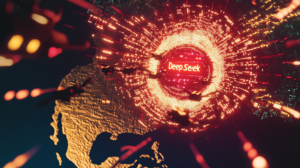
DeepSeek's Rise: China's Surprising Advance in the AI World
At the end of January 2025, news shook the global technology landscape: The Chinese startup DeepSeek, with its AI assistant R1, conquered the top spot among the most popular free apps in the Apple App Store, displacing OpenAI's ChatGPT from the leading position. This development surprised many experts, as the USA had previously been considered the undisputed market leader in the field of artificial intelligence.
DeepSeek, an AI development lab based in Hangzhou, was founded by Liang Wenfeng and specializes in creating large language models. What makes DeepSeek particularly noteworthy is not only the performance of its models, but above all its cost-effective approach. The company claims to have developed its leading models, such as DeepSeek V3 and R1, with a budget of less than $6 million. This stands in stark contrast to the billions of dollars that American companies invest in their AI development.
Related to this:
Rasmus Rothe, co-founder of the Berlin-based AI investor Merantix Capital, expressed his admiration for DeepSeek's performance: "You can tell that the developers were very intelligent." Although the Chinese model still needs to undergo further testing, it is already playing "in the same league" as its American competitors.
The cost issue: A crucial competitive factor
A key aspect of the AI race is the economic dimension. Operating advanced AI models incurs enormous costs that, in the long run, impact profitability and market penetration. ChatGPT's operation is estimated to cost around $700,000 (or €700,000) per day, which equates to roughly 36 cents per query. The majority of these costs are attributable to the hardware infrastructure required to run the AI systems.
In contrast, DeepSeek has chosen a remarkably cost-efficient approach. The company states that the total cost for the latest training run of its model was only $5.576 million. This cost difference represents a significant competitive advantage and could fundamentally change the dynamics of the AI industry.
What we are currently witnessing in the AI race is nothing less than an economic earthquake. Chinese innovation has dealt the US a significant blow: with operating costs of just €83,500 per day, DeepSeek undercuts the American flagship ChatGPT by a factor of eight – that's €700,000 per day. This cost difference will ultimately determine market share and possibly even technological supremacy.
What is particularly remarkable is that DeepSeek achieved this efficiency despite the American export restrictions intended to limit Chinese companies' access to advanced semiconductor technology. Researchers at DeepSeek stated that their DeepSeek V3 model was trained on Nvidia's H800 chips, a less advanced alternative unaffected by the restrictions.
Google's response: Brin's call to intensify the work culture
The progress of Chinese AI companies has caused concern among American tech giants. Google, once a pioneer in AI research, was surprised by the sudden popularity of ChatGPT and initially failed to launch a product that could match its level of recognition.
In this tense situation, Google co-founder Sergey Brin has recently caused a stir with an internal memo. According to the New York Times, he urged employees of the Gemini team – Google's department for AI models and applications – to increase their efforts. "I recommend being in the office every day of the week," he reportedly wrote, describing 60 hours per week as the "sweet spot of productivity.".
Brin emphasized the urgency of the situation, stating: “The competition has intensified significantly, and the final race for AGI (Artificial General Intelligence) has begun. I believe we have all the ingredients to win this race, but we need to accelerate our efforts.” His comments illustrate how seriously Google is taking the competition and how intense the race for leadership in AI development has become.
The DeepSeek Effect: Shocks in the Financial Markets
The impact of DeepSeek's success extends far beyond technological aspects and has also significantly influenced financial markets. At the end of January 2025, the discussion surrounding the Chinese start-up triggered a veritable stock market earthquake, which became known as the "DeepSeek effect.".
Related to this:

The US chipmaker Nvidia was hit particularly hard, as its graphics processors were previously considered indispensable for training AI models. Nvidia's stock fell by as much as 17 percent at one point, representing the largest single-day drop in value ever recorded by a company on Wall Street. Other technology companies, including Siemens Energy and Siltronic, also suffered significant share price declines.
These market reactions illustrate how sensitive investors are to changes in the AI landscape and how closely the economic success of many companies is linked to the further development of the AI sector.
USA versus China: The geopolitical context of the AI race
The race between the US and China in the field of artificial intelligence is often compared to the space race during the Cold War. The US currently holds the lead, particularly in investment. According to a study by Stanford University, nearly 900 new AI startups were founded in the US last year, compared to 122 in China. With almost $70 billion in investment, the US is far ahead of China.
Nevertheless, China is catching up rapidly, particularly in certain application areas. The strength of Chinese AI developers lies in concrete applications of artificial intelligence, not primarily in large-language models. Especially in humanoid robotics, Chinese companies are demonstrating their technological progress.
The US government has attempted to slow China's progress by restricting exports of advanced semiconductor technology. These measures, expanded in 2021, aim to prevent Chinese companies from acquiring powerful chips like Nvidia's A100 and H100, often used in the development of large-scale AI models. However, the success of DeepSeek calls into question the effectiveness of this policy.
The future of global AI competition
The race for supremacy in artificial intelligence is far from over. While the US still enjoys structural advantages – not least due to the dominant position of its technology companies and massive funding – the rise of DeepSeek shows that innovation and efficiency can challenge traditional strengths.
With Gemini 2.0, Google is preparing for the next phase of this competition. The new model promises improved performance, new capabilities, and a focus on AI agents that can independently perform complex tasks. With Project Astra, the company is also developing a universal AI assistant that will be available across various platforms.
At the same time, DeepSeek remains a challenge for established players. The Chinese company's ability to develop competitive AI models with limited resources could fundamentally change the dynamics of the market.
Innovation, efficiency and the future of AI
The current race for leadership in artificial intelligence is characterized by dynamic changes. DeepSeek's surprising success has shown that innovation and cost efficiency can challenge established market leaders. At the same time, Google's response illustrates how seriously American technology companies are taking this challenge.
The economic dimension of this competition is becoming increasingly important. The enormous costs of developing and operating advanced AI models present a challenge that can only be met through continuous innovation and efficiency improvements. Companies that successfully strike this balance will play a leading role in the future of AI.
Ultimately, this competition primarily benefits users of AI technologies. The intensified competition drives the development of more powerful, cost-effective, and accessible AI solutions, which have the potential to transform numerous aspects of our daily lives and the global economy.
Related to this:
Your global marketing and business development partner
☑️ Our business language is English or German
☑️ NEW: Correspondence in your native language!

Konrad Wolfenstein
I and my team are happy to be available to you as your personal advisor.
You can contact me by filling out the contact form here wolfenstein@xpert.digital:or simply call me at +49 7348 4088 965. My email address is
I'm looking forward to our joint project.