

Published on: November 1, 2024 / Updated on: November 1, 2024 – Author: Konrad Wolfenstein

Web search and search engines with artificial intelligence – How does Google's AI search function differ? – Image: Xpert.Digital
OpenAI's web search in ChatGPT: How AI is changing the way we search the internet & challenging Google
OpenAI's major innovation: ChatGPT enhanced with web search – The future of internet research compared to Google
OpenAI has taken a significant step towards the wider use of artificial intelligence (AI) with the introduction of a web search function in ChatGPT. This feature allows the tool to retrieve current information directly from the internet, thus considerably expanding its capabilities. This development puts ChatGPT in direct competition with established search engines like Google and changes the way users search for and process information on the internet. The following sections will detail how this feature works, its differences from Google, and the potential impact of this innovation.
ChatGPT's web search function: Functionality and introduction
ChatGPT's new web search function represents a significant expansion of the AI model's existing capabilities. While ChatGPT previously relied on a static knowledge model that was only updated up to a certain point in time, it can now access real-time information. This means users can retrieve current data such as news, weather forecasts, sports scores, or stock prices directly within the chat. This information is displayed in real time and includes source citations to enhance the credibility of the content provided.
Another advantage of this feature is the automatic activation of web search. As soon as the system detects that a query requires current information, the web search is started automatically. Alternatively, users can also activate web search manually if they prefer. This offers flexible usage options and ensures that the most relevant information is always available.
Additionally, ChatGPT allows users to ask follow-up questions to further refine the answers or obtain more detailed information. This dialogue-based interaction enables users to delve deeper into a topic and examine specific aspects of a question more closely.
Phased rollout and availability
The rollout of the new search function will be phased in. Initially, premium users—that is, ChatGPT Plus subscribers and team subscription holders—will have access to this feature. Enterprise and education users will follow in the subsequent weeks. OpenAI plans a release for free users sometime in November. This staggered rollout is typical for OpenAI and allows the company to identify and resolve potential issues early on, before the feature is available to all users.
It's also interesting that OpenAI isn't planning a separate search engine. Instead, the technology has been integrated directly into ChatGPT, meaning users don't need an additional platform to benefit from the new features.
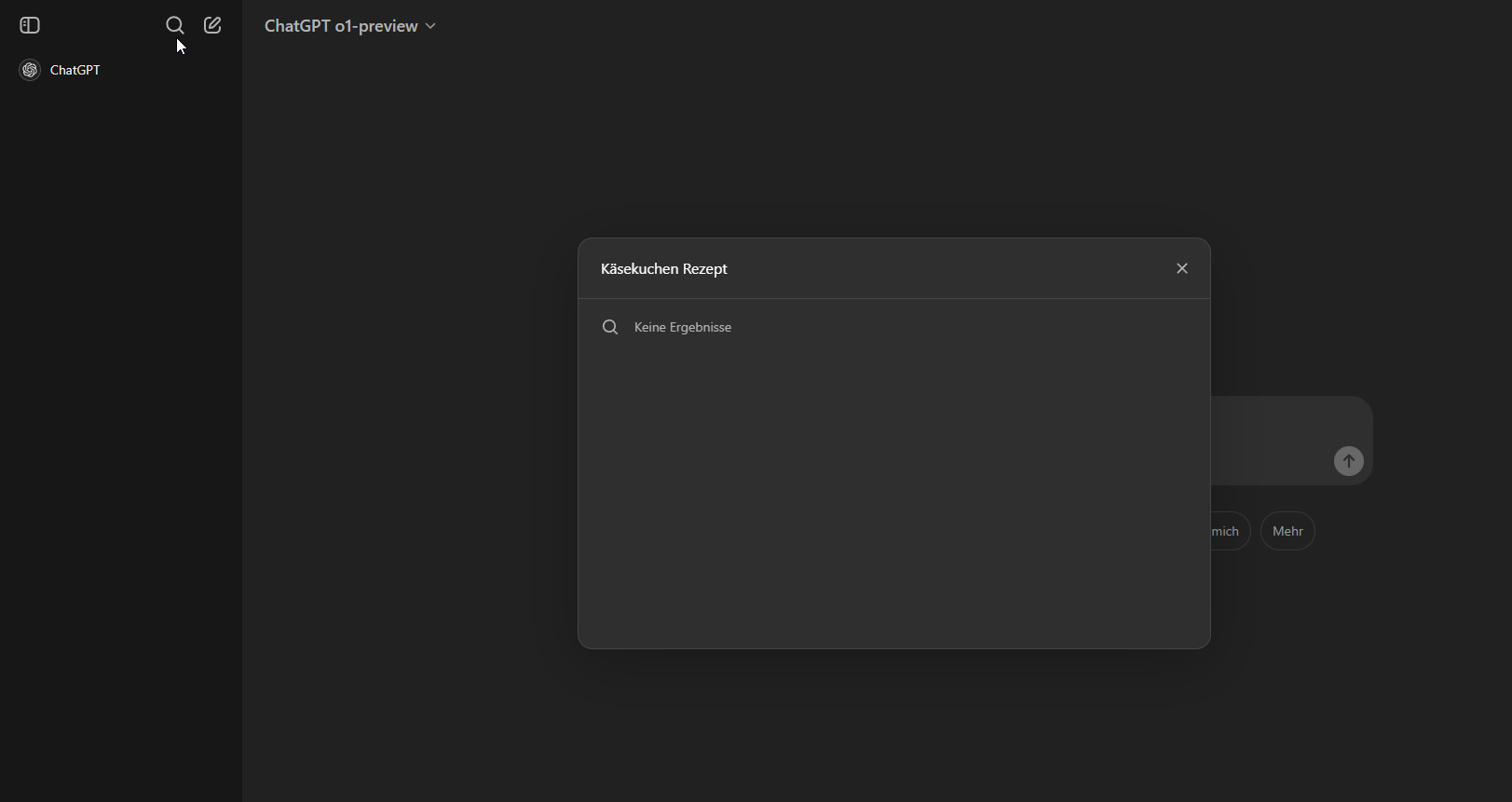
First, the feature that allows searching the chat history on the ChatGPT website is being introduced. “Now you can quickly and easily find a chat for reference or continue where you left off,” OpenAI wrote on X on October 29, 2024. No chat history, then initially no search results either. We can look forward to when the other functionalities will be added.
Perplexity is at risk?
With a web function, ChatGPT could become a serious competitor for Perplexity, as both platforms pursue similar goals but provide information in different ways.
How does the new search function differ from Google's?
Although ChatGPT will now also offer a search function, it differs from traditional search engines like Google in several key aspects:
1. Dialogue-based interaction vs. classic search results
A key difference between ChatGPT and Google lies in the nature of the interaction. While Google displays a list of websites relevant to a user's search based on keywords, ChatGPT offers a dialogue-oriented search experience. Its AI model provides a single, summarized answer to a query, allowing users to delve deeper into the topic or refine the answer by asking follow-up questions.
This conversational structure allows for interactive and personalized information searches. The user doesn't have to decide which of the many displayed links to click – as is the case with Google – but receives a comprehensive answer to their question directly.
2. Source references and links
Another difference lies in how sources are handled. Since the introduction of web search, ChatGPT has integrated links to the websites from which the information originates. This allows users to further verify the provided content or read additional details.
Google, on the other hand, displays websites directly without interpreting or summarizing their content. The user has to navigate through the results themselves and filter out the relevant information.
3. Real-time information
Both Google and ChatGPT offer real-time information. With Google, this often appears as special widgets or highlighted results at the top of the page – for example, weather forecasts or sports scores. With ChatGPT, however, this information is displayed directly in the chat window as part of a conversational reply.
This saves users time, as they do not have to click through multiple links to access the desired data.
4. Target groups and context of use
ChatGPT is particularly well-suited for more complex queries or tasks where users require detailed explanations or creative solutions – for example, when troubleshooting technical problems or writing texts. Its dialog-based structure also allows users to ask more in-depth questions and thus explore a topic more comprehensively.
Google, on the other hand, is more efficient for simple search queries – for example, when users quickly need precise information such as store opening hours or definitions of terms.
5. Monetization
Another difference lies in monetization: While Google generates a large portion of its revenue from online advertising, OpenAI currently pursues a different model with ChatGPT. There are no advertisements within the chat; instead, OpenAI relies on premium subscriptions and partnerships with media companies for high-quality content.
Partnerships with media companies
To ensure that the information provided is always up-to-date and accurate, OpenAI has partnered with renowned media outlets, including the Associated Press (AP), Axel Springer, and Reuters. These collaborations enable OpenAI not only to offer high-quality content but also to guarantee that this information comes from trustworthy sources.
These partnerships are an important step for OpenAI in competing with other search engine providers such as Google or Bing (Microsoft), as they are intended to ensure that the information provided is not only up-to-date but has also undergone journalistic review.
Future developments
OpenAI plans further enhancements to its platform in the near future. In addition to improvements in web search, features for shopping and travel queries will be added – areas where Google has traditionally been strong. Furthermore, voice capabilities will be expanded to make the platform even more intuitive to use.
Although there are currently no plans for a separate search engine, this could change in the future – especially if it turns out that users increasingly want to use dialogue-based search systems.
A new era of internet search?
The introduction of web search functionality in ChatGPT marks a significant milestone in the development of artificial intelligence and its everyday applications. The ability to retrieve information in real time and to engage in dialogue-based interaction clearly distinguishes the tool from traditional search engines.
Although Google remains the market leader in internet searches and has extensive resources, the emergence of such AI-based systems could prove to be serious competition in the long term – especially for user groups with more complex information needs.
It will be interesting to see what further developments OpenAI will present in the future and how this will affect the internet search market.
Related to this: