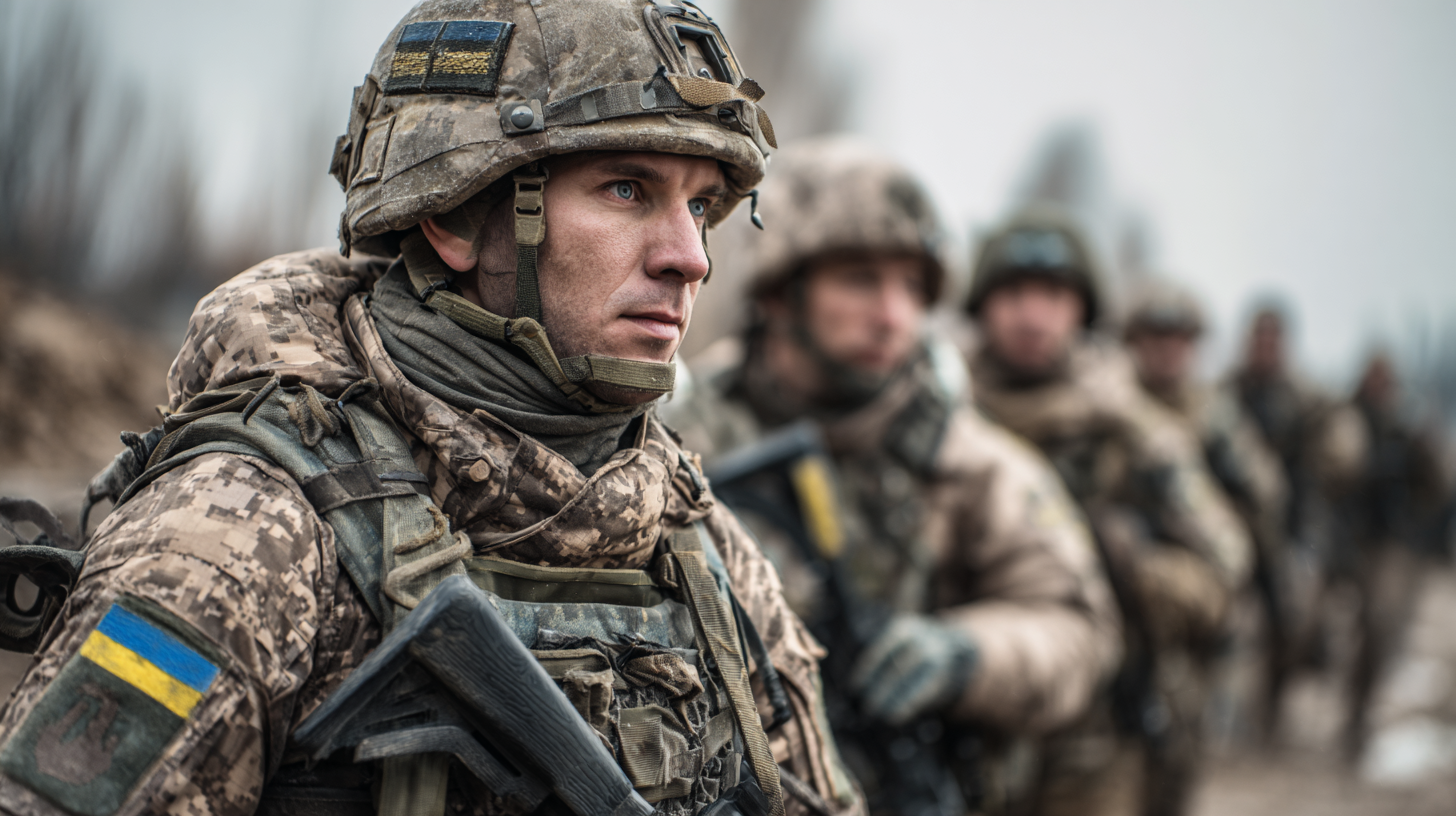
Germany wants a military alliance with Ukraine? The economic and military realignment of the German-Ukrainian alliance – Creative image: Xpert.Digital
The end of the "gifts": The hard-nosed economic logic behind the new Ukraine pact
Merz's arms bombshell: Why German tanks will soon be built directly in Ukraine
Germany is facing a security policy transformation whose scope dwarfs previous understandings of the "turning point" in history. Friedrich Merz is planning a radical paradigm shift in support for Ukraine: away from the role of a hesitant donor and towards that of architect of a fully integrated arms-industry alliance.
For a long time, German aid to Kyiv followed a simple pattern: old stocks were delivered, gaps were painstakingly filled, and Ukraine remained in the role of a grateful but dependent supplicant. But this model is exhausted. What is now on the table is a draft of a strategic symbiosis that goes far beyond mere lip service. The ten-point plan, leaked from government circles, outlines nothing less than the fusion of two worlds: traditional German "hardware excellence" with its heavy platforms meets the brutal, battle-forged "software agility" of Ukrainian warfare.
This analysis looks behind the scenes of this new Berlin arms pact. It reveals why the relocation of German tank factories to the Dnipro River is not a charitable gesture, but follows a compelling economic logic. We examine how the German armed forces intend to benefit for the first time from Ukrainian AI and drone technology through so-called "reverse tech transfer" in order to overcome their own modernization backlog. And it demonstrates how state guarantees create a multi-billion-euro lever for private capital, permanently strengthening the European security architecture against Russian aggression.
Friedrich Merz's initiative is more than a plan – it's an attempt to secure peace in Europe not through hope, but through industrial superiority. Read here how a new business model for Western security is emerging from the "laboratory of war.".
From supplicant to system partner: How the new Berlin arms pact with Kyiv is recoding the European security architecture
Chancellor Friedrich Merz's decision to transform military support for Ukraine from a purely donor-recipient relationship into a fully integrated arms-industry alliance marks a watershed in German foreign and security policy. This step, which goes far beyond previous ad-hoc deliveries, is not only a military necessity but also follows a compelling economic logic. We are witnessing the transition from a "turning point" as a rhetorical figure to a "turning point" as an industrial reality. This analysis deconstructs the economic, technological, and strategic dimensions of this pact and demonstrates why this "arms union" has the potential to become a catalyst for a new European arms autonomy.
The Decade of Integration: Anatomy of the Defense Industry Master Plan
The ten-point plan, leaked from government circles, is far more than a diplomatic gesture. It is a technocratic blueprint for the merger of two national defense industries whose capabilities complement each other almost perfectly. Germany contributes the "hardware excellence"—highly complex platforms such as the Leopard 2, the Panzerhaubitze 2000, and air defense systems, which are valued worldwide for their precision and durability. However, these systems are expensive, slow to produce, and often over-engineered for a war of attrition.
Ukraine, however, brings something to the table that money alone cannot buy in the West: software agility and the brutal efficiency of mass production under fire. The plan is not only to connect these two worlds but to interlink them institutionally. The creation of the "Ukraine Freedom House" as a liaison office in Berlin is the operational hub. It functions not only as a diplomatic mission but also as a business incubator, directly connecting Ukrainian engineers with German corporations such as Rheinmetall, KNDS, and Hensoldt.
From an economic perspective, this drastically reduces the transaction costs of cooperation. Previously, German companies had to navigate the Ukrainian bureaucracy with great difficulty or rely on unreliable information. Now, the exchange is institutionalized. If Ukrainian frontline officers report that a particular German sensor is being jammed by Russian electronic warfare, this information no longer ends up in a report gathering dust in Berlin months later. It goes directly to the development departments of German industry, which—supported by Ukrainian specialists on the ground—can develop and implement software patches. This "fast track" to innovation is impossible in peacetime, but vital for survival in war. The plan thus institutionalizes the shortest innovation cycle German industry has ever seen.
Another crucial point is the integration of Ukrainian industry into the EU single market for defense goods. This represents a significant regulatory lever. Previously, Ukrainian companies were often treated as third-party suppliers, which complicated tariffs, certifications, and export controls. By effectively being treated the same as EU manufacturers, Kyiv gains access to European Defence Funds (EDF) and joint procurement programs (EDIP). Conversely, for German industry, this means access to a vast pool of skilled workers and production capacity that operates far more cost-effectively than comparable locations in Western Europe. This will create a defense industry cluster stretching from the Ruhr region to the Dnipro River.
Synergy instead of donation: The economic logic of production relocation
Perhaps the most radical component of the new alliance is the shift away from a purely export-oriented model towards local production ("local content"). The agreement stipulates that German arms will increasingly be manufactured directly in Ukraine. Rheinmetall has already pioneered this approach with its joint venture, but the Merz plan extends this model to the entire industry.
The economic advantages for Germany are counterintuitive at first glance, but evident upon closer examination. The production of 155mm artillery ammunition, for example, is energy- and material-intensive. In Germany, manufacturers struggle with high energy costs, strict environmental regulations, and an extreme shortage of skilled workers. In Ukraine, unit labor costs are significantly lower, energy supply (despite Russian attacks) for strategic industries is a priority and heavily subsidized, and, above all, the workforce's motivation is driven by a sense of existential need.
By relocating parts of the value chain—such as the final assembly of vehicles or the filling of ammunition casings—to Ukraine, German industry can ramp up its capacity more quickly than would be possible by building new factories in Lower Saxony or Bavaria. This is a classic arbitrage strategy applied to the war economy. German corporations supply the high-tech intermediate products (e.g., the optics, the engine, the alloy for the gun barrel), while the labor-intensive integration takes place locally.
This also solves a serious logistical problem. Every tank that has to be towed to Poland or Lithuania for repairs is unavailable at the front for weeks. If German companies now operate repair hubs and production lines deep in western Ukraine or in protected underground facilities, the availability of the equipment increases dramatically. Economically, this means a higher return on investment: A Leopard tank that is operational 90% of the time delivers more "security production" than one that spends 40% of its time on a low-loader between the Donbas and Poland.
Moreover, these joint ventures secure long-term market share for German industry. After the war, Ukraine will have the largest and most powerful army in Europe. Whoever builds the factories and sets the standards today will also supply the spare parts, upgrades, and ammunition for decades to come. It's a classic "lock-in" strategy. By investing massively in the Ukrainian industrial base now, Germany is crowding out potential competitors from the USA, South Korea, or Turkey, who are also eyeing this future market.
The Laboratory of War: How the German Armed Forces Benefit from Ukraine's Innovative Strength
One aspect often overlooked in public debate is the massive technology transfer from East to West – the so-called "reverse tech transfer." For a long time, the prevailing arrogant assumption was that the West was teaching Ukraine how to fight. The reality of 2025 is different: Ukraine is teaching the West how to wage a high-intensity war in the 21st century.
The alliance's stated goal of leveraging the "lead of Ukrainian industry in drones and related technologies" is an admission of its own shortcomings. The German armed forces have largely missed the boat on developing tactical drones (First Person View – FPV) and loitering munitions, or have become bogged down in bureaucratic certification processes. Ukraine, on the other hand, now produces millions of these systems annually, at unit costs that seem like mere rounding errors to Western procurement agencies.
The alliance envisions the integration of Ukrainian drone technology – particularly the algorithms for swarm control and autonomous target acquisition using AI – into German systems. Imagine a German Puma infantry fighting vehicle no longer solely reliant on its onboard cannon, but instead routinely controlling a swarm of Ukrainian reconnaissance and kamikaze drones, coordinated by an AI trained in the trenches of Bakhmut and Avdiivka. This is the technological quantum leap that Merz envisions.
Particularly valuable are the "digital battlefield data" mentioned in the ten-point plan. Data is the gold of AI development. Ukraine possesses the world's most comprehensive dataset on modern warfare: radar signatures of Russian jets, movement patterns of tank units, and frequency ranges of Russian jammers. For German defense electronics manufacturers like Hensoldt and Rohde & Schwarz, this data is invaluable. It enables the development of sensors and jammers based not on theoretical models, but on the harsh realities of electronic warfare.
The exchange of this data is not a one-way street. The German Armed Forces gain access to real-time insights into the performance of their own weapons. If a Panzerhaubitze 2000 self-propelled howitzer exhibits signs of wear under sustained fire that never appeared at the Meppen test range, this is crucial information for further development. The alliance is thus institutionalizing a feedback loop that radically accelerates product improvement. We are witnessing the emergence of "defense agility," modeled on the software industry: release, combat testing, feedback, patch, new release. With this alliance, Germany is therefore not only buying security but also the modernization of its own armed forces.
Hub for Security and Defense - Advice and Information

Hub for Security and Defense - Image: Xpert.Digital
The Security and Defence Hub offers expert advice and up-to-date information to effectively support companies and organizations in strengthening their role in European security and defence policy. Working closely with the SME Connect Defence Working Group, it particularly promotes small and medium-sized enterprises (SMEs) that wish to further develop their innovative capacity and competitiveness in the defence sector. As a central point of contact, the Hub thus creates a crucial bridge between SMEs and European defence strategy.
Related to this:
Security investment instead of subsidies: How Germany is turning Ukraine into an arms fortress with guarantees
Risk transfer and capital leverage: The financial architectural hedging of the eastern flank
Naturally, the question of financing arises. How can a country like Germany, which has imposed strict budget rules on itself, finance such a massive rearmament offensive? The answer lies in the details of the plan: "Possible use of federal investment guarantees.".
This is a masterstroke of fiscal policy. Instead of disbursing taxpayers' money directly as subsidies (which would immediately burden the budget), the state merely assumes the risk. It provides guarantees for investments made by private companies in Ukraine. If Rheinmetall builds a €200 million factory in western Ukraine, the federal government guarantees the factory's value in the event of Russian shelling or political expropriation.
For the federal budget, this is initially cost-neutral. Costs only arise in the event of damage. From an economic perspective, the state is leveraging private capital here. With a guarantee of perhaps one billion euros, it can trigger investments of ten billion euros. This is the multiplier effect that reconstruction economists have been calling for for years. It signals to the markets: The German government believes in the viability of Ukraine and is prepared to back it with its credit rating.
At the same time, the "large arms procurement community" is mentioned. This suggests a Europeanization of costs. When Germany, Poland, the Netherlands, and the Baltic states jointly order ammunition—some of it from Ukrainian production—unit prices decrease due to economies of scale. Ukraine is being used here as an extended NATO production facility, which reduces the cost per shell. At a time when 155mm shells are traded at exorbitant prices on the world market, building up domestic, cost-effective production capacity in Ukraine is also a measure to combat inflation in the arms sector.
The "anti-corruption shield" is the conditio sine qua non for investor confidence. Without rigorous compliance mechanisms, German executives, who are subject to strict liability rules, would never transfer billions to a country historically plagued by corruption. The direct involvement of German officials and the creation of transparent digital procurement processes (inspired by the Ukrainian Prozorro system) are intended to ensure that the money flows into production and does not disappear into shady channels. This further reduces the risk premium for private capital.
Geopolitical gravity: The long-term commitment to the Euro-Atlantic area
Beyond the sheer numbers, this alliance has profound structural political significance. It creates facts that are irreversible. A Ukraine whose arms industry is 100% compatible with NATO standards, whose factories are joint ventures with German corporations, and whose engineers are in daily Zoom meetings with colleagues in Munich and Düsseldorf, is effectively already part of the West.
This industrial integration is a stronger bond than any EU accession treaty printed on paper. It creates mutual dependencies. Germany is becoming dependent on Ukrainian drones and munitions, Ukraine on German high-tech and capital. In game theory, this is called a "credible commitment." Germany is signaling to Moscow that it is no longer possible to isolate Ukraine without simultaneously violating vital German interests. An attack on a Rheinmetall factory in Lviv is then no longer just an attack on Ukraine, but a direct blow against German property and German security interests.
This increases the deterrent effect. Putin must calculate that any escalation will not only result in diplomatic protests, but also a further acceleration of the arms industry machinery in the West, which now operates directly on his border. The alliance is thus the first step towards a "porcupine strategy" for Ukraine: The country will be so heavily militarized and industrially hardened that conquest will become physically impossible and economically ruinous.
The realism of strength
Friedrich Merz's initiative is a belated correction of a long-held illusion: the illusion that security can be achieved solely through trade and change. The new reality is security through capacity and deterrence. The arms alliance with Ukraine is not a handout, but a hard-nosed investment in national security.
Germany benefits in three ways: First, the Russian threat is contained and weakened on Ukraine's eastern border ("Containment"). Second, German industry gains access to a huge growth market and a unique innovation ecosystem ("Industrial Base Expansion"). Third, the German armed forces are modernized through the direct influx of combat experience and technology ("Force Transformation").
Of course, risks remain. The factories could be bombed, and political instability in Kyiv could jeopardize cooperation. But the alternative—a Ukraine that collapses due to a lack of ammunition and forces the Russian military to the Polish border—would be many times more expensive, both economically and in terms of security.
With this alliance, Berlin is taking the step from passive observer to active shaper of the European security order. It is a pact of reason, forged in the fires of war, financed by market logic. The message to Moscow is unequivocal: Europe's industrial power has awakened, and it has decided not only to defend Ukraine, but to transform it into a fortress of freedom. This is the new German Ostpolitik: not change through rapprochement, but peace through superiority.
The technological transformation of warfare – Why Ukrainian “garage innovation” beats German “engineering perfectionism”
To truly understand the significance of the technological component of this alliance, one must delve deep into the microstructure of innovation. The German defense sector has historically been fixated on the "gold standard": weapons systems are developed over decades, must meet thousands of DIN standards, and are designed to function for 30 years. The result is technological marvels like the Puma infantry fighting vehicle – which, however, is so complex that it is often not operational and whose unit costs are astronomical.
Out of necessity, Ukraine has developed a counter-model that could be described as a "Minimum Viable Product" (MVP) of warfare. Ukrainian engineers take civilian components—Chinese engines, American chips, hobbyist remote controls—and build weapons that are "good enough" to destroy a $5 million Russian tank, but cost only $500 themselves.
This "frugal innovation" is a culture shock for German industry, but a beneficial one. Within the framework of the new "lighthouse projects," German engineers will learn how to shorten development cycles from years to weeks. A concrete example is the interference resistance of drones.
In Ukraine, the Russians often change their jamming frequencies weekly. A German drone whose frequency band is either permanently fixed or can only be changed at the factory via a complex software update becomes useless there after three days. Ukrainian drones often have open architectures that allow soldiers in the trenches to adjust the frequency with a laptop before takeoff. This flexibility ("modularity at the front") will now be incorporated into German designs.
The alliance allows Germany to import this agility without completely abandoning its own quality standards. A kind of hybrid design is emerging: German reliability and safety in the critical components (propulsion, warhead), coupled with Ukrainian flexibility in software and sensors. This is the key to prevailing in future conflicts where the adversary is no longer static but adapts rapidly using technology.
The role of artificial intelligence in the new alliance
Another underestimated aspect is AI integration. Ukraine is currently the only country in the world where AI-controlled weapons systems operate autonomously on a large scale against a technologically equal adversary. We're talking about "terminal guidance" for drones here: The drone flies into the target area, the radio link is disrupted by jammers, and the onboard AI takes over, visually identifies the target, and autonomously guides the drone to its destination for the last 100 meters.
This technology is the "holy grail" of modern robotic warfare. German companies have been researching it in laboratories for years. The Ukrainians have brought it to maturity in the field because they had to. Through the alliance and the "continuous technology transfer," Germany gains access to these algorithms. This is worth billions. It would take years and cost enormous sums to synthetically generate this training data. Ukraine delivers it "free of charge.".
In return, Germany provides the computing power and hardware platforms to make this AI even more powerful. German chips, German optics, and German encryption technology make the Ukrainian AI more robust. It's a perfect match: Ukrainian software "intelligence" meets German hardware "muscle.".
The European dimension: A nucleus for the EU defense union
Finally, we must broaden our perspective to the European level. Merz's initiative is also a signal to Paris and Brussels. For a long time, France attempted to consolidate the European arms industry under French leadership. Germany is now taking a counterpoint: an eastward expansion of its defense base.
By bringing Ukraine into the "arms procurement community," Germany is shifting the center of gravity of European defense eastward. Poland, the Baltic states, Scandinavia, and now Ukraine, together with Germany, form a "North-East bloc" that is more pragmatic, closer to America, and more open to technology than the traditional Franco-German engine.
This could be the starting point for a genuine division of labor in Europe. While France focuses on large-scale projects like the Future Combat Air System (FCAS) jet, the German-Ukrainian cluster could become the center for land warfare systems, artillery, and drones. Ukraine would become the "armory of the eastern flank," financed by Western European capital, protected by Western air defenses, and integrated into NATO logistics.
This would also reduce the pressure on the US. If Europe (including Ukraine) is able to largely shoulder conventional deterrence against Russia itself – through the mass production of munitions and drones – the US can focus more on the Indo-Pacific. The Merz alliance is therefore also an offer to Washington: "We are taking responsibility, not just with words, but with factories."
In summary, the economic analysis of this alliance reveals a picture of remarkable coherence. It is not an ideological project, but a coldly calculated business plan for the security of Europe. The costs are high, but the dividend – lasting peace through deterrence and a revitalized German industry – is priceless.
Consulting - Planning - Implementation

Markus Becker
I would be happy to serve as your personal advisor.
Head of Business Development
Chairman SME Connect Defense Working Group
Consulting - Planning - Implementation
Konrad Wolfenstein
I would be happy to serve as your personal advisor.
You can contact me at wolfenstein∂xpert.digital or
Just call me on +49 7348 4088 965 .
Your dual-use logistics experts
Dual-use logistics experts - Image: Xpert.Digital
The global economy is currently undergoing a fundamental transformation, a watershed moment that is shaking the foundations of global logistics. The era of hyper-globalization, characterized by the relentless pursuit of maximum efficiency and the "just-in-time" principle, is giving way to a new reality. This new reality is marked by profound structural breaks, geopolitical power shifts, and increasing fragmentation of economic policy. The once taken-for-granted predictability of international markets and supply chains is dissolving and being replaced by a period of growing uncertainty.
Related to this:
Our EU and German expertise in business development, sales and marketing
Our EU and German expertise in business development, sales and marketing - Image: Xpert.Digital
Industry focus areas: B2B, digitalization (from AI to XR), mechanical engineering, logistics, renewable energies and industry
More information here:
A thematic hub offering insights and expertise:
- Knowledge platform covering global and regional economies, innovation and industry-specific trends
- A collection of analyses, insights, and background information from our key areas of focus
- A place for expertise and information on current developments in business and technology
- A hub for companies seeking information on markets, digitalization, and industry innovations