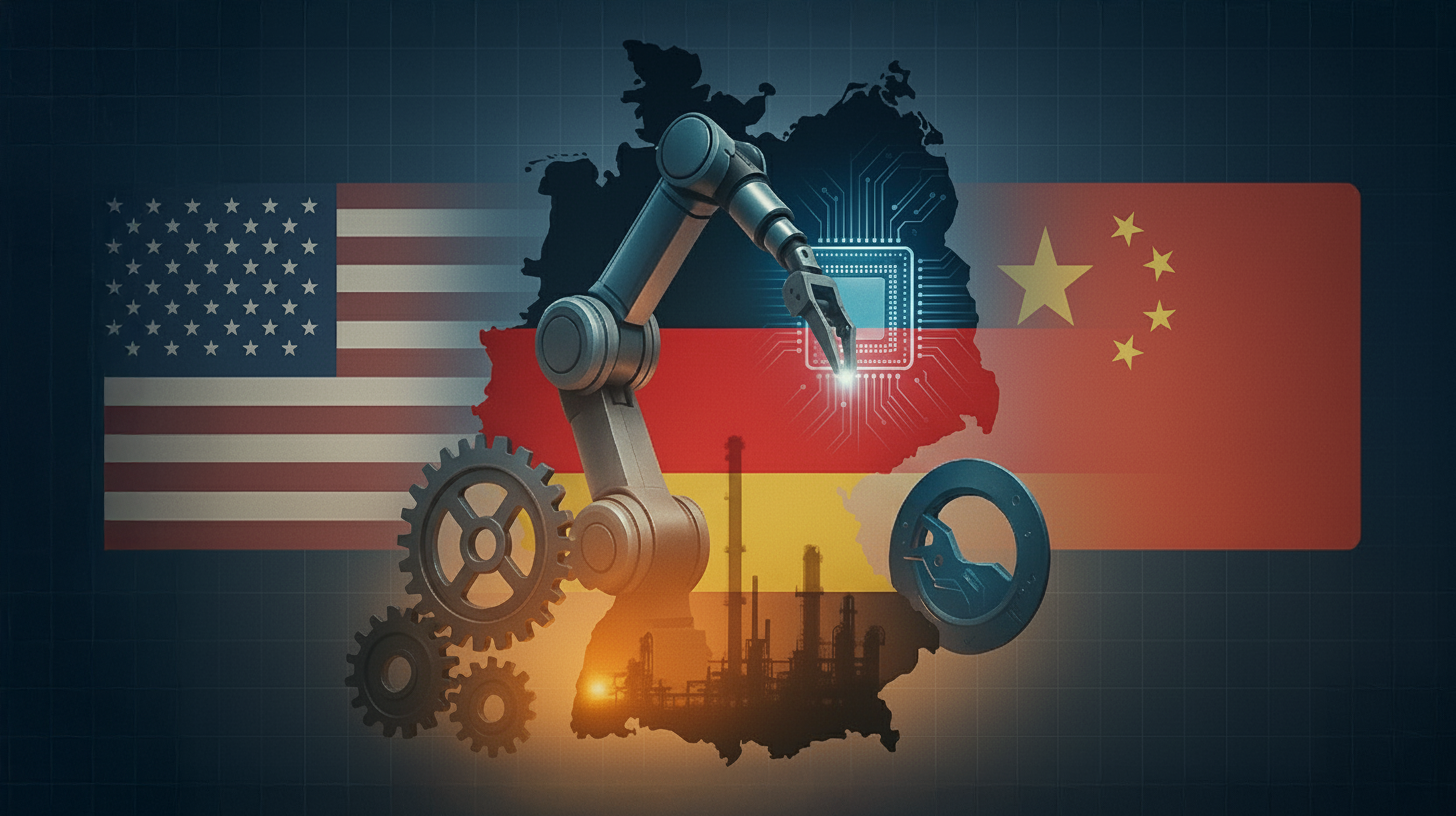
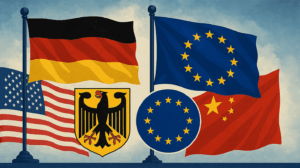
Germany's secret superpower? How these three technologies make us stronger than the USA and China – Image: Xpert.Digital
The invisible giants: How 1,469 German companies are secretly conquering the world – and hardly anyone knows it
More than just mechanical engineering: This is why Germany is much further ahead in artificial intelligence than you think
While deindustrialization and a sense of crisis are often discussed, a technological revolution is quietly brewing in Germany, one that has the potential not only to maintain the country's global leadership but also to redefine it. The key lies in the intelligent integration of three powerhouses: the traditionally strong mechanical engineering sector, a rapidly growing robotics landscape, and the transformative power of artificial intelligence. This "technological trinity" reinforces itself and creates a foundation that is unparalleled internationally.
With nearly 280,000 robots in operation, Germany is already Europe's undisputed automation superpower. But its true strength lies deeper: in the 1,469 often-unknown global market leaders, the so-called "hidden champions," who set the global pace in their niche markets. This article shows how this unique industrial base is reaching a new level of competitiveness through strategic alliances—from Siemens' data cooperation to the pioneering European partnership between ASML and Mistral AI. We examine why the weaknesses of its competitors, the USA and China, represent a historic opportunity for Germany and how the convergence of these technologies can unlock a future market worth eight trillion euros. It is the story of a technological turning point that proves: the era of self-doubt is over. Here are the facts that pave Germany's way to the forefront of the next industrial revolution.
Related to this:

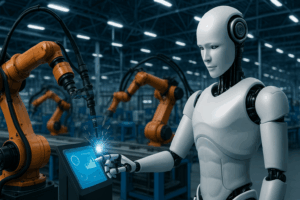
The technological trinity: robotics, AI and mechanical engineering as the key to global leadership
Germany stands at a crucial turning point in its industrial history. The convergence of robotics, artificial intelligence, and mechanical engineering forms the foundation for a new era of technological innovation. These three fields are not only intertwined but also mutually reinforcing, creating a force that gives Germany the potential not only to maintain but even to expand its position as a leading industrial nation.
German industry has already proven its ability to master complex technological systems. With 278,900 operational robot units in 2024, Germany is the European leader in robot automation and operates 40 percent of all factory robots within the European Union. This impressive figure reflects not only technological maturity but also the willingness of German industry to invest in future-oriented technologies.
Germany's strength lies in the unique combination of various factors. The country boasts highly skilled hardware manufacturers, renowned worldwide for their precision and reliability. At the same time, the German economy is characterized by long-term strategic thinking that extends beyond short-term profit maximization. This philosophy enables companies to make sustainable investments in research and development, the returns of which will only become apparent over many years.
The global robotics market: Germany's strong position
In a global comparison of annual robot installations, Germany ranks fifth, behind Korea, the USA, Japan, and China. This position may seem modest at first glance, but it reflects a remarkable achievement when considering the scale of the operation. Germany installed a total of 27,000 new industrial robots in 2024, the second-best result since records began.
The German robotics landscape is characterized by impressive diversity. Global corporations such as Bosch, Linde Material Handling (with €8.46 billion in revenue), and Jungheinrich (€5.55 billion) lead the field. KUKA, with €4.05 billion in revenue and 14,726 employees, is also among the leading players and is active in several robotics segments.
Particularly noteworthy is the role of small and medium-sized enterprises (SMEs) as drivers of innovation. Companies like Agile Robots from Munich, with 1,700 employees, and igus from Cologne, with €1.1 billion in revenue and 5,215 employees, have established themselves internationally as specialists in niche markets. These SMEs are often the true hidden champions of the German robotics industry.
The regional distribution reveals a clear concentration: Over 80 percent of leading robotics companies are headquartered in Baden-Württemberg, Bavaria, and North Rhine-Westphalia. Baden-Württemberg proves to be a particular robotics hotspot with a strong environment of AI research and industrial application.
Industry distribution: New dynamics in the use of robotics in Germany
An analysis of the industry distribution of robot installations reveals interesting developments in German industry. While the automotive industry has traditionally been the largest user of robots, new trends are emerging. In 2024, sales in the automotive industry fell drastically by 25 percent to 6,900 units, the weakest result in 15 years. This development can be attributed to lower-than-expected demand for electric vehicles and political uncertainties.
In contrast, the metalworking industry experienced an impressive upswing. With 6,000 installed units in 2024, it achieved an increase of 23 percent compared to the previous year, reaching its best result since records began. This development demonstrates the adaptability of German industry and its ability to tap into new growth areas.
Other growth areas include the chemical and plastics industry with 3,100 installed units and a growth of 71 percent, and the electrical and electronics industry with 2,100 units and an increase of 18 percent. This diversification shows that German robotics applications are no longer solely dependent on the automotive industry, but are expanding into various sectors.
Artificial Intelligence: Germany's Potential as a Technology Leader
German mechanical and plant engineering has the best prerequisites to reach the top of the world rankings using AI software. This optimistic assessment is based on several structural advantages that Germany possesses compared to other technology locations.
Particularly noteworthy is that 51 percent of German manufacturers are using AI and machine learning solutions on the factory floor, an increase from 47 percent last year and above the European average. In the area of generative AI, Germany even leads all the European countries surveyed: 63 percent of companies have already invested, an impressive jump of 39 percent in 2024.
The investments are already beginning to pay off. Thirteen percent of German manufacturers report that generative AI has delivered the highest return on investment of all technologies, compared to eight percent the previous year. Intelligent tools are being used extensively, with German manufacturers leading the way in Europe in the use of AI for process optimization (56 percent), cybersecurity (53 percent), and quality control (51 percent).
Despite these encouraging figures, considerable potential remains. According to a Bitkom study, only 8 percent of German companies currently use AI applications, even though two-thirds of all German companies consider artificial intelligence to be the most important technology of the future.
German mechanical engineering: Global leadership despite challenges
Germany is the world's third-largest producer of machinery after China and the USA, and maintains its position as the leading exporter in numerous mechanical engineering segments. With an export volume of €194.42 billion, mechanical engineering ranks second among Germany's most important export goods.
German machinery exports reached a record high of €208.1 billion in 2023, representing a nominal increase of 7.7 percent. The most important markets were the USA (€28 billion), China (€18.6 billion), and France (€14.5 billion). This geographical diversification demonstrates the global reach of German mechanical engineering expertise.
Particularly impressive is their market leadership in specific segments. In 9 of the 31 sub-sectors of mechanical engineering, companies from the EU-27 hold a share of more than 50 percent of global trade, with German companies playing a leading role. EU manufacturers achieve particularly high shares in cleaning systems (65.7 percent), food processing and packaging machinery (63.4 percent), agricultural machinery (61.5 percent), and woodworking machinery (61.4 percent).
Strategic alliances and partnerships: A crucial success factor
The willingness of German companies to enter into strategic partnerships and business alliances is proving to be a decisive competitive advantage. This openness to cooperation makes it possible to pool expertise, share risks, and jointly develop new markets.
A prime example of this strategy is Siemens' data alliance with European machine tool manufacturers. This alliance includes the machine tool manufacturers Grob, Trumpf, Chiron, Renishaw, Heller, the Machine Tool Laboratory of RWTH Aachen University, and the Voith Group. At the heart of the collaboration is the exchange of anonymized machine data to scale industrial AI.
This type of collaboration demonstrates the potential of German companies to create synergies through cooperation. The underlying principle is that artificial intelligence functions better the higher the quality and quantity of the training data. German companies see this as an opportunity to leverage their strong industrial base to remain competitive with the US and China in the field of industrial AI.
Related to this:

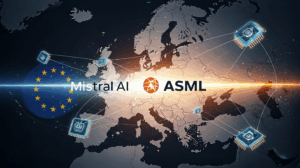
Europe's AI secret weapon: The strategic alliance between ASML and Mistral
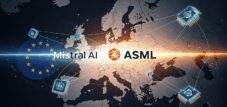
A particularly significant step forward for Europe's technological sovereignty is the strategic partnership between the Dutch semiconductor giant ASML and the French AI startup Mistral AI. ASML is investing €1.3 billion in Mistral, becoming its largest shareholder with a stake of approximately 11 percent. This investment catapults Mistral to a valuation of €11.7 billion, making it the most valuable AI company in Europe.
The significance of this alliance extends far beyond a mere financial investment. ASML is the undisputed monopolist for EUV lithography machines, which form the heart of every modern semiconductor factory and without which neither Apple nor Nvidia could produce their most advanced chips. Mistral AI, on the other hand, develops impressively efficient, cost-effective, and natively multilingual AI models that are giving the US giants OpenAI and Google a run for their money.
This partnership symbolizes the emergence of a potentially seamless European value chain, from the foundation of chip manufacturing to intelligent software. It is a strong sign of Europe's digital sovereignty and a response to the technological dominance of the USA and China.
Related to this:
Our EU and German expertise in business development, sales and marketing

Our EU and German expertise in business development, sales and marketing - Image: Xpert.Digital
Industry focus areas: B2B, digitalization (from AI to XR), mechanical engineering, logistics, renewable energies and industry
More information here:
A thematic hub offering insights and expertise:
- Knowledge platform covering global and regional economies, innovation and industry-specific trends
- A collection of analyses, insights, and background information from our key areas of focus
- A place for expertise and information on current developments in business and technology
- A hub for companies seeking information on markets, digitalization, and industry innovations
Robotics, AI & mechanical engineering merge – Germany's next revolution
Global challenges: The USA and China are grappling with their own problems
While Germany often takes a self-critical look at its economic challenges, it should not be overlooked that other economic powers are also struggling with significant problems. The US faces fiscal challenges due to expansionary policies that may promote growth in the short term but could carry long-term risks of inflation, debt, and stagflation.
China, on the other hand, is striving for a more sustainable growth model with lower growth rates, but is struggling with structural problems. The weakening real estate sector, local government debt, a sluggish stock market, and a lack of consumer confidence are weighing on the Chinese economy. Even with the comprehensive stimulus packages implemented by the Chinese government, a return to its former growth strength is not expected.
These global challenges offer Germany opportunities to strengthen its relative position. While other economic powers struggle with structural problems, Germany can leverage its strengths in industrial production, technological innovation, and strategic partnerships.
Related to this:

The potential of deep tech: Eight trillion euros by 2030
The Boston Consulting Group predicts that deep tech will generate more than eight trillion euros in added value worldwide by 2030. This corresponds to almost 50 percent of the projected gross domestic product of the 27 EU member states for this period. These figures illustrate the enormous economic potential inherent in future-oriented technologies.
Due to their strong position in global research and development, Germany and Europe have the potential to take a leading role in deep tech. In particular, collaboration between large corporations and agile networks is considered crucial for successfully expanding deep tech leadership.
The deep tech sector encompasses technologies such as artificial intelligence, quantum computing, biotechnology, and other highly complex innovations based on intensive research. While American deep tech companies received €215 billion in funding between 2018 and 2023, European companies raised only €58 billion during the same period. Less than ten percent of deep tech unicorns originate in Europe, representing a significant imbalance given the region's economic importance.
Related to this:
Germany as a world market leader: Hidden champions and export hits
Germany maintains its position as the world's leading exporter in approximately 180 product categories, demonstrating the exceptional breadth and depth of German industrial expertise. From fertilizers to crane trucks, from microscopes to harvesting machines – German companies dominate in a wide variety of sectors.
Current analyses identify 1,469 German global market leaders, 93 percent of which are industrial companies. This industrial dominance clearly distinguishes Germany from other economies and underscores its particular strength in the production of high-quality technical goods. The distribution by sector shows that mechanical engineering leads with 308 global market leaders, followed by the automotive industry and its suppliers with 95, electrical engineering with 88, measurement and control technology with 72, and components with 66.
These hidden champions, as Professor Hermann Simon calls them, form the backbone of Germany's export strength. They often operate in niche markets, are technological leaders, and globally oriented. Their strength lies in the combination of technical excellence, innovative power, and long-term strategic thinking.
Technological sovereignty: Germany's strategic realignment
The German Federal Government has recognized that technological sovereignty is crucial for Germany's future prosperity. With its High-Tech Agenda Germany, research, technology, and innovation policy focuses on six key technologies: artificial intelligence, quantum technologies, microelectronics, biotechnology, fusion and climate-neutral energy production, as well as technologies for climate-neutral mobility.
The framework program Research and Innovation for Technological Sovereignty (FITS2030) implements this strategy. Its goal is to significantly increase Germany's innovative capacity and economic strength through investments in these technologies. This is to be achieved through faster research, development, and commercialization of technologies, and through a consistent focus on building technological capacities in Germany and Europe.
Germany must be able to develop key technologies itself and utilize their potential. Against the backdrop of crises such as the Covid-19 pandemic, the war in Ukraine, and increasing geopolitical tensions, technological sovereignty is more important than ever.
Regional strengths: Baden-Württemberg as an innovation center
The regional distribution of German technology companies reveals clear clusters. Baden-Württemberg has established itself as a particular hotspot for robotics and AI research, followed by Bavaria and North Rhine-Westphalia. This concentration creates synergies through proximity to research institutions, suppliers, and partners.
Baden-Württemberg benefits from a unique ecosystem of global corporations, innovative medium-sized businesses, excellent universities, and research institutes. Companies like Mercedes-Benz, Bosch, Trumpf, and SAP have their roots here and drive technological development. The close collaboration between industry and science enables the rapid transfer of research results into marketable products.
Challenges and opportunities: The way forward
Despite its strong position, Germany and its technology companies face significant challenges. International competition is intensifying, particularly from Chinese suppliers who are penetrating traditional German domains with cost-effective alternatives. Robotics production in Germany reached only 31,200 units in 2024, 10 percent below the previous year's figure.
At the same time, the convergence of robotics, AI, and mechanical engineering opens up new opportunities. The integration of these technologies enables entirely new fields of application and business models. Collaborative robots, AI-supported quality control, and autonomous production systems are just a few examples of the possibilities arising from this technological fusion.
Germany possesses the ideal prerequisites for success in this transformation process. The combination of highly qualified specialists, a strong industrial base, innovative medium-sized companies, and a willingness to enter into strategic partnerships forms a unique foundation for technological progress.
The importance of data and AI integration
A key success factor for the future lies in the intelligent use of data. Thanks to Industry 4.0, Germany can draw on an exceptionally large reservoir of digital machine data as well as customer and company data. The potential is enormous, because data are valuable resources whose correct and profitable use is crucial for the future.
German mechanical engineering companies have the advantage of already possessing extensive data sets from the production and customer use of their machines. This data can be analyzed using algorithms to optimize sales, purchasing, and logistics. Customer behavior can be better understood, and the product range can be continuously improved.
Skilled workers and qualifications: The key to success
A critical success factor for further development is the availability of qualified specialists. 35 percent of companies cite the shortage of skilled personnel as one of the biggest challenges in implementing AI. Germany must therefore invest more heavily in the training and further education of specialists in robotics, AI, and mechanical engineering.
The combination of theoretical knowledge and practical experience that has traditionally characterized the German education system is a significant advantage. Dual vocational training and the close ties between universities and industry provide the foundation for practice-oriented qualification of skilled workers.
Innovation and entrepreneurship: New business models
The convergence of robotics, AI, and mechanical engineering is opening up entirely new business models. Service robotics, autonomous production systems, and AI-supported maintenance are just a few examples of the innovations emerging from this technological convergence. German companies have the opportunity to not only be technology suppliers but also to offer complete solutions and services.
The shift towards data-driven business models enables the continuous generation of added value. By analyzing machine data, companies can offer predictive maintenance, optimize processes, and develop new services. This transformation from a product-centric to a service-centric approach offers significant growth opportunities.
International cooperation: Europe as a technology bloc
Germany can best leverage its strengths by strategically utilizing its position in Europe. Cooperation with other European countries, as demonstrated by the ASML-Mistral alliance, can strengthen Europe's technological sovereignty. By pooling the expertise of various European nations, a powerful bloc emerges that can compete with the USA and China.
The EU Platform for Strategic Technologies for Europe (STEP) is a key component of this strategy. It aims to expand production capacities in digital technologies, clean technologies and biotechnologies, and to strengthen value chains.
Sustainability and climate protection: New market opportunities
Integrating sustainability aspects into technology development opens up new market opportunities. German companies can leverage their expertise in developing energy-efficient robots, environmentally friendly production processes, and sustainable materials to position themselves in growing green-tech markets.
Germany's High-Tech Agenda explicitly considers technologies for climate-neutral energy production and mobility. This focus on sustainability not only meets societal expectations but also opens up new export markets in countries that want to decarbonize their industries.
Digital sovereignty: Independence through own technologies
Developing in-house AI models and robotics systems is not only economically sound but also strategically essential. Dependence on foreign technology providers poses risks for German industry. Initiatives such as collaborations between German and European companies demonstrate how digital sovereignty can be achieved.
Mistral AI, as a European alternative to ChatGPT, is an important step in this direction. The French company develops AI models that work better with European languages, are designed with data privacy in mind, and are closer to European culture than American or Chinese alternatives.
Germany at a turning point
Germany is at a technological turning point that will determine its future. The convergence of robotics, AI, and mechanical engineering offers unique opportunities to lead German industry into a new era. With 278,900 operational robots, leading positions in 180 export categories, and 1,469 global market leaders, Germany has a solid foundation for this transformation.
The challenge lies in intelligently combining these strengths and amplifying them through strategic partnerships. The willingness of German companies to enter into alliances is a crucial success factor in this regard. Examples such as the Siemens data alliance or the ASML-Mistral partnership demonstrate how collaborations can create synergies that individual companies could not achieve.
The potential of eight trillion euros in global value creation through key technologies by 2030 illustrates the scale of the upcoming transformation. Germany has all the prerequisites to generate a significant share of this value creation. The combination of technological excellence, industrial expertise, and strategic partnerships forms the foundation for a successful future.
While other economic powers grapple with structural challenges, Germany can strengthen its relative position. The US faces fiscal risks, China struggles with structural problems, and Germany can leverage this situation to expand its technological leadership.
The time for lamentation must end. Germany possesses all the ingredients for technological success: highly qualified specialists, innovative companies, strong research institutions, and a willingness to engage in strategic cooperation. Now it is crucial to mobilize these strengths and win the race for the next stage of technological development.
The path is clear: Through the intelligent combination of robotics, AI, and mechanical engineering, Germany can not only maintain its position as a leading industrial nation but even expand it. The future belongs to those who boldly forge ahead and seize the opportunities of technological transformation. Germany has all the prerequisites for this – now it must use them.
Your global marketing and business development partner
☑️ Our business language is English or German
☑️ NEW: Correspondence in your native language!

Konrad Wolfenstein
I and my team are happy to be available to you as your personal advisor.
You can contact me by filling out the contact form here wolfenstein@xpert.digital:or simply call me at +49 7348 4088 965. My email address is
I'm looking forward to our joint project.
☑️ SME support in strategy, consulting, planning and implementation
☑️ Creation or realignment of the digital strategy and digitization
☑️ Expansion and optimization of international sales processes
☑️ Global & Digital B2B trading platforms
☑️ Pioneer Business Development / Marketing / PR / Trade Fairs
🔄📈 B2B trading platform support – Strategic planning and support for export and the global economy with Xpert.Digital 💡


B2B trading platforms - Strategic planning and support with Xpert.Digital - Image: Xpert.Digital
Business-to-business (B2B) trading platforms have become a critical component of global trade dynamics and thus a driving force for exports and global economic development. These platforms offer significant advantages to companies of all sizes, especially SMEs—small and medium-sized enterprises—which are often considered the backbone of the German economy. In a world where digital technologies are increasingly prominent, the ability to adapt and integrate is crucial for success in global competition.
More information here: