
Published on: February 1, 2025 / Updated on: February 1, 2025 – Author: Konrad Wolfenstein
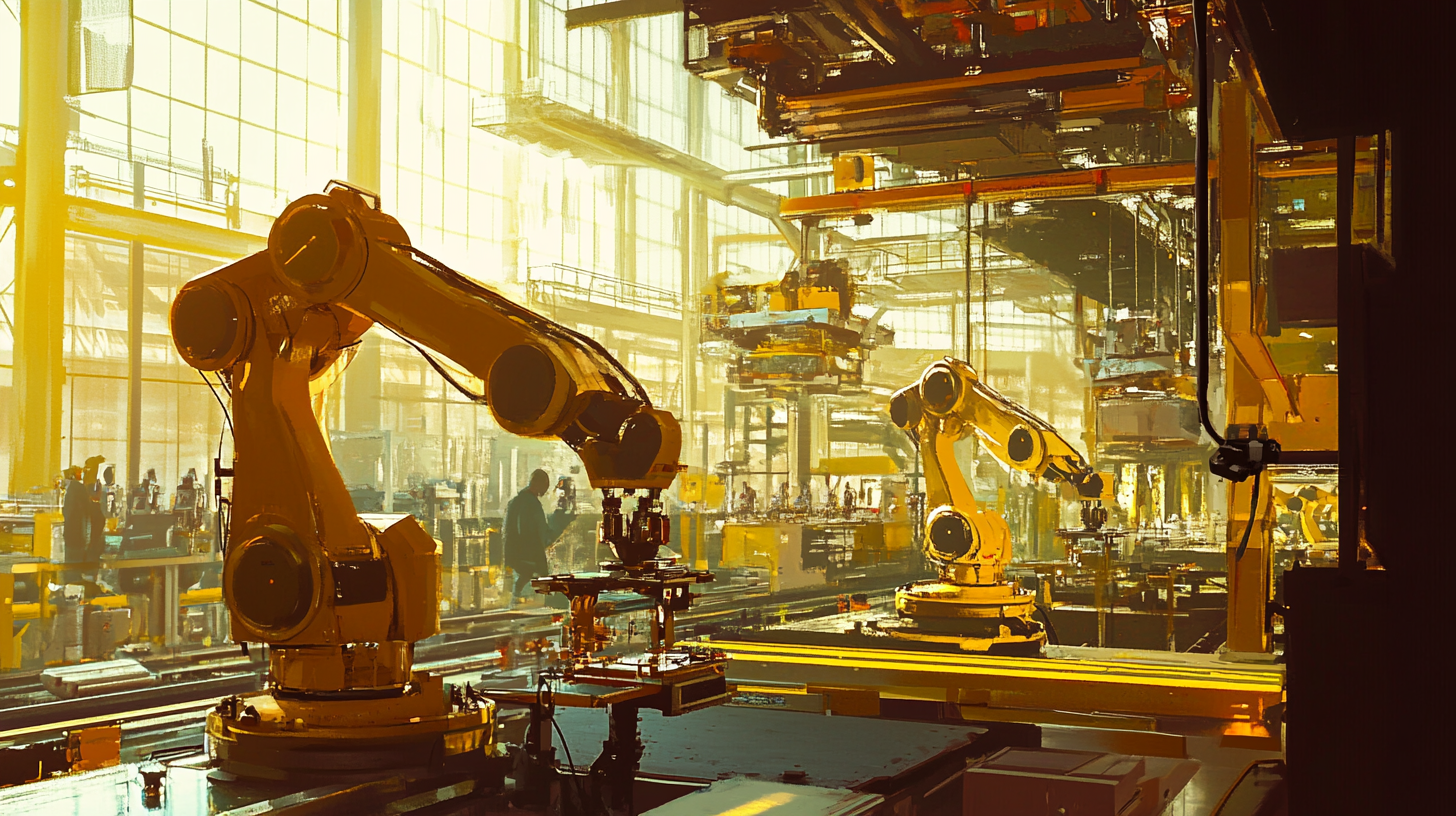
Is the robot revolution in danger? According to the VDMA, Germany's automation sector is threatened by a downward trend – Image: Xpert.Digital
VDMA forecasts: Is the future of robotics in danger?
The challenges facing German robotics and automation: A wake-up call for innovation and change
The German robotics and automation industry, once a symbol of engineering prowess and technological excellence, is undergoing a period of upheaval. The latest forecasts from the industry association VDMA paint a bleak picture: A nine percent decline in revenue to €13.8 billion is expected for 2025, following a six percent drop to €15.2 billion the previous year. These figures are more than mere statistics; they are a wake-up call, underscoring the need for profound change and strategic realignment within the industry and its regulatory framework.
The causes of the downward trend: More than just cyclical fluctuations
The current difficulties facing the German robotics and automation industry cannot be attributed solely to temporary economic fluctuations. Rather, they stem from a combination of structural problems that necessitate a comprehensive rethink. A key factor is the excessive dependence on the automotive industry. This traditionally most important customer group for the sector experienced a significant decline of 16 percent in domestic orders in 2024. This development illustrates how vulnerable German robotics is to the ups and downs of individual industries and underscores the urgent need for diversification of sales markets.
Another stumbling block is the competitive disadvantage resulting from high costs and regulatory hurdles in Germany. The comparatively high labor costs, complex approval processes, and bureaucratic requirements make it difficult for companies to keep pace in global competition. Furthermore, weak demand abroad has exacerbated the situation. While orders from the Eurozone rose by 44 percent, exports to all other regions declined by 13 percent, resulting in an overall decrease in foreign orders of 2 percent. These figures illustrate that German robotics is not only struggling with domestic problems but is also losing ground in international competition.
Suitable for:
A look at the order situation: The facts speak for themselves
The order situation in 2024 provides a detailed picture of the challenges facing the German robotics and automation industry. While domestic orders declined by 16 percent, foreign orders fell by 2 percent. Only exports to the Eurozone showed positive development, increasing by 44 percent. This underscores the need for German robotics to reconsider its dependence on individual sales markets and pursue new strategic partnerships. Exports outside the Eurozone, on the other hand, suffered a significant decline of 13 percent. This highlights the necessity of developing new strategies and sales concepts in these markets to regain trust and demand.
The VDMA's demands: A call to action
Dr. Dietmar Ley, Chairman of the VDMA (German Engineering Federation), has urgently called for reforms that place obligations on both companies and policymakers. He emphasized that companies must accelerate their innovation cycles, become more agile, and optimize their cost structures. This demand aims to strengthen the innovative capacity and competitiveness of German robotics companies and enable them to respond more quickly to changing market demands.
At the same time, Ley appealed to policymakers to reduce regulatory hurdles and create a more competitive framework. It is crucial that policymakers set the right course for the future by cutting red tape, promoting research and development, and supporting companies in managing structural change. Despite current challenges, the association emphasized that long-term growth trends such as the digitalization of industry and the energy transition remain intact. The sector is therefore quite capable of reclaiming a leading role in the global market. Crucially, the right decisions must be made now and the necessary changes initiated.
Strategic industry initiatives: Cooperation and innovation as the key to success
To restore the competitiveness of German robotics and automation, comprehensive strategic initiatives are needed. A key approach is the formation of consortia for key technologies. These cross-sector collaborations will enable the scaling of innovative applications such as fuel cell production and accelerate the development of new technologies. Such an approach would allow German companies to pool their resources and jointly achieve a stronger position in global competition.
Another important component is the creation of a data ecosystem (“Manufacturing-X”). Such a platform would simplify the integration of artificial intelligence into production and drive the development of intelligent and networked production processes. Data exchange and access to comprehensive information would enable companies to make their processes more efficient and develop innovative products. This would be a major step forward in securing the competitiveness of the German robotics industry.
Equally important is the diversification of sales markets. Excessive dependence on the automotive industry has proven dangerous. Therefore, new growth areas such as laboratory automation, logistics, and renewable energies must be developed. This diversification would enable German robotics to increase its resilience and reduce its dependence on individual sectors. Furthermore, the development of new application areas would boost the industry's growth and create new jobs.
Funding for education and research: an investment in the future
A future-proof robotics and automation industry needs highly qualified specialists. To meet the increasing demand for experts, doubling the number of university places in robotics and automation by 2028 is essential. This measure would ensure that enough young talent is trained to support the industry in the coming years.
Furthermore, the introduction of a compulsory technology subject in schools is crucial. This subject would spark interest in technical professions at a young age and lay the foundation for a future career in robotics and automation. Early qualification is key to attracting the skilled professionals of tomorrow who will shape the innovations of tomorrow.
At the same time, it is necessary to expand cutting-edge research in robot safety, human-robot collaboration, and artificial intelligence (AI). By researching these topics, German robotics can assume a pioneering role and set new standards for the safe and efficient use of robots in industry and other sectors. Promoting research and development is the foundation for technological progress and the creation of innovative products and processes.
Political and economic framework: Setting the course for success
Policymakers play a crucial role in creating a competitive environment for German robotics. A key step is reducing regulatory hurdles. This measure would lower operating costs and make it easier for companies to manufacture and invest in Germany. Bureaucratic requirements should therefore be reviewed and simplified to facilitate entry for companies and ensure the necessary flexibility.
Furthermore, investment incentives for users are essential to increasing the automation rate. Companies should be encouraged to invest in new technologies and automation solutions through tax incentives or subsidies. A higher automation rate is crucial for increasing competitiveness and boosting productivity.
Furthermore, it is necessary to create more favorable financing conditions, especially for start-ups and small and medium-sized enterprises (SMEs). Access to capital is often difficult for these companies, and improved financing would enable them to implement innovative projects and invest in new technologies.
Global competitiveness: Embracing the challenge
The German robotics and automation industry must face the challenge of global competition. State-subsidized competition from Asia and North America poses a serious threat. Therefore, industrial policy measures are needed to safeguard the competitiveness of German companies.
In addition, export promotion must be strengthened, particularly for non-eurozone markets, which experienced a 13 percent drop in demand in 2024. German companies must develop new strategies and sales concepts to regain success in these markets.
Corporate reforms: Strengthening agility and innovation
Companies themselves must also contribute to restoring the competitiveness of German robotics. An important measure is accelerating innovation cycles through agile processes and cost optimization. Companies must react more quickly to market changes, develop innovative products, and make their production processes more efficient. A willingness to change is key to success in a dynamic market.
Another important step is the expansion of service robotics. Germany should strive for global technological leadership in this field. The development of service robots is a growth market with great potential. This offers German companies an opportunity to differentiate themselves from the competition and tap into new markets.
The future of German robotics: An appeal to all stakeholders
The German robotics and automation industry is at a crossroads. A combination of internal adjustments and political support is key to overcoming challenges and capitalizing on long-term growth trends. The digitalization of industry and the energy transition offer tremendous opportunities that must be seized. It is now up to all stakeholders to jointly initiate the necessary steps to put German robotics back on the path to success. The future of German robotics will depend significantly on whether it succeeds in addressing current challenges and setting the course for a successful future. Only in this way can German robotics regain its former leading position and continue to be a pillar of the German economy.
Suitable for: