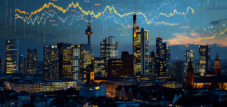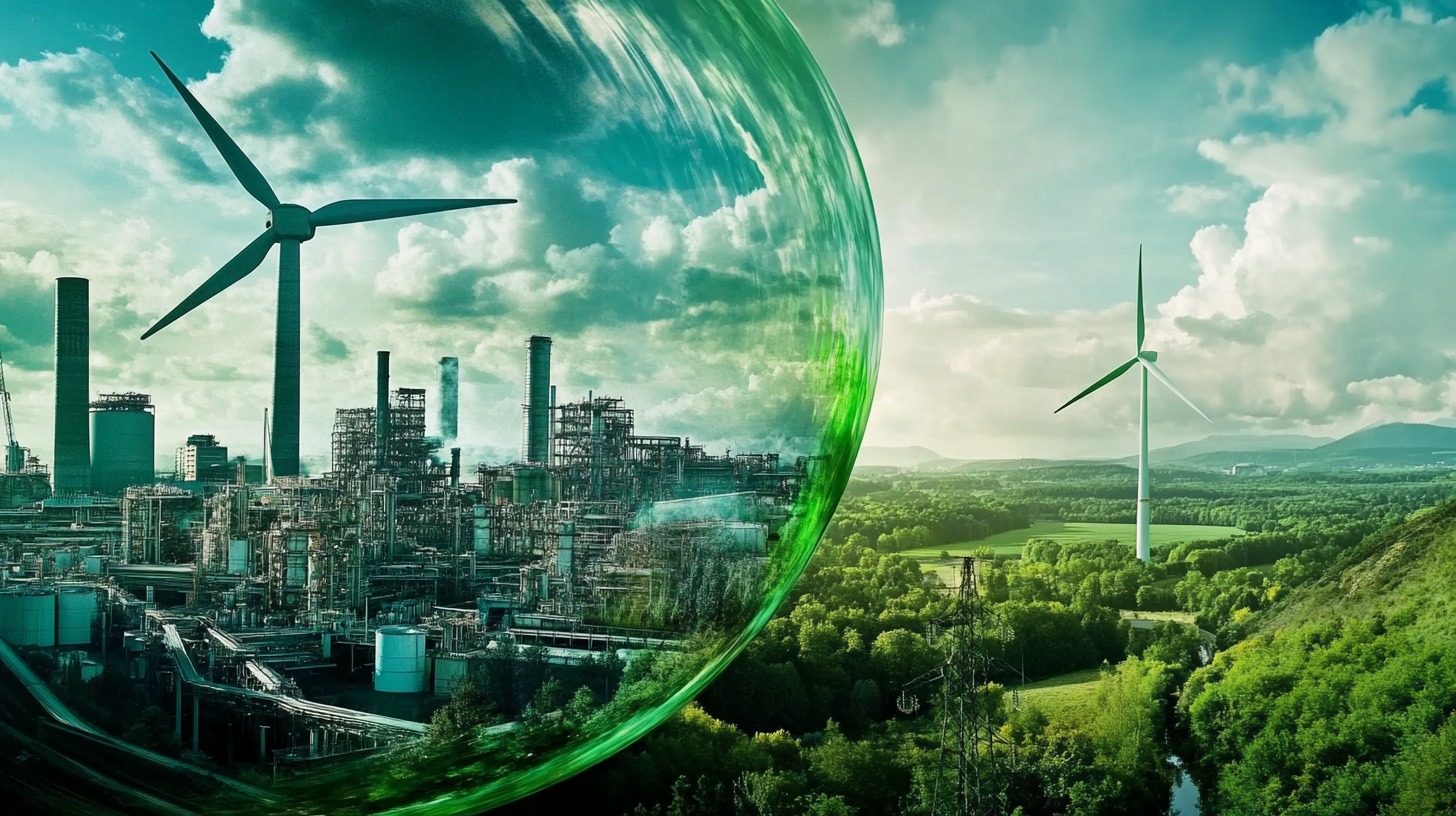
Germany's economy at a crossroads: The supposed cyclical economic crisis, which is actually a deep structural crisis – Image: Xpert.Digital
Economic uncertainty: Is Germany facing collapse?
The German economy in turmoil: causes and solutions
Germany is experiencing a period of economic uncertainty that goes far beyond a typical cyclical downturn. This situation is so profound and complex that it must be described as a structural economic crisis. Distinguishing between a cyclical and a structural crisis is crucial, as this distinction fundamentally determines the type of economic policy measures that must be taken to return the economy to a stable growth path.
Related to this:

Economic crisis
A business cycle, often also called a cyclical crisis, is essentially a temporary slowdown in economic activity. It is part of the natural ups and downs of the business cycle. During such phases, aggregate demand falls briefly. This leads to lower utilization of companies' production capacities, which in turn can lead to a decline in production, investment, and potentially also an increase in unemployment. However, such cyclical dips are usually of limited duration. After a certain period, the economy recovers and returns to its long-term growth trend. In business cycles, government spending programs can be an effective measure. Through targeted investments and demand stimulus, the government can close the temporary demand gap and stabilize the economy until it recovers on its own. This type of crisis is comparable to a cold for the economy—unpleasant and temporary, but usually without lasting damage.
Structural crisis
A structural crisis, however, is of a completely different nature and scope. It affects the fundamental pillars and functional mechanisms of an economy. It is not a temporary weakness, but rather profound changes and dysfunctions in the economic structure itself. Experts at the ifo Institute emphasized in their economic forecasts for autumn 2024 that Germany's current crisis is primarily a structural one. They argue that a multitude of factors are converging to put established business models and production structures in Germany under enormous pressure. These factors include the decarbonization of the economy, advancing digitalization, demographic change with an aging and shrinking population, the global impact of the COVID-19 pandemic, the massive energy price shock resulting from geopolitical tensions, and China's changing role in the global economy. These developments are not temporary disruptions, but long-term trends that are fundamentally transforming the German economy.
Challenges for Germany
Compared to many other industrialized nations, Germany faces particularly significant challenges. This is primarily due to the structure of the German economy, which has traditionally been heavily reliant on manufacturing. While sectors such as the automotive, mechanical engineering, and chemical industries have historically been engines of prosperity and growth, they are now facing unprecedented transformations. Energy-intensive industries, which account for a substantial portion of German industrial production, are particularly hard hit by rising energy costs and the need for decarbonization. The automotive sector, once the flagship of the German economy, is grappling with the transition to electromobility, increasing competition from Chinese manufacturers, and disruptive changes brought about by new technologies such as autonomous driving and connected mobility concepts.
Current economic data
The latest economic data confirm the picture of a structural crisis in a worrying way. For more than two years, no sustained and broad-based recovery in economic output has been observed in Germany. Instead, periods of minimal growth alternate with periods of stagnation or even decline. A short-term increase in one quarter is often wiped out by a similarly sharp decline in the following quarter. This persistent stagnation is a clear indication of fundamental problems that cannot be solved with short-term economic stimulus measures or demand boosts. Far-reaching structural reforms are needed to restore the competitiveness and long-term growth potential of the German economy.
Alarming economic situation
Germany's current economic situation is indeed alarming and cause for concern. After the gross domestic product (GDP) already fell by 0.3 percent in 2023, the downward trend continued in 2024, with the economy shrinking again by 0.2 percent. Two consecutive years of economic decline, a so-called recession, last occurred in Germany in 2002 and 2003. This renewed recession is a warning signal and underscores the seriousness of the economic situation. While the ifo Institute forecasts moderate growth of 0.9 percent for 2025, followed by 1.5 percent in 2026, these forecasts should be treated with caution, as they have been revised downwards several times in the past. The ongoing uncertainty and repeated revisions of the growth forecasts reflect the deep unease about Germany's future economic development.
Loss of the growth trajectory
Particularly worrying is the fact that the German economy is apparently no longer able to return to its long-term growth path. The employers' association Gesamtmetall has put this in stark terms, emphasizing that Germany is experiencing its longest economic crisis since the founding of the Federal Republic. This statement underscores the exceptional nature of the current situation. According to Gesamtmetall, the coronavirus crisis in 2020 marked a turning point. Since then, the German economy has abandoned its long-term growth trend. Unlike previous crises, in which the economy eventually returned to its previous growth trajectory, it is now stagnating significantly below this trend. The gap to the long-term growth trend widened to more than 6 percent in real terms in 2024. This development is not merely statistically significant but has concrete and tangible consequences for the prosperity of people in Germany.
Loss of prosperity
The loss of prosperity resulting from this ongoing stagnation is enormous. The gap to the growth trend of more than 6 percent equates to an annual loss of over 270 billion euros. Translated to the population, this means a loss of prosperity of approximately 3,200 euros per capita per year. These figures illustrate the extent of the economic damage caused by the structural crisis. To return to a growth trajectory and keep pace with other countries, the German economy would need to grow by 2.5 percent annually over the next six years. However, given the current economic and political conditions, this appears to be an unrealistic and illusory prospect. Therefore, comprehensive and bold reforms are urgently needed to free the German economy from this structural crisis and guide it back onto a sustainable growth path.
Related to this:

Structural problems
The structural problems of the German economy are multifaceted and complex. They cannot be attributed to a single factor, but rather to a combination of various challenges that reinforce each other and pull the economy into a downward spiral. Germany is particularly affected by global structural change, as the manufacturing sector has traditionally played a disproportionately large role in German economic output. This sector is now facing profound changes. Energy-intensive industries, such as steel, chemicals, and paper, are suffering massively from comparatively high energy costs. This cost burden jeopardizes their competitiveness and may force companies to relocate production facilities abroad or reduce investments. The automotive industry, a cornerstone of the German economy, faces the enormous challenge of transitioning to electromobility. This transformation requires immense investments in new technologies, production facilities, and workforce training. At the same time, competition is intensifying from emerging Chinese manufacturers who have already established a strong position in the field of electromobility.
Demographic change
Demographic change represents another massive structural challenge for Germany. The population is aging rapidly, and the number of people in the working-age population is declining. The potential workforce in Germany is developing less favorably than in many other industrialized countries. This trend is leading to an increasing shortage of skilled workers in almost all sectors. Companies are struggling to find qualified employees, which significantly limits the economy's growth potential. At the same time, there is a considerable number of young people in Germany without completed vocational training. Around three million people between the ages of 20 and 35 do not have a qualifying vocational qualification. This points to weaknesses and shortcomings in the education system that urgently need to be addressed in order to counteract the skills shortage and strengthen the economy's innovative capacity.
Bureaucracy and overregulation
Another serious structural problem is the excessive bureaucracy and overregulation in Germany. Companies have long complained about complicated approval processes, extensive documentation requirements, and inefficient administration. This bureaucracy stifles entrepreneurial initiative, delays investments, and increases costs for businesses. Federal Minister for Economic Affairs Robert Habeck himself has criticized the inefficient approval processes in Germany. He complained that business subsidies must be notified in Brussels, a process that can take up to three and a half years. Such a duration is unacceptable in international competition and damages Germany's attractiveness as an investment location. The sluggish digitalization in many areas of the economy and administration further exacerbates these problems. Germany lags behind other leading industrialized nations in terms of digital infrastructure, the use of digital technologies in companies, and the digital skills of its population. Deficiencies in physical infrastructure, particularly in the transport and energy sectors, also hinder economic growth.
International competitiveness
Germany's international competitiveness suffers from these multiple structural weaknesses. While other countries, particularly the USA and some Asian economies, have regained significant economic momentum after the COVID-19 pandemic, the German economy has stagnated. This divergent development suggests that Germany's problems are primarily homegrown and cannot be attributed solely to global developments or external shocks. It is the internal structures and framework of the German economy that are hindering growth and urgently require reform.
National debt
In the debate surrounding how to address the structural economic crisis, the issue of public debt plays a central role. Germany has a relatively low debt-to-GDP ratio compared internationally. At the end of 2023, public debt stood at 63.7 percent of gross domestic product. In comparison, other major industrialized nations such as France (115 percent), Italy (almost 140 percent), and the USA (126 percent) have significantly higher debt-to-GDP ratios. Germany, along with Canada, is among the last remaining G7 countries with a public debtor rating of AAA, the highest possible rating from the major rating agencies. This sound financial foundation could theoretically provide leeway for government investment and crisis management measures.
National debt in an economic crisis
In an economic crisis, a moderate increase in government debt can be quite useful in stimulating aggregate demand and boosting the economy. Experience from the global financial crisis of 2008 and 2009 shows that extraordinary new borrowing can be helpful in the short term during such periods. Under favorable circumstances and with a subsequent economic recovery, this additional debt can be reduced again over the course of a decade.
Public debt in structural crisis
In a structural crisis, however, debt-financed stimulus programs reach their limits and can even be counterproductive. If an economy's fundamental problems lie in structural deficits such as a lack of competitiveness, demographic change, weak innovation, or overregulation, temporary demand boosts cannot solve these problems. Instead, there is a risk that additional government spending will increase the debt burden without sustainably stimulating the economy or addressing the structural problems. In such cases, debt-financed stimulus programs can lead to a misallocation of resources and even delay structural adjustment processes.
Debt brake
Germany's debt brake, which limits new federal borrowing to a maximum of 0.35 percent of GDP and requires the federal states to maintain balanced budgets, is the subject of controversial debate in this context. Economics Minister Habeck has repeatedly advocated for a relaxation of the debt brake to finance additional investments in key areas such as education, infrastructure, and climate protection. Other political parties, such as the CDU and SPD, are also considering at least a temporary relaxation of the debt brake or creating exceptions for specific investment areas. For example, the CDU and SPD have already agreed on a comprehensive investment package that could include a possible relaxation of the debt brake for defense spending.
Use of state funds
The crucial factor in the question of national debt is not just the amount of debt, but above all, what the additional funds are used for. New debt can certainly be sensible and justified if it is specifically used for future-oriented investments that help to solve the economy's structural problems and strengthen its long-term growth potential. Investments in education, research and development, digital infrastructure, renewable energies, and reducing bureaucracy can have a positive long-term impact on the economy's competitiveness and productivity. A general increase in government spending without a clear focus on structural reforms and future-oriented investments, on the other hand, would not eliminate structural deficits and would only further increase the debt burden.
Economic policy reforms
To overcome the structural crisis in Germany and put the economy back on a sustainable growth path, fundamental changes to the economic policy framework are essential. A comprehensive reform package is needed, aimed at strengthening competitiveness, removing structural barriers, and promoting innovation and growth.
Bureaucracy reduction
A key starting point must be the reduction of bureaucracy and overregulation. Oliver Zander, CEO of Gesamtmetall, aptly formulated this, demanding that the competitiveness and investment conditions in Germany be significantly improved through deregulation, a transformation of the education system, and a return to technological openness and supply-side policies. Specifically, this means simplifying approval processes, digitizing administrative procedures, reducing reporting requirements, and streamlining laws and regulations. A lean and efficient state can unleash entrepreneurial initiative, accelerate investment, and strengthen the innovative capacity of the economy.
Energy policy
Energy policy also needs a fundamental realignment to guarantee security of supply, reduce energy costs, and advance the decarbonization of the economy. Germany's comparatively high energy prices place a particular burden on energy-intensive industries and jeopardize their competitiveness. A technology-neutral and pragmatic energy policy is needed that reconciles both ecological and economic goals. This includes expanding renewable energies, but also utilizing other low-carbon technologies and energy sources to ensure a secure and affordable energy supply.
Education and Research
Investments in education and research are crucial for strengthening the innovative capacity of the German economy and counteracting the skills shortage. Federal Minister for Economic Affairs Habeck has raised the question of whether it is truly sensible that the federal government is not allowed to directly finance education policy. Given the structural deficits in education and the increasing skills shortage, new approaches to education financing and coordination are urgently needed. This could include, for example, direct federal funding of schools and universities, strengthening vocational training, promoting STEM subjects (science, technology, engineering, and mathematics), and improving the permeability of the education system.
tax system
The tax system should be modernized to promote investment and innovation and to position Germany as an attractive location for businesses and skilled workers. In this context, Habeck has proposed a "low-bureaucracy procedure with 'tax credits'" in which companies can directly offset investments against their taxes. Such tax incentives could mobilize private investment and make a significant contribution to the structural renewal of the economy. Furthermore, lowering corporate taxes and simplifying the tax system could further enhance Germany's attractiveness as an investment location.
Infrastructure modernization
Modernizing infrastructure, both physical and digital, is another key task. The CDU and SPD are planning a massive €500 billion financial and investment package for infrastructure. Such investments can significantly boost economic growth potential if they are targeted and efficient. This includes not only expanding roads and railways, but also the nationwide rollout of fiber optic networks, the development of a modern 5G infrastructure, and the modernization of energy and transportation infrastructure. Efficient and modern infrastructure is a fundamental prerequisite for a competitive and future-proof economy.
Related to this:
Germany's economy: The way out of the structural crisis
Germany faces the major challenge of finding a way out of a deep structural economic crisis. The recognition that this is not primarily a cyclical but a structural crisis is the first and crucial step in overcoming this challenge. The structural problems of the German economy—demographic change, high energy costs, excessive bureaucracy, innovation deficits, and shifts in international competitiveness—cannot be solved solely through short-term, debt-financed stimulus programs. Instead, fundamental and comprehensive reforms of the economic policy framework are required. These reforms must aim to strengthen competitiveness, reduce investment barriers, and provide targeted support for innovation, education, and infrastructure.
Debate about the debt brake
The debate on the debt brake must be nuanced and solution-oriented. The crucial factor is not the level of national debt itself, but rather how the funds are used. If debt-financed spending is specifically targeted at overcoming structural problems and strengthening long-term growth potential, it can contribute to sustainable economic recovery despite higher debt levels in the short term. The goal is to make smart, forward-looking investments that eliminate the structural weaknesses of the German economy and lay the foundation for future prosperity and growth.
Opportunity for realignment
The current crisis not only presents risks but also offers an opportunity to realign and modernize the German economy. With bold and comprehensive reforms, a clear focus on competitiveness, innovation, and future viability, Germany can strengthen its position as one of the world's leading industrial nations and return to a path of sustainable and prosperous growth. However, this requires political courage, long-term thinking, a broad public debate, and a willingness to question and adapt established structures and ways of thinking. Only in this way can Germany overcome the structural crisis and shape a successful economic future.
We are here for you - Consulting - Planning - Implementation - Project Management
☑️ SME support in strategy, consulting, planning and implementation
☑️ Creation or realignment of the digital strategy and digitization
☑️ Expansion and optimization of international sales processes
☑️ Global & Digital B2B trading platforms
☑️ Pioneer Business Development

Konrad Wolfenstein
I would be happy to serve as your personal advisor.
You can contact me by filling out the contact form below or simply call me on +49 7348 4088 965 .
I'm looking forward to our joint project.
Write to me



Xpert.Digital - Konrad Wolfenstein
Xpert.Digital is a hub for industry focusing on digitalization, mechanical engineering, logistics/intralogistics and photovoltaics.
With our 360° Business Development solution, we support renowned companies from new business to after-sales.
Market intelligence, smarketing, marketing automation, content development, PR, mail campaigns, personalized social media and lead nurturing are part of our digital tools.
You can find more information at: www.xpert.digital - www.xpert.solar - www.xpert.plus
Keep in touch