German Industrial Metaverse – Will Germany take the lead in industry and mechanical engineering? – Image: Xpert.Digital
🏭 German Industrial Metaverse: The Rise to the Top?
🛠️ Siemens and the billion-dollar project
Germany is making visible progress in the field of the industrial metaverse, and companies like Siemens are investing heavily in this market. Siemens is planning a campus that will establish itself as a central hub for the industrial metaverse. This is a key part of a multi-billion-euro investment that will have far-reaching implications for the German economy, extending well beyond Siemens. The campus is intended to serve as an incubator for new technologies and a testing ground for innovative concepts.
Related to this:
📡 5G: The backbone of Industry 4.0
5G networks are crucial for realizing Industry 4.0. These networks enable unprecedented speed and reliability, which are essential for the functioning of the industrial metaverse. Not only fast data transmission, but also real-time communication and low latency are key factors. In this respect, Germany is becoming one of the world's leading players through the rapid expansion of its 5G infrastructure.
🤖 Artificial Intelligence: Segen and a Challenge
Integrating AI into the industrial metaverse is one of the biggest challenges on the path to implementation. Artificial intelligence can contribute to process automation and can also be used for complex analyses and predictions. However, its introduction is complex and requires multidisciplinary teams of engineers, data scientists, and experts in ethical issues.
🎯 Matrix code: Another key?
In addition to 5G and AI, matrix codes should not be overlooked. They enable simple and rapid identification of products and machines. This can be particularly advantageous in logistics processes and significantly increase efficiency in the industrial sector.
🌍 Global competition and Germany's position
Even though Germany is well-positioned, it shouldn't lose sight of global competition. Countries like the USA, China, and South Korea are also investing heavily in technologies related to the industrial metaverse. However, Germany's strong industrial base and highly skilled workforce give it a good starting point to assume a leading role worldwide.
📣 Similar topics
- 🏭 German Industry: A Look into the Future of the Metaverse
- 📡 5G and Industry 4.0: A perfect symbiosis?
- 🤖 AI in industry: More than just a buzzword
- 🎯 Matrix code: The underestimated technology?
- 🌍 Global competition in the industrial metaverse
- 💡 Innovation driver in the industrial metaverse
- 🤝 Cooperations in the industrial sector: Who is at the top?
- 🚀 Technological progress: What comes after the metaverse?
- 🧠 Skilled worker shortage: Does it threaten German leadership in the metaverse?
- 💰 Investing in the future: Where does the money go?
#️⃣ Hashtags: #GermanIndustrialMetaverse #5GandIndustry #ArtificialIntelligence #MatrixCode #GlobalCompetition
🗒️ Xpert.Digital: A pioneer in the field of Extended and Augmented Reality

Finding the right Metaverse agency, planning office, or consulting firm - Image: Xpert.Digital
🗒️ Finding the right Metaverse agency, planning office, or consulting firm – Search and search: Top Ten Tips for Consulting & Planning
In the age of digitalization, where technologies such as Extended Reality (XR) and the metaverse are constantly gaining in relevance, Xpert.Digital is positioning itself as a thought leader and pioneer. With over 1,500 specialist articles, Xpert.Digital is establishing itself as a central point of contact for the industry.
🌌 Extended Reality (XR): The best of both worlds
Extended Reality is an umbrella term encompassing Virtual Reality (VR), Mixed Reality (MR), and Augmented Reality (AR). Xpert.Digital is dedicated to creating impressive XR experiences that are both informative and entertaining.
- Interactive experiences: XR allows users to immerse themselves in virtual worlds and interact with their environment in ways that were previously unimaginable.
- Education and training: XR can be used for educational purposes to convey complex topics and concepts in an understandable and tangible way.
- Entertainment: Whether games, films or art – XR opens up new horizons in digital entertainment.
🔮 Augmented Reality (AR): Seeing the world with digital eyes
Augmented Reality, a particular focus of Xpert.Digital, makes it possible to integrate digital information or graphics into the real world. The possibilities are virtually limitless.
- Marketing and advertising: AR can be used to create interactive advertising campaigns that engage customers in a completely new way.
- Everyday assistance: From navigation apps that project the route directly onto the street, to furniture apps that show what a new sofa would look like in the living room – AR makes it possible.
🌐 The Metaverse: The Next Big Thing
The metaverse is a virtual world where people can interact through avatars and create shared experiences. Xpert.Digital recognizes the enormous potential of the metaverse and is working to translate this potential into usable products and services.
- Social interaction: The Metaverse offers the opportunity to connect with people from all over the world and share common experiences.
- Economy and trade: In the Metaverse, virtual goods and services can be traded, opening up completely new business models and sources of income.
- Creative freedom: From building your own worlds to designing individual avatars – the metaverse is a place of endless creative possibilities.
🚀 Xpert.Digital at the forefront of innovation
Xpert.Digital demonstrates how a company can be at the forefront of the technological revolution. With their focus on XR, AR, and the metaverse, they are well-positioned to shape and define the future of digital interaction.
More information here:
🌐 The Roadmap for Germany: A Guide for the Metaverse Industry
The vision of making Germany a leading nation in the field of the industrial metaverse is an ambitious undertaking that requires a comprehensive, integrated strategy. This strategy should not only cover technological aspects but also consider economic, social, and legal issues. It is crucial to recognize and utilize the potential of metaverse technology without being hampered by excessive regulation.
📜 The regulatory framework
While regulations are necessary to ensure security and data protection standards, an excessive regulatory framework should be avoided. This is particularly true for Extended Reality (XR) technologies, which can create legal gray areas in areas such as employee data protection and remote work from abroad. This does not mean that these issues should be neglected; rather, clear guidelines are needed that foster innovation while protecting user privacy and security.
🔗 Interoperability and Standards
A key component for the success of the metaverse is standards and norms that ensure interoperability between different platforms and applications. All stakeholders, from industry and academia to government agencies, should come together to develop common standards. Without such standardization, we risk ending up with a fragmented metaverse, which would significantly limit its widespread adoption.
🔬 Research and Development
Another important element of the strategy is the promotion of research and development. This includes not only basic research in the field of simulation technology and immersive user experience, but also applied research in the areas of system and data security. Furthermore, investments should be made in the development of technologies for the visualization of 3D data and digital twins, which are important for many industrial applications of the metaverse.
🌐 Infrastructure
No metaverse strategy would be complete without a solid plan for expanding digital infrastructure. Here, it is essential to consistently implement the German government's ongoing Gigabit strategy. This means, in particular, the rapid expansion of fiber optic networks and 5G/6G technologies, which must guarantee not only high data transmission rates but also the necessary security and reliability.
📚 Education and qualifications
An often overlooked aspect is the importance of education and training. A focus must be placed on training the next generations of developers, engineers, and other professionals who possess the know-how to design and operate the metaverse and related technologies.
💼 Economic incentives and ecosystem
In addition to the technological aspects, the economic dimension should not be overlooked. Tax incentives for startups and established companies could further stimulate development in the field of the industrial metaverse. Furthermore, it would be beneficial to create an ecosystem of public-private partnerships to leverage synergies and accelerate the adoption of the technology.
🤝 Ethics and Society
Last but not least, ethical and societal questions must also be addressed within the framework of the metaverse strategy. This includes, for example, the security-related and ethical use of AI, as well as questions about the digital divide that could arise from the introduction of new technologies.
Overall, the metaverse offers enormous potential for the German economy and society. To fully exploit this potential, a well-thought-out, comprehensive strategy that integrates all relevant aspects is needed. Only in this way can Germany realize its vision and become a world-leading provider in the field of the industrial metaverse by 2030.
📣 Similar topics
1️⃣ German Leadership in the Metaverse Industry: Reality or Fiction?
2️⃣ Balancing Act Between Regulation and Innovation in the Industrial Metaverse
3️⃣ The Role of Extended Reality (XR) in the German Metaverse
4️⃣ Standardization and Interoperability: Key to Metaverse Success
5️⃣ Research and Development in the Industrial Metaverse: An Overview
6️⃣ Digital Infrastructure: The Backbone of the German Metaverse
7️⃣ Education and Training: How We Train the Metaverse Developers of Tomorrow
8️⃣ Tax Incentives and the Ecosystem in the Industrial Metaverse
9️⃣ Ethics and Society: The Hidden Challenges of the Metaverse
🔟 Germany 2030: A Global Leader in the Industrial Metaverse?
#️⃣ Hashtags: #IndustrialMetaverse #GermanLeadership #DigitalInfrastructure #EthicsInTheMetaverse #ResearchAndDevelopment
Our Industrial Metaverse Configurator
Simply try out our universally applicable (B2B/Business/Industrial) Metaverse Configurator for all CAD / 3D demo options:

Xpert (B2B/Business/Industrial) Metaverse Configurator for all CAD / 3D data, usable on all end devices, one platform!
Related to this:
🌐 The Industrial Metaverse and its significance for Industry 4.0
The concept of the Industrial Metaverse is still in its early stages, but its potential impact on Industry 4.0 is immense. It represents an extension of the existing technological infrastructure, which relies on virtual reality (VR), augmented reality (AR), sensors, real-time data, and cloud computing. While all these technologies already exist, integrating them into a coherent and functional metaverse presents numerous challenges.
🔧 Hardware challenges
First, we need to consider the hardware challenges. Current AR and VR devices are often expensive and have limited battery life, restricting their use in industrial applications. Furthermore, the technology's scalability is still under development. The ability to scale the system to a large number of users and enormous amounts of data is crucial for the future viability of the Industrial Metaverse.
👩💻 Software Development
But it's not just about the hardware; the software also needs to evolve. We need robust algorithms and artificial intelligence capable of recognizing, predicting, and controlling complex patterns. Another crucial aspect is latency, which should be as low as possible. Edge computing can play a vital role here, as it brings data processing closer to the data source, thus minimizing delay.
🏭 The Brownfield Problem
Then there's the so-called "brownfield" problem: integrating existing facilities and systems into the new metaverse. Many companies have already made significant investments in their existing infrastructure. A successful industrial metaverse must be able to integrate seamlessly into these existing systems without requiring major overhauls or investments.
🤝 User Interaction and Usability
The next challenge is user interaction. Engineers should be able to navigate the metaverse intuitively. This means that interfaces and interaction models must be designed to meet human needs, not the other way around. Simple drag-and-drop user interfaces, speech recognition, and even haptic feedback systems could move in this direction.
🛡️ Safety aspects
Another important point is security. In an increasingly interconnected world, the attack surface for cyberattacks is constantly growing. The Industrial Metaverse must have robust security protocols and encryption techniques to ensure data protection and secure operation.
🔗 Interoperability and ecosystem
Furthermore, the Industrial Metaverse should not be viewed as an isolated solution. It must be part of a larger ecosystem that includes sensors, wearables, CAD/CAE software, web content, digital payment systems, and other components. Interoperability between these various elements is crucial for the success of such a system.
⚖️ Legal and ethical issues
Finally, the legal and ethical dimensions cannot be ignored. Who owns the data in the metaverse? How is user privacy guaranteed? These and other questions must be answered before the Industrial Metaverse can become fully operational.
🚀 Conclusion and Outlook
Overall, the Industrial Metaverse faces a multitude of challenges, both technical and organizational. However, the potential benefits—from increased efficiency and cost reduction to improved quality and safety—are too compelling to ignore. It's an exciting time for anyone working at the intersection of technology and industry, and the coming years will undoubtedly be crucial in determining the direction and success of this emerging concept.
📣 Similar topics
- 🌐 Introduction to the Industrial Metaverse: What is its potential?
- 🔧 Technical challenges in the Industrial Metaverse: AR and VR in focus
- 👩💻 Software innovations in the metaverse: AI and edge computing
- 🏭 The Brownfield Dilemma: Integrating Existing Systems
- 🤝 User experience and interaction: The human factor in the metaverse
- 🛡️ Cybersecurity in the Industrial Metaverse: Protection against attacks
- 🔗 The Industrial Metaverse Ecosystem: Interoperability as a Key
- ⚖️ Legal and ethical considerations in the Industrial Metaverse
- 🚀 Future of the Industrial Metaverse: What's next?
- 🌍 Industry 4.0 meets Metaverse: A symbiosis of technologies
#️⃣ Hashtags: #IndustrialMetaverse #Industry4.0 #VirtualReality #AugmentedReality #Cybersecurity
🗒️ If you don't understand something or need advice, we also offer training courses and workshops
Metaverse & Extended Reality training, lecture or workshop for Augmented, Mixed and Virtual Reality – Xpert.Digital
In today's digital age, technology is evolving at a rapid pace. New terms and technologies are constantly emerging, requiring understanding and mastery. If you're struggling to keep up with topics like the metaverse, XR technologies, or immersive 3D, you're not alone.
More information here:
🏭🌐 Industrial Metaverse: Excellent foundations and conditions in Germany, and therefore enormous potential for Germany as a business location 🇩🇪
🛠️📈 Industrial Metaverse: Why Germany is an ideal location for exponential growth opportunities 📍
The industrial metaverse refers to a virtualization of the workplace and industrial processes that goes far beyond anything we have known so far. This digital ecosystem offers excellent conditions for the German economy, as it is built on the solid foundation of Industry 4.0, artificial intelligence (AI), virtual reality (VR), augmented reality (AR), and the Internet of Things (IoT). Germany has already made significant investments in these technologies and has a well-developed infrastructure that is crucial for the implementation of the industrial metaverse.
🎯🏢 Use cases of the Industrial Metaverse in various sectors 📊
1. 👨💻 Design and Engineering 📐
The metaverse enables engineers and designers to run simulations in real time. In a collaborative mode, specialists at different locations can evaluate complex models and make improvements without having to be physically present. This not only saves travel costs but also enables faster product development.
2. 🧪 Virtual testing and validation 🛡️
Another crucial advantage is the ability to test products in a virtual environment using synthetic data. This allows companies, for example, to conduct crash tests without having to destroy a physical model. This saves time and resources.
3. 🏭 Production 📦
In the industrial metaverse, the production environment can be simulated in advance. This allows companies to save costs, as they are able to identify potential weaknesses early on and adjust processes before actual production begins.
4. 🛠️ Operation and Maintenance 📊
Visualizing workflows and data in a three-dimensional space enables better process management. Machines can be monitored remotely and serviced as needed, increasing efficiency and minimizing downtime.
5. 👨🏫 Education and Training 📚
Using the metaverse for training purposes offers immense advantages. Employees can be trained in dangerous or costly scenarios, such as those found in the chemical industry, without exposing them to actual risks. This leads to a better-prepared workforce and increases overall workplace safety.
📈🌐 Potential for Germany as a business location 🇩🇪
Germany offers ideal conditions for the industrial metaverse. The country has already made significant progress in digital transformation and is a global leader in the implementation of Industry 4.0 technologies. Since German companies have already invested in technologies such as AI, IoT, VR, and AR, they can only benefit from the introduction of the industrial metaverse. They can work more efficiently, improve the quality of their products, and ultimately increase their competitiveness.
The synergies between the industrial metaverse and existing technologies could usher in a renaissance of the German industrial sector. By cooperating with domestic providers of digital solutions, companies can accelerate their innovation cycles and thus further expand their competitive advantage.
📝💡 Final thoughts 🌟
In conclusion, it can be stated that the industrial metaverse is not just a vision for the future, but offers a realistic perspective for the German economy. Its diverse applications and enormous potential for efficiency gains make it a crucial factor for the long-term success of Germany as an industrial location.
📣 Similar topics
- 🏭 Industry 4.0 and the industrial metaverse: A symbiosis for Germany
- 🤖 AI and IoT as building blocks of the industrial metaverse
- 🛠️ Use Cases: How the Metaverse is Changing Design and Engineering
- 🎮 VR and AR in the industrial metaverse: Revolution or evolution?
- 🌐 The Internet of Things meets the industrial metaverse
- 🚗 Virtual testing and validation: The future of product development
- 💡 German innovation: Why the metaverse can thrive here
- 🎓 Education and training in the Metaverse: Safer, faster, more efficient
- 🔄 Digital Transformation: The Industrial Metaverse as the Next Step
- 🇩🇪 Germany as a business location: The potential of the industrial metaverse
#️⃣ Hashtags: #IndustrialMetaverse #Industry40 #DigitalTransformation #GermanEconomy #UseCases
🗒️ New territory for newcomers: What you should know now about blockchain, tokens, NFTs, wallets, cryptocurrency and the metaverse
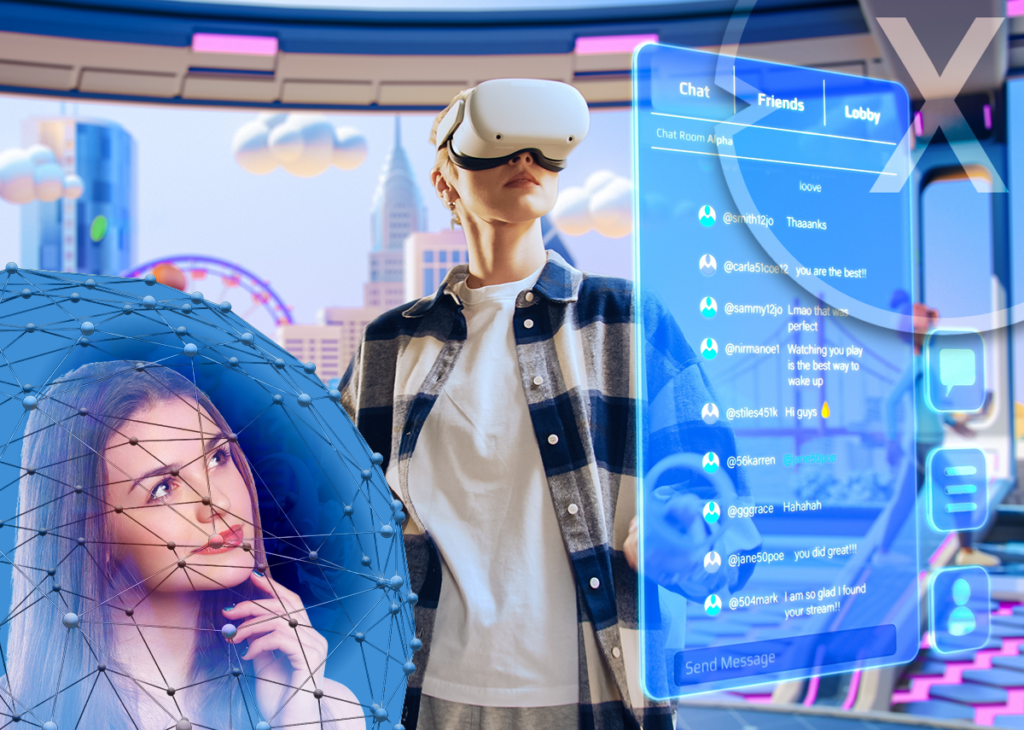
(Consumer) Metaverse: New territory for newcomers – What you should know now – Image: Xpert.Digital
In today's digital world, terms like blockchain, NFTs, wallets, cryptocurrencies, and the metaverse have become increasingly prevalent. For newcomers, these terms can initially seem confusing and complex. Here, we attempt to explain these concepts clearly and provide you with important and interesting details.
More information here:
🌐 The Merging of the Physical and Digital Worlds: The Role of Humans at the Center of Technological Change
🔧 Technology in maintenance
In industrial environments, AR is already being used successfully to improve machine maintenance and repair. For example, AR glasses automatically detect machine malfunctions, while an AI system filters relevant work instructions and displays them directly in the technician's field of vision. This leads to a significant increase in efficiency and minimizes human error.
📡 Remote repair and remote technicians
Another exciting application is remote maintenance. This involves using smartphones with lidar sensors to create a 3D map of the environment. This information allows an expert located elsewhere to provide repair instructions without being physically present.
🌌 Limits and possibilities
However, it is important to note that many of the technologies referred to as the Industrial Metaverse are actually just augmented reality or digital twin applications. Full interaction, where humans, components, and machines collaborate in a so-called "human-in-the-loop" model, is often not yet a reality. This means that the true potential in areas such as design, maintenance, product testing, and training remains largely untapped.
🤔 **Ethics and Data Protection
Another aspect that should not be neglected is the question of ethics and data protection. The increasing networking of humans and machines raises numerous questions regarding data security and privacy, which urgently need to be addressed as these technologies continue to develop.
🚀 Future developments
Looking ahead to future developments, one can imagine a number of scenarios in which augmented reality and AI converge to create fully integrated systems. These could bring about revolutionary changes in healthcare, transportation, and even entertainment.
💼 Economic importance
The economic significance of these technologies is enormous. Companies capable of developing efficient XR and AI systems could gain a considerable competitive advantage. Furthermore, improvements in work processes could create numerous jobs in highly skilled fields.
🌍 Social aspects
At a societal level, technology can offer both opportunities and challenges. On the one hand, the use of XR and AI could overcome the limitations of time and space, potentially improving access to education and healthcare. On the other hand, there is a risk of social isolation if people drift too far into the virtual world.
🔑 Conclusion
In conclusion, we are only at the beginning of a technological revolution that has the potential to profoundly change both our working lives and our everyday lives. The key to success lies in the balanced integration of people into these new systems, taking into account both technological and ethical aspects.
📣 Similar topics
- 🌐 The Industrial Metaverse: Where humans and machines merge
- 🛠️ AR technology in industry: increasing efficiency and minimizing errors
- 📱 Remote repair and remote technicians: The future of maintenance
- 🚀 The potential of XR and AI: Future scenarios
- 🤖 Ethics and data protection in human-machine interaction
- 💼 Economic significance of XR and AI: Opportunities for companies
- 👥 Societal impacts of Extended Reality and AI
- 🌟 The revolution of human-machine integration
- 💡 Technological Evolution: From the Industrial Metaverse to Everyday Transformation
- 🌍 XR and AI: The connection between the physical and digital worlds
#️⃣ Hashtags: #IndustrialMetaverse #ARTechnology #RemoteRepair #XRandAI #EthicsAndDataProtection #EconomicSignificance #SocietalImpact #HumanMachineIntegration #TechnologicalEvolution #PhysicalAndDigitalWorld
🛠️ The Brownfield Problem: Integrating Existing Systems and the Challenges That Come With It 🤖
In today's business world, companies often face a multitude of technological challenges. One of the most complex tasks is the integration of existing systems, also known as a brownfield scenario. Brownfield systems are existing installations that need to be updated or integrated into a new ecosystem for a variety of reasons. These systems can include both software and hardware components and range from outdated IT infrastructures to fully automated production facilities.
📚💡 Historical context 🕰️
The term "brownfield" originates in the real estate industry and refers to an area that has already been developed and now needs to be redeveloped or renovated. In the context of information technology, it encompasses the further development or integration of existing systems.
🚧 Challenges 🤔
🧩 1. Technological Fragmentation 🔄
Technology is evolving rapidly, meaning that new and improved solutions are available in a short time. Companies that don't invest continuously often find themselves in an environment with highly fragmented technologies.
💰 2. Costs 📊
A complete system overhaul would usually be financially unfeasible. Brownfield projects therefore often have to make do with limited resources, which makes modernization more difficult.
⚙️ 3. Compatibility 🔗
The various systems are often incompatible with each other. This requires individual adjustments, which can be expensive and time-consuming.
🛑 4. Service interruptions ⏳
Modernization often requires the existing system to go offline for a certain period of time, which can lead to operational disruptions and thus financial losses.
🗺️ Strategic approaches to solving 🎯
🔄 1. Phased Integration 🗓️
Instead of updating all systems at once, it is often more sensible to carry out the modernization in phases. This allows the most outdated parts to be replaced first.
✅ 2. Pilot projects 🧪
Before undertaking a comprehensive modernization, companies should consider pilot projects. This allows them to better assess and minimize potential risks.
👩🔬 3. External expertise 👨🔬
It can be helpful to consult system integration experts. Their experience and expertise can help find the best solutions for the specific challenges.
🏭 Case study: A manufacturing company 📘
Imagine a manufacturing company that has been operating since the 1990s. Over the years, it has acquired various machines and IT systems. Now, a comprehensive digitalization strategy is to be implemented.
📊 Phase 1
Analysis of existing systems and prioritization. Outdated machine controls are identified, and it is decided to modernize these first.
🧪 Phase 2
Selection of a system integrator and implementation of a pilot project. An external service provider is commissioned to conduct a pilot project on one of the oldest machines. The results are positive.
✅ Phase 3
Implementation. Following the successful pilot project, the modernization will continue in the remaining areas of the company. This phase will also include training measures for employees to prepare them for the new systems.
📣 Similar topics
1️⃣ The Role of Brownfield Scenarios in Digitalization
2️⃣ Technological Fragmentation: A Dilemma in the Brownfield Environment
3️⃣ Cost-Benefit Analysis in Brownfield Projects
4️⃣ Compatibility Problems in System Integration
5️⃣ Operational Disruptions: An Underestimated Risk in Brownfield Projects
6️⃣ The Use of Pilot Projects to Minimize Risk
7️⃣ External Expertise in System Integration: A Must?
8️⃣ Phased Integration as a Solution Approach
9️⃣ Case Studies: Successful Brownfield Modernization in Practice
🔟 Strategic Approaches for Modernizing Brownfield Systems
#️⃣ Hashtags: #Brownfield #Systemintegration #Technologicalfragmentation #Costmanagement #Pilotprojects
🔍 In summary, integrating existing systems into brownfield scenarios is a complex but achievable task. Many of the challenges can be overcome through careful planning, phased implementation, and the involvement of experts. It is crucial to keep the business aspects in mind at all times to ensure efficient and cost-effective modernization. 📈🎉

We are here for you - Consulting - Planning - Implementation - Project Management
Xpert.Digital - Pioneer Business Development
Smart Glasses & AI - XR/AR/VR/MR industry expert
Consumer Metaverse or Metaverse in general
If you have any questions, require further information or advice, please feel free to contact me at any time.

Konrad Wolfenstein
I would be happy to serve as your personal advisor.
You can contact me by filling out the contact form below or simply call me on +49 7348 4088 965 .
I'm looking forward to our joint project.
Write to me


Xpert.Digital - Konrad Wolfenstein
Xpert.Digital is a hub for industry focusing on digitalization, mechanical engineering, logistics/intralogistics and photovoltaics.
With our 360° Business Development solution, we support renowned companies from new business to after-sales.
Market intelligence, smarketing, marketing automation, content development, PR, mail campaigns, personalized social media and lead nurturing are part of our digital tools.
You can find more information at: www.xpert.digital - www.xpert.solar - www.xpert.plus
Keep in touch