
GermanBrandAwards2025 -1K0A2041 – Image: Yvonne Hartmann
AI, crises and regulation: Why brand trust will become the most important protective shield in 2026
The B2B fallacy: Why purchasing decisions are much more emotional today than managers think
What was long considered a creative "nice-to-have" in the consumer goods and lifestyle industries has evolved into a hard-nosed economic success factor. The record number of submissions for the German Brand Award 2026 impressively demonstrates that, particularly in capital-intensive, highly regulated B2B sectors such as industry, healthcare, and mobility, brands are increasingly understood as productive capital. In a globalized economy characterized by geopolitical crises, stringent regulations, and the rapid transformation of AI, brand trust now serves as an essential shield and engine of growth. The following article explores why strategic brand management is no longer merely a communication issue, why B2B purchasing decisions are becoming increasingly emotional, and what essential conclusions companies must draw to avoid falling behind in tomorrow's competition.
Anyone who still sees branding as a "soft topic" in 2026 has not understood the new rules of the game of competition
Brand management in transition: From nice-to-have to productive capital
The figures for the German Brand Award 2026 tell a clear story: 1,676 submissions from 12 countries demonstrate that brand management is no longer seen as a purely decorative discipline, but rather as a tangible competitive advantage in which companies are making targeted investments. This trend is particularly noticeable in economically strong sectors such as healthcare, mobility, and industry, which have traditionally been more technology- and product-driven. The brand discourse is thus shifting away from a focus on consumer goods and lifestyle, towards those sectors that significantly shape a nation's value creation, export performance, and employment.
From an economic perspective, this shift points to a redefinition of corporate value: Intangible assets – above all, strong brands – are gaining importance in dimensions that are often difficult to grasp on balance sheets but are highly effective in the real economy. In markets permeated by digitalization, automation, and regulation, brands act as a coordination mechanism: They reduce information costs, lower uncertainty, and consolidate the expectations of customers, employees, investors, and partners. Brand management thus becomes a kind of productive capital that raises barriers to market entry, expands pricing flexibility, and accelerates the acceptance of innovation.
At the same time, the high number of submissions illustrates that brand competition is becoming more intense, not easier. When virtually all relevant market players are working on their brand positioning, a "brand inflation" effect occurs: visibility and differentiation become scarcer, while communication pressure increases. Those who want to not only keep up in this environment but also lead the way must consistently understand branding as a strategic and economic control mechanism, not as a secondary activity following campaign planning.
Industry, Mobility, Health: Why are the "hard" industries launching brand offensives?
The strongest growth in product submissions in 2026 is projected for the Health & Pharmaceuticals, Transport & Mobility, and Industry, Machinery & Engineering sectors. These industries face simultaneous pressure from multiple directions: high capital intensity, long development cycles, increasing regulation, a shortage of skilled workers, and intensified global competition. It is precisely under these conditions that branding becomes economically attractive, as it serves as a lever that has a long-term impact and pays for itself through numerous touchpoints.
In the healthcare sector, the need for guidance is growing because the pace of innovation, regulatory requirements, and societal awareness of risks are all increasing simultaneously. For pharmaceutical manufacturers, medtech providers, and healthcare providers, a strong brand acts as a trust filter: it reduces perceived risk, increases therapy acceptance, and thus indirectly influences prescribing, usage, and willingness to pay. At the macroeconomic level, brands in the healthcare sector also play a role when it comes to strategic security of supply and the attractiveness of a location for research-based companies.
In the mobility sector, structural change is intensifying due to electromobility, connected services, and new platform models. Providers are no longer competing solely on product features, but rather on ecosystems of services, software, charging infrastructure, and mobility services. A strong brand can increase switching costs, secure customer loyalty across individual vehicle or service generations, and boost the acceptance of new business models – such as subscriptions or data-driven services. In economic terms, this translates to more stable cash flows, lower acquisition costs, and greater resilience during economic downturns.
In industry, specifically in mechanical engineering, plant engineering, and other engineering sectors, branding was long relevant primarily in an export context, serving, for example, as a promise of origin and quality. With the increasing modularization of solutions, the growing importance of software, and a service-oriented approach, this logic is changing. Brands are now building trust in complex, often lifecycle-oriented offerings: maintenance contracts, digital platforms, data-driven services, and AI-based assistance systems. Since investment decisions in this environment involve large-scale projects and long-term commitments, strong brands act as a risk buffer for investors and as margin protection for suppliers.
Brand trust as a growth engine in an age of uncertainty
The evolving role of brand trust is also reflected in the German Brand Award's collaboration with the market research institute Ipsos. As part of this partnership, a study will examine how brand trust relates to sustainable growth, the use of artificial intelligence, and regulatory frameworks. This study focuses on a key economic question: To what extent can strong brands compensate for uncertainty in volatile markets and thereby secure growth opportunities?
Trust acts economically as a discount factor for perceived risks. When customers attribute greater reliability, quality, and integrity to a brand, they are more willing to accept premium prices, enter into longer-term contracts, or adopt innovations more quickly. For companies, this translates into more stable revenue streams and reduced volatility in demand and cash flow. In times of multiple crises—from geopolitical tensions to supply chain disruptions—this creates an intangible buffer that is reflected in measurable metrics such as churn rate, net promoter score, and repurchase rates.
With the increasing integration of AI into business processes and brand communication, the discourse surrounding trust is shifting further. AI can increase efficiency and personalization, but at the same time, it raises awareness of issues such as transparency, fairness, and data privacy. Brands that strategically deploy AI must therefore credibly communicate not only functional performance but also digital responsibility. Economically, this is reflected in customers' willingness to use data-based services, their acceptance of automated decisions, and their loyalty to data-driven business models.
In this context, regulation acts as a dual driver: On the one hand, it increases compliance costs; on the other hand, it creates barriers to market entry from which established, trusted brands benefit disproportionately. Companies that consistently integrate brand management with governance, risk, and compliance structures can therefore use regulation not only as a cost factor but also as a bulwark against less well-positioned competitors.
B2B markets in brand focus: When procurement decisions become more emotional than they appear
The strong support from technology- and industry-driven sectors underscores that branding is now strategically weighted much more highly in the B2B environment than it was just a few years ago. For a long time, it was assumed that B2B decisions were largely rational, data-driven, and functional; branding primarily served as a background anchor of trust. With the increasing complexity of solutions, the growing interchangeability of core technologies, and the professionalization of purchasing and procurement, this picture is changing.
Today, B2B purchasing decisions are often multidimensional consensus processes involving various stakeholders with diverse motivations: engineering, procurement, management, IT, compliance, and often HR. In such situations, a brand serves as a symbol of orientation and unification, facilitating internal coordination. An established, positively perceived corporate brand can shorten decision-making cycles, reduce internal resistance, and thus lower transaction costs. In tenders, it acts as a "risk premium": those perceived as secure, reliable, and future-oriented have a better chance, even if not every single criterion achieves the best price or functionality.
Furthermore, B2B customers are increasingly transferring expectations from their private consumer experiences to their professional roles. User-friendly digital touchpoints, clear brand images, and consistent customer journeys are becoming expected basic services, even in industrial contexts. Suppliers who ignore these expectations not only risk reputational damage but also, in the medium term, falling behind new, digitally savvy competitors. Brand management in B2B is therefore becoming the intersection of sales economics, service architecture, and digitalization.
🎯🎯🎯 Data-driven B2B industry hub as a quasi-in-house solution

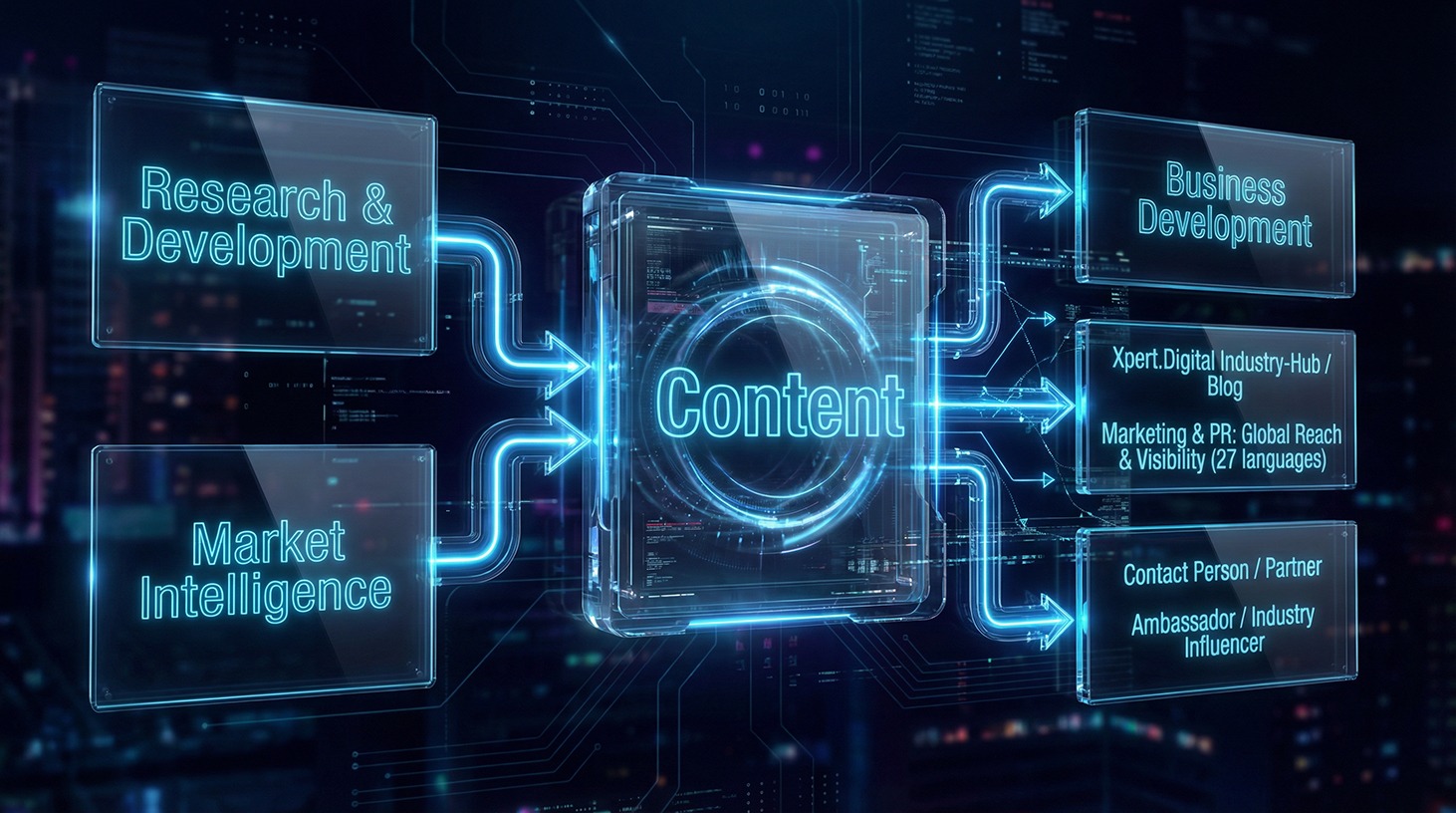
The quasi-in-house solution: How Xpert.Digital closes operational gaps in B2B marketing and sales – Smart Content-Driven Business - Image: Xpert.Digital
Xpert.Digital is a data-driven B2B industry hub led by Konrad Wolfenstein . The company acts as an external, quasi-in-house solution for industrial partners, closing operational gaps in marketing, content, and sales – without requiring additional resources on the client side.
More information here:
Logo and slogan are dead: Why classic brand management will no longer be enough in 2026
The jury as a seismograph: Which brand logics prevail?
The 18-member jury of the German Brand Award 2026, comprised of leading figures from business, brand strategy, communication, and culture, effectively acts as a seismograph for the development of modern brand logics. With eight new members from companies and organizations such as Deutsche Bank, Ruhr West University of Applied Sciences, 1KOMMA5°, Baby got Business, followfood, T-Systems International, and a cultural trend scout, the panel is becoming broader and more diverse. This composition is not merely symbolic but also economically significant: it underscores which perspectives will increasingly determine which brands are considered exemplary in the future.
For the anniversary year 2026, eight new members will join the committee
- Lutz Dietzold, CEO, German Design Council
- Stefan Anderl, Vice President, German Design Council
- Dr. Saskia Diehl, jury member and managing director of GMK Brand Consulting
- Prof. Dr. Simone Roth, jury member and professor at Ruhr West University of Applied Sciences
- Christian Rummel, jury member and Head of Central Brand Management, Deutsche Bank
- Dr. Christian Loefert, jury member and CMO T-Systems International
- Isabelle Rogat, jury member and cultural trend scout
- Sophia Rödiger, jury member and CMO 1KOMMA5°
- Julius Palm, jury member, Co-CEO and Head of Strategy & Brand followfood
The increased integration of representatives from the sustainability sector, culture, and digitalization suggests that traditional brand management—understood as consistency in logo, slogan, and campaign—is no longer sufficient. Instead, concepts that link strategic brand management with sustainability, technological transformation, and social relevance are being evaluated. For companies, this means that brand promises must increasingly be supported by verifiable performance indicators, such as CO₂ reduction, social impact, or digital customer experience. Those who act credibly and measurably in this area can differentiate themselves economically and simultaneously reduce reputational risks.
The jury meeting, held in the vicinity of a major financial institution in Frankfurt am Main, also underscores another dimension: brands are understood as assets that influence capital markets, investors, and financial communication. In times when ESG criteria and intangible assets are gaining importance, consistent brand management can justify valuation premiums, support investor relations, and facilitate access to capital. The jury thus indirectly acts as a filter for those brand models that will gain traction in future financial and governance discourse.
Partnerships, studies, conventions: Brand as an ecosystem and knowledge platform
With its collaboration with the creative trade publication PAGE and Ipsos' new role as an Insights Partner, the German Brand Award is further expanding its positioning as a knowledge and networking platform. The honorary "Creative of the Year" award emphasizes the importance of creative signatures that, based on a clearly defined brand DNA, create consistent brand presences, thereby increasing recognition, conciseness, and economic impact. At the same time, other honorary awards such as "Brand Manager of the Year," "Best Purpose of the Year," and "Startup of the Year" highlight that brand management is considered along the entire value chain – from strategic direction and social impact to the growth dynamics of young companies.
The German Brand Convention, as an accompanying networking event to the award show, provides a framework for sharing research findings, best practices, and future perspectives. From an economic perspective, it's interesting to note that the award has evolved over ten years from an industry gathering with 250 guests to a cross-sector platform with more than 750 brand managers. This reflects a growing need for exchange on brand strategy issues, particularly regarding transformation, AI, sustainability, and regulation. Furthermore, where many market players converge, an informal standardization process emerges: best practices are observed, imitated, and further developed – a process that, in the long run, also shapes industry benchmarks and expectations.
By highlighting strong brands, campaigns, and strategies, the award reduces information costs in the market: companies can orient themselves toward award-winning projects, investors receive signals about future-proof brand models, and talent can identify employers who take brand management seriously. This creates an ecosystem effect that extends beyond the mere awarding of prizes and contributes to the professionalization of the market.
Ten years of the German Brand Award: Brands as drivers of transformation and resilience
The tenth anniversary of the German Brand Award marks a turning point: The award has evolved from a format for industry experts into a platform that reflects key transformation issues facing business and society. While initially the focus was primarily on classic marketing and communication aspects, today topics such as circular design, sustainable business models, data-driven services, and AI-accelerated innovation are taking center stage. This reflects the stance of the German Design Council, which understands design and brand management as levers for economic success, transformation, and a sustainable future.
For companies, this means that by 2026, brand management can no longer be meaningfully separated from corporate strategy, innovation policy, and organizational development. Those who continue to view a brand merely as a communication tool are missing out on economic potential and increasing their risk of being overtaken by better-positioned competitors. In saturated, regulated, and technologically complex markets, competitive advantages arise less from individual product features and more from integrated brand and business models that combine trust, differentiation, and adaptability.
The 2026 award show at the Uber Eats Music Hall in Berlin is therefore not only a stage for honoring outstanding achievements, but also a symbol of the new importance of brands within the economic landscape. Brands that gain visibility here embody a development in which intangible values such as trust, creativity, and credibility have become measurable factors influencing growth, profitability, and resilience.
Strategic perspective: What companies should learn from the German Brand Award 2026
From an economic perspective, several strategic conclusions can be drawn from the developments surrounding the German Brand Award 2026. First, brand management has become a core competency in capital-intensive, technology-driven, and regulation-driven industries. Those operating in health, mobility, or industry should understand branding not as an add-on to communication, but as an integral component of product, service, and innovation strategy. This includes clear positioning, a consistent experience across all touchpoints, and a consistent link to measurable business objectives.
Secondly, brand trust is becoming the central currency in times of AI, the data economy, and increasing regulation. Companies should therefore actively invest in trust architecture: transparent AI applications, credible sustainability strategies, robust governance structures, and dialogue formats with stakeholders. Brand management must act as a link here, conveying technological capability and social relevance.
Thirdly, in the B2B environment, branding becomes a differentiating factor in complex, multi-stage procurement processes. Suppliers should align their branding efforts with the various stakeholders in the buying center, actively address decision risks, and substantiate their brand promises with solid performance and service evidence. Those who succeed in balancing rationality and emotionality in brand management can defend margins, mitigate price wars, and secure long-term customer relationships.
Fourth: The professionalization of brand competition increases the demands on governance and excellence. The growing role of awards, studies, and expert juries means that brand performance is more closely monitored, compared, and evaluated. Companies should therefore systematically invest in brand controlling, impact analysis, and the organization-wide anchoring of brand principles to make their brand management manageable and scalable.
Those who ignore these developments risk not only reputational damage but also real economic disadvantages: reduced pricing power, higher acquisition costs, lower loyalty, and weaker resilience in crises. Conversely, those who actively embrace them can leverage their brand as productive capital that simultaneously supports growth, transformation, and competitiveness.
Statista trend study “B2B Content Marketing” reveals: 94% fail at this – and the Xpert.Digital model in comparison


Statista trend study “B2B Content Marketing” reveals: 94% fail at this – and the Xpert.Digital model in comparison – Image: Xpert.Digital
The 8th edition of Statista+'s B2B Content Marketing Trend Study (2026) provides solid empirical guidance for content strategists in the DACH region, the UK, and the US. It surveys 252 B2B content marketers and outlines four key chapters: Visibility under pressure, AI as a new benchmark, Data as a strategic foundation, and Competitive advantage. The study precisely diagnoses what many B2B companies are doing wrong – without identifying who is already doing it right.
This is precisely where Xpert.Digital comes in: The company embodies almost every key thesis of the study, not as a future goal, but as a lived operational reality. 254,000 monthly trade visitors in February 2026, a multilingual presence in 27 languages, verifiable citations by international trade publications, and the direct integration of content into business development – these are not mere claims, but proven key performance indicators.
More information here:
📈🔵 Ambidexterity or doom: The only management concept that still works in the triple crisis💡


When proven strategies fail: Organizational adaptability in the digital transformation of ambidexterity - Image: Xpert.Digital
We are currently experiencing a period of economic turmoil that differs fundamentally from previous recessions. A deceptive silence prevails in the boardrooms of European and international companies – broken only by the sound of failing strategies that were considered a guarantee of success just yesterday. This is not merely a cyclical downturn, but a profound structural break. The tools with which companies achieved growth for over two decades simply no longer work.
More information here:
Our EU and German expertise in business development, sales and marketing

Our EU and German expertise in business development, sales and marketing - Image: Xpert.Digital
Industry focus areas: B2B, digitalization (from AI to XR), mechanical engineering, logistics, renewable energies and industry
More information here:
A thematic hub offering insights and expertise:
- Knowledge platform covering global and regional economies, innovation and industry-specific trends
- A collection of analyses, insights, and background information from our key areas of focus
- A place for expertise and information on current developments in business and technology
- A hub for companies seeking information on markets, digitalization, and industry innovations