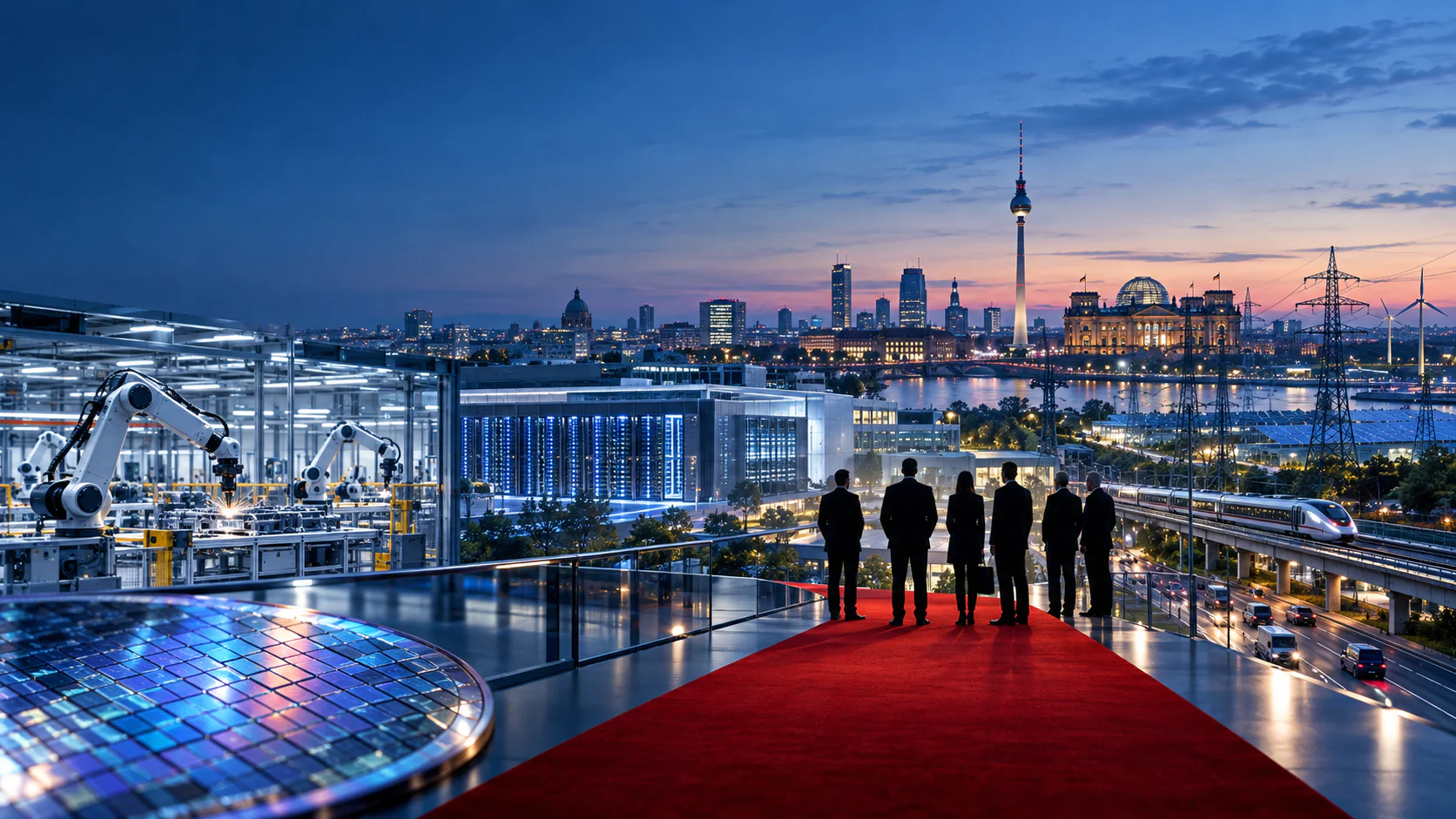
Between the USA and China – the future of exports in German mechanical engineering – Image: Xpert.Digital
Economic uncertainties and their impact on mechanical engineering exports
🌍🔧 Strategies for the future of exports in German mechanical engineering
The future of exports in the German mechanical engineering sector faces significant challenges shaped by global trade conflicts and economic uncertainties. These developments have a profound impact on the export of German machinery and are expected to strongly influence the industry in the coming years.
💥🌎 Impact of global trade conflicts
Global trade conflicts, particularly between the US and China, as well as protectionist tendencies worldwide, are increasingly impacting German machinery exports. The introduction of tariffs, trade barriers, and other protectionist measures is driving up the prices of German products on international markets, weakening the competitiveness of German machine manufacturers. Furthermore, trade disputes between major economic powers, such as the EU and the US, could escalate, affecting not only the automotive industry but also the mechanical engineering sector, given the close interrelationship between the two.
Another aspect is the uncertainty created by these conflicts. Companies postpone investments, leading to a decline in demand for capital goods such as machinery. This uncertainty has a more damaging long-term effect than tariffs themselves, as it undermines confidence in stable trade relations and leads to a general slowdown in global trade.
🌐💸 Economic uncertainties and geopolitical risks
The German mechanical engineering industry is also suffering from general economic uncertainties. Geopolitical tensions, particularly the war in Ukraine, have caused energy prices in Europe to rise sharply. This significantly burdens production costs and reduces the competitiveness of German exporters. Furthermore, disruptions in global supply chains are leading to delays and higher costs in the procurement of raw materials and components.
The weakening global economy is also having a negative impact on the German mechanical engineering sector. Key sales markets such as China and the USA are experiencing slower economic growth or are burdened by high inflation and rising interest rates. This is leading to lower demand for German machinery in these countries. Within Europe, the economic environment also remains strained, further hindering sales of German machinery.
📈🔮 Long-term perspectives
Despite these challenges, there are also long-term opportunities for the German mechanical engineering sector. The global trend toward digitalization and electrification offers potential for innovative products and services. German machine manufacturers could strengthen their market position by expanding their portfolio to include digital solutions and focusing on specialized niche markets. Furthermore, increased diversification of sales markets could help reduce dependence on individual regions and make the business model more resilient to crises.
Nevertheless, the situation remains tense: Insolvencies in the sector are expected to increase, particularly among smaller companies without sufficient financial reserves. High production costs in Germany and competition from cheaper suppliers in Asia pose further risks.
💻🚀 Technological innovations in the field of digitalization offer opportunities for a realignment.
Global trade conflicts and economic uncertainties will significantly impact the export business of the German mechanical engineering sector in the coming years. The industry must prepare for a prolonged period of difficulty, characterized by protectionist measures, rising production costs, and a weak global economy. At the same time, technological innovations in the area of digitalization offer opportunities for realignment. To remain competitive in the long term, German companies must adapt their business models and focus more on diversification.
📣 Similar topics
- 📊 The future of exports in German mechanical engineering: Challenges & opportunities
- 🌏 Global trade conflicts: A threat to German exports
- 🚧 Protectionism and its impact on mechanical engineering
- 📉 Economic uncertainties: A risk for exports
- 📈 Long-term perspectives in German mechanical engineering
- 💡 Digitalization as an opportunity in global competition
- 🔗 Geopolitical tensions and their consequences for exports
- 🤝 Strategies for diversifying sales markets
- 🔄 Technological innovations in mechanical engineering
- 🔍 Competitiveness in the age of globalization
#️⃣ Hashtags: #MechanicalEngineering #Export #TradeConflicts #Digitalization #Competitiveness
Our recommendation: 🌍 Limitless reach 🔗 Networked 🌐 Multilingual 💪 Strong sales: 💡 Authentic with strategy 🚀 Innovation meets 🧠 Intuition
At a time when a company's digital presence determines its success, the challenge is how to make this presence authentic, individual and far-reaching. Xpert.Digital offers an innovative solution that positions itself as an intersection between an industry hub, a blog and a brand ambassador. It combines the advantages of communication and sales channels in a single platform and enables publication in 18 different languages. The cooperation with partner portals and the possibility of publishing articles on Google News and a press distribution list with around 8,000 journalists and readers maximize the reach and visibility of the content. This represents an essential factor in external sales & marketing (SMarketing).
More about it here:
⚙️🚀 German mechanical engineering: Innovation driver and export challenges
🔍 For decades, German mechanical engineering has been a cornerstone of the German economy and is recognized worldwide as an innovation leader. The mechanical engineering industry is characterized by technological excellence, quality, and precision, and is at the forefront globally with products such as automation systems, robotics, and energy generation equipment. However, the challenges facing the export of machinery and equipment from Germany are steadily increasing. Global trade conflicts, economic uncertainties, and growing competition from other industrialized nations and emerging economies are significantly impacting the market and the future prospects of German mechanical engineering. This article examines the key factors shaping the export of German machinery and analyzes potential strategies for the industry to position itself successfully in the long term.
📊 1. The importance of exports in German mechanical engineering
The mechanical engineering industry is of central importance to the German economy. Around 80% of domestically produced machinery and equipment is exported, making international demand a key factor in its success. Major export markets include the USA, China, and many European countries. For decades, international business has proven to be a stabilizing factor, enabling companies to offset domestic economic fluctuations through export revenues. However, this very high export share makes the mechanical engineering sector vulnerable to global changes, trade conflicts, and protectionist measures that can hinder access to key markets.
🔨 2. Trade conflicts and protectionism as an obstacle to exports
In recent years, global trade conflicts, particularly between the US and China, have intensified considerably. These conflicts are leading to an increase in tariffs and other trade barriers, significantly increasing the cost of German machinery exports. The US remains one of the most important markets for German mechanical engineering, and protectionist policies, such as higher import tariffs, pose a direct threat to competitiveness.
Another example is the dependence on exports to China, the world's largest market for German machinery. China is increasingly focusing on domestic production and promoting national champions to reduce its reliance on foreign suppliers. For German companies, this presents a twofold challenge: On the one hand, market entry barriers are rising, and on the other hand, competition is growing from locally producing companies that adhere to international standards. This development is forcing German companies to either increase their presence in China and establish local production facilities or to adapt their market strategy.
🛠️ 3. Technological sovereignty and “Industry 4.0” as an answer to global uncertainties
One answer to the growing challenges in international business could lie in strengthening technological sovereignty and expanding Industry 4.0 strategies. Germany is considered a global pioneer of Industry 4.0, the fourth industrial revolution, characterized by comprehensive networking and digitalization of production processes. Industry 4.0 aims to make production more efficient and flexible through the use of artificial intelligence (AI), robotics, and networked systems. This can significantly increase competitiveness in the international arena, as German machines, through their digital integration and intelligence, could become even more attractive to the global market.
For German mechanical engineering companies, investing in digitalization and the development of new technologies is a forward-looking strategy. Digital technologies enable closer customer relationships by offering services such as remote maintenance, predictive maintenance, and personalized machine customization. Such offerings not only strengthen customer loyalty but also provide the opportunity to develop services as an additional business area. The combination of mechanical engineering and digital services creates new revenue streams and can be seen as an important response to increasing international trade barriers.
🌍 4. Sustainability and environmental protection as a competitive factor
Another important aspect that could shape the future of exports in the German mechanical engineering sector is the growing importance of sustainability and environmental protection. Global awareness of climate change is increasing, and the demand for environmentally friendly technologies is rising. For German mechanical engineering companies, this presents an opportunity to position themselves as providers of sustainable technologies. Efficient, resource-saving machines and systems that, for example, reduce energy consumption in production or contribute to lowering emissions are increasingly in demand.
Many countries, especially in the EU, but also in Asia and North America, are tightening their environmental regulations and focusing on technologies that minimize their carbon footprint. German mechanical engineering companies that invest early in environmentally friendly technologies can secure a decisive competitive advantage. Machines that are not only efficient but also ecologically sustainable offer German companies the opportunity to strengthen their market position through targeted innovation and benefit in the long term.
🧑🔧 5. Skills shortage and demographic challenges
In addition to global trade conflicts and technological changes, the German mechanical engineering sector also faces internal challenges, particularly regarding labor. Demographic shifts and the shortage of skilled workers pose a serious problem for the industry. Even today, the demand for qualified professionals such as engineers, technicians, and IT specialists exceeds the supply. As a result, it is becoming increasingly difficult for companies to find and retain the employees necessary for technological advancement.
Securing a sufficient supply of skilled workers is becoming a crucial factor for the competitiveness of the German mechanical engineering sector in international comparison. One way to overcome this shortage could be through increased training and development of young talent, as well as the recruitment of qualified specialists from abroad. Furthermore, the retraining and further education of existing employees is a key strategy for adapting their skills to the demands of Industry 4.0 and the digital transformation.
🌏 6. Potential of new markets: Opportunities and risks
A crucial factor for the future of exports in the German mechanical engineering sector will be the development of new markets. Markets in Africa and Southeast Asia offer great potential for German machinery and equipment, as there is a growing need for infrastructure and industrial equipment in these regions. However, new markets also present challenges and risks. Political instability, inadequate legal frameworks, and cultural differences necessitate thorough analysis and targeted market entry strategies.
For German machine manufacturers, establishing local partnerships and collaborations is of great importance. By working with local companies or forming joint ventures, German machine manufacturers can minimize the risks of expanding into new markets. At the same time, such partnerships provide better access to local networks and facilitate the adaptation of machines and services to the specific needs of the respective market.
🚀 7. Future strategies for German mechanical engineering
In light of the aforementioned challenges and opportunities, the German mechanical engineering sector faces the task of developing long-term strategies that strengthen exports and secure the industry's potential. Some approaches are already becoming apparent:
Market diversification
Dependence on a few large markets like the US and China carries risks. Greater diversification can be achieved by developing new markets and focusing on countries with stable economic systems.
####Promotion of Innovation and Research
Technological innovations are essential for the competitiveness of German mechanical engineering companies. The expansion of research and the development of new technologies, particularly in the areas of digitalization and sustainable production, should continue to be supported.
Strengthening the skilled workforce
Securing and developing qualified specialists is essential for the future of mechanical engineering. Both companies themselves and policymakers are called upon to take appropriate measures to address the skills shortage.
Adaptation to regulatory requirements
The ability to adapt to new legal requirements, particularly in the area of environmental protection, can create a competitive advantage. Mechanical engineering companies should act proactively in this regard and invest early in sustainable and resource-efficient technologies.
🚀 Driving digital transformation forward
The future of exports in the German mechanical engineering sector is characterized by numerous uncertainties and challenges stemming from global trade conflicts, economic developments, and technological changes. However, this situation also presents opportunities. German mechanical engineering companies that invest in innovation and sustainable technologies, develop new markets, and drive digital transformation have a good chance of maintaining their position in international competition. The coming years will show how successfully the German mechanical engineering industry overcomes these challenges and maintains its export strength in a changing global economy.
📣 Similar topics
- ⚙️ The future of German mechanical engineering: challenges and opportunities
- 🌍 Global trade conflicts and their impact on German machinery exports
- 🤖 Industry 4.0: Innovations in German mechanical engineering
- 🌿 Sustainability as a driver for German machinery exports
- 📈 Opportunities and risks in new markets for German machine manufacturers
- 🛠️ Skilled worker shortage in German mechanical engineering: How to react?
- 💡 Strengthening innovation: The path to securing export strength
- 📊 German mechanical engineering: Analysis of current challenges
- 🤝 New partnerships in mechanical engineering: A strategy for market entry
- 🔍 Long-term strategies for the success of German mechanical engineering
#️⃣ Hashtags: #MechanicalEngineering #TradeConflicts #Industry40 #Sustainability #SkillsShortness
We are there for you - advice - planning - implementation - project management
☑️ SME support in strategy, consulting, planning and implementation
☑️ Creation or realignment of the digital strategy and digitalization
☑️ Expansion and optimization of international sales processes
☑️ Global & Digital B2B trading platforms
☑️ Pioneer Business Development
I would be happy to serve as your personal advisor.
You can contact me by filling out the contact form below or simply call me on +49 89 89 674 804 (Munich) .
I'm looking forward to our joint project.
Xpert.Digital - Konrad Wolfenstein
Xpert.Digital is a hub for industry with a focus on digitalization, mechanical engineering, logistics/intralogistics and photovoltaics.
With our 360° business development solution, we support well-known companies from new business to after sales.
Market intelligence, smarketing, marketing automation, content development, PR, mail campaigns, personalized social media and lead nurturing are part of our digital tools.
You can find out more at: www.xpert.digital - www.xpert.solar - www.xpert.plus