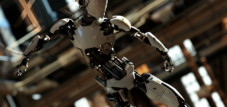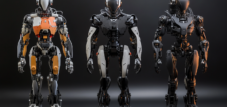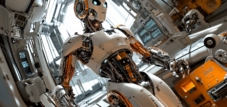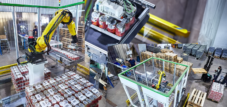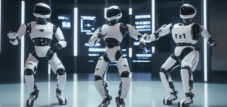
Nvidia's GR00T N1: Strategy for full control of the robotics value chain – Image: Xpert.Digital
Strategy for the future: Nvidia's plans for a dominant robotics ecosystem
Exponential growth: How Nvidia is profiting from the robotics transformation
With the recent unveiling of the GR00T N1 Foundation model at GTC 2025, Nvidia has taken a strategic step to strengthen its position in the robotics sector and control the entire value chain in the long term. Similar to its successful CUDA strategy in the GPU market, Nvidia is creating an ecosystem that is open yet tightly integrated with its own hardware. The company is leveraging its technological lead and broad product portfolio to achieve market dominance. Nvidia's move comes at a crucial time, as the global robotics market is growing exponentially and is projected to reach a volume of USD 96 billion by 2029.
Related to this:


The innovation behind GR00T N1
GR00T N1 is the world's first open, fully customizable Foundation model for humanoid robots. Nvidia unveiled it at the GTC conference on March 18, 2025, and made it immediately available. It is the first in a whole family of models that Nvidia will pre-train and release to robotics developers worldwide.
Dual-system architecture for human-like cognition
The technological basis of GR00T N1 is a two-stage system architecture modeled on human cognition:
- “System 1” functions as a fast-thinking action model that mimics human reflexes and intuitive reactions. It translates the plans developed by “System 2” into precise, continuous robot movements.
- "System 2" is a slow-thinking model for conscious, methodical decision-making. Based on a vision-language model, it analyzes the environment and develops plans for robot actions.
This architecture enables the robots to perceive their environment, understand instructions, and perform complex tasks. In a typical task such as retrieving a box from a shelf, System 2 analyzes the scene, understands the request, and plans a series of steps, while System 1 handles the actual execution – coordinating the robot's movement to the shelf and controlling its arm and hand to grasp the box.
Generalist skills and broad applicability
GR00T N1 was designed to handle general tasks essential for humanoid robots. It can easily switch between different activities:
- Grasping and moving objects with one or both arms
- Transfer of objects from one arm to the other
- Execution of multi-stage tasks that require long-term context
- Combining different basic skills for complex tasks
These capabilities are suitable for numerous applications such as material handling, packaging, and inspection. In his GTC keynote, CEO Jensen Huang demonstrated a humanoid robot from manufacturer 1X that autonomously performed household cleaning tasks – the result of an AI training collaboration between 1X and Nvidia.
Nvidia's holistic strategy for the robotics value chain
Nvidia's approach with GR00T N1 follows the successful pattern of the CUDA platform. The company controls the entire value chain from hardware to software and positions GR00T as a potential standard for robot AI.
Controlled "openness" as a strategic advantage
Compared to similar projects like Google DeepMind's Robotic Transformer, which lacks full platform integration, or Tesla's closed Optimus project, Nvidia is pursuing a more open ecosystem. Similar to CUDA, the company makes core components publicly available but retains control over critical elements such as hardware optimization.
This strategy aims to create a sustainable market for Nvidia's chips. Every GR00T-based robot requires high-performance Nvidia hardware for both training and operation. At the same time, valuable usage data flows back into the ecosystem.
Related to this:

Caution: A more "open" ecosystem still remains a lock-in business model
The “lock-in business model” or “vendor lock-in” is a strategy in which companies bind customers to their products and services by creating a seemingly open, but in reality closed, ecosystem.
Nvidia's approach with the GR00T N1 Foundation model follows this pattern. The company is creating an ecosystem that appears open but is tightly tied to its own hardware. This is similar to the CUDA strategy in the GPU sector and aims to control the entire value chain in the robotics sector.
This strategy does indeed carry the risk of widespread dependency:
- Technological lock-in: Users are tied to Nvidia's technology stack, making it difficult to switch to competing products.
- Ecosystem trap: The more products and services are used within the ecosystem, the more difficult it becomes to leave it.
- Investment dependency: Companies investing in Nvidia's technology may be forced to remain in the ecosystem due to high switching costs.
- Market dominance: By controlling the value chain, Nvidia can achieve a dominant market position, which could restrict competition.
This type of business model is widespread in the technology industry. Companies like Apple, Amazon, and Google have successfully used similar strategies to retain customers within their ecosystems.
While such ecosystems often offer benefits such as seamless integration and improved user experience, it is important to consider the long-term impacts and potential dependencies they can create.
The core components of the Nvidia robotics ecosystem
Nvidia has developed a comprehensive portfolio of technologies that together form a closed ecosystem:
1. Hardware: High-performance chips for training and operating GR00T-based robots; Jetson Thor specifically for humanoid robots
2. Software: The GR00T N1 Foundation model with its dual system architecture forms the core
3. Development tools:
- Isaac GR00T Blueprint for Synthetic Data Generation
- Newton, an open-source physics engine, developed with Google DeepMind and Disney Research
- Omniverse platform for simulations and digital twins
4. Data ecosystem: Massive data generation for training and data feedback from robots in use
Market impact and economic significance
The robotics industry is facing unprecedented growth. The market volume was approximately USD 46 billion in 2024 and is projected to reach around USD 96 billion by 2029, representing an annual growth rate of +16%.
Transformative impact on the robotics sector
Nvidia CEO Jensen Huang describes the launch of GR00T N1 as the beginning of the "age of generalist robotics." This assessment is supported by industry partners. Bernt Børnich, CEO of 1X Technologies, emphasizes: "The future of humanoids lies in adaptability and learning. With minimal post-training, we have fully implemented NEO Gamma."
Jonathan Hurst, co-founder of Agility Robotics, sees a "turning point in history where human-centered robots like Digit will forever change the world of work." These statements underscore the transformative potential that leading companies in the industry see in the GR00T N1.
Strategic partnerships as the key to success
Nvidia has built a broad network of partnerships with leading robotics manufacturers:
- Humanoid Specialists: 1X Technologies, Agility Robotics, Boston Dynamics, NEURA Robotics
- Industrial robot manufacturers: Universal Robots, Franka Robotics
- Logistics-focused partners: As part of the "Mega" project, Nvidia is working on solutions for warehouse automation
These partnerships strengthen Nvidia's influence across the entire value chain and create an ecosystem where Nvidia technology becomes the standard.
Regulatory challenges and competition concerns
Nvidia's growing dominance in the AI and robotics sector has attracted the attention of regulators worldwide.
Antitrust investigations in the USA and China
The US Department of Justice has launched an antitrust investigation into Nvidia. Authorities are concerned that Nvidia could make it more difficult for customers to switch to competitors and that customers who exclusively use Nvidia technology may receive more favorable terms.
In China, Nvidia is also under antitrust investigation and could face a fine of up to one billion US dollars. Despite these regulatory challenges, the company is continuing its expansion in China, particularly in the area of autonomous vehicles.
Market concentration and competition concerns
With a market share of approximately 80% of the global AI chip market, Nvidia's market power is considerable. Its strategy of gaining control over the robotics value chain through GR00T N1 and its associated ecosystem could raise similar competitive concerns.
Nvidia's current strategy with the GR00T N1 could be seen as an attempt to establish a similar dominance in the robotics sector as it already enjoys in the field of AI chips. The regulatory response to this expansion will be crucial for the future development of the market.
Future prospects and market development
The development of humanoid robots is accelerating rapidly. By 2026, the first humanoid robots could be helping in private households with tasks such as laundry, vacuuming, and dishwashing. By 2040, there could be up to 10 billion such robots worldwide, operating in all sectors of the economy.
Competitive landscape and innovation dynamics
The competitive landscape in humanoid robotics includes established technology companies and specialized startups:
- USA: Tesla (Optimus), Boston Dynamics (Atlas), Figure AI (Figure 02), Agility Robotics (Digit)
- China: Unitree (H1, G1), UBTECH Robotics (Walker S), Agibot (Yuanzheng A2)
- Europe: NEURA Robotics from Germany as an important innovator
In this competitive environment, Nvidia is not positioning itself as a direct competitor of robot manufacturers, but as a provider of the fundamental technologies on which the next generation of robots will be built.
GR00T N1 as a bridge for industry development
By providing a pre-trained, customizable Foundation model, Nvidia lowers the barriers to entry for new players and accelerates the development of humanoid robots. This democratization of the technology could lead to an explosion of new applications and use cases.
At the same time, Nvidia secures a strategic advantage and long-term revenue from the growth of the sector through the close integration of GR00T N1 with its hardware infrastructure.
Nvidia on the road to market dominance
Nvidia's strategy with GR00T N1 is an ambitious push to control the entire robotics value chain. By combining an open, yet hardware-bound model with a comprehensive ecosystem of development tools and partnerships, the company is positioning itself as a key player in the next phase of robotics development.
This strategy follows the successful CUDA pattern, in which Nvidia gained a sustainable competitive advantage by controlling critical technology components. The success of this strategy in the robotics sector will depend on several factors: the technological superiority of the GR00T N1, the development of the overall market for humanoid robots, and, not least, the regulatory response to Nvidia's growing market power.
The next few years will show whether Nvidia can actually control the entire robotics value chain with GR00T N1, or whether regulatory interventions and competitive dynamics will promote a more balanced market development.
Fittingly,
Your global marketing and business development partner
☑️ Our business language is English or German
☑️ NEW: Correspondence in your native language!

Konrad Wolfenstein
I and my team are happy to be available to you as your personal advisor.
You can contact me by filling out the contact form here wolfenstein@xpert.digital:or simply call me at +49 7348 4088 965. My email address is
I'm looking forward to our joint project.