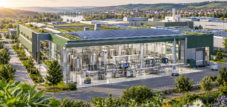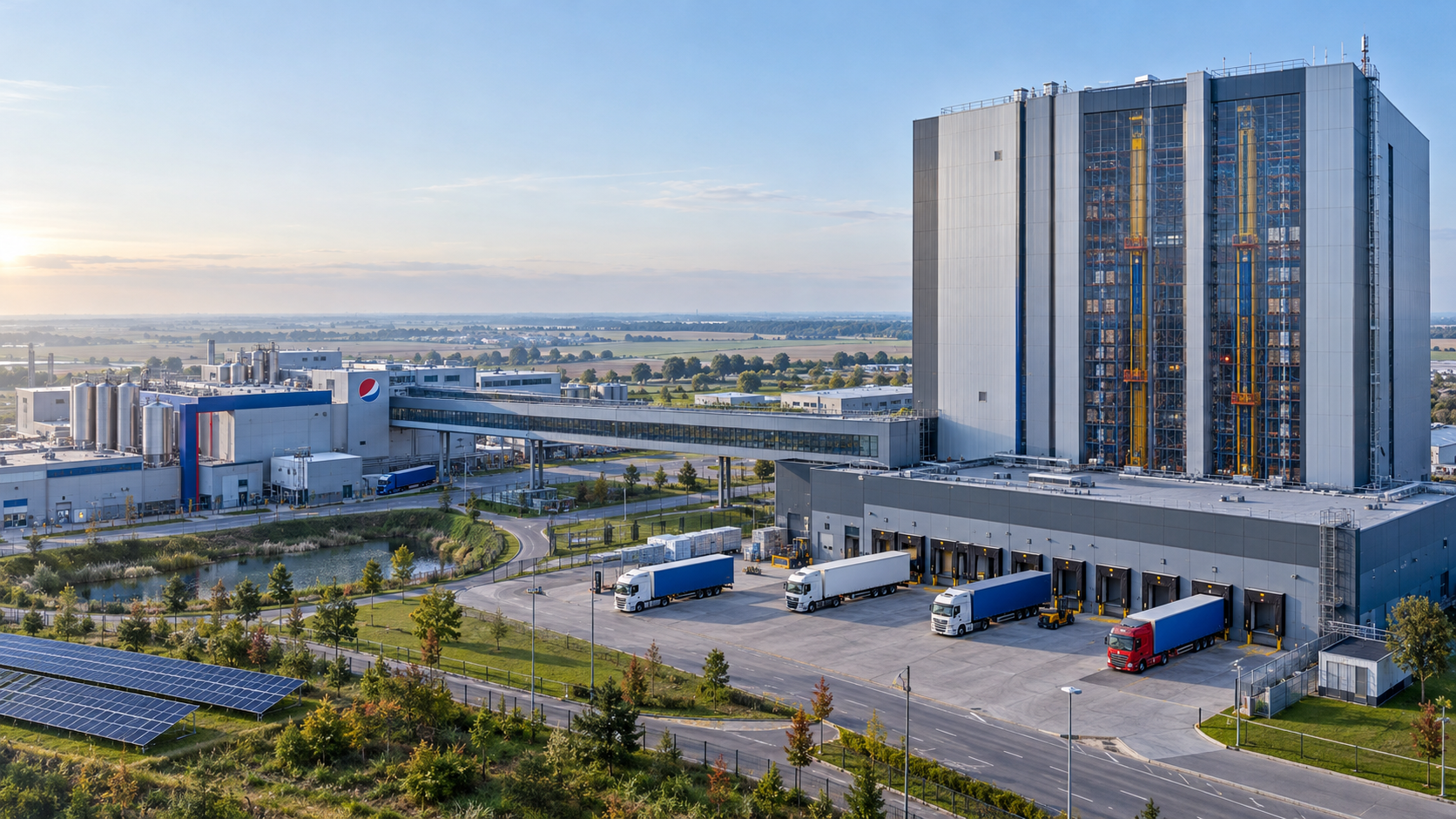
$50 million investment: PepsiCo optimizes supply chain in Michrów, Poland – From warehouse space to production extension – Creative image on the topic, with AI: Xpert.Digital
Automation and efficiency: PepsiCo's new high-bay warehouse in Michrów
Sustainability in focus: PepsiCo saves 2,000 tons of CO₂ through new storage strategy
Poland as a logistics hub: PepsiCo invests in the future of beverage production
PepsiCo is breaking new ground in warehouse logistics with an impressive $50 million investment, transforming the economic structure of its beverage plant in Michrów, Poland. Instead of simply creating additional storage space, the company will construct a state-of-the-art high-bay warehouse that will function as an integral part of the production chain. This innovative concept aims to increase efficiency by optimizing the flow of materials between production, storage, and shipping. Digital control and automation will not only reduce transportation costs but also eliminate unnecessary waiting times and manual handling.
The new warehouse will not only be a key component in the transformation of PepsiCo's supply chain, but will also strengthen the competitiveness of Poland. At a time when efficiency and sustainability are increasingly important, this project demonstrates how modern technologies and intelligent logistics solutions can be combined to meet the challenges of global markets. A conventional warehouse will be transformed into a highly automated infrastructure that not only saves costs, but also significantly contributes to reducing CO₂ emissions. In this context, the Michrów plant will become a flagship project for the entire European consumer goods industry.
PepsiCo turns the warehouse into a factory: $50 million to combat supply chain downtime
PepsiCo isn't simply building additional warehouse space in Michrów, near Grójec, Poland. The company is investing nearly $50 million to fundamentally transform the economic logic of its beverage plant there. Production, storage, inventory management, and shipping will function as a largely closed, digitally controlled material flow. The new high-bay warehouse will thus become less of a building adjacent to the factory and more of an extension of the production facility. This is precisely where the true significance of the project lies: added value is generated not only at the bottling line but also by eliminating unnecessary transport, waiting times, intermediate storage, and manual transfers.
This investment is a vivid example of how the competitiveness of industrial locations in Europe is shifting. Labor costs, land prices, and proximity to sales markets are no longer the sole determining factors. The ability to organize production, data, and logistics within an integrated system is becoming increasingly important. A location that delivers goods to customers faster, with less inventory, and lower energy consumption can be economically superior despite rising wages and high investment costs. Michrów therefore exemplifies an industrial development path where automation doesn't primarily replace personnel, but rather reduces tied-up capital, transportation costs, and organizational friction.
The provocative thesis is this: the most expensive warehouse isn't the automated high-bay warehouse, but a cheap one that makes the supply chain slow, fragmented, and opaque. In Masovia, PepsiCo is aiming to make these hidden costs visible and eliminate them structurally. Whether this strategy will be entirely successful depends on more than just the technology. Key factors will include capacity utilization, system availability, sales performance, energy costs, and the quality of operational management.
Surface area becomes vertical infrastructure
The warehouse is being built directly adjacent to the existing beverage plant in Michrów, which produces brands including Pepsi, Mirinda, and Lipton Ice Tea. A 38-meter-high high-bay warehouse with an initial capacity of 28,500 pallet spaces will be constructed on a footprint of approximately 4,700 square meters. The planned storage density is remarkable: In practice, only about 0.165 square meters of floor space are allocated to each pallet space. This figure is not a land requirement in the traditional sense, because traffic areas, technical areas, and building structures interact within the vertical framework. However, it illustrates how effectively the high-bay warehouse concept compensates for land use through height.
For a manufacturer of heavy, high-volume beverages, this is economically significant. Beverage pallets take up a lot of space, result in high transport weights, and often have a lower value relative to their volume than compact premium products. Additional handling steps and unnecessary mileage therefore quickly impact profit margins. A dense warehouse directly adjacent to production shortens transport routes and increases the number of pallets that can be accommodated in a limited industrial space.
The initial capacity of 28,500 pallets is equivalent to more than a thousand fully loaded trucks. At the same time, the system is modularly designed for potential expansion to up to 65,000 pallet spaces. Compared to the first phase, this would represent an additional capacity of 36,500 spaces, or an increase of approximately 128 percent. The final capacity would thus be 2.28 times the initial level. This expansion option makes economic sense because PepsiCo does not immediately tie up capital for the maximum conceivable demand, while simultaneously taking into account key technical and structural prerequisites for future growth.
Vertical construction also limits additional land use. In a region where logistics, industry, agriculture, and residential development compete for available land, this is a significant advantage. A conventional flat warehouse with the same capacity would require considerably more land and create longer internal transport routes. The high-bay warehouse trades space for technology and capital. This exchange is particularly worthwhile where a continuous, predictable flow of goods and high utilization are expected.
The bridge eliminates the most expensive detour
The central component of the project is not the racking, but the 220-meter-long logistics bridge between the beverage plant and the warehouse. Finished pallets will be transported directly from the production lines to the warehouse structure via this bridge. Elevators and an electric monorail system handle the automated transport. This eliminates the previous break between production and storage, where goods had to be prepared, moved with forklifts, loaded onto vehicles, or transported to external warehouses.
In conventional structures, every transfer point is a potential source of costs and errors. Pallets wait for pickup, vehicles require time slots, inventory levels must be reconciled between different systems, and damage can occur during re-picking and setting down. These processes do not generate additional customer demand. They merely consume labor, energy, space, and management capacity. Directly connecting the production lines to the warehouse transforms a series of individual processes into a continuous flow of materials.
The economic benefits extend beyond simply reducing transportation. Spatial integration improves the synchronization of production and distribution. The warehouse receives earlier and more precise information about which items are arriving and in what quantities. Conversely, production planning can be more closely aligned with inventory, order intake, and shipping capacity. The more reliably this integration functions, the smaller safety buffers can be without compromising delivery capability.
The logistics bridge should therefore be understood as productive infrastructure. It connects not just two buildings, but two previously partially separate economic systems. Its benefits are evident in shorter lead times, reduced handling, lower error rates, and improved data flow. With a high daily volume, even a small saving per pallet adds up to a significant annual effect.
Automation from the assembly line to the truck
The entire process, from the end of production through storage and retrieval to preparation for loading, is to be automated. Six double-deep storage and retrieval machines move pallets within the high-bay aisles. Double-deep storage increases space utilization but places higher demands on software, inventory logic, and access planning. Not every pallet is directly accessible at all times. The system must therefore select storage locations in such a way that product turnover, batches, shelf life, and shipping priorities are taken into account.
Digital control is handled by a warehouse management system that coordinates goods movements in real time and is connected to the overarching SAP system. This integration is crucial. Automated mechanisms without consistent data will only accelerate incorrect decisions. Only when production orders, item master data, batches, storage locations, customer orders, and transport planning converge in a seamless information chain can the system reach its full potential.
The planned throughput is more than 200 incoming and more than 200 outgoing pallets per hour. More recent project data indicates approximately 210 pallets per hour for both inbound and outbound traffic. Theoretically, the system can therefore handle goods movements of over 400 pallets per hour, provided both directions are operating at full capacity simultaneously. In practice, production, order volume, and truck arrivals fluctuate. However, the high peak performance creates reserves to absorb peak loads and make up for downtime.
Sixteen loading docks will form the physical interface with road transport. The facility is designed to handle approximately 150 trucks per day. With 28,500 occupied pallet spaces and a shipping rate of 200 pallets per hour, the entire theoretical inventory would be moved once in just under six days at continuous maximum throughput. Such a theoretical turnover rate is not consistently achieved because product range structure and safety stock levels must be taken into account. Nevertheless, this comparison demonstrates that the project is not geared towards passive long-term storage, but rather towards a dynamic flow of goods.
Inventory is transformed from a buffer into a control instrument
The greatest economic benefit could come from the reduction in inventory holding times. The new structure is expected to decrease the dwell time of goods by two days. This will theoretically eliminate the need for approximately 8,000 pallet spaces of buffer capacity. Compared to the initial capacity of 28,500 spaces, this represents a reduction of around 28 percent. In other words, a significant portion of the required capacity is achieved not through more concrete and steel, but through increased speed.
Inventory incurs costs, even though it appears as an asset on the balance sheet. It represents capital that cannot be used for other purposes until it is sold. Added to this are costs for space, energy, insurance, shrinkage, damage risks, and the risk that product variants will sell more slowly than planned. For beverages, seasonal demand, promotional sales, packaging changes, and limited shelf life can further complicate inventory management. Therefore, reducing inventory holding time by two days not only improves space efficiency but also the financial quality of current assets.
The saving of 8,000 buffer spaces makes the logic particularly clear. If PepsiCo wanted to achieve the same effect solely through additional warehouse space, the company would have to plan a significantly larger building or continue to lease external capacity. Process acceleration thus replaces a portion of physical capital. This is a core principle of modern supply chains: resilience is not created by the largest possible inventory, but by the ability to move inventory transparently, quickly, and efficiently.
However, inventory reduction should not be confused with maximum leanness at any cost. Insufficient buffers can become problematic in the event of production disruptions, IT outages, transportation bottlenecks, or unexpected demand spikes. The optimal solution lies between two extremes: unnecessarily high inventory levels on the one hand and a fragile just-in-time structure on the other. The expansion reserve of 65,000 pallet spaces gives PepsiCo the flexibility to adapt the system to increasing sales or changing security requirements.
Direct delivery replaces warehouse hopping
The share of direct deliveries is expected to increase from around 30 to 90 percent. This represents a tripling of the rate and means that in the future, nine out of ten relevant goods flows will be able to reach their next destination without an additional external storage stage. For the cost structure, this step is likely more significant than individual savings within the building itself. External warehouses incur rent, handling costs, administrative interfaces, and additional transport. Furthermore, they complicate maintaining a consistent inventory overview.
The existing model using external warehouses can be useful in cases of capacity bottlenecks or highly fluctuating demand because it offers flexibility and avoids high initial investments. However, this flexibility becomes expensive with consistently large volumes. Every transfer from the factory to an external warehouse and from there to the customer or distribution center generates at least one additional transport leg. Added to this are waiting times at loading docks, repeated checks, and potential booking errors.
By centralizing operations at the plant, PepsiCo assumes more fixed costs but reduces variable costs per pallet moved. This increases operational leverage. At high capacity utilization, average logistics costs decrease, while depreciation, maintenance, and tied-up capital remain in place during periods of weaker demand. The investment is therefore both an efficiency program and a bet on demand. PepsiCo is confident that the Michrów plant will maintain a sufficiently high production and shipping volume in the long term.
The direct delivery rate of 90 percent also improves responsiveness. Orders can be scheduled closer to production stock levels, while less time needs to be allocated for stock transfers. Shorter routes can increase planning accuracy and allow for later order completion. For trading partners, what matters is not how technically sophisticated the warehouse operation is, but whether deliveries arrive complete, on time, and in the correct sequence. Automation must ultimately be measured against precisely these performance indicators.
8,000 fewer trips change the cost basis
PepsiCo expects the new warehouse structure to eliminate approximately 8,000 truck journeys annually. This should save nearly two million kilometers of road travel and roughly 2,000 tons of carbon dioxide per year. To put this in perspective: each avoided journey averages about 250 kilometers, and each kilometer saved reduces carbon dioxide emissions by approximately one kilogram. This equates to a calculated saving of around 250 kilograms per journey.
These figures show that the primary focus is on eliminating transport between the factory and external storage locations. Deliveries to customers don't disappear; they are simply organized more directly. Sustainability here isn't achieved through a symbolic measure, but by eliminating a structural detour. This is more economically viable than projects that reduce emissions but result in permanently higher operating costs.
The financial impact extends beyond fuel savings. Fewer trips mean a reduced need for drivers, vehicles, tolls, maintenance, tires, dispatching, and time slot management. Furthermore, vulnerability to traffic jams, driver shortages, and fluctuating transport costs decreases. Even if some transport is outsourced, PepsiCo indirectly bears these costs through freight rates and surcharges.
The avoided two million kilometers represent a considerable volume of transport. At the same time, the climate impact should be realistically assessed. The facility itself will require electricity and heat, its technology must be manufactured and maintained, and construction generates so-called embodied emissions. The stated 2,000 tons refer primarily to avoided transport. A complete climate impact assessment would also have to consider construction, energy consumption, refrigerants, maintenance, and future expansions. Nevertheless, the trend is clear: when goods reach the same customer with fewer intermediaries, resource efficiency improves.
LTW Intralogistics Solutions

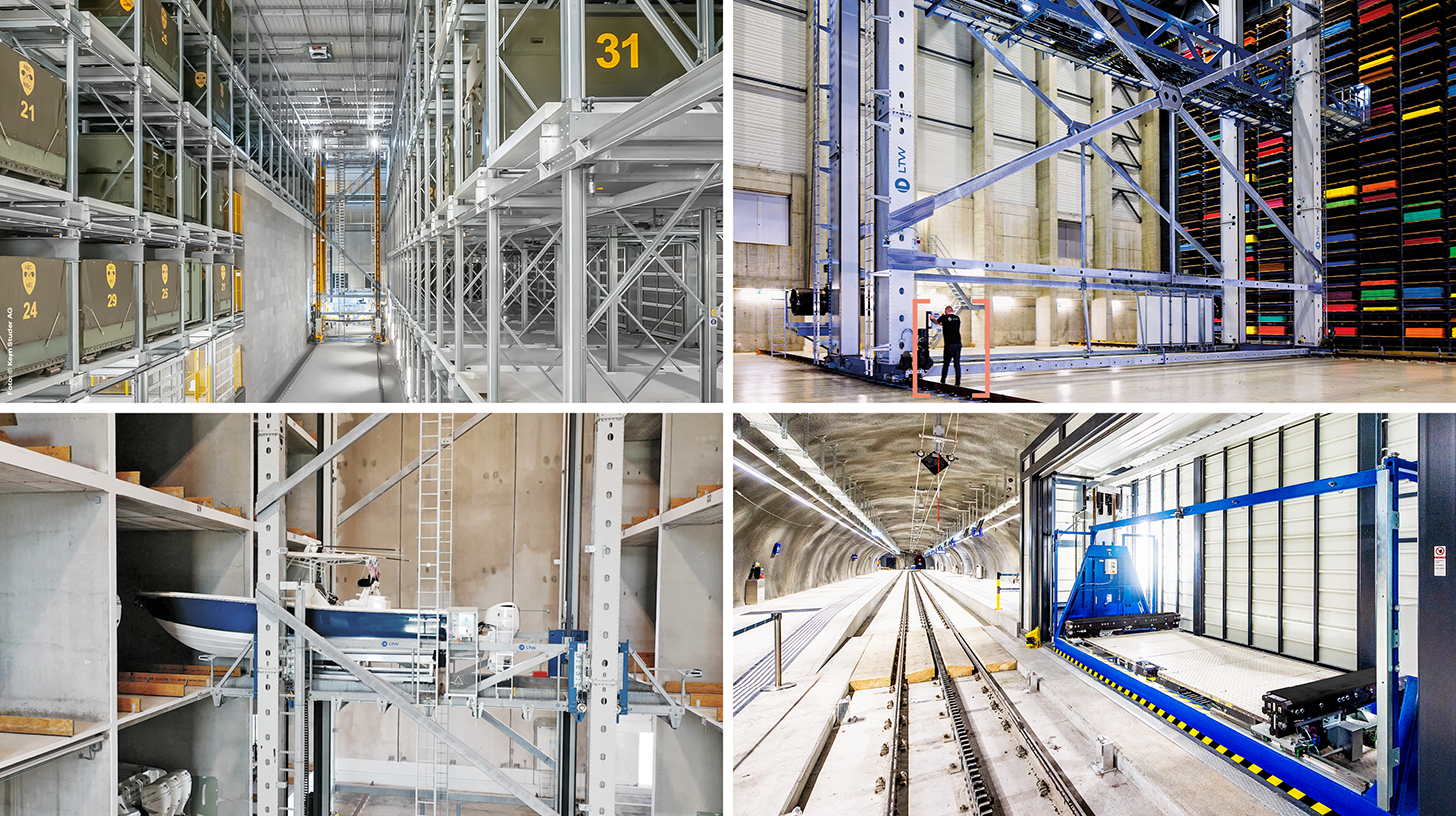
LTW Intralogistics – Engineers of Flow - Image: LTW Intralogistics GmbH
LTW offers its customers not individual components, but integrated complete solutions. Consulting, planning, mechanical and electrotechnical components, control and automation technology, as well as software and service – everything is networked and precisely coordinated.
In-house production of key components is particularly advantageous. This allows for optimal control of quality, supply chains, and interfaces.
LTW stands for reliability, transparency, and collaborative partnership. Loyalty and honesty are firmly anchored in the company's philosophy – a handshake still means something here.
Related to this:
Logistics bridge and automation: The new PepsiCo infrastructure
Energy efficiency becomes part of the plant logic
The high-bay warehouse is designed to recover energy during the deceleration of the storage and retrieval machines. When lowering or decelerating, a portion of the kinetic energy is converted into electrical energy and fed back into the system. While each individual process may seem small, storage and retrieval machines accelerate and decelerate thousands of times. In a continuously operating warehouse, this energy recovery can therefore add up to a significant reduction in energy consumption.
In addition, there is a weather-dependent intelligent heating control system. It adjusts the heating demand to external conditions and the actual requirements of the building. High-bay warehouses present special challenges because their large air volume does not automatically need to be kept entirely at a comfortable temperature. Precise control can prevent unused areas from being heated unnecessarily. It is crucial to differentiate between frost protection, technical requirements, and work areas.
The ecological and economic benefits are aligned. Every kilowatt-hour saved reduces operating costs at a given energy price and simultaneously lowers indirect emissions. The economic value of intelligent control increases when electricity prices fluctuate or grid fees become more dependent on capacity. An automated warehouse can coordinate movements over time, limit peak loads, and, in the future, be integrated with on-site generation or storage.
The downside is a greater dependence on electrical energy and control technology. While a conventional warehouse can continue operating manually to some extent during minor IT disruptions, a fully automated system can quickly grind to a halt. Energy efficiency must therefore be combined with security of supply. Redundant systems, spare parts concepts, cyber defenses, and robust restart plans are not mere technical accessories, but rather prerequisites for the economic availability of the system.
Poland is rising from the factory floor to a system location
The investment strengthens Poland's position as a production and logistics hub for Central and Eastern Europe. Michrów is located in Masovia, near Warsaw, Poland's largest metropolitan area and sales center, and has access to a high-performance road network. From there, the Polish market, the Baltic states, other countries in Central and Eastern Europe, as well as export destinations such as Germany, can be served. The location combines a large domestic market with cross-border reach.
Poland now boasts over 38 million square meters of modern industrial and logistics space, making it the largest market of its kind in Central and Eastern Europe. Masovia is one of the most important submarkets. The vacancy rate fell in 2026, while demand for modern space picked up again. At the same time, new construction activity has slowed compared to previous boom years. This favors projects focused on specific industrial use rather than speculative leasing.
The PepsiCo project differs from a conventional distribution center. It is directly linked to an existing production facility, technically tailored to its flow of goods, and has limited alternative uses. This specialization creates efficiency but also increases the location risk. If production were to decline or relocate in the long term, a 38-meter-high automated beverage warehouse could not simply be re-let like a standard warehouse.
For Poland, the investment is nevertheless strategically significant. It demonstrates that the country is not only chosen for its comparatively low costs, but also as a platform for complex, capital-intensive, and digitally integrated processes. This transformation is necessary because wages are rising and simple cost advantages over other regions are diminishing. Productivity gains through automation, infrastructure, and management quality are therefore becoming the decisive factor in choosing a location.
Polish road freight transport remains the backbone
Poland is the largest player in European road freight transport. In 2024, Polish vehicles transported approximately 368 billion tonne-kilometers, accounting for nearly one-fifth of the EU's total road transport performance. This strength provides industrial companies with a dense network of freight forwarders, drivers, and logistics services. At the same time, it makes Poland vulnerable to rising toll, wage, fuel, and regulatory costs.
For the foreseeable future, trucks will remain indispensable for beverages. The goods are heavy, delivery destinations are numerous, and retailers demand flexible delivery windows. The new warehouse does not eliminate this dependency. It utilizes road transport more efficiently by eliminating internal transfer journeys and focusing the remaining transport more on direct customer deliveries. This is a more pragmatic approach than the assumption that large quantities of beverages can be completely shifted to rail in the short term.
Poland's advantage as a transport nation supports the reach of the Michrów site. At the same time, driver shortages and rising costs are intensifying the pressure to eliminate avoidable mileage. The investment can therefore be understood as a response to a structural problem: transport capacity is becoming more valuable, so it should be used for actual market distribution and not for warehouse hopping.
Saving 8,000 journeys per year also frees up capacity in the transport network, even if the effect remains small at the national level. Locally, fewer journeys can reduce noise, congestion, and accident risks. For operational calculations, it is crucial that this saving recurs annually. A continuous stream of avoided costs can justify a high initial investment, provided the system is used for a sufficient duration.
$46.1 million is a bet on volume
The more precise project value is US$46.1 million, often rounded to just under US$50 million. Publicly available information on depreciation period, financing, expected annual savings, and internal cost of capital is lacking for this valuation. An exact amortization calculation would therefore be speculative. Nevertheless, the economic drivers can be clearly identified: reduced external storage costs, fewer transports, lower personnel and equipment requirements, lower damage, less tied-up working capital, and increased delivery performance.
Furthermore, there's the advantage of avoiding future costs. If sales and product range grow, PepsiCo would have to lease additional external warehouse space without its own capacity. The prices for this space depend on market conditions, location quality, and lease duration. Owning its own infrastructure offers some protection against rent increases and availability bottlenecks. In return, the company assumes the construction, technology, and capacity utilization risks itself.
The calculation is particularly attractive if the plant operates near its intended capacity for many years. Automation has high fixed costs and comparatively low marginal costs. An additional pallet places little strain on the system as long as capacity is available. However, with low utilization, the invested capital is spread across too few units. Success therefore depends not only on technical indicators but also on stable demand for the beverages produced in Michrów.
The option to expand to 65,000 seats limits the risk of early oversizing. PepsiCo can start with 28,500 seats and only activate additional capacity when sales, product range, or distribution requirements justify it. This real option has economic value: The company buys the ability today to grow faster tomorrow without having to bear the full costs of the final stage upfront.
Productivity instead of mere staff reduction
Full automation is often reduced to the question of how many jobs will be lost. This perspective is too narrow. In a high-bay warehouse 38 meters high, manual processes are neither particularly efficient nor practical in all areas. Automation takes over repetitive, heavy, and potentially dangerous movements. The need for personnel shifts to plant operation, maintenance, software, data analysis, and fault management.
For the regional labor market, this likely means fewer traditional forklift and transport jobs per pallet moved, but at the same time a higher demand for technically skilled workers. The number of people working directly in the warehouse could be lower than with a conventional solution. However, the overall effect is crucial: A more productive location can attract additional production and distribution, thereby securing jobs at the plant, with service providers, and in the surrounding region.
Like many European countries, Poland is facing demographic challenges. The workforce is becoming scarcer, and wages are rising. Under these conditions, automation is not just a cost-cutting tool, but a prerequisite for reliably handling increasing volumes. Companies that permanently base every process on readily available manual labor increase their operational risk.
At the same time, a new skill requirement arises. An automated system needs employees who understand mechanics, sensors, software, and process interrelationships. PepsiCo must build up in-house expertise and avoid becoming entirely dependent on external specialists. With a high degree of automation, a rapid response to malfunctions determines whether a minor technical error results in a production or shipping stoppage lasting several hours.
Data becomes the actual inventory
A physical warehouse can only function as well as its digital twin. Every pallet must be uniquely identified, assigned to a batch, and tracked in the correct location. Incorrect master data, damaged labels, or inconsistent entries can block the flow of materials. In a manual warehouse, some discrepancies can be improvised through experience. An automated system, however, requires clear rules and accurate data.
The integration of Easy WMS and SAP creates the foundation for seamless control. Orders, production quantities, inventory positions, and shipping can be coordinated in real time. Building on this, forecasts can be improved, bottlenecks identified earlier, and priorities dynamically adjusted. Artificial intelligence can potentially support demand forecasting, inventory optimization, maintenance, and ramp planning in the future. However, the immediate benefit stems from robust process digitization, not from a trendy AI label.
Data on actual throughput times, disruptions, and energy consumption are particularly valuable. If the system records every movement, PepsiCo can systematically analyze deviations. Which items generate unnecessary relocations? Which production sequence leads to bottlenecks? At what times do peak loads occur? Where does the performance of a storage and retrieval machine drop? Such questions can be answered more precisely with continuous data than with sporadic observations.
With increasing data dependency comes greater cyber risk. A disruption to the warehouse management system or the interface with enterprise software can disrupt the physical flow of goods. Network segmentation, access controls, backups, and proven emergency procedures must therefore be part of the operational concept. Digital efficiency without digital resilience would be a dangerous false sense of security.
Resilience requires redundancy and controlled complexity
A centralized warehouse reduces external dependencies but also concentrates risks in one location. If the system fails, production may continue, but finished goods can only be buffered and shipped to a limited extent. The 220-meter-long connection creates efficiency but also becomes critical infrastructure. Fire, power outages, software errors, or mechanical damage can affect large parts of the system.
The crucial metric is therefore not the theoretical peak performance, but technical availability. A system capable of handling 210 pallets per hour is of little use if frequent downtime reduces the actual daily output. Preventive and condition-based maintenance, spare parts inventory, and redundant communication and power supplies are essential for profitability. Manual or alternative emergency processes should also be in place, at least for selected material flows.
Dependence on a few specialized suppliers is another risk. Storage and retrieval machines, control systems, and software cannot be interchanged at will. Long-term service contracts can ensure availability, but they also increase ties to the technology partner. PepsiCo must therefore weigh the advantages of a standardized solution against potential vendor lock-in effects.
The sales side also remains uncertain. Consumer habits, sugar taxes, packaging regulations, and market concentration can all alter product mix and volume. A flexible warehouse must not only be able to accommodate more pallets but also handle different formats, batch sizes, and turnover rates. Modular expansion is helpful but does not replace regular reviews of the network strategy.
The timeline illustrates the difficulty of large-scale industrial projects
Preparatory work for the project took approximately two years. Groundbreaking took place in early 2026, with the ceremonial laying of the foundation stone on May 27th. Initially, the plan was to close the building by the end of 2026, then install the interior technology, and begin operations in June 2027. More recent project information now targets the fourth quarter of 2027 for commissioning.
This delay should not be prematurely interpreted as a failure. An automated high-bay warehouse is a combination of building structure, racking system, conveyor technology, software, and factory integration. The individual components must not only be completed but also tested under real-world conditions. Starting too early can be more expensive than a controlled ramp-up later on if disruptions affect production and customer service.
The difference in timing also highlights that investment announcements are merely snapshots in time. For economic evaluation, what matters is the actual ramp-up: When will the plant reach a stable throughput? How quickly will the direct delivery rate increase? When can external storage contracts be terminated? Only these operational milestones will realize the expected savings.
During the start-up phase, parallel costs are to be expected. External warehouses and existing transport systems cannot be completely shut down immediately while the new system is being tested. Staff must be trained, inventory must be relocated, and interfaces must be stabilized. Therefore, the stated investment amount does not necessarily cover all transition costs.
A reference model for the European consumer goods industry
Michrów demonstrates how manufacturers can transform their supply chains from a series of individual functions into an integrated production and distribution system. This model is particularly well-suited for companies with high, relatively stable volumes, standardized pallets, limited land, and recurring shipping patterns. Beverages, food, paper goods, and other fast-moving consumer goods offer favorable conditions for this approach.
Not every factory should copy this concept. With highly fluctuating production volumes, numerous special formats, or an uncertain future location, a flexible external warehouse can be more economical. Smaller producers also often lack the volume to fully utilize expensive automation. The real question, therefore, is not whether automation is inherently superior, but whether process stability, production volume, and service life justify the high fixed costs.
For large manufacturers, the pressure to integrate is growing. Retailers demand reliable and transparent supply chains, CO₂ costs are becoming increasingly important, and available labor is dwindling. At the same time, investors expect measurable productivity gains. A project like Michrów addresses these requirements in a single system: It reduces transportation, accelerates inventory management, increases automation, and creates scalable capacity.
The strategic value extends beyond immediate returns. If the warehouse operates reliably, PepsiCo can gain experience there, develop standards, and modernize other sites more quickly. The plant thus becomes a learning center for the European organization. The benefits of a successful reference facility can be greater than the isolated profit of the individual building.
Efficiency is compelling, but not without risk
The project's overall economic logic is strong. The direct connection between production and storage eliminates unnecessary movement. Tripling the direct delivery rate reduces external dependencies. A two-day reduction in inventory holding time replaces approximately 8,000 buffer spaces. Around 8,000 avoided truck journeys lower costs and emissions. The expansion option protects against premature full investment while simultaneously keeping growth possibilities open.
The greatest risks lie not in the basic concept, but in its execution. The system must be reliably available for years, the software integration must function flawlessly, and the production volume must remain sufficiently high. Furthermore, any savings achieved through the use of external storage facilities should not be prematurely abandoned entirely, as long as contingency plans and ramp-up capabilities are not robust. An efficient supply chain should not be optimized so tightly that every disruption immediately jeopardizes customer supply.
From a location policy perspective, the investment strengthens Poland. It combines production, technology, and distribution, increasing the plant's strategic relevance within the European PepsiCo network. For Masovia, this not only creates additional capacity but also a more sophisticated industrial profile. The location will therefore compete less on low costs and more on productivity, infrastructure, and systems expertise.
The project ultimately delivers a sobering insight for the debate on sustainable industry: the most effective emission reductions often occur where waste also costs money. Avoiding two million unnecessary kilometers of road travel makes ecological sense because it is also economically sound. This connection, in particular, increases the likelihood that the effect will be lasting.
PepsiCo's investment in Michrów isn't primarily in 38 meters of steel and 28,500 pallet spaces. The company is investing in speed, transparency, and control over the flow of goods. If the technology runs reliably and the planned process improvements are achieved, the warehouse can become a competitive advantage for the entire plant. Then the real return on investment wouldn't be the number of pallets stored, but rather the number of kilometers, days, and transfers saved.
Consulting - Planning - Implementation

Konrad Wolfenstein
I would be happy to serve as your personal advisor.
You can contact me at wolfenstein∂xpert.digital or
Just call me on +49 7348 4088 965 .
Your intralogistics experts

Consulting, planning and implementation of complete solutions for high-bay warehouses and automated storage systems - Image: Xpert.Digital
More information here: