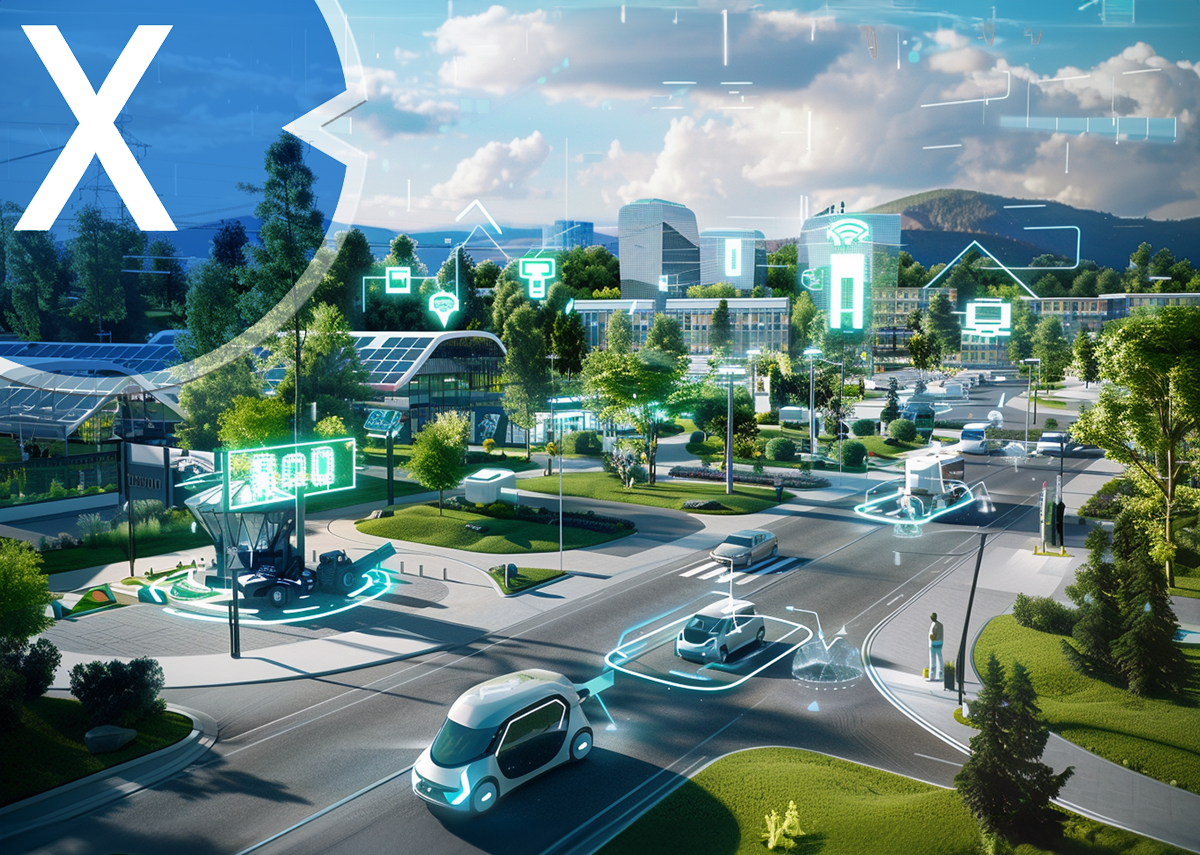
The future of the Smart City and Smart Factory: Integration solutions for urban and industrial spaces – Image: Xpert.Digital
🌳🏢🔍 Future-proof urbanization and modern industry 🌞🤖📶
🌆🏭 Shaping the future: Smart City and Smart Factory solutions
For advancing urbanization and modern industry, the concepts of Smart City and Smart Factory offer comprehensive solutions. Photovoltaics (PV), artificial intelligence (AI), 5G technology, warehouse logistics, digitalization, and the metaverse are used to make our cities and industrial environments future-proof and efficient. Xpert.Digital combines all these technologies and offers comprehensive solutions.
Xpert.Digital is a pioneer in urbanization and urban logistics solutions, as well as in the logistics, intralogistics, digitalization, renewable energy, and smart 3D visualization sectors. Thanks to the continuous expansion of our expertise, we have firmly established ourselves as leading experts in Smart Cities and Smart Factories. On our platform, the Xpert.Digital industry hub and e.Xpert Infotainment Portal, you will find over 2,500 technical articles and more than 400 PDFs with facts and figuresto provide you with well-founded and comprehensive information.
The seamless integration of all these technologies makes it possible to collect and analyze data in real time and react accordingly. Mobility becomes more efficient, energy supply more sustainable, and urban life as a whole more livable. These Smart City Factory concepts exemplify the changes that will shape our cities and industries now and in the future.
📶🛠️ Power grid and wireless network infrastructure
A reliable wireless network coverage is a fundamental requirement for a smart city and smart factory. Given the importance of real-time data and real-time tracking, 5G technology (including 5G campus networks) plays a crucial role. This technology is essential for implementing various metaverses, such as urban, consumer, and industrial metaverses. These smart 3D worlds and digital twins require a high-performance network infrastructure.
Electricity supply is the lifeblood of any modern infrastructure. In the context of sustainability and energy efficiency, solar energy plays a prominent role. Photovoltaics has proven to be particularly effective, efficient, and easily integrated in urban areas. In addition to generating electricity, solar power systems offer further advantages:
1. Solar power systems and PV roofs on asphalted surfaces
These help urban heat islands .
2. Dual use of areas
For example, through solar parking lots or PV carports in both city centers and industrial areas.
3. Semi-transparent solar modules
These can be integrated into city solar pergolas , for example, which allows for greening underneath and thus contributes to the quality of life.
4. Building-integrated photovoltaics
Additionally, building-integrated photovoltaics can be used on large structures such as warehouses, production halls, or stadiums. This integration contributes to sustainable urban development.
5. Facade solar
An alternative to building-integrated photovoltaics is the solar facade, which can be attached to the outside of buildings. This is particularly interesting for large halls and building complexes.
6. Further alternatives: Solar systems from rooftops to flat roofs, ground-mounted solar parks, solar fences and agri-PV
These options offer a wide range of possibilities for effectively utilizing solar energy in various environments. Whether on the roof of a building, on open land, as part of infrastructure projects, or in combination with agricultural activities – there are suitable solutions for every situation.
🧠 Artificial Intelligence
With the increasing integration of renewable energies, AI is gaining importance in controlling these complex energy systems (smart grids). While conventional power grids are mostly characterized by centralized power generation, the trend is shifting towards decentralized generation facilities. Renewable sources such as photovoltaics, wind power, and biogas contribute to a more complex structure. This presents new challenges, particularly in the areas of load control, voltage regulation, and grid stability. Decentralized generation facilities feed directly into the lower voltage levels, which necessitates intelligent control.
A smart grid integrates all stakeholders – from producers and storage facilities to grid management and consumers. This ensures that energy production always matches consumption. Smart grids take into account decentralized energy sources and storage, resulting in spatially and temporally balanced consumption. This is particularly important for compensating for fluctuations in energy generation from renewable sources.
🌐 Digitization and Automation
Digitalization is a continuous process that has revolutionized the way we live and work. With the introduction of the internet in the late 20th century, the availability of information changed, enabling global business strategies and methods such as just-in-time production. In the last two decades, mobile technologies, social networks, and AI have further accelerated this transformation. These technologies allow for deeper networking, automation, and the analysis of massive amounts of data.
In the logistics sector, the introduction of the barcode in the 1970s laid the foundation for global trade. Since then, logistics has evolved through increasing flexibility and automation, which has also led to more complex processes. From 2027, the barcode is to be replaced by the 2D matrix code , which can contain more data and be used for multiple purposes. This code can be used not only in global and intra-company logistics but also provide additional information for users and end consumers, including smart 3D visualizations that can be viewed on smartphones. These visualizations could also be integrated into a metaverse.
🌍 Metaverse and the 15-Minute City concept
The metaverse will play a central role in daily life during urbanization. Whether for work, shopping, education, healthcare, or culture – all these activities should be accessible within a 15-minute walk or bike ride. This urban planning promotes the development of mixed-use neighborhoods that integrate residential, commercial, cultural, and recreational functions. The goal is to reduce long commutes and foster social cohesion and a connected community.
In the15-minute city, particular emphasis is placed on promoting emission-free or low-emission forms of mobility. Cities are to be planned in such a way as to minimize the need for private vehicles in order to reduce traffic congestion, air pollution, and noise pollution. Pedestrian and bicycle paths will form the backbone of the urban transport network, complemented by reliable public transport as a sustainable alternative to individual motorized transport.
Should this not be immediately feasible for various reasons, the metaverse offers a way to close this gap. For example, official procedures could be handled virtually from the living room.
🏭 Industrial Metaverse – The step towards Industry 4.0
The Industrial Metaverse includes real-time data tracking, predictive maintenance technologies, rapid machine changeovers, and virtual testing through the use of digital twins. This enables the simulation of entire production facilities, leading to increased efficiency and flexibility.
🚚 Urban logistics and rural supply
Urban logistics and rural supply chains benefit significantly from Smart City Factory technologies through the use of autonomous robotics and cobots, as well as fully automated high-bay warehouses and micro-hubs. Local to decentralized logistics centers utilizing renewable energy and AI can create efficient and sustainable supply structures. These technologies enable real-time data collection, analysis, and response, leading to more efficient mobility, sustainable energy supply, and an overall improvement in the quality of life in urban areas.
🎯🎯🎯 Benefit from Xpert.Digital's extensive, five-fold expertise in one comprehensive service package | BD, R&D, XR, PR & Digital Visibility Optimization


Benefit from Xpert.Digital's extensive, five-fold expertise in a comprehensive service package | R&D, XR, PR & Digital Visibility Optimization - Image: Xpert.Digital
Xpert.Digital possesses in-depth knowledge across various industries. This allows us to develop tailored strategies precisely aligned with the requirements and challenges of your specific market segment. By continuously analyzing market trends and monitoring industry developments, we can act proactively and offer innovative solutions. The combination of experience and expertise generates added value and provides our clients with a decisive competitive advantage.
More information here:
📌 More related topics






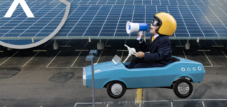






🌆🏭 The future of the Smart City and Smart Factory: Integration solutions for urban and industrial spaces
📦 Advances in warehouse logistics through Smart Factory technologies
The modern technologies of the Smart Factory are revolutionizing warehouse logistics. Advanced sensor and tracking solutions enable real-time monitoring and management of inventory. This leads to reduced storage costs and increased efficiency. Intelligent warehouse management systems, supported by AI, forecast demand and continuously optimize warehouse processes.
📶 5G Integration: Opportunities and Challenges
The integration of 5G into urban and industrial environments opens up numerous opportunities but also presents several challenges. 5G enables the rapid and reliable transmission of massive amounts of data, which is essential for the industrial metaverse and digital twins. However, the challenge lies in establishing the necessary infrastructure across the board and addressing security concerns.
🏙️ The importance of 5G for the Smart City
In smart cities, 5G enables faster and more interconnected structuring of urban and industrial processes. Applications such as networked traffic management systems, smart energy distribution, and real-time monitoring of urban environments benefit significantly from the increased bandwidth and low latency that 5G offers.
🧠 Use of Artificial Intelligence (AI) for municipal services
AI plays a crucial role in improving urban services. By analyzing large data sets, city utilities can operate more efficiently, traffic flow can be optimized, and security services can be enhanced. AI-powered systems help cities take proactive and predictive action.
🌐 Digitalization in urban infrastructures
Digitalization is at the heart of modern urban infrastructure. From intelligent transport systems and digital health solutions to smart energy and water networks – digital transformation enables increased efficiency and sustainability.
🌌 The Metaverse and its role in future urban development
The metaverse offers new dimensions for urban development. Virtual and augmented realities can be used for urban planning, architecture, and real estate displays. Digital twins of urban spaces enable more precise planning and management by providing virtual replicas of real-world environments.
🚚 Smart warehouse logistics: From theory to practice in the smart factory
In the Smart Factory, theory becomes practice through the use of technologies from the Industrial Metaverse. These enable comprehensive networking and digitalization of warehouse processes. Real-time tracking, autonomous transport systems, and predictive analytics make warehouse logistics more efficient and reliable.
🤖 Artificial intelligence as a driver for smart cities and industries
AI is a key driver of the transformation towards smart cities and industries. Through machine learning and complex algorithms, processes are automated and optimized. In urban and industrial contexts, this leads to a significant increase in productivity and innovation.
💡 The future of digitalization: Changes brought about by the Smart City Factory
The Smart City Factory is at the heart of the digital revolution, fundamentally transforming urban and industrial spaces. Through the comprehensive integration of 5G, AI, sensors, and the metaverse, efficiency, sustainability, and quality of life are enhanced. Early and targeted implementation of these technologies secures competitiveness and market share.
The Smart City Factory combines all these technologies and approaches into a coherent and integrated solution that helps cities and industries prepare for the challenges and opportunities of tomorrow.
📣 Similar topics
- 🏭 Advances in warehouse logistics through Smart Factory technologies
- 📶 5G Integration: Opportunities and Challenges
- 🏙️ The importance of 5G for the Smart City
- 🧩 Use of Artificial Intelligence (AI) for municipal services
- 📊 Digitalization in urban infrastructures: A comprehensive overview
- 🌐 The Metaverse and its role in future urban development
- 🚚 Smart warehouse logistics: From theory to practice in the smart factory
- 🤖 Artificial intelligence as a driver for smart cities and industries
- 🔮 The future of digitalization: Changes brought about by the Smart City Factory
- 🔧 Technological innovations for sustainable urban development
#️⃣ Hashtags: #SmartCity #SmartFactory #Digitalization #AI #5G
We are here for you - Consulting - Planning - Implementation - Project Management
☑️ Industry expert, here with his own Xpert.Digital industry hub featuring over 2,500 specialist articles

Konrad Wolfenstein
I would be happy to serve as your personal advisor.
You can contact me by filling out the contact form below or simply call me on +49 7348 4088 965 .
I'm looking forward to our joint project.
Write to me


Xpert.Digital - Konrad Wolfenstein
Xpert.Digital is a hub for industry focusing on digitalization, mechanical engineering, logistics/intralogistics and photovoltaics.
With our 360° Business Development solution, we support renowned companies from new business to after-sales.
Market intelligence, smarketing, marketing automation, content development, PR, mail campaigns, personalized social media and lead nurturing are part of our digital tools.
You can find more information at: www.xpert.digital - www.xpert.solar - www.xpert.plus
Keep in touch