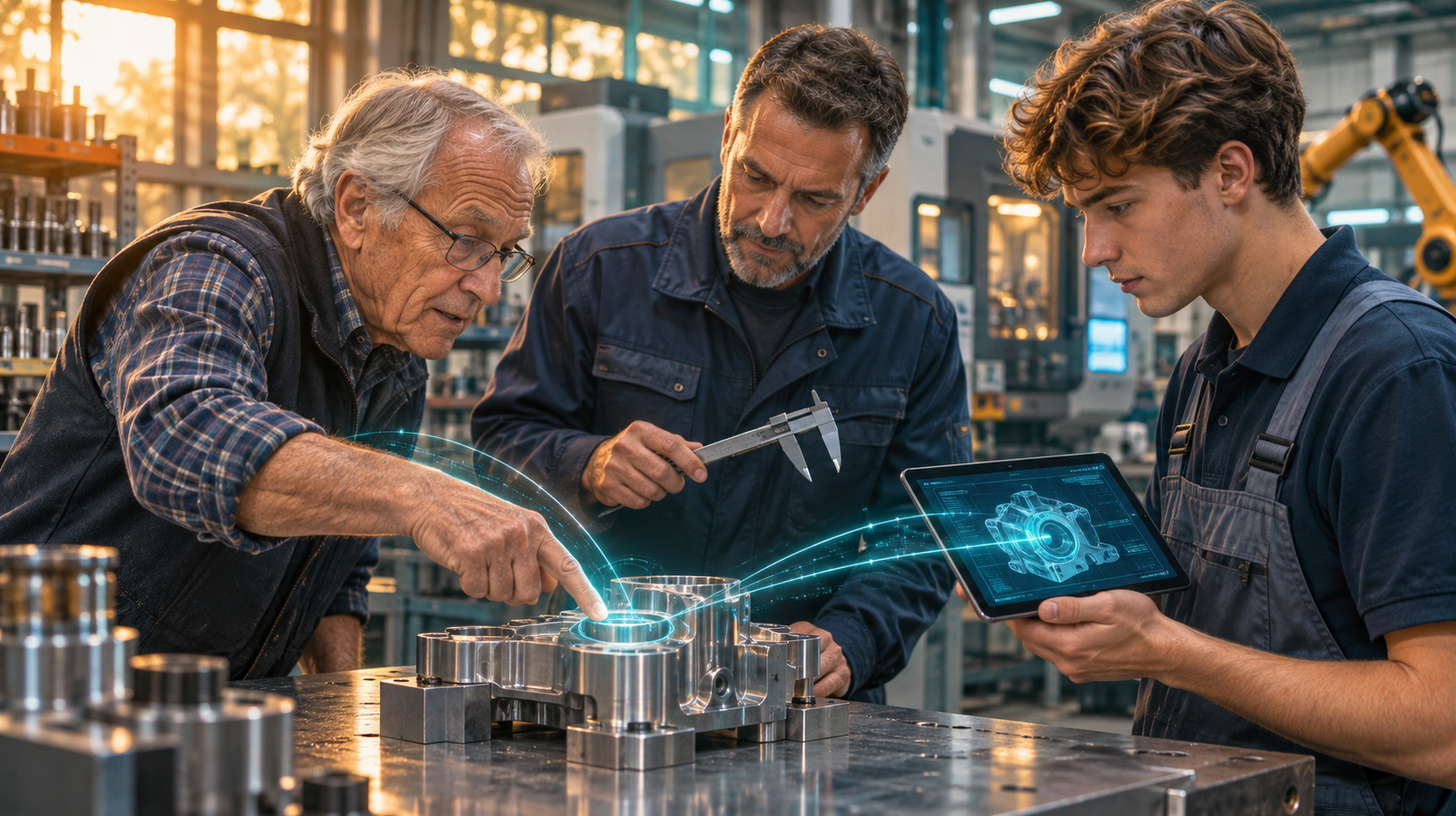
Expert knowledge meets artificial intelligence: Germany's AI future is decided not in the data center, but in the workshop – creative image on the topic, with AI: Xpert.Digital
The invisible treasure of German companies: What AI cannot learn on its own
AI can accelerate errors – if companies lose the knowledge of their specialists
Germany's decisive advantage in the AI age may lie where hardly anyone suspects it: not in enormous data centers or the latest language models, but in the minds and hands of experienced specialists. Their knowledge resides in manual skills, trained eyes, and the intuition to recognize when a machine isn't functioning correctly or a component needs closer inspection. It's rarely found in a manual – and it can't simply be copied.
But it is precisely this experiential knowledge that is in danger of being lost. Millions of employees from the baby boom generation are approaching retirement, while many companies are lacking young talent. At the same time, companies are introducing AI, which can accelerate processes and recognize patterns, but without the knowledge of the workforce, it may be working on the wrong problem. Germany's opportunity, therefore, does not lie in necessarily being at the forefront of the race for the biggest models. It lies in meaningfully combining human skills and artificial intelligence – and passing knowledge between generations in both directions. The crucial question is whether small and medium-sized enterprises (SMEs) still have enough time to do so.
China copies machines in months. Germany loses its experiential knowledge over years, and hardly anyone notices
Those who talk about the artificial intelligence boom usually focus on the visible. They talk about data centers, graphics processors, billion-dollar valuations, language models, and robotic arms that grasp components in seconds. All of this can be photographed, shown in presentations, and reflected in balance sheets. But what will truly make a company valuable with AI in the future lies somewhere that doesn't appear in any photograph: the experiential knowledge of people who have worked with machines, materials, customers, and mistakes for decades.
A machine can be replicated. An AI model can be developed, trained, and adapted to specific needs. However, why an experienced inspector takes a second look at a particular point during acceptance testing is often not explained in any manual. Perhaps they witnessed a weld fail at that exact spot fifteen years ago. Perhaps they know the supplier whose tolerances differ between winter and summer. Perhaps they can simply hear a motor sounding like a warning sign that something is wrong. In a critical situation, this knowledge determines whether a company profits from AI or merely makes a costly mistake more quickly.
This leads to a gamble that initially sounds counterintuitive. Especially in the age of AI, German SMEs could have a structural advantage. This isn't due to better software or larger data centers, as others are ahead in both areas. The advantage lies in an institution that has brought together young people and experienced professionals within the company for generations. Whether this gamble pays off, however, depends on two questions: What does one generation know that the next can still learn? And who is willing to listen in the other direction as well?
The Economics of Silent Knowledge
Economics has a somewhat cumbersome term for what experienced skilled workers, master craftsmen, and engineers possess: implicit knowledge. This refers to skills that are difficult or even impossible to put into words. Labor market research has long distinguished between explicit knowledge, which can be written down, communicated, and incorporated into curricula, and tacit knowledge, which is embedded in manual skills, perceptual patterns, and judgments. Experiential knowledge is considered a particularly highly developed form of procedural knowledge. It connects both levels in such a way that people can reliably solve tasks even under incomplete information, time pressure, and changing conditions.
Economically, this knowledge is remarkable for three reasons. First, it is hardly marketable. There is no market where you can buy a quality inspector's instinct for critical points. At best, you can hire the person who possesses it, and even then, the transfer only succeeds if the new environment allows them to apply their skills. Second, it is difficult to copy. Design drawings can be reconstructed through reverse engineering, production facilities can be purchased, and software can be reprogrammed. The interplay of process knowledge, customer understanding, and experience with mistakes that develops within an established company largely defies this logic. Third, it is lost if it is not passed on. Unlike a machine, which can be stored away, experiential knowledge disappears with the person who leaves the company.
This very characteristic is the core of the competitiveness of many German hidden champions. Their global market leadership is rarely based on a single spectacular invention. It is based on thousands of small improvements, on manufacturing tolerances that others cannot reliably achieve, and on the ability to solve customer problems before the customer can even articulate them. This is accumulated experiential knowledge, distributed across minds, hands, and departments. It doesn't appear on the balance sheet. But anyone who has ever witnessed a company suddenly generate a flood of complaints after the departure of two key individuals knows its value.
Why AI also accelerates errors
Artificial intelligence is essentially an amplifier. It processes data faster, recognizes patterns in larger quantities, and automates decisions that previously required human intervention. This is its enormous benefit. But it is also its risk, because an amplifier doesn't distinguish between good and bad signals. A model that learns from incomplete or distorted data not only passes on its weaknesses, it amplifies them.
In everyday industrial practice, this becomes very concrete. An AI-supported optical quality inspection system can check millions of components in a short time. But if no one knows which defect patterns are truly critical, it will reliably inspect the wrong things. A language model can formulate offers, maintenance instructions, and test reports in seconds. If it doesn't know the questions a demanding customer asks during acceptance testing, it delivers smoothly written documents that fail at the crucial moment. A predictive maintenance algorithm can evaluate sensor data. But if it lacks the knowledge of which deviations are harmless and which indicate a failure, it will either generate false alarms or a deceptive sense of calm.
The real value creation, therefore, doesn't arise in the model itself, but in the combination of the model and expert knowledge. Large, basic models are increasingly becoming mass-produced. They are available via interfaces, the price per calculation is falling, and their performance differences are shrinking. What distinguishes a company from its competitors is the question of what knowledge it can feed into these systems. This includes which error catalogs it maintains, which test criteria it has formulated, which exceptions it recognizes, and which customer requirements it understands. Data, however, is only half the story. Crucial is the judgment that determines which data actually matters.
This leads to an uncomfortable realization for all those who primarily view AI as a means of saving on experienced workers. Those who lay off the people with the deepest understanding of processes precisely when AI systems are being introduced deprive these systems of their most important resource. The calculation might work in the short term, but in the medium term it will result in costly mistakes.
China's generational divide as a lesson
Few examples illustrate the crucial role of intergenerational knowledge in a country's economic development more clearly than China. During the Cultural Revolution, higher education practically ground to a halt. Between 1966 and 1969, universities did not admit any new students. From 1970 to 1976, only applicants deemed politically reliable were accepted. It wasn't until the autumn of 1977 that the nationwide university entrance examination, the Gaokao, was reintroduced after an eleven-year hiatus. The famous Winter Gaokao of that year became a turning point for an entire generation.
The consequences of this rupture were immense. A generation lost years of education, teachers were persecuted, knowledge was devalued and, in many areas, not passed on. All the more astonishing, then, is what happened next. The following generation built an industrial economy in just a few decades whose pace is virtually unparalleled in economic history. Anyone who has visited Chinese industrial sites in the past two decades has witnessed how fields were transformed into industrial parks and suppliers into global market leaders. Today, China is the world's largest industrial nation. In terms of robot density in manufacturing, the country has overtaken Germany: with around 470 industrial robots per 10,000 employees, it recently surpassed the Federal Republic, and well over 1.7 million industrial robots now operate in Chinese factories.
And now a young Chinese generation is developing artificial intelligence, and with considerable success. Chinese language models have quickly caught up with the world's leading technologies, often with significantly fewer resources than their American counterparts. In a single country, three generations with very different backgrounds are thus converging: one that experienced the rupture of the past, one that tackled industrialization, and one that masters digital technologies with ease.
This contains a lesson that extends beyond China. Having three generations in the same country is a demographic fact. Bringing their knowledge together in a single company is an organizational challenge, and a significantly more difficult one at that. The experiential knowledge of the industrialization generation and the digital skills of the younger generation don't automatically merge. They must be combined in concrete working relationships—at the machine, in testing, in customer interactions.
When speed overshadows learning
An example from Shandong province illustrates just how concrete this challenge is. A large manufacturer of vehicles and agricultural machinery in the port city of Rizhao, a company with around 10,000 employees, runs its own apprenticeship program. Its director described to the International Labour Organization a problem familiar to many industrial companies: the high workload of day-to-day operations left little time for the systematic training of apprentices. Production took priority, and learning became an afterthought.
This observation hits a nerve. Ironically, the very pace that makes a company strong can deprive it of the time to pass on its expertise. In a growth phase where every machine hour counts and delivery deadlines are tight, the hour an experienced skilled worker spends with an apprentice appears as a cost factor. Its benefit only becomes apparent years later, when the apprentice is solving problems independently, avoiding mistakes, and mentoring others. Economically speaking, training is an investment with a long-term horizon and uncertain returns, because the trained employee can leave the company at any time. Markets heavily focused on short-term performance therefore systematically underinvest in this form of human capital.
China has recognized the problem. For several years, the government has been pushing forward with the development of a modern apprenticeship system that aims to better integrate practical experience in the workplace with classroom instruction, explicitly drawing on experiences from Europe. With international support, pilot companies have been recruited, training standards developed, and training phases structured. However, such a system cannot be created by decree in just a few years. It requires companies that understand training as part of their core identity, trainers with pedagogical and professional qualifications, recognized qualifications, and a social standing for vocational education that can compete with the academic path. In a society where the Gaokao (a type of apprenticeship) and university studies have been considered the gold standard for decades, this represents a cultural shift.
🎯🎯🎯 Data-driven B2B industry hub as a quasi-in-house solution

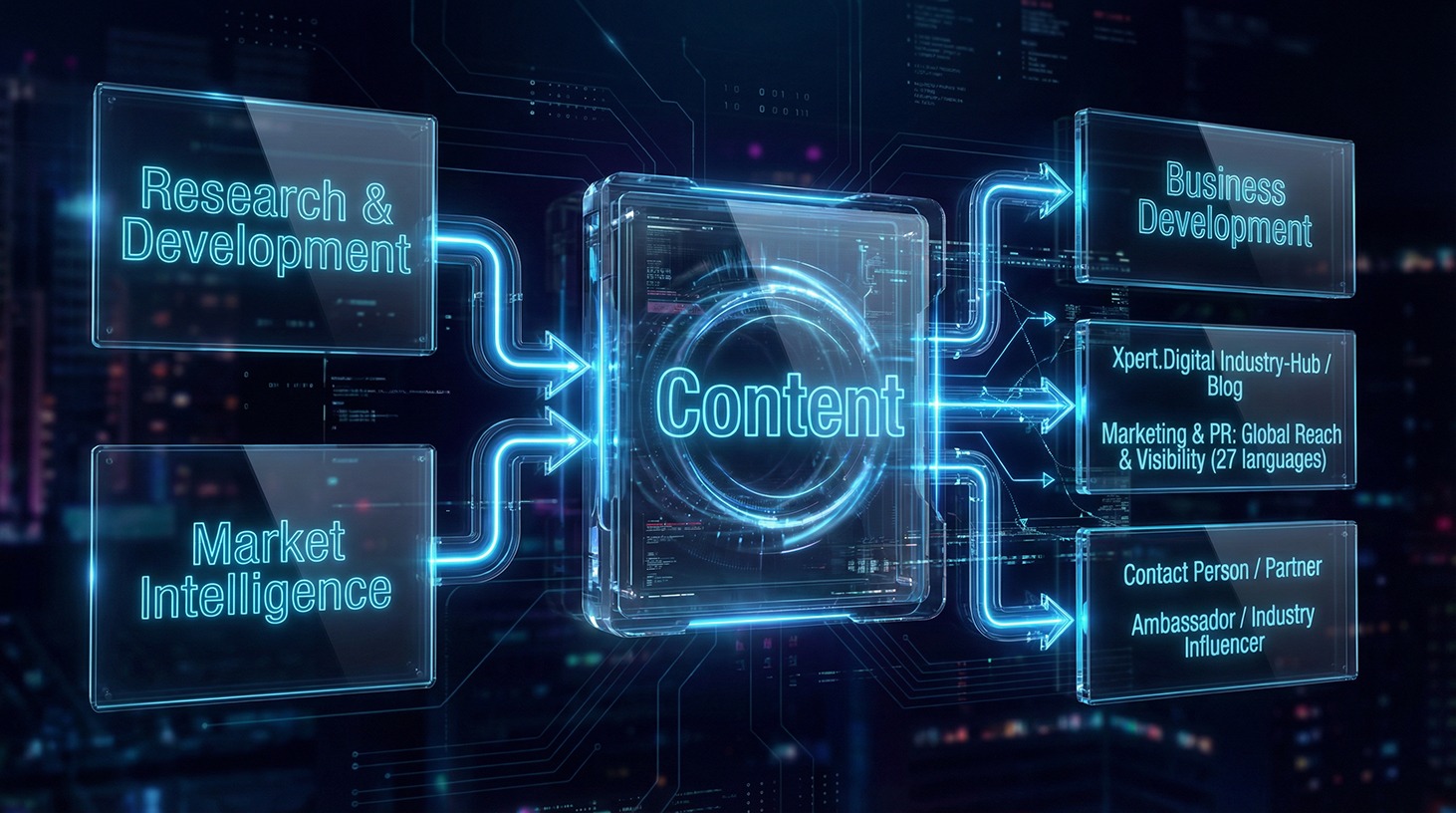
The quasi-in-house solution: How Xpert.Digital closes operational gaps in B2B marketing and sales – Smart Content-Driven Business - Image: Xpert.Digital
Xpert.Digital is a data-driven B2B industry hub led by Konrad Wolfenstein . The company acts as an external, quasi-in-house solution for industrial partners, closing operational gaps in marketing, content, and sales – without requiring additional resources on the client side.
More information here:
The challenges of demographic change for German SMEs
The German equation: Demographics meets digitalization
Anyone who concludes from this that Germany can sit back and relax is sorely mistaken. The German model has an advantage, but it is under pressure whose magnitude is often underestimated.
According to calculations by the German Economic Institute (IW), almost 19.5 million people from the baby boom generation will reach retirement age by 2036. At the same time, significantly fewer young people are entering the workforce. The net result is a looming labor shortage of around 4.3 million. This is more than just a statistical figure. It means that in the next ten years, a substantial portion of the accumulated experience and knowledge in German companies will be lost to retirement. Baby boomers, in particular, represent the most experienced workforce in many technical professions, quality management, maintenance, and sales of complex capital goods.
The situation is even more critical at the top of companies. More than a third of owners of medium-sized businesses are now over 60 years old, and another fifth are between 55 and 59. The average age is over 54. By the end of 2029, around 109,000 owners of small and medium-sized enterprises plan to hand over their businesses to new owners each year. At the same time, hundreds of thousands of entrepreneurs are planning to close their businesses due to a lack of successors, rather than transferring ownership. With every business that closes, not only jobs and revenue disappear, but also knowledge about customers, processes, and niche markets that can never be fully reconstructed.
The foundation upon which Germany's advantage rests is also crumbling. The number of newly concluded dual vocational training contracts fell to just under 476,000 in 2025. That's a good 10,000 fewer than the previous year, a decline of 2.1 percent, driven primarily by fewer company-based contracts. At the same time, many apprenticeship positions remain unfilled, while some young people cannot find a suitable placement. The mismatch between supply and demand is a recurring issue in vocational education policy.
The picture is similarly mixed when it comes to the use of artificial intelligence. Just over a quarter of German companies with at least ten employees were using AI technologies in 2025, compared to a fifth the previous year. The growth rate is remarkable. However, the gap between large and small companies is considerable. More than half of the companies with at least 250 employees use AI, while for companies with ten to 49 employees, it's not even a quarter. AI is currently taking hold most slowly precisely where experiential knowledge is particularly dense and vulnerable – namely in small and medium-sized industrial enterprises.
The German equation, therefore, is this: a large body of experiential knowledge, a rapidly shrinking number of its holders, declining numbers of young talent, and hesitant digitalization in SMEs. This can become a competitive advantage, but only if it is possible to secure the existing knowledge within a manageable timeframe, pass it on, and make it usable with new tools.
Three generations at one table
A conversation that took place in a medium-sized company illustrates how this can look on a smaller scale. Three people from three generations sat around the table. The oldest, Dirk, is 67 years old. He brings the questions a customer might later ask, the objections raised during acceptance testing, the critical inquiries about durability, and the experience of where projects typically fail. In the middle sits a 45-year-old with a background in mechanical engineering and quality management—someone who knows processes, standards, and testing logics. The youngest, Maxi, is 16 years old. He built the company's AI.
This situation challenges an unspoken order that still prevails in many companies today. If the decision about who could explain something to whom had been based on years of service, the AI developer would have been the last to get the go-ahead. In traditional hierarchies, knowledge flows from top to bottom, from the experienced to the newcomer, from the master to the apprentice. In a world where digital tools are evolving faster than training regulations can be adapted, this one-way street is no longer sufficient.
The true value of this triangle lies in the fact that each brings something that the others lack. The experienced individual knows which questions are important but may not be able to translate them into a system. The younger generation can build systems but doesn't know which questions they need to answer. The middle generation bridges the gap between these two worlds, structuring knowledge into processes, criteria, and testing procedures. Only through this interplay can an AI application emerge that not only functions technically but also withstands the scrutiny of a demanding customer.
Human resource research refers to the reverse trend, in which younger people introduce older people to new technologies, as reverse mentoring. In the age of AI, this becomes more than just a personnel development tool. It becomes a prerequisite for experiential knowledge to even be integrated into digital systems. This requires older people to be willing to listen to a sixteen-year-old. It requires younger people not to dismiss a 67-year-old's question as a lack of technological understanding, but rather as an indication of a problem their system has not yet solved. Both are more demanding than they sound because they touch upon status, self-image, and ingrained roles.
Dual vocational training as an underestimated AI infrastructure
This is where the strength of Germany's SMEs comes into play. With its dual vocational training system, Germany possesses an institution that achieves precisely what many other economies fail to do: it systematically brings young people and experienced professionals together in companies over several years, guided by clear rules. Apprentices learn not only in vocational school but also on real machines, working on real customer orders, under the guidance of people who have mastered their craft for decades. The system is secured through chambers of commerce, training regulations, and examinations, and despite some criticism, enjoys a level of social recognition that other countries envy.
Until now, dual vocational training has primarily been viewed as a tool for securing skilled workers and integrating young people into the labor market. In the age of AI, it is acquiring an additional, previously overlooked function: it serves as an infrastructure for knowledge transfer between generations, in both directions. The master craftsman can show the apprentice how to identify a defect. The apprentice can show the master craftsman how this knowledge will benefit the entire workshop tomorrow, because he knows how to structure it in a knowledge database, feed it into an AI assistant, or translate it into a digital inspection report.
This dual approach makes the model potentially an opportunity for all of Europe. The continent is unlikely to surpass either the United States or China in the race for the largest language models and the most powerful data centers. However, it can develop strength where AI meets industrial practice: in manufacturing, quality assurance, maintenance, logistics, and plant engineering. In these fields, the experiential knowledge of the workforce is the crucial resource, and Europe, especially the German-speaking countries with their tradition of vocational training, possesses this knowledge in abundance.
To unlock this potential, however, dual vocational training must evolve. Training regulations that treat digital skills only as a peripheral issue fail to reflect reality. Trainers themselves need access to AI tools and the freedom to use them in their daily training. Companies must provide apprentices with spaces where they can develop and test their own digital solutions, instead of simply fitting them into predefined processes. And the apprentice's role must shift from mere recipient to active participant. European AI law already obligates companies to ensure their employees have sufficient AI skills. Dual vocational training would be an obvious place to fulfill this obligation not as a bureaucratic burden, but as an investment.
From master knowledge to workshop memory
How can this concept be translated into practical business applications? Experience shows that many knowledge management projects fail because they start too abstractly. Software is purchased, a wiki is set up, and the hope is that experienced employees will contribute their knowledge. This rarely happens because tacit knowledge cannot be transformed into text at the push of a button, and because those involved simply don't have the time in their daily work. A more promising approach is one that focuses on the concrete work itself.
A first step is to identify the knowledge silos within the company. Which employees possess knowledge that no one else has? Which of them will retire in the next five years? At which process steps do the most costly errors occur, and who knows how to avoid them? Such a risk analysis of the knowledge base is new for most medium-sized businesses, even though it is just as important for future viability as an assessment of machinery or the financial situation.
A second step involves forming intergenerational tandems or trios with a clear mission. Instead of simply passing on general knowledge, an experienced professional and a younger, digitally savvy colleague work together on a specific problem. They might, for example, develop an AI assistant for troubleshooting a particular system, a questionnaire for customer acceptance testing, or a digital test protocol that documents typical error patterns with photos and explanations. The knowledge isn't assessed abstractly, but rather made visible through dialogue. The experienced colleague explains why they're paying close attention to a particular point, and the younger colleague asks questions until a comprehensible rule emerges.
Modern AI tools significantly simplify this process. Recordings of conversations can be automatically transcribed and structured. Photos and videos of workflows can be linked with explanations. Speech models can access company documents, complaint reports, and test protocols, and respond to employees in natural language. In this way, a workshop memory gradually emerges, one that doesn't gather dust in a folder but is readily available in everyday work. Younger employees ask the digital assistant, which has learned from experienced colleagues, questions, and the experienced colleagues see that their expertise extends beyond retirement.
A third step concerns incentives and recognition. Knowledge transfer takes time, and this time must be planned and valued. Companies that measure their most experienced employees solely by production output will hardly succeed in getting them to share their knowledge. The experience from Shandong applies here just as it does in Swabia. Where the pace of daily business overshadows everything else, no knowledge transfer takes place. Fixed time allocations for knowledge transfer, visible appreciation of the mentoring role, and flexible models for the transition to retirement, such as part-time work or consulting activities after retirement, are all beneficial. These are particularly accessible options for small and medium-sized enterprises (SMEs), which often know their experienced employees personally.
A fourth step is quality assurance of established knowledge. Not everything an experienced employee considers correct is actually correct. Some rules of thumb originate from times when different materials, machines, or standards were in place. Therefore, a workshop's collective memory must be maintained, reviewed, and updated. Here, too, intergenerational collaboration can be helpful. Younger employees question established practices, older employees explain their origins, and together they decide what should remain.
The limits of the thesis
An honest analysis must also acknowledge the weaknesses of this gamble. First, Germany's lead in experiential knowledge is not a given. China has built up a vast base of industrial experience in just a few decades. The generation that spearheaded its industrialization possesses enormous process knowledge, and it's not a given that this knowledge will be passed on less effectively than German knowledge. Furthermore, Chinese companies are actively recruiting experienced engineers from Europe, and acquisitions of European SMEs have, for years, also served the purpose of knowledge transfer. Implicit knowledge is difficult to copy, but certainly susceptible to acquisition.
Secondly, a narrative that relies primarily on experiential knowledge may underestimate the speed at which machines learn. Modern AI systems learn patterns from vast amounts of data that no human has ever consciously formulated. In some areas of image processing, process optimization, and materials research, they already surpass experienced professionals. Those who possess millions of sensor data points and a high degree of automation, as is increasingly standard in Chinese factories, can replace some experiential knowledge with sheer volumes of data. The thesis of irreplaceable expert knowledge, therefore, does not hold true everywhere. It is strongest where production runs are small, variants are numerous, and customer requirements are individualized—precisely in special-purpose machine manufacturing, plant engineering, and many niche sectors of medium-sized businesses.
Thirdly, Germany faces problems that no matter how good its vocational training system is, it cannot compensate for them. High energy prices, lengthy approval processes, weak investment momentum, hesitant digitalization of public administration, and a comparatively slow adoption of digital technologies in small businesses are all impacting its competitiveness. The declining number of apprenticeship contracts demonstrates that the dual system itself is under pressure. An advantage that is not utilized is no advantage at all.
Fourth, there is a danger of complacency. The narrative of invisible experiential knowledge can become a convenient excuse for postponing necessary changes. Those who rely on the skills of their workforce without safeguarding, digitizing, and developing them transform their greatest advantage into their greatest risk. Because experiential knowledge that disappears upon retirement is irretrievably lost.
The copy or the skill: Which is lost faster?
Despite these objections, the fundamental thesis remains valid, precisely because it contains a clear call to action. Competition in the AI age will not be decided solely by computing power and model size. To a significant extent, it will be decided by which companies and economies succeed in combining human experience with machine intelligence. The best models will be available to everyone. The best expertise will remain scarce.
In this competition, Germany has a genuine advantage. It boasts a dense network of specialized medium-sized companies with in-depth process knowledge, a proven system that brings generations together within the company, and a tradition of valuing professional skills in society. At the same time, time is running out. In the next ten years, millions of experienced professionals will retire, tens of thousands of companies seek succession every year, and the number of apprenticeship contracts is declining. The window of opportunity to secure existing knowledge and combine it with new tools is limited.
This leads to the real strategic question for Germany as a business location. China can copy a machine, and at a speed that repeatedly surprises European manufacturers. Germany, on the other hand, risks losing its expertise quietly, year after year, with every retirement that isn't accompanied by a proper handover. Both are threats. The second is more dangerous because it doesn't make headlines and because it's irreversible. A copied machine can be surpassed by a better one. Lost expertise can only be rebuilt with great difficulty and incompletely.
The good news is that the solution doesn't have to lie in billion-dollar programs or large-scale projects. It begins at a table where a 67-year-old, a 45-year-old, and a 16-year-old talk to each other. Each contributes their expertise, and each listens to the others, regardless of who has been with the company the longest. If these conversations take place in tens of thousands of companies, systematically supported by a modernized dual vocational training system and AI tools that make knowledge visible and accessible, then the invisible capital of small and medium-sized enterprises (SMEs) will become a competitive advantage that no factory in the world can simply replicate.
The bet on Germany is therefore not a bet on nostalgia, on the good old workshop, or on the superiority of past virtues. It relies on the generations being willing to learn from each other, in both directions. Anyone who wants to win this must start today, while the people whose knowledge is at stake are still working in the company.
📈🚀 From visibility to trust 👀🤝 Your scalable path with Xpert.Digital

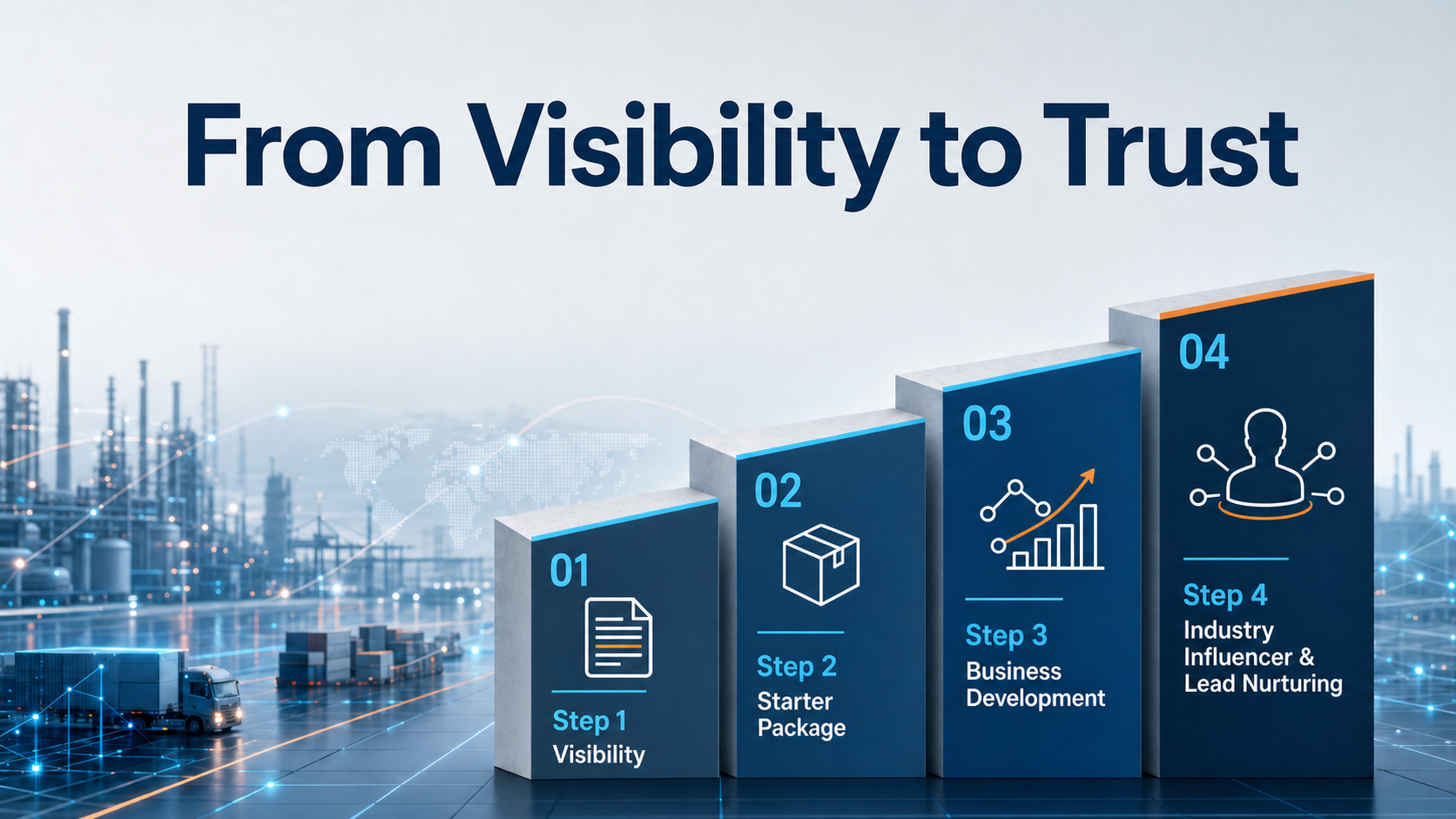
From visibility to trust: Your scalable path with Xpert.Digital - Image: Xpert.Digital
In industrial B2B, sustainable business relationships rarely emerge overnight. They develop step by step – through visibility, professional relevance, recurring touchpoints, and growing trust. Xpert.Digital's 4-stage model addresses precisely this: It offers a structured path that begins with a manageable entry point and can evolve into deeper collaboration in business development if needed.
Instead of relying on loud marketing promises, this model puts the relationship at the forefront. Companies start with clearly defined, easily calculable measures and then decide, based on their own experience, how far they want to expand the collaboration. A key factor for this undisturbed trust-building process: The platform completely avoids annoying advertising ads, so the editorial focus remains solely on the companies' expertise.
More information here:
Your global marketing and business development partner
☑️ Our business language is English or German
☑️ NEW: Correspondence in your native language!

Konrad Wolfenstein
I and my team are happy to be available to you as your personal advisor.
You can contact me by filling out the contact form here wolfenstein@xpert.digital:or simply call me at +49 7348 4088 965. My email address is
I'm looking forward to our joint project.