Europe's arms program: Belated course correction or expensive symbolic politics? – Image: Xpert.Digital
From peace dividend to defense investment – A continent is rearming itself
A new era of arms autonomy: Europe's multi-billion euro program for the arms industry
The European Union has sent a historic signal with a budget of €1.5 billion for the European Defence Industry Programme (EDIP). The EDIP is intended to strengthen the production capacities of the European defense industry, stabilize supply chains, and reduce strategic dependence on American weapons systems. Of this amount, €300 million will flow directly into cooperation with the Ukrainian defense industry, underscoring the geopolitical dimension of this industrial policy intervention. However, behind the facade of these announcements lies a fundamental reorientation of European economic and security policy, the economic implications of which extend far beyond military matters.
The central challenge is that Europe currently sources more than 60 percent of its weapons systems from outside the European Union, with the US being the dominant supplier at over 64 percent. The EDIP (European Defense Initiative) sets a clear target: a maximum of 35 percent of components may originate from third countries in the future. By 2030, at least 50 percent of defense equipment is to be procured within the EU, and by 2035, this figure is to reach 60 percent. These figures mark nothing less than a paradigm shift in industrial policy, requiring investments in the hundreds of billions and intended to transform the entire European defense industry.
Related to this:

The legacy of the peace dividend: Empty arsenals and painful dependencies
After the end of the Cold War in 1991, Europe underwent a period of comprehensive disarmament and a reorientation of its security policy. The so-called peace dividend led to drastic cuts in defense budgets in almost all European states. While the USA transformed its arms industry into highly efficient corporations like Lockheed Martin, Raytheon, and Northrop Grumman through massive consolidation efforts in the 1990s, European states largely retained their fragmented national structures.
The German armed forces, for example, reduced their air defense missile units from 10,970 personnel in 1990 to only around 2,300. Of the original 36 Patriot squadrons, only twelve remained. This trend was mirrored throughout Europe. European arms companies shrank to highly specialized manufacturers producing small quantities of technologically sophisticated systems and dependent on export markets to maintain their production lines.
The structural weaknesses of this development were brutally exposed by the Russian attack on Ukraine in February 2022. EU member states had pledged to deliver one million artillery shells to Ukraine within twelve months, but by January 2024 had only fulfilled 52 percent of this commitment. European production capacity for 155mm artillery ammunition was so limited that it could guarantee neither deliveries to Ukraine nor the replenishment of their own stockpiles. By comparison, Russia produced an estimated 1.7 million rounds of artillery ammunition in 2022 and planned for a production volume of three million rounds by 2025. The US doubled its production capacity from 14,000 to 28,000 rounds per month and announced its goal of producing one million shells annually by 2025.
This discrepancy highlights the core problem of European defense policy: For decades, the continent relied on the US to guarantee its military superiority in a crisis. The resulting strategic dependence affects not only weapons systems but also extends to critical supply chains. China is the main supplier of nitrocellulose, a key component of propellant powder, to European manufacturers. This dependence on Russia's most important ally reveals the geopolitical vulnerability of European defense structures.
A patchwork quilt instead of a fortress: The fragmentation of the European arms landscape
The European defense industry is dominated by a handful of large corporations, whose revenues, however, lag far behind those of their American and increasingly also Chinese competitors. At the top is the British company BAE Systems, with defense revenues of US$27.4 billion in 2022. It is followed by the Italian company Leonardo with US$14.5 billion and Airbus Defence and Space with US$11.2 billion. Rheinmetall, Germany's largest arms manufacturer, achieved total revenues of approximately €10 billion in 2024, placing it 20th among global defense companies. By comparison, the American industry leader Lockheed Martin generated revenues of US$64.65 billion in 2023, almost six times that of Rheinmetall.
These differences in scale are not accidental, but rather the result of fundamental structural problems. Europe is estimated to use over 170 different weapons systems, while the US manages with only 30. This fragmentation prevents economies of scale, increases unit costs, and stifles technological innovation, as research and development budgets are spread across too many parallel programs. The Franco-German company KNDS, which emerged from the merger of Krauss-Maffei Wegmann and Nexter, exemplifies this dilemma. Despite a formal merger in 2015, both companies continue to operate largely independently. The Leopard 2 main battle tank, the flagship of KNDS Germany, requires key components such as the gun, fire control system, and ammunition from its competitor, Rheinmetall.
National procurement policies further exacerbate this fragmentation. Each EU member state strives to maintain the broadest possible portfolio of its own production capabilities in order to safeguard its industrial and security sovereignty. The principle of juste retour, according to which each country seeks to secure as much as possible from the EU budget, prevents a concentration on a few highly efficient production sites. These national solo efforts have even increased in recent years, as rising military budgets have incentivized the allocation of funds to local jobs rather than pooling resources.
The EDIP attempts to break down these structures by providing financial incentives for cross-border cooperation. Projects must involve at least four EU member states to be eligible for funding. The European Defence Fund, with a budget of €8 billion for the period 2021-2027, complements these efforts. However, compared to the scale of American defense research, which spends approximately €28 billion annually on research alone, these sums remain modest.
The market power of the US is manifested not only in the size and efficiency of its defense contractors, but also in its ability to influence European procurement decisions. Between 2015-2019 and 2020-2024, arms imports by European NATO members doubled, with the US share rising from 52 to 64 percent. For critical systems such as missile defense, aircraft engines, and drones, Europe often lacks competitive alternatives. Germany, for example, opted for the Israeli-American Arrow 3 missile defense system at a cost of approximately €4 billion because comparable European systems were either unavailable or technologically inferior.
Between record spending and capability gaps: The quantitative dimension of the paradigm shift
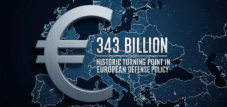
Defense spending by the 27 EU member states reached a record high of €343 billion in 2024, representing a 19 percent increase compared to the previous year. The European Defence Agency forecasts a further increase to €381 billion for 2025. This would mean that, for the first time, the NATO target of two percent of GDP would be exceeded, a target that most European states have failed to meet for many years. Measured as a percentage of GDP, spending in 2024 amounted to approximately 1.9 percent and is projected to rise to 2.1 percent in 2025.
However, these increases mask structural deficiencies. The new NATO target, agreed upon at the summit in The Hague in June 2025, stipulates that all member states should spend a total of five percent of their GDP on defense by 2035: 3.5 percent for traditional defense spending and a further 1.5 percent for defense-related infrastructure. For Germany, this would mean increasing annual defense spending from the current level of approximately 90 billion euros to over 200 billion euros. The entire EU is estimated to have to spend more than 630 billion euros annually.
These figures illustrate the scale of the impending economic transformation. The investment share of EU defense spending already reached 31 percent in 2024, significantly above the NATO target of 20 percent. For 2025, this share is expected to rise to €130 billion, or 34 percent. These investments are primarily directed towards the procurement of equipment and research and development.
The production capacity of the European arms industry is growing at a historic pace. According to an analysis of satellite data by the Financial Times, European weapons factories have been expanding three times faster since 2022 than in peacetime, now occupying over seven million square meters of new industrial space. Rheinmetall, for example, plans to increase its production of artillery shells to 700,000 units annually, distributed across manufacturing facilities in Germany, Spain, South Africa, and Australia. A new munitions plant was built in Unterlüß, Lower Saxony, and a production facility was inaugurated in Denmark with government attendance.
Despite this expansion, critical gaps remain. In 2023, Europe possessed 1,627 main battle tanks, but requires between 2,359 and 2,920, depending on the scenario. For air defense systems like Patriot and SAMP/T, only 35 units were available in 2024, while 89 would be needed. NATO is calling for a massive expansion of ground-based air defense from the current 293 units to 1,467. These capability gaps cannot be closed in the short term, as building production capacity takes years and requires highly skilled personnel as well as long-term planning certainty.
Hub for Security and Defense - Advice and Information
Hub for Security and Defense - Image: Xpert.Digital
The Security and Defence Hub offers expert advice and up-to-date information to effectively support companies and organizations in strengthening their role in European security and defence policy. Working closely with the SME Connect Defence Working Group, it particularly promotes small and medium-sized enterprises (SMEs) that wish to further develop their innovative capacity and competitiveness in the defence sector. As a central point of contact, the Hub thus creates a crucial bridge between SMEs and European defence strategy.
Related to this:
How the Ukraine war is accelerating Europe's arms innovation
War as a driver of innovation: Ukraine as a testing ground and strategic ally
A remarkable development in the European defense sector is the increasing integration of the Ukrainian arms industry. Since the Russian attack in 2022, Ukraine has increased its defense production 35-fold. The value of production increased tenfold from 2021 to 2024, reaching over €10 billion, and could triple again in 2025. The number of drone manufacturers has grown from seven to over 500 companies, producing more than four million units annually. In the electronic warfare sector, the number of companies has risen from 10 to over 300.
The BraveTech-EU initiative, announced at the Ukraine Recovery Conference in Rome in July 2025, institutionalizes this cooperation. With a total budget of €100 million, funded equally by the EU and Ukraine, the program links the Ukrainian BRAVE1 platform with EU instruments such as the European Defence Fund. The BRAVE1 platform has registered over 3,500 developments, codified more than 260 according to NATO standards, and awarded grants worth 1.3 billion hryvnia.
For European companies, Ukraine offers a unique advantage: the opportunity to test technologies under real combat conditions. German companies like Diehl Defence are testing their robotic systems via BRAVE1 at the training center of the 3rd Assault Brigade. Such tests provide insights that cannot be gained in any laboratory or simulator and significantly accelerate development cycles. The Ukrainian government is planning record investments of €16 billion for weapons production and procurement by 2025, representing approximately 38 percent of the state budget and 20 times pre-war spending.
Nevertheless, Ukrainian production capacity is only utilized at about 40 percent, primarily due to inadequate protection of production facilities and a lack of funding. Ukrainian arms companies are pushing for export rights, as they can produce more than the country itself consumes. Industry leaders argue that exports would enable the mass production necessary to reduce costs and strengthen domestic defense. This debate reveals a fundamental tension between short-term military needs and long-term industrial structures.
Related to this:


The high price of security: Economic risks and political turmoil
Europe's massive military buildup carries significant economic, social, and geopolitical risks. Fiscally, NATO's five percent target entails a dramatic reallocation of public resources. For Germany, this would require additional spending of more than €100 billion annually, equivalent to over 40 percent of the current federal budget. These funds must be raised either through tax increases, new borrowing, or cuts in other areas. Each of these options carries considerable political and economic risks.
The question of prioritization is becoming increasingly controversial. While investments in defense equipment create jobs and stimulate short-term demand, they do not generate long-term productivity gains like investments in education, infrastructure, or research. The Draghi report on European competitiveness, presented in September 2024, emphasizes the need for massive investments in innovation, decarbonization, and building an independent defense industry. However, pursuing all these goals simultaneously requires investments on a scale not seen in Europe since the Marshall Plan.
Another structural risk lies in technological dependencies. The European defense industry relies on supplies in critical areas that are subject to geopolitical risks. Taiwan produces more than 90 percent of the world's most advanced semiconductors. These chips are indispensable for modern weapons systems, from guided missiles and drones to communication systems. A military escalation in the Taiwan conflict would drastically impact the European defense industry and could lead to estimated losses of US$500 billion. Although Europe is investing in building its own semiconductor capacities, its dependence on Taiwan will persist for the foreseeable future.
Arms export policy remains a focal point of ethical and security policy controversies. German arms exports to Saudi Arabia, a country playing a controversial role in the Yemen war, have been repeatedly criticized and temporarily restricted. Similar discussions exist regarding deliveries to Turkey. The balance between the economic interests of the arms industry, security policy considerations, and human rights standards remains precarious. The EDIP exacerbates this dilemma, as it is intended to strengthen European production capacities on the one hand, but could also facilitate exports to third countries on the other.
The consolidation of the European arms industry is progressing slowly and fraught with conflict. While Rheinmetall and Leonardo have entered into a strategic partnership for the Italian tank market and established a joint venture with a volume exceeding €20 billion, national interests remain dominant. The Franco-German project for the Main Ground Combat System, the battle tank of the future, is paralyzed by jurisdictional disputes and national considerations. What was originally slated for introduction in 2035 is now being pushed back beyond 2040. At a time when speed in the arms race is increasingly becoming the decisive factor for success, this paralysis jeopardizes Europe's strategic capability.
Between strategic autonomy and failure: Three scenarios for the future
The future of the European defense industry is shaped by several factors, the interplay of which involves considerable uncertainty. In the optimistic scenario, Europe succeeds in overcoming fragmentation and achieving economies of scale through coordinated procurement and production. Investments in research and development would close technological gaps, particularly in air defense, precision munitions, and autonomous systems. Cooperation with Ukraine would integrate combat-proven innovations into European production lines. In this scenario, Europe would indeed source the targeted 60 percent of its defense equipment from domestic production by 2035 and substantially strengthen its strategic autonomy.
The more likely moderate scenario envisions a gradual improvement, but without fundamental structural change. National procurement traditions remain dominant, and the EDIP budget is insufficient to finance truly transformative projects. Europe would reduce its dependence on the US, but not overcome it. Production capacities would grow, but more slowly than demand. Technological breakthroughs would remain isolated, while structural inefficiencies persist. In this scenario, Europe would continue to import 40 to 50 percent of its weapons systems and would only be globally competitive in niche areas.
The pessimistic scenario assumes that the fiscal burdens will lead to political upheaval. The simultaneous need to invest in climate protection, digital infrastructure, and social welfare states overwhelms public budgets. Populist movements gain support by portraying military spending as a waste of public funds. European integration comes under pressure, and unilateral national actions increase. In this scenario, the EDIP would fail, fragmentation would worsen, and Europe would further lose its strategic capacity.
Disruptive technologies could transform the entire landscape of European defense planning. Artificial intelligence, autonomous weapon systems, hypersonic missiles, and space weapons are already defining new dimensions of military superiority. China and the US are investing heavily in these areas, while Europe hesitates due to regulatory concerns and ethical debates. If Europe falls behind in these key technologies, massive investments in conventional weapons systems could prove to be a strategic miscalculation.
Geopolitical shocks remain the greatest risk. A military escalation in the Taiwan conflict would disrupt global supply chains and cut Europe off from critical technology imports. A US withdrawal from NATO, conceivable under certain political constellations, would force Europe to drastically accelerate its defense capabilities. Conversely, a de-escalation of the war in Ukraine could reduce political pressure for rearmament and lead to further cuts before the structural problems are resolved.
Catalyst or symbolic politics: A final assessment of the defense policy turnaround
The European Defence Industry Programme (EDIP) marks a historic turning point. For the first time in decades, Europe acknowledges the need for substantial investment in its defense industry and commits to overcoming national fragmentation. However, at €1.5 billion, the EDIP budget falls far short of what would be required for genuine structural change. By comparison, Germany's €100 billion special fund is 66 times larger than the entire EDIP budget.
The central strategic question is whether Europe is prepared to bear the necessary economic and political costs. Achieving the five percent target would cost Europe over €630 billion annually, more than double current spending. These funds must be mobilized while simultaneously requiring massive investments in decarbonization, digital transformation, and social security systems. The question is not whether Europe can raise these funds, but whether it has the political will to manage the associated distributional conflicts.
Significant growth opportunities are opening up for companies, particularly in the technology sector. Dual-use technologies, which can be deployed for both civilian and military purposes, are becoming a focus of policy. SMEs and start-ups are gaining access to financing and markets previously unavailable to them through instruments such as EUDIS. The BraveTech EU initiative offers additional cooperation opportunities with combat-proven Ukrainian defense technology. Companies that enter these markets early can secure long-term competitive advantages.
For political decision-makers, the defense policy shift requires a recalibration of fiscal, industrial, and foreign policy priorities. The debt brake, long considered non-negotiable in Germany, is now up for discussion. European integration must prove itself in defense policy, an area that traditionally symbolizes national sovereignty. The balance between alliance loyalty to the US and Europe's strategic autonomy must be readjusted.
For investors, the shift in defense policy signals a fundamental change in capital flows. Defense stocks like Rheinmetall have multiplied in value since 2022. The order books of European defense companies are at record levels. KNDS, with an order backlog of €23.5 billion, is planning an IPO that aims to transform the company into a European champion. However, this development also carries risks. Defense stocks are volatile and react sensitively to geopolitical events and changes of government. The ethical controversies surrounding arms exports could lead to stricter regulations.
The long-term significance of the EDIP will be measured by its success in overcoming the structural weaknesses of the European defense industry. Fragmentation across more than 170 weapon systems, a lack of consolidation, dependence on critical imports, and insufficient research investment are problems that have accumulated over decades. They cannot be solved with a budget of €1.5 billion and a three-year timeframe. At best, the EDIP can act as a catalyst, initiating more far-reaching reforms. If it fails to do so, it will go down in history as expensive symbolic politics, yet another missed opportunity for a continent that recognized the signs of the times but failed to act in time.
Economic analysis shows that Europe's defense transformation is overdue, underfunded, and fraught with considerable risks. Its success will determine not only the continent's military capability but also its economic competitiveness, political coherence, and role in an increasingly multipolar world order. The coming years will reveal whether Europe possesses the will and the resources to undertake this transformation. The alternative would be progressive strategic marginalization in a world where military strength has once again become the currency of geopolitical power.
Consulting - Planning - Implementation

Markus Becker
I would be happy to serve as your personal advisor.
Head of Business Development
Chairman SME Connect Defense Working Group
Consulting - Planning - Implementation
Konrad Wolfenstein
I would be happy to serve as your personal advisor.
You can contact me at wolfenstein∂xpert.digital or
Just call me on +49 7348 4088 965 .
Your dual-use logistics experts
Dual-use logistics experts - Image: Xpert.Digital
The global economy is currently undergoing a fundamental transformation, a watershed moment that is shaking the foundations of global logistics. The era of hyper-globalization, characterized by the relentless pursuit of maximum efficiency and the "just-in-time" principle, is giving way to a new reality. This new reality is marked by profound structural breaks, geopolitical power shifts, and increasing fragmentation of economic policy. The once taken-for-granted predictability of international markets and supply chains is dissolving and being replaced by a period of growing uncertainty.
Related to this: