Minimum prices for Chinese electric cars: Europe's risky balancing act between climate goals and industry protection – Image: Xpert.Digital
The EU wants to protect itself from dumping – and at the same time opens the door for a Chinese automotive offensive on its own soil
From punitive tariffs to price promises: Brussels' new line
In the dispute over Chinese electric cars, the EU is making a remarkable change of course: Instead of high punitive tariffs, minimum prices are to be introduced, which Chinese manufacturers can commit to as part of so-called price obligations. In effect, Brussels is replacing a harsh, unilateral protection mechanism with a kind of contractually regulated, "controlled" market access.
The basic logic: The anti-subsidy tariffs of up to 35.3 percent on battery electric vehicles (BEVs) from China, introduced in 2024 – in addition to the regular 10 percent tariff on passenger car imports – will remain in place as a deterrent, but can be circumvented if manufacturers commit to selling their vehicles at a minimum import price accepted by the Commission. This minimum price should apply individually to each model and configuration, for example, to a specific version of a compact SUV, and not across the board to all vehicles from a manufacturer.
The Commission's newly published guidelines outline the conditions:
First, the minimum price must be sufficient, from the EU's perspective, to offset the harmful effects of subsidies granted in China. Second, its effect should be "equivalent" to the current level of protection afforded by tariffs. Third, arrangements must be avoided in which manufacturers cross-subsidize losses on electric vehicle sales through other products – such as hybrids or combustion engine vehicles. Fourth, planned investments in the EU are explicitly included as a positive factor in the assessment.
This makes it clear: it's not just about trade policy in the narrow sense, but about an industrial policy deal – market access in exchange for commitments to locations. The Chinese Chamber of Commerce in the EU is already praising this as a "soft landing" for the process; Beijing, in turn, is presenting the model as proof that disputes can be resolved within the framework of WTO rules.
The China shock on four wheels: How deeply Chinese electric cars are already anchored in Europe
To understand the implications of this step, it's worth looking at the market figures. Imports of Chinese vehicles into the EU have expanded dramatically in just a few years. In 2023, around 438,000 battery-electric passenger cars were imported from China into the EU, with a value of almost €9.7 billion. Overall, in 2023, around 21.7 percent of all BEVs sold in the EU were of Chinese manufacture – this also includes models from Western brands that have their vehicles produced in China.
The pure market share of Chinese brands (BYD, MG/SAIC, Geely brands such as Zeekr, Nio and others) was almost 8 percent of the BEV market in 2023 and continued to rise in many statistics until 2025. In individual countries such as Norway, which is considered the "test market of Europe" particularly for new electric car concepts, Chinese brands already reached around 10 percent market share across all drive types by 2025.
In parallel, Chinese manufacturers have established themselves as a global export powerhouse. China is now the world's largest exporter of automobiles, with a strong focus on electric and hybrid vehicles. The EU market plays a key role in this: in 2023, 18 percent of all vehicles imported into the EU came from China, and a disproportionately large share of these were electric cars.
The asymmetry in bilateral automotive trade is pronounced. While the EU imported nearly 438,000 battery electric vehicles (BEVs) from China in 2023, only about 11,000 BEVs went from the EU to China. European manufacturers are significantly weaker in the Chinese electric vehicle segment than Chinese manufacturers are in Europe.
Why the tariffs have only partially achieved their goal
The tariffs introduced in 2024 were a classic response to an identified subsidy regime: In an anti-subsidy investigation, the EU Commission found that the Chinese BEV value chain benefited extensively from state support – for example, through favorable loans from state banks, direct subsidies, tax breaks and discounted inputs in battery and raw material chains.
The resulting tariffs varied depending on the manufacturer and their willingness to cooperate: BYD was charged 17 percent, Geely 18.8 percent, cooperating manufacturers like Tesla and BMW 7.8 and 20.7 percent respectively, and non-cooperating manufacturers like SAIC even up to 35.3 percent – in each case in addition to the regular 10 percent tariff. In total, this resulted in an effective tariff burden of up to 45.3 percent on certain BEV models.
Economically, these tariffs should achieve three effects: Firstly, reduce the price advantage of Chinese electric cars; secondly, give European manufacturers time to strengthen their own electric car range in the volume segment; and thirdly, build negotiating power vis-à-vis Beijing.
The overall picture is mixed, however. In the BEV segment, many vehicles manufactured in China became more expensive – which provided short-term relief for European manufacturers, but at the same time kept the end-customer price for electric cars high. Simultaneously, some Chinese competitors were able to simply circumvent the tariffs by adjusting their product strategies.
This is particularly evident in the cases of BYD and MG (SAIC): Both have significantly shifted their European offerings towards plug-in hybrids and full hybrids since the introduction of the tariffs, as these vehicles were not affected by the additional duties imposed on BEVs. BYD, previously almost exclusively focused on pure electric vehicles, saw an explosive increase in PHEV registrations in the EU in 2025, while MG massively expanded its hybrid range and BEV sales declined.
Furthermore, despite tariffs, the market share of Chinese brands in the electric vehicle segment continued to grow. Data for 2025 shows that Chinese brands were able to increase their BEV market share to approximately 7.6 percent in 25 EU member states; total sales of Chinese brands in Europe increased by around 90 percent. The tariffs thus slowed the trend but did not reverse it – and at the same time created new distortions through the alternative channel of hybrid vehicles.
Minimum import prices as a "tailor-made" trade barrier
Against this backdrop, the move towards minimum prices appears as an attempt to employ a more flexible and targeted instrument. Legally, the EU is building on the concept of "price commitments" provided for in WTO rules: Exporters can be offered the option of suspending anti-dumping or anti-subsidy proceedings if they commit to raising their export prices to an agreed level.
The design outlined above is remarkably granular:
- Minimum prices are set on a model- and configuration-specific basis, for example for a specific battery size and vehicle equipment.
- The amount can either be derived from previous import prices plus the calculated subsidy or customs differential, or be based on comparable EU models without subsidies, including distribution costs and a reasonable profit margin.
- In addition, volume limits and contract durations can be agreed upon to make abuse and subsequent undercutting more difficult.
- Investment commitments – such as the construction of factories or R&D centers in the EU – should be taken into account positively, without formally being part of the price formula.
Economically, this corresponds to a "managed trade" approach: Instead of letting pure market forces take effect or roughly isolating the market through tariffs, prices and, in some cases, quantities are negotiated within a tight regulatory framework.
Look, this little detail saves up to 40% installation time and reduces costs by up to 30%. It comes from the USA and is patented.

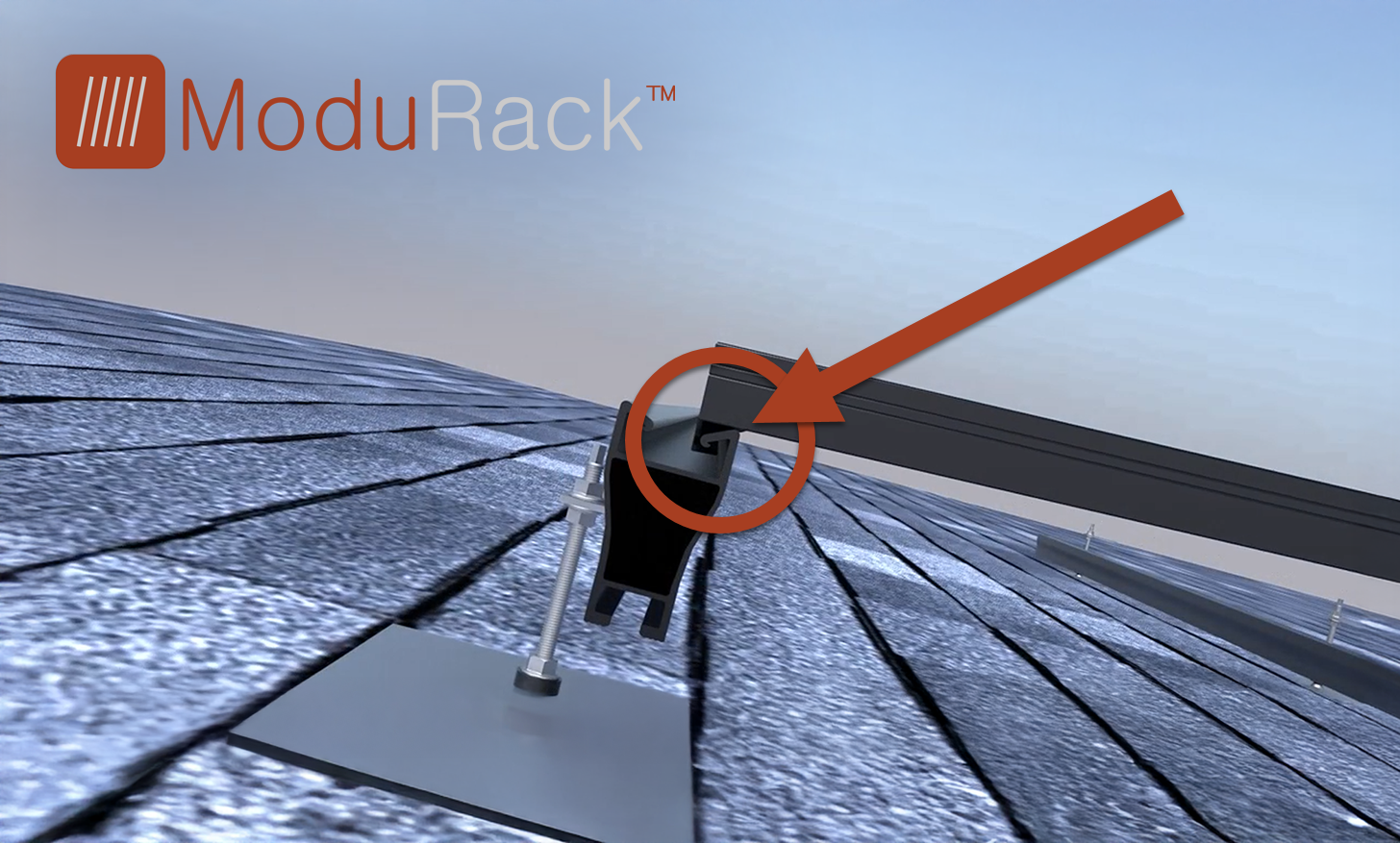
NEW: Ready-to-install solar systems! This patented innovation significantly accelerates your solar construction project
The core of ModuRack 's innovation lies in the departure from conventional clamp fastening. Instead of clamps, the modules are inserted and held in place by a continuous support rail.
More information here:
China's electric car plan: Will Europe become Beijing's extended workbench?
Industrial policy consequences: Protective shield or bridge for Chinese production in Europe?
The minimum price model has ambivalent consequences for the European automotive industry. In the short term, a minimum price stabilizes the lower end of the price scale: dumping offers, which are far below the already competitive Chinese average prices of around €25,000 per BEV in Europe, would be prevented. At the same time, Chinese competition would remain present in the volume segment, albeit with somewhat less price pressure.
The starting position of European manufacturers is structurally difficult: Production costs for vehicles in the EU are estimated to be around 30 percent higher than in China. Energy prices, labor costs, lower economies of scale in the battery ecosystem, and a fragmented supply chain worsen their relative cost position. Minimum prices cannot eliminate these cost disadvantages, but at best can limit their impact on the market price. (762419_EN.pdf)
At the same time, the guidelines create strong incentives for Chinese manufacturers to build up capacity in the EU. BYD is currently constructing a large plant in Hungary, which is scheduled to begin producing electric cars for the European market at the end of 2025; in parallel, a European development and service center is being built in Budapest, creating several thousand new jobs. MG/SAIC, in turn, is planning its own plant in Europe, with an initial annual capacity of around 100,000 units, also with the aim of circumventing tariffs and future restrictions.
From an EU policy perspective, this is a double-edged sword. On the one hand, jobs and investments are created in the single market, and some of the added value shifts from China to Europe. On the other hand, precisely the scenario that numerous analyses warn of is looming: Europe is developing into an extended workbench for Chinese corporations, while the technological and entrepreneurial control center remains in China.
The outlook is even more precarious for the domestic supplier industry. Chinese OEMs often bring their own vertically integrated supply chains. While they promise local supplier participation, the negotiating power of local SMEs vis-à-vis state-backed corporations with global platforms is limited. Without accompanying industrial policy, the European supplier landscape risks erosion, even if "production in Europe" nominally takes place.
Climate goals caught in the grip of industrial interests and consumer prices
The conflict of objectives with climate policy is particularly critical. The EU wants to rapidly decarbonize its transport sector; at the same time, the breakthrough of the electric car in the mass market is stagnating. In 2024, the share of battery electric vehicles (BEVs) in new registrations in Europe fell slightly from 15.7 to 15.4 percent, while hybrids saw a significant increase. A key reason for this is the high purchase price: The average BEV in the eurozone cost around €62,700 in 2024, while a hybrid cost approximately €42,200.
In this environment, inexpensive Chinese electric cars act as a lever that could accelerate electrification – just as once-affordable Chinese solar panels fueled photovoltaics in Europe. In the solar sector, the EU initially relied on minimum import prices and volume restrictions from 2013 onwards to protect domestic manufacturers. These measures were ultimately abolished in 2018 because they increased the cost of expanding renewable energies without establishing competitive domestic mass production.
The parallel is obvious: With electric cars, too, there is a risk that an excessively high minimum price level, while giving European manufacturers some breathing room, will at the same time slow down the market ramp-up of BEVs – especially in the volume segment below 30,000 euros, which is crucial for the CO₂ balance.
From an economic perspective, the question is therefore not only whether minimum prices protect European manufacturers, but whether the societal benefits of increased domestic value creation outweigh the costs of a potentially slower reduction in emissions in the transport sector. In the solar sector, the EU ultimately decided in favor of rapid decarbonization; in the automotive sector, the answer so far has been in favor of industry.
China's counter-strategy: hybrids, expansion, and geopolitical leverage
China, in turn, is using the situation strategically. First, Chinese manufacturers are partially switching to drive systems that are not (yet) the focus of EU measures – particularly plug-in hybrids. This has already led to a sharp increase in PHEV exports to Europe. Second, they are pursuing a localization strategy: factories in Hungary, Turkey, Spain, or potentially other locations are intended not only to circumvent tariffs but also to secure political acceptance.
Thirdly, Beijing is deliberately leveraging geopolitical leverage. In the dispute over EV tariffs, China has already launched counter-investigations against European agricultural and consumer goods and threatened special tariffs on large-volume imports of combustion engine vehicles – a direct attack on the export base of German premium manufacturers. Against this backdrop, the minimum price deal can also be seen as a de-escalation mechanism: it allows both sides to save face without getting caught in a comprehensive tariff spiral that would hit export-oriented EU economies particularly hard.
Lessons from the solar dispute: How not to repeat an industrial policy
The conflict over Chinese solar modules provides a cautionary example. There, too, the EU attempted to counter a highly subsidized Chinese industry, which flooded the European market with massive overcapacities and dumping prices, by imposing minimum prices and volume limits.
The result was sobering: While some European manufacturers received temporary support from the measures, the structural disadvantages – smaller scale, higher costs, and less government support – remained. With the expiration of the minimum prices in 2018, there was a renewed wave of imports of Chinese modules, while the remaining European production could only compete in niche, higher-value segments.
Applied to the electric vehicle sector, this means that minimum prices can reduce price pressure in the short term, but they are no substitute for comprehensive location and industrial policy. Without parallel measures – from lower energy prices and tax incentives for investments in modern manufacturing to targeted support for battery technology and software expertise – the EU risks buying time without using that time productively.
Strategic scenarios: Where will the minimum price exchange rate lead by 2030?
Economically, three development paths can be roughly outlined:
First, a scenario of "soft landing with Asian dominance"
Minimum prices stabilize the margins of European manufacturers, but inexpensive Chinese brands continue to gain market share, supported by local production in the EU. Domestic industry remains present, but is losing ground, particularly in the entry-level and mid-price segments. Employment is shifting, in part, from European OEMs and suppliers to European locations of Chinese corporations.
Secondly, a scenario of “hard protectionism”
The EU could – as already discussed – extend measures to hybrids and only allow the minimum price model restrictively. This would noticeably slow Chinese imports, but at the same time keep the price level for electric cars high and delay their market ramp-up. China would react more harshly, for example with tariffs on European combustion engine exports. Ultimately, the net welfare loss for both sides could be substantial.
Thirdly, a scenario of "compromise with reindustrialization"
The EU is using its bargaining power through minimum prices and tariffs to integrate Chinese investments in Europe into value chains that also benefit European suppliers and technology providers. At the same time, it is reducing structural disadvantages for European locations – particularly energy prices, approval times, and tax burdens – and enabling European OEMs to scale up competitive electric vehicles in the sub-€30,000 price segment. In this case, the minimum price mechanism could indeed serve as a bridge to a new, more diversified European electric vehicle landscape.
Assessment: Minimum prices are a politically astute but economically risky way to buy time
From an economic perspective, the move from pure punitive tariffs to negotiated minimum prices is a pragmatic attempt to serve several conflicting goals simultaneously: protection against subsidy-driven dumping, containment of geopolitical escalation, securing investments and jobs in Europe, and at least partially achieving climate goals through further market access for cheaper electric cars.
The price for this, however, is high: The EU is moving further towards a system of administered trade relations in which prices and market shares are no longer primarily determined by competition, but by political negotiation. Empirical and theoretical analyses of anti-dumping instruments also indicate that price commitments tend to mean higher prices and lower welfare for consumers than traditional tariffs – to the benefit of exporting companies and at the expense of overall economic efficiency.
Whether the chosen path can ultimately be considered a success therefore depends less on whether Chinese manufacturers save a few percentage points in tariffs or whether European OEMs can breathe a little longer. The crucial question is whether the EU uses this extra time to strengthen its structural competitiveness in the automotive sector: through consistent cost reduction at production sites, by accelerating investments in its own battery and software expertise, through targeted support for mass-market BEVs, and through an integrated transport policy that stimulates demand for affordable electric cars.
If this structural reform fails to materialize, the minimum price regime risks becoming a mere industrial policy placebo: it alleviates pressure in the short term, but only delays the moment when Europe must confront the full force of global competition. However, if the EU uses this time-buying opportunity for a genuine renewal of its core automotive sector, the politically risky balancing act between climate goals and industrial protection could prove to be one of the last chances to redefine Europe's role in the age of electric and software mobility.
Your global marketing and business development partner
☑️ Our business language is English or German
☑️ NEW: Correspondence in your native language!

Konrad Wolfenstein
I and my team are happy to be available to you as your personal advisor.
You can contact me by filling out the contact form here wolfenstein@xpert.digital:or simply call me at +49 7348 4088 965. My email address is
I'm looking forward to our joint project.
☑️ SME support in strategy, consulting, planning and implementation
☑️ Creation or realignment of the digital strategy and digitization
☑️ Expansion and optimization of international sales processes
☑️ Global & Digital B2B trading platforms
☑️ Pioneer Business Development / Marketing / PR / Trade Fairs
🎯🎯🎯 Benefit from Xpert.Digital's extensive, five-fold expertise in one comprehensive service package | BD, R&D, XR, PR & Digital Visibility Optimization

Benefit from Xpert.Digital's extensive, five-fold expertise in a comprehensive service package | R&D, XR, PR & Digital Visibility Optimization - Image: Xpert.Digital
Xpert.Digital possesses in-depth knowledge across various industries. This allows us to develop tailored strategies precisely aligned with the requirements and challenges of your specific market segment. By continuously analyzing market trends and monitoring industry developments, we can act proactively and offer innovative solutions. The combination of experience and expertise generates added value and provides our clients with a decisive competitive advantage.
More information here: