Environmental bonus/innovation bonus: Promotion of plug-in hybrids – Image: Xpert.Digital & Wit Olszewski|Shutterstock.com
From October 1, 2022, only plug-in hybrid vehicles (PHEVs) with a purely electric range of at least 60 kilometers will be eligible for the environmental bonus. This minimum range is set to increase to 80 kilometers on January 1, 2024. The previously applicable additional criterion of maximum CO2 emissions of 50g/km will be eliminated. This is according to a proposal from the Federal Ministry for Economic Affairs and Energy regarding the new funding guidelines.
The so-called environmental bonus is being paid – for vehicles with a list price of up to €40,000, it now amounts to €9,000 for purely electric cars and fuel cell vehicles, and €6,750 for plug-in hybrids, including the innovation premium. For vehicles over €40,000, the premium is €7,500 for purely electric cars and €5,625 for hybrid cars. Federal funding is only provided if the manufacturers contribute a share of the costs. The innovation premium applies to vehicles registered from June 4, 2020. Currently, the environmental bonus is limited until December 31, 2021. However, an extension of the premium until the end of 2025 is planned.
Car buyers can submit their applications here to the Federal Office for Economic Affairs and Export Control (BAFA).
Demand for solar carports is also rising thanks to environmental bonuses for promoting electric cars
The environmental bonus was introduced in Germany in 2016. As a premium for the purchase of a new electric vehicle, it is intended to increase demand by incentivizing sales. The environmental bonus also applies to hybrid electric vehicles and hydrogen/fuel cell vehicles.
More information here:

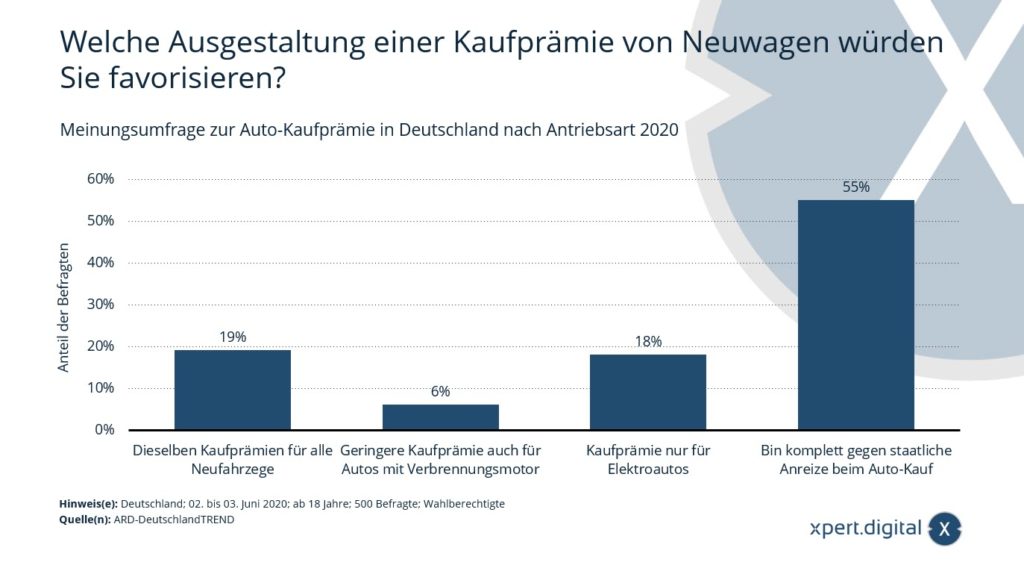
Purchase incentive for new cars? – Image: Xpert.Digital
Criticism from the automotive industry
The German Association of the Automotive Industry (VDA) and the Association of International Motor Vehicle Manufacturers (VDIK) are critical of the stricter requirements for plug-in hybrid vehicles (PHEVs) planned with the extension of the innovation premium.
“We generally welcome the extension of the innovation bonus. However, the planned elimination of the CO2 criterion will slow down the ramp-up of electromobility in the short to medium term. Many plug-in hybrids that were previously eligible for subsidies will become less attractive to customers. These customers may then opt for a vehicle with a conventional engine, and that cannot be the political will. The technical challenge of increasing the minimum range to 80 kilometers is solvable for the automotive industry in the medium term. But here, too, the industry needs planning certainty, which is why we demand that the deadline remain at the beginning of 2025,” says VDA President Hildegard Müller.
VDIK President Reinhard Zirpel stated: “As things stand, this would mean that approximately 50 percent of the plug-in hybrids offered by VDIK members would no longer be eligible for subsidies. This sends the wrong signal, especially as the electric mobility market ramps up. Smaller and therefore cheaper vehicles are also affected by these stricter regulations.”
The tightening of the regulation, in the form of increasing the minimum all-electric range to 80 km on January 1, 2024, was previously planned for a year later. This change also contradicts the planning certainty that is so important for the automotive industry. Meeting this requirement is planned for many vehicles in conjunction with a model change, which cannot simply be brought forward by a year at will. Plug-in hybrids, in particular, with their flexibility, represent a key component in the success of electromobility. In the first half of 2021 alone, plug-in hybrids accounted for over 50 percent of newly registered electric vehicles.
Currently, electric plug-in hybrids are eligible for subsidies if they emit no more than 50 grams of CO2 per kilometer driven or achieve a minimum range using only their electric drive. Current regulations stipulate that this minimum range is 40 kilometers for vehicles purchased before December 31, 2021. For vehicles purchased after December 31, 2021, and before January 1, 2025, the minimum range will increase to 60 kilometers, and for vehicles purchased after January 1, 2025, it will increase to 80 kilometers to remain eligible for subsidies.
📣 Parking lot solar solutions for industry, retail and municipalities
Everything from a single source, specifically designed for solar solutions for large parking areas. Refinance or offset your future costs with your own electricity generation.
🎯 For solar installers, plumbers, electricians and roofers
Consultation and planning including a non-binding cost estimate. We connect you with strong partners in photovoltaics.
👨🏻 👩🏻 👴🏻 👵🏻 For private households
We have a regional presence throughout the German-speaking world. We have reliable partners who will advise you and implement your wishes.
📊 Photovoltaic planning tool and solar configurator for roofs and open fields 💬


Innovation bonus
Since mid-2020, the adoption of electric vehicles in Germany has increased significantly. This is primarily due to the introduction of the innovation bonus on July 8, 2020, with which the German government doubled its subsidies for the purchase of an electric vehicle.
Federal Minister Peter Altmaier: “Since the introduction of the innovation premium, we have seen a significant boost in electromobility. The number of applications remains at a record high. In the first half of 2021, more premiums were claimed than in the entire previous year – a total of €1.25 billion. This year will see record funding for electric cars. That is why we in the coalition have decided to continue the funding until the end of 2025, so that the market ramp-up of electromobility can gain further momentum.”
Torsten Safarik, President of the Federal Office for Economic Affairs and Export Control (BAFA): “With the introduction of the innovation premium, demand for the environmental bonus has risen sharply. In the first half of 2021, 273,000 vehicles were applied for – already more than in the entire previous year. This is a strong signal for climate-friendly mobility in Germany.”
With the introduction of the innovation premium, the number of applications for the environmental bonus increased significantly. In the second half of 2020, new application records were set monthly. In December 2020, the number of applications reached a preliminary peak of 53,566. In March 2021, the number of applications was again just under 52,000.
From January to the end of June 2021, subsidies were applied for on 273,614 vehicles. This sends a strong signal for climate protection and demonstrates the steadily increasing public interest in electric vehicles. Since the subsidy program began in 2016, a total of 693,601 vehicles have been applied for as of July 1, 2021.
The innovation premium, which doubles the federal government's share of the environmental bonus, will be extended beyond 2021 until December 31, 2025, according to the decision of the Automotive Summit (KAM) at the Federal Chancellery on November 17, 2020. The Federal Ministry for Economic Affairs and Energy will implement this extension shortly.
With the doubling of the government's share of the environmental bonus, subsidies of up to €9,000 can be claimed for electric vehicles with a net list price of less than €40,000; for hybrid cars, the subsidy is €6,750. For electric vehicles with a net list price exceeding €40,000, subsidies of up to €7,500 are available for purely electric vehicles and up to €5,625 for hybrid cars.
Increased subsidies for electric vehicles
"The amended funding guidelines for the 'innovation premium' will be published in the Federal Gazette today at 3 p.m. and will come into force tomorrow. This will double the government's share of the funding for electric cars. Pure electric cars will thus receive funding of up to €9,000; plug-in hybrids will receive funding of up to €6,750," according to the Federal Ministry for Economic Affairs and Energy in its press release of July 7, 2020.
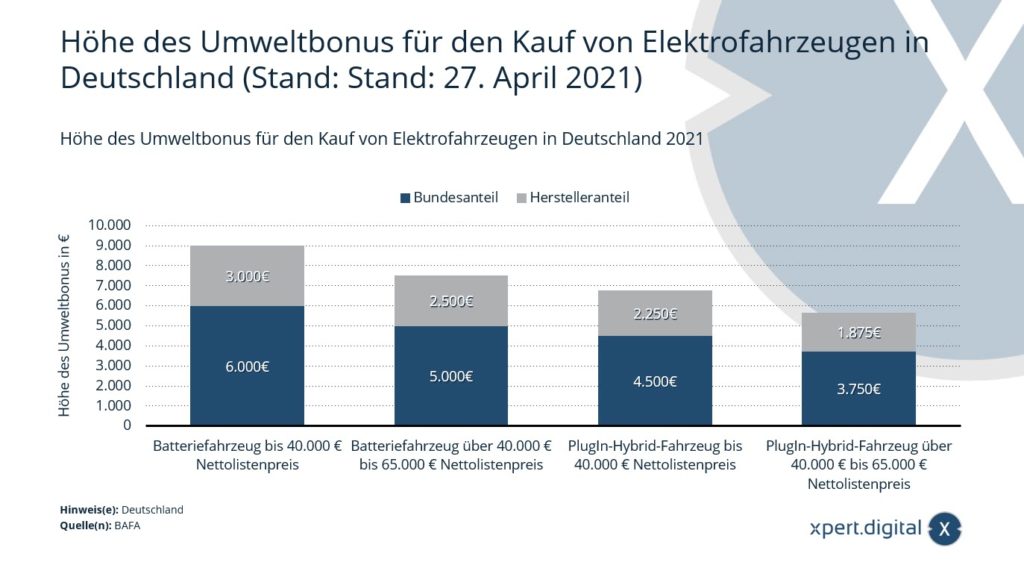
Amount of the environmental bonus for the purchase of electric vehicles – Image: Xpert.Digital
Federal Minister for Economic Affairs Peter Altmaier: “We are doubling the government subsidy for the purchase of an electric car, thus creating a significant incentive for consumers to buy one. We want to accelerate the switch to electric cars and give electromobility in Germany a new boost.”
The President of BAFA, Torsten Safarik: “The new subsidy rates of up to 9,000 euros make switching to an electric car significantly more attractive for citizens. With the streamlined, single-stage procedure, we at BAFA are implementing the new innovation premium efficiently and in a citizen-friendly manner.”
From July 8, 2020, the federal share of the existing environmental bonus system will be doubled temporarily until December 31, 2021. The manufacturer's share remains unchanged. The following purchased or leased vehicles can benefit from the "innovation premium"—even retroactively:
- New vehicles that are registered for the first time after June 3, 2020 and up to and including December 31, 2021, as well as young used vehicles whose first registration takes place after November 4, 2019 and whose second registration takes place after June 3, 2020 and up to December 31, 2021.
The "innovation premium" stems from the outcome of the coalition committee meeting of June 3, 2020. In addition to the temporary doubling of the federal government's share, the amended funding guidelines prohibit combining it with funding from other public sources. This is intended to prevent over-subsidization. The European Commission has reviewed the "innovation premium" under state aid rules.
Related to this:
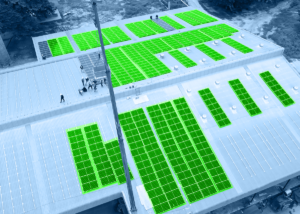


- Planning photovoltaics on warehouses, commercial buildings and industrial buildings
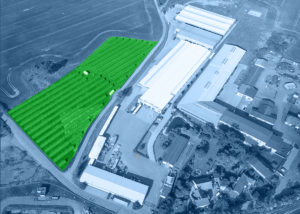
- Industrial plant: Planning a photovoltaic open-field system or open-area system
- Planning solar power systems with photovoltaic solutions for freight forwarding companies and contract logistics
- B2B Solar Systems and Photovoltaic Solutions & Consulting
Xpert.Solar offers consulting and planning services for solar carports, charging stations, energy storage systems and infrastructure

Konrad Wolfenstein
I would be happy to serve as your personal advisor.
You can contact me by filling out the contact form below or simply call me on +49 7348 4088 965 .
I'm looking forward to our joint project.
Write to me


Xpert.Digital – Konrad Wolfenstein
Xpert.Digital is a hub for industry focusing on digitalization, mechanical engineering, logistics/intralogistics and photovoltaics.
With our 360° Business Development solution, we support renowned companies from new business to after-sales.
Market intelligence, smarketing, marketing automation, content development, PR, mail campaigns, personalized social media and lead nurturing are part of our digital tools.
You can find more information at: www.xpert.digital – www.xpert.solar – www.xpert.plus
Keep in touch