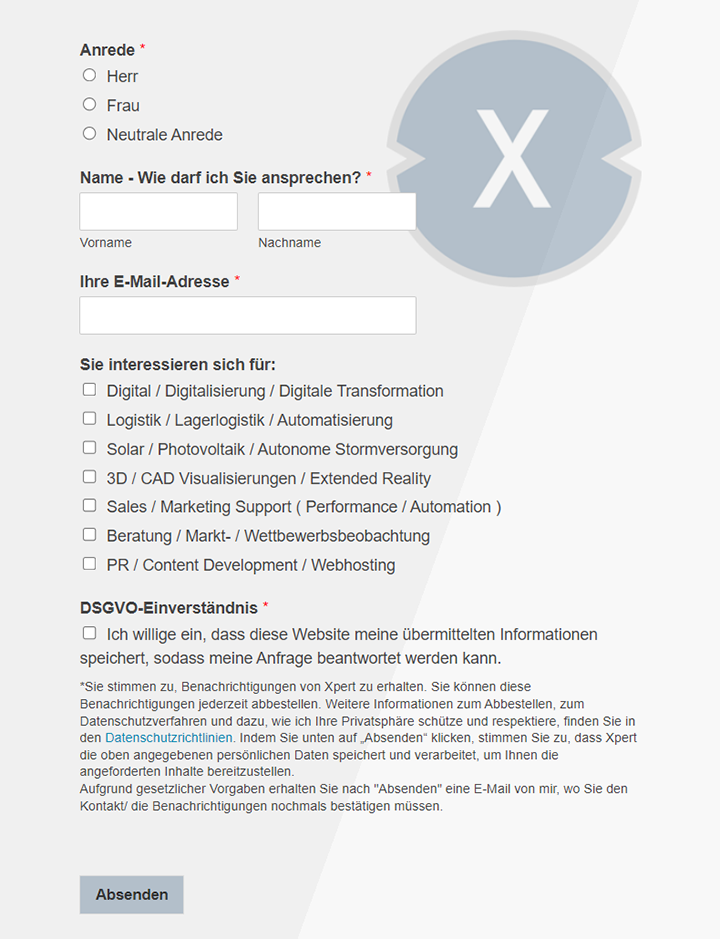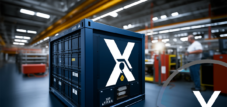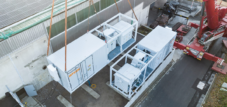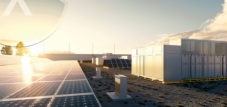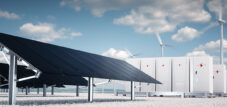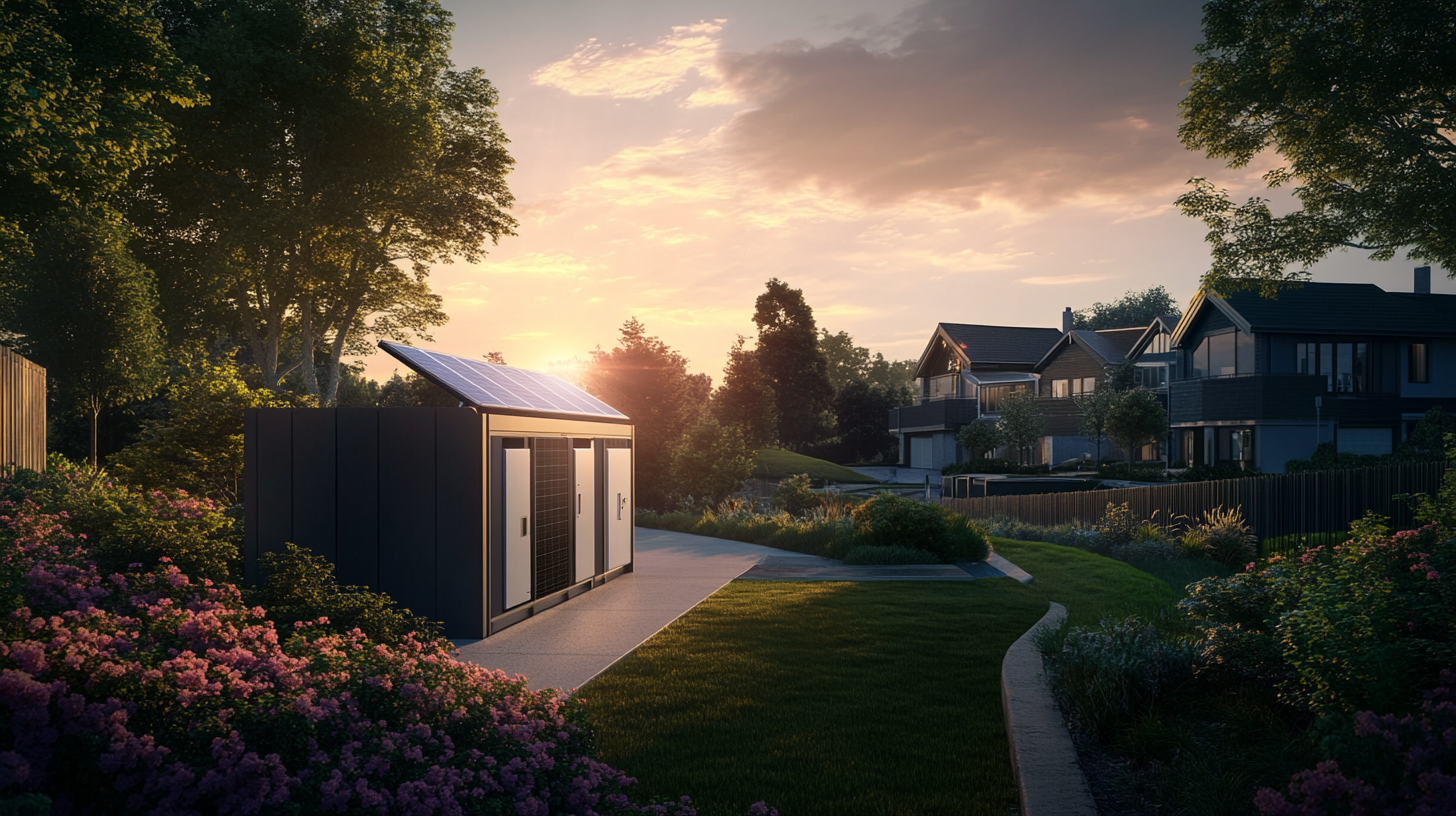
Germany is focusing on energy storage: Insights into home storage, commercial storage and large-scale storage solutions – Creative image: Xpert.Digital
Germany focuses on energy storage: Insights into home storage, commercial storage and large-scale storage solutions
Germany has positioned itself as a pioneer in the energy transition, and energy storage is a key component of this transformation. Batteries, used in households, commercial and industrial enterprises, and large infrastructure projects, play a crucial role. With the increasing use of renewable energies such as solar and wind power, which are inherently subject to fluctuating availability, energy storage is gaining importance in all sectors.
The role of home storage systems: Decentralizing energy supply
The latest figures from December 2024 show that there are approximately 1.66 million registered battery storage systems in Germany. The majority of these systems are home storage units with capacities of up to 30 kilowatt-hours. These storage systems allow households to store excess electricity generated by solar panels and use it as needed. This not only increases independence from rising electricity prices but also makes a valuable contribution to stabilizing the electricity grid.
With an impressive total capacity of 12.6 gigawatt-hours (GWh), home storage systems represent the largest share of installed storage capacity in Germany. This demonstrates the crucial role private households play in the energy transition. Particularly when combined with government support programs, such as the KfW loan program or regional subsidies, battery storage systems are an increasingly attractive investment for homeowners.
Dynamic market for home storage in Europe
In a European comparison, Germany remains the leading market for home energy storage. Forecasts for 2024 predict an increase of 11 gigawatt-hours of home storage capacity in Europe. Germany and Italy are the largest markets in this regard. This trend underscores the growing importance of home storage in Europe, particularly in countries heavily reliant on solar energy.
The high demand for home storage systems in Germany is driven by several factors:
- Rising energy costs: More and more households are looking for ways to increase their energy independence.
- Technological progress: Advances in the efficiency and lifespan of lithium-ion batteries have significantly increased the attractiveness of energy storage systems.
- Political framework: The German Federal Government has set clear targets for the decarbonization of the energy sector, which promotes investments in renewable energies and storage technologies.
Commercial storage: Flexibility and cost-effectiveness for businesses
In addition to residential storage systems, commercial storage systems are also playing an increasingly important role. These systems, which typically have capacities ranging from 30 kilowatt-hours to several megawatt-hours, are used by companies to reduce peak loads, lower energy costs, and ensure security of supply. Commercial storage systems enable businesses to increase their self-consumption rate and become less dependent on price fluctuations in the electricity market.
Furthermore, commercial energy storage systems contribute to grid stability by providing frequency control and balancing services. Many companies also utilize their storage facilities in virtual power plants, where numerous decentralized energy sources and storage systems are interconnected to support grid stability and generate additional revenue through participation in the energy market.
Large-scale storage: Cornerstone of the energy transition
Large-scale storage facilities, often with capacities in the double-digit megawatt-hour range or beyond, are a key component of the energy transition. They are typically used in combination with solar or wind farms and make it possible to store surplus energy and feed it into the grid later. This is particularly important for balancing the volatility of renewable energy sources.
A prominent example is the use of large-scale storage systems to stabilize the electricity grid. With the increasing share of renewable energies in the grid, it becomes ever more important to compensate for short-term fluctuations. Large-scale storage systems can react to grid fluctuations in fractions of a second and thus contribute to security of supply.
Technological developments and challenges
The energy storage industry is undergoing rapid technological advancements. Lithium-ion batteries currently dominate the market, but alternative technologies such as solid-state batteries, redox flow batteries, and hydrogen storage are gaining importance. These technologies offer potentially higher energy densities, longer lifespans, and lower costs.
However, one of the biggest challenges remains the supply of raw materials. Lithium, cobalt, and nickel, the key components of many current battery systems, are available in limited quantities and their extraction is often associated with environmental and social challenges. Recycling and the development of technologies that require less critical materials are therefore key research priorities.
Economic and environmental benefits
Energy management systems and storage solutions not only offer economic advantages but also make a significant contribution to climate protection. Storing renewable electricity reduces the use of fossil fuels. At the same time, storage promotes decentralized energy generation and helps to relieve pressure on the electricity grid.
Furthermore, energy storage systems also offer protection against power outages. These systems are becoming increasingly important, especially in times of growing extreme weather events caused by climate change.
The path to a sustainable future
The future of energy storage in Germany and Europe looks promising. With further investment in research and development, as well as continuous improvement of the political framework, energy storage technology could play an even greater role. Germany has the opportunity to expand its leading position in this field and serve as a role model for other countries.
The combination of residential, commercial, and large-scale energy storage systems forms a comprehensive system that provides the foundation for a sustainable and climate-friendly energy supply. Through innovative business models, advanced technologies, and a clear vision for the future, the energy storage industry can make a crucial contribution to the global energy transition.
With steady progress and increasing public acceptance, Germany is entering a new phase of its energy transition, in which storage technologies will play a central role. The successful implementation of this transformation will not only create economic opportunities but also contribute to the global fight against climate change.
Related to this:
🎯🎯🎯 Benefit from Xpert.Digital's extensive, five-fold expertise in one comprehensive service package | BD, R&D, XR, PR & Digital Visibility Optimization
Benefit from Xpert.Digital's extensive, five-fold expertise in a comprehensive service package | R&D, XR, PR & Digital Visibility Optimization - Image: Xpert.Digital
Xpert.Digital possesses in-depth knowledge across various industries. This allows us to develop tailored strategies precisely aligned with the requirements and challenges of your specific market segment. By continuously analyzing market trends and monitoring industry developments, we can act proactively and offer innovative solutions. The combination of experience and expertise generates added value and provides our clients with a decisive competitive advantage.
More information here:
Current status and significance of energy storage in Germany
Germany is increasingly relying on energy storage to successfully advance the energy transition and continuously increase the share of renewable energies in the electricity mix. "A sustainable energy supply is hardly conceivable without efficient storage solutions," is the conclusion of many experts working on this topic. Home storage, commercial storage, and large-scale storage each play an important role. The following provides a detailed look at current developments, summarizing technical background information, market trends, and future prospects to paint a comprehensive picture of the energy storage landscape in Germany.
Related to this:
Development and distribution of home storage systems
The most recent available data, dated December 17, 2024, illustrates the dynamic development of the market: Approximately 1.66 million battery storage systems are registered in Germany, the majority of which are privately installed solutions with a capacity of up to 30 kilowatt-hours. This rapid growth in decentralized energy storage has accelerated considerably in recent years. Private households that decide to combine a solar power system with a corresponding storage system benefit in several ways. Firstly, home storage systems enable better utilization of self-generated solar power, and secondly, they ensure stability in the household's electricity supply. A further incentive is the potential financial advantage – maximizing self-consumption reduces dependence on grid electricity.
The total capacity of all home storage systems in Germany now significantly exceeds that of large-scale storage facilities. Small-scale storage systems in private households alone already reach a combined capacity of 12.6 gigawatt-hours (GWh). This figure underscores the crucial contribution that private households are making to the energy transition. While large-scale storage systems are mostly operated by energy suppliers or industrial companies and serve to compensate for grid frequency fluctuations or to stabilize the electricity grid, the numerous decentralized home storage systems form the backbone of a bottom-up energy transition: Citizens are choosing to actively invest in photovoltaic systems and battery storage to generate and store a portion of their energy independently.
Germany's role in the European home storage market
In a European comparison, Germany stands out as one of the most important markets for home energy storage. An increase of 11 gigawatt-hours of home storage capacity was expected across Europe in 2024. "Germany and Italy are considered the two largest markets for residential storage in Europe," according to some industry observers. This is due, among other things, to the support mechanisms already established in both countries, as well as the comparatively high electricity prices, which make the economic viability of such storage solutions attractive for private individuals. Furthermore, both countries have very ambitious targets for the integration of renewable energies, which is driving solar and storage projects forward intensively.
Related to this:
Commercial storage systems as flexible solutions for businesses
In addition to residential storage systems, there are numerous medium-sized energy storage systems frequently used in commercial enterprises. These commercial storage systems often have a capacity of between 30 and several hundred kilowatt-hours and can be seamlessly integrated into existing operational concepts. For example, craft businesses, medium-sized companies, and agricultural operations are increasingly relying on hybrid systems consisting of photovoltaic systems, small wind turbines, or combined heat and power plants with integrated battery storage. The advantages are clear: peak loads can be absorbed, higher self-consumption rates can be achieved, and electricity costs can be reduced. Furthermore, these storage solutions offer emergency power supply options should short-term grid shortages occur. This increases the reliability and predictability of a business's energy supply, while also significantly reducing operating costs.
Large storage facilities as stabilizers of the power grid
Large-scale energy storage solutions play a different, but equally important, role. Their primary function is to compensate for frequency fluctuations by feeding energy into or absorbing it from the grid every second. Especially during periods of significant fluctuation in the share of renewable energy – for example, when the wind is very strong or solar irradiance suddenly decreases – large buffers are essential to maintain grid frequency stability. Such systems often reach capacities in the megawatt-hour to gigawatt-hour range and require substantial investment in construction. Nevertheless, they are considered a crucial component of the energy transition, particularly as the share of solar and wind power continues to increase. Without battery storage and other storage technologies, blackout-like situations could arise if, for example, several gigawatts of solar power were to suddenly drop.
Diversity of technologies in storage development
An exciting aspect of this development lies in the technological diversity of storage solutions. Numerous home storage systems currently rely on lithium-ion technology. Due to its high energy density, comparatively long lifespan, and falling prices, this technology has established itself as the market leader in recent years. Nevertheless, other approaches exist, such as redox flow batteries, which operate with liquid electrolytes and are characterized by their easy scalability, although they are less widespread so far. Lithium-ion batteries are also used in some cases for large-scale industrial storage systems, but there is a growing trend to try alternative battery types in order to circumvent raw material shortages or recycling issues. Hydrogen as an energy storage medium is also gaining importance, especially in sectors where direct electrification is not always practical, such as heavy industry or transportation.
Vehicle-to-Grid concepts: Potential of electromobility
Another interesting aspect is the possibility of increasingly integrating electric cars into the energy system in the future. Vehicle-to-grid (V2G) concepts could allow the energy stored in electric car batteries to be temporarily fed back into the grid. While the current focus is primarily on covering self-consumption and reducing peak loads during charging, the future prospect is that the millions of electric cars in Germany could function as decentralized, mobile energy storage units. This could further stabilize the overall structure of the electricity grid, as a large proportion of the vehicles are parked overnight or at work and would therefore have time to feed energy into or absorb it from the grid to compensate for bottlenecks.
Political and legal framework for energy storage
Besides the technological aspects and the sheer number of installed storage systems, the political and legal framework plays a crucial role. Germany has had established funding programs for photovoltaic systems and storage solutions for years, with the conditions being regularly adjusted. Such measures often include low-interest loans, repayment subsidies, or direct investment grants and are popular with private individuals, businesses, and public institutions. Furthermore, it is essential to simplify bureaucratic hurdles and accelerate approval processes to enable the nationwide expansion of charging and storage infrastructure. The attractiveness of self-consumption is further fueled by steadily rising electricity prices, which increase the economic advantage of independence from the electricity market.
Challenges in the take-back and recycling of lithium-ion batteries
However, there are still challenges to be overcome. These include the long-term take-back and recycling of lithium-ion batteries, as it is essential to ensure that the materials used are processed properly. Raw materials such as lithium and cobalt are difficult to access in some regions of the world and their extraction poses environmental and social risks. Manufacturers and policymakers are called upon to develop strategies for the recycling and reuse of battery cells so that the energy storage systems of tomorrow are truly sustainable. Current efforts aim to improve the recycling of battery-compatible raw materials, establish take-back systems, and intensify research into alternative cell chemistries.
Safety of lithium-ion batteries and their operation
Another important aspect of energy storage is safety. Lithium-ion batteries, in particular, should be handled with care during installation and operation to minimize the risk of fires or other accidents. Users are therefore advised to look for quality seals and opt for professional installation by qualified companies. Modern home storage systems and their components typically have comprehensive safety mechanisms and monitoring systems that can detect critical conditions in a timely manner and initiate countermeasures. Energy suppliers and grid operators also place great importance on relevant certifications to ensure compatibility standards during grid connection.
Economic opportunities through energy storage technologies
At the same time, energy storage offers economic opportunities for Germany. Many companies from the mechanical engineering, electrical engineering, and chemical industries are involved in the value chain surrounding battery and storage technologies. From material extraction and cell manufacturing to system integration and maintenance, new jobs and innovation clusters are being created. The German federal government and various federal states have therefore launched special programs to support research and development in this field. Examples include pilot plants for cell production, research centers for hydrogen storage, and testbeds for smart grid integration.
Technological advances for private households
Last but not least, private households that opted for energy storage early on also benefit from technological advances. Many newer system generations are modular and can be expanded as demand increases. Furthermore, the price per kilowatt-hour of storage capacity usually decreases year by year, making the introduction of solar power storage even more attractive. This suggests that even more people are likely to be interested in their own solution for the domestic energy transition in the future. "The future belongs to those who empower themselves to be part of the solution," say some proponents of decentralized energy supply.
European perspectives on the expansion of energy storage
Looking beyond Germany's borders, it becomes clear that other European countries are also accelerating the expansion of their energy storage capacities. According to various market analyses, Italy, Spain, France, and the United Kingdom are experiencing increasing interest from households and businesses in investing in battery systems. The motivations behind this may differ: while climate targets are a major focus in some countries, economic factors and a sometimes dilapidated grid infrastructure are driving the expansion of decentralized storage in others. Nevertheless, a common thread runs through several countries: energy storage is becoming an increasingly indispensable component for achieving the transformation towards climate neutrality in the coming decades.
Large-scale projects with battery storage: Flexibility and cost-effectiveness
Large-scale renewable energy projects are also increasingly incorporating battery storage into their planning. This leads to the development of solar and wind farms that, in combination with large-scale batteries, can shift the generated electricity over time. Instead of having to sell excess production for low prices due to peak loads during certain hours, electricity is fed into the grid when it fetches a higher price or when the grid requires support. In the long term, this trend leads to greater flexibility and profitability for renewable energies. Ultimately, all these different storage options – from the home garage to massive battery parks – form the backbone of a modern, green electricity supply.
Growth of energy storage in Germany and Europe
In summary, the growth of energy storage in Germany is impressive and is becoming established in a wide variety of sectors. The 1.66 million registered battery storage units as of December 2024 underscore the strong market drive by private individuals, while large-scale storage solutions remain essential for grid stabilization. A total capacity of 12.6 GWh in home storage systems alone illustrates the significant contribution of many small storage units to the energy transition. Within Europe, Germany, along with Italy, remains a leader in the development of residential storage systems.
Innovations and sustainable energy systems of the future
Through continuous innovation, improved funding programs, and the ongoing development of battery technology, the market will continue to evolve in the coming years. Alternative storage technologies such as redox flow batteries, hydrogen, or other chemical storage systems may gain in importance. At the same time, the trend toward comprehensive system solutions combining multiple technologies will increase. The potential of vehicle-to-grid (V2G) applications is particularly exciting, as electric vehicles could become a key component in decentralized energy storage.
All of this demonstrates that the energy future in Germany and Europe requires pragmatic yet forward-looking approaches to reconcile security of supply with climate protection. Private households, businesses, and large corporations are jointly challenged to continuously modernize the energy system and supplement it with innovative measures. Energy storage is key to achieving a high share of renewable energies and thus represents an important step towards climate neutrality. Given the rapid pace of development, the number of installed battery storage systems is expected to increase significantly in the coming years, and the technologies for a sustainable energy supply are expected to gain ever wider application and acceptance.
We are here for you - Consulting - Planning - Implementation - Project Management
☑️ SME support in strategy, consulting, planning and implementation
☑️ Creation or realignment of the digital strategy and digitization
☑️ Expansion and optimization of international sales processes
☑️ Global & Digital B2B trading platforms
☑️ Pioneer Business Development

Konrad Wolfenstein
I would be happy to serve as your personal advisor.
You can contact me by filling out the contact form below or simply call me on +49 7348 4088 965 .
I'm looking forward to our joint project.
Write to me


Xpert.Digital - Konrad Wolfenstein
Xpert.Digital is a hub for industry focusing on digitalization, mechanical engineering, logistics/intralogistics and photovoltaics.
With our 360° Business Development solution, we support renowned companies from new business to after-sales.
Market intelligence, smarketing, marketing automation, content development, PR, mail campaigns, personalized social media and lead nurturing are part of our digital tools.
You can find more information at: www.xpert.digital - www.xpert.solar - www.xpert.plus
Keep in touch