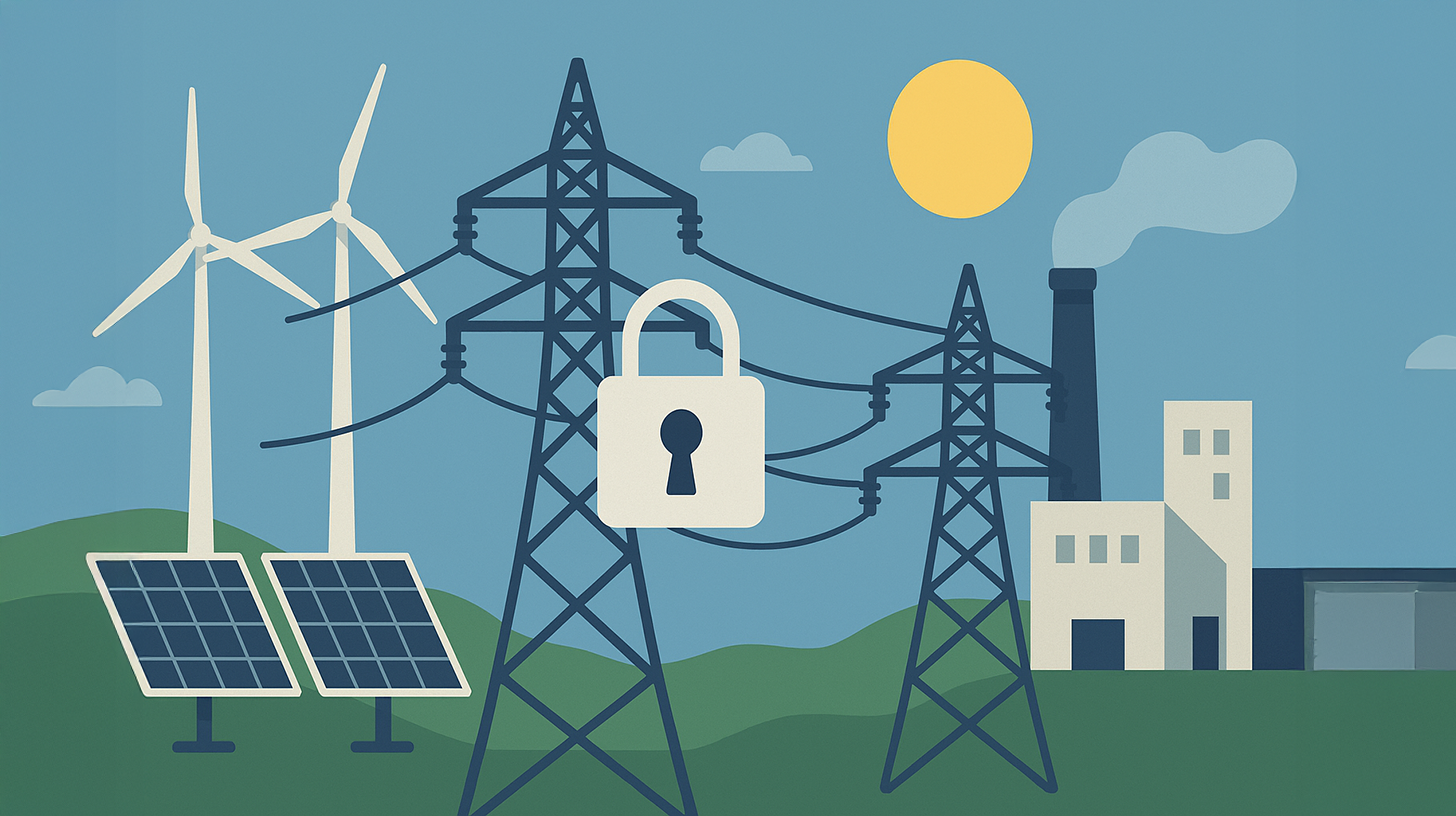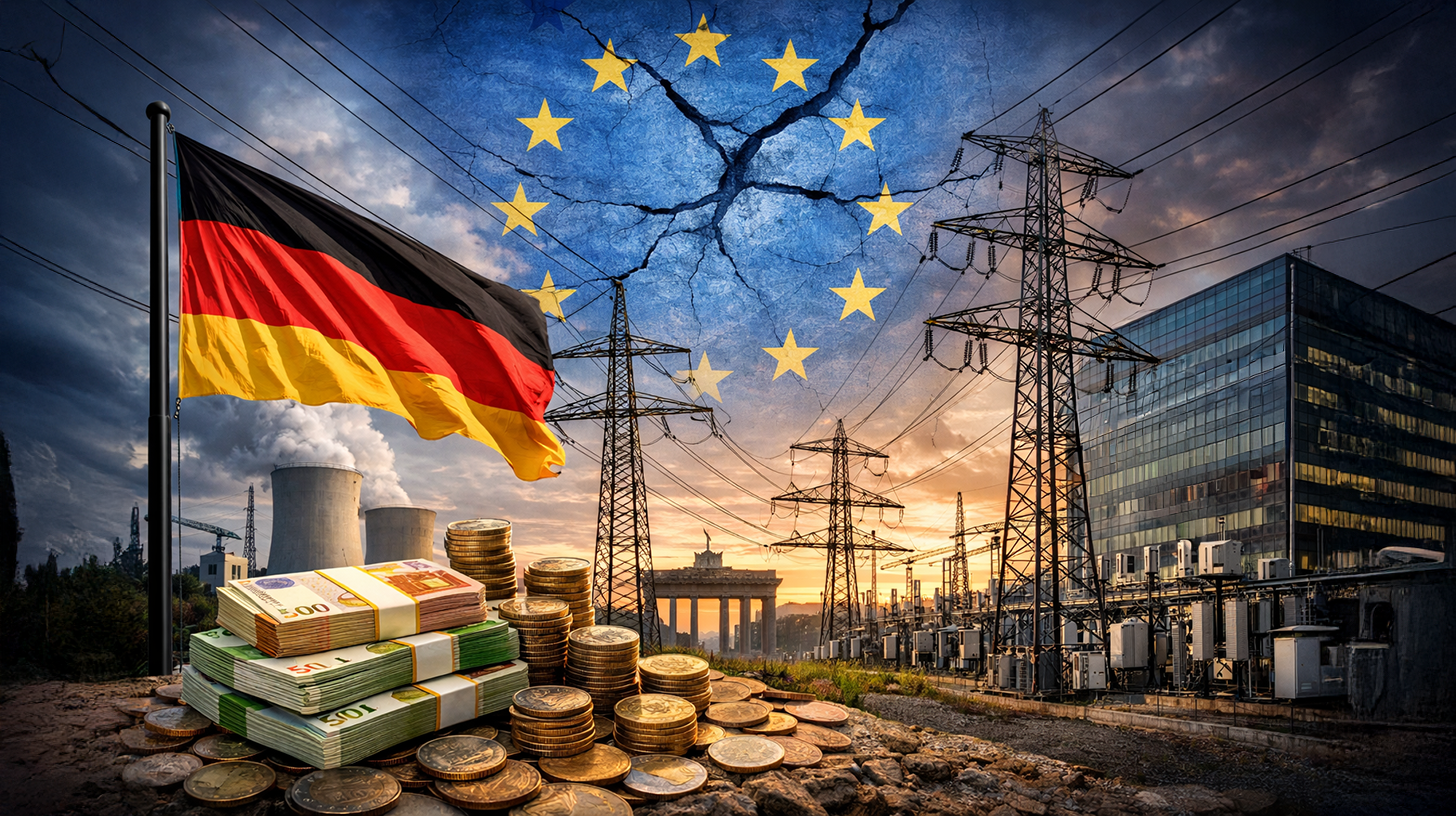
This is Germany: Energy sovereignty in the electricity grid? What was once a forced sell-off is now becoming an expensive buyback – Image: Xpert.Digital
Controlled by foreign powers within our own network? Why critical infrastructure has been in foreign hands for 17 years
How a 2009 EU ruling is costing taxpayers billions today
The silence of the elites: Why the sell-off of our networks was never an issue
Electricity comes from the wall socket – but who actually owns the lines that transport it there? This seemingly technical question touches upon the core of German economic policy today and reveals a dilemma that has largely gone unnoticed by the public for almost two decades. While Germany is pushing ahead with the energy transition as a national project of the century, the heart of this transformation – the large high-voltage grids or "electricity highways" – is largely no longer in German hands. What was celebrated in 2009 as a liberal liberation and executed as a "forced sell-off" under massive pressure from the EU Commission is now proving to be a costly strategic own goal.
The situation is paradoxical: To break up monopolies, Brussels once pressured the energy supplier E.ON to sell its grid. However, the buyer wasn't a private competitor, but the Dutch state via its grid operator TenneT – for just under one billion euros at the time. Now, with grid expansion stalled and investment costs skyrocketing, German taxpayers are being asked to foot the bill. The federal government is preparing a partial repurchase, but at a valuation that now puts the grid at over 13 billion euros.
But it's about more than just money. It's about energy sovereignty. How independently can an industrialized nation operate when essential infrastructure is controlled by foreign states (like the Netherlands with TenneT or Belgium with 50Hertz) and profit-driven financial investors? When decisions about expanding transmission lines are made not in Berlin, but in The Hague or Brussels, based on their financial resources?
Related to this:

From forced sale to expensive state intervention: Why Germany is now co-financing its electricity grid with billions.
Germany's energy supply and control over its critical infrastructure are central elements of its economic and political independence. However, over the past two decades, a situation has become entrenched in Germany that has received little public attention: a large portion of the high-voltage power grid, the so-called "electricity highways," no longer belongs to the German state, but to foreign states and financial investors. What was once a forced sell-off mandated by Brussels has now become an expensive buyback or co-financing agreement, requiring the federal budget—and ultimately, once again, the German taxpayer—to dig deep into their pockets to cover the political mistakes.
This is illustrated by the example of TenneT: Germany is acquiring a 25.1% stake in TenneT Deutschland, the German network operator division of the Dutch TenneT Holding, for €3.3 billion. The purchase is typically made through the state-owned development bank KfW. This is a minority stake with blocking minority rights, which will bind the federal government more closely to the financing and decisions of the network operator in the future. Furthermore, it is planned to retain this 25.1% stake even in future capital increases, meaning that billions more could be added in subsequent years.
This process raises a fundamental question: How sovereign is Germany if significant parts of its energy infrastructure are in foreign hands? Here we critically examine the historical background, the current developments surrounding TenneT and the other transmission system operators, the associated risks to energy sovereignty, and the economic policy consequences – and finally ask what a sustainable strategy for a sovereign, future-proof electricity grid in Germany would have to achieve.
1. How a former forced sell-off became an expensive buyback
The current dispute surrounding TenneT cannot be understood without its historical context. Since 2009, a third of Germany's transmission grid, specifically the high-voltage network between 220 and 380 kilovolts, has been in foreign hands. The buyer was TenneT, the state-owned grid operator of the Netherlands. At the time, E.ON was obligated to sell a large portion of its grid – not voluntarily, but under intense pressure from the European Commission. The Commission had targeted E.ON for market abuse and distortion of competition and demanded the separation of generation and grid operations. The result was the so-called "forced sell-off" of the transmission grid.
The sale took place for just under €1 billion. For the Netherlands, this was a bargain, as the grid is a strategic infrastructure of enormous importance. Today, however, the German federal government intends to pay around €3.3 billion for a mere 25.1% stake in TenneT Deutschland GmbH. Using this stake as a benchmark, the entire grid is valued at over €13 billion. What was once a forced sell-off has thus become an expensive, if not overpriced, buyback – paid for from the federal budget and ultimately from electricity consumers through high grid fees.
The buyback is not a sign of correcting a mistake, but rather an attempt to stabilize the consequences of an initially misguided political course. While the forced sell-off in 2009 was touted as progress toward market liberalization and competition protection, it is now clear that the costs of that decision are very high – not only financially, but also in terms of strategic flexibility.
2. How much of our network is still "German"
To grasp the extent of this dependency, it's worth taking a look at the German transmission system operators. In Germany, there are four such operators, each managing a defined grid area – and they have strict territorial protection: each is only allowed to transport electricity within a specific region, which limits rather than promotes competition.
The relevant actors are:
TenneT TSO GmbH
Owner: The Dutch state via the Dutch Ministry of Finance in The Hague. TenneT is therefore not a private investor, but an instrument of Dutch state policy. TenneT operates Germany's largest transmission grid with approximately 14,000 kilometers of high-voltage lines and is thus central to the implementation of the energy transition in Germany.
50Hertz Transmission GmbH
Owners: The Belgian Elia Group with approximately 77% and the German KfW with approximately 23%. Here too, a large part of the grid operation is in foreign hands – a semi-state-owned actor from Belgium decisively influences how electricity flows in eastern Germany and parts of Saxony, Brandenburg, and Mecklenburg-Western Pomerania.
Amprion GmbH
Owners: A group of German financial investors, including insurance companies, funds, and other institutional investors. While Amprion is not owned by a foreign state, it is owned by a pool of investors primarily seeking returns and not necessarily pursuing a strategic energy policy.
TransnetBW GmbH
Owner: EnBW, largely owned by the state of Baden-Württemberg, its municipalities, and the KfW. TransnetBW is thus one of the few network operators primarily owned by German, or more precisely, state and municipal authorities – and therefore also one of the few where political control is highest.
Who really owns our electricity grid? The answer will surprise you
Approximately one-third of Germany's transmission grid officially belongs to the Dutch state, and another quarter to the Belgian state via the Elia Group. Amprion and TransnetBW are thus the "last" purely German-owned grid operators, with Amprion being dominated by financial investors. The fact that such a large portion of our critical infrastructure has been in foreign hands for 17 years has largely been taboo in public discourse.
3. Energy sovereignty – What exactly does that mean?
Energy sovereignty means that a state retains control over the essential elements of its energy supply. This includes not only its own energy production, but also grid infrastructure, storage facilities, transmission lines, and decision-making powers regarding construction, operation, and expansion. If a foreign state or an investor with foreign policy interests significantly influences how and under what conditions electricity is transported in Germany, energy sovereignty is effectively limited.
In Germany the situation is paradoxical:
On the one hand, the "energy transition" has been described for years as a strategic task for climate protection, technological leadership, and independent energy policy. On the other hand, precisely the kind of infrastructure has been created in which a third of the grid is operated by a foreign state and another quarter by a foreign private grid operator.
Energy sovereignty in a complex network like the European electricity market is never absolute control, but it means that a country retains the ability to set its own priorities in times of crisis, political tension, or strategic decisions such as grid expansion, grid security, or trade relations. This ability is limited when planning, investment, and operation are largely in foreign hands.
4. Why the forced sell-off in 2009 was even possible
The forced sale of E.ON's transmission network was not a random event, but rather part of a largely unwavering belief in certain market principles. At the time, the EU Commission pursued the line that a strict separation between generation and grid operations would improve competitive conditions. E.ON was considered "too big" and "too powerful" and perceived as a monopolist or potential market dominator. The forced sale was therefore intended as an instrument of competition policy.
This was based on the assumption that a private, international grid operator – like TenneT – would operate more neutrally and efficiently than a former energy company. Foreign state participation was considered unproblematic because it was believed that a "neutral" grid operator could better ensure European integration and electricity trading. In reality, however, this meant handing over a central pillar of the infrastructure to a foreign state – without sufficient discussion of the political consequences.
The decision was an expression of the political spirit of the times:
The belief in liberalization, the market, and competition was detached from geopolitical judgment. Aspects such as strategic dependence, national security, and long-term energy policy were relegated to the background. The subsequent energy crisis, the dependence on gas imports, and the need for a rapid energy transition have painfully exposed this political shortsightedness.
5. Why the expensive buyback is happening today
The German government's recent move to acquire a 25.1% stake in TenneT Deutschland, paying approximately €3.3 billion, is formally described as a "strategic investment." The official rationale is the expansion of the electricity grid. TenneT Deutschland operates Germany's largest transmission network, spanning roughly 14,000 kilometers, and, as part of the energy transition, must construct thousands of kilometers of new power lines to transport wind power from the north to consumption centers in the south. This expansion will cost billions of euros and places high demands on the company's financial resources and willingness to invest.
The Dutch side has recently slowed down the expansion of the German energy grid considerably. TenneT Holding in Arnhem was under pressure to strengthen its balance sheet and was no longer willing to bear the risk of a massive, financially precarious grid expansion alone. From the Dutch perspective, it was clear: the German energy transition is a German project, but a large portion of the infrastructure costs are being borne by a Dutch state-owned company. This reluctance to shoulder further investments in Germany put pressure on the federal government to step in independently.
The German federal government is now responding by acquiring a stake through KfW. At the same time, it gains veto rights over far-reaching decisions – for example, regarding financial policy, the business plan, or the appointment and dismissal of management. Furthermore, the federal government gains insight into TenneT Germany's financial situation. Officially, this is described as "greater influence" and "securing grid expansion." In reality, however, it amounts to an admission of guilt
Without government funding and political pressure, network expansion will no longer be possible.
6. What a bottomless pit of money is being created!
Buying back the product is expensive – not just once, but permanently.
The €3.3 billion for a 25.1% stake in TenneT corresponds to a valuation approach that estimates the entire network at over €13 billion. This is many times what E.ON received for the network in 2009. The federal government is thus responsible not only as the network operator but also as an investor. The investments are made through KfW, and therefore ultimately financed through public funds and government bonds.
However, the costs will not only come from the federal budget. Network charges, which are ultimately borne by electricity consumers, will increase. A network operator who needs to bolster its balance sheet with profits from these network charges will pass the costs on to the users. The result is a classic "money pit":
The state is paying billions for the initial investment, but at the same time remains dependent on private investors and a foreign state receiving their shares and demanding their target return.
The difference to the original sale is astonishing:
Back then, it was claimed that privatization and competition would reduce costs. Today, the state is paying billions to ensure an expansion that the same market participants are supposed to carry out in the same structure. The costs are not reduced, but merely redistributed – from the initial competitive disadvantage to public budgets and ultimately to electricity prices.
Look, this little detail saves up to 40% installation time and reduces costs by up to 30%. It comes from the USA and is patented.

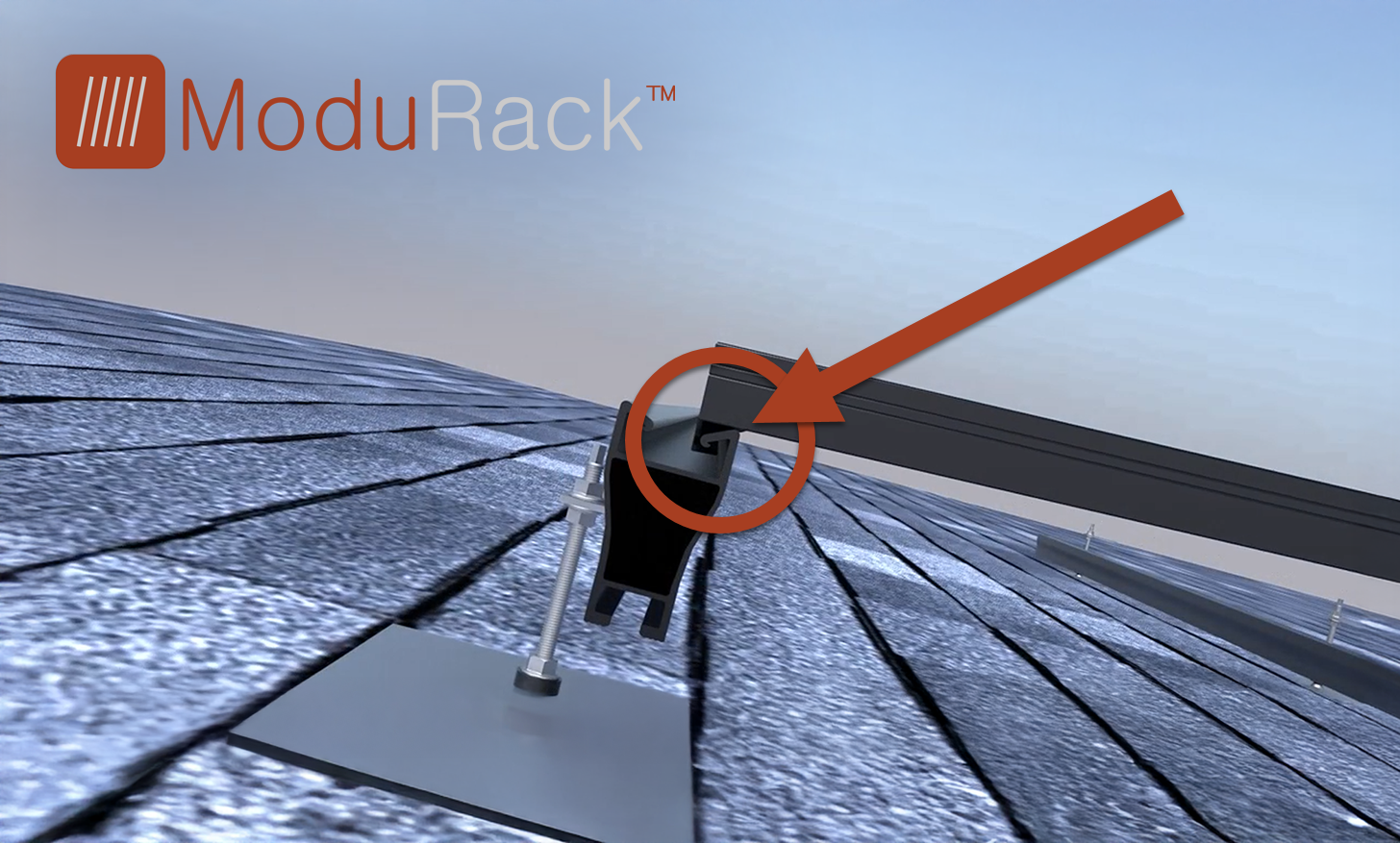
NEW: Ready-to-install solar systems! This patented innovation significantly accelerates your solar construction project
The core of ModuRack 's innovation lies in the departure from conventional clamp fastening. Instead of clamps, the modules are inserted and held in place by a continuous support rail.
More information here:
Sold and forgotten: How Germany lost control of its power lines
7. Why science and the media have largely remained silent – and still remain silent
Another key point of criticism is the lack of attention from academia and the media. For 17 years, the fact that a large part of the German network is in foreign hands has gone almost unnoticed. The public has become accustomed to this situation without any in-depth debate about the political and economic implications.
Why is that?
Several reasons can be identified:
Acceptance of EU policy as “natural”
The EU Commission and national governments have marketed the liberalization and separation of generation and grid as a technocratic issue. The debate has been reduced to competition law, market structures, and regulatory efficiency. Strategic questions such as sovereignty, political control, and national security have only been touched upon peripherally.
Complexity of the topic
The institutional structures, ownership relationships, and role of network charges are difficult for the general public to understand. Journalists and academics often struggle to explain these topics clearly without resorting to technical jargon. As a result, such issues are discussed more in specialist publications and less frequently in mainstream media.
Lack of political opponents
In the past, the political landscape was largely united in its view of liberalization and competition as progress. Critical voices pointing to the risks of privatization and outsourcing of network infrastructure received little attention in the 1990s and 2000s. Only recently, with the energy supply crisis and the energy transition, have these issues resurfaced – but more as a technical challenge than as a political option.
Lack of research incentives
Financial incentives for research on energy sovereignty and grid structures have been rather weak to date. Research has focused more on technology, climate protection, and market design than on ownership structures and geopolitical implications. This has led to an information gap.
8. Why the question of controlling the "electricity highways" was not asked for so long
The question of whether it is right for foreign states to control our "electricity highways" is a crucial one, yet one that has rarely been asked. In the past, the role of network operators was understood as "neutral" and purely technical, even though network operators are in reality political decision-makers in terms of infrastructure policy. This technical perspective has reduced the debate to regulation, costs, and efficiency, while the political dimension of infrastructure control has faded into the background.
Furthermore, the EU energy policy practiced for years has contributed to the perception that national borders in the energy sector are "outdated." The idea that a European grid could only function if it was as privatized and internationally interconnected as possible was a powerful political narrative. In this mindset, the role of a foreign state as owner was not presented as a risk, but rather as a guarantee of "neutrality" and "grid integration." The fact that a foreign state has a say in a large part of Germany's transmission infrastructure was understood not as a loss of energy sovereignty, but as a necessary price to pay for the European market.
9. Why energy sovereignty can no longer be a taboo subject
The current situation has practically lifted this taboo. Various developments have made it clear that energy sovereignty is not a theoretical question, but a central issue of security and industrial policy
- The energy crisis from 2022 onwards, triggered by the war in Ukraine and the subsequent sanctions against Russia, has shown Germany how quickly dependencies can become existential risks.
- The energy transition requires a massive expansion of the grid, in which the infrastructure must be controlled not only technically, but also financially and politically.
- The increasing importance of cyberattacks, sabotage and geopolitical influence on infrastructure makes it clear that network operators are not "just" technical operators, but strategic actors.
At the same time, it has become clear that the Dutch side is increasingly limiting its willingness to finance the German grid expansion. The TenneT Group is facing a massive investment program spanning decades, with costs for Germany and the Netherlands running into the hundreds of billions of euros. The Netherlands already made it clear in 2025 that it no longer wants to bear all the risks alone. The search for investors and the announced participation of major investors such as the Norwegian sovereign wealth fund, Dutch pension funds, and the Singaporean sovereign wealth fund GIC demonstrates a deliberate effort to reduce the burden on the Dutch state.
Germany is therefore facing a dilemma:
A massive expansion of the grid is needed, but this cannot be achieved without substantial external financial investment. At the same time, this further blurs political control over the infrastructure. The question of energy sovereignty clashes with the question of financial viability.
Related to this:


10. The role of KfW and federal participation
The German government's stake in TenneT through KfW is less a classic buyback than a strategic investment to ensure political control and financial stability. The government emphasizes that its involvement serves to secure the multi-billion-euro capital requirement in the coming years and to create planning certainty for grid expansion. It will be granted veto rights on crucial issues such as financial policy, the business plan, and the appointment of management. Furthermore, the government will gain comprehensive insight into the company's financial situation.
From a regulatory perspective, this development signals that the previous assumption – that networks would develop "by themselves" through the market – is no longer tenable. The financing capacities of private and foreign actors are finite, and political guidance is necessary to achieve goals such as network expansion, climate protection, and security of supply.
From a critical perspective, however, one has to ask why the state is only now assuming the role of co-owner, with a purchase price of €3.3 billion for 25.1% and thus valuing the network at over €13 billion, after having sold the network for just under €1 billion in 2009. This deeply integrates the state into the structure, not only politically but also financially – without giving it full control. It remains a hybrid model of foreign state involvement, German taxpayers' money, and private investment, in which political transparency diminishes.
11. What alternatives would be available for Germany?
The critical assessment of the expensive buyback inevitably leads to the question of what alternative measures Germany could take today and in the future. Several plausible options exist, which are not mutually exclusive but have different political and financial consequences:
Increased state participation or reversion to full state ownership
Germany could consider whether it makes sense to transfer the critical parts of the grid – especially those areas central to the energy transition – into full or at least predominantly public ownership. This is politically difficult because it would involve a paradigm shift away from privatization, but in the long term it could mean greater political control and less dependence on foreign states and financial investors.
Increased use of public ownership forms
In addition to KfW's participation "alongside" foreign owners, instruments such as federally owned infrastructure companies or federal grid companies could be discussed, which would build and operate new power lines as part of the energy transition. This would allow for stronger political steering in principle, without requiring a complete overhaul of the existing structure.
Increased participation of municipal and state-owned structures
Existing models, such as those used by TransnetBW or parts of the distribution networks, where municipalities and state-owned companies play a role, could be expanded. In some countries, it has been shown that municipal and state-owned structures can adapt the energy transition more effectively to the needs of the population and regions than purely market-oriented investors.
Cost containment and clear political targets
Germany could link federal participation to clear political objectives, such as priorities for grid expansion, cost containment, and transparency. Veto rights could be used to reduce planning costs, eliminate unnecessary delays, and ensure that grid expansion benefits not only investor returns but also industry and households.
At the same time, the debate must reveal that no path is without its costs. A complete return to public ownership would be expensive and fraught with political risks. However, maintaining the current structure indefinitely is equally risky, as it further weakens energy sovereignty and cements dependence on foreign owners and markets.
12. Why current policies can be criticized as "blind"
Criticism of the expensive buyback is not just a matter of numbers, but a question of political responsibility. The fact that a third of the German transmission grid has been in Dutch hands for 17 years without widespread public debate is a sign that political and intellectual attention to energy sovereignty has been lacking for a long time. Policymakers have relied on EU regulations and technical organization without questioning the geopolitical and strategic implications.
This same blindness is evident in the fact that the decision to sell TenneT was treated as "technical market regulation," while the question of whether a foreign state should control a third of Germany's infrastructure was barely raised. Infrastructure policy was de facto delegated—to the EU, to regulatory authorities, and to international investors. The debate about energy sovereignty was long a taboo subject, only resurfaced by the crisis and the imperative of grid expansion.
The expensive buyback strategy is therefore less a sign of a successful correction and more an attempt to mask a belated realization of a political lapse in judgment. The criticism is thus also directed at the politicians who did not develop such a strategy earlier than the forced sell-off in 2009.
13. What sustainable energy sovereignty in Germany needs
For Germany to strengthen its energy sovereignty, a multi-stage approach is needed – both in the short and long term. A key principle must be:
Critical infrastructure must not be solely in the hands of foreign states or purely financial investors, but must remain politically and strategically controllable.
In the short term, this means:
Strengthening political control via KfW
The federal government's stake in TenneT, 50Hertz, and TransnetBW must be used not only as a technical financial measure but also as an instrument of political control. Veto rights should be clearly focused on the implementation of the grid expansion plan and climate targets, not solely on financial stability.
More transparent cost control
Policymakers must ensure that network costs are not simply passed on to consumers through network charges, but that clear rules and upper limits are in place. The discussion surrounding the "efficiency return" of network operators and the question of how much profit these companies actually earn must be conducted more transparently.
In the long term, a more fundamental realignment is needed:
Clear definition of critical infrastructure
Germany needs to define which infrastructure is considered "critical" and to what extent it should remain in public or at least state-controlled hands. A clear separation between critical infrastructure and purely market-based segments could help to target political influence.
Long-term financing models
Germany needs a stable, long-term financing model for grid expansion that is not solely based on short-term investors, but rather on a mix of public funds, low-interest KfW loans, and limited profit opportunities. Infrastructure financing should not be misused as a mere investment opportunity for those seeking returns.
A stronger European dimension with a clear national role
While Germany is part of a European network, the European dimension must be clearly distinguished from the national role. The political governance of infrastructure must be visible not only in Brussels but also in Berlin. EU regulation should not automatically be seen as the "end of political debate," but rather as a framework that must be shaped politically.
14. A forced sell-off turned into an expensive buyback – but not yet a successful change of strategy
What was once a forced sell-off has now become an expensive buyback – financed from the federal budget and through grid fees levied on electricity consumers. The fact that a third of the German transmission grid has been under Dutch control for 17 years is a clear indication of limited energy sovereignty. The federal government's recent steps, including acquiring a 25.1% stake in TenneT Deutschland and obtaining veto rights, are an attempt to mitigate this limitation, but not a complete paradigm shift.
The political debate surrounding energy sovereignty is long overdue. Criticism of the expensive buyback program is not merely a question of price, but a question of political responsibility. Germany has the opportunity to learn from past mistakes and develop an infrastructure policy that reconciles control over critical energy infrastructure with the need for financing and market dynamics. Whether this opportunity is seized ultimately depends on whether policymakers are willing to break taboos and treat grid and energy policy not just as a technical issue, but as a central question of sovereignty.
15. Who was responsible for the forced sale at that time?
Two actors are primarily responsible for the forced sale of E.ON's transmission network in 2009:
1. The EU Commission and the competition authority
The main driving force behind this was the European Commission, more precisely its Directorate-General for Competition. EU Competition Commissioner Neelie Kroes suspected E.ON of influencing gas and electricity prices in Germany by exploiting its dominant position in the transmission network, thereby distorting competition. As part of an antitrust investigation in 2008, E.ON was pressured to divest parts of its infrastructure to avoid a hefty antitrust fine in the billions.
- Neelie Kroes' work is not without its critics. An overview can be found on Wikipedia: https://de.wikipedia.org/wiki/Neelie_Kroes#Kritik
To avert this procedure, E.ON committed to the EU Commission at the time to sell its high-voltage grid (spun off into the Transpower company) to a competitor – by the end of 2010. The EU Commission saw this as a step towards better market unbundling and competition protection, thus justifying the forced sale as a "concession" within the framework of competition policy.
This means that the institutional responsibility lies primarily with the EU Commission and the competition authority, which formulated the requirement to sell and enforced it with sanctions.
2. E.ON as the obligated seller
Politically, the sale was the result of a forced offer from the EU Commission, but operationally it had to be implemented by the energy company E.ON. The management, led by then E.ON CEO Wulf Bernotat, agreed to this concession in order to avoid the threatened antitrust fine.
E.ON's supervisory board finally gave the green light for the sale to TenneT, allowing the company to complete the sale of approximately 10,700–11,000 kilometers of high-voltage grid for nearly 1.1 billion euros. This places E.ON, as the seller, under responsibility, even though the underlying motivation was clearly political and competitive (EU mandate).
3. The role of German energy and antitrust policy
Technically, the forced sale also implemented German energy policy, or rather the energy policy of the then-federal government, which in the 2000s promoted the strict separation of generation and grid (unbundling according to the Energy Industry Act). The Federal Network Agency and the regulatory authority monitored the implementation of the unbundling, but did not actively intervene to prevent the sale to a foreign state-owned operator.
In short:
- Primarily responsible for the compulsory nature of the sale: the EU Commission with Competition Commissioner Neelie Kroes.
- The German energy company E.ON, under the leadership of Wulf Bernotat, was operationally responsible for the sale to TenneT.
- Politically embedded in the German and European liberalization and unbundling policies of the 2000s, which allowed a third of the German transmission network to come under Dutch state ownership.
Your global marketing and business development partner
☑️ Our business language is English or German
☑️ NEW: Correspondence in your native language!

Konrad Wolfenstein
I and my team are happy to be available to you as your personal advisor.
You can contact me by filling out the contact form here wolfenstein@xpert.digital:or simply call me at +49 7348 4088 965. My email address is
I'm looking forward to our joint project.
☑️ SME support in strategy, consulting, planning and implementation
☑️ Creation or realignment of the digital strategy and digitization
☑️ Expansion and optimization of international sales processes
☑️ Global & Digital B2B trading platforms
☑️ Pioneer Business Development / Marketing / PR / Trade Fairs
🎯🎯🎯 Benefit from Xpert.Digital's extensive, five-fold expertise in one comprehensive service package | BD, R&D, XR, PR & Digital Visibility Optimization

Benefit from Xpert.Digital's extensive, five-fold expertise in a comprehensive service package | R&D, XR, PR & Digital Visibility Optimization - Image: Xpert.Digital
Xpert.Digital possesses in-depth knowledge across various industries. This allows us to develop tailored strategies precisely aligned with the requirements and challenges of your specific market segment. By continuously analyzing market trends and monitoring industry developments, we can act proactively and offer innovative solutions. The combination of experience and expertise generates added value and provides our clients with a decisive competitive advantage.
More information here: