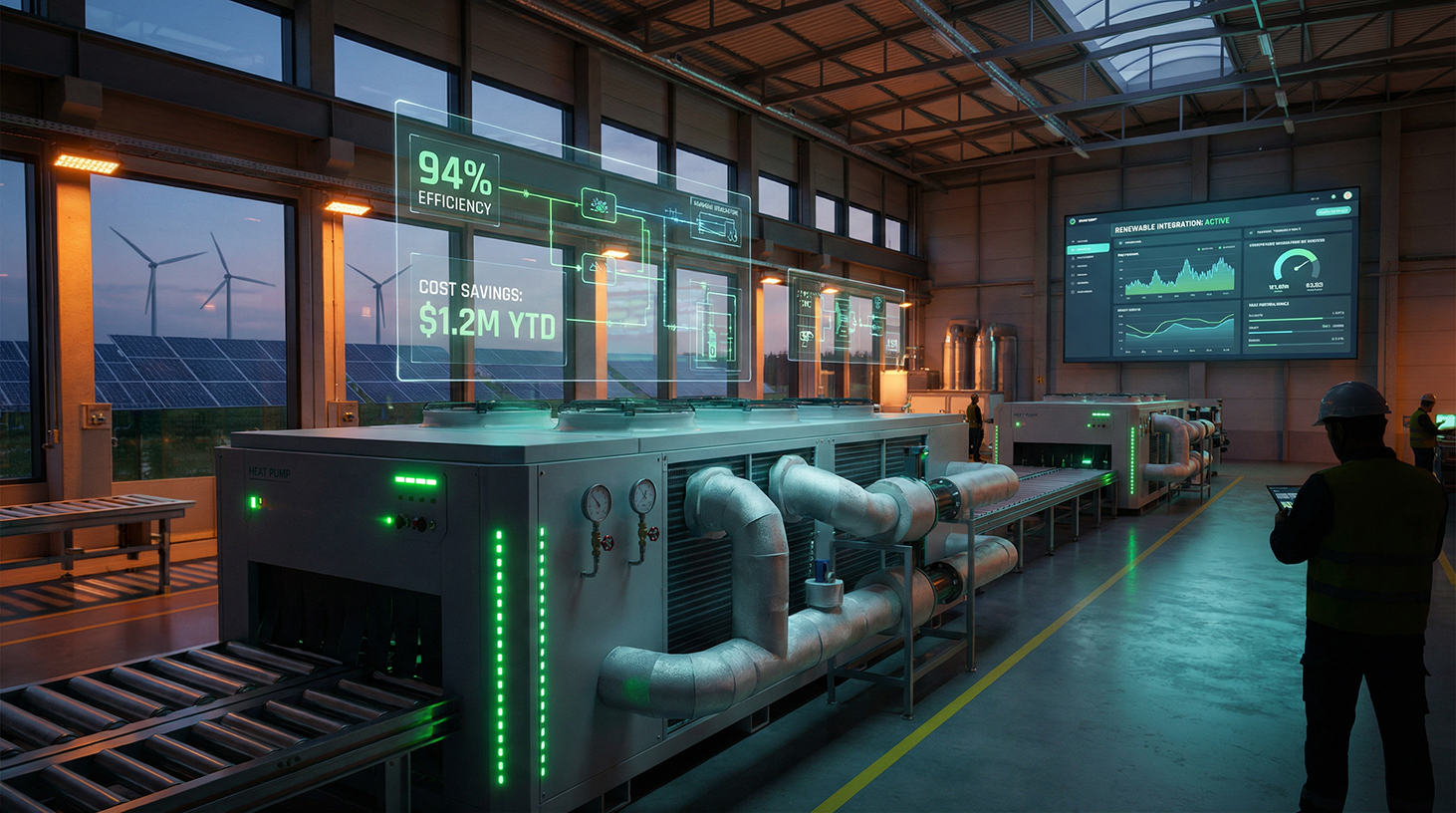
The factory that pays for itself – Why energy efficiency is no longer a cost-cutting program, but a survival strategy – Image: Xpert.Digital
Electricity prices force action: How intelligent energy concepts secure Germany's industrial location
Subsidies as self-deception: Why the industrial electricity price is only a painkiller – and what factories really need
German industry is under enormous pressure: With energy prices far above the international average, the competitiveness of entire sectors is being severely jeopardized. Government subsidies, such as the planned industrial electricity price, may provide a brief respite, but they are not a lasting solution. Anyone who still believes that a few new LED lights or a rudimentary energy audit will suffice is dangerously self-deception and is jeopardizing the future of their business location. Furthermore, strict EU regulations will come into effect in 2026, forcing companies to finally take action. But this crisis also presents an immense opportunity: By consistently implementing the "efficiency first" principle, closing hidden cost traps such as compressed air, using high-temperature heat pumps, and implementing intelligent energy management, costs can not only be drastically reduced but also transformed into genuine competitive advantages. Learn why energy efficiency is no longer a bothersome cost-cutting measure, but a radical survival strategy – and how this concept translates into measurable profits on the balance sheet.*
Anyone who still believes that a few LED lights and an energy audit are enough has not grasped the seriousness of the situation
German industry is at a turning point in energy policy, comparable in its implications to the oil price shock of the 1970s. However, unlike then, this is not a temporary crisis, but a structural reorganization of industrial cost architecture. In a global comparison, German industrial companies pay an average of 14 cents per kilowatt-hour of electricity, significantly more than the European average of 12 cents. France pays 8 cents, Spain 9 cents, and Norway even 5 cents. In North America, the price level is roughly half that of Germany. Against this backdrop, anyone still making minor adjustments is not reducing costs, but rather deluding themselves.
The consequences of this price difference are already measurable. According to the German Chamber of Industry and Commerce (DIHK), four out of ten companies in Germany are considering reducing their production or relocating it abroad due to energy prices. Particularly energy-intensive sectors such as the chemical, steel, glass, and paper industries are feeling the competitive pressure directly: production is declining, investments are being postponed, and value creation is increasingly migrating abroad. Even data centers, automotive manufacturers, and logistics companies are suffering from high energy costs. Electricity prices in Europe, and especially in Germany, are among the highest in the world, with gas prices up to seven times and electricity prices up to five times higher than in competing locations in other countries.
The industrial electricity price as a painkiller, not as a cure
The German government has responded to the pressure and will introduce a state-subsidized industrial electricity price from January 1, 2026. Energy-intensive companies from 91 economic sectors will receive electricity at around 5 cents per kilowatt-hour, roughly half the current price. The measure is limited until 2028 and will be financed through the Climate and Transformation Fund. Chancellor Friedrich Merz had already announced this relief at the last steel summit.
But this subsidy is a painkiller, not a cure. It provides some relief, but it doesn't solve the fundamental cost problem. The Bavarian Business Association puts it succinctly: Competitive energy prices are a basic prerequisite for a strong industry, and if Germany wants to remain a leading industrial location, this cost factor must become reliable, predictable, and internationally competitive. A reversal of this trend is not currently in sight. While a certain convergence with Asian levels is conceivable in the medium term, countries with their own subsidies and favorable infrastructure will clearly remain at an advantage.
The honest answer, therefore, is this: No company can rely on the state to permanently compensate for the difference compared to international competitors. Those who want to secure their location in the long term must bring their energy costs up to a competitive level on their own. And this is precisely where the discussion about industrial energy concepts that actually make financial sense begins.
The regulatory framework as a driver of change
For industrial companies, 2026 marks the beginning of a period of new, binding energy and efficiency requirements. Several laws will come into full effect: the EU Energy Performance of Buildings Directive (EPBD), the Energy Efficiency Act (EnEfG), the Building Energy Act (GEG), and new requirements for building automation. From 2026 onward, the EU Energy Performance of Buildings Directive requires the installation of photovoltaics in new non-residential buildings larger than 250 square meters, intelligent building automation for controlling lighting, ventilation, air conditioning, heating, and cooling, as well as a gradual transition towards near-climate-neutral operation.
The Energy Efficiency Act significantly tightens the obligations. Companies with a total final energy consumption of more than 2.5 gigawatt-hours per year must conduct energy audits or operate an energy or environmental management system. They are also required to prepare and publish implementation plans for economically viable energy efficiency measures, which the Federal Office for Economic Affairs and Export Control (BAFA) checks on a random basis. Companies with a consumption of more than 7.5 gigawatt-hours per year must implement a certified energy management system according to ISO 50001 or EMAS by November 2025 at the latest. While the planned amendment to the Energy Efficiency Act is intended to bring long-term relief, all existing obligations remain unchanged until its adoption – expected in 2026 or 2027.
The German government plans a 1:1 implementation of the EU directive, a reduction in bureaucracy, and greater EU harmonization. For industrial companies, this means in practice: the regulatory future has already begun. Those who want to be prepared for 2026 must implement concrete measures now.
The Efficiency First principle as the foundation of every energy concept
An energy concept that translates into positive results doesn't begin with the acquisition of new technology, but with a systematic analysis of the current situation. The efficiency-first principle, as enshrined in the EU Energy Efficiency Directive, represents an approach that systematically reduces energy demand before expanding additional or alternative generation capacities and infrastructure. This principle is not only required by regulations, but also economically imperative.
The figures speak for themselves: In the area of industrial process heat, which accounts for roughly two-thirds of total industrial energy demand, there is an economic energy saving potential of approximately 47 percent of final energy consumption – without any production restrictions. In Germany, more than 300 terawatt-hours of industrial waste heat are lost unused every year. This represents a massive cost factor that is not explicitly included in any balance sheet, but severely impacts competitiveness.
ISO 50001 certification typically leads to savings of 10 to 20 percent, which can amount to five- to six-figure sums annually for energy-intensive companies. Systematic recording and optimization create a complete overview of all energy flows, consumers, and costs, thus enabling well-informed investment decisions.
New: Patent from the USA – install solar parks up to 30% cheaper and 40% faster and easier – with explanatory videos!

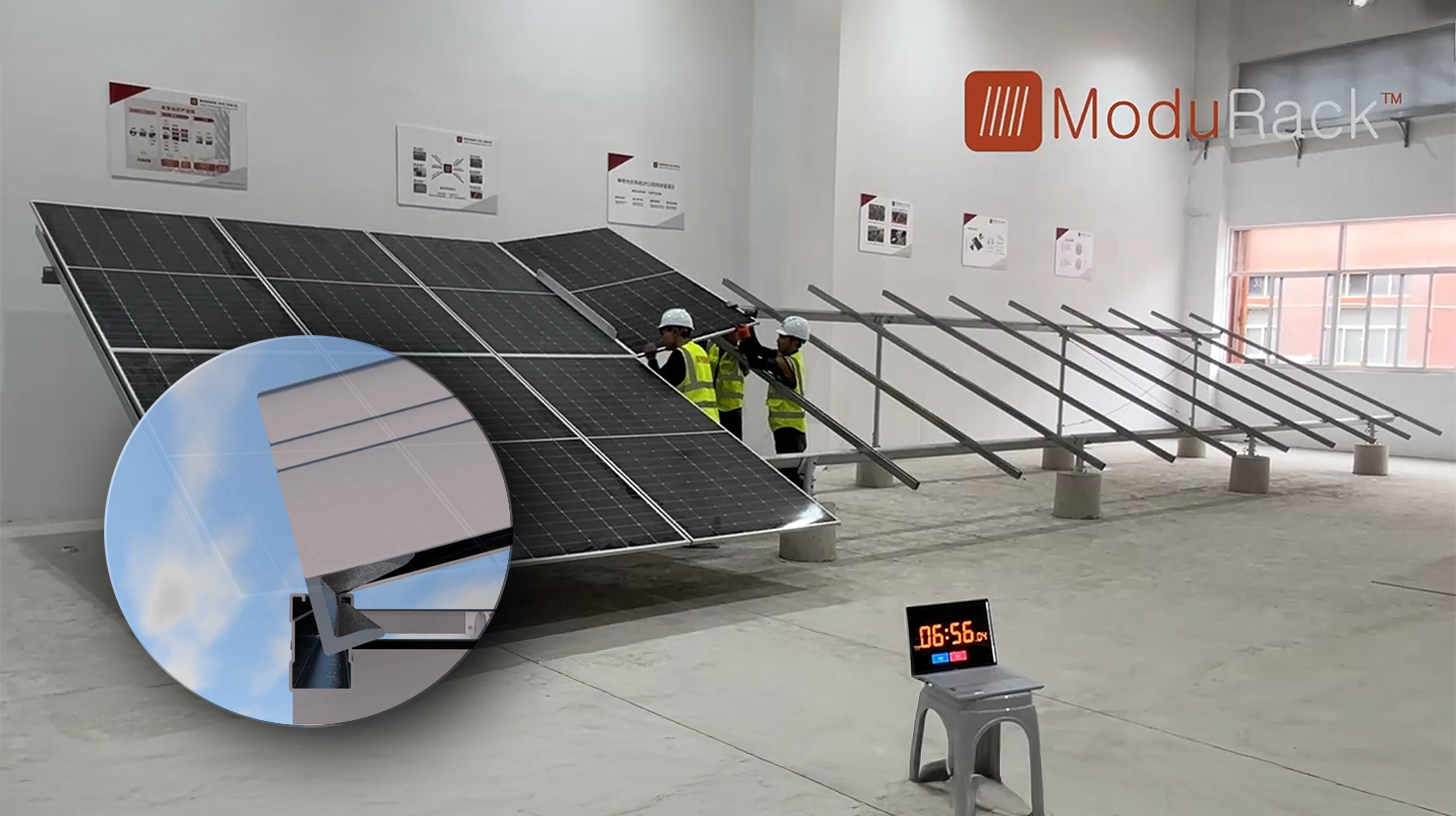
New: Patent from the USA – Install solar parks up to 30% cheaper and 40% faster and easier – with explanatory videos! - Image: Xpert.Digital
The core of this technological advancement is the deliberate departure from conventional clamp mounting, which has been the standard for decades. The new, more time- and cost-effective mounting system addresses this with a fundamentally different, more intelligent concept. Instead of clamping the modules at specific points, they are inserted into a continuous, specially shaped support rail and held securely in place. This design ensures that all forces – whether static loads from snow or dynamic loads from wind – are distributed evenly across the entire length of the module frame.
More information here:
Industry 4.0 with a twist: Why intelligent management is more important than new engines
Compressed air: the forgotten cost trap
One of the most underestimated potential savings lies in compressed air generation. Compressed air is one of the most expensive utilities in industry, yet it is often still considered free in the workplace. The facts tell a different story: 4 to 5 percent of global electricity consumption is attributable to compressed air, representing one of the largest industrial savings potentials of 233 terawatt-hours. More than 75 percent of a compressor's total operating costs are energy costs.
The real problem lies in physics: When generating compressed air, approximately 85 to 94 percent of the electrical energy used is lost as heat. Air-cooled, oil-injected screw compressors can recover up to 90 percent of this heat energy. This heat recovery is a standard option and can often be retrofitted, with the investment frequently paying for itself within a few months. Nearly every other company has usable heat recovery potential, as hot water or steam is needed anyway for cleaning, sterilization, heating, or production.
Furthermore, identifying and reducing leaks, optimizing operating pressure, and using variable-speed compressors offer further significant savings potential. Combining these measures can reduce energy consumption for compressed air by 30 to 50 percent, which quickly translates into six-figure savings per year for a typical industrial operation.
High-temperature heat pumps as a game changer in process heat
Industrial process heat is the largest energy consumer in German industry, and this is precisely where the greatest potential for improvement lies. High-temperature heat pumps are suitable wherever process heat with a temperature of up to 150 degrees Celsius is required, for example in the food, paper, or chemical industries. A heat exchanger recovers the heat from existing waste heat generated during cooling or melting processes and efficiently feeds it back into the production process.
The market potential is enormous. In key industries alone (food and beverage production, chemical and pharmaceutical industries, mechanical manufacturing, and textiles), approximately 3.5 terawatt-hours of energy are lost annually, which could be utilized by heat pumps. According to the International Energy Agency (IEA), high-temperature heat pumps could cover around 30 percent of industrial heat demand by 2050 at temperature levels up to 400 degrees Celsius.
Heat pumps are particularly economical where there is a simultaneous need for both heating and cooling, for example in the food industry. In such situations, the seasonal performance factor (SPF) increases significantly because the cooling capacity is also utilized. At the same time, price risks can be better mitigated because the dependence on fossil fuels decreases.
Digital load control and intelligent energy management
The third pillar of a profitable energy concept is the digitalization of energy management. Fraunhofer IFF's experience shows that intelligent sensors and dynamic load control, which adapt energy consumption to production requirements in real time, enable a 20 percent reduction in energy costs while simultaneously increasing production capacity by 10 percent. Advanced, real-time data-based energy management systems can reduce energy consumption by 15 percent and save several million euros annually.
A fundamental rule applies to system optimization: With a total energy saving potential of 100 percent in a system, approximately 10 percent is achieved through more efficient components such as motors, and about 30 percent through adaptable speed control. However, the greatest savings, around 60 percent, are achieved by optimizing the entire system. Investing in a speed-controlled system with a frequency converter offers a higher long-term ROI than simply using more energy-efficient motors, as the energy savings are more than three times greater.
A dairy company was able to reduce its overall energy consumption by approximately 20 percent through systematic energy management, which served as a model project for other locations, and also benefit from negative electricity prices through load management. The key lay in an energy circle in which managers from several organizational units regularly defined energy targets, decided on measures, and tracked their implementation.
Power-to-heat and the integration of renewable energies
The most significant savings are achieved by companies that fundamentally transform their energy supply. Power-to-heat and power-to-gas technologies make it possible to reduce energy consumption by up to 50 percent and significantly lower CO₂ emissions. At the same time, the coalition agreement envisages the construction of up to 20 gigawatts of gas-fired power plant capacity by 2030, with all new plants being hydrogen-capable and operating on a fully decarbonized basis by 2045 at the latest.
The "Federal Funding Program for Industry and Climate Protection" has already selected 38 industrial projects from various sectors in its first competition. These projects implement new production processes, energy-efficient plants, and technologies for capturing, utilizing, and storing CO₂. A second call for proposals runs until the end of February 2026, demonstrating the federal government's commitment to creating reliable framework conditions for pilot projects and innovative technologies.
Installing your own photovoltaic systems on warehouse roofs – which will become mandatory for new non-residential buildings over 250 square meters from 2026 onwards due to the EPBD – can significantly increase self-consumption and reduce electricity costs by 30 to 40 percent in the long term if carefully planned. Combined with battery storage and intelligent load management, this creates a system that not only minimizes costs but also ensures security of supply.
The business case of an integrated energy concept
An energy concept that measurably impacts the overall energy balance combines all the aforementioned levers into an integrated system. Payback periods vary considerably depending on the specific measure. Heat recovery from compressed air systems often pays for itself within a few months. Investing in frequency converters typically pays for itself within two years. High-temperature heat pumps have payback periods of three to five years, depending on the application, with the simultaneous use of heat and cooling significantly improving efficiency.
The order is crucial: first efficiency and flexibility, then the direct use of climate-neutral energy on-site. Those who follow this principle avoid oversized systems and maximize the return on investment for each individual measure. Companies pursuing this systematic approach report total energy consumption savings of 30 to 50 percent, which, for a typical medium-sized company with energy costs in the seven-figure range, represents a dramatic improvement in their competitive position.
The alternative to a systematic approach is not the status quo, but rather the gradual loss of competitiveness in an environment where competitors in other industrialized countries are also increasing their energy efficiency and the benefits of government subsidies are usually short-lived. Those who fail to invest today will pay the price tomorrow – not only in the form of higher energy bills, but also through lost contracts, the departure of skilled workers, and ultimately the closure of entire sites.
The path from concept to implementation
Experience shows that successful energy concepts don't function as purely technical projects, but require deep integration into the corporate culture. The aforementioned dairy company was successful because it actively pursued energy efficiency as a key management responsibility and raised employee awareness of the topic through regular training. Technical systems only function optimally when the people operating them understand why energy efficiency is not a limitation, but rather an investment in their own job security.
Furthermore, direct investment is not always necessary. Numerous energy suppliers and contracting companies offer attractive models that eliminate the need for high initial investments. Combining in-house efficiency measures with external contracting can significantly lower the barrier to entry while simultaneously ensuring access to specialized technologies.
German industry has the technological means, the regulatory incentives, and the economic pressure to fundamentally transform its energy supply. What is still lacking in many cases is the courage to move from incremental improvements to a systemic approach. The companies that take this step now will not only have lower energy costs in five years, but also a significantly stronger position in international competition. The factory of the future is not the one that produces the most, but the one that manages its resources most intelligently.
Your partner for business development in the fields of photovoltaics and construction
From industrial rooftop PV to solar parks and larger solar parking lots
☑️ Our business language is English or German
☑️ NEW: Correspondence in your native language!

Konrad Wolfenstein
I and my team are happy to be available to you as your personal advisor.
You can contact me by filling out the contact form here wolfenstein@xpert.digital:or simply call me at +49 7348 4088 965. My email address is
I'm looking forward to our joint project.