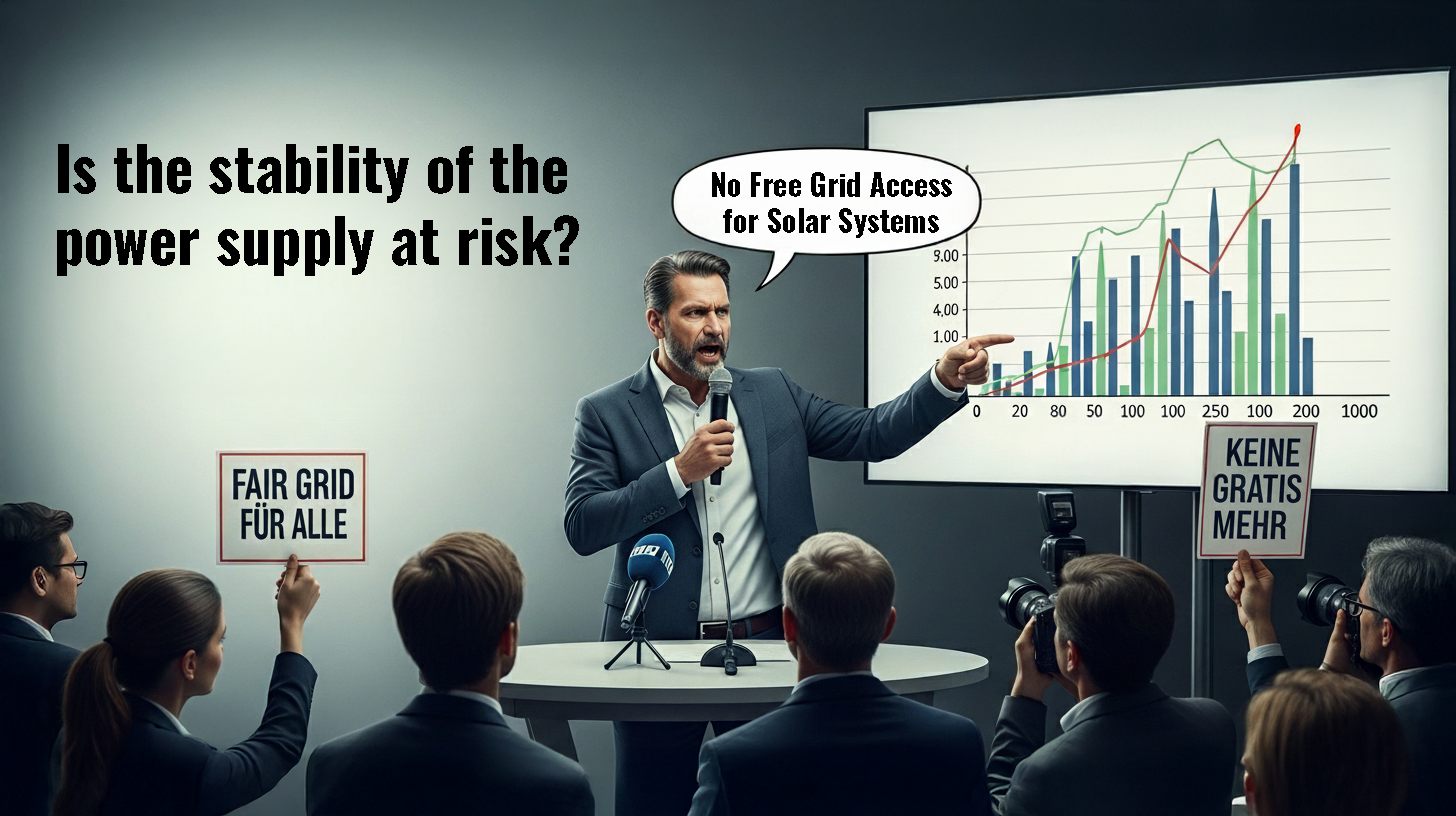
RWE's CEO in Germany demands: End the free grid access for solar power plants? – Image: Xpert.Digital
Solar power dispute: Who will ultimately pay for the green energy transition?
Background to the current debate: RWE CEO calls on owners of solar power plants to finance grid connections
Germany's energy transition is reaching a crucial phase in which fundamental questions about the financing and design of renewable energies are being renegotiated. Federal Economics Minister Katherina Reiche's proposal to eliminate feed-in tariffs for new private solar installations has sparked a heated debate. RWE CEO Markus Krebber goes even further, demanding that solar panel owners contribute to the costs of grid connections in the future.
Fairness debate regarding green electricity: Do only the rich benefit from solar energy?
A proposal by Markus Krebber, CEO of Germany's largest energy company RWE, has reignited the debate about the future of solar energy and touches upon a fundamental question of the global energy transition: Who will bear the costs of restructuring our electricity grids? Krebber is calling for a radical rethink and wants owners of private solar power systems to pay for connecting to and using the grids – a burden that is currently shared by all electricity customers.
At the heart of his argument is the accusation that the current system is socially unjust and jeopardizes the stability of the electricity supply. While primarily wealthier homeowners benefit from subsidized solar power, the billions of euros in costs for grid expansion are passed on to the general public, especially renters and low-income earners. Furthermore, solar installations flood the grid precisely when electricity is least needed, necessitating costly interventions for stabilization.
The demand is sparking fierce opposition. The solar industry and environmental groups warn that such a step would stifle the expansion of renewable energies and push climate goals further into the distance. They argue that private investment in solar power is a crucial contribution to the energy transition and should not be penalized with additional costs. This debate thus exposes the central conflict facing many countries: How can the energy transition be not only rapid, but also fair and economically viable for everyone?
The position of RWE CEO Markus Krebber
The CEO of Germany's largest energy company, RWE, Markus Krebber, has significantly intensified his criticism of current solar subsidies. At an event hosted by the Düsseldorf Association of Business Journalists, he argued that the current subsidies are merely windfall gains. His reasoning is multifaceted and touches on both technical and social aspects of the energy transition.
Krebber views private solar power plant operators as problematic actors in the electricity system. According to him, these are users who feed electricity into the grid whenever there is too much sunshine and their electricity is not actually needed. At the same time, they receive compensation for this that is significantly higher than the wholesale electricity price. In Krebber's opinion, this situation leads to unnecessary additional costs in the system.
RWE's CEO, however, goes a step further than Minister Reiche. While she merely proposes eliminating feed-in tariffs for new installations, Krebber is calling for a fundamental reform of cost distribution. His vision is for solar plant operators to contribute to the costs of grid connections and grid expansion. This would represent a fundamental change to the current system, in which these costs are financed through general grid fees.
Arguments for a reform of the financing structure
Economic efficiency without subsidies
Those in favor of cutting subsidies argue that solar power systems are now profitable even without government support. The costs for photovoltaic modules and storage systems have fallen drastically in recent years. A modern solar power system now costs between €1,200 and €1,600 per kilowatt peak, which is significantly lower than in previous years.
With current electricity prices averaging 35 to 38 cents per kilowatt-hour, households can save considerably by using solar power themselves. The production costs for solar power range from 4.1 to 14.4 cents per kilowatt-hour, depending on the location. This difference makes photovoltaic systems economically attractive even without feed-in tariffs, especially with high self-consumption.
Social justice
A key criticism of the current subsidy structure concerns social justice. Krebber and other critics argue that solar subsidies result in a redistribution of wealth from the bottom to the top. The costs of the subsidies are financed through the electricity bills of all consumers, while primarily wealthier homeowners benefit from them.
This criticism is not new. For years, there has been discussion about whether the Renewable Energy Sources Act leads to an unfair distribution of the burden. Tenants and people with low incomes who cannot afford a solar system have to co-finance the subsidies of those who are able to make such an investment through higher electricity prices.
The regressive effect of the EEG surcharge exacerbates this problem. Poorer households have to spend a larger share of their disposable income on electricity than wealthier households. At the same time, they benefit less from the advantages of the energy transition, as they often lack the opportunity to install their own solar panels.
Network stability and system integration
Another important argument concerns grid stability. The massive expansion of solar energy is increasingly leading to challenges in the electricity grid. Particularly on sunny days, oversupply can occur, destabilizing the grid frequency. Most private solar installations currently feed power into the grid uncontrolled, without regard to current demand or the state of the grid.
This problem is exacerbated on public holidays when good weather leads to high solar power production but low consumption. Transmission system operators then have to implement expensive balancing measures to ensure grid stability. These costs are ultimately passed on to all electricity consumers via grid fees.
Rising network costs as a problem area
Current development of network charges
Network charges have risen steadily in recent years and now account for about a third of the electricity price. In 2024, households paid an average of 11.6 cents in network charges per kilowatt-hour, compared to 7.5 cents in 2021. This increase is mainly due to the necessary expansion of the electricity grid, which is required for the integration of renewable energies.
The multi-billion euro grid expansion incurs high costs, which have so far been borne primarily by electricity consumers who draw power from the grid. However, solar power plant operators with storage systems can significantly reduce their grid consumption and consequently pay lower grid fees, even though they use the grid infrastructure for feeding in electricity and require it as a backup.
The problem of the shrinking funding base
The Federal Network Agency sees a structural problem in the current financing of network costs. The number of users paying full network charges is steadily decreasing, while costs are simultaneously rising. A particularly problematic aspect is that households with solar panels and storage systems pay lower network charges, but use the network just as intensively when their systems are not producing electricity.
Klaus Müller, head of the Federal Network Agency, has already initiated a reform process to achieve a fairer distribution of network costs. Various models are being discussed for how prosumers (simultaneous producers and consumers of electricity) can contribute more to network costs.
Solutions for network financing
Various models are currently being discussed to make the financing of the grid infrastructure sustainable for the future. One possibility would be feed-in tariffs, where electricity producers also contribute to grid costs. Alternatively, basic grid fees could be introduced, which are levied regardless of actual consumption or feed-in.
Another approach is to price grid connection capacity. Costs would then be calculated not only based on the actual amount of electricity used, but also on the available connection capacity. This would place a greater burden on operators of solar power plants with high installed capacity.
Counterarguments and criticism of the reform plans
Position of the Greens and the solar industry
The Green Party has reacted sharply to the reform plans and is demanding a legal right to solar power. Green Party parliamentary group leader Katharina Dröge criticized Minister Reiche's statements, saying they have led to massive uncertainty among citizens, tradespeople, and the solar industry. A decline in orders for photovoltaic systems is already being reported.
The German Solar Association (BSW) disagrees with the assessment that solar power plants are economically viable without subsidies. Managing Director Carsten Körnig argues that only solar power plants with high self-consumption and very large ground-mounted installations can currently be operated economically without EEG subsidies. Market prices for solar power are, on average, still below the levelized cost of electricity.
Economic perspective
Critics of the reform plans argue that subsidizing solar energy makes perfect economic sense. The generation of renewable energy is associated with positive effects such as avoiding greenhouse gas emissions and reducing import dependency. These climate protection benefits benefit society as a whole and justify government support.
Furthermore, it is argued that private solar power plant operators already make a significant contribution to the energy transition. Eliminating subsidies could slow the expansion of renewable energies and jeopardize climate goals. Decentralized energy generation by citizens, in particular, is seen as a crucial component for a successful energy transition.
Impact on the energy transition
A drastic reduction in solar subsidies could have negative consequences for the entire energy transition. Germany has set ambitious targets for the expansion of renewable energies, which can only be achieved with continuous growth. A slump in new installations would jeopardize these goals.
The solar industry is warning of negative consequences for jobs and regional economic development. Ending subsidies would not only lead to fewer installations, but could also drive companies into bankruptcy and destroy jobs. This would be a setback for an industry that has made significant progress in recent years.
New: Patent from the USA – install solar parks up to 30% cheaper and 40% faster and easier – with explanatory videos!

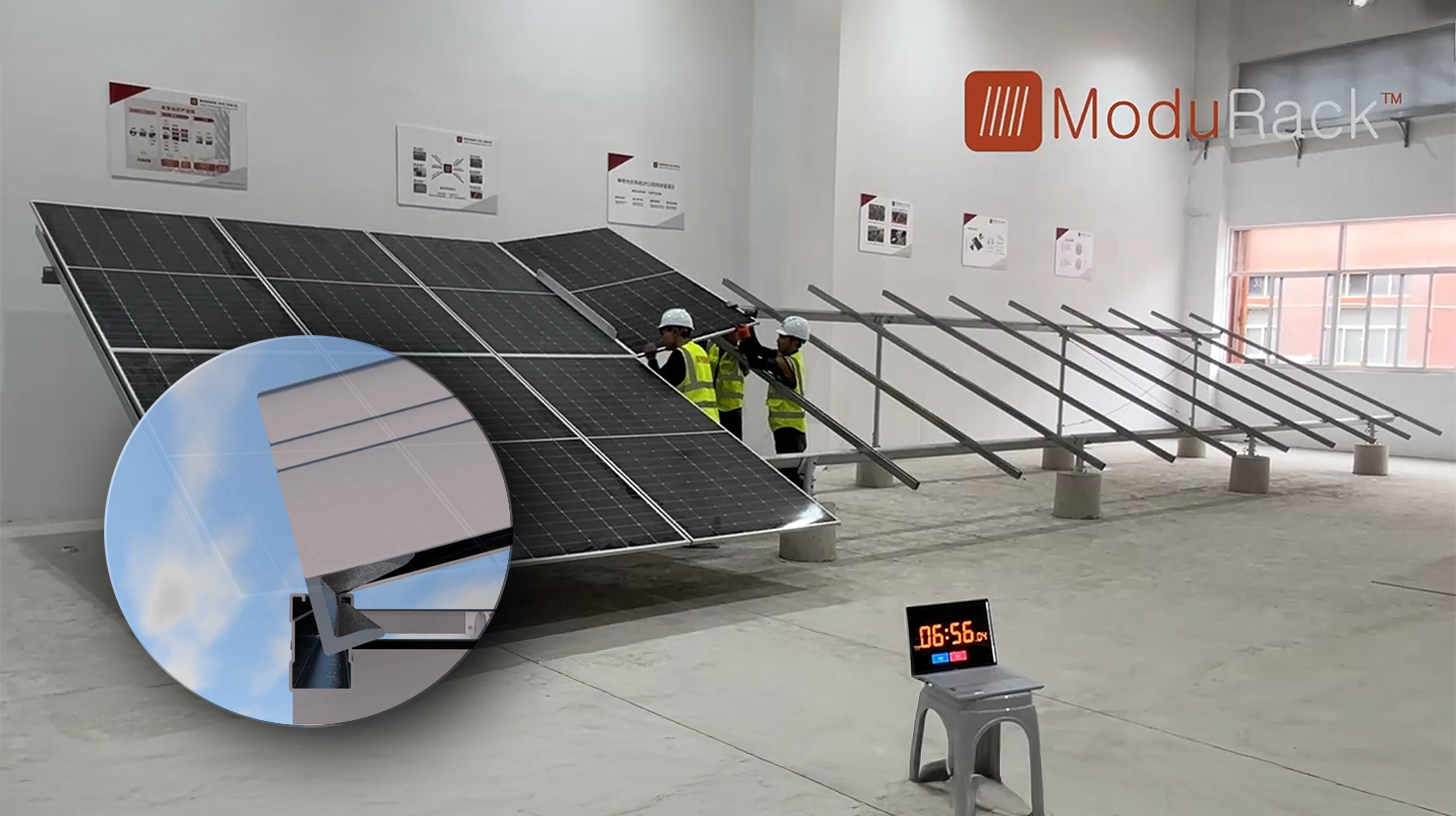
New: Patent from the USA – Install solar parks up to 30% cheaper and 40% faster and easier – with explanatory videos! - Image: Xpert.Digital
The core of this technological advancement is the deliberate departure from conventional clamp mounting, which has been the standard for decades. The new, more time- and cost-effective mounting system addresses this with a fundamentally different, more intelligent concept. Instead of clamping the modules at specific points, they are inserted into a continuous, specially shaped support rail and held securely in place. This design ensures that all forces – whether static loads from snow or dynamic loads from wind – are distributed evenly across the entire length of the module frame.
More information here:
Solar power goes smart: Economic efficiency and technical innovations
Technical solutions for better system integration
Intelligent control and digitalization
To meet the challenges of growing solar energy, technical solutions are needed. The Solar Peak Act, which came into force in February 2025, stipulates that grid operators and plant operators are obligated to improve the possibilities for controlling even small-scale installations.
Smart meters and control systems can help ensure that solar power plants no longer feed into the grid uncontrollably, but instead respond to the needs of the grid. This would improve grid stability and simultaneously reduce the costs of balancing measures. Plant operators who do not install this technology will be subject to penalties.
Storage technology and flexibility
The increasing prevalence of battery storage offers further opportunities for improved system integration. Modern storage systems can not only increase self-consumption but also serve as a buffer against grid fluctuations. However, there are currently few incentives to deploy these storage systems in a grid- or market-oriented manner.
In the future, variable tariffs and time-dependent prices could help to make storage facilities more flexible. They could charge during periods of low prices and release electricity when demand is high. This would improve grid stability and increase the economic benefits for operators.
Sector coupling and new consumption patterns
The integration of solar energy can be improved through new consumption patterns. Heat pumps, electric vehicles, and power-to-heat plants can help to directly consume solar power during periods of high generation. This reduces feed-in to the grid and improves system integration.
Sector coupling also offers opportunities to make good use of surplus solar power. The production of hydrogen or other energy carriers could help to balance the fluctuating generation of renewable energies.
Economic assessment of the current situation
Amortization and profitability
Despite the reforms under discussion, photovoltaics remains an attractive investment for many households. Under 2025 conditions, a modern photovoltaic system typically pays for itself in eight to twelve years. The exact payback period depends on various factors, particularly the self-consumption rate and local electricity prices.
Self-consumption has become the decisive factor for economic viability. While the feed-in tariff is now only 7.86 cents per kilowatt-hour, households can save 28 to 35 cents for every kilowatt-hour they consume themselves. A high self-consumption rate is therefore more important than a high feed-in rate.
Influence of storage systems
Battery storage systems can significantly improve the economic viability of solar power systems. They make it possible to increase the self-consumption rate from around 30 percent without storage to up to 70 percent with storage. This leads to considerably higher savings and shortens the amortization period of the entire system.
The cost of battery storage systems has fallen significantly in recent years and is expected to continue to decline. This makes them increasingly attractive to households, even regardless of potential subsidy cuts. Furthermore, the combination of a solar power system and storage offers greater security of supply and independence from the electricity provider.
Regional differences
The economic viability of solar power systems varies considerably depending on the region. In southern Germany, with higher levels of solar irradiance, production costs are lower than in northern Germany. Even inexpensive systems in northern Germany have production costs of at least 8.7 cents per kilowatt-hour, which could limit their profitability without subsidies.
These regional differences must be taken into account when reforming the funding structure. A complete elimination of subsidies could lead to a situation where hardly any solar power systems are installed in less sunny regions, which would slow down the expansion of renewable energies across Germany.
Future prospects and reform options
Gradual reform instead of a radical cut
Many experts advocate for a gradual reform of solar subsidies rather than a radical cut. An overly abrupt change in the framework could lead to a slump in new installations, as has already been observed after previous subsidy reductions. A predictable transition phase would give the industry time to adjust to the new conditions.
Possible reform steps could include a further reduction in feed-in tariffs, the introduction of minimum requirements for intelligent control systems, or the gradual sharing of grid costs. It would be important that these changes be announced well in advance to ensure planning certainty.
New business models
The changing regulatory environment is also opening up new business models for the solar industry. Direct marketing, power purchase agreements, and tenant electricity could gain importance when the traditional feed-in tariff is phased out. However, these models often require larger installations and professional marketing.
Services related to energy management and flexibility could also become more important. Companies that offer intelligent control systems or market storage solutions could benefit from the changing requirements.
European perspective
The debate surrounding solar energy subsidies is not limited to Germany, but is also taking place in other European countries. It is becoming clear that different approaches are being pursued. Some countries are relying more heavily on market mechanisms, while others continue to rely on government subsidies.
A coordinated European approach could help avoid distortions in the internal market and make the energy transition more efficient. This applies in particular to the issue of network costs and their distribution among the various actors in the energy system.
Conclusion and rating
The debate initiated by RWE CEO Markus Krebber regarding the financing of solar energy and grid infrastructure touches upon fundamental questions of Germany's energy transition. His demand that solar plant operators contribute to grid costs is part of a necessary discussion about the fair distribution of the burdens and benefits of the energy transition.
The arguments for reform are certainly valid. The falling costs of solar power systems, rising grid fees, and issues of social justice necessitate an adjustment of existing structures. At the same time, the risks of overly radical change must not be overlooked. A collapse in solar expansion would jeopardize climate targets and destroy important industrial structures.
The key lies in a balanced reform that takes the various interests into account. Technical solutions for better system integration, fair cost distribution, and predictable transition phases are crucial. The energy transition is too important for the climate and Germany's future to be jeopardized by hasty or one-sided decisions.
Ultimately, the debate also shows that the energy transition is entering a new phase. While previously the focus was solely on expansion, the emphasis is now on the intelligent integration and fair financing of an increasingly complex system. Mastering this challenge will be crucial for the long-term success of Germany's energy transition.
Look, this little detail saves up to 40% installation time and reduces costs by up to 30%. It comes from the USA and is patented.

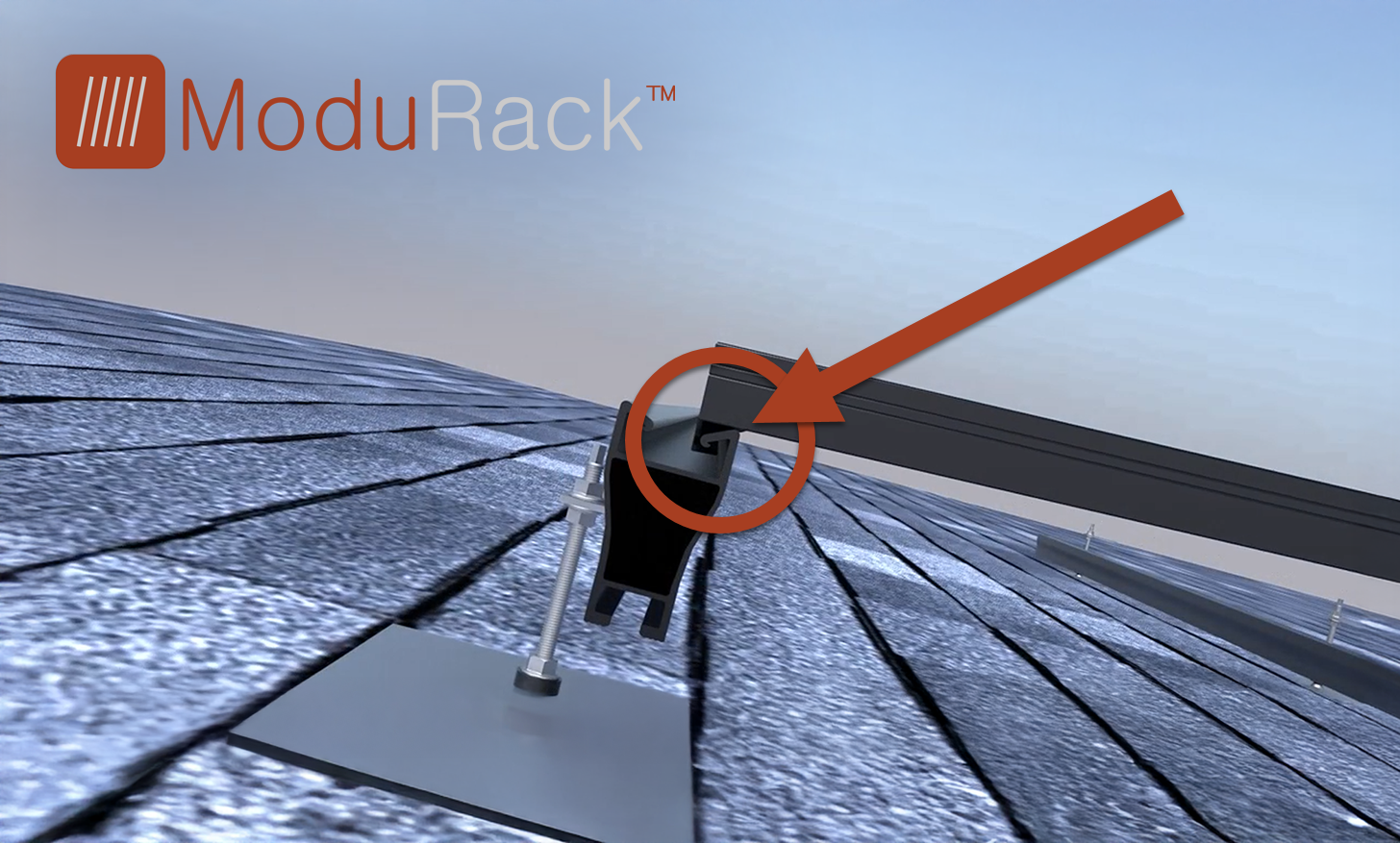
NEW: Ready-to-install solar systems! This patented innovation significantly accelerates your solar construction project
The core of ModuRack 's innovation lies in the departure from conventional clamp fastening. Instead of clamps, the modules are inserted and held in place by a continuous support rail.
More information here:
Your partner for business development in the fields of photovoltaics and construction
From industrial rooftop PV to solar parks and larger solar parking lots
☑️ Our business language is English or German
☑️ NEW: Correspondence in your native language!

Konrad Wolfenstein
I and my team are happy to be available to you as your personal advisor.
You can contact me by filling out the contact form here wolfenstein@xpert.digital:or simply call me at +49 7348 4088 965. My email address is
I'm looking forward to our joint project.