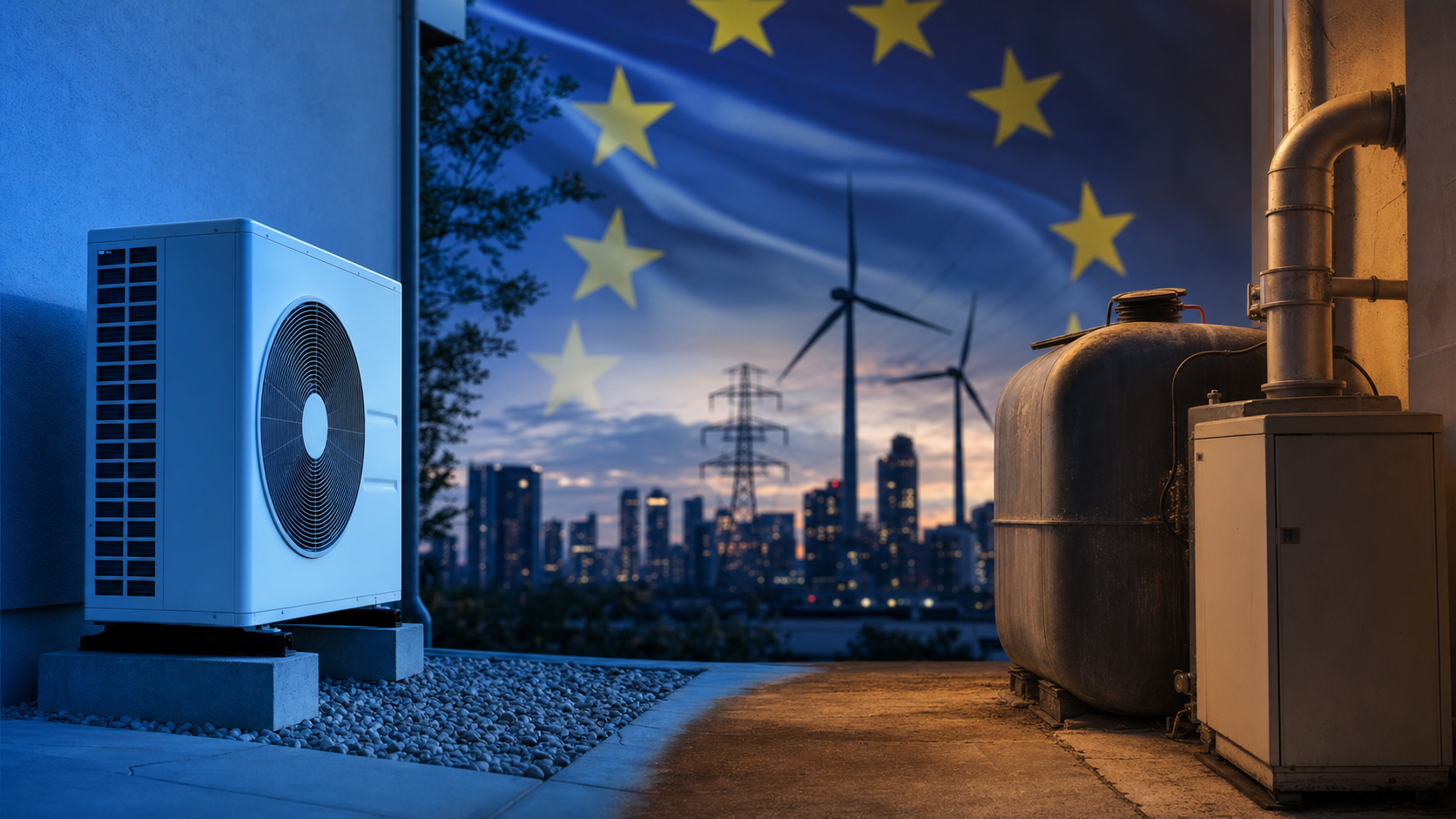
“Electrification Action Plan”: EU overrides German heating law – Why oil and gas could soon become unaffordable – Image: Xpert.Digital
Heat pump vs. biogas: The looming clash between Brussels and the building energy law
The end of gas heating through price? How the EU is turning German energy policy upside down
A billion-dollar trap: technological openness? Why the EU's heating plans are completely different from Berlin's
A new strategy paper from Brussels is highly controversial for German energy and heating policy: With the "Electrification Action Plan" currently being prepared, the EU Commission is initiating a fundamental, continent-wide transformation of the energy supply. While the German government recently made significant concessions to the Building Energy Act (GEG) and is once again focusing more on "technology neutrality" and the gradual introduction of biogas for heating, Brussels is pursuing a radically different path. The EU wants to enshrine widespread electrification – above all the massive expansion of heat pumps and e-mobility – through binding national targets and primarily push fossil fuels out of the market through targeted interventions in the price structure.
This presents Germany with a significant, medium-term conflict of objectives. Will the national plans to facilitate the transition for citizens and businesses by maintaining gas networks ultimately prove futile because the European economy is already creating a different reality? The following analysis examines the geopolitical background of the EU master plan, the deliberate exclusion of e-fuels from the mass market, and the crucial question of why the German heating law could soon be superseded not by a legal prohibition, but by sheer economic logic.
If Europe electrifies while Berlin sticks with gas: Who ultimately foots the bill for Germany's special role?
"Electrification Action Plan": Why Brussels is undermining the German heating compromise.
At first glance, the European Commission's draft "Electrification Action Plan" reads like just another strategy paper from Brussels, but behind it lies one of the most fundamental energy policy decisions of recent years. The starting point is a simple yet consequential observation: Europe has experienced its vulnerability to oil and gas imports twice in the last five years, most recently through the escalation in the Middle East. Between the outbreak of this conflict and the plan's presentation, the European Union has had to spend an additional fifty billion euros on importing fossil fuels alone, according to its own figures. This number is more than a footnote; it is the very starting point of the entire initiative: In Brussels, energy dependency is no longer primarily understood as a climate issue, but rather as a question of Europe's economic and security policy capacity. The plan is to be presented together with a proposal on electricity taxes and grid fees, demonstrating that the Commission views electrification not as an isolated climate project, but as an integrated economic transformation that affects prices, taxes, and grid architecture equally.
The binding electrification target as a new organizing principle
At the heart of the draft is a binding electrification target, which for the first time is to be enshrined in law for all member states. By 2040, a share of Europe's energy demand, the exact figure of which has not yet been finalized, is to be met by electricity instead of oil and gas, with the Commission expected to propose the specific target figure towards the end of the year. The legal structure is noteworthy: unlike many previous climate strategies, which functioned more as declarations of intent, this target is to be enshrined in law and thus become binding for all member states. The existing framework of the Clean Industrial Deal and the Affordable Energy Action Plan, which aim to increase the share of electricity in final energy consumption to 32 percent by 2030, can already be used as a benchmark. The new plan would extend this logic beyond 2030 and transform it into a binding, longer-term target corridor that will structure all European energy and investment planning.
Why the Commission is using price as leverage
The plan's most important lever is not regulation or prohibition, but price. The Commission aims to help lower electricity prices in member states while gradually phasing out state subsidies for fossil fuels. According to the climate think tank Ecco, the Commission is targeting a specific price ratio between electricity and gas: by 2030, this ratio should be reduced to a maximum of 2.5 for households and a maximum of 2 for industry. This is based on a sober economic consideration: as long as electricity remains structurally too expensive compared to gas, electrical technologies will not prevail in the market despite their higher efficiency, even if they were cheaper when considering all costs. In its draft, the Commission identifies five key obstacles to electrification, including the price gap between electricity and fossil fuels, the high capital costs of electrical technologies, bottlenecks in the electricity grid, technological limitations in sectors difficult to electrify, such as long-distance transport, and an insufficiently developed European value chain for these technologies. The plan thus addresses not only the demand side, but also structural industrial policy weaknesses that have slowed down rapid electrification so far.
Social leasing and the attempt to consider distributive justice
One aspect often overlooked in the public debate is the social component of the plan. Following the French model, social leasing schemes are to be introduced, enabling less affluent households to switch to electric vehicles and heat pumps. These programs are to be financed, among other things, through revenues from the emissions trading system and the climate social fund. With this, the Commission is responding to one of the central criticisms of previous electrification strategies: that the high purchase costs of electric technologies disproportionately affect lower-income households and jeopardize the social acceptance of the energy transition. Whether the French leasing model, which has already been tested there for electric vehicles, can actually be scaled across Europe remains an open question, as the fiscal resources of the member states vary considerably.
The economic benefit: Two-thirds less gas, half as much oil
The Commission underpins its plan with concrete economic figures. By 2040, the European Union could replace two-thirds of its gas imports and half of its oil imports through electrification, thereby saving a total of around €200 billion. This calculation is based on the assumption that battery-electric vehicles and heat pumps are technically superior to their fossil fuel alternatives because they achieve a significantly higher efficiency and therefore require less primary energy for the same amount of usable energy. A heat pump extracts heat from the environment, such as the air or the ground, and converts electricity only to power the compressor, typically generating many times the amount of heat energy from one unit of electricity. A gas heater, on the other hand, can at best convert almost all of the energy content of its fuel into heat, but never with a multiplication effect. This fundamental physical fact is the core of the efficiency argument that the Commission uses for its entire strategy.
Expansion targets for renewable electricity, nuclear energy and storage as a foundation
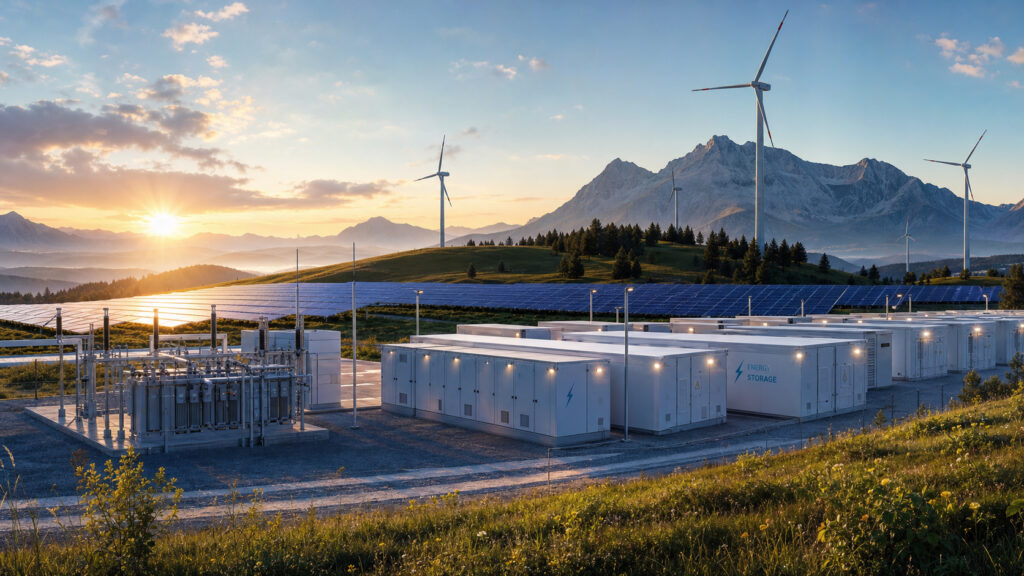
To ensure that electrification can meet demand, the plan closely links it to an accelerated supply side. The expansion of renewable energies and nuclear power is to be pursued even more decisively, as is the expansion of battery storage. Specifically, an additional 100 gigawatts of renewable electricity generation capacity are to be connected to the grid by 2030, while installed storage capacity is to increase more than tenfold to a total of 200 gigawatts. These targets illustrate that the Commission does not consider electrification in isolation from the question of security of supply, but rather as a system in which increased demand, generation expansion, and flexibility options such as storage must be considered together. Without a parallel expansion of storage capacities, a mass shift to heat pumps and electric vehicles would significantly increase the risk of peak loads and grid congestion, which is why the plan explicitly addresses this aspect.
Transport and buildings are the two major emission sources
The plan takes a particularly aggressive stance in the transport and building sectors, which together account for around 65 percent of European CO2 emissions. For the building sector, the draft proposes doubling the installation rate of heat pumps by 2030 compared to 2025 levels. Currently, around 2.4 million heat pumps are installed annually in Europe; this figure is projected to rise to approximately 4 million units per year by 2030. The Commission even intends to propose mandatory installation of heat pumps in public buildings, representing a significantly stronger regulatory intervention than mere subsidies. Additionally, a market mechanism, not yet defined in detail, is envisioned to steer manufacturers more strongly towards heat pump production, suggesting a type of quota system or manufacturer requirement, similar to those already in place in the automotive industry. For the transport sector, which accounts for roughly one-third of European energy consumption, the plan includes, among other things, a revision of the Clean Vehicles Directive for public procurement, tax incentives for electric company fleets, and the aforementioned social leasing programs. For industry, which accounts for almost a quarter of European energy demand, the Commission plans to increase the use of funds from emissions trading for industrial decarbonization, establish an Industrial Decarbonisation Bank and hold a second Industrial Heat Auction under the Innovation Fund in 2026.
Innovative photovoltaic solution for cost reduction (up to 30%) and time savings (up to 40%)

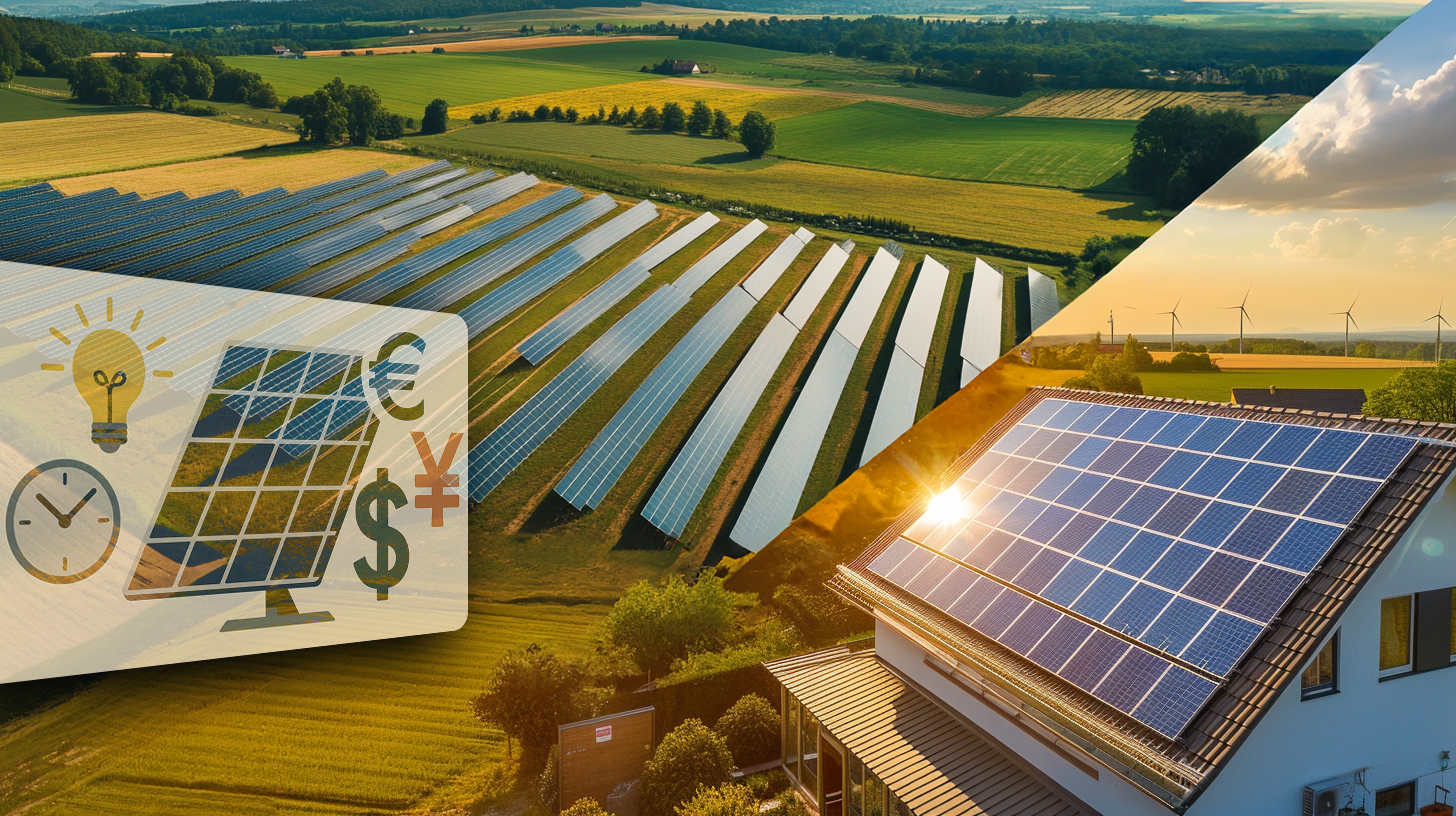
Innovative photovoltaic solution for cost reduction and time savings - Image: Xpert.Digital
More information here:
Winners and losers of the energy transition: Opportunities for the heat pump industry
The deliberate exclusion of e-fuels and green gases
What is striking is what is missing from the plan. Synthetic fuels, so-called e-fuels, for road transport are not included, nor is the continued operation of oil and gas heating systems using green fuels. With this, the Commission explicitly contradicts a position that the German Federal Government has repeatedly advocated at the European level, particularly regarding alternative drive systems for road transport. This omission is no accident, but rather the result of the plan's fundamental economic considerations: Both the production of e-fuels and the production of synthetic or biogenic green gas involve considerable energy losses in the conversion chain, ultimately requiring significantly more primary energy than direct electrical use. From the Commission's perspective, these technologies are at best niche solutions for sectors difficult to electrify, such as long-distance transport, but not an equivalent alternative to direct electrification in the mass market for passenger cars and residential buildings.
The German heating reform as a contrasting program
While Brussels is pushing for accelerated electrification, the German federal government has recently shifted its energy policy for heating in the opposite direction. With the amendment to the Building Energy Act, the coalition of the CDU/CSU and SPD has once again made it easier to install new oil and gas heating systems, provided they are operated with a steadily increasing proportion of climate-neutral fuels such as biomethane. Key components of the previous heating law were removed: the previously applicable requirement that newly installed heating systems must be powered by at least 65 percent renewable energy has been eliminated, as has the originally planned ban on the operation of fossil fuel boilers by 2045. The so-called "bio-staircase" will replace the previous system, requiring a growing proportion of climate-neutral fuels to be blended in from January 1, 2029, starting at ten percent and rising to at least 60 percent by 2040, with the goal of complete climate neutrality by 2045. Minister of Economic Affairs Katherina Reiche justified the reform by stating its aim to create investment and planning security as well as technological openness, while critics see it as a weakening of climate protection measures. According to calculations by the federal government, the reform will relieve citizens of around €5.1 billion annually and the economy of approximately €2.3 billion on balance. The government has also made provisions for the distribution of future additional costs: From 2028, the costs for the CO2 price and gas network charges will be split equally between tenants and landlords; the same will apply to the price surcharges for more climate-friendly fuels from 2029.
Two philosophies, one conflict of goals
A comparison of the two approaches reveals a fundamental conceptual difference. The following overview summarizes the key differences:
| aspect | EU Electrification Action Plan | German heating reform (GEG amendment) |
|---|---|---|
| Basic principle | Mandatory, legally enshrined electrification target by 2040 | Technological openness without a fixed renewables quota |
| heat pump | Doubling of the installation rate by 2030, mandatory for public buildings | No obligation, funding recently reduced |
| Fossil fuel heating systems | No room for green gases as an equivalent option | Still permitted, with an increasing organic share from 2029 onwards |
| Operation ban for fossil boilers | Not planned, as fossil fuel operation is to be phased out anyway | Original ban from 2045 onwards removed |
| leitmotif | Reducing energy security and import dependency | Investment and planning security for owners |
While the Commission relies on binding regulatory measures and aims to actively promote heat pumps through price and market mechanisms, the German reform pursues a technology-neutral approach that deliberately avoids fixed bans and quotas. Although both approaches share the overarching goal of climate neutrality by 2045, their paths to achieving it differ fundamentally in terms of pace, binding nature, and the role of the state as a steering body.
Why the plan is not legally binding for Germany at first
From a legal perspective, the draft has no immediate consequences for Germany. The measures outlined in the plan must first be formally proposed by the Commission, then negotiated and adopted in the European Parliament and the Council of the European Union, and subsequently transposed into national law by the member states. This multi-stage legislative process can drag on for several years, particularly if individual member states – as has already happened in Germany's case with combustion engine issues – resist specific components. The Commission itself, however, is signaling a clear focus: According to the think tank Ecco, the electrification target is to be enshrined in law as part of the Energy Union package expected in the fourth quarter of 2026, in order to quickly become a binding obligation. The timeframe until the plan takes effect legally for Germany is therefore longer than the current media frenzy suggests, but the political direction is unmistakably clear.
The creeping conflict and its medium-term explosive potential
Even though an immediate legal conflict is currently averted, a structural conflict is emerging in the medium term. Should the European Union actually enshrine the binding electrification target in law, Germany would have to demonstrate its compliance, regardless of which national path the federal government takes regarding heating. According to experts, the recent amendment to the Building Energy Act already jeopardizes the achievement of existing national climate and building targets, as the elimination of the 65 percent rule removes significant pressure to switch to renewable heating systems. If a European electrification target were to come into force in addition, a dual target architecture would emerge, in which national technological openness and a European electrification obligation could clash. Furthermore, it is noteworthy that the Commission's argument does not primarily focus on regulatory law, but rather on price: If electricity becomes cheaper compared to gas and fossil fuel subsidies expire, heat pumps could achieve the behavioral change actually intended by the German heating law simply through their economic attractiveness, entirely without a national ban or quota. In this interpretation, the European plan would render the German heating law superfluous not through legal coercion, but through economic logic.
Opportunities and risks for the German heat pump industry
For German industry, particularly manufacturers of heat pumps and components for electric drives, the European plan offers considerable opportunities despite all the political friction. A binding European expansion target would create planning certainty for investments in production capacities, which have so far suffered from fluctuating national funding conditions. At the same time, the combination of declining national subsidies and increasing European market pressure carries the risk of structural uncertainty: Consumers, forced to navigate between contradictory political signals from Berlin and Brussels, could further postpone investment decisions, which in turn would harm the entire sector. The closer coupling of electricity and gas prices to a maximum of 2.5 for households and 2 for industry by 2030, as envisioned by the Commission, would be the decisive economic factor that is likely to determine the actual success of the heat pump strategy in the market.
A European bet on system coherence
The Electrification Action Plan is ultimately more than a reaction to acute geopolitical shocks – it is an attempt to transform European energy policy from a collection of isolated national measures into a coherent, continent-wide system. The integration of expansion targets for renewable generation, storage capacity, grid fees, electricity taxes, and sectoral electrification requirements demonstrates that the Commission is pursuing a systems approach that extends far beyond individual technological issues such as heat pumps. Whether this approach can actually be implemented against the resistance of individual member states, such as Germany, which pursue their own, sometimes conflicting, national priorities, will only become clear in the further legislative process. However, it is already certain that Germany's decision to maintain technological neutrality in heating was made in a European environment that is increasingly focused on mandatory electrification, which is likely to reduce the national scope for deviating paths in the medium term, even if it remains formally untouched for now.
🎯🎯🎯 Data-driven B2B industry hub as a quasi-in-house solution


The quasi-in-house solution: How Xpert.Digital closes operational gaps in B2B marketing and sales – Smart Content-Driven Business - Image: Xpert.Digital
Xpert.Digital is a data-driven B2B industry hub led by Konrad Wolfenstein . The company acts as an external, quasi-in-house solution for industrial partners, closing operational gaps in marketing, content, and sales – without requiring additional resources on the client side.
More information here:
Your global marketing and business development partner
☑️ Our business language is English or German
☑️ NEW: Correspondence in your native language!

Konrad Wolfenstein
I and my team are happy to be available to you as your personal advisor.
You can contact me by filling out the contact form here wolfenstein@xpert.digital:or simply call me at +49 7348 4088 965. My email address is
I'm looking forward to our joint project.