Electric mobility in Norway – Image: Piotr Krzeslak|Shutterstock.com
Electric vehicles took center stage at this year's Geneva Motor Show, which concludes on Sunday. With stricter emissions standards in Europe, numerous manufacturers showcased their latest visions of a battery-powered future, with both concept cars and market-ready models prominently featured.
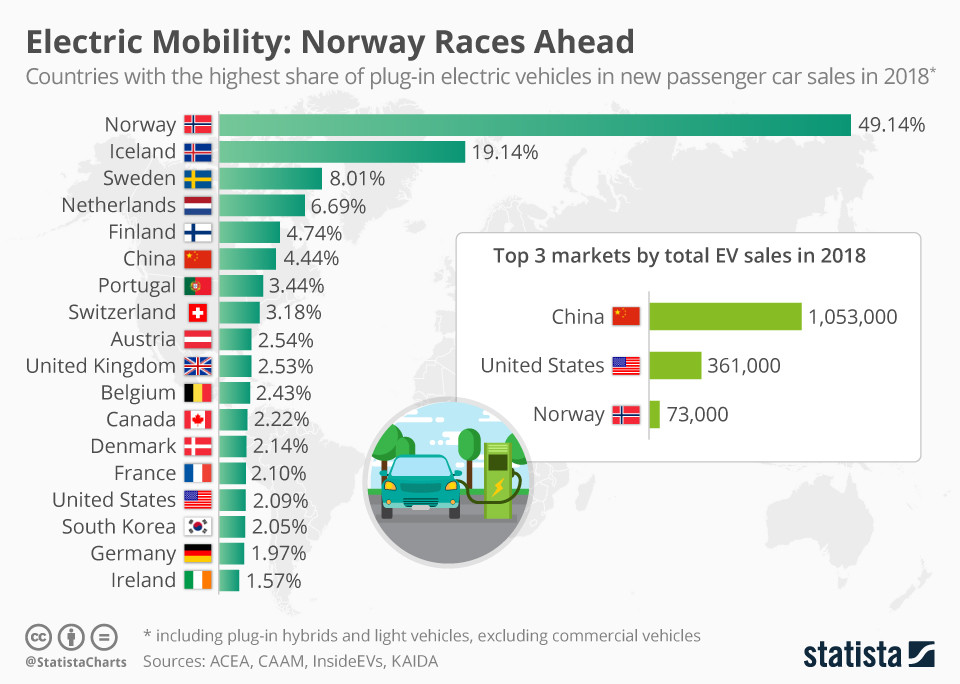
Despite robust growth and record sales of electric vehicles in most of the largest automotive markets, internal combustion engines continue to dominate global passenger car sales. The share of plug-in electric vehicles in total sales/registrations of passenger cars and light commercial vehicles was below five percent in all but four markets in 2018, with Norway being the most notable exception at 49 percent. With Iceland, Sweden, and Finland also among the top five countries with the highest EV shares, the Nordic countries are adopting electric mobility faster than any other part of the world. China, by far the largest market for electric cars in terms of unit sales, ranks sixth behind Finland with a share of 4.44 percent.
While Norway's policies (such as tax breaks, toll exemptions, and other incentives) have proven highly effective in promoting electric vehicles, the Norwegian model cannot be readily replicated in other countries. First, the country levies substantial import duties and registration taxes, making cars significantly more expensive than in the United States. By waiving these tariffs on electric vehicles, Norway effectively subsidizes their purchase to an extent that a larger country like the US cannot afford. Second, Norway is a very wealthy country (ironically, thanks to its oil reserves) with a high level of income. According to Statistics Norway, the median household income after taxes in 2017 was nearly $60,000, roughly the same as in the United States but more than double the EU average.
Electric vehicles took center stage at this year's Geneva Motor Show which ends on Sunday. Facing tougher emissions standards in Europe, countless manufacturers showed off their latest vision of a battery-powered future, with both concept cars and market-ready models featuring heavily.
Despite robust growth and record levels of electric vehicle sales in most of the largest automobile markets, combustion engines still dominate passenger car sales around the world. The share of plug-in electric vehicles in total passenger car and light vehicle sales/registrations was below five percent in all but four markets in 2018, with Norway the most notable exception at 49 percent. With Iceland, Sweden and Finland also featuring in the top 5 countries with the highest share of EVs, the Nordics are adopting electric mobility faster than any other part of the world. China, which is by far the largest market for electric cars in terms of unit sales, ranks sixth behind Finland with a share of 4.44 percent.
While Norway's policy measures (eg tax exemptions, toll exemptions, and other incentives) did prove highly effective in promoting electric cars, the Norwegian model cannot be easily transferred to other countries. First and foremost, the country imposes hefty vehicle import duties and car registration taxes, which makes cars significantly more expensive than say in the United States. By waiving these duties for electric vehicles, Norway is effectively subsidizing EV purchases at a level that a larger country such as the US couldn't afford. Secondly, Norway is a very wealthy country (ironically thanks to its oil reserves) with a high level of income. According to Norway's national statistical institute, the country's median household income after taxes was nearly $60,000 in 2017, which is roughly in line with the United States but more than twice as high as the EU average.

Electromobility: Norway is racing ahead – Image: Statista
Related to this:
- Electromobility: Europe is racing ahead
- Electromobility is coming slowly, but it is coming
- Charging infrastructure for electric mobility in Germany
Keep in touch