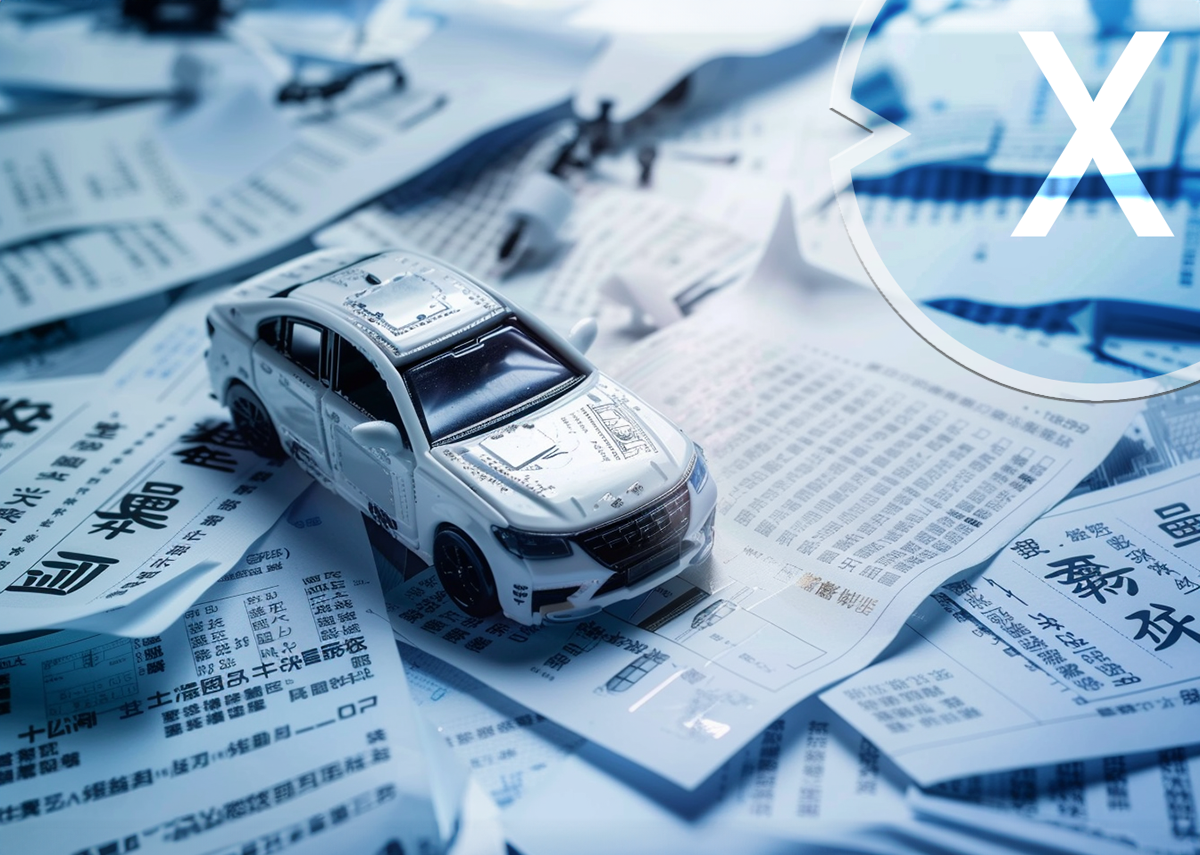
Tariffs on Chinese electric cars due to state subsidies – EU reacts to unfair competition from China – Image: Xpert.Digital
🌍⚖️ EU: Measure against subsidized electric vehicles from China
🇪🇺🛠️ EU relies on tariffs: Fair conditions in the electric car market – Tariffs on state-subsidized Chinese electric cars
The European Union recently decided to impose tariffs on electric vehicles from China. This decision follows a comprehensive investigation by the European Commission, which concluded that Chinese electric vehicles benefit from substantial state subsidies, thus giving them an unfair competitive advantage over European manufacturers. The tariffs are expected to reach up to 35.3% and will come into effect no later than the beginning of November.
💼📉 Reasons for the introduction of punitive tariffs
The European Commission argues that Chinese government subsidies distort competition in the European market, making Chinese electric vehicles significantly cheaper than their European counterparts. The tariffs are intended to offset this price advantage and protect the European automotive industry. The decision follows a year-long investigation, which began in October 2023, into the practices of the Chinese auto industry.
🗣️🤝 Reactions within the EU
Within the EU, opinions differ regarding the tariffs. Countries like France and Italy support the measure, while Germany, Spain, Hungary, and others oppose it. Germany, as one of Europe's largest automotive nations, fears negative repercussions for its car industry. German manufacturers such as Volkswagen, BMW, and Mercedes produce many of their vehicles in China for export to Europe and could be severely affected by the tariffs.
🔧🚙 Impact on the automotive industry
The introduction of tariffs could have a significant impact on the prices of electric vehicles. Experts expect prices for Chinese electric cars in Europe to rise considerably, potentially making them less competitive. This could also affect German manufacturers that produce in China. Examples include the BMW iX3 and the Mini Cooper, whose prices could increase due to the tariffs.
🔄⚔️ Possible countermeasures by China
China has already signaled that it views the tariffs as protectionist and may take countermeasures. These could affect European exports to China and trigger a trade conflict between the two economies. China has already launched investigations into European imports such as brandy and dairy products, which is seen as a possible reaction to the EU tariffs.
🔮🤝 Conflict was inevitable
Despite the adoption of the tariffs, the possibility for negotiations between the EU and China remains. Both sides have an interest in a solution to avoid a full-blown trade conflict. The European Commission has stated that it will continue talks with China to find an alternative solution. Such a solution would have to be WTO-compliant and take into account the interests of both European and Chinese industry.
The imposition of tariffs on Chinese electric vehicles is a complex issue encompassing both economic and political dimensions. The coming months will be crucial in determining whether a negotiated solution can be found or whether trade relations between the EU and China will deteriorate further.
📣 Similar topics
- 📣 EU decision: Tariffs on Chinese electric cars
- 🚗 Reasons for the EU tariffs on electric vehicles
- 💬 Different reactions within the EU
- 🇫🇷 Support for tariffs: France's perspective
- 🇩🇪 German concerns about the new EU tariffs
- 🏭 Impact on the European automotive industry
- ⚖️ Price increase expected for Chinese electric cars
- 🇨🇳 China's potential countermeasures analyzed
- 🔄 Future of trade between the EU and China
- 🌍 Talks to avoid a trade conflict
#️⃣ Hashtags: #EUTariffs #ChinaEUTrade #AutomotiveIndustry #Tariffs #TradeConflict
September 2023 | ⚡🚗 Anti-subsidy investigation: EU launches investigation and examines measures against subsidized electric cars from China

EU launches investigation and considers measures against subsidized electric cars from China – Image: Xpert.Digital
In recent years, China has pursued an ambitious strategy to promote electric vehicles. This includes massive government support in the form of subsidies, tax incentives, and other financial incentives for electric vehicle manufacturers.
More information here:
🚗⚖️ EU imposes tariffs on Chinese electric vehicles: Impact on global electromobility
🔒📝 The European Union's decision to impose tariffs on electric vehicles from China could have significant repercussions for global electromobility. This measure aims to protect the European automotive industry from competition from subsidized Chinese vehicles. However, the decision could have far-reaching consequences for the global adoption of electric vehicles and international trade relations.
🌍📈 Impact on the global market
1. Changes in trade flows
The introduction of punitive tariffs could lead Chinese manufacturers to seek new markets outside the EU to compensate for their export losses. Countries with smaller domestic automotive industries could benefit from cheaper imports, while countries with significant automotive production could face increased competitive pressure.
2. Increased pressure on other markets
As Chinese electric vehicles may be displaced from the EU and the US, they could be increasingly offered in other regions. This could lead governments in those regions to also take measures to protect their domestic industries.
3. Rising prices for electric vehicles
Prices for electric vehicles could rise in the EU because production within Europe is more expensive than in China. This could dampen demand for electric vehicles and slow the transition to clean mobility.
🌐🤝 Political and economic tensions
1. Trade conflicts
The tariffs could trigger a trade conflict between the EU and China. China has already threatened to take countermeasures, which could further strain trade relations.
2. Impact on European manufacturers
European car manufacturers that produce in China or are heavily dependent on the Chinese market could also suffer from the tariffs. This particularly affects German manufacturers such as Volkswagen and BMW.
3. Long-term changes in production
Some Chinese manufacturers might consider setting up production facilities in Europe to circumvent tariffs and maintain a presence in the European market.
🚀🏭 Opportunities for European industry
1. Promoting domestic production
The tariffs could help increase the production of electric vehicles within the EU and secure jobs in the region[3].
2. Strengthening competitiveness
European manufacturers may be forced to increase their innovative capacity and develop more efficient production methods in order to remain competitive.
3. Promote sustainable mobility
In the long term, this measure could help to promote sustainable mobility solutions within Europe and reduce dependence on imported vehicles.
📣 Similar topics
- 📊 Impact of EU tariffs on the global e-mobility market
- 🚗 EU protects with tariffs: Battle for the car market
- 🌍 Global trade flows in transition due to EU tariffs
- 🔍 Rising EV prices in the EU: What does this mean?
- ⚙️ European automotive industry in focus of tariffs
- 📈 The future of EV production in Europe through tariffs
- 🤝 Trade conflicts between the EU and China are looming
- 🌿 Opportunities for sustainable mobility in the EU
- 🏭 Relocating production to Europe: An option?
- 🎯 Strengthening EU competitiveness through tariffs
#️⃣ Hashtags: #EUMarket #TradeConflicts #Electromobility #EuropeanIndustry #Sustainability
💭📦 Why? Duty-free imports from China lead to distortions of competition and tax losses – and then there are also safety and quality concerns

Duty-free imports from China lead to distortions of competition and tax losses – Image: Xpert.Digital
In recent years, the rise in duty-free imports from China has caused quite a stir, particularly in Europe and the USA. At first glance, duty-free imports seem like a Segen for consumers, offering a wide selection of inexpensive products. However, closer inspection reveals significant drawbacks that far outweigh the apparent advantages. These imports not only lead to massive distortions of competition but also to substantial tax losses and pose risks to the safety and quality of the products entering the market.
More information here:
We are here for you - Consulting - Planning - Implementation - Project Management
☑️ SME support in strategy, consulting, planning and implementation
☑️ Creation or realignment of the digital strategy and digitization
☑️ Expansion and optimization of international sales processes
☑️ Global & Digital B2B trading platforms
☑️ Pioneer Business Development

Konrad Wolfenstein
I would be happy to serve as your personal advisor.
You can contact me by filling out the contact form below or simply call me on +49 7348 4088 965 .
I'm looking forward to our joint project.
Write to me


Xpert.Digital - Konrad Wolfenstein
Xpert.Digital is a hub for industry focusing on digitalization, mechanical engineering, logistics/intralogistics and photovoltaics.
With our 360° Business Development solution, we support renowned companies from new business to after-sales.
Market intelligence, smarketing, marketing automation, content development, PR, mail campaigns, personalized social media and lead nurturing are part of our digital tools.
You can find more information at: www.xpert.digital - www.xpert.solar - www.xpert.plus
Keep in touch