

Published on: January 28, 2025 / Updated on: January 29, 2025 – Author: Konrad Wolfenstein
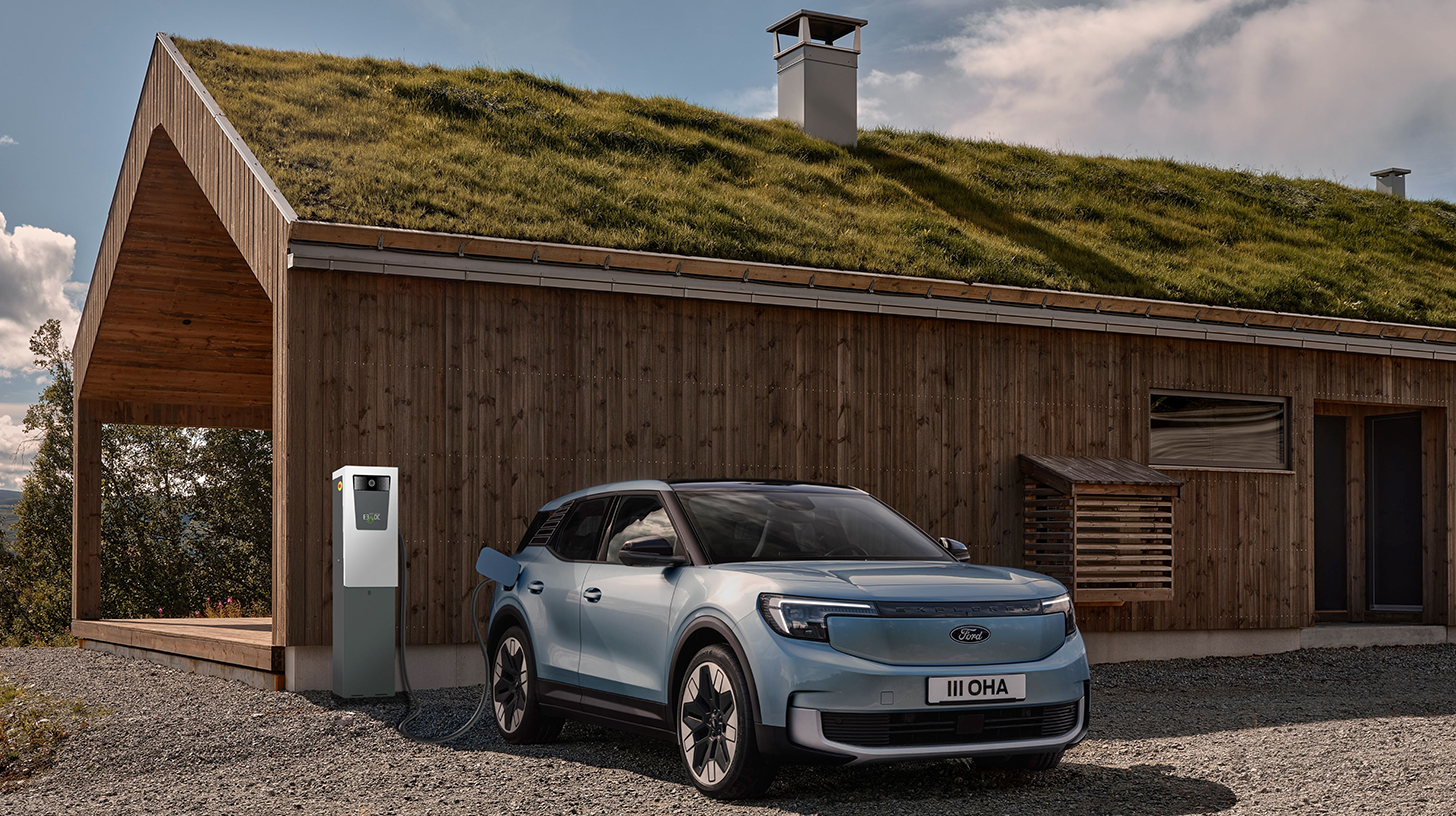
Ford electric car as an energy storage device via bidirectional charging with the E3/DC home power plant – Image: Ford / E3/DC
E-mobility with added value: Ford as a storage solution for your PV system
The electric car as a power plant: How Ford is driving the energy transition
Ford's electric models offer an innovative solution for the energy transition: they can be used as energy storage for buildings with an E3/DC home power plant. This bidirectional charging technology makes it possible to store excess energy from the home's photovoltaic system in the vehicle and feed it back into the battery in the home power plant when needed.
Ford Explorer and Capri as flexible energy storage units
The partnership between Ford and E3/DC marks a milestone in decentralized energy supply. With the new EDISON V2H charging solution, electric vehicles are seamlessly integrated into home energy management systems. The Ford Explorer and Capri electric models are specifically equipped for bidirectional DC charging. This technology expands the possibilities for utilizing home solar energy and actively supports the energy transition.
Oliver Adrian, Head of European Charging & Energy Strategy and Go-to Market, explains: “We deliberately equipped the Ford Explorer and our new Capri with the option of bidirectional charging because we consider this technology a key pillar of a sustainable energy supply. This technology allows us to utilize even more energy from renewable sources. The large batteries in our modern electric models are ideally suited as buffer storage.”
Dr. Andreas Piepenbrink, CEO of HagerEnergy GmbH and founder of the E3/DC brand, emphasizes regarding the upcoming start of the collaboration with Ford: “We see direct current-based bidirectional charging as a crucial extension of the home power plant concept and as the key to a decentralized energy transition that functions around the clock and around the year.”
How does bidirectional loading work?
The concept is simple yet effective: The photovoltaic system on the roof generates solar energy, which is first stored in the home power plant's battery. Once this battery is full, the excess energy is transferred to the electric vehicle's battery. The vehicle thus acts as a mobile energy storage unit. When energy is needed in the house – for example, at night or during periods of low solar output – the stored energy can be fed back from the vehicle's battery into the home power plant.
The large capacity of the vehicle battery offers additional security, especially during power outages. "Thanks to bidirectional charging, electric vehicles also play an important role when stationary. They serve as additional storage for renewable energies and help to flexibly adapt the power supply to demand," explains Piepenbrink.
Suitable for:
Technical details and advantages
The EDISON V2H charging solution consists of the bidirectional EDISON connect DC charging station and the EDISON power DC/DC converter. These components enable direct communication between the vehicle and the home power plant. Installation is carried out by specially trained E3/DC partners.
The high-voltage batteries in the Ford Explorer and Capri, which have a capacity of 77 to 79 kWh, have an adjustable minimum discharge limit of 20 percent. This ensures the vehicle remains ready to drive at all times.
By combining a new S10 E COMPACT home power plant with EDISON V2H technology, users can maximize their self-consumption of solar energy while simultaneously relieving the strain on the electricity grids.
Another advantage is the active use of dynamic electricity tariffs:
- During periods of low electricity prices or high availability of wind energy, the vehicle battery can be charged in a targeted manner.
- During periods of high electricity prices or low solar yields, the stored energy is used in the house.
This not only reduces energy costs but also stabilizes the grids by absorbing peak loads.
A step towards a sustainable future
Bidirectional charging is an important step towards a decentralized, sustainable energy supply. The ability to use the large batteries of electric vehicles as buffer storage is key to better integrating renewable energies into the power supply.
Ford and E3/DC share a clear vision: "Our electric models are not just means of transportation, but a key component of sustainable energy management," says Adrian. The partnership encompasses not only Germany, but also Austria and Switzerland, and is set to expand further in the future.
Suitable for:
Future prospects and innovations
Forecast-based charging is an exciting area for the future. This uses weather data and electricity price trends to optimally control charging and discharging processes. For example, if sunshine is forecast, the battery can be partially discharged overnight to make room for the expected solar energy.
Furthermore, smart home energy systems can be networked with other applications such as intelligent household appliances or heating systems in the future. This creates a fully integrated energy management system that increases comfort while simultaneously improving efficiency.
The role of politics and society
To fully exploit the potential of bidirectional charging, clear legal frameworks are needed. Currently, hurdles remain regarding integration into existing power grids and the billing of electricity fed back into the grid. Close cooperation between automakers, energy companies, and governments is necessary to overcome these obstacles.
At the same time, it is important to raise public awareness of this new technology. Broad acceptance and a willingness to invest in such systems are crucial for their success. Informative campaigns and incentive programs can motivate consumers to take advantage of bidirectional charging.
Networked energy: Utilizing the power of electric cars and home power plants
Bidirectional charging with Ford's electric models and the E3/DC home power plant is more than just a technological innovation. It's a crucial step towards a sustainable and decentralized energy supply. The combination of electromobility and renewable energies offers enormous potential, both for individuals and for society as a whole.
The large battery capacity of modern electric vehicles not only enables the cost-efficient use of self-generated solar energy, but also makes a significant contribution to the stability of the power grid. Innovative technologies such as predictive charging make energy management even more intelligent and flexible.
The collaboration between Ford and E3/DC demonstrates how companies can take a leading role in the energy transition through cooperation. It is hoped that other manufacturers and energy companies will follow this example and work together towards a sustainable future.
Suitable for: