Whose Republic? The Power of the Business Lobby in Germany – Image: Xpert.Digital
When corporations write the laws: This is how small and medium-sized businesses are losing the power struggle in Berlin
Cars, energy & banks: How the largest lobby in the republic controls our democracy
The silent giant: Why 99 percent of German companies have no voice in politics
In Germany, around one billion euros flow into political lobbying every year – but this gigantic budget is extremely unevenly distributed. While large corporations from the finance, automotive, and energy sectors exert direct influence on legislation and government decisions with millions of euros and legions of lobbyists, the backbone of the German economy is often left behind: small and medium-sized enterprises (SMEs). Although these companies generate more than half of the value added and provide the majority of jobs, they have hardly any voice in Berlin's political circles. An analysis of the lobby register reveals a disturbing power imbalance that not only distorts fair competition but, through revolving-door effects and unequal access, is increasingly becoming a threat to our democracy. A look behind the scenes of this multi-billion-euro apparatus – and why urgent reform is needed to break the dominance of special interests.
A billion-dollar apparatus in the shadow of parliament
Side-changers and multi-million-euro budgets: The unequal game of lobbyists in the Bundestag
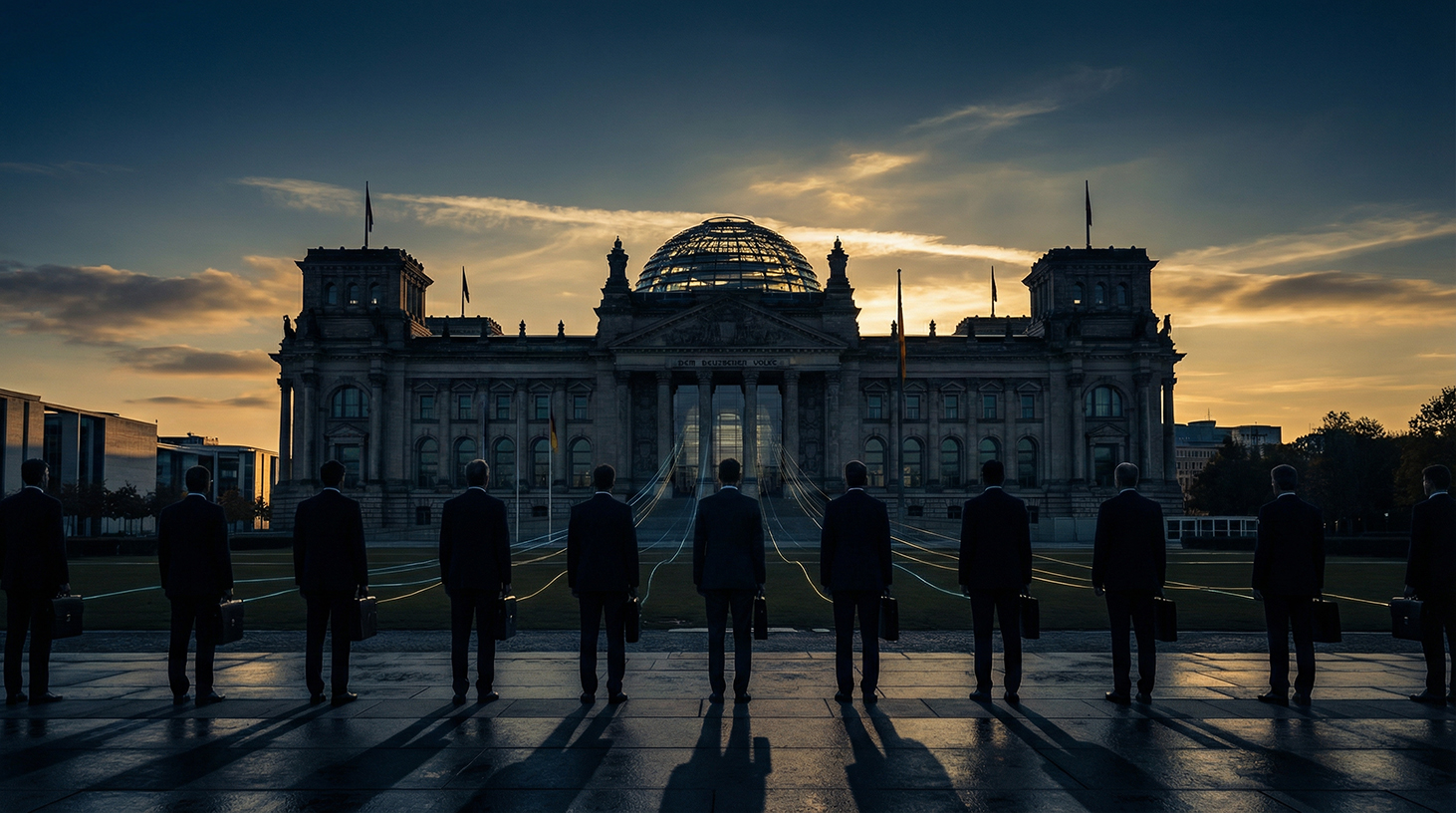
Anyone wanting to understand politics in Germany must observe not only the Bundestag, but also the hundreds of offices surrounding the Reichstag building, where strategic influence on laws and regulations is exerted daily. In 2024, associations, companies, and other interest groups at the federal level spent around one billion euros on lobbying – the financial expenditures for personnel, operating costs, and representative offices alone amounted to more than 910 million euros, according to the report from the Bundestag's lobby register. The actual total is even higher, as employers' organizations, trade unions, and religious communities are exempt from mandatory registration. Currently, over 6,200 companies, associations, and organizations are registered in the lobby register – an apparatus whose size and financial resources can hardly be overestimated.
What the lobby register has revealed since its introduction in 2022 is a structural power imbalance that is worrying from a democratic theory perspective. Among the 100 largest lobbying actors, measured by lobbying expenditures, there are only seven non-profit organizations – compared to 84 actors with economic interests. More than four-fifths of the most financially powerful lobbyists thus come from the business sector, which spends more than seven times as much as non-profit NGOs. This power imbalance has even worsened compared to the previous year: in 2023, the ratio was 7 to 81, and a year later it was already 7 to 84.
It must be emphasized that lobbying as such is neither illegal nor inherently illegitimate in a democracy. Interest groups contribute their expertise to the legislative process; parliaments and ministries rely on this input to adequately assess complex technical, economic, and social issues. The problem lies not in the principle itself, but in the stark imbalance between those who can afford lobbying and those who cannot.
How a leading association speaks for over 100,000 companies – and whose voice is the loudest
Structurally, the Federation of German Industries (BDI) stands at the forefront of the German business lobby. Founded in 1949, the BDI, as the leading association of German industrial companies, unites the interests of over 100,000 companies with some eight million employees. It is considered the most important lobbying body for its sectors when it comes to key economic and tax policy decisions and is the most frequently cited organization in leading media outlets. In its self-presentation, the BDI conveys the interests of German industry to those in political power – a self-image that suggests transparency but, in practice, obscures a complex internal power structure.
The BDI (Federation of German Industries) is not a unified lobby group, but rather an umbrella organization where large corporations significantly influence the agenda. Individual heavyweights like Volkswagen, BASF, and Siemens attempt to use the association as a lobbyist while simultaneously exerting influence on their own interests. This results in the BDI often only addressing general aspects of economic policy – because on many specific issues, such as the pace of decarbonization or workers' rights, the interests of its members are diametrically opposed. The breadth of its representational scope is thus also the association's institutional weakness.
Besides the BDI (Federation of German Industries), industry-specific associations are playing an increasingly important role, as they can operate in a more targeted and thematically focused manner. The area of interest "business" is the most frequently cited target of lobbying efforts in the lobby register – followed by "environment," "science, research and technology," and "European policy and the European Union." Behind these seemingly dispassionate categories lie decades of political influence, which in many cases goes far beyond what is considered legitimate in democratic processes.
The silent giant: How the financial industry is quietly climbing to the top
Those who think of "powerful lobbying" at first glance think of cars and energy. However, a sober analysis of the lobby register paints a different picture: the financial sector is by far the most financially powerful lobbying player in Germany. Ten of the one hundred lobbying players with the largest budgets are banks, insurance companies, or investment firms, which together account for annual lobbying expenditures of almost 40 million euros and 442 lobbyists registered by name.
Since the register's introduction in 2022, the German Insurance Association (GDV) has held the undisputed top spot with annual expenditures exceeding €15 million. By comparison, the lobbying budget of the German Association of the Automotive Industry (VDA) is around 35 percent smaller at €9.9 million, while that of the German Chemical Industry Association (VCI) is a full 40 percent lower at approximately €9.2 million. The Association of German Banks spends around €6 million, and the German Savings Banks Association just under €3.4 million.
The personnel presence of the financial lobby is particularly striking: the ten largest players together employ 456 lobbyists – statistically, this equates to ten lobbyists for every member of the Finance Committee in the Bundestag. What the Finanzwende analysis describes as "constant barrage of excessive numbers" reveals a structural problem: when there are ten industry lobbyists for every member of the relevant committee, a balanced consideration of interests is virtually impossible. The citizens' movement Finanzwende speaks of a "glaring imbalance" between the financial lobby and civil society.
Why does the financial sector manage to attract comparatively little public attention despite its enormous political power? The answer lies in the nature of its products: regulatory requirements, equity capital requirements, consumer protection rules, and financial market supervision are abstract topics and more easily escape public discourse than diesel emissions or electricity prices. The financial lobby can therefore operate with less reputational risk and greater impact – a strategic advantage it consistently exploits.
Full speed ahead against the rest: The automotive industry as a political pacesetter
No sector of the German economy is as deeply intertwined with the federal government as the automotive industry. It generates a good fifth of the total revenue of German industry and directly employs around 800,000 people – an economic power that translates directly into political power. The relationship between the federal government and car manufacturers has become virtually symbiotic over decades: numerous contacts, networks, and people switching sides have created a close personal and institutional entanglement.
The most well-known instrument of this entanglement is the so-called revolving door effect. Politicians with excellent networks move into well-paid lobbying positions in the automotive industry – and there they leverage their contacts with state secretaries, ministers, or the Chancellor's Office. Matthias Wissmann, long-time Federal Minister of Transport and later head of the German Association of the Automotive Industry (VDA), is the most prominent example of this pattern. He seamlessly transitioned from the negotiating table of politics to the other side – equipped with the insider knowledge, personal networks, and understanding of political mechanisms he had acquired as Minister of Transport. This practice is not an isolated case: LobbyControl has documented over 72 such moves in the automotive industry alone.
A recently revealed case illustrates the problem with alarming directness: A leaked CDU position paper on the state of the automotive industry contained entire passages of wishes and demands originating from the VDA (German Association of the Automotive Industry), highlighted in purple in the document. The VDA described this as a "normal, democratic process"—a description most democratic theorists would likely disagree with. While political decision-makers publicly strive for balance, the automotive industry is co-authoring key political position papers.
This influence has tangible political consequences. In the run-up to the diesel scandal, lobbyists from the German Association of the Automotive Industry (VDA) intervened with the Federal Chancellery to prevent stricter emissions tests. Government documents show that the automotive lobby prevailed: Within two days, the federal government changed its stance, and the Federal Ministry for the Environment backed down from its initially hardline position. The result: The corporations were granted a generous transition period for the introduction of on-road tests – shortly before the diesel scandal rocked the public. For months, the automotive lobby has been vehemently opposing the EU's planned 2035 phase-out of combustion engines and has Chancellor Friedrich Merz and the Christian Democratic Union (CDU) and Christian Social Union (CSU) on its side.
Pipelines into politics: The energy and gas lobby between dependence and transformation
The energy lobby is arguably the most complex of the major industry players in its composition – and simultaneously the one with the most direct societal consequences. Since the founding of the Federal Republic of Germany, companies and associations in the fossil fuel industry have decisively shaped German energy policy. What the 2023 gas lobby study by LobbyControl revealed was more than an isolated scandal: it systematically demonstrated how gas industry corporations exerted massive influence on politics to safeguard fossil fuel business models.
From December 2021 to September 2022, representatives of major gas companies met with top federal politicians on average once a day. There were nowhere near as many meetings with environmental organizations or other energy policy stakeholders – a one-sided closeness that structurally distorts political decisions. As a result, the federal government largely adopted the narratives of the gas industry: fossil natural gas was to continue playing a key role in the energy transition for a long time to come. Instead of making progress in expanding renewable energy sources, the government relied ever more heavily on natural gas – with the well-known consequences following the Russian invasion of Ukraine: billions of euros in misinvestments, further dependence, and high gas bills.
This pattern continues today. The current German government is planning new gas-fired power plants with a capacity of up to 20 gigawatts, which equates to roughly 40 new facilities. At the same time, the government has approved an agreement with the Netherlands for joint natural gas production off the North Sea island of Borkum. The 2026 Financial Turnaround Analysis indicates that many energy companies with high energy demands have particularly high lobbying expenditures. In the lobby register, "energy" is one of the most frequently mentioned topics, accounting for 28.94 percent of registered areas of interest.
What makes the energy lobby particularly powerful is its ability to politically instrumentalize arguments concerning employment. The Climate Action Plan 2050, championed by then-Environment Minister Barbara Hendricks, serves as a prime example: an ambitious draft was significantly watered down shortly before the UN Climate Conference in Marrakech under pressure from the business and energy lobbies. The argument that "too many jobs are at risk" is politically difficult to counter – especially when energy companies are the government's dominant negotiating partners and dissenting voices from environmental organizations simply receive less attention.
Chemistry and pharmaceuticals: Expert power as strategic capital
The chemical and pharmaceutical industries differ fundamentally in their lobbying strategy from the automotive and energy sectors: Instead of spectacular public confrontations, they rely on subtle, network-based influence, which is all the more effective because it remains less visible. The German Chemical Industry Association (VCI), which represents over 1,600 German chemical companies and thus encompasses more than 90 percent of the sector, operates with a two-pronged strategy: On the one hand, it uses its members' network to exert decentralized influence on members of parliament in their respective constituencies via local companies; on the other hand, it speaks with a unified voice to the federal government.
Strategic networking begins as early as the recruitment stage: The VCI (German Chemical Industry Association) actively seeks out ambitious individuals with political aspirations and integrates them into the association before they enter politics. This strategy is long-term – because those who are socialized within the VCI today will bring a familiar perspective to ministries tomorrow as state secretaries or department heads. Lobbying here functions not as a one-off exertion of influence, but as a structural shaping of political decision-makers.
The pharmaceutical industry, in turn, is perhaps the most striking example of the boundaries between legitimate advocacy and problematic influence. The Association of Research-Based Pharmaceutical Companies (vfa) represents the interests of 43 pharmaceutical companies – including Bayer, Pfizer, Novartis, and Roche – and is considered the most influential lobbying group in the sector. For decades, the pharmaceutical industry succeeded in fending off or weakening all government plans to reduce costs. Statistically, the German pharmaceutical market is among the most expensive in the world – a finding independently confirmed by both the OECD and the German Council of Economic Experts.
The influence of the pharmaceutical industry is particularly complex because it affects not only laws but also medical knowledge and physicians' prescribing practices. Continuing education events, disguised as knowledge transfer, are in reality targeted marketing for their own products, and generously sponsored conferences are part of a comprehensive apparatus of influence. Here, the line between lobbying and the control of information flows, which ultimately enable political decisions, becomes blurred.
A concrete example of direct influence: In the drafting of the austerity package for pharmaceutical manufacturers, formulations from a VFA paper were adopted almost verbatim into a motion by the governing coalition. The SPD at the time spoke of "the most blatant lobbying in years"—an incident that demonstrates how fluid the lines between interest representation and legislation can be in political practice.
Our EU and German expertise in business development, sales and marketing

Our EU and German expertise in business development, sales and marketing - Image: Xpert.Digital
Industry focus areas: B2B, digitalization (from AI to XR), mechanical engineering, logistics, renewable energies and industry
More information here:
A thematic hub offering insights and expertise:
- Knowledge platform covering global and regional economies, innovation and industry-specific trends
- A collection of analyses, insights, and background information from our key areas of focus
- A place for expertise and information on current developments in business and technology
- A hub for companies seeking information on markets, digitalization, and industry innovations
SMEs on the brink of power and the power of digital lobbying: How Bitkom shapes politics and why that is dangerous
Digital Economy: Data Sovereignty and Regulatory Power in the 21st Century
A relatively new but increasingly influential force in the German business lobby is the digital sector. Bitkom, the digital association of the German information and telecommunications industry with around 2,200 member companies, has developed into one of the most active lobbying players in the Bundestag within just a few years. In 2024, due to its broad thematic scope and high level of activity, Bitkom had the most regulatory proposals and statements of all actors registered in the German lobby register.
This thematic breadth is strategically significant: digitalization, artificial intelligence, cybersecurity, data protection, cloud computing, platform regulation – there is hardly a policy area that doesn't have digital implications today. Since its inception, Bitkom has maintained good relationships with both the Federal Ministry for Economic Affairs and Energy and directly with the Federal Chancellery. The association is adept at framing its lobbying efforts as a contribution to national competitiveness – as a mission for Germany's digital future, not as advocacy for individual corporations.
The digital lobby demonstrates how an industry can gain influence before political decision-makers have fully grasped the implications of an issue. In a field like artificial intelligence, where regulatory expertise is still being developed, digital industry associations are often the only ones who can contribute in-depth specialist knowledge to the political process. This knowledge advantage is political power – legitimate in its function, but problematic if it remains unbalanced.
Revolving door democracy: When politicians become lobbyists (and vice versa)
Revolving-door democracy: When politicians become lobbyists (and vice versa) – Image: Xpert.Digital
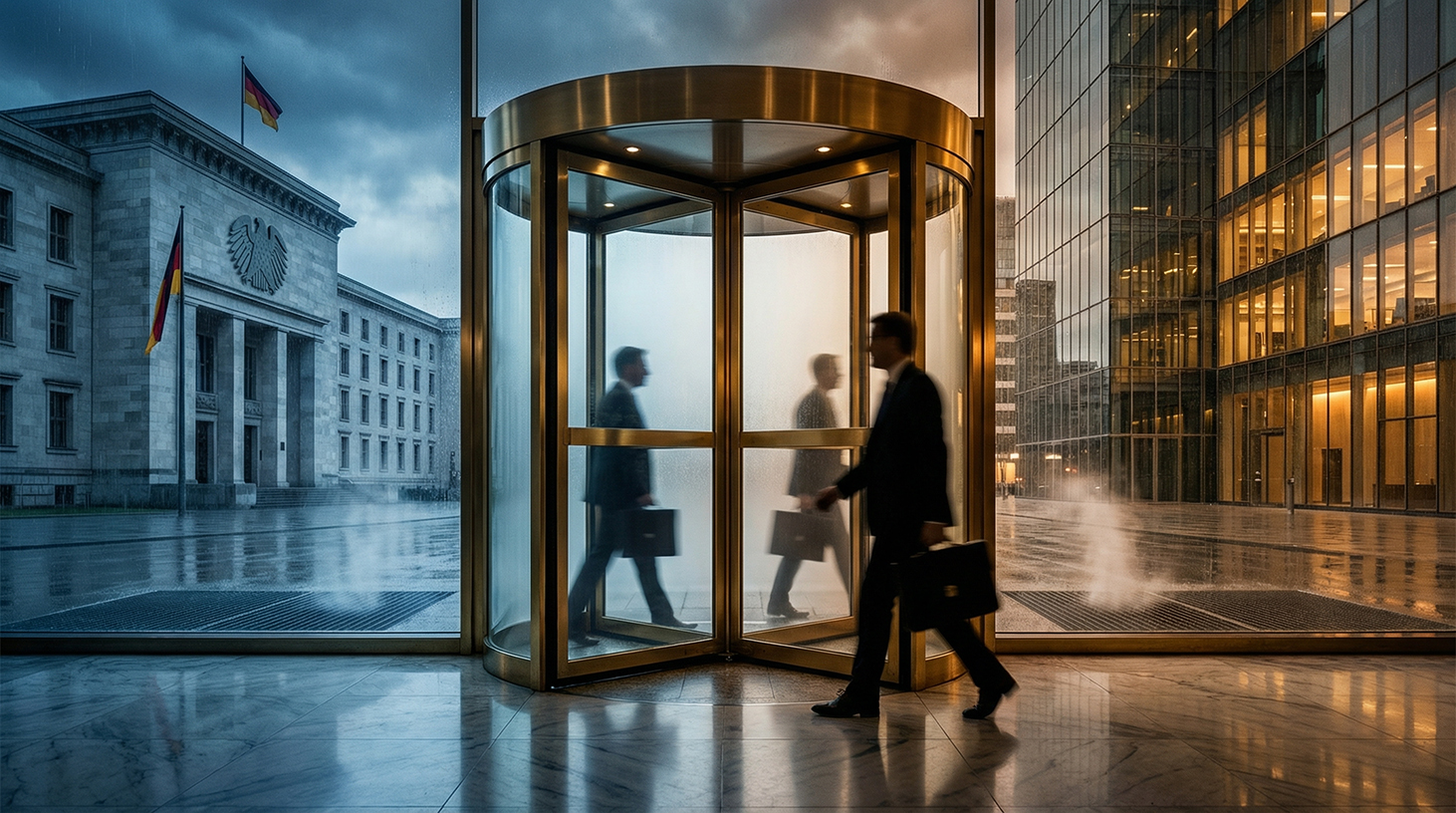
A systemic characteristic of the German business lobby is the revolving door effect: Politicians and high-ranking ministry staff move to companies or interest groups after leaving political office, where they leverage their insider knowledge, networks, and contacts. ZDF research from 2025 revealed that at least 73 former members of the Bundestag are actively engaged in lobbying. A total of 565 individuals who transitioned from political roles to lobbying were identified – including ministry and parliamentary group staff, as well as four former ministers.
LobbyControl has documented 72 such cases in detail at the German level, and the list is constantly being expanded. Particularly problematic are so-called "flying switches," meaning transitions that occur immediately after the end of a political function. With such recently departed decision-makers, interest groups secure not only their insider knowledge but also their still-fresh contacts in ministries and parliament. This creates privileged access and a structural competitive advantage for those who can afford to hire such individuals.
It goes without saying that this primarily benefits financially powerful economic actors. Small NGOs, environmental associations, or consumer organizations cannot lure state secretaries away from politics with seven-figure annual salaries. Political regulation of the revolving door effect in Germany is comparatively weak: While the Lobby Register Act has mandated expanded disclosure requirements since 2024 and also covers changes of staff between parliamentary groups and ministries, binding cooling-off periods—that is, waiting periods between political office and lobbying position—exist only in a limited form.
From public office to corporation — and back: Germany's most prominent career changers
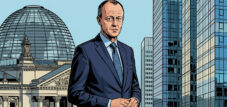
Friedrich Merz is, in a sense, the antithesis of the classic revolving-door politician—in his case, the effect ran in the opposite direction. After leaving the Bundestag in 2016, Merz moved directly to the US financial group BlackRock as chairman of the supervisory board for Germany, where his explicit duties included cultivating contacts with authorities and governments. He gave up this lobbying job at the beginning of 2020—precisely when he ran again for the CDU party chairmanship. When he became Chancellor in 2025, a man who had most recently been an institutional representative of the world's largest asset manager—an institution considered the largest investor in BASF and thus directly impacting Germany's industrial policy—moved into the highest office of government.
Related to this:

Katherina Reiche, on the other hand, is the textbook example of a seamless career change in its purest form. In 2015, she resigned her seat as a directly elected member of the Bundestag and her position as Parliamentary State Secretary in the Federal Ministry of Transport—and moved almost immediately to become the managing director of the Association of Municipal Enterprises (VKU), which represents the interests of municipal utilities in the energy, waste, and water sectors. LobbyControl demanded a three-year cooling-off period at the time—however, the Federal Cabinet simultaneously passed a draft law with a waiting period of only twelve to a maximum of 18 months. The law came into effect a few days after Reiche's move—it did not apply retroactively to her. In 2025, Reiche returned via the opposite route: directly from her management position at E.ON, she became Federal Minister for Economic Affairs—without any cooling-off period. Energy economist Claudia Kemfert warned of potential conflicts of interest, since Reiche, as a former energy manager, was now to decide on the affairs of the very sector from which she came.
Related to this:


Gerhard Schröder's move to Gazprom constituted the most consequential political shift in postwar German history. As Chancellor, he spearheaded the Nord Stream Baltic Sea gas pipeline project alongside Vladimir Putin—just a few months after leaving office, he became chairman of the supervisory board of the newly formed pipeline consortium. Later, in his capacity as a lobbyist, he personally brought Gazprom CEO Alexei Miller to a meeting with then-Economics Minister Brigitte Zypries—while other lobbyists had to wait a long time for appointments, Schröder secured one within days. The geopolitical consequences of this chain of events—Germany's fatal dependence on Russian gas—are well known.
Eckart von Klaeden, a long-serving Minister of State in the Federal Chancellery and a close confidant of Angela Merkel, moved seamlessly to Daimler's "Global External Affairs" division as chief lobbyist at the end of 2013. Particularly explosive was the fact that the public prosecutor's office launched an investigation on suspicion of accepting undue advantages, as he had already conducted the job negotiations with Daimler while still in office. LobbyControl determined that, from that point on, he was effectively unable to perform his duties as Minister of State impartially. At the same time, two other high-ranking government officials, Bernd Pfaffenbach (Federal Chancellery to JP Morgan) and Markus Kerber (Finance Ministry to the Federation of German Industries), also moved into lobbying positions.
Perhaps the most brazen career change in recent history was carried out by Dirk Niebel (FDP). As Federal Minister for Economic Cooperation and Development from 2009 to 2013, he was a member of the Federal Security Council—the secretive body that decides on arms exports. During his tenure, the council approved, among other things, a multi-billion-euro tank export to Algeria, in which Rheinmetall played a significant role. Just a few months after leaving office, Niebel became chief lobbyist for this very same arms manufacturer—responsible for "strategy development" and the "expansion of global government relations." The wording is revealing: what was being sought was not expertise, but insider access.
Finally, the case of Bengt Bergt (SPD) from 2025 is noteworthy because it shows how early a change of sides is sometimes planned. As a member of parliament, he helped develop the "green gas quota" — and was already in contact with the Gas and Hydrogen Industry Association, for which he now lobbies after leaving the Bundestag.
Individual interests versus the overall economy: Who shapes the future, who blocks progress?
A sobering question that arises in light of the power structures outlined is: Which sectors truly represent macroeconomic interests, and which consistently pursue particular interests at the expense of the general public? The answer is nuanced – but there are certainly some clear findings.
The fossil fuel lobby has structurally pursued interests that directly contradict macroeconomic and societal needs. The years-long obstruction of ambitious climate protection goals by the lignite and gas lobby has weakened Germany's international competitiveness in the field of renewable energies and simultaneously prolonged its energy dependence on Russia – with the well-known catastrophic consequences. The costs of these misguided decisions are borne not by the gas industry, but by society as a whole: through higher energy prices, misinvestments in outdated infrastructure, and geopolitical vulnerability.
The automotive industry, by blocking stricter emissions regulations, has not only increased healthcare costs for the general public but also weakened its own sector in the long term. Had the German auto industry focused on electromobility earlier and more consistently, Volkswagen and other German manufacturers would be in a significantly better position today in global competition with Chinese suppliers. The short-term focus on maximizing profits directly contradicted the long-term survival interests of the industry itself – a paradox that casts short-term lobbying in a poor economic light.
The financial sector exerts a less spectacular but continuous influence on regulatory details that remain invisible to the general public – equity capital rules, consumer protection standards, commission models, and the Riester pension scheme. Here, the question of self-interest versus the common good is particularly difficult to answer because the effects are diffuse and long-term. However, one thing is clear: when there are ten lobbyists for every member of the finance committee, a fair balance of interests is structurally disadvantaged.
The vast majority of the population suspects a fundamentally conflicting relationship between economic interests and the common good – a finding confirmed by studies on "responsible lobbying." Lobbying is predominantly perceived as a tool for pursuing particular interests. This skepticism is not unfounded: political decisions demonstrably reflect the preferences of wealthy and economically powerful actors more often than those of the general population.
The forgotten backbone: The structural weakness of the SME lobby
Over 99 percent of all companies in Germany are small and medium-sized enterprises (SMEs). They employ more than half of all employees subject to social security contributions – around 19 million people. They generate over 55 percent of the total net value added of the German private sector. They train more than 70 percent of all apprentices and are thus the most important driver of vocational training. And they are massively underrepresented in political decision-making.
This contradiction between economic importance and political ineffectiveness is the central structural problem of the German economic system. The KfW SME Atlas 2024 shows that the share of SME employees among all employed persons rose from 66.8 percent in 2012 to 71.9 percent – the weight of SMEs has increased, while their political influence has stagnated. 83 percent of SMEs have an annual turnover of only up to one million euros; less than 0.5 percent of SMEs have an annual turnover of over 50 million euros. The structural heterogeneity is enormous – and this is precisely one of the main reasons for the relative weakness of the SME lobby.
The most important associations representing small and medium-sized enterprises (SMEs) are the German Association for Small and Medium-Sized Businesses (BVMW), the German Confederation of Skilled Crafts (ZDH), and the Association of German Chambers of Industry and Commerce (DIHK). In February 2025, the BVMW adopted its "Agenda 2025+", a new policy platform outlining demands for business-friendly policies, an energy transition, job security, and improved conditions for innovation in SMEs. The ZDH, in turn, criticizes the fact that economic policy decisions often focus solely on large corporations without considering the specific needs of SMEs.
Currently, 26 percent of medium-sized companies are dissatisfied with their situation, while only 25 percent are satisfied. High energy and labor costs, lengthy and complex permitting processes, and a multitude of bureaucratic regulations are hampering the competitiveness of small and medium-sized enterprises (SMEs) in particular. The federal government's initiatives have so far had little impact on the broader sector. The ongoing series of severe economic crises has hit SMEs structurally harder than large corporations – because they have fewer resources to weather crises and, at the same time, are less represented in politics.
Why the middle class is losing politically – and what can be done about it
The structural causes of SMEs' weakness in the lobbying landscape are multifaceted and mutually reinforcing. Firstly, small and medium-sized enterprises (SMEs) simply lack the financial resources for professional lobbying. While the German Insurance Association (GDV) spends €15 million annually on lobbying and the German Association of the Automotive Industry (VDA) nearly €10 million, the German Association for Small and Medium-Sized Businesses (BVMW), with its significantly more limited resources, cannot even come close to competing. The combined expenditure of all nine cross-sector associations in the top 100 – including the Federation of German Industries (BDI) – amounts to only €40.2 million. While this is a considerable sum in absolute terms, structurally, it represents interest representation on a different playing field.
Secondly, the SME lobby suffers from the problem of collective action: What would benefit every single SME – lower energy prices, less bureaucracy, fair tax policies – is too expensive for a single company to fight for alone. At the same time, every company benefits when others do this work. This incentive to free-ride structurally weakens SME associations, while industry associations of large corporations can represent more direct and concentrated interests, where the costs of not being represented are immediately felt by the individual company.
Thirdly, the SME lobby lacks the expertise to generate attention. Large corporations employ specialized communications teams and political consultants who develop media-effective narratives and can structure political discourse through background briefings and studies. Small and medium-sized enterprises (SMEs), on the other hand, are completely occupied with day-to-day operations – they lack the time, energy, and know-how to maintain a sustained presence in Berlin or Brussels. According to a survey, only one in ten SMEs still believes in the positive effects of the government reforms.
How can small and medium-sized enterprises (SMEs) strengthen their political influence? Several approaches are possible. Networking across association boundaries is a first step: The German Association for Small and Medium-Sized Businesses (BVMW) has already developed an approach with its SME Alliance to unite SME-oriented industry associations under one umbrella and formulate joint political demands. This approach needs to be further expanded. Only when SMEs speak with a single, clear political voice can they overcome the weaknesses caused by fragmentation.
Another lever is the greater use of elected officials' networks at the regional level. Large corporations maintain a presence in the Bundestag through professional Berlin offices; small and medium-sized enterprises (SMEs), on the other hand, are deeply rooted in their constituencies. Local representatives depend on SMEs as employers and pillars of society – this regional influence is currently not being used strategically enough in politics. Systematic networking between business owners and constituency representatives, combined with concrete, locally grounded demands, can generate an impact that lobbying budgets alone cannot achieve.
Finally, small and medium-sized enterprises (SMEs) should understand this difference in legitimacy as rhetorical capital: While the lobby of large corporations is increasingly perceived as representing a particular interest, SMEs can credibly claim the common good argument for themselves. Businesses that provide local training, maintain social structures, and bind generations to Germany have a genuine interest in a functioning overall economy – not an interest in undermining regulations that ultimately also protect their own employees and customers. This moral authority is politically valuable – but only if it is actively and visibly deployed.
More transparency, less cronyism: Perspectives for reform
The Bundestag's lobby register has been an important step forward for the transparency of political influence in Germany since its introduction in 2022. The tightening of regulations on March 1, 2024, which now also covers contacts with staff members of members of parliament as well as with heads of department in federal ministries, was a further step in the right direction. At the same time, all the analyzed findings show that greater transparency alone is not enough: Disclosure makes the power imbalance visible, but it does not correct it.
What is needed is a structural reform encompassing four dimensions. First, mandatory and longer cooling-off periods between political office and lobbying activities should be introduced – internationally, the standard is twelve to 24 months, but in sensitive areas it should be significantly longer. Without such waiting periods, the revolving door effect remains a structural gateway for privileged access. Second, public funding for lobbying by non-profit organizations must be expanded to correct the balance of power. A democracy in which environmental groups and consumer protection organizations can spend 15 times less than corporate lobbyists is structurally unbalanced. Third, Germany needs mandatory online consultation procedures modeled on the EU system, enabling structured input from even less resource-rich actors into the legislative process – a proposal even Bitkom itself supports. And finally, associations representing small and medium-sized enterprises (SMEs) must be strengthened through government funding for professional advocacy, similar to the practices in other EU countries.
As stated at the outset, Germany's business lobby is not a homogeneous entity – it is a powerful, multifaceted network of competing interests in which the strongest regularly win and the weak regularly lose. The more than 99 percent of companies that belong to the Mittelstand (SMEs) generate more than half of the national economy's added value and provide the majority of jobs – yet they are politically underrepresented. This imbalance is no accident, but rather the result of structures entrenched over decades that regularly favor capital strength at the expense of the broader interests of the population. A vibrant democracy cannot afford this imbalance in the long run.