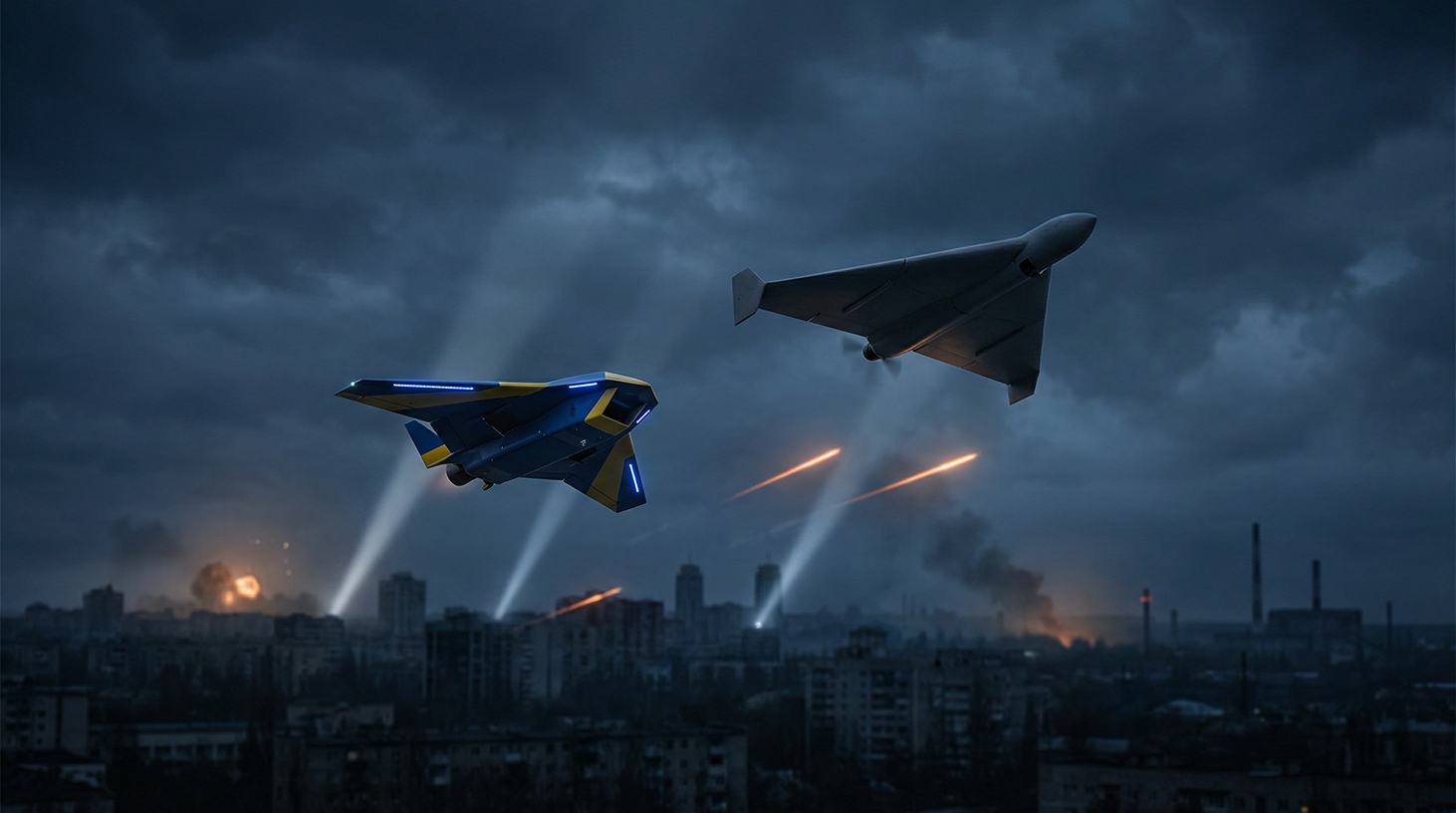
Drones against drones – Kyiv's cost-effective war revolution as a global export hit – Image: Xpert.Digital
Why shooting missiles costing 3.5 million euros at 800-dollar drones is no longer war, but a bankruptcy proceeding” in Estonia
Cheap against cheap: Ukraine's ingenious defense strategy against Putin's drone swarms
From the battlefield to the world: Why Arab states are now buying Ukrainian drones
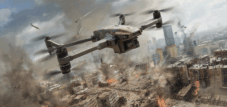
Since the start of the Russian invasion, Ukraine has faced a massive economic and military problem: How to defend against thousands of cheap, disposable drones every month when its own interceptor missiles cost many times more and are only available in limited quantities? The answer from Kyiv is as simple as it is revolutionary, and it is currently changing the global security architecture. Instead of being financially drained in an asymmetric war of attrition, Ukraine, under extreme pressure, has built a state-of-the-art ecosystem for affordable FPV interceptor drones. What initially began as an improvised emergency solution has long since become a true game-changer. Today, mass-produced drones costing €1,000 destroy enemy swarms in the sky – and are arousing the desire of states worldwide facing the same threats. As a result, Ukraine is rapidly transforming itself from a dependent arms recipient into a global exporter of highly specialized defense technology and forging entirely new diplomatic networks.
The core economic problem: When defense is more expensive than offense
Since Russia's full-scale offensive in February 2022, Ukraine has faced a dilemma that no traditional military plan had anticipated. Russia launches 15 to 20 major offensive waves per month – roughly 90 percent of which consist of inexpensive, disposable Shahed-136 drones, the Iranian original, which is now being mass-produced in Russia. In 2025, Russia deployed approximately 55,000 of these disposable combat drones against Ukraine – a fivefold increase compared to 2024. In December 2025 alone, over 5,100 kamikaze drones were launched in a single month.
The problem for any defender is not tactical, but fundamentally economic. Each Shahed drone costs its operator between $20,000 and $50,000. Conventional countermeasures—Western Patriot surface-to-air missiles—cost between €3.5 and €13.5 million per kill. This results in a cost ratio of up to 1:190 against the defender. Academic analyses show that FPV drones achieve a cost-effectiveness of around $1,036 per successful hit on the attacking side—compared to $269,258 for Shahed systems. This makes Ukrainian decentralized drone production, at least on paper, 200 to 3,000 times more cost-effective per target destroyed.
To make matters worse, Patriot missiles are not technically designed for this purpose. They were conceived for ballistically precise medium-range missiles, not for slow-moving, low-flying propeller drones. No government budget in the world, and no arms manufacturer, is capable of producing the necessary number of missiles to neutralize the swarms of drones launched daily. Ukraine recognized this earlier than anyone else – and, under extreme pressure, developed a structurally different response.
From the battlefield to the laboratory: How Ukraine built its defense system
The solution developed by Kyiv follows a simple principle: cheap against cheap. Instead of expensive missiles, inexpensive, manually controlled FPV interceptor drones are used to destroy incoming Shahed drones through collision. What sounds like an improvised emergency solution is actually the result of a highly disciplined innovation process geared towards real-time military needs.
Ukraine began systematically developing interceptor drones as early as 2023. They were deployed on a large scale starting in the fall of 2025. Since the beginning of January 2026, units of the Ukrainian Armed Forces have been receiving more than 1,500 specialized interceptor drones daily. The Ukrainian defense industry is currently producing around 950 interceptor drones per day – a production level that was at the prototype stage just a year ago. President Zelenskyy stated that daily capacity could be increased to 2,000 units, with half of these earmarked for export.
The pricing structure of these systems marks a decisive break with old air defense concepts. A Ukrainian interceptor drone costs between €1,000 and €4,000. The flagship project of manufacturer SkyFall, the P1-Sun, is supplied to the Ukrainian military for around US$1,000 per unit. By comparison, a Shahed drone, against which these systems are deployed, costs between €25,000 and €40,000. The cost inversion is thus complete: For the first time in the history of modern air defense, the defensive weapon is significantly cheaper than the threat itself.
Technical architecture of the Ukrainian interception systems
The Ukrainian solution is not a single product, but a multi-layered ecosystem comprising hardware, training, and software integration. At its core is the FPV (First Person View) drone, originally known from drone sports, which is controlled in real time by a pilot using video goggles and rams incoming targets with high precision. Crucially, the drone itself is less important than the entire system, including early detection, radar, acoustic sensors, guidance software, and trained pilots.
The most technologically advanced systems, such as the P1-Sun from SkyFall, were presented to the world at the Dubai Airshow in November 2025. The aircraft reaches a maximum speed of 450 kilometers per hour – 50 percent faster than its predecessor – and operates at altitudes of up to 5,000 meters. Its design is based on a 3D-printed modular fuselage, allowing for rapid mass production. Particularly relevant for Western export markets is the fact that approximately 85 percent of the components are manufactured in Ukraine, thus largely eliminating dependence on Chinese supply chains.
Another system, the Sting from manufacturer Wild Hornets, reaches speeds of up to 280 kilometers per hour and, according to the manufacturer, achieves an interception rate of 80 to 90 percent against Shahed drones. SkyFall itself puts the P1-Sun's record after only four months of operation at over 1,500 Shahed drones shot down and more than 1,000 other UAVs. The tactical range of these systems is between 17 and 37 kilometers, and the operational altitude is between 3,000 and 5,000 meters – an operating range that precisely matches the typical flight profiles of Shahed drones.
The Brave1 ecosystem: From the battlefield to the market
The strategic framework behind this technological development is the state-organized defense cluster Brave1, initiated by the Ukrainian Ministry of Digital Strategy and Development. Brave1 has consolidated over 1,600 innovations from more than 1,000 Ukrainian manufacturers onto a single platform and supported them with approximately US$3 million in grants. Key areas of focus include drones, robotic systems, navigation, artificial intelligence, and communication. Over 60 developments have already been codified for government procurement or are in serial production.
In November 2025, the European Union, in partnership with Brave1, launched a new €3.3 million funding program under the EU4UA Defence Tech framework. The first funding priority explicitly focuses on high-speed interceptors and radar systems. Projects at technology readiness levels 5 and 6 are eligible for funding – meaning systems that are to be transitioned from the prototype phase to series production. The maximum funding per project is €150,000, twice the amount in the standard Brave1 program. Within this institutionalized framework, the development cycle of defense products shrinks from typical multi-year procurement phases to weeks or a few months.
Another key element is the Brave1 Dataroom, launched in January 2026, which, in cooperation with the US company Palantir, provides an AI-powered training platform for autonomous drone defense. The database contains thermal and visual signature data of Russian drone types, collected from real-world operations by Ukrainian soldiers. The goal is to develop autonomous AI systems capable of independently detecting and intercepting enemy drones. If AI-controlled FPV systems achieve the projected 80 percent hit rates—achievements that remain the preserve of skilled pilots with manually controlled systems—the military cost-benefit ratios will shift dramatically once again.
Hub for Security and Defense - Advice and Information

Hub for Security and Defense - Image: Xpert.Digital
The Security and Defence Hub offers expert advice and up-to-date information to effectively support companies and organizations in strengthening their role in European security and defence policy. Working closely with the SME Connect Defence Working Group, it particularly promotes small and medium-sized enterprises (SMEs) that wish to further develop their innovative capacity and competitiveness in the defence sector. As a central point of contact, the Hub thus creates a crucial bridge between SMEs and European defence strategy.
Related to this:
How Ukraine is revolutionizing drone defense – and why it still has gaps
The defense rate and its strategic limits
Despite its innovative capabilities, Ukrainian air defense is not a foolproof shield. In 2024, Ukraine achieved interception rates of 85 to 90 percent against incoming drones. By 2025, this rate had dropped to around 80 percent – a decline that illustrates the ongoing technological adaptation on both sides. Russia is continuously investing in faster, higher-flying drone variants that are more resistant to electronic warfare, increasingly overwhelming existing ground defense systems.
Ukrainian Commander-in-Chief Syrskyi reported that in February 2026, over 70 percent of all Shahed drones launched at Kyiv and the Kyiv region were destroyed by interceptor drones – a significant indicator of the operational maturity of this technology. At the same time, statistics show that between March and May 2025, an average of 12.5 percent of all drone attacks reached their targets despite interception – with a worrying increase to 18 percent in May of the same year. This is therefore a technological race without a clear endpoint.
In the Kyiv region and the Ukrainian hinterland, Ukraine is increasingly forced to deploy its limited fighter jet capabilities for drone defense. This highlights the systemic limitations of the concept: it offers a cost-effective first line of defense, but not a comprehensive solution. The depth of the defense system – from acoustic sensors and mobile defense teams to interceptor jets – remains crucial.
The global export dimension: War experience as a commodity
The strategic significance of Ukrainian drone defense technology lies not only in its functionality but also in its export potential. Since the escalating conflicts in the Middle East have placed the same technology family – Iranian Shahed drones – on the agenda of the Gulf States, Ukraine's wealth of experience has suddenly become universally relevant. According to sources close to the Ukrainian defense industry, eleven countries have requested assistance or advice from Kyiv regarding defense against Iranian drones.
President Zelenskyy confirmed to the British Parliament on March 16, 2026, that 201 Ukrainian military experts are active in the Gulf region – in Saudi Arabia, the United Arab Emirates, Qatar, Kuwait, and Jordan. A further 34 specialists are ready to join the mission. The underlying strategic model is a barter arrangement: Ukrainian drone defense technology in exchange for resources and technology – including PAC-3 interceptor missiles, which Ukraine itself urgently needs. Zelenskyy deliberately framed the offer in the language of strategic trade, not humanitarian aid.
SkyFall, the leading Ukrainian manufacturer, states its monthly production capacity at up to 50,000 drones, of which 5,000 to 10,000 are available for export. For the export market, the price would be higher than the domestic Ukrainian price of US$1,000 – but, according to the company, still significantly lower than any competing Western product. This price advantage is structural: it results from Ukrainian wage structures, war-related production incentives, and a development cycle focused on speed rather than bureaucratic procurement procedures.
The economic transformation of the Ukrainian arms industry
Behind this export phenomenon lies a remarkable industrial metamorphosis. Before the Russian invasion, Ukraine was indeed active as an arms supplier, but at a low technological level. Within four years, an ecosystem has emerged that will reach a theoretical annual production of US$50 billion in defense equipment by early 2026 – of which around two-thirds is not yet fully utilized by Ukraine's own needs and partner support. The industry has grown fiftyfold in just a few years.
The Ukrainian defense sector achieved a production value of US$10 billion in 2024 and aims to increase this to US$15 billion by 2025. In the drone sector, Ukraine produced over two million units in 2024. An increase to four million was planned for 2025, with a potential capacity of up to ten million units. Foreign direct investment in the Ukrainian defense sector rose to US$105 million in 2025 – a hundredfold increase compared to the previous year. A total of approximately US$776 million in venture capital flowed into the sector in 2025. The first Ukrainian defense unicorn, the drone company UForce, was valued at over US$1 billion in March 2026 following a US$50 million investment round.
Kyiv also plans to establish ten export centers in Europe – primarily in Northern Europe and the Baltic states – to scale distribution channels and gain direct access to European procurement budgets. The first export licenses for Ukrainian arms were granted in February 2026, following a suspension of arms exports since the invasion. According to Ukrainian officials, arms exports could reach several billion dollars in 2026.
Structural competitive advantages and their limits
The strength of the Ukrainian model lies in four mutually reinforcing factors. First, a radical cost advantage over conventional air defense. Second, a development cycle compressed into weeks, because feedback from real combat is immediately incorporated into product improvements. Third, a well-developed state support system in the form of Brave1, which bridges the gap between private enterprise and state procurement. Fourth, the unparalleled combat experience of Ukrainian drone pilots, for whom SkyFall already offers a three-week training program for overseas operators.
Limitations remain, however. Experts point out that the technologies used are neither fundamentally complex nor unique. Partners could produce the systems in larger quantities themselves after a learning phase. Furthermore, the effectiveness of manually controlled FPV systems is highly pilot-dependent: the hit rate of inexperienced pilots is around 10 percent, while that of skilled pilots is between 30 and 50 percent. Only AI-supported systems could raise the hit rate to a projected 80 percent, thus making the model globally scalable even without top Ukrainian pilots.
The export-oriented development also raises a legitimate strategic question: If Ukraine can spare 200 highly skilled drone specialists for foreign missions, how precise is the balance between self-defense and the export business? Zelenskyy himself emphasized that any export decision must not jeopardize Ukraine's defense capabilities. However, the pressure to offset the war weariness of Western donors through economic self-sufficiency is likely to significantly influence this strategic calculation.
Asymmetric warfare economics as a geopolitical blueprint
What Ukraine has achieved under attack over four years is fundamentally changing the economics of modern air defense. The old paradigm—an expensive, highly integrated system like Iron Dome or Patriot covering a territory—is colliding with a new reality: mass drone attacks cannot be addressed with linear arms industry logic. Israel's Iron Dome costs around £40,000 per shootdown and reaches its systemic limits when faced with sustained drone swarms. Laser weapons like the Israeli Iron Beam, which became operational in September 2025, theoretically promise near-zero costs per shootdown, but are still far from being suitable for mass deployment.
In this vacuum, Ukraine positions itself as the only power in the world with battle-tested, affordable, and readily available interceptor systems. The advantage is not only technological but also epistemological: no other nation possesses four years of continuous, real-time combat data against the same type of drone now being used in other conflicts. This data cannot be copied—it is the result of a path of suffering that no other country has voluntarily embarked upon.
The geopolitical implications are considerable. Ukraine is transforming itself from a dependent recipient of Western arms aid to an active provider of security-relevant technology and expertise. This shifts the balance of power in its relationship with Western partners and opens new channels of diplomatic negotiation. Drone technology in exchange for Patriot missiles or other strategic resources—this is a form of defense diplomacy that was previously unthinkable. The war has forced Ukraine to industrialize an economy under extreme pressure. The result is a model of asymmetric defense economics that could redefine the global security architecture.
Consulting - Planning - Implementation

Markus Becker
I would be happy to serve as your personal advisor.
Head of Business Development
Chairman SME Connect Defense Working Group
Consulting - Planning - Implementation
Konrad Wolfenstein
I would be happy to serve as your personal advisor.
You can contact me at wolfenstein∂xpert.digital or
Just call me on +49 7348 4088 965 .