

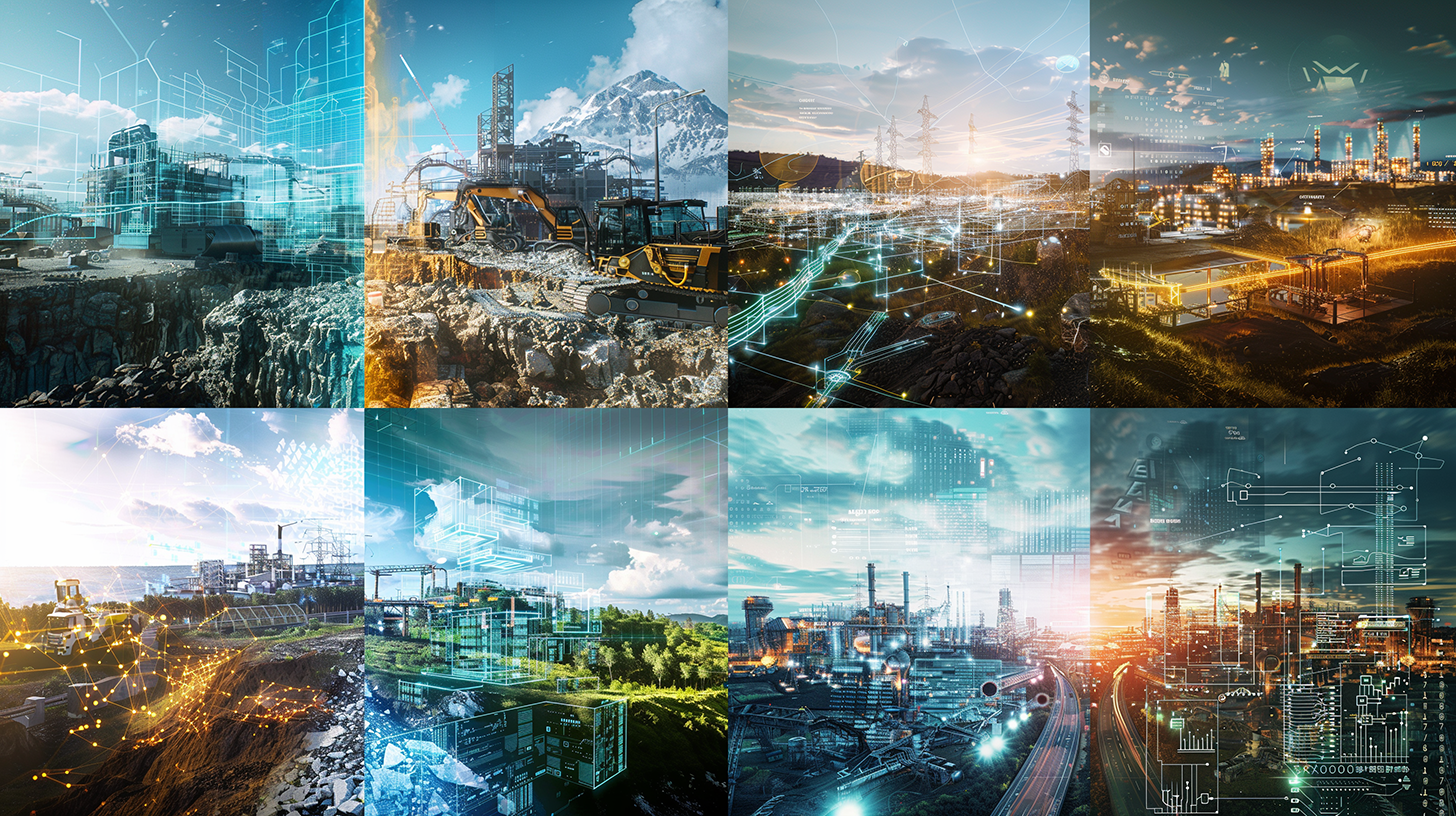
The digital twin in industry: The bridge between the virtual and physical worlds – Image: Xpert.Digital
Real-time data, maximum efficiency: The role of digital twins in modern industry
Digital Twins explained: The key to tomorrow's connected industry
A digital twin represents the digital representation of a physical object, process, or system. This representation is based on real-time data and is closely linked to its physical counterpart. This innovative technology connects the physical and digital worlds and forms a key component of modern industry, particularly within the context of Industry 4.0.
Definition and concept
A digital twin goes far beyond simple digital models. It is a living representation of the physical object, continuously fed with data and able to react dynamically based on that data. The technology is not just a tool, but a strategic instrument for increasing the efficiency and innovative capacity of companies.
The basis of the digital twin comprises three essential elements:
- The physical object: The real element whose data is collected.
- The virtual model: A digital clone that represents all relevant information.
- The data connection: Real-time interfaces that enable the flow of data between physical and digital space.
Functions and possibilities
The digital twin is a powerful tool that supports companies in many areas. Its main functions include:
- Real-time data analysis: Continuous data collection enables in-depth analysis and immediate insights.
- Simulation and optimization: Companies can test scenarios before implementing them in the real world.
- Error detection: Early identification of vulnerabilities reduces failures.
- Data-driven decisions: Well-founded decisions through precise analyses and forecasts.
Application areas in industry
Digital twins have proven to be a versatile technology and are used in various industrial sectors:
1. Production and manufacturing
- Optimization of production lines through scenario simulation.
- Virtual commissioning of machines, saving time and costs.
2. Predictive Maintenance
- Continuous monitoring of machine conditions to accurately predict maintenance work.
- Avoiding unexpected failures and increasing operational efficiency.
3. Product Development
- Virtual prototyping accelerates development cycles and reduces material costs.
- Simulation of physical properties prior to actual manufacturing.
4. Logistics and Transport
- Optimizing supply chains through real-time data analysis.
- Improvement of material flows in automated warehouses and autonomous vehicles.
5. Energy and Environment
- Monitoring and optimization of energy systems to promote sustainability.
Benefits for industry
The introduction of digital twins brings a multitude of advantages:
1. Increased efficiency
Simulations and precise analyses lead to better-coordinated production processes and reduce waste.
2. Cost reduction
Optimized maintenance planning and fewer breakdowns save companies significant resources.
3. Customer-specific customization
Collected data allows products to be individually tailored to customer needs.
4. Sustainability
Optimized processes mean lower resource consumption and reduced environmental impact.
Challenges in implementation
Although the digital twin offers immense advantages, companies face some challenges:
1. IT infrastructure and data management
Building a robust infrastructure is costly and requires expert knowledge.
2. Data integration
The seamless integration of IoT technologies and the processing of large amounts of data present technical challenges.
3. Interdisciplinary collaboration
Implementation requires cooperation between IT, production, and management teams.
4. Safety aspects
The protection of sensitive data from cyberattacks must be guaranteed.
How does a digital twin work?
The functionality of a digital twin is based on the networking of physical objects and their digital representation. This process is highly complex and integrates various technologies:
1. Sensors and data sources
Sensors continuously collect information such as:
- temperature
- Pressure
- Position and speed
- Energy consumption
- Environmental conditions
This raw data forms the basis for the digital image.
2. Data transmission
The collected data is transmitted to the digital platform in real time via protocols such as MQTT or HTTP. IoT hubs act as intermediaries between devices and cloud services.
3. Digital Modeling and AI
Artificial intelligence (AI) and machine learning are used to create a dynamic model from the data. This model:
- It detects patterns and trends.
- Allows predictions (Predictive Analytics).
- Identifies anomalies early.
4. Simulation and Interaction
The digital twin simulates processes and makes it possible to test possible scenarios without endangering physical resources. At the same time, it can actively interact with the physical object, for example through control commands.
5. Visualization
Technologies such as augmented reality (AR) or 3D models make the digital twin tangible. They facilitate the understanding of complex data and systems.
Future areas of application
With the advancement of technologies such as the Internet of Things (IoT), 5G, and artificial intelligence, digital twins are becoming increasingly powerful. Future applications could include:
- Autonomous factories where digital twins monitor and control all processes.
- Smart cities where twins make the infrastructure more efficient.
- Healthcare, with the simulation of patient models for personalized medicine.
The digital twin will therefore not only remain a tool for industry, but will also revolutionize other areas of life.
The digital twin connects the physical and virtual worlds in an innovative way, enabling companies to make their processes more efficient, reduce costs, and operate more sustainably. Despite the challenges of implementation, this technology remains an essential component of Industry 4.0 and a bridge to a data-driven future. Those who recognize and utilize the potential of the digital twin today will be among the pioneers of a new industrial era tomorrow.
Related to this: