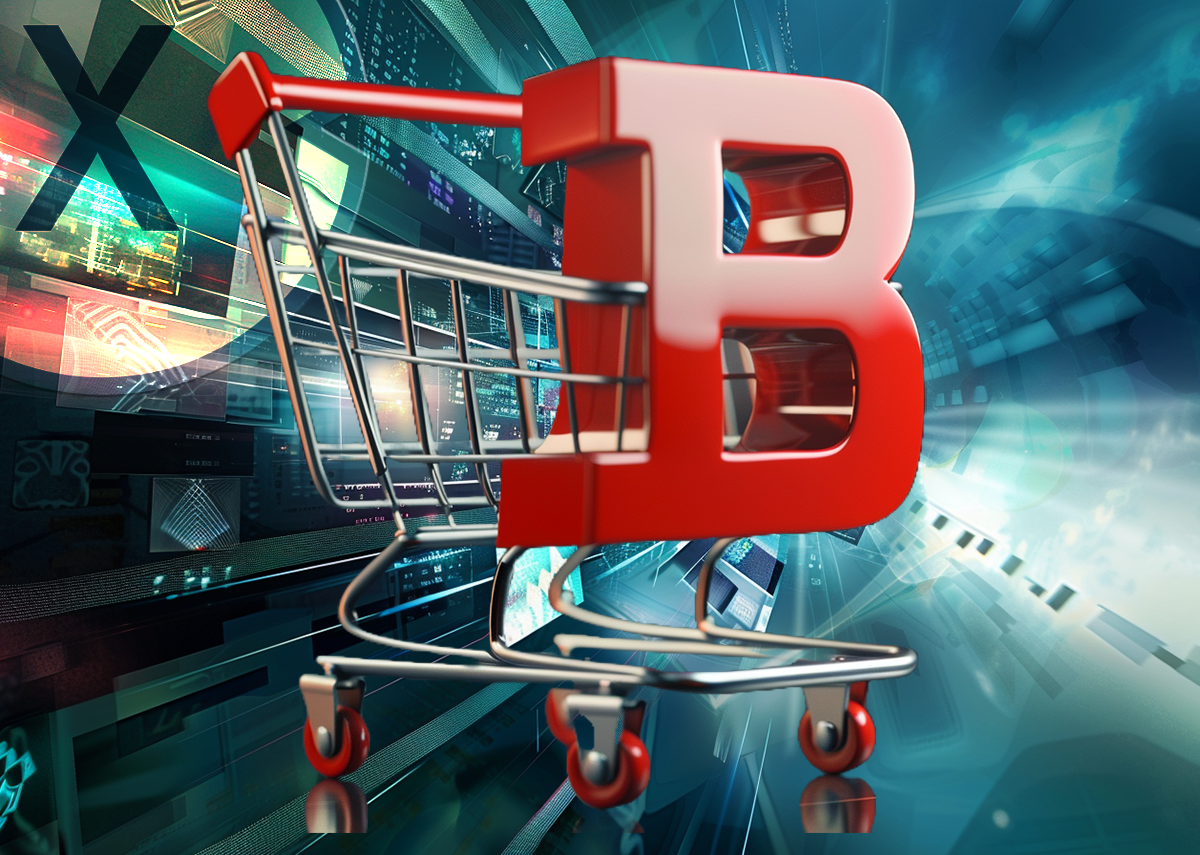
Digital B2C & B2B platforms are at the heart of the modern retail landscape – Image: Xpert.Digital
🚀 Digital platforms: The heart of the modern retail landscape
🛍️ B2C trading platforms
B2C trading platforms are aimed directly at end consumers. Examples include well-known online marketplaces and retailers such as Amazon, eBay, and Zalando, which sell products and services to individual customers. These platforms are designed to reach a broad audience with a wide selection of products. A key characteristic of B2C platforms is user-friendliness: the user interfaces are easy to navigate, product presentations are appealing, and the ordering and payment process is kept as smooth as possible.
One of the biggest advantages of B2C platforms is the personalization of the shopping experience. By using data collection and analysis, these platforms can provide individual recommendations based on previous searches and purchases. This makes the shopping experience increasingly personalized and convenient for the consumer.
🏢 B2B trading platforms
In contrast, B2B platforms focus on trade between businesses. Examples include Alibaba and ThomasNet. These platforms are used to trade goods in larger quantities, often involving more complex transaction processes, including individual price negotiations, requests for proposals, and long-term contractual agreements. The features these platforms provide are tailored to the specific needs of business relationships and often offer more advanced tools for order processing, inventory management, and integration with other business systems.
While B2C platforms are designed to reach the broadest possible audience, B2B platforms focus on building and deepening long-term business relationships. The interaction processes are less geared towards speed or immediate transactions, and more towards establishing a stable, trusting trading environment.
🌐 E-commerce
At its core, e-commerce refers to the buying and selling of goods and services over the internet. It is the foundation upon which both B2C and B2B platforms operate. E-commerce has continuously evolved, offering an increasingly diverse range of products and a growing number of services.
What makes e-commerce particularly attractive is the ability to conduct business anytime, anywhere. Customers can search for, compare, and purchase products worldwide, providing access to an unprecedented variety of goods. For businesses, e-commerce means the opportunity to reach a global customer base, which in turn expands their market potential.
Related to this:
🕶️ V-Commerce
The next evolution of e-commerce is V-commerce (virtual commerce), which incorporates virtual reality and augmented reality to create an immersive shopping experience. Brands and retailers use V-commerce, for example, to allow customers to virtually try on clothes or visualize how a piece of furniture would look in their living space. It enables an interactive experience where the boundaries between the physical and digital worlds blur.
Related to this:
👨💻 Digital Shopping Systems
Digital shopping systems are versatile tools that go beyond simple product transactions and include various service elements such as customer support, personalized shopping assistants, and integrated inventory management systems. They could also include subscription models or loyalty programs aimed at customer retention and long-term value.
Technological innovations such as artificial intelligence and machine learning make a significant contribution to the dynamics of digital shopping systems. They support the analysis of purchasing behavior, the optimization of inventory, and the personalization of marketing campaigns. The use of big data for trend forecasting and uncovering customer preferences is also an essential component.
The differences between B2C and B2B regarding e-commerce and digital platforms are therefore multifaceted. Pricing, customer engagement, transaction complexity, and customer retention strategies are just some of the aspects in which the two business models differ. B2C is often faster and more emotional, with a focus on brand awareness and customer experience. B2B, on the other hand, is more strategic and data-driven, placing greater emphasis on long-term relationships and efficiency in the process chain.
In an era of ever-increasing digitalization and globalization, it is essential for companies to continuously adapt and optimize their digital platforms. Only through constant innovation and consideration of evolving customer needs and market conditions can they remain competitive. This also includes understanding and utilizing new technologies not merely as tools, but as an integral component of the business model.
Digital commerce platforms and systems have fundamentally shaped economic interaction in the 21st century. They not only enable easy and rapid access to products and services, but also create new business models and markets. The clear distinction between B2C and B2B is beginning to blur, as both domains adopt elements from each other to maximize customer satisfaction and increase operational efficiency. The end result is a complex system of platforms that is constantly evolving, driven by technological innovations and the changing behavior of consumers and business users.
Related to this:
📣 Similar topics
- 💻 The boom in digital trading platforms
- 🛒 Revolution in e-commerce: B2C vs. B2B
- 🖥️ B2C trading platforms: User-friendliness and personalization
- 📈 B2B trading platforms: Long-term relationships and network expansion
- 🌍 Global trade facilitated by e-commerce
- 🛍️ V-Commerce: The new era of online shopping
- 🤖 AI: The Game-Changer in Digital Shopping Systems
- 💼 Differentiating strategies of B2C and B2B in the digital age
- 🔄 Evolving the shopping experience with V-Commerce
- 🚀 New dimensions of customer loyalty through digital shopping systems
#️⃣ Hashtags: #DigitalTradePlatforms #ECommerceEvolution #B2CvsB2B #VCommerce #DigitalShopping
📌 More related topics







🌐 In the digital age, business relationships have changed dramatically
🚀 B2C vs. B2B: Differentiating Marketing Strategies
At the heart of B2C marketing is the end consumer, who is served with products or services that meet their immediate needs or desires. In contrast, B2B marketing focuses on providing products or services to other businesses, and the transactions are usually more complex and based on a long-term customer relationship.
📱 The evolution of B2C approaches
The strategies used in the B2C sector are diverse and constantly evolving with changing technologies and consumer trends. One of the most prominent characteristics of B2C marketing is its emotional appeal to customers. The aim is to build a personal connection with consumers and foster brand loyalty through emotional advertising. Social media campaigns, influencer marketing, and SEO-optimized content are just a few examples of how companies try to capture consumers' attention.
👁️ The importance of user experience in the B2C sector
User experience (UX) also plays a crucial role. In the digital age, consumers expect a fast, easy, and enjoyable online shopping experience. B2C marketers are therefore investing heavily in optimizing websites and mobile apps to make the purchasing process as intuitive and seamless as possible. Personalization is another key element. By analyzing data on consumer behavior and preferences, companies can present tailored offers that increase the likelihood of a purchase.
🔍 B2B: A different marketing dimension
B2B marketing, on the other hand, requires a fundamentally different approach. Since it often involves larger investments and multiple stakeholders in the purchasing decision, the sales cycle is typically longer and the associated customer relationship far more complex. Products must not only meet immediate needs but also represent long-term value for the customer's business. Therefore, a company's trust and credibility are crucial.
📑 Content marketing in the focus of the B2B sector
Content marketing is a powerful tool in the B2B sector. Technical articles, white papers, case studies, webinars, and informative videos help demonstrate expertise and highlight a company's competence. Search engine optimization (SEO) is also important, but with a stronger focus on industry-specific terms and niche keywords to maximize visibility within particular sectors.
🤝 Networking as a cornerstone of B2B marketing
Networking plays a crucial role in B2B marketing. Networking events, trade fairs, and conferences are important platforms for establishing and maintaining personal relationships. In the digital world, LinkedIn and other professional networks complement these efforts by offering opportunities to exchange ideas and interact with industry experts and potential customers.
📊 CRM systems at the heart of B2B strategies
Furthermore, customer relationship management (CRM) is of fundamental importance in the B2B segment. An effective CRM system makes it possible to collect and analyze detailed information about customers and prospects, which in turn improves customer care and enables targeted marketing campaigns. Automation of marketing processes also serves to support sales and ensure that no interaction opportunities with potential customers are missed.
💻 The rise of digital platforms
Digital platforms are evolving into essential tools for both B2B and B2C strategies. While B2C brands, for example, benefit from messages and campaigns that can go viral, B2B companies use platforms to distribute targeted and specialized content that increases credibility and promotes lead generation.
🔮 Big Data and AI as trendsetters in both areas
The increasing importance of big data and artificial intelligence cannot be underestimated for either field. Data-driven decisions enable marketing teams to predict trends, better understand customer behavior, and adapt their strategies accordingly. AI-based tools can help analyze increasingly complex datasets and create personalized user experiences.
🌐 Convergence of B2C and B2B in the digital age
Looking ahead, it's clear that both B2C and B2B marketing will continue to converge in the digital age. The lines between professional and private use of digital media are increasingly blurring, leading to an overlap of strategies. B2B decision-makers are also consumers who are familiar with B2C tactics, which in turn encourages B2B marketers to adapt certain B2C practices – whether in the way content is presented or in the personalization of customer communication.
📈 The future viability of digital marketing strategies
The diversity and dynamism of digital marketing in both sectors offer unlimited opportunities for creativity, innovation, and growth. The key to success lies in thoroughly understanding one's own marketplace, incorporating both the technology and the human aspects of the target audiences, and developing flexible, adaptable marketing strategies. Whether in the B2C or B2B segment, companies that are prepared to continuously evolve and proactively respond to change will thrive in tomorrow's digital landscape.
📣 Similar topics
- 🔍 Similarities and differences between B2B and B2C marketing strategies
- 📈 The role of user experience in B2C marketing
- 💼 B2B Marketing: Building Long-Term Customer Relationships
- 📝 Importance of content marketing in the B2B sector
- 🤝 Networking and personal relationships in B2B marketing
- 🚀 Digitalization and automation in marketing
- 📊 Big Data and artificial intelligence in marketing strategies
- 📲 The importance of digital platforms for B2B and B2C strategies
- 💡 Creative and innovative opportunities in digital marketing
- 🔮 The future of B2B and B2C marketing in the digital age
#️⃣ Hashtags: #B2BMarketing #B2CMarketing #DigitalMarketing #ContentMarketing #UserExperience
🎯🎯🎯 Benefit from Xpert.Digital's extensive, five-fold expertise in one comprehensive service package | BD, R&D, XR, PR & Digital Visibility Optimization

Benefit from Xpert.Digital's extensive, five-fold expertise in a comprehensive service package | R&D, XR, PR & Digital Visibility Optimization - Image: Xpert.Digital
Xpert.Digital possesses in-depth knowledge across various industries. This allows us to develop tailored strategies precisely aligned with the requirements and challenges of your specific market segment. By continuously analyzing market trends and monitoring industry developments, we can act proactively and offer innovative solutions. The combination of experience and expertise generates added value and provides our clients with a decisive competitive advantage.
More information here:
🏭🌍 Future of Export – Digital Platforms for Mechanical Engineering – What has global sales been like so far and how can they be boosted?


Future of Export – Digital Platforms for Mechanical Engineering – Image: Xpert.Digital
One of the best-known examples of these platforms is Alibaba. As a global wholesale portal, it connects manufacturers, suppliers, and wholesalers with potential business partners around the world.
Other well-known platforms in the B2B sector include Amazon Business, which has established itself as a professional version of the popular B2C marketplace and offers a wide range of products and services. More specialized providers, such as ThomasNet, DirectIndustry, and Wer liefert was (WLW), also offer comprehensive catalogs and are tailored to the B2B market.
More information here:
We are here for you - Consulting - Planning - Implementation - Project Management
☑️ Industry expert, here with his own Xpert.Digital industry hub featuring over 2,500 specialist articles

Konrad Wolfenstein
I would be happy to serve as your personal advisor.
You can contact me by filling out the contact form below or simply call me on +49 7348 4088 965 .
I'm looking forward to our joint project.
Write to me


Xpert.Digital - Konrad Wolfenstein
Xpert.Digital is a hub for industry focusing on digitalization, mechanical engineering, logistics/intralogistics and photovoltaics.
With our 360° Business Development solution, we support renowned companies from new business to after-sales.
Market intelligence, smarketing, marketing automation, content development, PR, mail campaigns, personalized social media and lead nurturing are part of our digital tools.
You can find more information at: www.xpert.digital - www.xpert.solar - www.xpert.plus
Keep in touch

Industrial & B2B Business Metaverse: Reduce costs with XR technology for photorealistic product images (XR 3D rendering machine)

Lathe in photorealistic rendering (3D product presentation) - Image: Xpert.Digital
XR technology offers a superior solution for creating photorealistic images, allowing companies to avoid the expensive fees charged by external media agencies. It's well known that media agencies charge high prices for creating such images, as this requires expertise, specialized software, and collaboration with various specialists.
More information here: