Digital professionals urgently needed – @shutterstock | HQuality
+++ Digital natives don't want to live in the provinces +++ Where specialists are needed +++ Skilled workers urgently sought +++
Digital natives don't want to go to the provinces
"Small and medium-sized enterprises are lagging behind in digitalization" or "Small and medium-sized companies are missing the boat on digitalization": These are common headlines in the newspaper. Commentators often blame the company bosses, claiming they lack the knowledge, understanding of the new opportunities, or the will to digitalize.
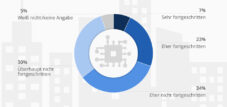
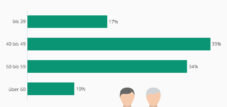
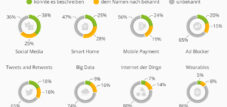
Asking those in charge within the companies themselves reveals a completely different problem. Many German medium-sized businesses are located far from the trendy metropolitan areas. And that's precisely where young, digitally minded professionals don't want to go, as our infographic based on a new McKinsey survey shows. According to the survey, more than half of the companies are having trouble recruiting digital specialists. The primary obstacle is location disadvantages. The executives surveyed also admit that they may not speak the language of these sought-after professionals well enough or be unable to accurately assess the required qualifications.
The study also analyzes the potential for growth and added value in the consistent digitalization of SMEs and emphasizes that SMEs, where rapid decision-making processes are often found, have great potential for a rapid transition to digital technology.


Where specialists are needed
In 2017, the research and consulting institute B,S,S. published a skilled worker index for the entire economy. It combines various indicators and thus shows in a single value how the demand for skilled workers has developed since 2010.
Overall, the index reached a value of 104 points in 2016, indicating increased demand compared to 2010. Looking at individual sectors, the demand for specialists increased most sharply in the ICT sector, followed by freelance, scientific, and technical services, as well as industry. Public administration and agriculture, on the other hand, experienced a significantly smaller shortage of young talent. Regional differences also emerged: while there was an increased demand for skilled workers in German-speaking Switzerland and Graubünden, the situation eased in French-speaking Switzerland and Ticino.

Skilled workers urgently needed
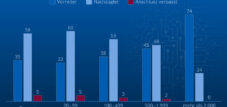
Many small and medium-sized enterprises (SMEs) in Switzerland are struggling to fill their vacancies. This is one of the findings of a recently published SME study by Credit Suisse. According to the study, almost half (45 percent) of the SMEs surveyed have recently found it difficult to recruit suitable staff. Only 23 percent, however, found it easy to find employees. This can be interpreted as an indication of a skills shortage.
However, this does not affect all sectors equally. As the study further shows, traditional manufacturing and the construction industry in particular often experience recruitment problems. The transport and logistics sectors, as well as health and social services, are the least affected. Furthermore, a "Rösti divide" exists regarding the skilled worker shortage: it is less pronounced in Ticino and French-speaking Switzerland than in German-speaking Switzerland. In addition, companies in cities find it easier to fill vacancies than businesses in rural areas.

Keep in touch