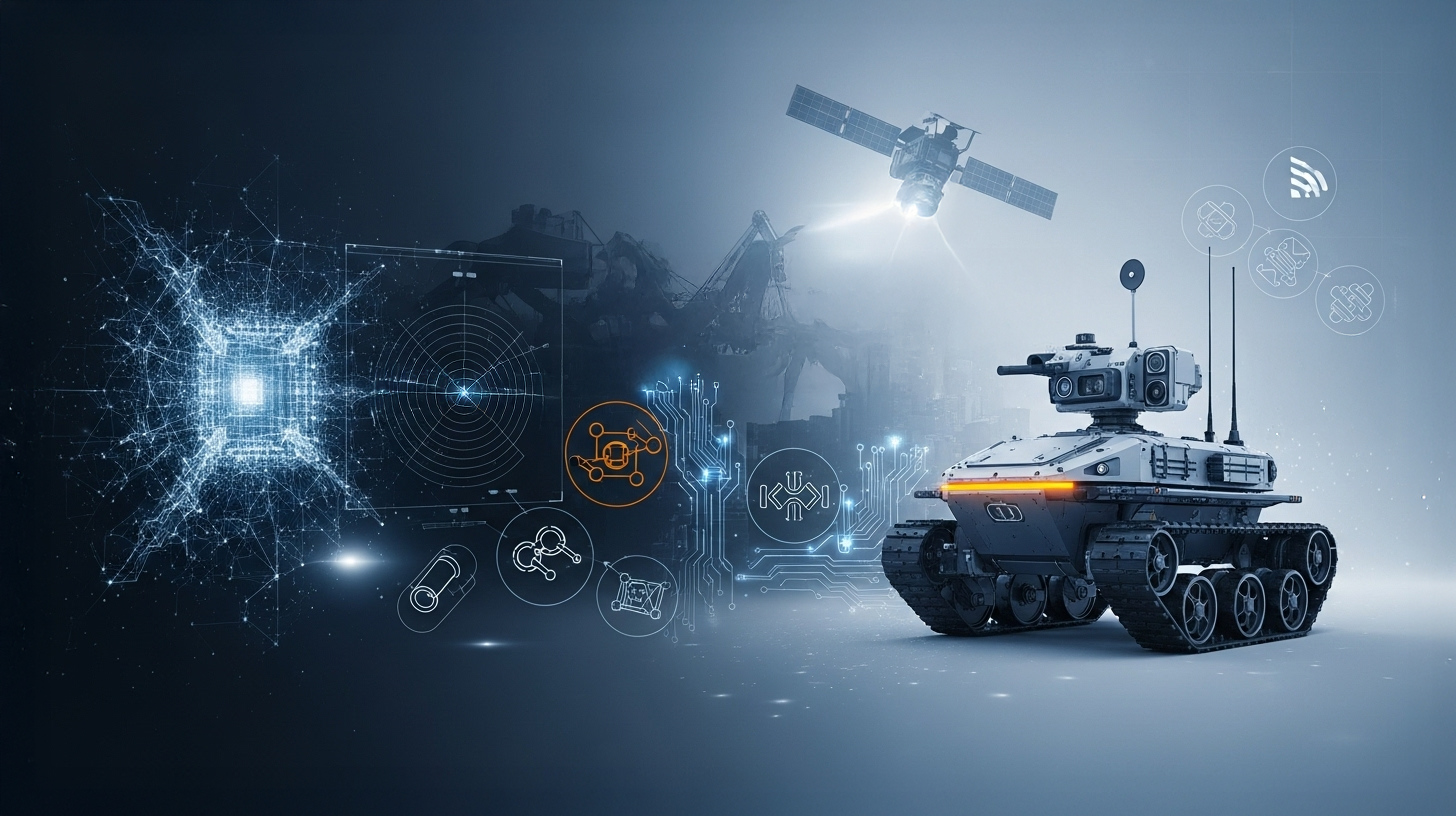
Bavaria's defense and dual-use ecosystem: Helsing, ARX Robotics & Co. – These startups represent Europe's military technology – Image: Xpert.Digital
While Berlin is still debating: This is how Bavaria is achieving what others fail at – a powerful tech defense
AI, quantum technology, drones: How a German state is becoming a tech superpower for NATO
The “turning point” is more than a political buzzword – it is an economic and technological reality that is mobilizing billions in investment and creating new innovation centers. Amidst this global realignment, one German state has quietly but resolutely positioned itself as the epicenter of this development in Europe: Bavaria. Here, not just a collection of individual arms companies is emerging, but a defense and dual-use ecosystem unique in its density and functionality, which is already considered a blueprint for Europe's technological sovereignty.
The key to success lies in a closely intertwined collaboration that is rare in this form: Established industrial giants such as Airbus, KNDS, and Hensoldt work hand in hand with excellent research institutions like the Bundeswehr University Munich and the Munich Quantum Valley. At the same time, a new generation of agile startups such as Helsing, Quantum Systems, and ARX Robotics is driving innovation forward at an impressive pace, financed by highly specialized deep-tech venture capitalists, which has made Munich one of Europe's leading defense investment hubs.
The result of this synergistic network is extremely short pathways from research to application and – crucially for the industry – from ambitious pilot projects to actual procurement. While elsewhere the necessity of developing their own technological base is still being debated, Bavaria is already demonstrating in practice how a scalable and resilient ecosystem for defense and security can be structured. This article analyzes the success factors of the Bavarian model, highlights the key players, and explains why this development is of strategic importance far beyond the borders of the Free State of Bavaria.
Related to this:


Billions for a new era: Why investors are now putting their money into Munich defense startups
Over the past few years, Bavaria has developed into a particularly dense and functional defense and dual-use ecosystem. The key to this success lies in the close collaboration between established industrial players, universities and research institutions, specialized funding programs, and professional deep-tech venture capital firms. This results in short pathways from research to application – and increasingly, from pilot projects to procurement. The core message: While elsewhere technological sovereignty is still being debated, Bavaria is already demonstrating in practice how a scalable defense and resilience ecosystem can be structured.
What is it about – and why now?
The geopolitical situation, the changing times in Germany, and a broader societal debate about security and defense have altered the landscape. Defence tech is no longer a niche topic in Europe. In 2024 alone, billions of euros flowed into defense startups in Europe; Germany, and Munich in particular, has established itself as a leading investment hub. At the same time, Bavaria, with its high-tech agenda, is expanding its computing infrastructure, professorships, and quantum expertise, and is specifically addressing barriers to technology transfer and procurement. This development is reflected in major financing rounds (e.g., Helsing), industrial alliances (e.g., Quantum Systems and ARX Robotics), and new hubs (Digital Hub Security & Defense).
What makes Bavaria a particularly strong location for defense and dual-use technology?
Bavaria's strength stems from a systemic advantage comprised of several pillars: a high density of industry in aerospace and land systems, excellent research (including the Bundeswehr University Munich and major research organizations), targeted high-tech investments by the Free State, specialized deep-tech venture capital firms, and a growing cohort of scaling startups. This interplay streamlines value chains, accelerates technology transfer, and reduces coordination costs between stakeholders.
A concrete expression of this concentration is the federal government's decision to locate the new Digital Hub for Security and Defense in Bavaria. The rationale: a third of Germany's defense companies are based in the Free State; the networking between industry, universities, and startups is exceptionally strong. For dual-use applications, Bavaria's strong core industries offer additional connectivity.
What role do the major industrial players play – and where are they located?
Bavaria is home to key companies in the German and European security and defense industry:
- Airbus Defence and Space operates the military aviation center in Manching, featuring Eurofighter final assembly, UAV expertise, and comprehensive services. Airbus Helicopters has its German headquarters in Donauwörth and is the largest employer in the region.
- KNDS Germany (formerly KMW) is headquartered in Munich-Allach; the German part of KNDS is responsible for, among other things, Leopard tanks, Panzerhaubitze 2000 self-propelled howitzers, and wheeled armored vehicle programs. The brand has operated under the unified name KNDS since 2024; locations and structure are clearly defined.
- Hensoldt, a spin-out of Airbus' sensor division, is one of Europe's leading electronics and sensor specialists for reconnaissance and protection. Its historical development, stemming from EADS/Airbus restructuring, underscores its extensive sensor expertise and focus on military and dual-purpose applications.
- MBDA Germany maintains several locations in Bavaria (e.g., Schrobenhausen). Companies such as MTU Aero Engines and RENK complement the industrial diversity; the aerospace cluster in the greater Munich/Swabia area strengthens co-localization effects.
These companies act as "primes," collaborating with universities, startups, and SMEs to open up transfer channels, for example, for Eurofighter upgrades (electronic warfare) or Eurodrone/FCAS components. Such programs require deep expertise in sensor fusion, embedded software, AI, electronics, and systems integration—all fields in which Bavarian companies have strong teams.
Which academic and research infrastructure sets the pace?
Two anchors shape the Bavarian profile:
First, there is the Bundeswehr University Munich (UniBw M) with its dtec.bw center. This program, established in 2020 and now extended, promotes digitalization and technology research with a defense focus. The dual-use orientation, in particular, has been further refined during the extension phase. Examples such as SeRANIS (integrated B5G/6G laboratory environment with New Space networks), RISK.twin (hybrid digital twins for critical infrastructures), and MISDRO (UAS-based inspection with multivariate image analysis using AI) demonstrate the bridge between fundamental topics and concrete application demonstrators.
Secondly, the Munich Quantum Valley (MQV) serves as a high-tech agenda flagship. It pools the resources of LMU, TUM, FAU, Max Planck, Fraunhofer, and BAdW, builds quantum computing infrastructures on three hardware platforms, and sees knowledge transfer and entrepreneurship as core missions. The goal is to develop and operate competitive quantum computers in Bavaria – with significant state funding and international networking.
In addition, the Free State is expanding AI computing infrastructure at the LRZ and RRZE to provide universities with high-performance clusters – a basic requirement for modern AI, sensor technology and simulation projects with a defense focus.
What recent political or programmatic signals strengthen the location?
Several decisions and initiatives solidify this path:
- The establishment of the “Digital Hub Security and Defense” in Bavaria anchors a national showcase for defense innovation, networking and start-up support in the Free State.
- The high-tech agenda focuses investments in AI, computing infrastructure, and quantum technology. Munich serves as a quantum technology hub with MQV, its own professorship base, and technology transfer programs.
- At the federal/EU level, initiatives such as the NATO Innovation Fund commitments to Bavarian-based deep-tech venture capital firms and the EU Defence instruments are becoming more prevalent. These capital flows increase the accessibility of young companies to security-relevant markets.
- The Bavarian law on the promotion of the German Armed Forces in Bavaria creates a clear framework against research-inhibiting civilian clauses and promotes systematic transfer between universities and German Armed Forces offices.
The combination of these factors reduces the typical gaps between research, piloting and procurement, and lessens cultural barriers that have historically existed in Germany between civilian and military innovation pathways.
How strong is the VC and startup core – and which deals demonstrate scalability?
Helsing's prominent €450 million Series C funding round marks a European milestone. Participants include General Catalyst as lead investor, along with Elad Gil, Accel, Saab, Lightspeed, Plural, and Greenoaks. The funds will be used for product development and R&D focused on European sovereignty and the protection of NATO's eastern flank. Helsing also holds significant government contracts and has been active in Ukraine since 2022. This funding round underscores the global relevance of Munich-based defense AI.
Munich is considered the leading European VC hub in the defense/security/resilience sector in 2024 – reports and analyses indicate that almost one billion US dollars in defense investments will be allocated to the location by 2024. This trend is supported by specialized funds such as Vsquared Ventures and Alpine Space Ventures, which have received NIF capital and address in-depth sector themes ranging from space to AI/robotics.
Startups such as Quantum-Systems (sUAS systems, deployment in Ukraine, industrial alliances), ARX Robotics (UGV platforms, multi-use, European testing/procurement) and The Exploration Company (Nyx spacecraft, Series-B €150 million; ESA contracts) illustrate scalability across dual markets and show how quickly prototypes can become operational products when capital, industry partners and pilot paths come together.
Bayern Kapital, as the state-owned venture capital firm, invests in capital-intensive deep-tech projects through growth-oriented funds, thereby strengthening financing chains in later rounds. This generates follow-on financing beyond traditional seed funding windows – a critical building block for bringing hardware-heavy defense technology to mass production.
What evidence is there to support the claim that Bavaria is a blueprint for pilot-to-procurement?
Several indicators support this view:
- With projects like SeRANIS, RISK.twin, and MISDRO, dtec.bw demonstrates how university research can lead to validated, field-oriented technologies that are tested in real-world applications with government agencies and industry partners. The extension and planned consolidation of funding from 2027 onward explicitly focuses on dual-use research in a secure environment with German Armed Forces agencies – a structured pathway from the laboratory to application.
- The establishment of the Digital Hub for Security & Defense in Bavaria institutionalizes networking, startup support, and knowledge transfer. This professionalizes the early phase between prototype and marketable product.
- Industry-startup alliances like Quantum-Systems x ARX (Strategic Partnership, UXS Alliance) accelerate the interoperability, standardization, and combinability of UxS systems. Such consortia create de facto pre-standards that facilitate procurement because they anticipate system-of-systems integration.
- VC signals, such as NIF support for Vsquared and Alpine Space Ventures, increase planning certainty for founders and provide bridges to international defense market access – important for scaling beyond national budgets.
At the same time, analyses indicate that Germany historically had a "firewall" between civilian and military research, and procurement processes were often rigid. The Bavarian approach—including a political framework against civilian clauses, a digital hub, and a high-tech agenda—addresses precisely these gaps. It is therefore a plausible blueprint if other regions wish to pursue similar paths.
Related to this:

How does the Munich Quantum Valley fit into the defense narrative?
Quantum computing, sensing, and communication are strategic foundational technologies in the medium to long term for encrypted communication, navigation robustness, sensor fusion, and the optimization of complex operational scenarios. MQV is developing three hardware pathways in Bavaria (superconducting, neutral atom, ion traps) as well as a transfer architecture and entrepreneurial programming. The Free State of Bavaria is specifically funding MQV through its High-Tech Agenda; the platform connects LMU, TUM, FAU, MPG, FhG, and BAdW – a level of collaboration that is internationally competitive. For defense applications, these capacities mean: talent, prototyping access, and industry-compatible transfer models are being developed locally, which will facilitate future security-relevant applications.
Which startups exemplify "rapidly deployable dual-use products"?
Three examples:
- Quantum Systems: High-endurance eVTOL sUAS with combat-proven Vector systems. Over 200 Vectors are in operation in Ukraine; 500 systems are on delivery; an additional 800 have been requested. Partnerships with Airbus Defence and Space (AI components, swarm intelligence) and ARX Robotics (joint UxS approaches) demonstrate a systems-oriented approach.
- ARX Robotics: modular UGV platforms with scalable hardware/software architecture; deployed in six European armed forces in test/procurement pipelines. Cooperations with Quantum Systems and the UXS Alliance aim for interoperability across domains.
- Helsing: AI systems for sensor analysis, electronic warfare, and battlefield intelligence. Large-scale funding, FCAS participation, and operational capability in real conflict environments demonstrate levels of maturity that go beyond the prototype stage.
These examples illustrate that dual-use is not just a label, but has been operationalized through concrete supply chains, approvals, overseas deployments and military acceptance processes.
Who is financing this – and how professional is the VC side?
In addition to international investors, several groups of actors are active in Bavaria:
- Deep-tech specialists like Vsquared Ventures invest in AI/computing, space, robotics, and energy, and close funds with institutional clout (e.g., €214 million Fund II, LP basis including NIF, EIF, KfW Capital). Their portfolios have strong ties to the Munich scene.
- Alpine Space Ventures positions itself as a NewSpace specialist with partner networks in NATO contexts (including NIF backing). Its focus on space is strategically relevant for ISR, communication, and navigation capabilities.
- Public and semi-public capital sources such as Bayern Kapital provide follow-up financing, growth funds and bridges into capital-intensive phases – with tickets that can also support later stages of industrialization.
- International growth and crossover investors are participating in large funding rounds, opening up valuations and scaling options on a global scale (Helsing round as a case study).
In summary, this VC architecture professionalizes scaling: Deal flow, due diligence and post-investment support are now calibrated to defense-typical cycles, certifications and regulatory requirements.
Hub for Security and Defense - Advice and Information
Hub for Security and Defense - Image: Xpert.Digital
The Security and Defence Hub offers expert advice and up-to-date information to effectively support companies and organizations in strengthening their role in European security and defence policy. Working closely with the SME Connect Defence Working Group, it particularly promotes small and medium-sized enterprises (SMEs) that wish to further develop their innovative capacity and competitiveness in the defence sector. As a central point of contact, the Hub thus creates a crucial bridge between SMEs and European defence strategy.
Related to this:
Dual-use instead of a one-way street: How military technologies scale to civilian use
Which specific structural elements accelerate the transfer into practice?
Five mechanisms can be identified:
- Research programs with a demonstrator focus. dtec.bw projects are designed from the outset for specific use cases. The early involvement of government agencies and industry partners reduces friction during validation and handover.
- Regional nodes that synchronize ecosystems. The Digital Hub Security & Defense is deliberately designed as an interface for startups, industry, and academia. It facilitates visibility, matchmaking, and the search for scaling partners.
- Cross-company alliances addressing interoperability. The UXS Alliance and the ARX Quantum partnership aim for common software frameworks and compatibility – a lever that significantly simplifies later procurement because system integration carries less risk.
- Political support. The Bavarian law to promote the German Armed Forces in Bavaria, the high-tech agenda, AI computing infrastructure and quantum technology promotion eliminate bottlenecks in resources, access and legal uncertainties that are hindering transfers elsewhere.
- Venture capital governance and international co-financing. NIF commitments, EIF programs, and corporate investors from the defense sector increase capital stability and reduce the risk of projects drying up between TRL stages. This makes pilot-to-procurement bridges more resilient.
Related to this:

How do dual-use and pure defense innovation pathways differ in Bavaria?
Dual-use projects are particularly well-suited to Bavaria because of its several leading civilian industries (automotive, mechanical engineering, aerospace, electronics). Technologies in sensor technology, propulsion, robotics, data analysis, and security can be scaled via civilian markets while simultaneously providing military benefits. This reduces dependencies on purely defense-related demand and improves capital allocation, as revenue diversification lowers financing costs. This connection is explicitly addressed politically – from high-tech agendas and the rationale for digital hubs to legal frameworks that permit the transfer of technologies into security-relevant applications.
Pure defense innovations – such as specific battlefield electronics or weapon system upgrades – benefit in Bavaria from the presence of the primes and their procurement channels. This allows highly regulated components to be developed, tested, and integrated into larger platform programs. This co-localization avoids interface losses and facilitates certifications.
To what extent does the Bavarian ecosystem contribute to European sovereignty?
European sovereignty requires its own expertise in key technologies, robust supply chains, and industrial policy coordination. Bavaria provides three building blocks:
- System leadership in sub-areas: KNDS Germany, MBDA sites, Airbus centers and Hensoldt's electronics expertise create industrial depth in land, air and space travel.
- Deep-tech talent: MQV, AI clusters, and HPC infrastructure provide talent and groundwork that can flourish in critical areas without US dominance. Quantum technology, AI, and secure communication are key to future military command and control systems.
- Capital mechanics: NIF-backed funds, national venture capital firms, and international investors generate the necessary financing lines so that projects don't stall after the proof-of-concept stage but instead progress to series production/platform integration. Helsing, as a case study, demonstrates how European defense AI can be built to be globally competitive.
These elements are not a guarantee of autonomy, but they reduce dependencies, increase negotiating power in transatlantic programs and strengthen Europe's industrial policy capacity.
What risks or blind spots remain despite the successes?
Three risks are identifiable:
- Procurement pace. Despite regional hub dynamics, national and European procurement processes remain complex. Without binding pilot-to-procurement pathways, startups risk the "valley of tears" phase after successful demonstrators. Studies emphasize the need for more flexible procurement and overcoming historical divisions between civilian and military research.
- Skilled workers and scaling capacity. In many places, the demand for AI, electronics, sensor technology, security, and aerospace experts exceeds the supply. MQV (Municipal Qualification Program), professorships, and AI clusters are important solutions, but international competition for talent remains high.
- Capital volatility and regulations. Although 2024/25 is expected to send strong VC signals, interest rate cycles, ESG debates, and export control regimes can influence financing and sales. Clearer guidelines for dual-use exports and security-by-design compliance are essential to create planning certainty.
What evidence supports the claim that Munich will be Europe's central defense investment hub by 2024?
Analyses by law firms, trade publications, and data services indicate that nearly one billion US dollars in defense investments were made in Munich in 2024. The Helsing Series C funding round was the most visible, accompanied by other major financing rounds for drone and robotics companies. This is complemented by NIF commitments to Munich-based funds and deal flow in space and resilience startups from the region. This clustering creates a network effect that attracts further investors.
What specific examples of industry-startup collaborations can be named?
In addition to the Quantum Systems ARX partnership and the UXS Alliance, there are indications of collaborations between Quantum Systems and Airbus Defence and Space for the development of AI-supported swarm capabilities. Helsing reports on contracts within FCAS consortia, Eurofighter EW upgrades (with Saab), and maritime and land-based projects. The Exploration Company secured ESA funding and is expanding its production base for Nyx prototypes in Planegg – an example of how space startups from the region are integrating contracts into European programs.
What role do state and federal initiatives play in procurement and awarding contracts?
Bavarian agencies and partner institutions address obstacles in public procurement with information and advisory services. At the federal level, programs like KOINNO exist to strengthen innovative procurement; Bavarian platforms transfer this expertise to companies. The goal is to increase the proportion of innovation-oriented contracts and to prevent startups from being structurally disadvantaged by specification and suitability requirements. Such support measures are crucial to ensure that pilot projects can transition into robust procurement procedures.
What about its social and economic policy integration?
Business and industry associations emphasize the need to translate the slogan of this paradigm shift into robust industrial and innovation policy. This includes long-term budgets, accelerated procurement, reliable export regulations, and an end to rigid dividing lines between civilian and military research pathways. Bavaria has addressed some of these points politically, but nationwide harmonization and EU compatibility remain crucial for realizing economies of scale.
At the same time, the investment surge shows that private markets respond to reliable signals. NIF support, EIF programs, and corporate VCs from the defense sector signal that security technologies are recognized as legitimate impact investments – provided that governance, ethics, and legal frameworks are clear.
What are the lessons for other federal states or regions?
Three lessons can be derived:
- Ecosystems benefit from density: Co-localization of prime locations, universities, hubs, and venture capital firms reduces transaction costs and time-to-pilot. The Bavarian conurbation around Munich/Swabia is coherent and generates network effects.
- Political instruments must close transfer gaps: legal certainty for dual research, HPC and quantum resources, digital hubs and procurement consulting create pathways that accompany startups and SMEs along the TRL scale.
- Capital architecture determines scalability: Funds with Defence/Deep-Tech DNA, NIF co-financing and state growth funds secure the bridge from Seed/Series-A to Series-B/C and series ramp-up – particularly important in hardware-heavy domains.
The blueprint is therefore: create systemic links, not just individual measures. Bavaria illustrates what these links can look like.
What future topics are emerging?
Three technology complexes will shape the next few years:
- Software-defined defense: From platform-centric to network-centric – with AI-supported sensor fusion, edge computing, resilient communication, and digital twins. Bavaria addresses these topics through dtec.bw projects, FCAS contexts, and AI computing infrastructure.
- Unmanned systems across domains: Interoperable drone and UGV swarms, modular payloads, standard APIs. Alliances like UXS and industry-startup partnerships are working on frameworks that facilitate the leap into procurement and doctrine.
- Quantum-enabled security: quantum communication, precise sensors, optimization. MQV offers the talent and hardware solutions; the transfer into defense applications will be a matter of roadmaps and use-case prioritization.
The accompanying question remains how export and procurement rules can be designed to allow European companies to scale while maintaining compliance and responsibility.
What does all this mean operationally: What measures are needed for a "pilot-to-procurement" path?
Operationally, five clearly defined steps are needed:
- Establish problem definition and use-case scoping with stakeholders early on (authorities, armed forces, critical infrastructure). dtec.bw formats demonstrate what joint scoping phases can look like.
- Rapid prototyping with realistic data and operational environments, secured by HPC/AI resources and testbeds. The Bavarian AI infrastructure at the LRZ/RRZE and the MQV resources support this.
- Leverage pre-commercial procurement/alliances to prioritize interoperability and standardization. The UXS Alliance and industry-startup collaborations serve as blueprints.
- Use innovation-oriented procurement (KOINNO instruments, ABZ consulting) in a structured manner and define criteria that do not effectively exclude startups (e.g., reference logic, liability models).
- Securing follow-on financing and production scale-up: State growth funds, NIF consortia, and corporate VCs are orchestrating the process. The Helsing C-round demonstrates the maturity of large capital pools for defense AI; space rounds at The Exploration Company confirm preparations for series production in the hardware segment.
When these steps are orchestrated as a “Build-Partner-Invest” alliance between universities, primes, startups and capital, the time from pilot to framework agreement decreases noticeably.
Where do the figures stand – is the boom sustainable or cyclical?
Sector cross-sections point to sustained increases in volume: European defense investments rose significantly in 2024; this trend is continuing in 2025, driven by geopolitical risks and a re-evaluation of ESG narratives in line with "security as impact." Germany overtook the United Kingdom as a target market in 2024; Munich aggregated almost one billion US dollars. At the same time, the number of rounds has decreased, while ticket sizes have increased—an indication of consolidation and quality selection. The risks lie less in demand than in the governance of procurement, exports, and regulatory compliance.
Which companies and institutions specifically shape the Bavarian landscape?
Examples from the location map and public sources include: Airbus Defence and Space (Manching, Donauwörth), Hensoldt (sensor technology), KNDS Germany (Munich-Allach), MBDA Germany, MTU Aero Engines, RENK, The Exploration Company (Planegg), Quantum-Systems (Gilching), ARX Robotics, Alpine Space Ventures, Vsquared Ventures, Bayern Kapital, TUM, University of the Federal Armed Forces Munich/dtec.bw. This list is not exhaustive, but it illustrates the density and close proximity of industry, research, and capital.
Related to this:
What is "uncomfortable" about Bavaria – and why is that relevant?
The uncomfortable realization is that a functioning defense and resilience economy arises not from debates, but from consistent ecosystem work: clear political guidelines, realistic procurement mechanisms, rigorous technology pathways, a robust capital architecture, and the conscious dismantling of outdated cultural divisions between civilian and military. Bavaria has taken visible steps in this direction – not through isolated flagship projects, but through the synchronization of many building blocks.
This sends a signal to the Republic and to Europe: Anyone who is serious about technological sovereignty must link organization, capital and procurement in such a way that research becomes market-effective capabilities – for resilience in peacetime, and for defense in times of crisis.
What specific recommendations for action can be derived?
Four sets of measures appear to be priorities:
- Reform procurement: Standardize innovation-oriented tendering, pre-commercial pilot contracts, and scalable framework agreements. A binding "pilot-to-procurement" guideline for each capability area reduces uncertainty for startups and procurement professionals. Bavaria can serve as a pilot region.
- Prioritize interoperability: Open interfaces, reference architectures, and shared testbeds (e.g., UxS frameworks) should be mandatory components. Alliances like UXS should be expanded across Europe and standardized.
- Securing talent and computing resources: Equipping professorships, labs, and HPC/AI clusters with reliable budgets. Networking MQV structures across Europe to ensure a steady flow of skilled professionals and joint projects.
- Close capital pathways: Coordinate state growth funds, NIF co-financing, corporate venture capital, and export credit guarantees to prevent TRL-8/9 phases from being interrupted. Strategically use successful flagship projects (Helsing-C, Nyx-B) as references in procurement processes.
These measures only work as a package. The Bavarian experience suggests that governance linkage is more important than the absolute size of individual funding budgets.
Is Bavaria a blueprint – and what are the implications?
Bavaria is not a blueprint because individual companies are large, but because the network of industry, research, capital, and politics functions coherently. The Digital Hub Security & Defense, the consolidation of dtec.bw, the high-tech agenda (AI and MQV), deep-tech VCs with NIF support, and scaling startups together create a path on which pilot projects can realistically transition into procurement and fleet integration. The large funding rounds at Helsing, the UxS alliances, and the MQV dynamics are visible markers of this development.
The next step is to standardize this path: binding pilot-to-procurement mechanisms, interoperable frameworks, and predictable export and financing rules. If other German states adopt this system logic and network it across Europe, genuine technological sovereignty will emerge – not as a buzzword, but as an industrially and operationally robust result. Bavaria has shown how it can be done; now it is up to others to have the courage to scale up.
Consulting - Planning - Implementation

Markus Becker
I would be happy to serve as your personal advisor.
Head of Business Development
Chairman SME Connect Defense Working Group
Consulting - Planning - Implementation
Konrad Wolfenstein
I would be happy to serve as your personal advisor.
You can contact me at wolfenstein∂xpert.digital or
Just call me on +49 7348 4088 965 .
Our EU and German expertise in business development, sales and marketing
Our EU and German expertise in business development, sales and marketing - Image: Xpert.Digital
Industry focus areas: B2B, digitalization (from AI to XR), mechanical engineering, logistics, renewable energies and industry
More information here:
A thematic hub offering insights and expertise:
- Knowledge platform covering global and regional economies, innovation and industry-specific trends
- A collection of analyses, insights, and background information from our key areas of focus
- A place for expertise and information on current developments in business and technology
- A hub for companies seeking information on markets, digitalization, and industry innovations
Your dual-use logistics experts
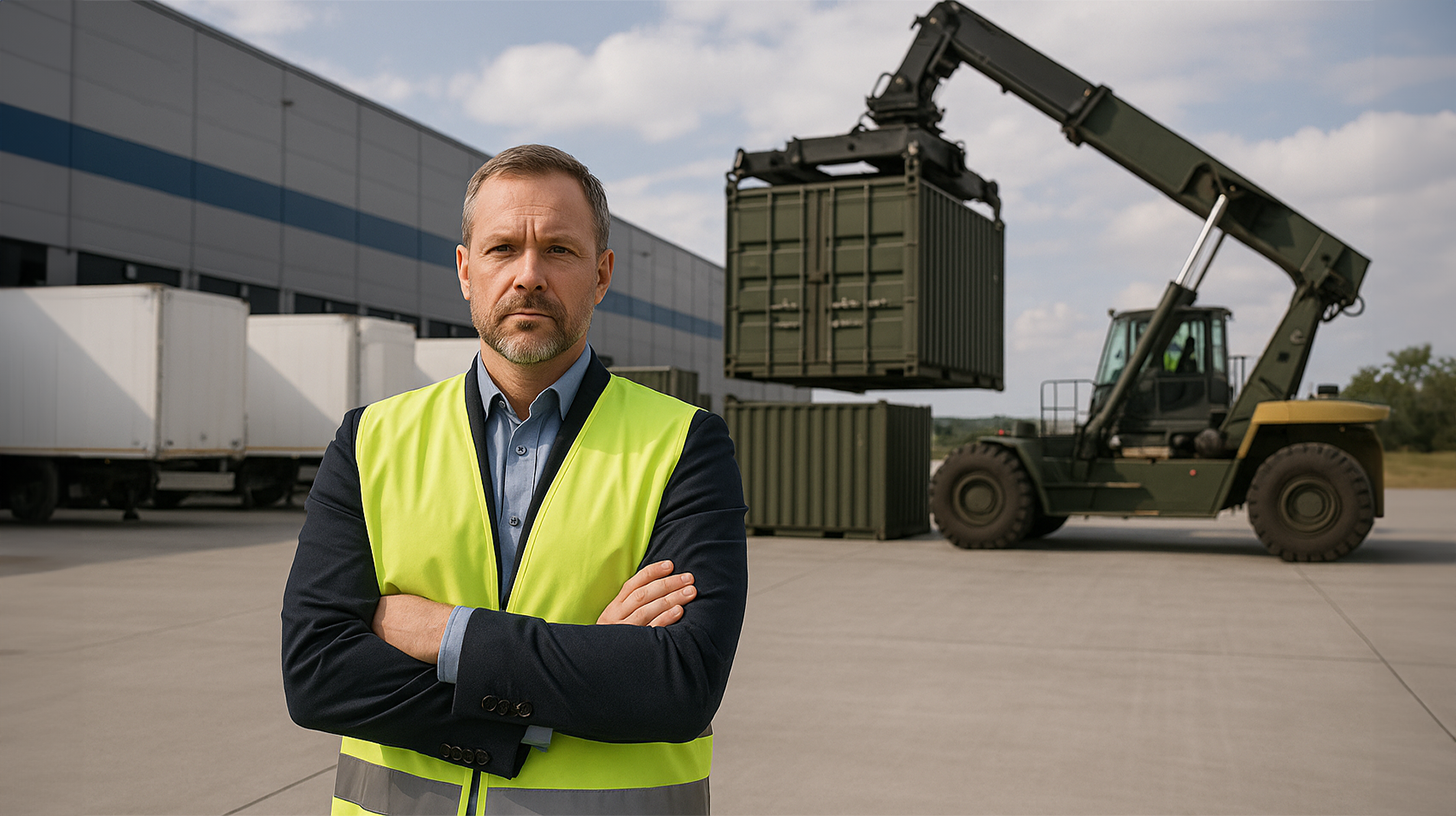
Dual-use logistics experts - Image: Xpert.Digital
The global economy is currently undergoing a fundamental transformation, a watershed moment that is shaking the foundations of global logistics. The era of hyper-globalization, characterized by the relentless pursuit of maximum efficiency and the "just-in-time" principle, is giving way to a new reality. This new reality is marked by profound structural breaks, geopolitical power shifts, and increasing fragmentation of economic policy. The once taken-for-granted predictability of international markets and supply chains is dissolving and being replaced by a period of growing uncertainty.
Related to this: