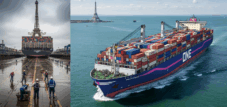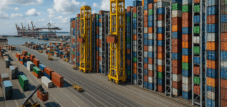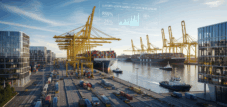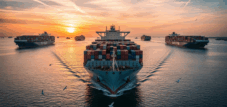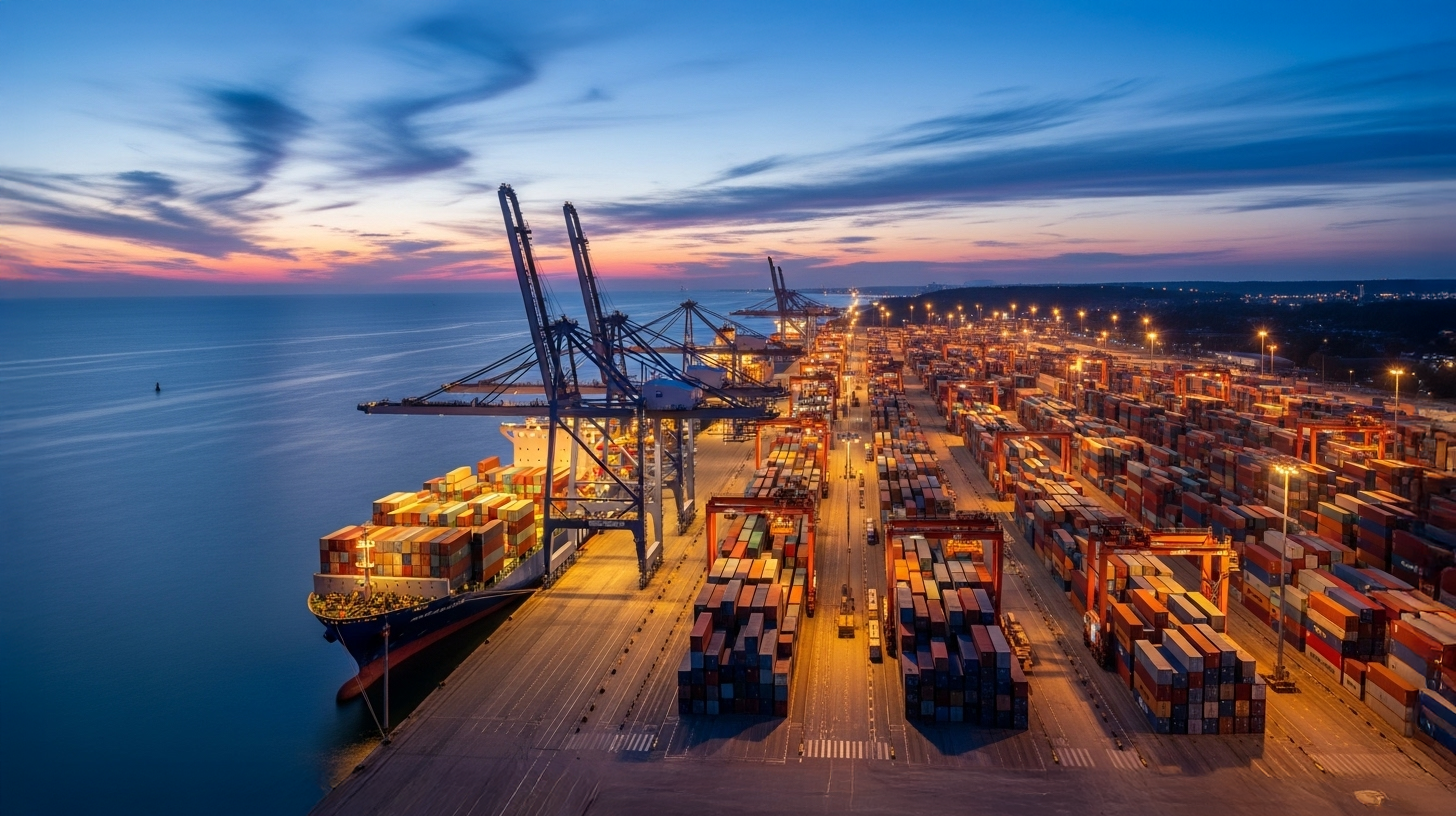
JadeWeserPort deep-water port: The record for one million containers and its significance for Germany's port landscape – Creative image: Xpert.Digital
After 13 years of stagnation, a million-dollar record has been broken: How two shipping giants are bringing the JadeWeserPort back to life
Faster than ever from China: The trick Wilhelmshaven is using to revolutionize logistics
Long considered the problem child of Germany's port landscape, the JadeWeserPort in Wilhelmshaven is now making history. In September 2025, it broke the magical mark of one million standard containers (TEU) handled within a single year for the first time – a milestone that marks a decisive turning point after 13 often arduous years of operation. The driving force behind this unprecedented success is the strategic alliance "Gemini Cooperation" of shipping giants Maersk and Hapag-Lloyd, which has been using Germany's only deep-water port as a central hub in its global network since the beginning of 2025. This breakthrough not only repositions Wilhelmshaven in the fierce competition with established ports like Hamburg and Rotterdam, but also sets the course for the future of German logistics. The record is more than just a number: it symbolizes a strategic realignment with the potential to reshuffle the cards in European maritime trade.
More than just a record: Why the success of the JadeWeserPort is important for all of Germany
The JadeWeserPort in Wilhelmshaven occupies a unique position in the German port landscape. As Germany's only deep-water port, it differs fundamentally from other German container ports due to its nautical characteristics. With a water depth of 18 meters at low tide, the world's largest container ships can be handled here fully loaded and independent of the tides. This feature makes it a strategically important location, one that even the Port of Hamburg, due to its tidal limitations, cannot offer.
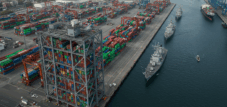
The port area was created through extensive sand replenishment and covers a total area of 360 hectares. The container terminal itself extends over 130 hectares with a quay wall 1,725 meters long. The port was officially opened on September 21, 2012, after almost 20 years of planning and construction, and was originally intended to reach full capacity within five years.
How was the million record achieved?
The historic moment occurred on September 18, 2025, when the millionth standard container of the year was handled at the EUROGATE Container Terminal Wilhelmshaven. This achievement marks a significant turning point in the port's history, as it had never reached this milestone in its previous 13 years of operation. The milestone container originated in China and contained machinery parts for the international agricultural industry.
The comparison to previous years is particularly significant: In all of 2024, 843,000 standard containers were handled, while by September 2025 the one million mark had already been exceeded. This development shows growth of more than 18 percent compared to the previous year and thus significantly surpasses the original expectations of the port operators.
What role does the Gemini Cooperation play?
The decisive factor for this exceptional growth is the Gemini Cooperation, a strategic alliance between the two container shipping companies Hapag-Lloyd and Maersk, which commenced operations in February 2025. This cooperation follows a hub-and-spoke system, with JadeWeserPort serving as one of the main transshipment points. The network comprises 57 services with a total capacity of 3.7 million TEU across approximately 340 vessels.
The alliance promises a schedule reliability of over 90 percent, which is significantly higher than the industry average of around 50 percent. Gemini Cooperation achieved this reliability rate in its first few months of operation, setting new standards in container logistics. For customers, this translates into more predictable supply chains and shorter transit times.
How does the hub-and-spoke system work at JadeWeserPort?
Gemini Cooperation's hub-and-spoke system uses Wilhelmshaven as a central hub for various shipping regions. The port is served by two major liner services: the NE1 service between Europe and Asia, and the AL1 service between Northern Europe and North America. These main lines are complemented by a network of 28 shuttle services connecting smaller ports.
A key feature is that Wilhelmshaven is the first European port of call on the direct route between Europe and Asia. This position offers logistical advantages for customers who want to quickly transport their goods to the European hinterland. The system also allows for the use of larger vessels on the main routes, resulting in both economic and environmental benefits.
What does this development mean for competition in the German port sector?
The success of JadeWeserPort is part of a complex competitive landscape among Germany's North Sea ports. Hamburg remains the largest German seaport with approximately 97 million tons of cargo handled, followed by Bremerhaven with 42.5 million tons. Wilhelmshaven ranks third with 34.5 million tons, although container handling represents only a portion of its total cargo volume.
The German port landscape is part of the so-called Northern Range, which also includes the major Dutch and Belgian ports of Rotterdam and Antwerp. These ports compete for the same cargo flows, particularly in the lucrative Asia-Europe trade. JadeWeserPort has struggled to establish itself in this competitive landscape, but the Gemini Cooperation now appears poised to bring about the anticipated breakthrough.
What technical features make JadeWeserPort attractive?
The technical infrastructure of JadeWeserPort is designed to meet the requirements of modern large container ships. Eight Post-Panamax container cranes, each weighing 1,750 tons and standing 83 meters tall, can move containers weighing up to 120 tons. Their booms are 69 meters long, enabling them to handle ships up to 430 meters in length with a capacity exceeding 18,000 TEU.
This infrastructure has been continuously modernized in recent years. Eurogate invested in raising the container cranes by 11 meters each to handle even larger ships. Additionally, work is underway on further automation solutions to increase the efficiency of terminal operations. These measures should even increase the theoretical capacity to up to 4.2 million TEU.
How is the hinterland connection developing?
A crucial success factor for any container port is the quality of its hinterland connections. JadeWeserPort has a direct connection to the A29 motorway, which leads directly onto the port premises without traffic lights. This connection enables smooth truck transport in all directions of the German and European road network.
Equally important is the rail connection via a 16-track marshalling yard with a direct link to the German Rail network. The adjacent 160-hectare freight center offers ideal location opportunities for logistics companies and allows for the option of rail sidings. This multimodal connection is crucial for the onward distribution of containers to the European hinterland.
Your container high-bay warehouse and container terminal experts

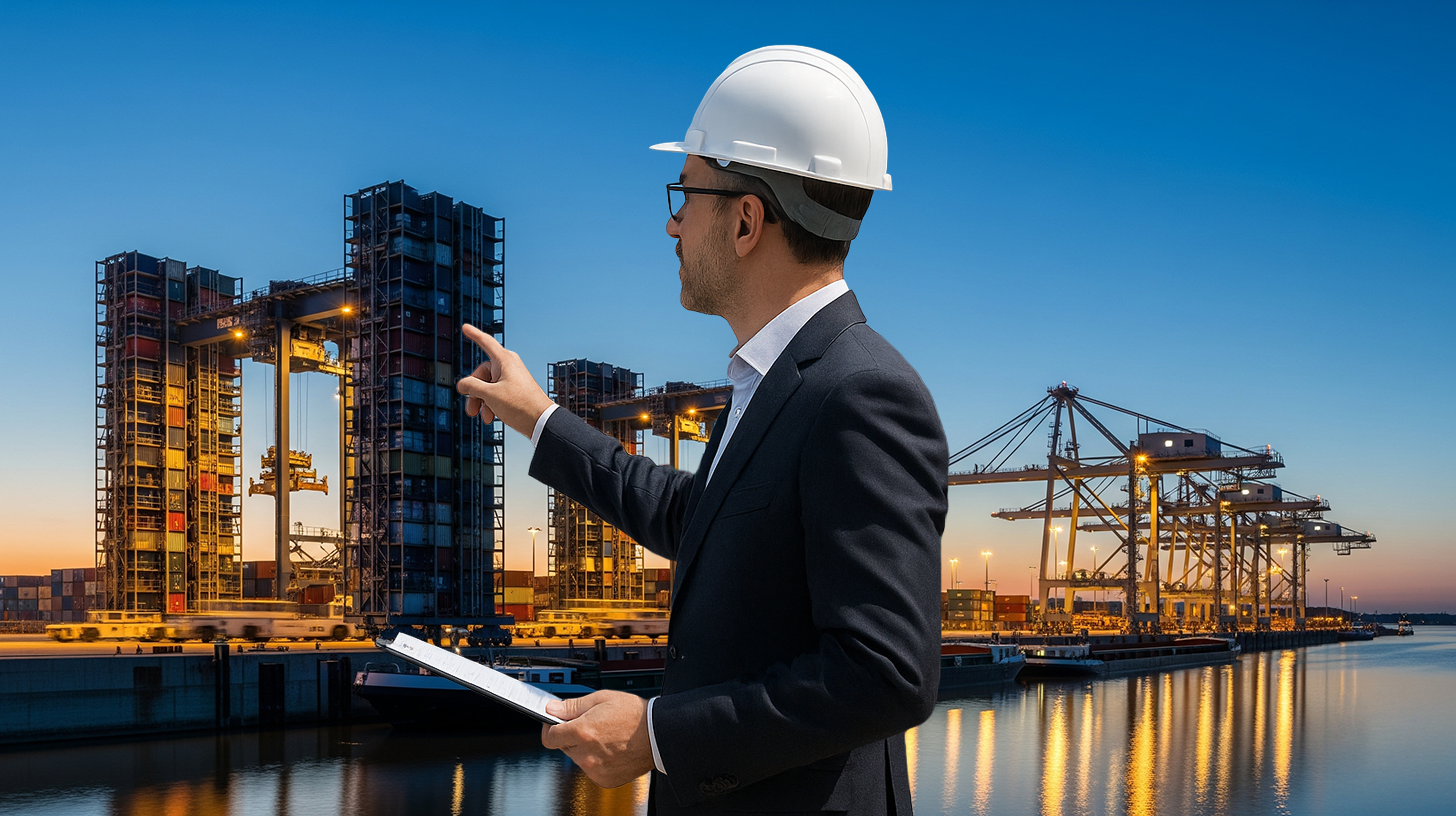
Container terminal systems for road, rail and sea transport in the dual-use logistics concept of heavy-lift logistics - Creative image: Xpert.Digital
In a world marked by geopolitical upheavals, fragile supply chains, and a new awareness of the vulnerability of critical infrastructure, the concept of national security is undergoing a fundamental reassessment. A state's ability to guarantee its economic prosperity, the provision of essential goods and services to its population, and its military capability increasingly depends on the resilience of its logistical networks. In this context, the concept of "dual-use" is evolving from a niche category of export control to a broader strategic doctrine. This shift is not merely a technical adjustment but a necessary response to the "paradigm shift" that demands a profound integration of civilian and military capabilities.
Related to this:
Direct to China in 25 days: Automation, LNG and expansion plans – this is how Wilhelmshaven wants to become a logistics hub
What role do international trade routes play?
JadeWeserPort benefits from its location on major international trade routes. Container traffic between Asia and Europe is one of the most important global trade routes, and the Gemini Cooperation has established the port as a central hub for this route. The NE1 service connects Wilhelmshaven with key Chinese ports such as Shanghai and Ningbo, as well as with other European ports.
Particularly noteworthy is a new direct connection to China, operated by the Chinese shipping company KAWA Shipping. This connection reduces the transit time between Ningbo and Wilhelmshaven to just 25 days, compared to the usual 30 to 40 days for connections with intermediate stops. Such direct connections strengthen JadeWeserPort's position as an efficient logistics hub.
How does this success affect the regional economy?
The growing success of JadeWeserPort has a positive impact on the entire region. Companies like Gebrüder Weiss use the port as a central transshipment point for their European logistics networks. From Wilhelmshaven, the Austrian logistics company organizes the onward transport of overseas goods by rail to Germany and Austria.
The direct connection to the Far East and the rapid processing make the location attractive for international companies. The high availability of goods, thanks to the improved schedule reliability of the Gemini Cooperation, further enhances the location's appeal. This creates jobs in the region and strengthens Wilhelmshaven as a logistics hub.
What challenges remain?
Despite reaching this milestone, JadeWeserPort is still far from operating at full capacity. Its theoretical capacity is 2.7 million TEU per year, meaning that even with one million containers handled, only about 37 percent of the available capacity is being utilized. This underutilization continues to pose an economic challenge for the operators.
Competition from established ports like Hamburg and Rotterdam remains strong. Hamburg recorded a 6.3 percent increase in container throughput in the first quarter of 2025, reaching 2.0 million TEU. The Dutch and Belgian ports are also continuously investing in their infrastructure and expanding their capacities. JadeWeserPort must therefore further strengthen its competitive advantages and attract new customers.
How are European container traffic developing?
The European container market is subject to constant change due to geopolitical developments and economic trends. Trade between Europe and Asia is growing steadily, with imports from China playing a particularly important role. At the same time, trade conflicts and geopolitical tensions are leading to shifts in trade flows.
One example of innovative solutions is the development of the Northern Sea Route through the Arctic, which is being tested by some shipping companies as an alternative connection between Asia and Europe. This route could reduce transit time from 30-50 days to just 18 days, but due to climatic conditions, it is only usable seasonally. Such developments demonstrate the dynamic nature of international container traffic.
What are the future prospects for JadeWeserPort?
Port operators are optimistic about future developments. Holger Banik of NPorts predicted at the beginning of the year that the port would handle between 1.3 and 1.5 million TEU by 2025. This forecast seems realistic, given that the one million TEU mark was already reached in September. Long-term discussions are even underway regarding an expansion of the port.
Further automation and potential infrastructure expansions could increase capacity to up to 4.2 million TEU. In addition to container handling, the port is also developing in other areas: car handling more than doubled to over 74,000 vehicles in 2024, and new terminals for liquefied natural gas are being built as part of the energy transition.
What does this record mean for the German logistics industry?
The success of JadeWeserPort sends a positive signal to the German logistics industry, which is under pressure from international competition. The port demonstrates that new locations can also be successful if they forge the right strategic partnerships and leverage their technological advantages. The collaboration with Gemini Cooperation underscores the importance for ports of integrating into global logistics networks.
Improved schedule reliability and direct connections to Asia strengthen Germany's position in international trade. For companies, this means more stable supply chains and more predictable logistics costs. This success could also motivate other German ports to rethink their strategies and seek new collaborations.
How does digitalization affect port operations?
Modern container terminals are increasingly relying on digital technologies to optimize their operations. JadeWeserPort is continuously investing in automation solutions designed to increase efficiency and reduce costs. These technologies include automated container cranes, intelligent transport systems, and digital planning tools.
Gemini Cooperation also utilizes modern IT systems to coordinate its global fleet and ensure high schedule reliability. Digitalization enables shipping companies and port operators to better coordinate their operations and provide customers with more transparent information about the status of their shipments. This contributes to the overall efficiency of the logistics system.
What ecological aspects play a role?
Sustainability is becoming increasingly important in container shipping. The Gemini Corporation promotes its hub-and-spoke system as a more environmentally friendly alternative to conventional routing strategies. By using larger ships on main routes and optimizing speeds, fuel consumption and emissions can be reduced.
JadeWeserPort's location contributes to emissions reduction, as the short 23-nautical-mile passage minimizes fuel consumption. Furthermore, the port is increasingly integrated into the energy transition, with plans for LNG terminals and other alternative energy sources. These developments position the port as a future-proof logistics hub.
A turning point for Germany's newest deep-water port
The record of one million containers handled marks a significant turning point in the history of JadeWeserPort. After 13 years of operation, the port has finally achieved the anticipated breakthrough through its strategic partnership with Gemini Cooperation. The combination of technological advantages, strategic location, and operational excellence demonstrates the potential of Germany's only deep-water port.
Although considerable capacity reserves still exist, current developments indicate that JadeWeserPort has established itself within the German and European port landscape. Successful integration into global logistics networks and continuous investment in modern technologies provide the foundation for further growth. For the German economy, this translates into additional, high-performance access to global markets and enhanced competitiveness in international trade.
Consulting - Planning - Implementation

Markus Becker
I would be happy to serve as your personal advisor.
Head of Business Development
Consulting - Planning - Implementation
Konrad Wolfenstein
I would be happy to serve as your personal advisor.
You can contact me at wolfenstein∂xpert.digital or
Just call me on +49 7348 4088 965 .
Our global industry and economic expertise in business development, sales and marketing
Our global industry and economic expertise in business development, sales and marketing - Image: Xpert.Digital
Industry focus areas: B2B, digitalization (from AI to XR), mechanical engineering, logistics, renewable energies and industry
More information here:
A thematic hub offering insights and expertise:
- Knowledge platform covering global and regional economies, innovation and industry-specific trends
- A collection of analyses, insights, and background information from our key areas of focus
- A place for expertise and information on current developments in business and technology
- A hub for companies seeking information on markets, digitalization, and industry innovations