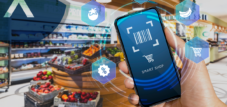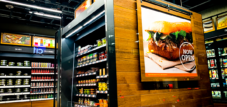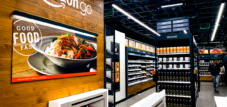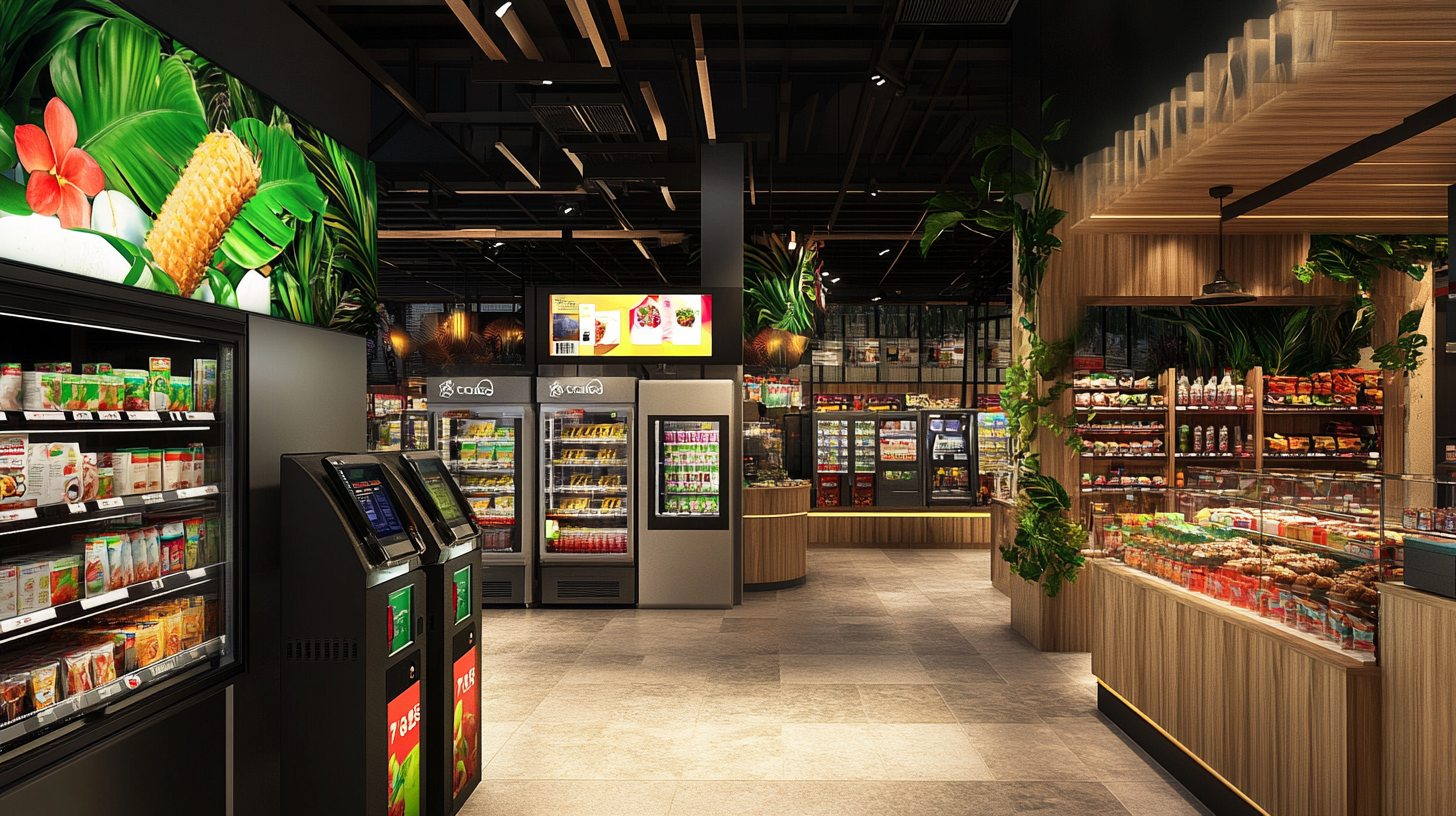
GS1 DataMatrix: Pioneering role of the 2D barcode in one-stop shops in Thailand – in use in 12,000 7-Eleven convenience stores – Image: Xpert.Digital
📦🔍 GS1 DataMatrix: The 2D barcode revolution in Thai convenience stores
🚀💡 Innovative technologies at 7-Eleven: Efficiency and safety in urban logistics
Rapid urbanization and the challenges of urban logistics are central to modern supply systems. Asian countries, especially Japan, are leading the way in this field. Companies like Daifuku have set global standards for highly automated warehousing and logistics systems. These technologies play a key role in urban supply logistics, particularly with regard to courier, express, and parcel services, as well as last-mile logistics.
A crucial aspect of this logistics is the so-called "last mile"—delivery from the distribution center to the end customer. This part of the supply chain is particularly complex and costly due to its high organizational effort. To overcome these challenges, companies are developing innovative approaches such as micro-hubs, local and decentralized logistics centers, and autonomous retail concepts.
🏪🛒 The importance of convenience stores in urban logistics
At the heart of these developments are convenience stores, also known as "konbinis." These small retail outlets are a combination of neighborhood stores and mini-markets. There are approximately 50,000 such konbinis in Japan, including well-known brands like FamilyMart, Lawson, NewDays, and Ministop. The market leader, 7-Eleven, employs more than 50,000 people in Japan alone and generates a revenue of 35 billion euros.
Related to this:
- Local decentralized hubs – logistics centers
- Smart Shopping Business Models: 30 innovative ideas and variations that have emerged in recent years around the new way of shopping
7-Eleven also has a strong market presence in Thailand. With over 12,000 stores, the company is a key player in supplying the urban population. One of the biggest challenges is managing expiration dates on ready meals and grab-and-go items. Manually checking these dates is time-consuming, error-prone, and inefficient. This is precisely where a groundbreaking innovation comes in: the GS1 DataMatrix code.
📊📦 The use of GS1 DataMatrix at 7-Eleven in Thailand
Since the beginning of 2023, approximately 100 ready-made products in Thai 7-Eleven stores have been labeled with a GS1 DataMatrix barcode on their packaging. This two-dimensional barcode contains information such as the best-before date and other product details. Cashiers are equipped with scanners that read this data and control the sales process.
Related to this:
🔄⚡ Automated Quality Assurance
When a product with an expired best-before date is scanned, a warning message appears on the cash register display. This instructs the cashier to remove the product from the shelves and offer the customer a new one. This process is not only more efficient but also significantly reduces human error.
Chakrit Hengsirikul, Head of Research and Knowledge Unit at 7-Eleven Thailand, explains: “Our quality assurance processes have become both stronger and simpler. We save time, simplify operations in stores, make our inventory management processes more efficient, and, most importantly, no products reach our consumers' kitchens after their best-before date.”
Related to this:
😊🔒 Improved customer satisfaction and increased security
The impact of this technology is remarkable. Complaints about expired products dropped to zero, and customers reported feeling more confident when buying ready meals and other food items. This increased confidence has significantly boosted customer satisfaction and established 7-Eleven as a leader in food safety.
📈🔍 Expansion to other product categories
Given its success, 7-Eleven plans to expand the use of GS1 DataMatrix to other product categories and suppliers. The technology is expected to play an even more central role in the future, particularly for private-label products such as baked goods. The goal is to make the entire supply chain more efficient and sustainable.
⚙️💰 Increased efficiency and cost reduction
In addition to improving food safety, the GS1 DataMatrix also offers significant economic advantages. Automated monitoring of expiration dates allows for faster logistics processes and optimized warehousing. Products nearing their expiration date can be targeted with advertising or discounts, leading to a reduction in food waste. These efficiency gains are particularly important in fresh and refrigerated logistics, where skilled labor shortages and cost pressures pose a major challenge.
🌱♻️ Sustainability and environmental protection
Reducing food waste not only contributes to cost savings but also has a positive impact on the environment. Every product that isn't wasted saves resources such as water, energy, and transportation costs. This is an important step towards greater sustainability in the food industry.
📦🤖 Technological advances in logistics
The GS1 DataMatrix barcode is an example of how digital technologies are revolutionizing logistics. These barcodes can store far more information than traditional EAN codes and offer a wide range of applications – from supply chain tracking to automated inventory monitoring. Integrating such technologies enables companies to react more quickly to market changes and secure their competitiveness.
💡🌍 A model for the future
The use of GS1 DataMatrix at 7-Eleven in Thailand demonstrates how technology can increase efficiency and safety in the food industry. The positive effects range from increased customer satisfaction to more sustainable resource use. This model could be applied in other countries and industries in the future, thus contributing to the further development of global logistics.
With innovations like these, 7-Eleven proves once again that it is not only a retail giant but also a pioneer in the application of modern technologies. The introduction of the GS1 DataMatrix is a milestone that paves the way for further advancements in urban logistics. This success story could serve as a blueprint for other companies that want to make their processes more efficient and sustainable.
Related to this:
📣 Similar topics
- 📦 The future of urban logistics: How 7-Eleven is increasing efficiency
- 🛒 GS1 DataMatrix: The intelligent solution for 7-Eleven Thailand
- 🤖 Automation at 7-Eleven: Quality through technology
- 🌱 Sustainability through innovation: Minimizing food waste
- 🚀 Technology revolution in retail: 7-Eleven leads the way
- 🕒 Last-mile efficiency: Micro-hubs and DataMatrix technology
- 📊 GS1 DataMatrix: An advantage for customers and companies
- 💡 How digital logistics solutions optimize supply
- 🔒 Safety and trust: New standards in food retailing
- 🌍 Sustainable logistics through reduced food waste
#️⃣ Hashtags: #Technology #FoodSafety #SmartLogistics #Sustainability #GS1DataMatrix

Expert partner in warehouse planning and construction

🚚📦 Urbanization and Logistics: How modern technologies like GS1's 2D matrix code are transforming retail
🏙️ Growing urbanization – a challenge for urban logistics
Increasing urbanization, the growth of cities, and changing consumer behavior present modern logistics with ever-new challenges. Particularly in densely populated areas where space is scarce, traffic is heavy, and customer demands are high, innovative concepts in urban and supply logistics have been gaining traction for many years. In this context, Asian markets, especially Japan, developed solutions early on to establish the most efficient, flexible, and scalable supply chains possible. Japanese companies have long been considered leaders in intralogistics: highly automated warehouse systems, sophisticated pallet storage structures, and advanced cold chain logistics are key elements, as is the well-designed infrastructure for so-called "last-mile logistics.".
Related to this:
🏪 Convenience shops and their contribution to the urban logistics chain
In this complex landscape of urban supply, convenience stores, known as "konbinis" in Japan, play a crucial role. These small neighborhood stores, which exist in similar forms in many countries—known as "Tante-Emma" stores in Germany and Switzerland, and "Greißler" in Austria—serve as microcosms of a comprehensive urban logistics solution. With a broad yet compact product range and extended opening hours, they represent a kind of one-stop shop for quick needs. Japan boasts approximately 50,000 of these konbinis, including well-known brands such as FamilyMart, Lawson, New Days, Ministop, and, most notably, the giant 7-Eleven. This company, with a turnover of several tens of billions of euros and tens of thousands of employees, is among the world's leading retailers in integrating new technologies to ensure quality, freshness, and efficiency throughout the entire supply chain.
Related to this:
🛡️ Quality control as the key to customer satisfaction
Urban supply logistics revolves not only around product availability but also quality assurance. The handling of ready meals and "grab-and-go" items, which are very popular with customers due to their speed and convenience, is particularly critical in this regard. However, the more extensive the product range and the shorter the shelf life, the more pressing the need becomes to precisely monitor expiration dates. Even a single expired product on a shelf can not only pose health and safety risks to consumers but also damage trust in the brand and the store itself. This challenge is all the greater when one considers that manually checking expiration dates in thousands of stores requires an enormous amount of personnel and organizational effort.
To address precisely this problem, 7-Eleven in Thailand launched a pioneering project several years ago in collaboration with GS1 Thailand: the introduction of the GS1 DataMatrix code as a standardized 2D barcode (2D matrix code) on selected products. Currently, around one hundred ready-made products, offered in over 12,000 Thai 7-Eleven stores, feature this small but information-rich code on their packaging. The GS1 DataMatrix serves as the central data element, uniquely encoding not only the product identification but also the best-before date.
🛒 Automation in retail stores – step by step to success
This significantly simplifies the process in the store: When a product is scanned at the checkout, the POS system automatically checks whether the stored best-before date has been reached or exceeded. If so, the cashier immediately receives a message on the screen stating that this product cannot be sold. The instruction to the staff is then essentially: "Please replace the expired product immediately with a fresh one and remove the expired product from the shelf." In this way, the risk of expired goods reaching the customer is drastically reduced. Customer complaints in this regard have practically disappeared. The relationship of trust between the buyer and the retailer is strengthened, as the customer can now be sure that they will always receive flawless, fresh products.
🌿 Sustainability and efficiency – a win for everyone involved
Increased efficiency also has a long-term impact on the company's cost situation. Less time spent on manual checks means fewer personnel resources are needed for this task, or more time for value-adding activities. Furthermore, less product goes unnoticed, which in turn reduces waste and minimizes losses. This has a particularly positive effect on the company's sustainability and environmental footprint, especially for perishable products involved in refrigerated and fresh food logistics processes. Less waste means less resource waste, less transport of unusable goods, less energy consumption, and ultimately, a contribution to environmental protection.
💡 Future outlook – From Thailand to the whole world?
In the future, 7-Eleven Thailand plans to significantly expand the application of the GS1 DataMatrix barcode. Additional product categories and types will also be marked with these codes. Private-label baked goods are a particular focus, in order to further broaden the benefits of automated best-before date verification. This step underscores the strategic decision to establish the use of intelligent identification and control systems as standard practice in the retail environment.
🤖 Digitalization meets traditional retail concepts
Looking at the bigger picture, it becomes clear that these measures are part of a comprehensive transformation in the retail sector. Global megatrends such as urbanization, connectivity, and digitalization mean that retailers must find new ways to serve their customers efficiently, safely, and reliably. In many countries, micro-hubs, local fulfillment centers, smart shopping models, and autonomous retail systems are already considered future visions for urban logistics. The introduction of advanced barcodes is just one piece of a larger puzzle in which technology and retail are converging.
📊 Data as a strategic advantage – opportunities and possibilities
Another positive effect is the improvement in data quality and availability. Since the GS1 DataMatrix can store significantly more information than a conventional one-dimensional barcode, it opens up extensive possibilities for analysis and process optimization. Companies can use the collected data to draw conclusions about consumption patterns, demand fluctuations, seasonal characteristics, and much more. These insights enable more precise inventory management, leaner supply chains, refined just-in-time concepts, and ultimately, better planning of the entire value chain.
🚀 7-Eleven as a pioneer in urban logistics
It's obvious that this approach will become more widespread in the future. Standardization via GS1 enables the global expansion of this principle; the technical barrier is relatively low, and the added value for retailers and customers is clear. What is already working successfully in over 12,000 Thai 7-Eleven stores could also establish itself in other regions in the medium term. By taking a pioneering role, retail chains build trust, attract new customers, strengthen customer loyalty, and simultaneously demonstrate that they act not only economically but also in a socially responsible manner.
📣 Similar topics
- 📌 Digitalization as an innovation driver in urban logistics
- 🚛 GS1 DataMatrix: The silent hero of modern supply chains
- 🏪 Konbinis and convenience stores: The future of urban local supply?
- 🧊 High automation meets cold chain logistics: Lessons from Japan
- 🍱 Fresh, convenient & safe: A revolution in food logistics
- 💡 How 2D barcodes are transforming urban logistics
- ♻️ Sustainability through technology: Waste reduction in retail
- 💻 Smart POS systems: Freshness guarantee at the touch of a button
- 🌐 Global standards in logistics: What the GS1 DataMatrix code can do
- 🤝 Digitalization and consumer confidence: A new retail strategy
#️⃣ Hashtags: #LogisticsRevolution #DigitalCommerce #SupplyChainOptimization #Sustainability #ConvenienceStores

Xpert.Plus Warehouse Optimization - High-bay warehouses and pallet warehouses: Consulting and planning
We are here for you - Consulting - Planning - Implementation - Project Management
☑️ SME support in strategy, consulting, planning and implementation
☑️ Creation or realignment of the digital strategy and digitization
☑️ Expansion and optimization of international sales processes
☑️ Global & Digital B2B trading platforms
☑️ Pioneer Business Development

Konrad Wolfenstein
I would be happy to serve as your personal advisor.
You can contact me by filling out the contact form below or simply call me on +49 7348 4088 965 .
I'm looking forward to our joint project.
Write to me



Xpert.Digital - Konrad Wolfenstein
Xpert.Digital is a hub for industry focusing on digitalization, mechanical engineering, logistics/intralogistics and photovoltaics.
With our 360° Business Development solution, we support renowned companies from new business to after-sales.
Market intelligence, smarketing, marketing automation, content development, PR, mail campaigns, personalized social media and lead nurturing are part of our digital tools.
You can find more information at: www.xpert.digital - www.xpert.solar - www.xpert.plus
Keep in touch