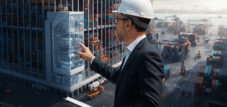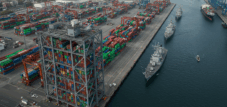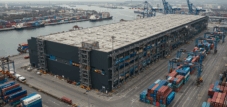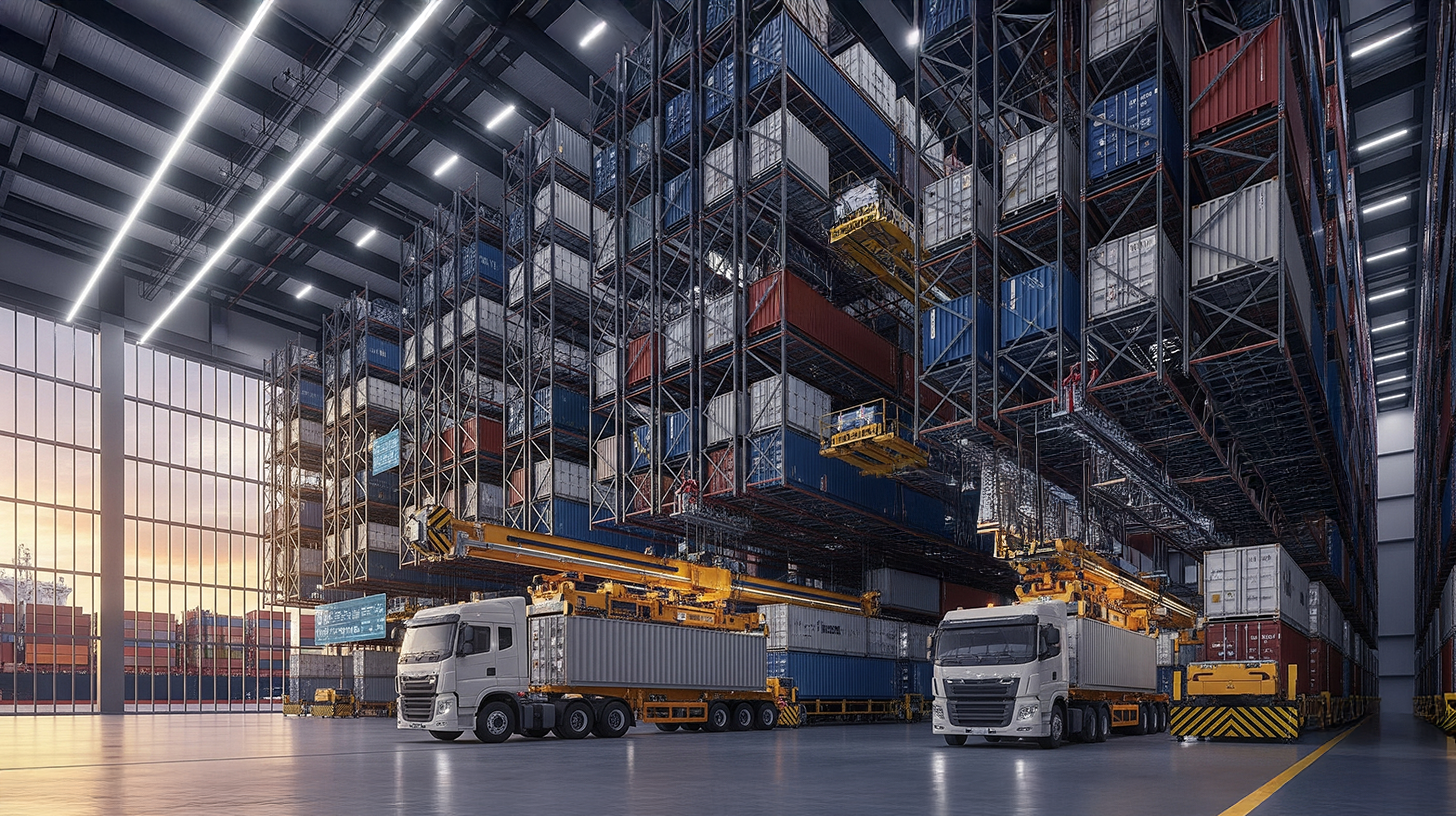
Container Tetris is a thing of the past: high-bay container warehouses and heavy-lift logistics are revolutionizing global port logistics – Creative image: Xpert.Digital
No more space in the port? A German invention is turning the container world upside down
### Three times the capacity: How the fully automated wonder warehouse of the future works ### Container Tetris is a thing of the past: How giant racks will change our ports forever ### The port revolution: This technology ends the global supply chain chaos ### No more restacking: The end of the biggest time waster in our ports is here ### Fully automated and gigantic: How robots are healing the Achilles heel of the global economy ###
Traffic jams at the ports? A brilliant invention from Germany could soon put an end to that
Global container logistics faces enormous challenges that require innovative solutions. High-bay container warehouses and automated heavy-lift logistics are emerging as key technologies with the potential to fundamentally solve global logistics problems and revolutionize the efficiency of ports worldwide.
Related to this:

The global supply chain crisis
The modern global economy is characterized by complex, interconnected supply chains that have been optimized for maximum cost efficiency over decades. However, this optimization comes at a price: supply chains have become more vulnerable to disruption, as recent years have dramatically demonstrated. Approximately 80 percent of international trade is conducted via maritime commerce, making ports critical hubs of the global economy.
The container crisis and port congestion have become a chronic problem. Dozens of cargo ships regularly queue up in front of major ports in Europe, the USA, and China, leading to delivery delays and skyrocketing transport costs. Freight prices have increased tenfold in some cases, while delivery times can often no longer be reliably guaranteed.
The causes of these problems are manifold: port closures due to pandemics, labor shortages, insufficient facility capacity, and inefficient handling processes. A particularly serious problem is container handling in conventional terminals, where between 30 and 60 percent of all container movements consist of unproductive restacking.
Container high-bay warehouses as a revolutionary technology
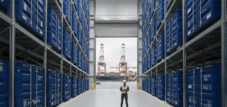
Container high-bay storage systems represent a paradigm shift in port logistics. Instead of stacking containers horizontally on top of each other as was previously common practice, they are stored vertically in multi-story steel racking structures up to eleven levels high. This technology enables a threefold increase in storage capacity on the same footprint compared to conventional solutions.
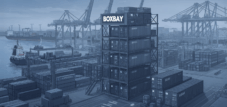
BOXBAY, a joint venture between global port operator DP World and the German SMS Group, is the first company worldwide to successfully transfer high-bay warehouse technology for heavy loads to container terminals. The technology, originally developed for the steel industry to handle steel coils weighing up to 50 tons, has been specifically adapted for container terminals.
The first large-scale high-bay warehouse system was successfully tested at Jebel Ali Terminal 4 in Dubai, with over 63,000 container movements. The tests lived up to expectations and showed that the system operates even more efficiently and energy-savingly than initially anticipated.
The advantages of container high-bay warehouses are impressive: Each container has its own individual storage space and is directly accessible at any time without having to move other containers. This completely eliminates the complex and time-consuming process of restacking. Performance is independent of capacity utilization and therefore predictable. One hundred percent utilization is possible, whereas conventional terminals achieve a maximum of 70 to 80 percent.
Automated heavy-load logistics as a complement
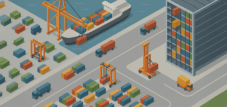
Alongside high-bay container warehouses, automated heavy-lift logistics is developing rapidly. Driverless transport systems and autonomous mobile robots, especially for heavy loads, are becoming increasingly important. These systems make it possible to transport containers and other heavy goods fully automatically, without human intervention.
Automation in the heavy-duty sector is particularly demanding, as it requires precise detection of center of gravity and flexible handling of varying load dimensions. Modern sensors, intelligent control systems, and modular vehicle platforms create comprehensive solutions that can be seamlessly integrated into existing processes.
The market for mobile robots in intralogistics is growing steadily. Almost 113,000 robots for transport and logistics tasks were sold in 2023, an increase of 24 percent compared to the previous year. Nearly 80,300 units were mobile robots used for transporting materials, for example, in loading and unloading containers.
Technological integration and digitization
The combination of high-bay container warehouses and automated heavy-lift logistics is made possible by comprehensive digitalization and intelligent networking. State-of-the-art port technologies utilize Internet of Things applications, artificial intelligence, big data, and 5G campus networks to optimize all processes.
German ports like Hamburg are leading the way in digitalization. The Hamburg Port Authority's smartPORT concept combines economic and ecological aspects through intelligent solutions for traffic and goods flows. An intermodal PortTraffic Center connects shipping, rail, and road traffic, enabling optimal data collection and rapid information exchange.
Next-generation terminal operating systems fully automate all processes from delivery and storage to shipment. These systems can react to changing conditions in real time, optimizing both efficiency and sustainability.
LTW Intralogistics Solutions
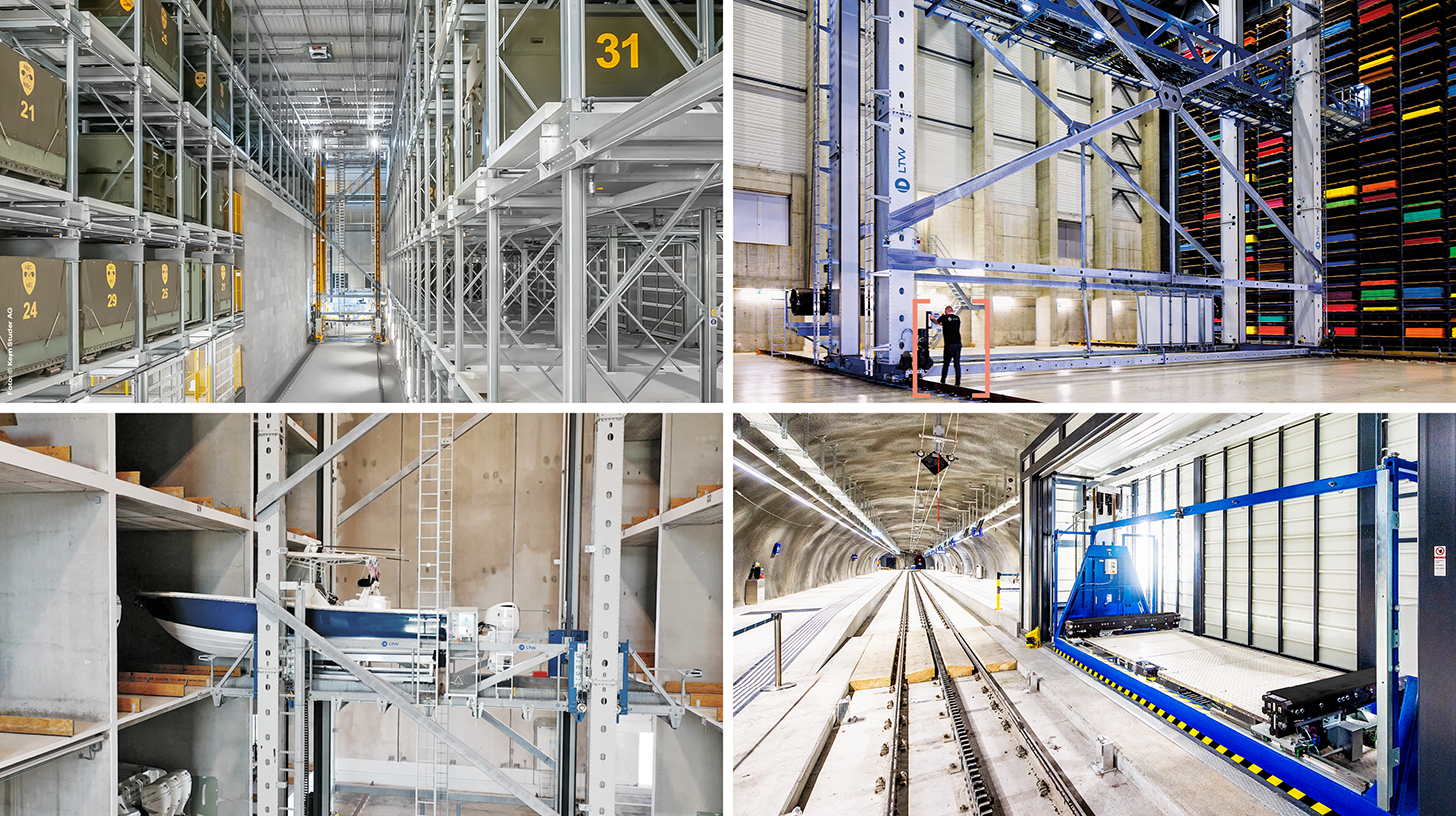
LTW Intralogistics – Engineers of Flow - Image: LTW Intralogistics GmbH
LTW offers its customers not individual components, but integrated complete solutions. Consulting, planning, mechanical and electrotechnical components, control and automation technology, as well as software and service – everything is networked and precisely coordinated.
In-house production of key components is particularly advantageous. This allows for optimal control of quality, supply chains, and interfaces.
LTW stands for reliability, transparency, and collaborative partnership. Loyalty and honesty are firmly anchored in the company's philosophy – a handshake still means something here.
Related to this:
Container Revolution: How high-bay container warehouses are reinventing port logistics
Impact on global logistics
The implementation of high-bay container warehouses and automated heavy-lift logistics has far-reaching implications for global logistics. Ports can drastically increase their capacity without developing additional land. This is particularly valuable because most major seaports have grown organically over time and are adjacent to port cities, which imposes natural limits on expansion.
The turnaround times of container ships are significantly reduced, which accelerates the entire supply chain. By eliminating unproductive container movements, terminals can triple their throughput rates. This leads to lower costs for shipping companies and ultimately for consumers.
Environmental benefits are another important aspect. The fully electrified and automated systems can be powered entirely by solar energy. Reduced manual intervention and optimized logistics processes significantly lower energy consumption and emissions.
Related to this:

Challenges and solutions
Implementing these new technologies also presents challenges. High initial investments, complex planning processes, and the need to retrain employees are significant hurdles. Nevertheless, successful pilot projects like those in Dubai and Busan demonstrate that these challenges can be overcome.
The modularity of the new systems is a crucial advantage. Container high-bay warehouses can be expanded incrementally while port operations continue. This allows even smaller ports to benefit from the technology without having to make massive initial investments.
Integration of existing systems is also possible. BOXBAY high-bay warehouses can be retrofitted into existing terminals without requiring a complete overhaul of operations. This makes the technology attractive even for established ports.
Future prospects and expansion
The future of port logistics will be significantly shaped by high-bay container warehouses and automated heavy-lift logistics. Following successful trials in Dubai, DP World plans to expand its BOXBAY technology to other locations worldwide. The first commercial system is already under construction in the port of Busan, South Korea.
Other European and American ports are showing great interest in the technology. German port operators and technology providers are well-positioned to benefit from this trend. Expertise in automation technology and plant engineering makes Germany a key player in this growing market.
The technology is continuously being developed. Artificial intelligence and machine learning enable the systems to optimize themselves independently and react to changing conditions. Predictive analytics can forecast maintenance needs and prevent failures.
Economic impact
The economic impact of high-bay container warehouses and automated heavy-lift logistics is significant. Ports can increase their competitiveness and achieve higher throughput at lower costs. This makes them more attractive to shipping companies and shippers.
Regional economic centers benefit from more efficient ports through improved access to global markets. Shorter transport times and lower costs strengthen the competitiveness of local industries. Germany, as an export nation, stands to particularly benefit from these improvements.
The technology providers themselves are opening up new business areas. German companies like the SMS Group can successfully transfer their know-how from other sectors to port logistics and conquer new international markets.
Jobs and qualifications
Automation is fundamentally changing the job landscape in port logistics. While simple manual tasks are disappearing, new, more skilled jobs are emerging in system monitoring, maintenance, and control. Further training and retraining of employees are therefore crucial.
Human-machine collaboration is becoming the norm. Humans are taking on higher-value tasks, while robots are handling repetitive and dangerous work. This leads to better working conditions and increased workplace safety.
Sustainability and environmental protection
Container high-bay warehouses and automated heavy-lift logistics contribute significantly to the sustainability of port logistics. Increased efficiency reduces resource consumption and emissions. Full electrification of the systems enables operation using renewable energy.
Concentrated storage reduces land requirements and conserves natural resources. Fewer port expansions mean less impact on marine ecosystems. Optimizing transport routes reduces noise and air pollution in port cities.
International competitiveness
The introduction of high-bay container warehouses and automated heavy-lift logistics is crucial for the international competitiveness of ports. Asian ports, which have already invested heavily in these technologies, are putting pressure on European and American ports.
European ports must assert themselves through innovation and increased efficiency. The combination of advanced technology, sustainable solutions, and optimized processes can provide the decisive competitive advantage.
The future of logistics: Germany's path to smart container automation
Container high-bay warehouses and automated heavy-lift logistics represent a revolutionary solution to the challenges of global container logistics. These technologies can triple port capacity, drastically increase efficiency, and simultaneously improve sustainability. Successful pilot projects demonstrate the technology's practicality and its potential to transform the entire port logistics system.
Implementation requires significant investment and organizational changes, but the long-term benefits far outweigh the costs. Ports that invest in these technologies early on will secure crucial competitive advantages and contribute to solving global logistics challenges. Germany, with its strong automation and plant engineering industries, is well-positioned to play a leading role in this transformation.
Your container high-bay warehouse and container terminal experts
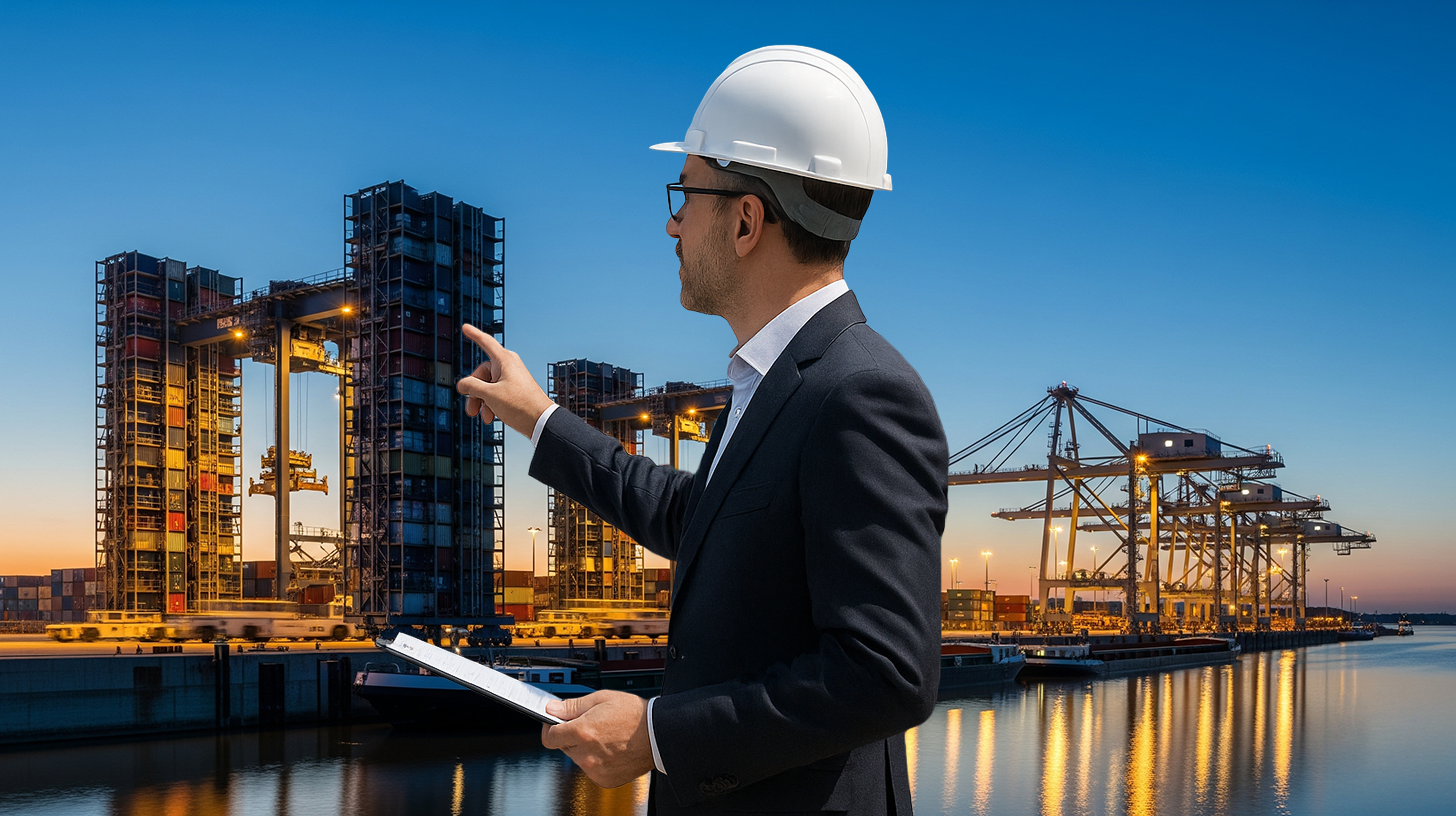
Container terminal systems for road, rail and sea transport in the dual-use logistics concept of heavy-lift logistics - Creative image: Xpert.Digital
In a world marked by geopolitical upheavals, fragile supply chains, and a new awareness of the vulnerability of critical infrastructure, the concept of national security is undergoing a fundamental reassessment. A state's ability to guarantee its economic prosperity, the provision of essential goods and services to its population, and its military capability increasingly depends on the resilience of its logistical networks. In this context, the concept of "dual-use" is evolving from a niche category of export control to a broader strategic doctrine. This shift is not merely a technical adjustment but a necessary response to the "paradigm shift" that demands a profound integration of civilian and military capabilities.
Related to this:
Consulting - Planning - Implementation

Markus Becker
I would be happy to serve as your personal advisor.
Head of Business Development
Consulting - Planning - Implementation
Konrad Wolfenstein
I would be happy to serve as your personal advisor.
You can contact me at wolfenstein∂xpert.digital or
Just call me on +49 7348 4088 965 .