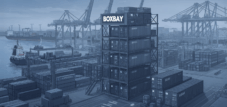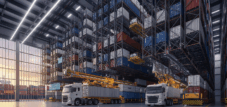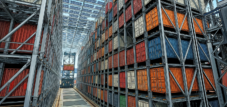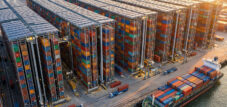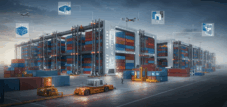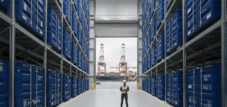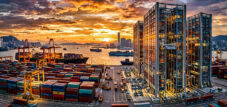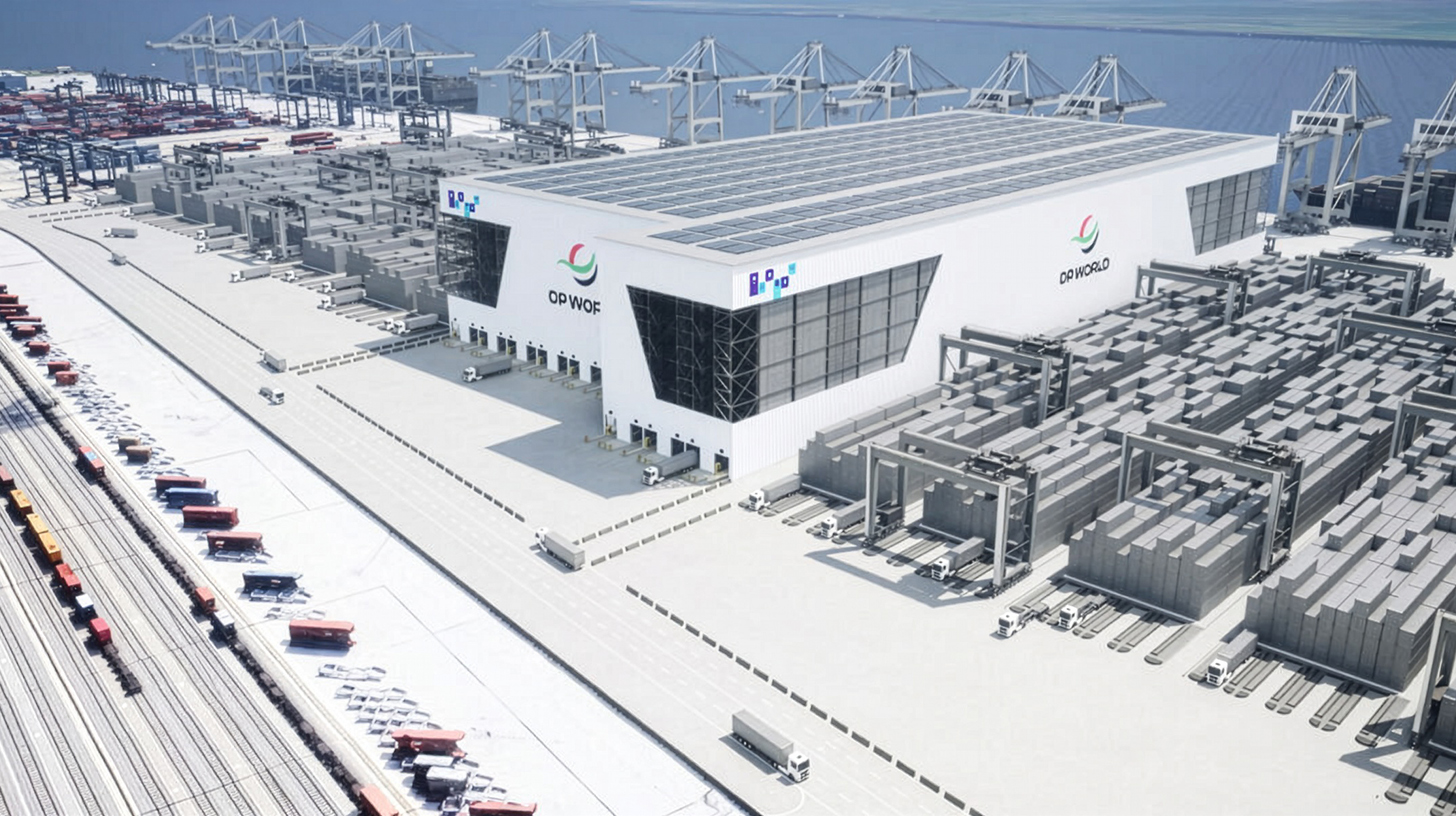
Container logistics at London Gateway Port: Boxbay implements 55-meter container high-bay warehouse – Image: Boxbay
No more room at the quay? How this fully automated system is changing port operations forever
No more stacking chaos: Why London is now relying on a brilliant German idea for containers
When the port becomes a high-bay warehouse – why container logistics will never be the same again
The joint venture Boxbay, founded by SMS group and DP World, signed a contract on October 23, 2025, for the construction of a fully automated high-bay warehouse for containers at the London Gateway deep-sea port. The project, valued at approximately €91.7 million, not only marks a technological milestone but also reflects a fundamental shift in global container logistics – a shift that was long overdue given growing trade volumes, scarce port space, and increasing pressure for sustainability.
From concept to reality: The technology behind Boxbay
The principle behind Boxbay sounds astonishing in its simplicity: Instead of stacking containers directly on top of each other, as has been the global practice since the introduction of the standard shipping container in 1956, the system places each individual container in its own shelf compartment. The result is an automated high-bay warehouse whose functional logic is similar to an oversized vending machine for containers – with direct access to each individual box without having to move other containers.
The technology was not originally developed for ports. It originated at SMS group subsidiary AMOVA, which specialized in the automated handling of heavy metal coils – steel coils weighing up to 50 tons in racks up to 50 meters high. AMOVA was the first company worldwide to consistently adapt this industrially proven know-how to the requirements of the port industry. This technological lineage is not trivial: it explains why the system was designed from the outset for extreme loads and high-frequency continuous operation, and did not need to be tailored to port operations as a laboratory prototype.
The Boxbay system received the German Logistics Award from the German Logistics Association (BVL) in 2022, thus transforming it from a theoretical concept into a product recognized by the industry. The path to this recognition led through a pilot project at Terminal 4 in Jebel Ali, Port of Dubai: The first system, with 792 container storage spaces, was built in just 18 months and began trial operation in January 2021. After only six months of testing, all criteria for market readiness had been met – the measured performance of all components even exceeded expectations. By the end of June 2022, 150,000 container movements had been carried out under real-world operating conditions. Energy consumption, reliability, and maintenance requirements were precisely measured and confirmed.
The technical dimensions of the project at London Gateway
The new facility at London Gateway Port surpasses the pilot project in Dubai in several respects. While the Jebel Ali facility stacked containers up to eleven levels high, the London project achieves a stacking height of 16 TEU – five levels more, resulting in a significantly more efficient use of space. With a total capacity of 27,000 TEU for 20- and 40-foot containers, the facility is also the first of its kind to be fully enclosed and thus weatherproof.
The building itself reaches a height of approximately 55 meters, with a footprint of about 323 meters in length and 159 meters in width – a structure that, according to British sources, is among the most technically sophisticated industrial buildings of its kind in the United Kingdom. For optimal space utilization, the facility features ten aisles served by a total of 15 storage and retrieval machines (SRMs). Handling takes place at 40 transfer points: 20 on the land side for trucks and 20 on the water side for shuttle carriers.
The system's performance is impressive: On the waterside, the facility can handle more than 200 containers per hour. Based on the detailed performance figures of the Boxbay technology, each individual waterside transfer point achieves a performance of approximately 19.3 handling movements per hour – values measured under real operating conditions during the Jebel Ali pilot project and serving as the baseline for the London project. Conventional automated storage and handling (ASC) systems, originally designed for fully loaded containers, cannot structurally achieve comparable throughput rates for empty containers. The physical geometry of Boxbay – narrower modules, taller rack blocks – creates a denser concentration of active spreaders along the quayside, thus enabling three times the throughput compared to benchmark ASC systems.
London Gateway: A port on its way to market leadership
The Boxbay project is not an isolated undertaking, but rather part of a comprehensive strategic transformation of London Gateway Port. DP World is investing a total of €1.15 billion in the expansion of the port, which is set to become the UK's largest container port within the next five years. The expansion is already measurable: in 2025, London Gateway handled over three million TEU for the first time – an increase of more than 52 percent compared to the previous year, when 1.9 million TEU were handled. This growth is primarily driven by the commissioning of the fourth berth and additional calls as part of the Gemini Cooperation Asia-Europe services.
The rise is strategically significant: Market observers estimate that the previous British market leader, Hutchison's Felixstowe, has declined from four million TEU to approximately 3.6 million TEU, while London Gateway is rapidly catching up. DP World now claims to cover more than half of the entire British container market, including its Southampton location, which handled more than two million TEU in 2025. The total British market is estimated at over nine million TEU.
Alongside the Boxbay project, two additional, fully electric-powered berths are being built at London Gateway as part of a separate one-billion-pound investment program. Once all six berths are operational, the port will be able to accommodate the world's largest ultra-large container vessels (ULCVs). A second rail terminal for low-emission hinterland connections began operating in 2025. According to media reports, the retail giant Tesco is set to become one of the largest tenants on the site. London Gateway is thus transforming from a British regional port into a hub of European importance.
The billion-dollar problem with the empty container
The decision to build the Boxbay Empty Superstack system specifically for handling empty containers is extremely insightful from an economic perspective. Empty containers are a persistent global problem in trade logistics, the extent of which is often underestimated in public discourse. According to calculations by the Boston Consulting Group (BCG), repositioning empty containers costs the shipping industry between 15 and 20 billion US dollars annually – equivalent to up to 8 percent of a shipping company's operating costs.
The structural causes lie in the chronic imbalance of global trade flows. Around 40 percent of containers arriving in Europe from Asia return empty after unloading; on the return journey from North America to Asia, this figure rises to as high as 60 percent. According to BCG, empty containers account for approximately 29 percent of all container movements in Europe. It is estimated that up to 30 percent of commercial transport involves empty containers. These containers occupy valuable port space, block capacity, and incur significant operating costs due to inefficient restacking – without contributing any direct value to the supply chain.
Christoph Roth, CEO of Boxbay, put it aptly: Almost every port in the world handles empty containers, but only a few have efficient solutions for this specific problem. This is the real market promise behind the Empty Superstack concept: It addresses not the rare exception, but the everyday reality of virtually every terminal worldwide. Empty containers are lighter and therefore potentially stackable higher than fully loaded ones, which makes the efficiency gains from the high-bay racking principle even more pronounced in this application.
The economics of vertical integration: What the system really delivers
A comparison with conventional storage systems clearly demonstrates Boxbay's economic potential. A conventional RTG (Rubber-Tyred Gantry Crane) system requires approximately four hectares of terminal space for a storage capacity of 3,000 TEU – the Boxbay system achieves the same capacity with just one hectare. With land values in prime locations like London's docklands ranging from €2,000 to €3,000 per square meter, a land saving of three hectares translates into monetary savings of €60 to €90 million – a significant portion of the total investment. This means the infrastructure pays for itself not only through operational efficiency but also through the opportunity costs of the saved land.
In addition, there are direct savings in operating costs: The fully automated system requires no lighting during operation, generates minimal noise, and runs without direct personnel in the warehouse. Energy recovery systems allow for the recuperation of electricity when containers are lowered. According to Boxbay, an optional photovoltaic system on the roof even supplies more energy than the system consumes – making the system a net energy producer. Avoiding unproductive restacking reduces the number of cranes required, increases the productivity of the container cranes by up to 20 percent, and significantly lowers the overall equipment requirements at the terminal.
Ernst Schulze, head of DP World Ports and Terminals for Northern Europe, described the principle using the metaphor of a vending machine: Direct access to any container eliminates the time-consuming and labor-intensive restacking process, shortens turnaround times, and reduces emissions. For the port's end customers – the shipping companies and their clients – this translates into shorter ship layovers, more reliable departure times, and reduced costs for port fees and waiting times. The Boxbay system thus creates a classic network effect: The more efficiently the terminal operates, the more attractive it becomes for major shipping companies – which in turn generates volume and further increases the facility's profitability.
The global market for automated terminals is growing
The Boxbay project in London is not an isolated event, but rather an expression of a broader market trend. The market for automated container terminals was estimated at around US$12 to US$13.6 billion in 2025. Depending on the research institute, an increase to US$18 to US$20 billion is projected by 2032 or 2035, corresponding to a compound annual growth rate (CAGR) of 3.7 to 6.1 percent. Some studies encompassing the entire field of container terminal automation even anticipate a CAGR of up to 11.2 percent and a market volume of US$22.3 billion by 2033.
Growth pressures are coming from several directions simultaneously: global trade is expanding, ships are getting bigger and loading more containers at once, labor is becoming scarcer and more expensive, safety requirements are increasing, and the pressure to decarbonize and operate with low emissions is mounting. The status quo offers no satisfactory solution to any of these problems. The classic RTG or straddle carrier model, which has dominated port operations for decades, is reaching its structural limits.
The industry's reaction is clear: 90 percent of global freight traffic is handled by sea, and ports worldwide are reaching their capacity limits. Jebel Ali, Singapore, Rotterdam, Hamburg – everywhere the same pressure is arising from increasing ship sizes, limited land area, and rising throughput expectations. The Boxbay concept offers an architectural solution that focuses not on spatial expansion, but on vertical densification.
LTW Intralogistics Solutions

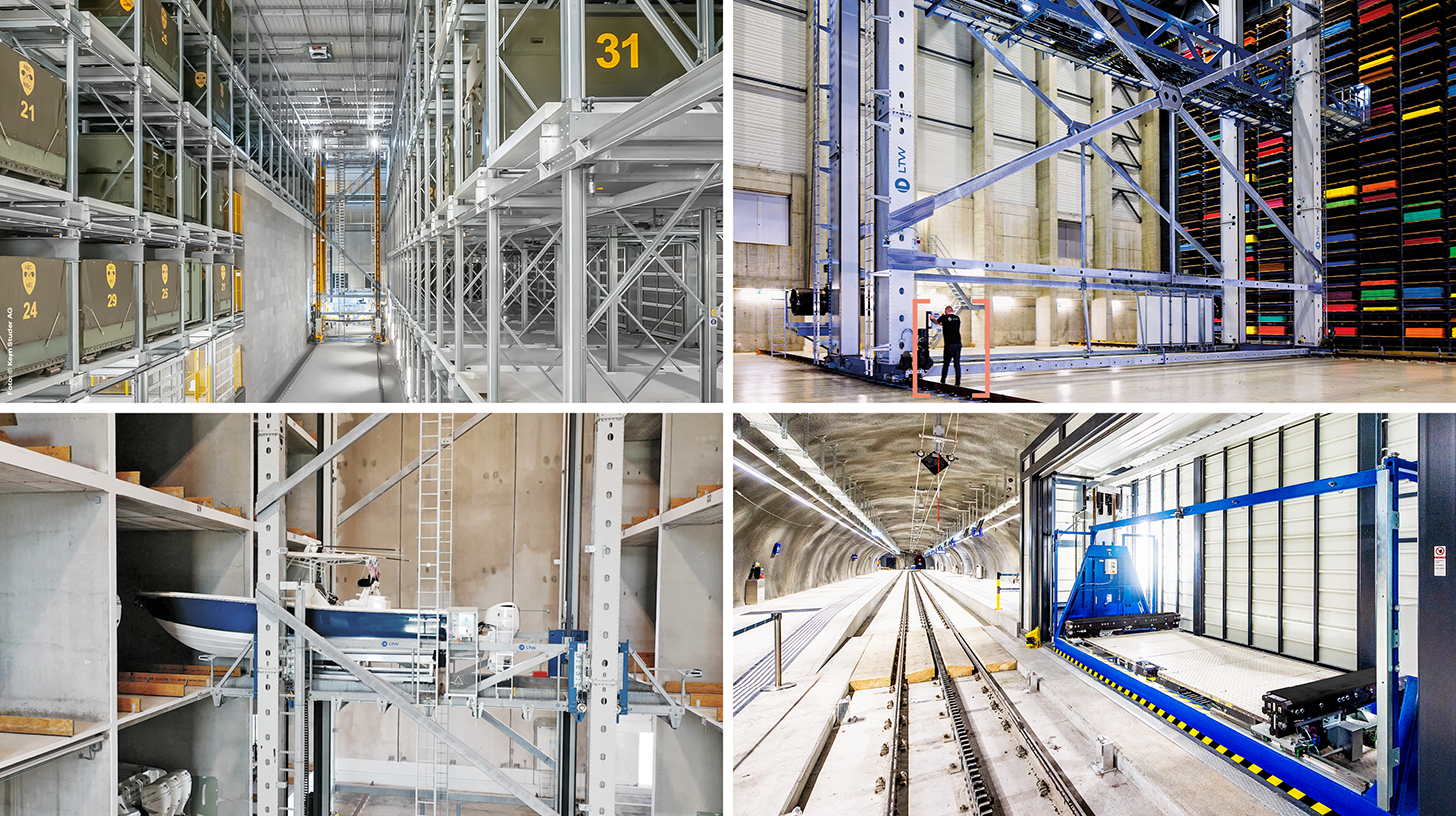
LTW Intralogistics – Engineers of Flow - Image: LTW Intralogistics GmbH
LTW offers its customers not individual components, but integrated complete solutions. Consulting, planning, mechanical and electrotechnical components, control and automation technology, as well as software and service – everything is networked and precisely coordinated.
In-house production of key components is particularly advantageous. This allows for optimal control of quality, supply chains, and interfaces.
LTW stands for reliability, transparency, and collaborative partnership. Loyalty and honesty are firmly anchored in the company's philosophy – a handshake still means something here.
Related to this:
From London to Shanghai: Pioneers, technology and the future of container verticalization
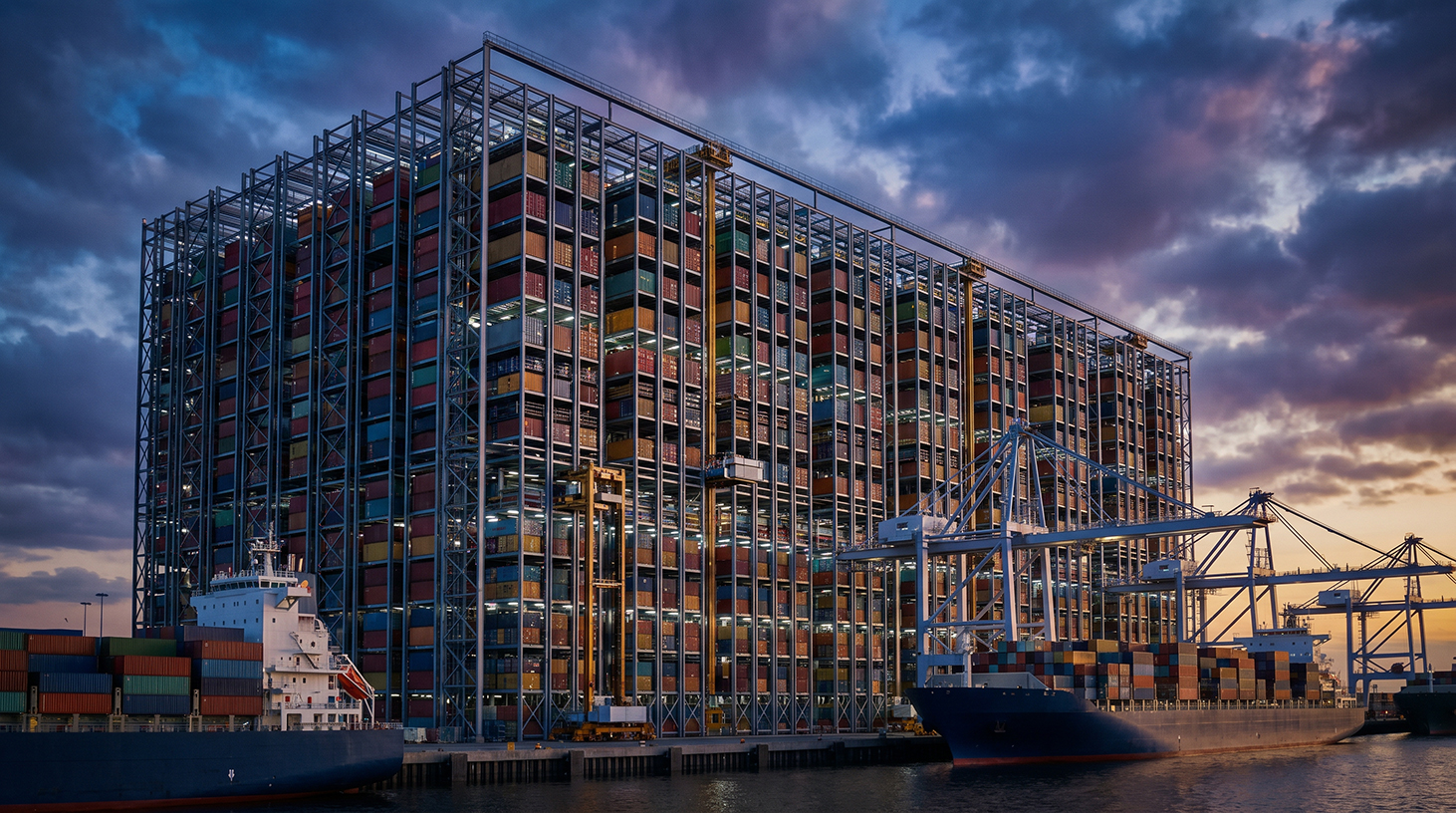
From London to Shanghai: Pioneers, technology and the future of container verticalization – Creative image: Xpert.Digital
Competition in a niche market: Few pioneers, big ambitions
The market for fully automated container high-bay warehouses is young, technically extremely demanding, and has so far been addressed by very few suppliers. With its London project, Boxbay is taking the position of the world's first company to operate an industrially proven and commercially implemented high-bay container storage system at an internationally significant deep-sea terminal. Competition is limited, but it is beginning to take shape.
The Austrian company LTW Intralogistics, based in Wolfurt, Vorarlberg, and part of the renowned Doppelmayr Group, has built a unique technological foundation in this field since 1981, guided by the principle of "Engineers of Flow." Over the course of more than four decades, LTW has designed, manufactured, and installed approximately 2,000 storage and retrieval machines in over 30 countries worldwide. LTW's manufacturing and design standards are based on the quality requirements of its parent company Doppelmayr's ropeway technology – an approach that ensures extremely tight manufacturing tolerances and maximum operational reliability, even in extreme environments.
LTW is among the very small group of companies worldwide that are actually capable of implementing fully automated high-bay warehouses for containers. LTW's first container high-bay warehouse was developed as a precision military project for the Swiss Federal Office for Defence Procurement, armasuisse: a 20-meter-high racking system with 206 storage locations, designed for containers, swap bodies, and interchangeable superstructures, with a specially developed 18-ton stacker crane. Particularly noteworthy is the solution implemented there for maintenance and service work directly on the stored container – a feature that is just as relevant for military logistics applications as it is for civilian terminals with intensive repair operations. Given the project's success, LTW has already announced a second container high-bay warehouse. Furthermore, LTW operates the system itself in its own high-bay warehouse at its Wolfurt site – a living reference that allows interested parties to see it directly under real operating conditions.
At the global level, the Chinese plant engineering company ZPMC has entered the market: In October 2025, it was announced that ZPMC's automated empty container stacking solution had been selected for the Yangshan project in Shanghai. The system can stack containers up to 18 levels high and is fully automated. However, ZPMC continues to rely on direct stacking without individual racking compartments, which prevents true direct access to each container and thus misses a key quality feature of the high-bay warehouse principle. At JNPA, the Jawaharlal Nehru Port in Navi Mumbai, a tender has been published for a mechanized empty container storage system based on ASRS (Automated Storage and Retrieval System) with an initial capacity of 1,400 TEU.
From the realm of traditional crane manufacturers, Konecranes has been active since 2022 through a partnership with the Finnish high-bay warehouse specialist Pesmel. The Konecranes concept integrates innovative shuttle spreaders and even envisions a direct connection to warehouses – a further development that could link conventional port and distribution logistics even more closely. However, no concrete customer implementations have been published to date. Vollert, another German engineering company with proven experience in automated intralogistics solutions for the metal, concrete, and manufacturing industries, has developed a conceptual container logistics system with stacker cranes that meets the criteria for genuine high-bay container warehouse operation. Here, too, public reference projects are still pending.
What characterizes this early competitive market is the high technical barrier to entry: fully loaded containers weigh up to 30 tons, must be handled reliably over long operating cycles, and the safety requirements in an active port leave no room for error. Only companies with in-depth expertise in heavy-duty high-bay logistics and long-established storage and retrieval machine technology are seriously viable here. This market reality explains why, despite the enormous economic potential, the number of competent suppliers worldwide can still be counted on one hand.
Safety, sustainability, and the end of analog port operations
Beyond its purely economic dimension, the Boxbay project in London also contributes to the transformation of working conditions in port operations. Conventional terminal operations are considered one of the most accident-prone working environments in logistics: heavy vehicles, high stacks, limited visibility, and complex traffic flows are daily risk factors. The fully automated high-bay racking system eliminates direct contact between human personnel and container movements in the core area of the warehouse. Ernst Schulze of DP World explicitly emphasized that employees benefit from a safer workplace.
The sustainability aspect also deserves economic recognition. All Boxbay systems are exclusively electrically powered and therefore produce no local CO₂ emissions. Energy recovery systems utilize the braking energy of the storage and retrieval machines, and an optional rooftop photovoltaic system can make the facility carbon-positive. For a port that competes for environmental certificates, customer preferences, and regulatory compliance with the "all-electric" label, this feature is not a marketing gimmick but a tangible competitive advantage. In the context of the EU Taxonomy Regulation and stricter emissions standards for the maritime sector, this factor is gaining importance in the financing and rating of port infrastructure projects.
The integration of the Boxbay system into the existing terminal is carried out as a retrofit: The system is embedded in the port's existing empty container parking area without interrupting the ongoing operations of the rest of the terminal. This modular and low-impact implementation is particularly attractive for port operators, as it minimizes the risk of operational disruptions during the construction phase and makes the concept available for existing terminals without requiring new construction investment.
Investment logic and strategic implications for the market
A project volume of €91.7 million for a specific subsystem within a billion-euro investment seems manageable at first glance – and thus also a sign of the concept's economic maturity. By comparison, the conventional ASC benchmark system for similar capacities would indeed have lower unit costs per TEU slot, but would require significantly more investment in land and infrastructure due to its higher land consumption. In a port like London Gateway, where every additional meter of quayside and every hectare of land is a scarce and expensive resource, the investment calculation shifts considerably.
Furthermore, the project sends a strong signal to the global market. Boxbay positions itself as a scalable, modular solution suitable for both new terminals (greenfield) and existing facilities (brownfield). The decision to implement the system explicitly for empty container handling for the first time opens up a market segment whose global scope has previously been largely unaddressed. CEO Christoph Roth's technical message is clearly and strategically formulated: Almost every port in the world handles empty containers – and with the Empty Superstack concept, there is now an industrially proven solution that solves precisely this problem.
For DP World, the main investor, this is about more than just improving a single terminal. The company is demonstrating to its global customers and competitors that it is ready to assume a leading technological role in the port industry. Sultan Ahmed Bin Sulayem, Group Chairman and CEO of DP World, explicitly emphasized the scalability and sustainability of the system. Behind this positioning lies a clear premise: whoever makes future capacity bottlenecks manageable in the port industry will secure long-term market share and pricing power vis-à-vis shipping companies, which are themselves under enormous pressure to optimize costs.
Vertical integration as a new paradigm in port planning
The developments surrounding Boxbay, LTW, Konecranes, and ZPMC point to a structural shift that will shape port planning for decades to come: the end of the purely horizontal paradigm. For decades, port operators have focused on land expansion – reclaiming more and more land, expanding further and further inland, and creating ever-larger buffer zones for the growing volume of containers. This model has reached its physical, regulatory, and financial limits in many regions of the world.
Vertical storage – essentially transferring the high-bay warehouse principle, long proven in industry, to the maritime context – offers a way out of this dilemma. One hectare of space with Boxbay provides three times the capacity of a conventional system. This means ports can grow without physically expanding. They can move more containers without using more space. And they can do so with less personnel, less energy, and fewer emissions than ever before.
In this context, the London project does not represent the end of a development, but rather its true beginning. More than 200 containers per hour on the waterside, direct access to any container around the clock, fully electric operation – these parameters define a new standard against which future terminal designs must be measured. London Gateway, as the first terminal of this size in Western Europe, will demonstrate whether and how the high-bay racking system functions under the conditions of a heavily trafficked deep-sea port in continuous operation. The proof in Dubai was convincing. London is the next, larger, and far more high-profile test.
For the international industry and potential customers, this project is therefore far more than a local investment decision: it is an industrial demonstration with global relevance. Every port operator worldwide facing the same challenges – and that is virtually everyone – will be closely following the results from London. The high-bay warehouse for containers has moved beyond the concept phase. It is now a reality. And with each successful implementation, the pressure grows on those ports that continue to rely on traditional, manual methods of stacking containers.
Consulting - Planning - Implementation

Konrad Wolfenstein
I would be happy to serve as your personal advisor.
You can contact me at wolfenstein∂xpert.digital or
Just call me on +49 7348 4088 965 .
Your container high-bay warehouse and container terminal experts
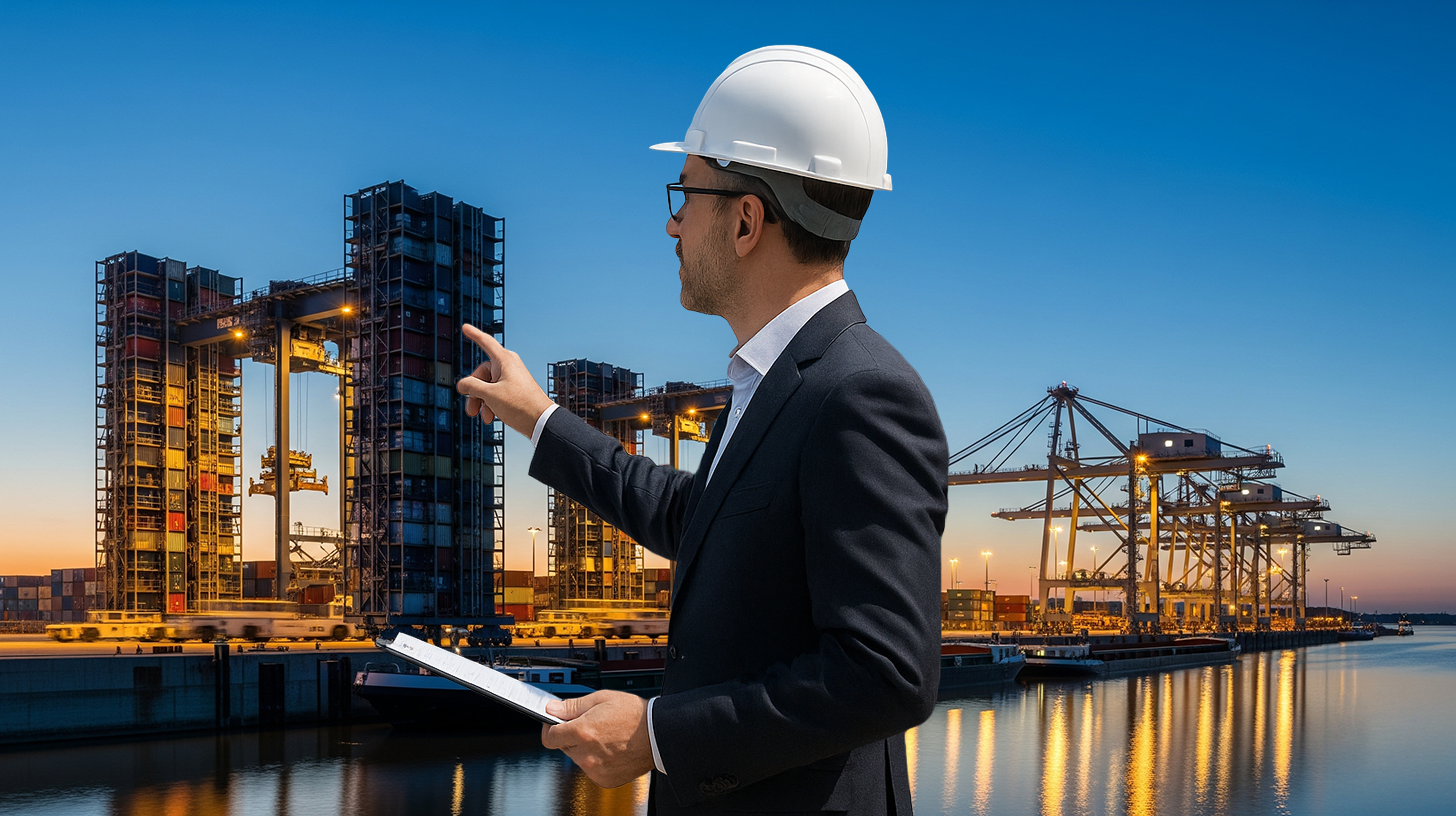
Container terminal systems for road, rail and sea transport in the dual-use logistics concept of heavy-lift logistics - Creative image: Xpert.Digital
In a world marked by geopolitical upheavals, fragile supply chains, and a new awareness of the vulnerability of critical infrastructure, the concept of national security is undergoing a fundamental reassessment. A state's ability to guarantee its economic prosperity, the provision of essential goods and services to its population, and its military capability increasingly depends on the resilience of its logistical networks. In this context, the concept of "dual-use" is evolving from a niche category of export control to a broader strategic doctrine. This shift is not merely a technical adjustment but a necessary response to the "paradigm shift" that demands a profound integration of civilian and military capabilities.
Related to this: