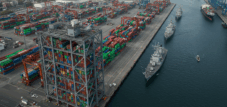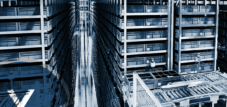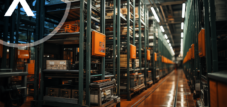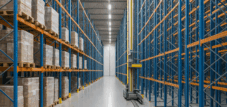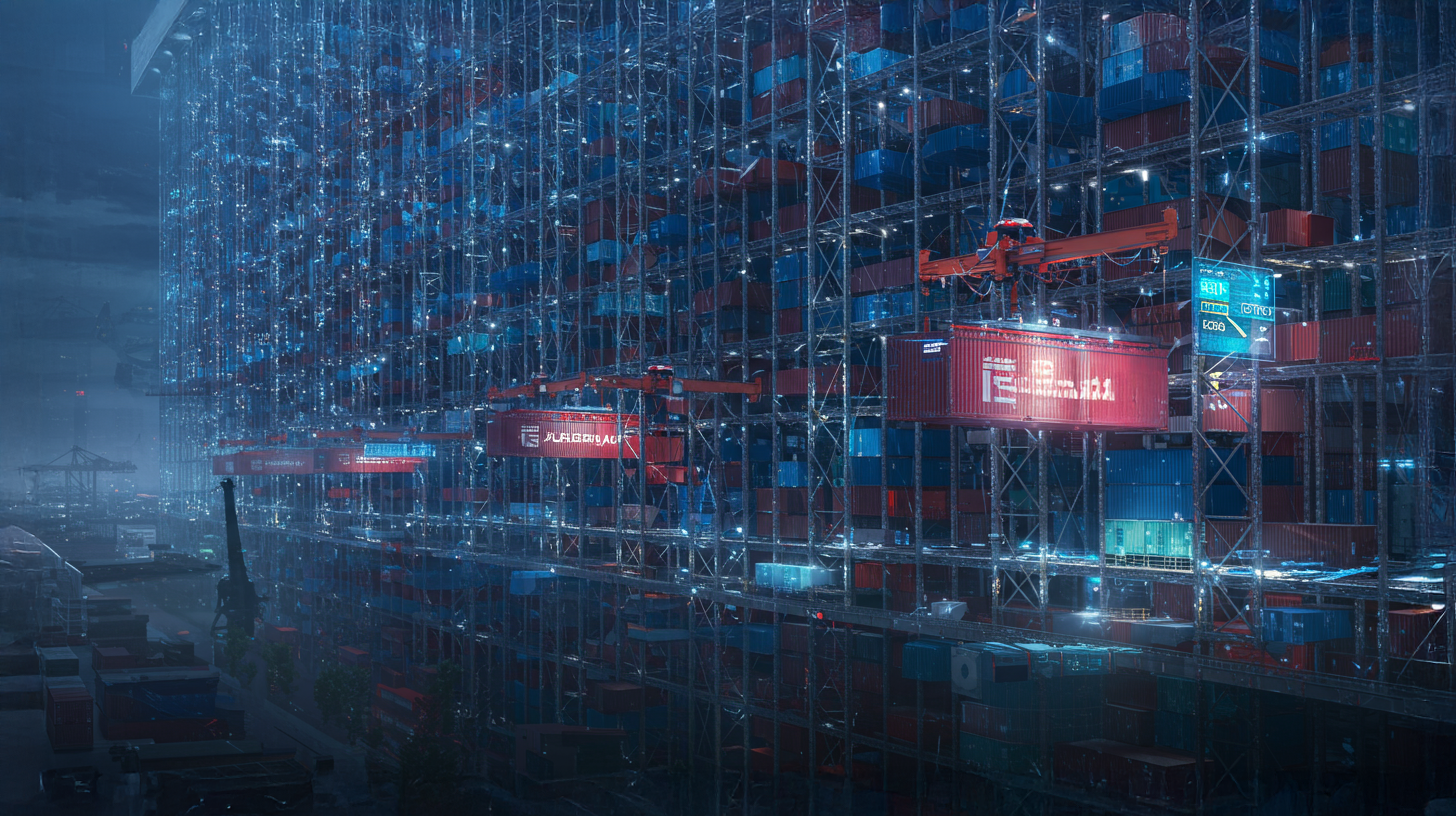
The top ten container high-bay warehouse manufacturers and a guide: Technology, manufacturers and the future of port logistics – Creative image: Xpert.Digital
Logistics of the future: Automated ports and their smart infrastructure
Innovative container handling: Greater efficiency, lower costs – The technology behind modern seaports
The world of global trade is inextricably linked to the shipping container. But while ships are getting ever larger, space in ports remains limited. This bottleneck leads to inefficiency, high costs, and environmental damage. A revolutionary technology promises to solve these problems: high-bay storage (HBS). Instead of stacking containers flat and only a few layers high, they are housed in enormous, fully automated racking systems. This article examines the technology, introduces the leading manufacturers, and looks at the future of this groundbreaking development.
1. What exactly is a container high-bay warehouse (HBS)?
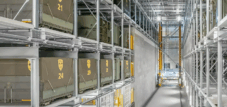
A container high-bay storage facility, often referred to as HBS (High-Bay Storage), is a logistics system for storing standard shipping containers (typically 20-foot or 40-foot containers, also called TEU and FEU) in a high-density, vertical steel racking structure. It can be thought of as a giant, fully automated bookshelf for containers.
Unlike traditional container yards, where containers are stacked on top of each other using cranes or vehicles like straddle carriers, a high-bay warehouse (HBS) assigns each individual container a fixed, individual shelf space. The transport of containers to and from these spaces is fully automated by rail-guided stacker cranes or other specialized robotic systems. This allows direct and immediate access to each individual container without the need to restack other containers first.
2. Why is this technology so revolutionary for ports and logistics centers?
The importance of HBS systems stems from the solution to fundamental problems of conventional container storage:
Inefficiency through resheaving: In a conventional container yard, containers are often stacked in blocks up to five or six layers high. If a container at the bottom of the stack is needed, all the containers above it must first be removed and temporarily stored elsewhere. This process is known as "resheaving" or "shuffling." Studies show that up to 60% of all crane movements in a traditional yard are unproductive resheaving operations. A high-bay warehouse (HBS) eliminates this problem entirely, as every container is directly accessible. This dramatically increases throughput.
Extreme land scarcity: Large seaports are often located in densely populated urban areas where land is extremely expensive and scarce. Horizontal expansion is usually impossible. HBS systems utilize vertical space. With stacking heights of 7 to 18 layers, they can store three to four times the number of containers on the same footprint. This allows ports to massively increase their capacity without having to develop new land.
Safety and Automation: Traditional yards are busy and potentially hazardous work environments with heavy equipment and large numbers of personnel. An HBS is a fully enclosed and automated system. People do not enter the actual storage area, which drastically reduces the risk of accidents. It operates 24/7 with maximum precision and reliability.
Sustainability and decarbonization: Most HBS systems are fully electric and can be powered by renewable energy. Many manufacturers integrate photovoltaic systems on the vast roof surfaces of their warehouses, enabling locally CO₂-neutral or even energy-positive operation. Furthermore, the elimination of countless truck and crane journeys for restacking significantly reduces energy consumption and noise emissions.
In summary, HBS is not just a further development, but a paradigm shift in container logistics, raising efficiency, land use, safety and sustainability to a new level.
3. Who is BOXBAY and why are they considered market leaders?
BOXBAY is a joint venture founded in 2019, uniting two industry giants: DP World, one of the world's largest port operators headquartered in Dubai, and the SMS group, a leading German technology group in plant and mechanical engineering, whose subsidiary AMOVA is also active in the HBS market. This combination is strategically brilliant: DP World contributes its expertise in port operations and direct market access, while the SMS group provides the engineering know-how for constructing such complex facilities.
BOXBAY is considered the market leader because they were the first to implement a fully functional, commercially viable HBS system on a large scale. Their system is characterized by the following features:
System name: BOXBAY High-Bay Storage.
Technology: The system stores containers in a steel rack with up to 11 layers. Storage and retrieval are carried out by fully automated storage and retrieval machines that move either above (TOP-GRID) or to the side (SIDE-GRID) of the rack aisles. Each container has its own designated space and is directly accessible at all times.
Completed Projects: The decisive milestone was the commissioning of the pilot plant at the Port of Jebel Ali (Terminal 4) in Dubai in 2021. This plant, with a capacity of 792 TEU, served as a proof of concept, demonstrating the system's functionality and efficiency under real port conditions. The breakthrough came in 2023 with the contract for the construction of a commercial plant at the Port of Busan (South Korea) for the operator PNC (Pusan Newport Company). This marked the transition from the pilot phase to commercial series production. DP World has also announced that feasibility studies are underway for over 20 additional locations worldwide.
Unique selling points: The area output is outstanding – BOXBAY promises more than three times the area output compared to conventional yards. Another key feature is sustainability: The entire system is fully electric, and the huge roof area of the facility is designed for the installation of solar panels, enabling CO₂-neutral operation.
Their leading position is therefore based on the combination of a strong partnership, a proven product and the first major commercial order in one of Asia's most important ports.
4. What role does AMOVA, which also belongs to the SMS group, play? Is there no competition for BOXBAY here?
AMOVA is a subsidiary of the SMS group and has many years of experience in the construction of high-bay warehouses for heavy industry, especially for steel and aluminum coils weighing several tons. Their expertise in handling extremely heavy loads provides a perfect foundation for container logistics.
System name: High-Bay Storage Systems (HBS).
Technology: AMOVA relies on highly robust, rail-mounted stacker cranes designed for lifting capacities of up to 50 tons. This is crucial, as loaded 40-foot containers can weigh over 30 tons. Their system is modular and can be adapted for both large seaports and smaller inland industrial and logistics parks.
Experience and market position: AMOVA has implemented several high-bay warehouses in steel mills since 2006. This experience in 24/7 operation under harsh industrial conditions is a strong selling point. They position themselves as a provider of customized HBS solutions that can be adapted to specific customer requirements. Their theoretical capacity is impressive: up to 160,000 TEU per hectare (ha), which underscores the enormous density of their systems.
Regarding the question of competition with BOXBAY: Although both belong to the SMS group, they pursue different, complementary strategies. BOXBAY is a standardized, highly scalable product that is primarily being pushed into the global seaport market by its partner, DP World. AMOVA operates more as a flexible solutions provider, offering its proven heavy-lift technology for a broader range of applications, including industrial and inland terminals. This can be seen as a dual strategy by the SMS group to cover different market segments.
5. What is special about Konecranes & Pesmel's approach?
Finnish crane manufacturer Konecranes and automation specialist Pesmel entered the market together in 2022, forming another strong European consortium. Konecranes is a global leader in port crane technology, while Pesmel is an expert in automated material handling systems for the paper and metal industries.
System name: Automated High-Bay Container Storage (AHBCS).
Technology: Their system stands out with an impressive storage height of up to 14 layers, further maximizing area density. Instead of conventional storage and retrieval machines, they utilize a system of rack shuttle cranes. These shuttles can move very quickly within the racks and transfer the containers to central lifting devices.
Unique selling point and market strategy: A key selling point is the seamless connection to distribution centers. Their concept involves docking the container storage facility directly to the loading docks of a warehouse or production hall. This enables "goods-to-hall" scenarios: An incoming container is stored directly from the ship or truck into the HBS and, if required, automatically transported to the correct dock of the adjacent building. This completely eliminates intermediate steps such as transport across the yard by truck.
Market activity: Although they have only been active since 2022, they state that they are already bidding on tenders in Europe and the Middle East. Their strong brand and innovative approach to warehouse integration make them a serious competitor for BOXBAY and AMOVA.
6. LTW Intralogistics built an HBS back in 2011. Why aren't they ranked higher?
LTW Intralogistics from Austria is a pioneer in this field. They already implemented a container depot for the Swiss Army in Thun in 2011. This makes them one of the first providers worldwide with a functioning system.
System name: Container Warehouse.
Technology: The system in Thun uses a track-mounted trolley with on-board shuttles. This means that a larger storage and retrieval machine travels through the aisle, carrying a smaller, more agile shuttle that pushes the container laterally into the storage compartment. The system is designed for a load capacity of 18 tons and can even operate in refrigerated environments down to -28°C, making it ideal for storing refrigerated containers (reefers) or sensitive goods.
Why not ranked higher? The reason lies in scalability and market focus. The project for the Swiss Army was a very specific, relatively small niche application. LTW has long concentrated on such specialized solutions and has not actively targeted the mass market of major seaports, as DP World/BOXBAY does. However, they are catching up: A second, significantly larger facility is currently under construction (2024/25), which will double the capacity of the first project. This demonstrates that LTW is also now moving into larger dimensions. Its mid-range ranking reflects its role as a highly innovative niche provider with the potential to climb even higher.

Xpert.Plus Warehouse Optimization - High-bay warehouses and pallet warehouses: Consulting and planning
From Austria to China: Global innovations in container logistics
7. Vollert Anlagenbau is mentioned in connection with Lufthansa Cargo. What is their specialty?
Vollert Anlagenbau is a German company specializing in heavy intralogistics and shunting systems. Their approach to container storage is conceptual and tailored to specific cargo customers.
System name: Container Logistics Solution (concept phase).
Technology: Their concept is based on a stacker crane equipped with a side-mounted gripper frame. This frame can pick up and place containers from the side. A key component of their concept is the interface to automated guided vehicles (AGVs) and adjacent warehouses.
Specialty and Projects: Vollert is a major player in the air freight sector. A pioneering project is the construction of a high-bay warehouse for ULDs (Unit Load Devices) – the standardized cargo containers used in aviation – for Lufthansa Cargo, scheduled for completion in 2025. Although ULDs are smaller and lighter than shipping containers, this project demonstrates their expertise in the automated storage of large load units. Their core competency lies in seamlessly integrating HBS systems into the complex logistics chains of cargo and air freight clients.
8. What do we know about JFE Engineering's Japanese solution?
JFE Engineering is another early pioneer. They installed an HBS system at the Tokyo-Ohi Terminal in Japan back in 2011.
System name: “Container Hangar”.
Technology: The facility in Tokyo is designed for 840 TEU and stacks containers seven layers high. Its single-aisle crane with an integrated turntable is a technologically interesting feature. This allows the crane to rotate the container for flexible orientation.
Market position: The Tokyo facility has served as a proof of concept for over a decade and has demonstrated its reliability. However, JFE Engineering does not appear to have pursued broad international expansion to date. Their solution is proven and functional, but less ambitious in terms of height and scalability compared to the latest systems from BOXBAY or Konecranes/Pesmel. They represent the solid, but rather conservative, Japanese approach to the technology.
9. ZPMC is a giant in port crane technology. What is their contribution to the HBS market?
ZPMC (Shanghai Zhenhua Heavy Industries Company) from China is the world's largest manufacturer of port cranes. When ZPMC enters a market, it is a clear sign of its importance.
System name: Fully Automated Empty Container High-Stack Yard.
Specialization: ZPMC is currently focusing on a specific but huge problem: the storage of empty containers. In many ports, empty containers make up a significant portion of the inventory and consume valuable space.
Project and Technology: ZPMC is currently constructing a gigantic project in the port of Ningbo-Zhoushan. This facility will have a capacity of 25,000 TEU and stack containers 18 layers high. This exceeds the height of most other systems. The technology is based on a shuttle crane system that is 100% electrically powered.
Strategic importance: By initially focusing on empty containers, they are addressing a pressing need and can perfect their technology in a less complex environment (no varying weights, no hazardous materials or refrigerated containers). However, it is highly likely that ZPMC will offer this technology for fully loaded containers in the future, thereby becoming a global heavyweight in the HBS market.
10. What is known about the concepts of Container Logistics International (CLI) and the Konecranes-AMOVA retrofit module?
These two entries represent innovative niches and future approaches.
Container Logistics International (CLI): CLI is an emerging provider that is still in the pilot and proposal phase.
System name: Tower Matrix System.
Technology: Their concept relies on particularly narrow storage and retrieval machines and side-mounted carriages, enabling very dense racking. The system is modular and easily expandable. Storage heights of up to 14 layers are planned. Similar to ZPMC, CLI is targeting the market for empty containers and inland terminals.
Konecranes-AMOVA (SideGrid Retrofit): This is not a standalone HBS, but a clever retrofit concept.
Concept: Instead of building a completely new HBS, they propose a phased modernization of existing, traditional container yards. Their port retrofit module integrates the HBS racking structure (similar to the BOXBAY SIDE-GRID or the AHBCS rack) with the existing cranes (e.g., rubber-tired gantry cranes, RTGs). The crane transports the container to the edge of the HBS, where an automated system places it into the rack.
Market potential: This approach is extremely attractive for port operators who want to increase their efficiency but are hesitant to make the enormous initial investment for a completely new HBS. It enables a phased transformation. Consulting projects have been underway in North America and the EU since 2024.
11. LTW Intralogistics and armasuisse. What kind of project is this?
This is a highly innovative special application that demonstrates the flexibility of HBS technology.
Project: Mobile container HBS for defense purposes.
Partners: LTW Intralogistics (the technology provider) and armasuisse, the Swiss Federal Office for Armaments.
Purpose: The Swiss Army requires a solution for the rapid and efficient storage and retrieval of materials stored in containers. A high-bay warehouse (HBS) offers 100% direct access and 24/7 availability, which is crucial in military or crisis scenarios. The facility for the Swiss Armed Forces (planned for 2025) will double the capacity of the existing facility in Thun.
Technology: The system will utilize double-deep storage to further increase density while still ensuring 100% direct access (the storage and retrieval machine can reach both compartments in depth). The term "mobile" may indicate that the system is designed to theoretically be dismantled and reassembled at another strategic location.
Related to this:

Our recommendation: 🌍 Limitless reach 🔗 Connected 🌐 Multilingual 💪 Sales power: 💡 Authentic with strategy 🚀 Innovation meets 🧠 Intuition


From local to global: SMEs conquer the world market with a clever strategy - Image: Xpert.Digital
In an era where a company's digital presence determines its success, the challenge lies in creating an authentic, personalized, and far-reaching presence. Xpert.Digital offers an innovative solution that positions itself as the intersection of an industry hub, a blog, and a brand ambassador. It combines the advantages of communication and sales channels in a single platform and enables publication in 18 different languages. Cooperation with partner portals and the ability to publish articles on Google News and a press distribution list with approximately 8,000 journalists and readers maximize the reach and visibility of the content. This represents a crucial factor in external sales and marketing (SMarketing).
More information here:
Efficiency without limits: The technological breakthrough that is completely transforming ports
12. The most important trend seems to be "direct individual access". Why?
Direct individual access is the core and greatest efficiency driver of HBS technology. To understand its significance, one must imagine the nightmare of a traditional container yard:
Imagine a stack of 10 books. You need the bottom one. You have to lift the top nine books, set them aside, take out the tenth book, and then restack the other nine. This is exactly what happens millions of times a day in ports around the world. A truck driver arrives to pick up container "XYZ." However, this container is in row 5, space 3, position 1 (the very bottom), and four other containers are stacked on top of it. A huge crane now has to lift these four "obstructing" containers one after the other and move them to available spaces in the yard. Only then can it grab the desired container "XYZ" and load it onto the truck.
These unproductive movements are called "shuffle moves" or "reshuffling." The fact that they can account for up to 60% of all crane movements illustrates the immense waste of time, energy, and resources.
The HBS system solves this problem radically: Each container is placed in its own, permanently assigned shelf space. The automated storage and retrieval system travels directly to this space, retrieves the container, and transports it to the transfer point. Not a single other container needs to be moved. Every container is 100% directly accessible at all times. This results in:
Dramatically shorter processing times for trucks and trains.
Predictable and reliable turnaround times.
Enormous energy savings, as unproductive crane movements are eliminated.
Less wear and tear on the equipment.
All ten manufacturers presented rely on this principle, as it cures the fundamental weakness of conventional storage.
13. How exactly is this high space efficiency achieved?
The area efficiency of HBS systems is the result of two factors: vertical stacking and compact geometry.
Vertical stacking: While traditional straddle carrier bays can usually only stack containers 3 to 4 layers high (RTG cranes manage 5-6 layers), HBS systems utilize heights of 7 layers (JFE), 11 layers (BOXBAY), 14 layers (Konecranes), or even 18 layers (ZPMC). This at least doubles or triples the storage capacity on the same footprint.
Compact geometry: In a conventional yard, wide aisles must be kept clear for the huge straddle carriers or RTG cranes. These aisles consume a significant portion of the total area. In an HBS, the aisles between the racks are extremely narrow – just wide enough for the rail-guided storage and retrieval machine. There is no wasted space for maneuvering.
The result, as stated in the source, is a three- to fourfold increase in land use. One hectare (10,000 m²) of land, which traditionally could perhaps store 1,000 TEU, can suddenly accommodate 3,000 to 4,000 TEU or more with an HBS. For a port like Singapore or Hamburg, where every square meter counts, this is an invaluable advantage.
14. What role do all-electric drives and solar integration play in the future of ports?
A very large one. Ports are under immense pressure to reduce their CO₂ emissions. They are hotspots for diesel consumption by trucks, cranes, and other vehicles. HBS systems are a key component of the "green port" of the future.
All-electric drives: All cranes and shuttles in an HBS are electrically powered. This eliminates local emissions (CO₂, nitrogen oxides, particulate matter) and significantly reduces noise. Many systems also utilize regenerative drives. This means that when braking or lowering a heavy container, energy is recovered and fed back into the system (similar to an electric car). This reduces overall energy consumption.
Solar integration: The roof area of a large HBS (High-Performance Building System) can be the size of several football fields. Manufacturers like BOXBAY, Konecranes/Pesmel, and AMOVA design their systems from the outset so that these roofs can be completely covered with photovoltaic modules. The solar energy generated in this way can be used directly to operate the warehouse. Depending on the location and size, the system can cover a large portion of its own electricity needs or even generate more energy than it consumes, thus becoming locally CO₂-neutral.
This combination makes HBS a flagship technology for the decarbonization of heavy industry and logistics.
15. What does the trend “Connectivity to Warehousing & Production” mean?
This trend, driven primarily by Konecranes/Pesmel, Vollert and the second generation of LTW, marks the next stage of HBS evolution: integration into the entire supply chain.
Traditionally, a port's container yard is a separate unit. A container is stored there, then loaded onto a truck and transported to an external distribution center or factory, where it is unloaded.
The new concept breaks down this separation. The HBS is physically attached directly to the warehouse or production line. The process then looks like this:
A ship arrives, a container is unloaded and stored directly in the HBS.
The company's inventory management system reports a need.
The HBS system automatically retrieves the correct container from the shelf and transports it directly to a specific loading ramp or conveyor technology interface of the adjacent building.
The intermediate step of truck transport from the yard to the warehouse is completely eliminated. This has enormous advantages:
Time savings: No waiting times for trucks, no traffic jams in the port.
Cost reduction: No transport costs for the "last mile" in the port.
Emission reduction: No more diesel trucks are needed for this transport route.
Process optimization: The entire chain from the ship to the production line becomes a single, automated and data-driven process.
This “goods-to-hall” scenario (or “container-to-dock”) transforms HBS from a mere warehouse into an active buffer and sorting center that is deeply integrated into its customers’ value creation processes.
16. How realistic is a rapid, widespread market penetration of HBS technology?
The signs point to very rapid development and widespread market penetration in the coming years. The data from the source supports this forecast:
DP World's statement that feasibility studies exist for over 20 port locations is a strong indicator. Port operators don't invest in expensive studies if there is no serious interest. This shows that the technology is on the agenda of major players worldwide.
Konecranes' forecast of an annual market volume exceeding US$1 billion from 2028 onward is also highly significant. This implies that several large HBS facilities will be built worldwide each year. The primary driver is the irreversible land scarcity in megaports.
The emergence of niche markets in the hinterland (rail hub terminals) and for specialized applications (empty containers, military logistics) demonstrates that the market is not limited to the world's top 10 ports. Providers such as ZPMC, CLI, and LTW are opening up new fields of application, further accelerating overall market dynamics.
In summary, the technology has overcome its teething problems, the pilot projects were successful, the first commercial contracts have been signed, and the biggest problems in port logistics (lack of space, inefficiency) are being directly addressed. Therefore, widespread market penetration is no longer a question of "if," but only of "how quickly.".
17. What is the final conclusion regarding the manufacturers and the technology?
The conclusion is clear and positive: Container high-bay warehouses are evolving from isolated pilot projects into an independent, rapidly growing and strategically crucial market segment of global logistics.
The manufacturers presented here are the driving forces behind this revolution. They can be divided into three groups:
The market leaders with production-ready systems (BOXBAY, AMOVA, Konecranes/Pesmel): They have strong partnerships, proven technology and the ability to deliver turnkey major projects for the world's most important seaports.
The highly innovative industry specialists (LTW, Vollert): With their deep expertise, they serve niches such as refrigerated or hazardous goods storage, air freight or military applications, thus driving technological diversity forward.
The scaling challengers and pioneers (JFE Engineering, ZPMC, CLI): This group includes early pioneers (JFE) who could now scale their proven concept, as well as new, aggressive players (ZPMC, CLI) who want to shake up the market with a focus on specific problems such as empty containers.
Together, these companies cover the entire spectrum and foster healthy competition that accelerates innovation. They are not just solving a logistical problem, but making a significant contribution to automation, increased efficiency, and, above all, the decarbonization of the port industry and its associated supply chains. The era of the flat, inefficient, and environmentally damaging stack of containers is drawing to a close – the future of container logistics is vertical, automated, and green.
Your intralogistics experts
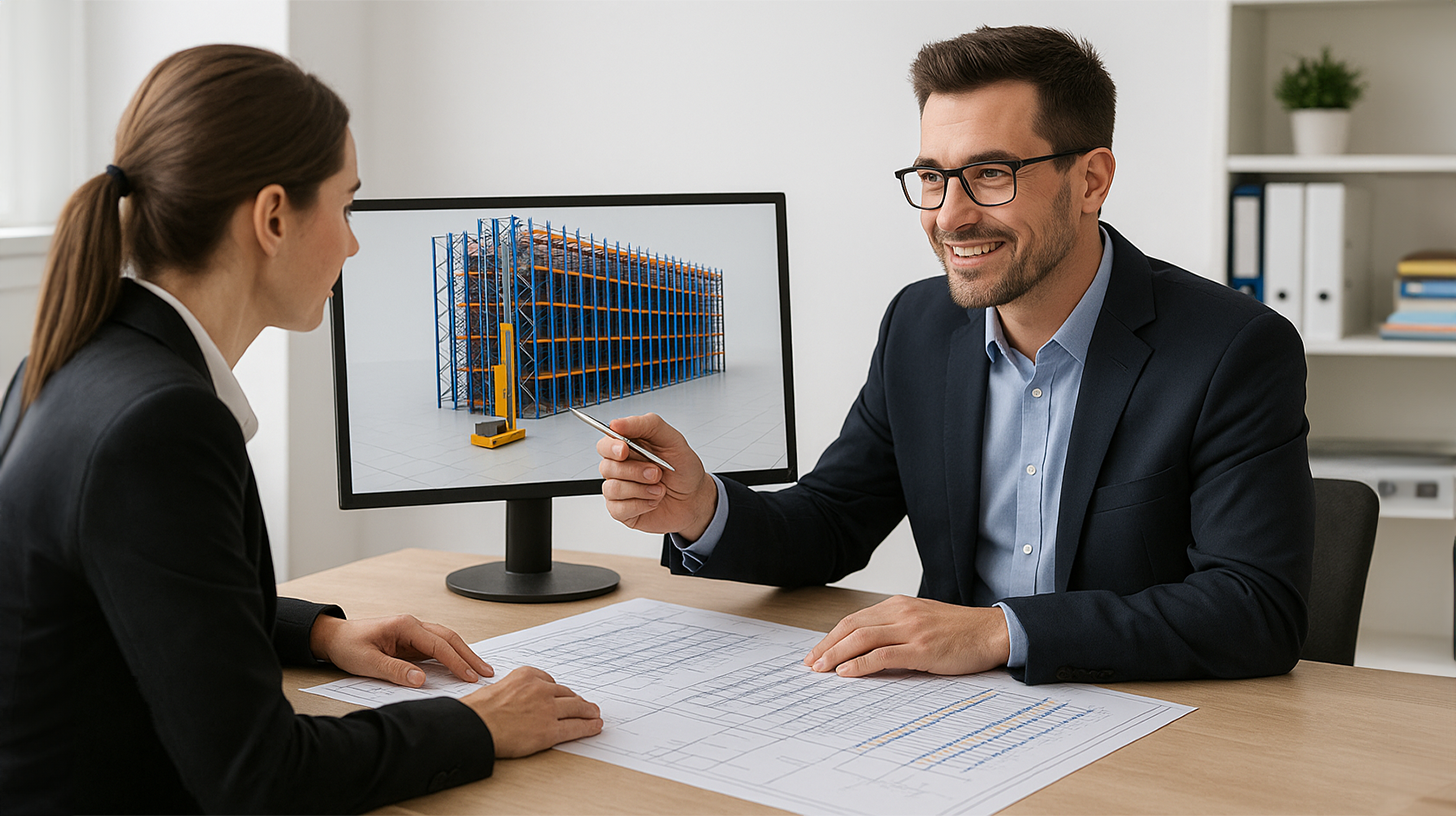
Consulting, planning and implementation of complete solutions for high-bay warehouses and automated storage systems - Image: Xpert.Digital
More information here:
Your dual-use logistics experts
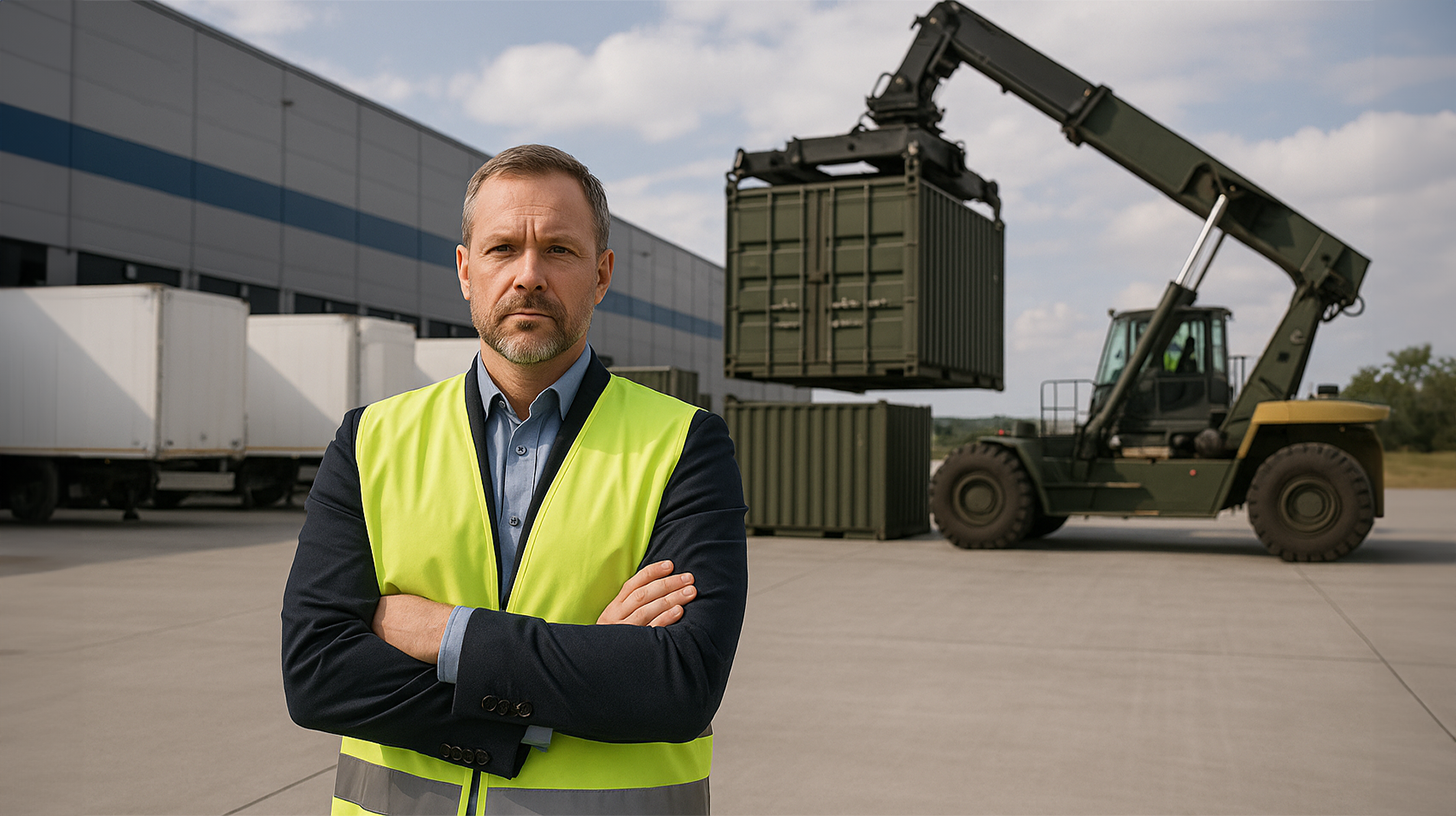
Dual-use logistics experts - Image: Xpert.Digital
The global economy is currently undergoing a fundamental transformation, a watershed moment that is shaking the foundations of global logistics. The era of hyper-globalization, characterized by the relentless pursuit of maximum efficiency and the "just-in-time" principle, is giving way to a new reality. This new reality is marked by profound structural breaks, geopolitical power shifts, and increasing fragmentation of economic policy. The once taken-for-granted predictability of international markets and supply chains is dissolving and being replaced by a period of growing uncertainty.
Related to this:
We are here for you - Consulting - Planning - Implementation - Project Management
☑️ Our business language is English or German
☑️ NEW: Correspondence in your native language!

Konrad Wolfenstein
I and my team are happy to be available to you as your personal advisor.
You can contact me by filling out the contact form here wolfenstein@xpert.digital:or simply call me at +49 7348 4088 965. My email address is
I'm looking forward to our joint project.