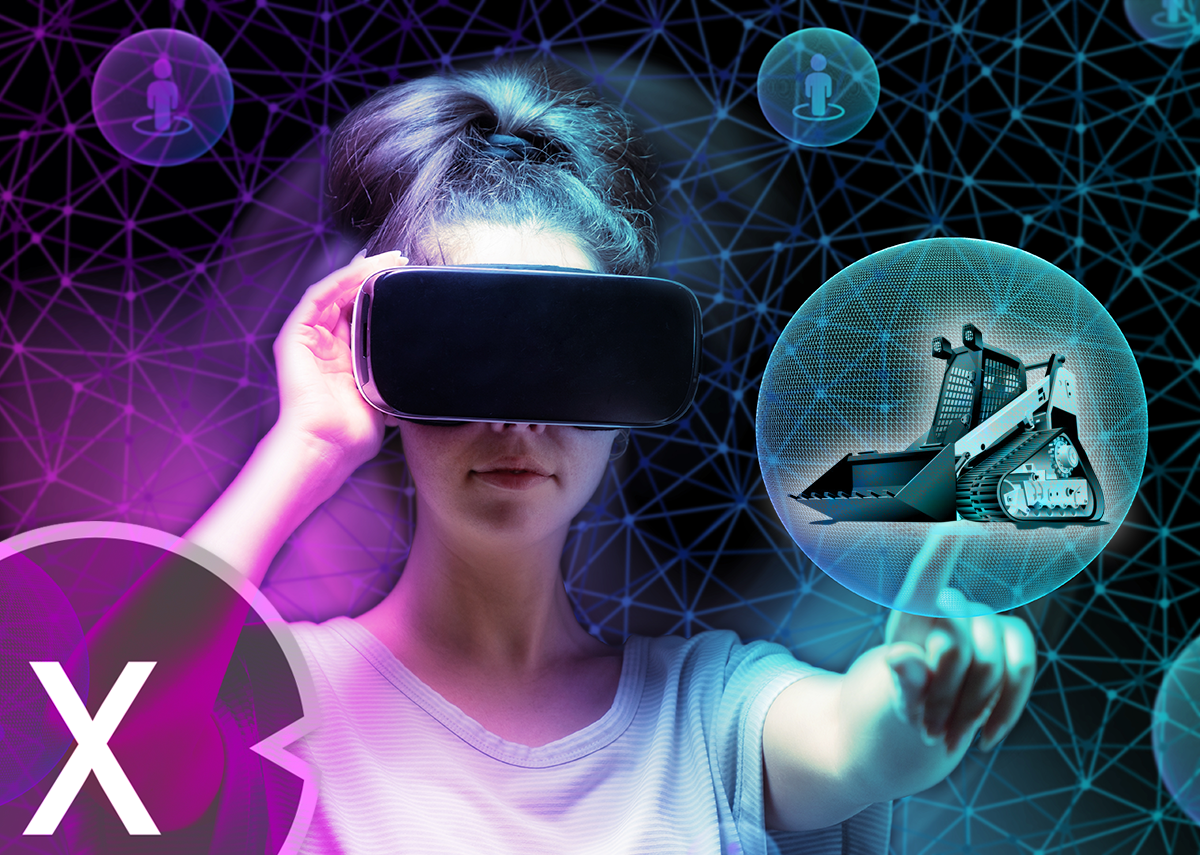
Market opportunities: The Metaverse company concept, strategies and opportunities – Image: Xpert.Digital
The 'Metaverse Corporate Concept', the strategies and opportunities
The concept of the Metaverse enterprise offers exciting market opportunities and opens up diverse possibilities for companies to expand and diversify their businesses. The 'Metaverse enterprise concept' refers to the creation of a company-owned virtual world where employees, customers, and partners can interact, collaborate, and conduct business. Through the integration of Virtual Reality (VR), Augmented Reality (AR), and other immersive technologies, a unique environment is created that enables companies to strengthen their brand presence and develop innovative business models.
One of the most important strategies in the corporate metaverse is creating an attractive and engaging virtual and/or augmented space. Companies have the opportunity to design customized virtual environments that reflect their brand image and offer a unique experience. From virtual offices and conference rooms to virtual showrooms and shopping experiences, the possibilities are endless. Companies can strengthen their brand identity, foster customer loyalty, and reach new audiences.
Another strategy is to improve collaboration and communication within the 'corporate metaverse'. Virtual workspaces enable employees to collaborate and communicate efficiently regardless of their geographical location. By using avatars and real-time communication, teams can interact seamlessly, exchange ideas, and work together on projects. This fosters efficiency, improves collaboration, and allows companies to engage talented employees worldwide.
The 'Company Metaverse Concept' also offers new opportunities for e-commerce. By integrating virtual shopping environments, companies can offer their customers an innovative and personalized shopping experience. Customers can virtually try out, customize, and purchase products without being physically present. This opens up the possibility for companies to reach new target groups and tap into additional revenue streams. Furthermore, companies can use data analytics and AI to provide personalized recommendations and further enhance the shopping experience.
Another aspect of the corporate metaverse is customer engagement and interaction. Companies can organize virtual events, conferences, and trade shows to connect with their customers and strengthen their brand bond. By integrating interactive elements, gamification, and reward systems, companies can build customer loyalty and encourage repeat purchases. The corporate metaverse allows companies to create unique and memorable experiences that encourage customers to interact with the brand and recommend it to others.
A crucial strategy in the 'corporate metaverse concept' is security and data protection. Companies must ensure that their customers' data is protected and that data protection regulations are observed. Since the corporate metaverse can collect a vast amount of personal data, it is essential to implement robust security measures and provide transparent information about data processing and usage.
The market opportunities in the corporate metaverse are diverse. Companies can tap into new revenue streams, strengthen their brand presence, develop innovative business models, and build a committed customer community. By applying the right strategies and addressing the needs of their target groups, companies can leverage the advantages of the corporate metaverse and successfully enter the future of the digital space.
Our Industrial Metaverse Configurator
Simply try out our universally applicable (B2B/Business/Industrial) Metaverse Configurator for all CAD / 3D demo options:
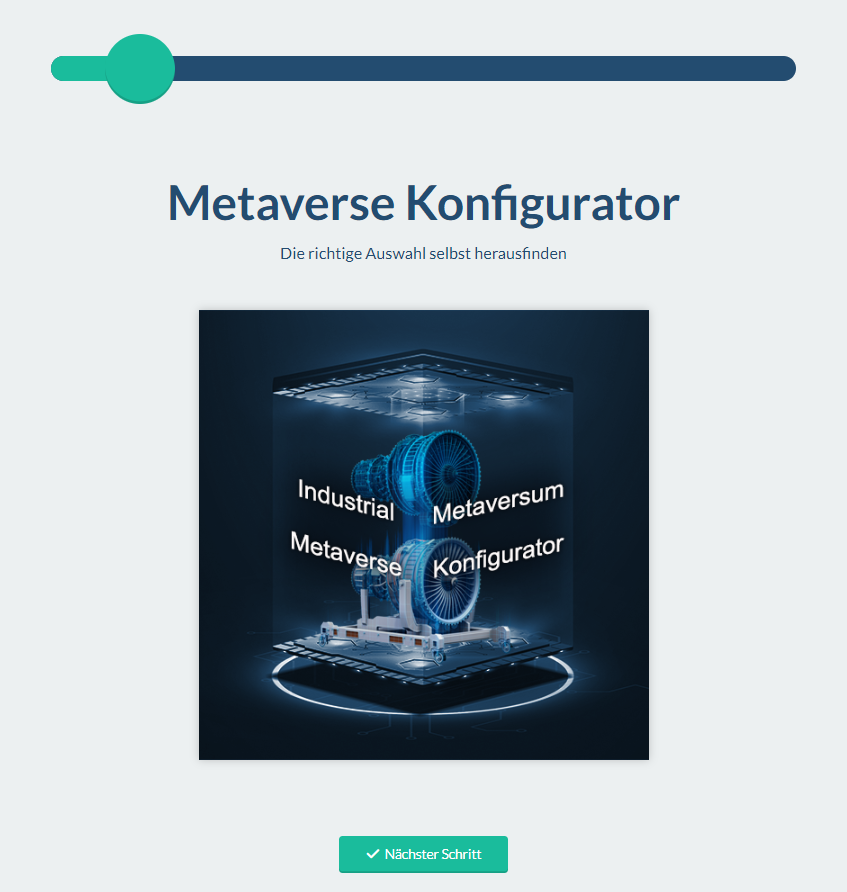

Xpert (B2B/Business/Industrial) Metaverse Configurator for all CAD / 3D data, usable on all end devices, one platform!
Related to this:
The transition to the web of the future
The transition to the web of the future, also known as the metaverse, offers exciting opportunities for businesses and individuals to succeed and expand their presence in the digital space. The metaverse is a virtual ecosystem that allows users to communicate, work, shop, and play in an immersive and interactive environment. To succeed in the web of the future, you should consider certain strategies and approaches.
Understand the metaverse platforms
The metaverse consists of various platforms, each offering different functions and user experiences. It's important to understand these platforms and determine which best suits your goals and target audience. Whether it's for social interaction, e-commerce, or business collaboration, each platform has its own unique characteristics and ways of using it.
Invest in technology
The metaverse requires a robust technological infrastructure to ensure seamless interactions and high-quality user experiences. Invest in AR and VR technologies to create immersive experiences and ensure your platforms and applications are scalable, secure, and user-friendly.
Personalize the user experience
The Metaverse enables personalized interaction with users. Leverage data analytics and AI to better understand your users' behavior and preferences, and offer them tailored content and offers. Individual avatars, personalized recommendations, and personalized shopping experiences are just a few examples of personalization within the Metaverse.
Create unique and engaging content
In the metaverse, competition for user attention is fierce. To succeed, you should create high-quality and engaging content. Be creative, use visual effects, interactive elements, and gamification to capture users' attention and keep them engaged.
Build strong communities
The metaverse offers the opportunity to build strong communities and connect with your target audience. Create platforms and spaces for exchanging ideas, discussions, and collaboration. Foster cultural exchange, interactive events, and virtual gatherings to build an active and engaged community.
Think about security and data protection
Given the growing concerns about data privacy and security, it is crucial that you implement robust security measures in your metaverse offering. Protect personal data, ensure compliance with data protection regulations, and transparently inform your users about data processing and usage.
Stay agile and innovative
The Metaverse is a constantly evolving space. To succeed, you must be agile and adapt to new technologies and trends. Be open to innovation, experiment with new features and ideas, and stay continuously up-to-date with developments in the Metaverse.
➡️ By applying these strategies and approaches in the web of the future (metaverse), you can be successful and benefit from the diverse opportunities of this exciting digital space. Be prepared to break new ground, be creative, and fully exploit the potential of the metaverse.
Only read if you want more: XR technology to touch and try out

Metaverse platforms: For trade fairs, in-house exhibitions & events and showrooms – Image: Xpert.Digital
If you'd like to learn more about XR technology with extended reality in the context of the industrial or business metaverse, several options are available. A first step could be to try out our industrial or business metaverse configurator free of charge. This configurator allows you to explore the various options and functions of XR technology and discover its potential for your company.
The configurator will first present you with some basic decisions. You can choose whether to use your own metaverse, developed specifically for your company, or a third-party metaverse provider. Both options have their own advantages and disadvantages, so it's important to consider your company's individual requirements and goals. This decision depends on various factors, such as the desired level of customization and control over the metaverse.
After selecting the metaverse type, another important question arises: Do you want to implement the project within an in-house department and perhaps bring in a consultant to support you with the conception, design, and planning? Or do you prefer to entrust the responsibility to an external agency with expertise in implementing XR projects? This decision depends on your resources, existing know-how, and time constraints.
Next, you should define the focus of your Metaverse. Do you want to use it for 3D presentations at trade fairs, events, hybrid trade shows, or during on-site customer visits? Here, XR technology offers the opportunity to present impressive virtual representations of your products and captivate potential customers. Or are you interested in virtual worlds such as showrooms, virtual trade fairs, and similar environments? These virtual environments allow your customers to explore products interactively and enjoy an immersive experience. Alternatively, you can also use the Metaverse for training by creating immersive learning environments where employees can learn new skills and processes.
Finally, there is the option of pursuing a comprehensive, all-in-one solution. This means that the metaverse combines various use cases and functions to holistically support your business. This could include, for example, the integration of sales and marketing tools, interactive training modules, and virtual conference rooms.
It is important to note that these possibilities represent only a selection of the diverse applications of XR technology with Extended Reality. Every company has specific needs and goals, so it is advisable to thoroughly examine the options and potential of XR technology in order to develop the right strategy for your business.
Using the Industrial or Business Metaverse Configurator provides you with an initial insight into the world of XR technology and allows you to explore the various options. It offers you the opportunity to make the right decisions and create a solid foundation for implementing this innovative technology in your company.
Further aspects to consider
Our preferred metaverse differs fundamentally from previous media and presentation concepts. It offers unique and fascinating possibilities characterized by immersive experiences and interactive features. Compared to conventional presentations, users are immersed in an expanded or virtual environment where they can actively participate and interact with the content.
The key to this immersive experience lies in the use of technologies such as Virtual Reality (VR), Augmented Reality (AR), and Mixed Reality (MR). By wearing a VR headset or using AR/MR-enabled devices, users can immerse themselves in a virtual world and interact with three-dimensional objects and scenarios. These interactive elements open up entirely new possibilities for presentation and information exchange.
Another crucial advantage of our metaverse is that the content is not limited to a specific medium. 3D product presentations and visualizations can be used on various electronic and digital media. Whether on a smartphone, PC, or touch table, the interactive 3D product model can be displayed and experienced seamlessly.
This flexibility opens up a multitude of possibilities for companies to present their products and services. For example, 3D product models can be shown on a large screen in a sales or marketing presentation to impress customers and give them a realistic impression of the product. At the same time, the same models can be presented on mobile devices to reach customers on the go and offer them an immersive experience.
Furthermore, our Metaverse enables the integration of additional information and media content. For example, users can access detailed product information, play videos, or use interactive tutorials with simple touches or gestures. This creates a comprehensive and interactive presentation that gives customers a deeper understanding of and a stronger connection to the product.
Another advantage of the Metaverse is that it provides a shared platform where various stakeholders can collaborate. For example, companies can involve external partners, designers, or consultants to work together on the design and development of their Metaverse presentations. This leverages broader expertise and improves the quality of the presentations.
The industrial or business metaverse represents groundbreaking innovation in the media and presentation landscape. The combination of immersive experiences, interactive capabilities, and flexibility across various media platforms makes it a powerful tool for businesses. It offers an innovative and impressive way to showcase products and services and engage customers in entirely new ways.
The future is calling: We are looking for answers to the future direction of strategies and concepts in two exciting scenarios!
The future already holds two exciting scenarios that urgently demand answers regarding the future direction of strategies and concepts. One of these scenarios is the transnational metaverse, considered one of the most compelling arguments for a metaverse. This metaverse is completely independent of time and spatial boundaries. It doesn't matter whether someone comes from China, Europe, or the USA—they can access your metaverse simultaneously, even if they are on different continents. This boundless connectivity opens up a wealth of opportunities for global interaction, collaboration, and trade.
Another important aspect that will shape the future is the 2D matrix code. By 2027, this code will be used worldwide, primarily in logistics, replacing the existing barcode. This step will bring about a revolutionary change in the market. The 2D matrix code not only enables more efficient tracking and monitoring of goods but also opens up new possibilities for end consumers. Particularly in conjunction with a company's own metaverse, exciting prospects arise for 3D product presentations in high streets and shopping centers. The matrix code will become a versatile tool for a wide variety of applications and uses.
By integrating the 2D matrix code into the company's metaverse, end consumers can experience interactive and immersive 3D product presentations. Imagine strolling down a busy shopping street and spotting a shop window with a QR code in the form of the matrix code. You scan the code with your smartphone, and suddenly a virtual world opens up where you can view the products from different angles, explore details, and even virtually try them out. This creates a unique shopping experience that blurs the lines between physical and digital space.
The use of 2D matrix codes in the company metaverse opens up new possibilities for businesses to present their products and interact with customers. It offers an innovative form of marketing and enables personalized and tailored shopping experiences. Customers can virtually test products, customize colors and options, and make immediate purchase decisions while immersed in a virtual environment.
The combination of the cross-border metaverse with the use of 2D matrix codes in the corporate metaverse opens up fascinating perspectives for companies. They can reach global customers, regardless of their geographical location, and offer them personalized and interactive experiences. At the same time, 2D matrix codes enable seamless integration between physical and digital spaces by providing access to virtual product presentations in real-world environments.
Companies face exciting challenges and opportunities regarding the cross-border metaverse and the use of 2D matrix codes within the corporate metaverse. A forward-looking strategy is required to fully exploit the potential of these technologies and develop innovative solutions. Companies that respond to these developments early and find creative applications can gain a competitive advantage and position themselves as pioneers in an increasingly networked and digitized world.
The difference between e-commerce, the industrial, the B2B or business metaverse, and especially the corporate metaverse
The metaverse has gained increasing importance in recent years and developed various application areas, including e-commerce, the industrial metaverse, the B2B/business metaverse, and the corporate metaverse. Each of these concepts has its own unique characteristics and differences that need to be understood. Therefore, let's examine each concept in more detail and highlight its interesting aspects.
E-commerce in the metaverse
Metaverse e-commerce encompasses the trading of goods and services in a virtual environment. Compared to traditional e-commerce, which takes place in two-dimensional online stores, the metaverse offers a more immersive and interactive shopping experience. Users can visit virtual stores, select and purchase products, and interact with other users. Furthermore, the metaverse allows participation in virtual events, auctions, and other experiences that enhance the shopping experience.
A fascinating development in the e-commerce metaverse is the rise of non-fungible tokens (NFTs). NFTs are unique digital assets built on blockchain technology. Businesses can use NFTs to offer exclusive virtual products or collectibles that command high value and demand. These digital assets can serve as status symbols, conveying a sense of exclusivity to users. Furthermore, they can have an impact in the physical world by granting access to exclusive events or discounts.
Industrial Metaverse
The Industrial Metaverse focuses on the application of virtual technologies and the Internet of Things (IoT) in industrial production and business operations. It enables companies to optimize their business processes, increase productivity, and develop innovative solutions. Within the Industrial Metaverse, virtual factories and production facilities can be created where companies can test, simulate, and improve their processes before implementing physical changes.
A key component of the Industrial Metaverse is the integration of augmented reality (AR) and virtual reality (VR) into industrial work environments. By using AR/VR glasses, employees can receive instructions and information in real time, increase their work efficiency, and participate in training within virtual environments. These technologies enable improved work quality, reduce errors, and promote more effective collaboration between teams.
B2B or Business Metaverse
The B2B, or Business Metaverse, refers to proprietary solutions where companies create and manage their own metaverse ecosystem. Unlike external providers, they are their own metaverse host and provider. The B2B metaverse enables companies to optimize internal processes, improve communication and collaboration among employees, and offer unique services to their customers.
A key feature of the B2B metaverse is the creation of a virtual work environment where employees can collaborate remotely. By integrating chat functions, virtual meeting rooms, and collaborative tools, teams can communicate seamlessly and work together on projects regardless of their geographical location. This enables global collaboration and allows companies to benefit from more flexible work models.
Metaverse Companies
A company metaverse is a proprietary solution where the company creates and manages its own metaverse ecosystem. Unlike a B2B metaverse, where the company may rely on an external provider, in a company metaverse, the company itself is the host and provider. This solution allows companies to tailor their metaverse platform to their specific requirements and maintain full control over the technology and content.
The Corporate Metaverse offers companies the opportunity to create a virtual world specifically tailored to their internal and external needs. They can create their own virtual environment where employees can interact, manage projects, and exchange information. At the same time, they can offer their customers unique and personalized experiences by welcoming them to virtual showrooms, conferences, or product presentations.
A key advantage of the corporate metaverse is the security and data privacy control it offers. By managing their own metaverse infrastructure, companies have the ability to protect their data and tailor their security policies accordingly. This is particularly important in areas such as protecting trade secrets or ensuring customer privacy.
➡️ The difference between e-commerce, the industrial metaverse, the B2B/business metaverse, and the company metaverse lies in their respective applications, focus areas, and control over the metaverse platform. While e-commerce within the metaverse enables virtual trade, the industrial metaverse focuses on the application of virtual technologies in industry. The B2B/business metaverse refers to proprietary solutions for optimizing processes and collaboration, while the company metaverse represents a customized, company-specific metaverse solution.
The Metaverse, Opportunities and Strategies
The metaverse is a fascinating concept that has gained increasing importance in recent years. It refers to a virtual, augmented reality in which people can interact, communicate, and engage in various activities. The metaverse offers a multitude of opportunities for both individuals and businesses, and requires a strategic approach to fully capitalize on these opportunities.
One of the greatest opportunities of the metaverse lies in the creation of new forms of interaction and communication. By connecting virtual and physical worlds, people can come together in an immersive environment, meet, exchange ideas, and engage in shared activities. This opens up the possibility for businesses to reach their customers in entirely new ways and offer them a unique experience. From virtual conferences and events to interactive shopping experiences, the possibilities are virtually limitless.
Another important aspect of the Metaverse is e-commerce. The Metaverse offers an innovative platform for online retail, where users can virtually explore, try on, and purchase products. Through the integration of augmented reality (AR) and virtual reality (VR), customers can, for example, virtually try on clothes or project furniture into their own rooms to enhance the shopping experience. Companies that invest early in Metaverse e-commerce can gain a competitive advantage and unlock new revenue opportunities.
Furthermore, the metaverse offers opportunities for collaboration and cooperation. Companies can create virtual workspaces where employees from different locations can come together, exchange ideas, and work on projects collaboratively. Through the use of avatars and real-time communication, teams can work together effectively, regardless of their geographical location. The metaverse fosters a culture of collaboration and enables companies to benefit from the talent and expertise of global teams.
When developing a metaverse strategy, it's crucial to keep the needs and preferences of the target audience in mind. Companies should prioritize the user experience and ensure their metaverse offerings are engaging, intuitive, and user-friendly. Tight integration of AR and VR, personalized content, and a high degree of interactivity are essential for captivating and retaining users.
Furthermore, it is important to ensure security and data protection within the metaverse. Companies must guarantee that personal data is protected and that compliance with data protection regulations is ensured. Transparent communication with users about data collection and use is crucial for building trust and establishing long-term relationships.

Xpert.Digital – Industry expert in mechanical engineering and digitalization with (Industrial/ E-Commerce/ B2B/ Business) Metaverse

Konrad Wolfenstein
I would be happy to serve as your personal advisor.
You can contact me by filling out the contact form below or simply call me on +49 7348 4088 965 .
I'm looking forward to our joint project.
Write to me


Xpert.Digital – Konrad Wolfenstein
Xpert.Digital is a hub for industry focusing on digitalization, mechanical engineering, logistics/intralogistics and photovoltaics.
With our 360° Business Development solution, we support renowned companies from new business to after-sales.
Market intelligence, smarketing, marketing automation, content development, PR, mail campaigns, personalized social media and lead nurturing are part of our digital tools.
You can find more information at: www.xpert.digital – www.xpert.solar – www.xpert.plus
Keep in touch