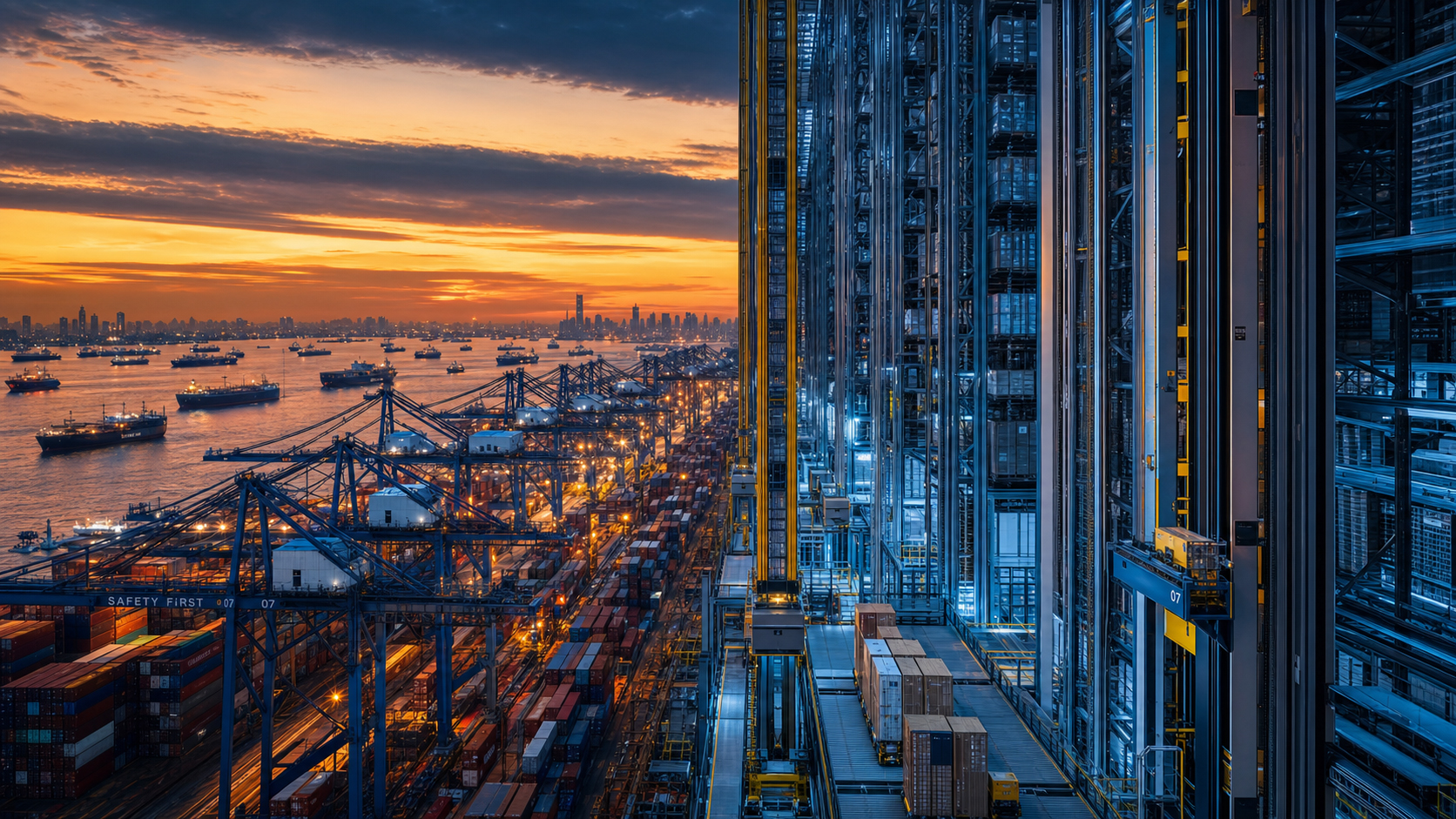
Supply chains at their limit: Companies use this warehouse trick to avoid port congestion – Image: Xpert.Digital
Traffic jams in Rotterdam & Hamburg: How vertical warehouses make your supply chain crisis-proof
When ships arrive weeks late: This strategy is now becoming mandatory for companies
Geopolitics paralyzes trade routes: Why smart companies are now building upwards
Global supply chains are once again under enormous pressure – but in 2026, the situation is completely different than during the pandemic. Persistent geopolitical tensions force shipping companies to take detours lasting weeks, causing massive queues of ships outside major ports like Rotterdam, Hamburg, and Singapore. The result is chronic capacity bottlenecks and completely unpredictable delivery times that bring the pace of the global economy to a standstill. Those still relying on classic stopgap solutions like expensive air freight or simply expanding warehouse space quickly reach their economic and spatial limits. The key to overcoming this ongoing structural crisis lies literally in height: Vertical, automated storage systems are evolving across industries from a mere efficiency measure to an absolute strategic necessity. Learn in the following article how smart buffer warehouses not only mitigate supply disruptions and save enormous costs and CO2 emissions, but also form the foundation for a resilient, future-proof supply chain.
Related to this:

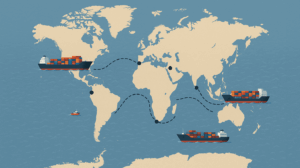
When the port becomes a bottleneck: Why vertical warehouses are becoming a strategic necessity
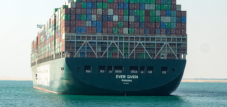
Anyone looking at the loading ports of Northern Europe or Southeast Asia in 2026 will see a scene that many already recognize from 2021 and 2022. Ships are piling up off Rotterdam, Antwerp, Hamburg, Singapore, and Tanjung Pelepas, terminals are operating at capacity, and delivery times are stretching unpredictably. But this superficial comparison is misleading, because the causes of today's congestion are fundamentally different from the pandemic-driven surge in demand of previous years. Back then, demand was the problem, with too much merchandise meeting too little port capacity, too few personnel, and too little storage space. Today, the cause lies further up the chain, at the geopolitically constricted bottlenecks of the trade routes themselves.
The ongoing tensions surrounding the Suez Canal and the intermittent closure of the Strait of Hormuz have forced shipping companies to divert their fleets onto longer and less predictable routes around the Cape of Good Hope. This diversion is not creating a one-off shock, but rather a structural distortion of the entire shipping network. Ships that are ten days late are not arriving in Singapore or Rotterdam in isolation, but rather clustered together with several other vessels affected by the same events. Terminals designed for a steady flow of shipping simply cannot handle this concentrated demand at their usual pace.
The figures from the first few months of this year underscore the seriousness of the situation. In Rotterdam, waiting times for inland vessels sometimes reached up to seven days, while port utilization at the ECT terminal was close to ninety percent. Hamburg reported delays of up to four days at the CTA terminal, and in Singapore, terminal utilization remained consistently between eighty and ninety percent, resulting in waiting times of one and a half days even under relatively stable conditions. A journey from Shenzhen to Rotterdam, which nominally takes 28 days, can, under current conditions, increase to 31 to 38 days without warning, and shippers cannot reliably predict which extreme they will encounter.
What makes this particularly critical is that traditional alternative strategies are failing. Air freight, traditionally used as a safety valve for time-critical shipments, has itself come under pressure due to the loss of significant cargo capacity in the Gulf region. This has led to a short-term decrease in global air freight capacity of around 18 percent and a rise in rates on certain routes of approximately 50 percent. Anyone relying on a window of just a few days to compensate for delays is now competing with all other shippers who have reached the same conclusion. It is precisely in this environment that the question of warehousing, especially its density, speed, and scalability, becomes a crucial economic decision for manufacturing and trading companies.
The business calculation behind the shelving unit
The temptation to simply rent more space and stockpile more goods in the face of uncertain supply chains is understandable, but economically short-sighted. Warehouse space has become scarce and expensive in many European metropolitan areas, with availability rates in some regions falling below three percent. Vertical, automated storage systems solve this space problem not by using more floor space, but by using more height, as they can nearly triple storage density compared to traditional shelving systems. Where a conventional warehouse has to operate with wide aisles for forklifts and order pickers, automated storage and retrieval systems, shuttle systems, and vertical lifts largely eliminate this wasted space and deliver goods directly to the operator's workstation.
The economic benefits become clear in concrete case studies. A comparison between a manual small parts warehouse and an automated vertical lift system with approximately one thousand picking operations per day shows that the total cost per picking position can be more than halved, from about sixty cents in manual operation to about 24 cents in automated operation. In this example, personnel costs are halved, error costs are almost completely eliminated, and the additional savings in rental space result in annual cost savings of around €92,000, with a payback period of about one and a half years. In larger projects with higher investment volumes, sample calculations from the automation industry show similar patterns, with total annual savings of around €970,000 on an initial investment of €2 million, corresponding to a payback period of about 2.3 years and a return on investment of around 43 percent.
These figures are examples and not universal laws, but they illustrate a recurring pattern. Order picking alone can account for over 55 percent of operational warehouse costs, while the error rate in purely manual processes is often only around 97 percent accuracy. Each incorrect delivery generates follow-up costs averaging about €19.50 for corrections, returns, and administrative expenses—an amount that quickly adds up to considerable sums with high order volumes. Automated systems, on the other hand, frequently achieve accuracies of over 99 percent, practically eliminating the costs of errors.
The decisive factor for economic efficiency, however, is not solely the cost structure, but availability. A single goods-to-person workstation can replace the output of four to five manual order pickers, and automated systems can operate around the clock, including nights and weekends, which is impossible with human labor bound to shift schedules. Especially in an environment of volatile ship arrivals, where goods arrive irregularly and in unpredictable waves, this continuous availability is a crucial buffer mechanism. Instead of manually compensating for delays elsewhere in the supply chain with overtime and temporary workers, an automated system can spread out peak loads and process them continuously.
However, caution is advised against blanket enthusiasm for automation. Investment hurdles are high, and in practice, profitability is usually only achieved above certain thresholds, often around a thousand order pickings per day or more than 2,000 different items. For low volumes, high product range dynamics, or strongly fluctuating seasonal demand, a well-organized manual warehouse often remains the more flexible and cost-effective solution, as personnel, unlike fully depreciated machinery, can be ramped up and down as needed. Companies wishing to respond to port-related volatility with automation should therefore honestly weigh their actual throughput figures, product range, and growth forecast against the investment sum before committing to a rigid system for years to come.
Electricity, heat and maintenance as underestimated levers
Besides space and personnel, energy consumption is the third major factor that vertical warehouse concepts address. Warehousing and logistics activities are estimated to cause around eleven percent of global CO2 emissions worldwide, with lighting and heating in traditional warehouses responsible for at least 76 percent of energy consumption. An average, non-temperature-controlled warehouse in the United States therefore consumes about 6.1 kilowatt-hours of electricity per square foot per year, a figure that increases significantly with inefficient lighting and inadequate building insulation.
Automated vertical storage systems address several of these factors simultaneously. The use of an automated storage and retrieval system, which nearly triples storage density, can reduce the expected energy consumption per storage unit to about half of the original estimate. This is due, in part, to the real-time energy management and regenerative braking features of storage and retrieval machines, and the elimination of traditional conveyor belts, which reduces idle losses. Additionally, the more compact design enables "lights-out" operation, where entire storage areas operate without continuous lighting, while intelligent, motion-controlled LED systems can save up to 75 percent energy compared to conventional lighting.
Climate control also benefits from increased density. Since automated systems can store more goods in a smaller footprint, the need for heating and ventilation technology decreases because less large volume of open space needs to be heated or cooled. Combined with AI-supported climate control, which regulates temperature and humidity according to demand rather than using a fixed level, energy consumption for building technology can be further reduced. The switch to battery- or ultracapacitor-powered storage and retrieval machines, which recharge themselves while in operation, also increasingly eliminates the need for diesel-powered forklifts, thus reducing direct emissions in warehouse operations.
For operating cost accounting, i.e., ongoing OPEX, this translates into a twofold benefit. First, the absolute energy costs per processed unit decrease because less space needs to be heated, lit, and ventilated. Second, the dense construction allows for better amortization of the building technology used, as more goods value and throughput are allocated to the same square meter of operating costs. However, the downside of automation remains important: maintenance and servicing require specialized personnel, and unplanned downtime affects a highly automated system far more severely than a manual warehouse, where work can continue even if necessary. Predictive maintenance approaches, which use sensor data to proactively plan maintenance intervals, are therefore not an optional extra, but a necessary addition to actually achieve the promised availability and minimize downtime, which would otherwise quickly negate the energy cost savings.
For existing buildings, the question of retrofitting also arises. Not every company can or wants to construct a new building to benefit from vertical storage density. Many suppliers therefore rely on modular retrofit solutions that can be integrated into existing warehouse structures and utilize the available building height more effectively than traditional shelving systems. Such a retrofit often significantly extends the service life of an existing site and avoids the capital commitment and land consumption of a new building, which is particularly economically attractive in inner-city or well-connected locations with limited expansion space.
LTW Intralogistics Solutions

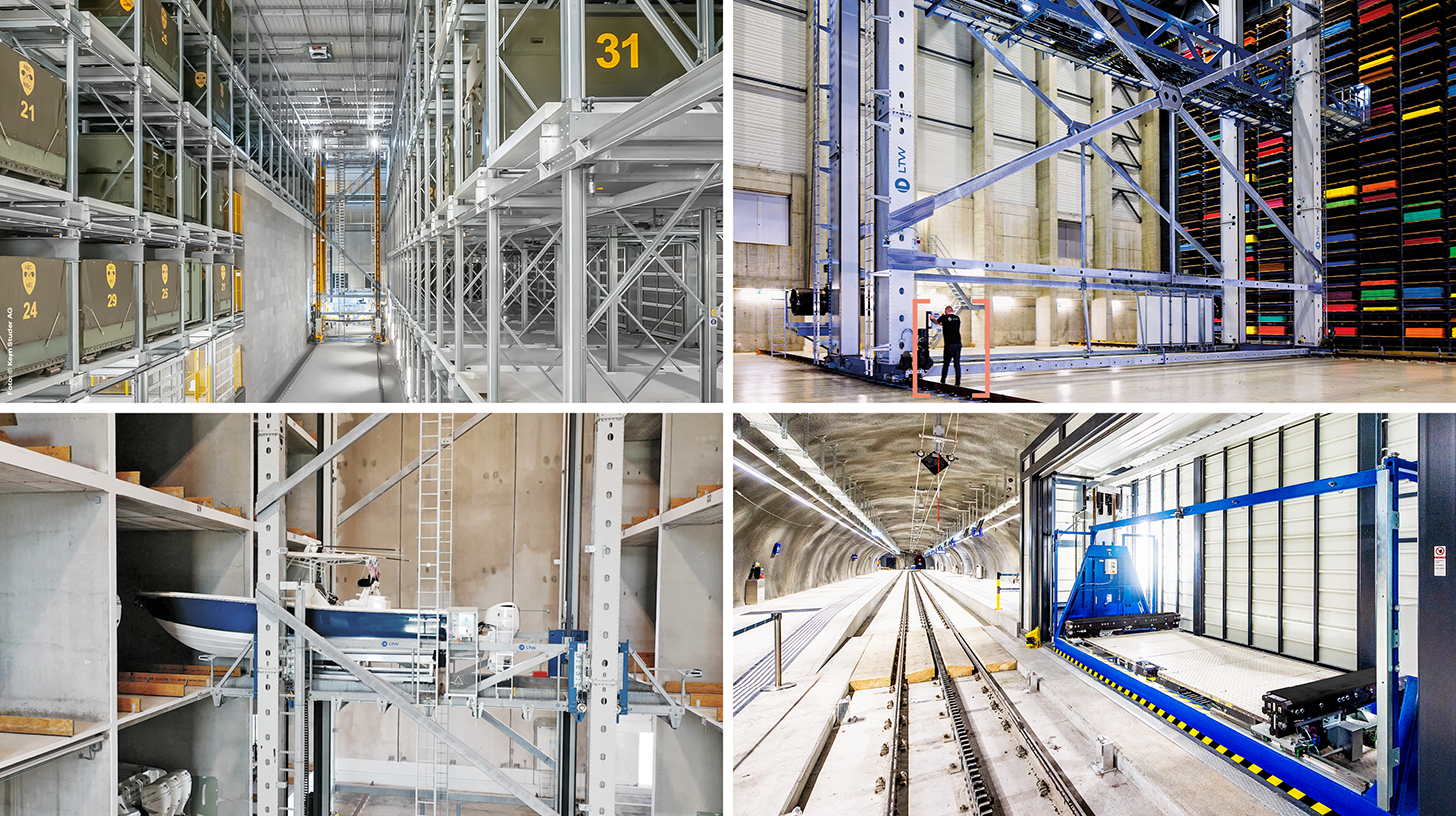
LTW Intralogistics – Engineers of Flow - Image: LTW Intralogistics GmbH
LTW offers its customers not individual components, but integrated complete solutions. Consulting, planning, mechanical and electrotechnical components, control and automation technology, as well as software and service – everything is networked and precisely coordinated.
In-house production of key components is particularly advantageous. This allows for optimal control of quality, supply chains, and interfaces.
LTW stands for reliability, transparency, and collaborative partnership. Loyalty and honesty are firmly anchored in the company's philosophy – a handshake still means something here.
Related to this:
Congestion in Rotterdam and Hamburg: How companies are securing their supply chains now
From data sheet to story: How use cases build trust
Technical metrics such as payback period, energy savings, or picking accuracy convince finance departments, but they rarely generate the emotional persuasion that truly drives an investment decision for the board or investors. This is where the compelling narrative of concrete use cases comes into play. A case study in which an educational materials distributor was able to reduce its staffing needs by 65 percent through the implementation of an automated sorting system, or a logistics provider that doubled its operational efficiency and simultaneously reduced sorting errors in last-mile delivery by integrating RFID-based sorting, tells a tangible story of change, risk, and success that mere percentages cannot convey.
The true art of communication lies in translating the abstract benefits of port buffers into a concrete narrative that resonates with decision-makers on an intuitive level. A story that begins with the anxiety of a purchasing manager waiting for a container ship that has been anchored off Rotterdam for two weeks, while the production line will grind to a halt in three days without supplies, creates a sense of urgency that a spreadsheet of amortization periods could never generate. When this story is then linked to the revelation that a vertical buffer warehouse would have bridged precisely those three days because already stored goods would have remained accessible regardless of the ship's arrival time, a narrative emerges that combines technical legitimacy with emotional relevance.
For companies communicating their automation strategy externally, a three-part structure is recommended: first, a description of the specific stress situation, such as particular congestion weeks and their measurable impact on delivery times and production risk; then, a description of the chosen technical solution with its verifiable key performance indicators; and finally, a link back to business success in terms of delivery reliability, customer satisfaction, or avoided production downtime. This structure works both in investor presentations and when addressing B2B customers who themselves suffer from volatile delivery times and are looking for reliable partners who have proven their own resilience.
In logistics, congestion refers to the overload of port terminals, where arriving ships cannot be processed immediately due to exhausted capacities at quays, cranes, storage areas, or personnel, and consequently have to wait for days at anchor or in front of the terminal. This leads to backlogs in waiting times, delayed unloading and loading, and consequently to unforeseen delays along the entire supply chain, as can currently be observed in Rotterdam, Hamburg, and Singapore, where waiting times of several days are common.
It is crucial that the narrative doesn't degenerate into mere marketing hype, but remains grounded in robust operational metrics. Overall equipment effectiveness (OEE), aisle availability, and throughput efficiency are key performance indicators (KPIs) that can be captured in real time via cloud-based monitoring platforms and tracked over time. Communicating this data transparently establishes a credibility that mere claims about resilience cannot achieve. The true strength, therefore, lies in combining verifiable operational data with the narrative integration of this data into a picture that customers, investors, and employees alike can understand and relate to.
Related to this:
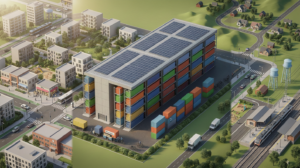
Trade routes, TEN-T and the struggle for regulatory resilience
The current congestion is not merely a logistical phenomenon, but increasingly a geoeconomic one. The diversion of shipping around the Cape of Good Hope, triggered by ongoing tensions in the Red Sea and the temporary de facto closure of the Strait of Hormuz, is altering not only transit times, but also the strategic evaluation of entire trade corridors. Countries and companies that had relied on dependable transit times through the Suez Canal are forced to reassess their procurement strategies, giving new and concrete urgency to debates about nearshoring, regional warehousing, and diversified sourcing.
The European Union is responding to this vulnerability, among other things, with the revised Trans-European Transport Network (TEN-T) Regulation, which entered into force in 2024 and reorganizes the planning, development, and operation of the core transport corridors. The aim of this regulation is to better integrate multimodal transport modes and to equip the coordinators of the individual core network corridors with expanded powers in order to identify and address bottlenecks more quickly. For operators of hinterland logistics and warehousing infrastructure, it is relevant that this network planning increasingly defines hubs where multimodal transshipment points, rail connections, and automated storage capacity are to be strategically bundled in order to mitigate precisely those capacity peaks that have become so painfully apparent in recent months.
At the same time, it is becoming clear that regulatory responses consistently lag behind operational reality. While TEN-T coordinators are working on multi-year infrastructure plans, companies are already having to cope with waiting times of several days at terminals like Rotterdam or Hamburg. This discrepancy between long-term infrastructure policy and short-term operational pressures explains why private investments in buffer capacity, particularly in the form of vertical warehouses at strategic hinterland hubs, are effectively becoming a form of private compensation for regulatory delays. Those who cannot wait until new rail lines or expanded inland ports are completed must secure their own supply chains through additional buffer capacity.
Related to this:

Another often underestimated regulatory factor is European data law. Automated warehouse systems generate enormous amounts of operational data, from sensor readings and goods movements to staffing schedules, which are increasingly processed via cloud-based platforms. European data protection regulations, and increasingly those concerning data sharing within supply chains, require operators to design their system architecture in such a way that sensitive operational and personnel data remain protected, while simultaneously ensuring the transparency regarding capacities and delays necessary for effective TEN-T coordination. This dual requirement—data protection on the one hand and interoperability for a functioning European transport network on the other—will become a distinct area of investment for logistics companies in the coming years, requiring them to adapt their IT architecture accordingly.
From a geoeconomic perspective, the current combination of geopolitically driven route congestion and structurally overloaded European port terminals is creating a new category of investment logic. Companies that previously viewed warehousing primarily as a cost factor to be minimized are beginning to understand it as a strategic resilience tool that proves its value particularly during times of crisis. Vertical, automated warehousing concepts at well-connected inland locations, ideally near the multimodal hubs planned within the framework of TEN-T, are thus positioning themselves as a link between short-term operational security and long-term European transport policy. Those who secure this position early gain a locational advantage that extends far beyond the mere cost analysis of individual warehousing projects and, in the best-case scenario, becomes a central component of their own supply chain strategy.
The coming years will show whether the current combination of geopolitical uncertainty and structural port congestion proves to be a temporary anomaly or a permanent new normal. Given the structural nature of the current distortions, which extend far beyond a one-off demand shock, the latter seems more likely. Companies that align their inventory and buffer strategies with this new reality now are gaining an advantage that should prove crucial when the next inevitable disruption hits.
Consulting - Planning - Implementation

Konrad Wolfenstein
I would be happy to serve as your personal advisor.
You can contact me at wolfenstein∂xpert.digital or
Just call me on +49 7348 4088 965 .
Your container high-bay warehouse and container terminal experts
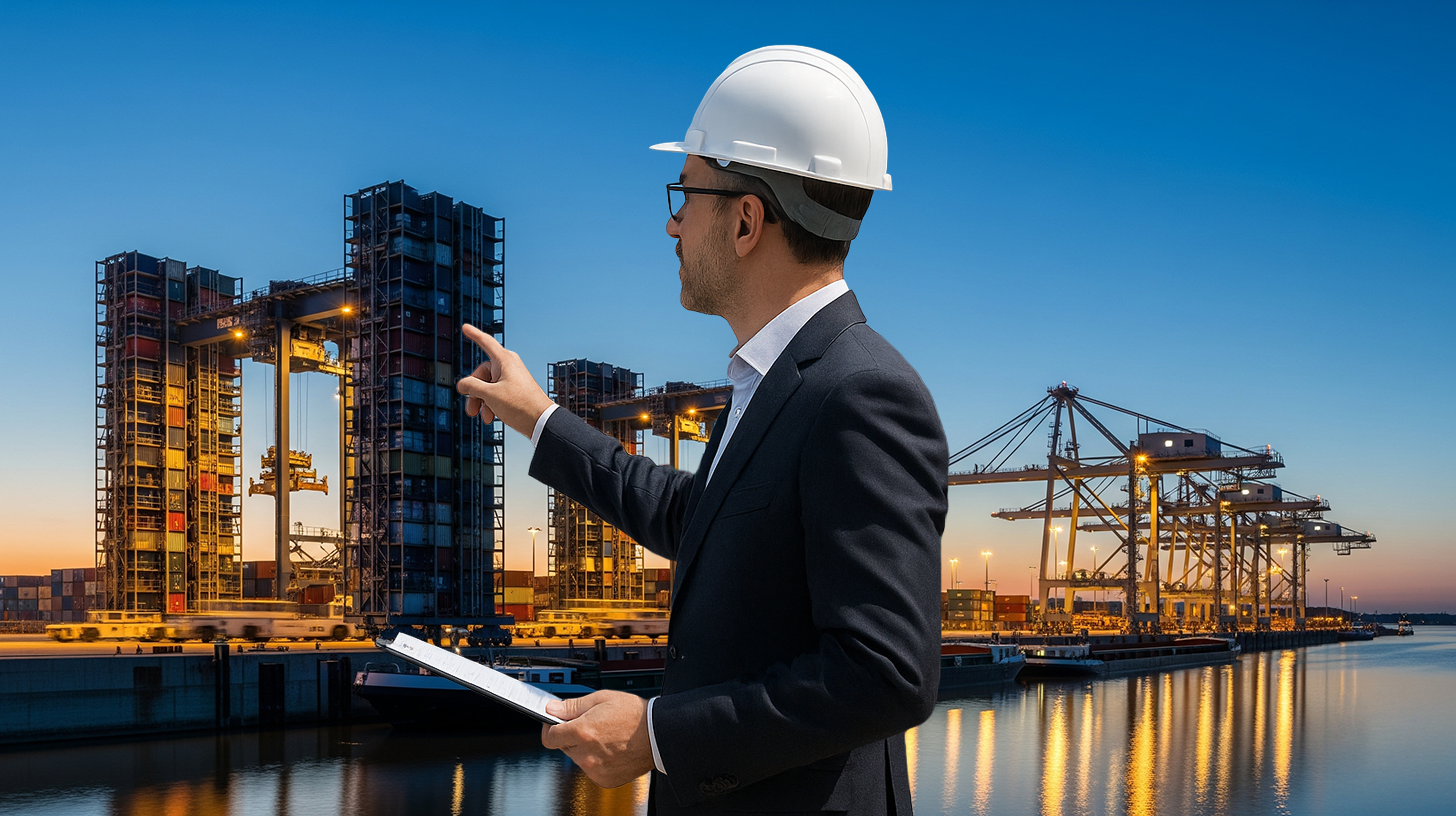
Container terminal systems for road, rail and sea transport in the dual-use logistics concept of heavy-lift logistics - Creative image: Xpert.Digital
In a world marked by geopolitical upheavals, fragile supply chains, and a new awareness of the vulnerability of critical infrastructure, the concept of national security is undergoing a fundamental reassessment. A state's ability to guarantee its economic prosperity, the provision of essential goods and services to its population, and its military capability increasingly depends on the resilience of its logistical networks. In this context, the concept of "dual-use" is evolving from a niche category of export control to a broader strategic doctrine. This shift is not merely a technical adjustment but a necessary response to the "paradigm shift" that demands a profound integration of civilian and military capabilities.
Related to this: