

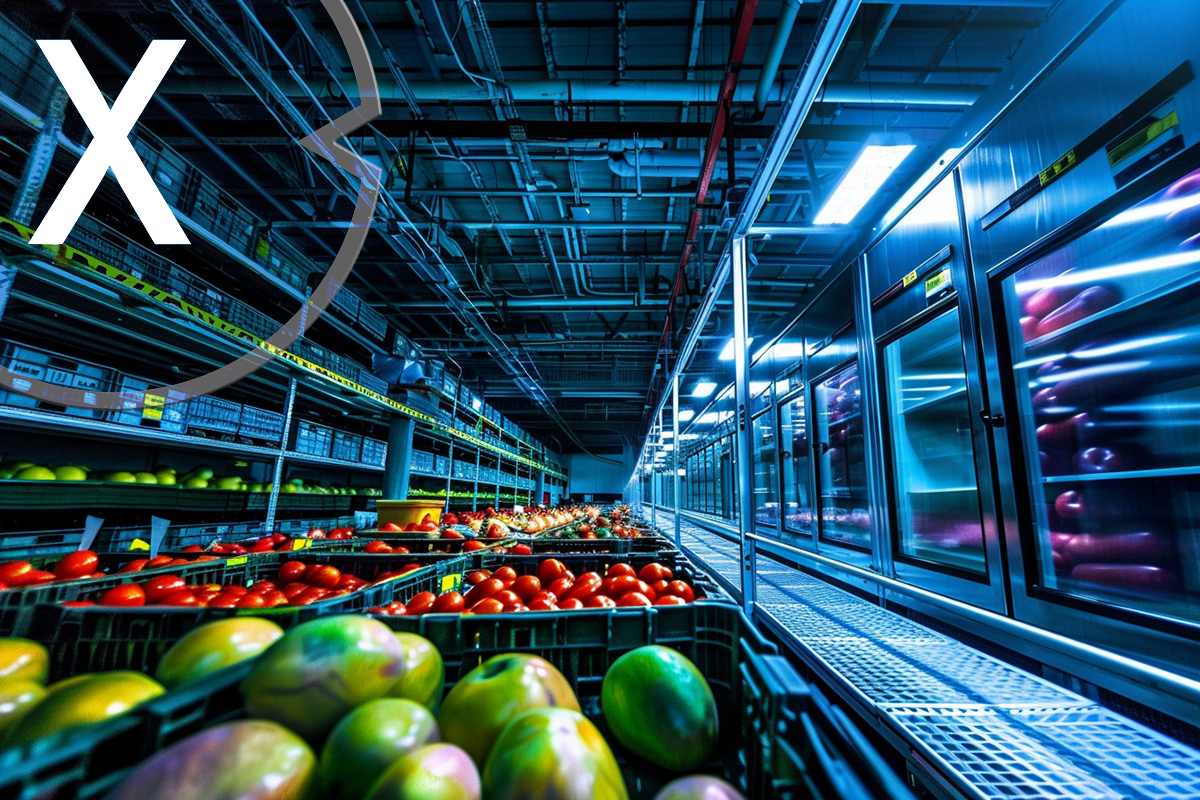
Cold chain logistics: How can blockchain technology improve the green cold chain in fresh produce and refrigerated logistics? – Image: Xpert.Digital
Blockchain for the green cold chain: A leap in innovation in fresh food logistics
Blockchain technology has the potential to significantly improve the green cold chain by increasing transparency, traceability, and efficiency across the entire supply chain. At a time when sustainability and environmental responsibility are becoming increasingly important, blockchain offers an innovative solution to address the challenges of traditional cold chain processes. The following outlines the key ways in which blockchain can contribute to improving the green cold chain.
1. Transparency and traceability
One of the greatest strengths of blockchain technology is its ability to store data immutably and transparently. This is particularly important in the cold chain, as many products – such as food and medicines – are temperature-sensitive and must be transported under specific conditions. By using blockchain, all parties involved in the supply chain can track the condition and history of a product in real time.
For example, IoT sensors can be attached to containers or packaging to continuously collect temperature, humidity, and location data. This data is then stored on the blockchain, where it cannot be manipulated. This allows every participant in the supply chain—from manufacturer to end consumer—to ensure that products have always been stored and transported under optimal conditions. Should any deviations occur, such as a temperature increase during transport, this is immediately documented on the blockchain, enabling a rapid response to minimize damage.
A practical example of this is the application of VeChain, a blockchain platform that makes it possible to transparently track a product's entire supply chain. Consumers can use a QR code on a product's packaging to verify that the cold chain has been maintained throughout. This not only increases confidence in product quality but also helps to reduce food waste.
Related to this:
2. Increased efficiency through automation
Blockchain can also help automate processes within the cold chain, thereby making them more efficient. One example of this is so-called "smart contracts," which are intelligent contracts based on the blockchain. These contracts can be executed automatically as soon as certain conditions are met.
Related to this:
In the cold chain, for example, smart contracts could be programmed to raise an alarm or trigger specific actions (such as rerouting transport) when sensors detect a deviation from the defined temperature specifications. This reduces the need for manual intervention and ensures that problems can be identified and resolved more quickly.
Furthermore, smart contracts can also be used to automate payments. For example, a contract could stipulate that a supplier is only paid once all conditions – such as maintaining the cold chain – are met. This creates additional incentives for all parties involved to adhere to the highest standards.
3. Prevention of fraud and manipulation
Another major problem in global supply chains is the possibility of fraud or manipulation of shipping documents or product information. Because blockchain data is immutable and every transaction or change is fully documented, this technology can help minimize such risks.
In the context of the cold chain, this means, for example, that falsification or manipulation of certificates or transport documents is virtually impossible. Any change to the product information is immediately visible to all parties involved and cannot be reversed or altered. This is particularly important for industries such as pharmaceuticals or food retail, where trust and safety are paramount.
One practical example is the company SkyCell, which has developed intelligent refrigerated containers for transporting medications. These containers are equipped with IoT sensors and use blockchain technology to store all relevant transport data. This enabled SkyCell to ensure that medications were transported safely during the COVID-19 pandemic, despite logistical challenges such as flight cancellations.
Related to this:
4. Sustainability through optimization
Optimizing processes along the cold chain not only increases efficiency but also reduces the environmental footprint. By using blockchain technology, companies can identify and resolve weaknesses in their processes more quickly.
For example, inefficient routes or unnecessary stops can be avoided by using real-time data from the blockchain. This leads to a reduction in energy consumption and thus also to a reduction in CO₂ emissions. In addition, the precise monitoring of temperature conditions enables the minimization of food losses due to spoilage – another important step towards greater sustainability.
The combination of IoT sensors and blockchain technology offers enormous potential here: Sensors continuously monitor the condition of the products during transport and immediately report any deviations to the system. This data can then be used to make future transports more efficient and to utilize resources better.
5. Improving food safety
Food safety is a central issue in the global logistics industry. A broken cold chain can lead to food spoilage or compromised quality – with potentially serious consequences for consumers.
Blockchain offers a solution here through seamless traceability: Every link in the supply chain can precisely track when and where a product was stored and under what conditions. Should a problem nevertheless arise – such as an outbreak of foodborne illness – it can be quickly traced which batch was affected and where the problem originated.
This not only saves time during recall campaigns, but also helps to strengthen consumer confidence in the safety of their food.
6. Cost savings through efficiency
In addition to its environmental benefits, the implementation of blockchain technology also offers economic advantages for companies. Automation of processes and reduction of errors can lead to cost savings.
For example, many manual steps in documenting transport processes are eliminated: Instead of exchanging paper documents between different parties (which is time-consuming and prone to errors), all relevant information can be stored and retrieved directly in the blockchain. This not only saves time but also significantly reduces bureaucratic costs.
Furthermore, preventing product losses through better monitoring helps to minimize financial losses – especially in industries such as food retailing or pharmaceuticals.
Blockchain as a key technology for a green cold chain
Blockchain technology offers numerous advantages for improving the green cold chain: it increases transparency and traceability along the entire supply chain; it automates processes through smart contracts; it minimizes the risk of fraud; it contributes to the optimization of logistical processes; it improves food safety; and it helps companies reduce costs.
In combination with other technologies such as IoT sensors, blockchain has the potential to make traditional cooling systems more sustainable – both in terms of environmental and economic aspects. Companies should therefore consider using this technology as part of their strategy to improve their sustainability goals.
Related to this:




Expert partner in warehouse planning and construction

Blockchain for the green cold chain: A leap in innovation in fresh food logistics
Several companies have already successfully implemented blockchain solutions for the cold chain to improve transparency, traceability, and efficiency in the logistics of temperature-sensitive goods. Here are some prominent examples:
1. IBM and Maersk
IBM and Maersk have developed a blockchain solution specifically designed for the cold chain in the logistics of food and pharmaceutical products. This solution improves transparency and efficiency in tracking goods along the supply chain by storing immutable temperature data, thus ensuring regulatory compliance.
2. SkyCell
SkyCell has developed intelligent refrigerated containers equipped with IoT sensors for transporting pharmaceuticals. These containers monitor their location, temperature, and humidity in real time. The data is stored on a blockchain to ensure tamper-proof documentation.
3. Walmart
Walmart has been using blockchain technology since 2018 to improve food traceability in its supply chain. One example is the tracking of leafy greens, where blockchain makes it possible to identify the origin of a product within seconds. This not only helps with recalls but also improves food safety.
4. Overhaul
In 2024, Overhaul introduced a solution for quality management in the cold chain based on blockchain technology. This solution aims to manage risks and quality for temperature-sensitive goods in industries such as pharmaceuticals and food.
5. Coforge
Coforge offers a blockchain-based cold chain solution specifically designed for the transport of organic products and pharmaceuticals. This solution utilizes IoT sensors for real-time monitoring of temperature and humidity conditions during transport.
Blockchain technology in cold chain logistics
These companies demonstrate how blockchain technology is successfully used in cold chain logistics to create transparency, prevent fraud, and minimize losses due to improper storage or transport.