Previously, the official target for reducing greenhouse gas emissions in the European Union by 2030 was 40%. Now, the EU has announced a more ambitious target. European Commission President Ursula von der Leyen presented the new EU climate target in her State of the Union address in Brussels.
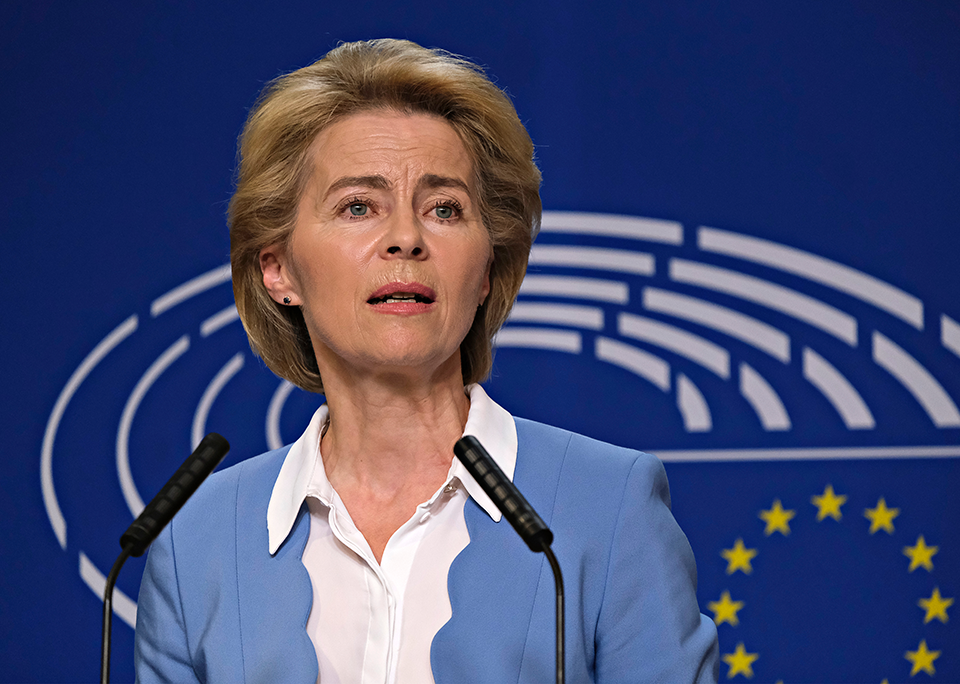
EU Commission President Ursula von der Leyen – Shutterstock.com|Alexandros Michailidis
CO2 emissions are to be reduced by 55 percent by 2030. This goal is "ambitious, but achievable," according to Ursula von der Leyen.
She is calling for the European Union's greenhouse gas emissions to be reduced by at least 55 percent below 1990 levels by 2030. Von der Leyen proposed this drastic tightening of the EU climate target in her State of the Union address in Brussels.
The stricter target is intended to help comply with the Paris Climate Agreement and stop dangerous global warming. However, the new target still needs to be agreed upon with the European Parliament and the EU member states in the coming weeks.
In Germany, climate policy distinguishes between measures taken by the federal government, the states, and the municipalities.
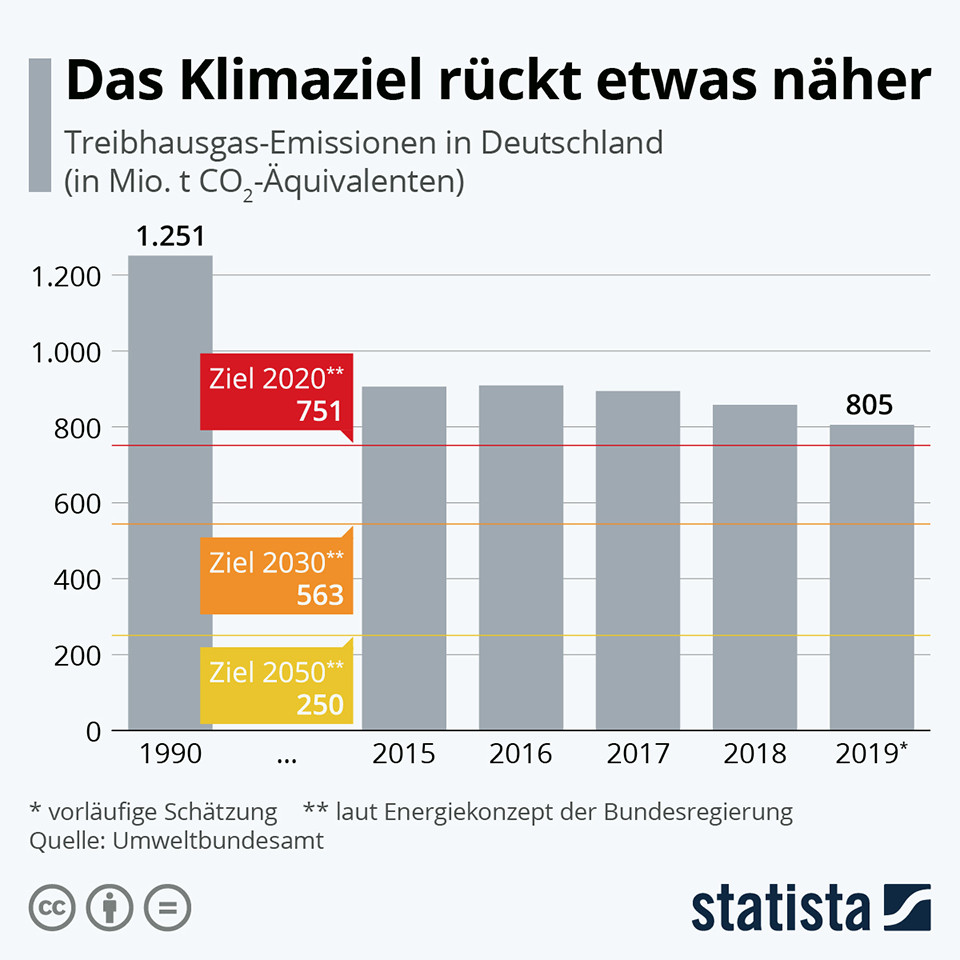
Germany has committed to reducing greenhouse gas emissions by 40% by 2020 compared to 1990, by 55% by 2030, by 70% by 2040 and by 80% to 95% by 2050.
However, according to all forecasts, this goal will be missed unless greater political efforts are undertaken. In a meta-analysis of eleven studies, the Center for Solar Energy and Hydrogen Research Baden-Württemberg (2015) found that if the current trend continues, only a reduction of 33% to 34% would be achieved by 2020. An Allianz SE report (2016) and a study by the Berlin School of Economics and Technology (2016) also confirmed that Germany will miss its climate targets. The reason given was the too slow expansion of renewable energies.
Can Germany still meet its 2020 climate target? The Federal Environment Agency presented its 2019 climate protection report in March. According to the preliminary assessment, Germany was able to reduce its greenhouse gas emissions in 2019 by around 54 million tons – 6.3 percent compared to the previous year. This was primarily due to a decline in emissions in the energy sector resulting from the decommissioning of coal-fired power plants and the expansion of alternative energy sources. The goal of reducing emissions to 751 million tons of CO₂ equivalents this year suddenly came within reach.
To keep global warming below 1.5 degrees Celsius, which would already have drastic environmental consequences, Germany would need to become climate-neutral by 2035. The expansion of wind power has recently stalled, and the federal government is also facing criticism for still doing far too little to combat climate change.
Ironically, COVID-19 could change that: Due to the shutdown of public life during the Corona lockdown, traffic and industrial production decreased, and less CO2 was released.
The energy sector continues to be the largest contributor to emissions in Germany, primarily through coal combustion. Industry accounts for the second largest share, followed by the transport sector and agriculture.
Related to this:
On December 11, 2019, the European Commission under Ursula von der Leyen presented the European Green Deal, a concept with the goal of reducing net greenhouse gas emissions in the European Union to zero by 2050. Europe is to become the first climate-neutral continent.
Greenhouse gas emissions: The climate target is getting a little closer
You can find more infographics at Statista.
Keep in touch