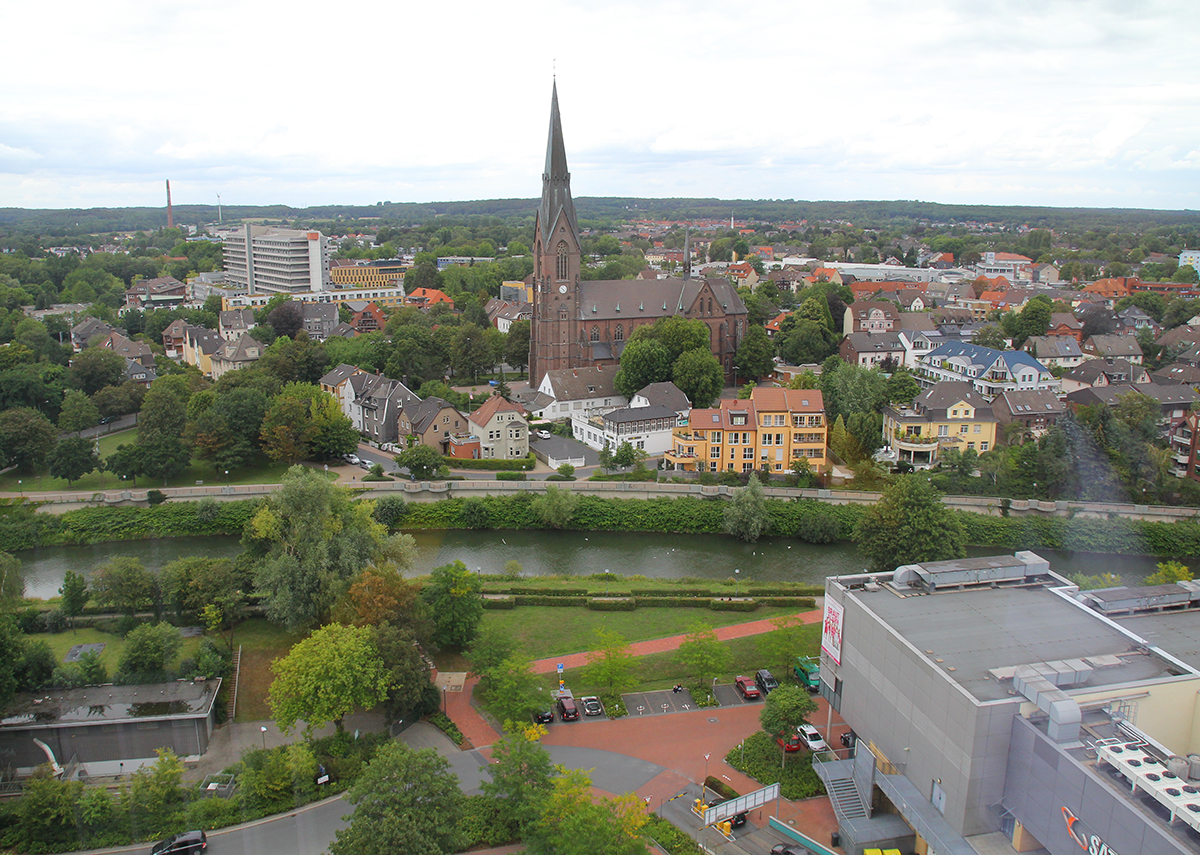
Climate analysis of Lünen by the city of Lünen, including a smart columbarium solution – Sinem Kaya|Shutterstock.com
The importance of green spaces and open spaces for the urban climate
➡️ The “Smart Columbarium” as an innovative solution
The climate analysis for Lünen underscores the crucial importance of protecting and promoting existing green spaces and open areas. These green spaces play a multifaceted role in the urban climate and the quality of life for residents. They not only provide space for recreation and relaxation, but also function as vital green corridors and the city's lungs. Through their properties, they actively contribute to improving air quality by absorbing CO₂ and filtering pollutants. Optimal preservation and maintenance of these green spaces are therefore essential for a healthy and pleasant living environment.
Challenges of inner-city densification
Due to steady population growth and increasing urbanization, careful inner-city densification is essential. The aim is to use existing space efficiently to meet the rising demand for housing. However, densification also presents challenges, particularly regarding the loss of green spaces and open areas. In this context, it is crucial to consider the integration of sufficient green spaces when planning new residential areas. These green spaces contribute significantly to a pleasant and healthy living environment and positively influence the city's microclimate.
Climatic stress in densely populated areas such as the city center
Climate analysis shows that densely built-up areas, such as the city center of Lünen, are more heavily impacted by climate change. Intensive construction, land sealing, and industrial activity lead to increased heat radiation and pollution. These factors negatively affect the microclimate and air quality of these regions. As a result, these areas can experience higher temperatures and impaired air quality, which in turn impacts the well-being of residents.
Interesting solutions that we at Xpert offer to cities, municipalities, communities and companies

➡️ City solar carport modules for photovoltaic parking spaces with translucent solar modules
➡️ City Pergolas: The ideal concept for the green smart city of the future
➡️ Smart Columarium - up to 90% green spaces in city centers for well-being and a green city
The "Smart Columbarium" as an innovative solution for space saving and urban development
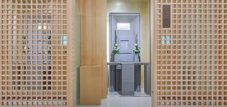
A novel and exciting solution is the "Smart Columbarium." This concept offers the possibility of saving up to 90% of cemetery space and using the freed-up green space for other purposes. This energy-efficient and space-optimized burial site was developed by logistics experts from Japan and Germany. The "Smart Columbarium" is an innovative form of burial where urns are stored in a space-saving and technologically advanced manner. This reduces the space required for traditional graves and frees up valuable green space. This space can then be used to make a valuable contribution to improving the living environment and quality of life for local residents.
The combination of protecting and promoting existing green spaces, thoughtful inner-city densification, and innovative concepts like the "Smart Columbarium" could help cities and municipalities find a balanced approach between urban development and environmental protection. By strategically investing in green infrastructure and exploring new land-use options, cities can preserve positive bioclimatic conditions in residential areas while simultaneously improving the climate in densely populated regions.
Learning from the Japanese: Already 91% of the population lives in urbanized areas
More information here:
The Smart Park or Smart Columbarium concept

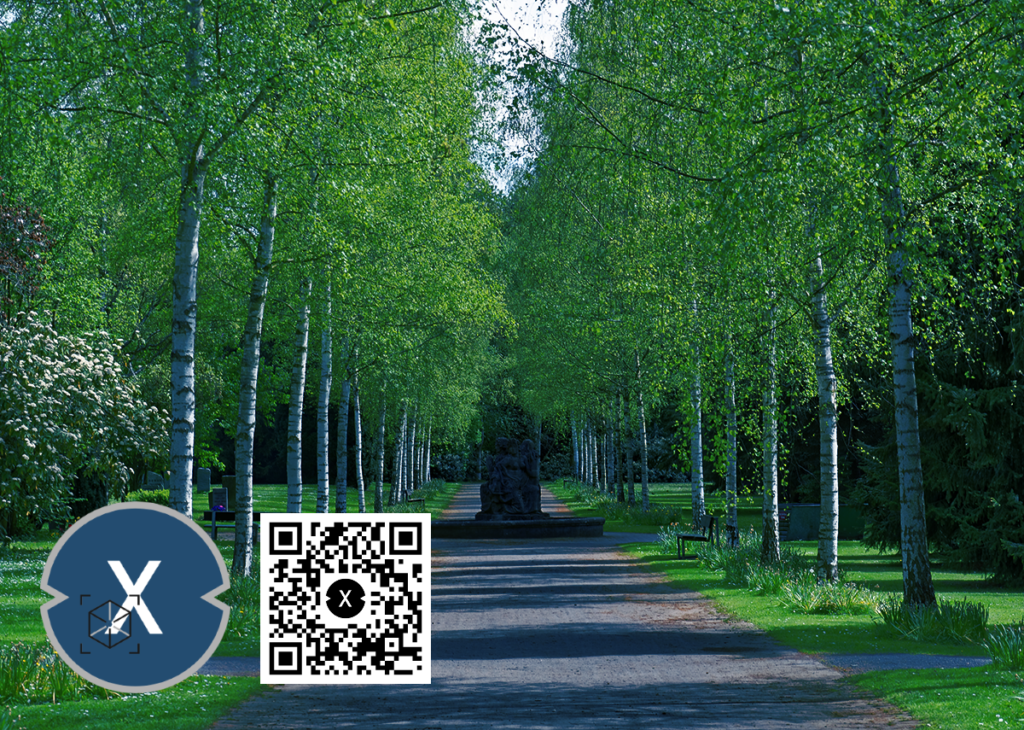
Smart Park: New green parks thanks to the Smart Columbarium - Image: Xpert.Digital
The Smart Columbarium concept describes the possibility of reducing the space required for cemeteries by an impressive 90%. This innovative solution creates valuable space that can be used to develop green leisure and recreational parks. This measure aims to enhance the sense of well-being in the community and provide residents with an attractive environment for their leisure activities.
More information here:
- Smart Park: New green parks thanks to the Smart Columbarium.
Access code/password: daifuku

The comprehensive climate analysis of Lünen: An overview
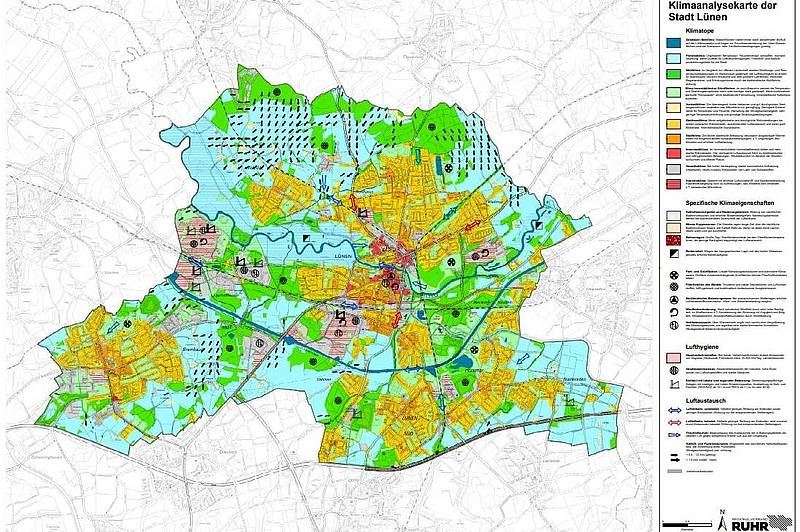
Climate analysis overview map of the city of Lünen: City of Lünen publishes results – Image: City of Lünen
This section presents a comprehensive climate analysis of Lünen, examining various climatic factors such as near-surface air temperature, nighttime cooling rate, and air currents. The analysis reveals encouraging results regarding bioclimatic conditions in most residential areas, while densely built-up regions such as the city center and industrial areas experience greater climatic stress. Based on these findings, specific urban planning and open space recommendations are proposed to maintain these positive climatic conditions. These include preserving open and green building stock, promoting local dredging and revegetation measures, and considering inner-city densification and smaller new residential areas with sufficient green spaces.
Related to this:
Climatic conditions in residential areas
The study reveals encouraging results regarding the bioclimatic conditions in Lünen's residential areas. These areas benefit from pleasant ground-level air temperatures, which contribute to a comfortable living environment. Residents here can enjoy the advantages of a pleasant climate, which has a positive impact on their quality of life.
Climatic stress in densely populated regions
Unfortunately, the climatic conditions in densely built-up areas such as city centers and industrial zones are not so favorable. Higher levels of climate stress are observed here, attributable to dense development, sealed surfaces, and industrial activities. Heat radiation and dust and pollutant levels are elevated in these areas, which can negatively impact the microclimate.
Urban planning recommendations for improving the climate
In order to maintain the positive climatic conditions in residential areas and to improve them in densely built-up regions, the analysis provides some urban planning recommendations:
1. Preservation of open and green building fabric
It is crucial to protect and promote existing green spaces and open areas. Green spaces not only provide room for recreation and relaxation, but also serve as vital green corridors and the lungs of the city. These areas contribute to improved air quality by absorbing CO₂ and filtering pollutants.
2. Promotion of local dredging and revegetation measures
Measures such as dredging waterways and targeted greening of streets and squares can reduce soil sealing and improve the microclimate. Trees and plants not only provide shade and cooling, but also contribute to improved humidity, which is particularly important in densely built-up areas.
3. Consideration of inner-city densification and smaller new residential areas with sufficient green spaces
To reduce land consumption while still creating sufficient living space, careful urban densification is necessary. However, care should be taken to ensure that new residential areas include sufficient green spaces to guarantee a pleasant and healthy living environment.
outlook
The comprehensive climate analysis of Lünen offers valuable insights into the city's climatic conditions. The positive bioclimatic conditions in residential areas should be protected and preserved, while targeted measures must be taken in densely built-up areas to improve the microclimate. By implementing the proposed urban planning recommendations, Lünen can make a significant contribution to climate protection and create a livable environment for its residents.
Climate analysis of Lünen: A comprehensive examination of the city's climate
Climatic conditions in Lünen: Influences on the urban climate
The climatic conditions in Lünen play a crucial role in the city's climate and the well-being of its residents. Various factors, such as geographical location, soil composition, and building development, significantly influence the local climate.
Bioclimatic analysis: Impacts on humans and nature
The bioclimatic analysis examines the interactions between the climate and living organisms in Lünen. It investigates the effects on health, vegetation, and ecosystems in order to find sustainable solutions for a harmonious coexistence of humans and nature.
Lünen city center climate: Special challenges in urban areas
The climate in Lünen's city center faces specific challenges due to the high building density and extensive sealing of surfaces. The "urban heat island" effect leads to elevated temperatures, while air quality is affected by traffic and industry.
Residential areas in Lünen: A comfortable climate for residents
The climate conditions in Lünen's residential areas are of particular importance for the well-being of the residents. The analysis shows how a pleasant and healthy living environment can be created through targeted measures.
Climatic stress in Lünen: Challenges and solutions
Densely built-up areas in Lünen are often more heavily impacted by climate change. The analysis identifies the causes and presents solutions to reduce this impact and improve the microclimate.
Green spaces in Lünen: their importance for the urban climate
The green spaces in Lünen play an important role in the city's climate. They contribute to improving air quality, reducing urban heat islands, and preserving biodiversity.
Open spaces in Lünen: Space for recreation and climate balance
The open spaces in Lünen not only offer room for recreation and relaxation, but also contribute to climate regulation. They create important green corridors and help to cool the city.
Inner-city densification in Lünen: A balance between living space and green spaces
Inner-city densification in Lünen presents a challenge in creating sufficient housing while simultaneously preserving enough green spaces. The analysis shows how sustainable urban planning can support this effort.
Smart Columbarium Lünen: New ways of using space
The "Smart Columbarium" in Lünen offers an innovative way to save cemetery space and free up valuable green spaces for other uses. This solution demonstrates the potential for climate-friendly and sustainable urban development.
Urban climate development: Future prospects for Lünen
Analyzing urban climate development in Lünen provides a glimpse into the future. Identifying trends and challenges forms the basis for targeted climate protection measures.
Climate protection measures in Lünen: Taking action for a sustainable future
The climate analysis in Lünen highlights the importance of climate protection measures. From promoting renewable energies to reducing CO2 emissions – targeted measures are crucial for a sustainable future.
Environmental protection in Lünen: Climate protection as part of holistic measures
Climate protection is closely linked to environmental protection. The analysis shows how comprehensive environmental protection in Lünen can contribute to protecting the climate and improving the quality of life for residents.
Air quality in Lünen: Impact on climate and health
Air quality in Lünen has an impact on the climate and the health of the population. The analysis identifies sources of air pollution and shows ways to improve air quality.
Lünen microclimate: Local characteristics and effects
The microclimate in Lünen exhibits local peculiarities and effects. The analysis examines the microclimatic conditions and shows how they can be positively influenced through targeted measures.
Sustainable urban planning in Lünen: Climate-friendly design of urban space
Sustainable urban planning in Lünen takes into account the climatic conditions and creates an urban space that protects the climate while simultaneously meeting the needs of the residents.
Climate change in Lünen: Challenge and opportunity
The analysis highlights the impact of climate change on Lünen and simultaneously shows the opportunity for a future-oriented and climate-friendly development of the city.
Climate-friendly architecture: A building block for sustainable construction in Lünen
Climate-friendly architecture plays a key role in shaping the urban climate in Lünen. Energy-efficient buildings and sustainable construction methods can make a significant contribution to climate protection.
Lünen's urban climate: A complex interplay
The urban climate in Lünen is the result of a complex interplay of various factors. The analysis shows how these factors influence it.
Climate analysis: A comprehensive look at the climate
Introduction to Climate Analysis
Climate analysis is an important scientific method for studying the climate in specific regions or globally. It encompasses various techniques and approaches for collecting and analyzing data that are crucial for understanding the climate.
Climate study: Research and findings
A climate study involves the thorough investigation of climate patterns, weather events, and climate change over a specific period. Scientists use various data sources to identify and interpret long-term trends and short-term fluctuations.
Climate data analysis: Evaluation of historical records
Climate data analysis focuses on evaluating historical climate records such as temperature data, precipitation amounts, and humidity. By using modern statistical methods, patterns and trends in the data can be identified, providing important information for assessing the current climate.
Climate research: Investigation of specific phenomena
Climate research focuses on investigating specific climatic phenomena such as El Niño, La Niña, or climate cycles. The aim is to better understand the underlying causes and effects of these phenomena and to develop possible predictive models.
Climate assessment: Assessment of climate conditions
Climate assessment involves a comprehensive evaluation of the climatic conditions in a specific area. This includes considering various factors such as temperature, precipitation, air quality, and solar radiation. The results serve as a basis for climate-related decisions and measures.
Climatic analysis: Investigation of climate zones and regions
Climatic analysis involves the study of climate zones and regions worldwide. By identifying similar climatic characteristics in specific areas, comparisons can be made to determine similarities and differences between various regions.
Climate monitoring: Monitoring current climate changes
Climate monitoring involves the continuous, real-time monitoring of current climate changes. Weather stations, satellites, and other technologies are used to collect and analyze data on temperature, precipitation, and other relevant parameters.
Climate data analysis: Use of big data and technology
Climate data analysis utilizes modern technology and big data analytics. Large amounts of climate data are collected to identify patterns and trends that contribute to a better understanding of the climate and more informed climate-related decisions.
Climate monitoring: Data collection for forecasting models
Climate monitoring focuses on collecting data for the development of forecasting models. Climate researchers continuously gather data to create models that enable predictions about future climate changes and weather events.
Climate diagnosis: Analysis of the causes of climate events
Climate diagnostics deals with the analysis and investigation of the causes of climate events such as heat waves, droughts, or heavy rainfall. By understanding the underlying factors, preventive measures can be taken to mitigate potential impacts.
➡️ This comprehensive overview of the various aspects of climate analysis highlights the importance of this research discipline for understanding and addressing the challenges of climate change. From the evaluation of historical data to the development of forecasting models, climate analysis plays a central role in the effort to better understand our climate and find sustainable solutions for the future.
Summary
The urban climate of Lünen is influenced by various factors, including its geographical location, soil composition, and building development. It plays an important role in the well-being of its residents, and therefore bioclimatic analyses are conducted to investigate its effects on people and nature.
The city center of Lünen faces specific challenges due to the high building density and sealing of surfaces, leading to the "Urban Heat Island" effectandair quality problems.
The climatic conditions in residential areas are of particular importance for the well-being of the residents, and a pleasant and healthy living environment can be created through targeted measures.
Densely built-up areas in Lünen are often more heavily impacted by the climate, therefore solutions are being sought to reduce the impact and improve the microclimate.
Green spaces and open areas play an important role in the urban climate and contribute to improving air quality and reducing heat islands.
Urban densification is a challenge in order to create living space while preserving sufficient green spaces, and sustainable urban planning can provide support in this regard.
The “Smart Columbarium” offers an innovative way to save cemetery space and free up valuable green spaces for other uses.
Hashtags: #ClimateProtection #UrbanDevelopment #EnvironmentalProtection #GreenSpaces #Sustainability
Energy-efficient urbanization: Climate analyses and climate emergency declarations by cities, towns and municipalities

Energy-efficient urbanization: Climate analyses and the master plan for 100% climate protection - Image: Xpert.Digital
Energy-efficient urbanization refers to the process of making cities and municipalities more energy-efficient and sustainable. Given the advancing climate change and the increasing global challenges related to energy consumption, energy-efficient urbanization is of great importance. Cities are responsible for a significant share of global emissions, but they also offer enormous potential to combat climate change and accelerate the transition to a low-carbon society.
More information here:
Xpert.Plus Smart City & Urban Logistics Consulting with Konrad Wolfenstein
Xpert.Plus is a project by Xpert.Digital. We have many years of experience in supporting and consulting on warehouse solutions and in warehouse optimization, which we combine under Xpert.Plus in a large network.

Konrad Wolfenstein
I would be happy to serve as your personal advisor.
You can contact me by filling out the contact form below or simply call me on +49 7348 4088 965 (Munich) .
I'm looking forward to our joint project.
Write to me


Xpert.Digital – Konrad Wolfenstein
Xpert.Digital is a hub for industry focusing on digitalization, mechanical engineering, logistics/intralogistics and photovoltaics.
With our 360° Business Development solution, we support renowned companies from new business to after-sales.
Market intelligence, smarketing, marketing automation, content development, PR, mail campaigns, personalized social media and lead nurturing are part of our digital tools.
You can find more information at: www.xpert.digital – www.xpert.solar – www.xpert.plus
Keep in touch