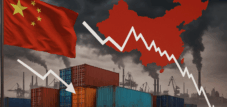
Beijing's new five-year plan and massive investment program: How China is challenging the global economic order – Image: Xpert.Digital
The chip war is escalating: Beijing's new five-year plan is a direct declaration of war on the USA
Current status (October 2025):
The 15th Five-Year Plan (2026-2030) is currently being drafted. The key milestones are:
From October 20 to 24, 2025, the 20th Central Committee of the Communist Party of China (CPC) convened for its Fourth Plenary Session in Beijing. At this meeting, the Central Committee's proposals for the drafting of the 15th Five-Year Plan (2026-2030) were discussed and adopted. General Secretary Xi Jinping chaired the session and explained the draft proposals.
Official farewell
The 15th Five-Year Plan is expected to be officially adopted and implemented at the National People's Congress (China's parliament) in March 2026.
The previous 14th Five-Year Plan
The currently valid 14th Five-Year Plan was adopted by the National People's Congress in Beijing in March 2021 and covers the period 2021-2025. It was initially prepared during a plenum of the Central Committee in the fall of 2020 and then formally adopted in the spring.
Investment priorities
As early as April 2025, at a symposium in Shanghai, Xi Jinping emphasized the core priorities of the new plan, including increased investment in artificial intelligence, semiconductor technology, quantum information technology, and other strategic future technologies. In March 2025, state media launched a nationwide campaign to gather public feedback, with "AI Plus" being named as the central topic of discussion.
Related to this:

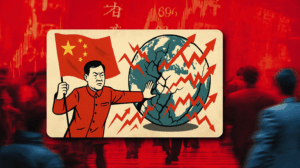
Is Beijing changing the rules of the game? Why the new economic order, caught between innovation and systemic conflict, will be a litmus test for the West
The new plan aims to strengthen China's technological independence and make the country less reliant on Western technology supplies – a response to tightened trade restrictions and the technology conflict with the US.
The next global upheaval has begun: With its new five-year plan and massive investment programs for artificial intelligence, semiconductor technology, and innovative industries, China is redefining the rules of a new great-power economic competition. Beijing is not only reacting to technological supply disruptions and growing geopolitical tensions with the US and Europe, but is also placing the paradigm shift from cheap mass production to global technological leadership at the heart of its national strategy.
This analysis illuminates the structure and dynamics of China's strategic master plan, outlines its historical origins, analyzes the driving forces and market mechanisms, examines the current situation using data, illustrates competition through practical country and company case studies, discusses risks and conflicting objectives, and offers a well-founded outlook on disruptive developments. Finally, it identifies strategic options for action for policymakers and businesses.
The long march to the top: China's economic transformation in retrospect
China's rise from an isolated developing country to the world's second-largest economy is the result of targeted state control, fundamental reforms, and ambitious phases of industrial expansion. Key milestones included the transition from a planned economy to a market-oriented opening-up in the late 1970s, accelerated by Deng Xiaoping's policy of "reform and opening up." Its role as an extended workbench for the Western world was effectively promoted by low wages and a vast labor market.
With projects like "Made in China 2025," ambitious investment programs, and, not least, the flagship technological projects in the current five-year plan, the focus is increasingly shifting towards high technology, innovation, and business-oriented research. The dominance in low-cost mass production is thus becoming a springboard for a technology-driven systemic change, fueled by societal modernization as well as geopolitical pressure and the increasing isolation of Western markets.
Anatomy of Control: The Drivers Behind China's Economic Strategy
The core of the Chinese economic model lies in the close integration of the party, the state, and key industries. Driven by long-term plans, centralized control mechanisms, and massively directed investments, the aim is to strengthen the domestic value chain, minimize dependence on Western technology suppliers, and expand global market power. Alongside key political and administrative actors (the National Development and Reform Commission, ministries), large state-owned enterprises and private-sector digital and technology companies are at the heart of the transformation agenda.
Economic drivers are:
- Targeted government funding in future sectors (AI, semiconductors, renewable energies)
- Strict industrial policy and subsidizing 'national champions'
- Economies of scale in the domestic market through over one billion consumers
- Massive state control of capital flows and investments in research and development
The complex control logic is supplemented by incentives, restrictions, and technology policy programs such as the social credit system. At the same time, however, the expectations and demands of a digitally networked, growing middle class are also rising, increasingly demanding innovative quality rather than low-priced products.
Our China expertise in business development, sales and marketing

Our China expertise in business development, sales and marketing - Image: Xpert.Digital
Industry focus areas: B2B, digitalization (from AI to XR), mechanical engineering, logistics, renewable energies and industry
More information here:
A thematic hub offering insights and expertise:
- Knowledge platform covering global and regional economies, innovation and industry-specific trends
- A collection of analyses, insights, and background information from our key areas of focus
- A place for expertise and information on current developments in business and technology
- A hub for companies seeking information on markets, digitalization, and industry innovations
Semiconductor three-way battle: USA, China and Taiwan in the race for chips
Data and diagnoses: China's economic transformation under scrutiny
The profound structural change is reflected in a number of striking indicators:
- The share of knowledge-based industry and high technology has been rising steadily for years, while traditional textile and metal industries are shrinking.
- GDP growth has slowed significantly – after decades of boom – but was still around 5 percent recently, while western countries stagnated or experienced recession.
- China invested over $1.4 trillion in strategic industries such as semiconductors, electric vehicles, AI and quantum computing between 2020 and 2025 alone.
- In the semiconductor sector, public and private investment has increased by more than 30 percent annually over the last five years.
- Exports of high-tech products already accounted for around 33 percent of total Chinese exports in 2024.
At the same time, many sectors are struggling with overcapacity, debt problems, and demographic change. Youth unemployment is at record levels, and the housing crisis regularly causes uncertainty in the financial markets. The economic inequality between the megacities on the east coast and the provinces in the interior also remains glaring.
Related to this:
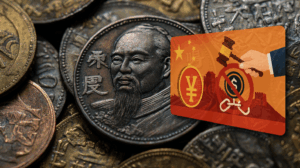
A three-way battle for the future: The semiconductor strategies of the USA, China and Taiwan
A clear comparison can be found in the technology sector between China, the USA, and Taiwan, particularly with regard to the semiconductor market. While the USA, with companies like Intel, Nvidia, and AMD, has shaped international developments for decades, Taiwan, with TSMC, dominates the high-precision manufacturing of state-of-the-art microchips.
China, supported by massive state subsidy programs, is pooling enormous resources to establish national champions like SMIC and YMTC as alternatives to the Western-dominated chip ecosystem. While China's market share in cutting-edge processor and memory technologies still lags behind, it is increasingly succeeding in reducing technological gaps through state-orchestrated innovation efforts. This is evident, for example, in the breakthrough in supercomputing and the rapid progress in AI applications.
Strengths of the USA: Market leadership in research and development, innovation culture, skilled workforce and globally networked venture capital.
China's strengths: Long-term state control, financial clout, huge economies of scale in the domestic market, strategic control over key resources, and rapidly scalable implementation capability.
Taiwan's role: Technological pacesetter in the field of most advanced chip manufacturing, but geopolitically highly vulnerable and positioned between power blocs.
Results: While the US remains the innovation leader, China is rapidly closing the gap in scaling and domestic application. Taiwan maintains its technological lead but remains a pawn in geopolitical games.
The other side of the coin: Conflicting goals and systemic dangers on China's path
The dangerous balancing act between rapid progress, the pursuit of self-sufficiency, and the looming threat of overheated markets is itself part of the new economic normal. Key risks include:
High debt levels of state-owned enterprises and regions, coupled with opaque credit markets.
Growing technology and export controls by the West could create supply gaps despite national substitution efforts.
Systemic risks arise from the rapid expansion of AI, for example in the protection of intellectual property, the control of algorithmic decisions, or in matters of digital surveillance.
Social disparities between winning and losing regions of rapid change, exacerbated by urbanization and labor market disruptions.
The scientific debate is controversial: While proponents point to the innovative power of focused industrial policy, critics warn of the consequences of excessive subsidies and market distortions. Conflicting objectives between security interests and an open innovation culture, between self-sufficiency and global division of labor, and between growth and sustainability remain pressing.
The world of tomorrow: Three possible futures in the competition of systems
Given the current dynamics, long-term developments are hardly predictable with any certainty. However, the following scenarios appear plausible:
Scenario 1
China achieves a technological breakthrough – the domestic market and state support mechanisms prevail, Chinese companies become the global benchmark and export their standards.
Scenario 2
Multipolar fragmentation – The global supply chain is permanently splitting into Western and Chinese-dominated spheres, innovations are increasingly running in parallel, and competitive pressure is increasing worldwide.
Scenario 3
Systemic setback – debt crises, demographics and political mismanagement are slowing China's ambitions, while the West defends its technological leadership through new coalitions and innovation alliances.
In summary, it should be noted that geopolitical disruptions – from supply chain wars to sanctions and military escalation, for example in Taiwan – could force radical course corrections at any time.
What needs to be done now: Strategic answers for politics and business
The balance of power between China and the West will be decisively shaped by innovative capacity, systemic resilience, and the ability to undergo strategic change. States and companies are challenged
to pool their capacities for continuous innovation and risk management, reduce dependencies, and invest in strategically relevant technologies. If the West continues with short-term reactions and patchwork solutions, it risks falling behind technologically.
Successfully navigating China's economic strategy requires a willingness to forge complex alliances, implement its own industrial policy programs, strategically develop talent, and consistently safeguard critical infrastructure. In the new global economic order, the ability to govern—not just the free market alone—determines the rules of the game.
Your global marketing and business development partner
☑️ Our business language is English or German
☑️ NEW: Correspondence in your native language!

Konrad Wolfenstein
I and my team are happy to be available to you as your personal advisor.
You can contact me by filling out the contact form here wolfenstein@xpert.digital:or simply call me at +49 7348 4088 965. My email address is
I'm looking forward to our joint project.
☑️ SME support in strategy, consulting, planning and implementation
☑️ Creation or realignment of the digital strategy and digitization
☑️ Expansion and optimization of international sales processes
☑️ Global & Digital B2B trading platforms
☑️ Pioneer Business Development / Marketing / PR / Trade Fairs
🎯🎯🎯 Benefit from Xpert.Digital's extensive, five-fold expertise in one comprehensive service package | BD, R&D, XR, PR & Digital Visibility Optimization

Benefit from Xpert.Digital's extensive, five-fold expertise in a comprehensive service package | R&D, XR, PR & Digital Visibility Optimization - Image: Xpert.Digital
Xpert.Digital possesses in-depth knowledge across various industries. This allows us to develop tailored strategies precisely aligned with the requirements and challenges of your specific market segment. By continuously analyzing market trends and monitoring industry developments, we can act proactively and offer innovative solutions. The combination of experience and expertise generates added value and provides our clients with a decisive competitive advantage.
More information here: