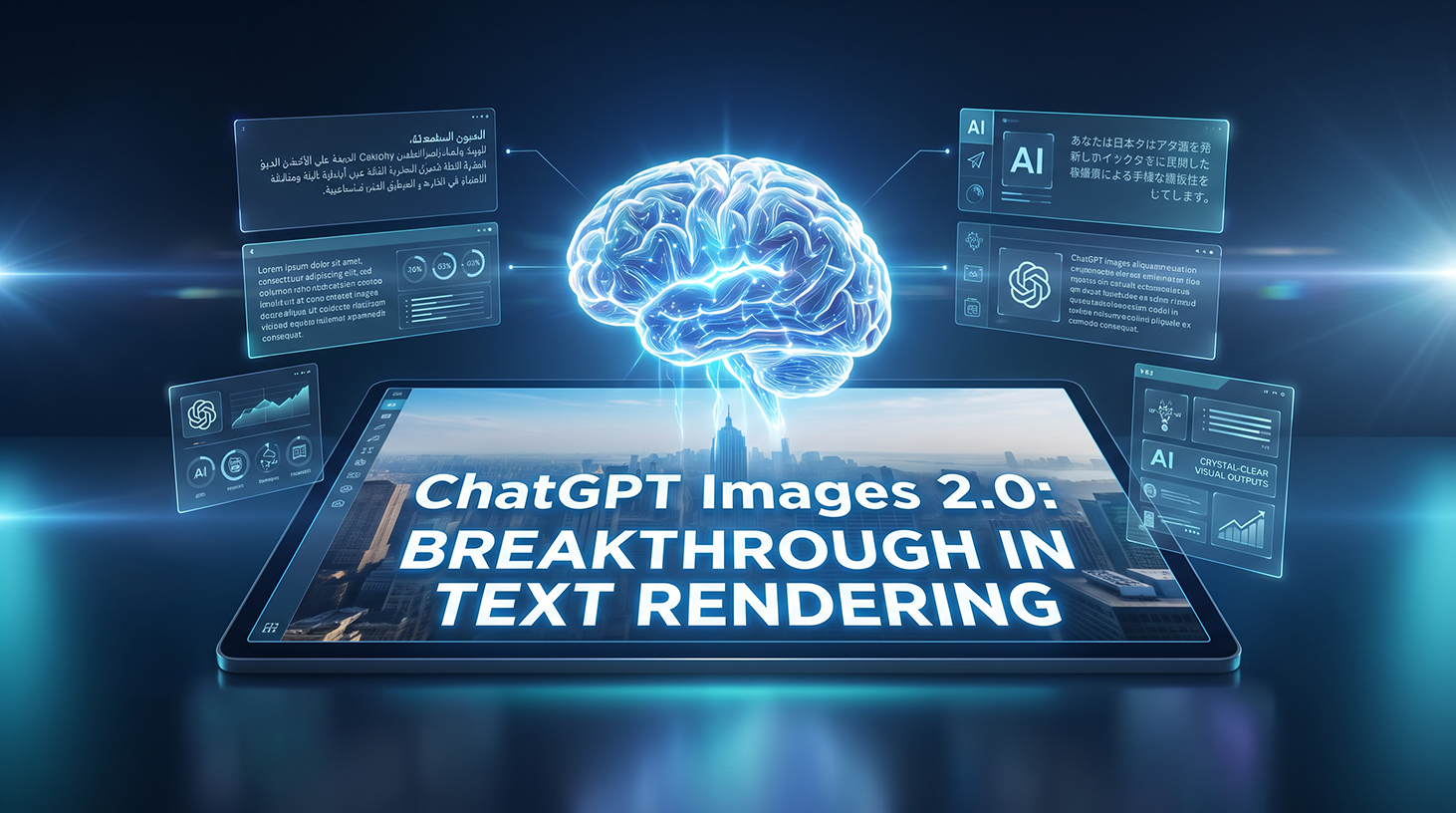
ChatGPT Images 2.0: When an AI stops dreaming and starts thinking – Image: Xpert.Digital
Finally, error-free text in AI-generated images: What ChatGPT Images 2.0 can really do
AI images on the next level: How OpenAI's new "Thinking Mode" works
Midjourney under pressure? ChatGPT Images 2.0 in a comprehensive analysis check
On April 21, 2026, OpenAI released "ChatGPT Images 2.0," a milestone that goes far beyond a typical version update. While previous AI image generators often failed due to illegible text and a lack of logical coherence, the new model departs from classic diffusion approaches. With a new, autoregressive architecture and a revolutionary "Thinking Mode," the AI plans, researches, and analyzes its image creation before the first pixel is generated. The result: flawless typography, consistent characters across entire image series, and a level of detail that even professional designers take notice of. However, these groundbreaking features come at a price and simultaneously reveal OpenAI's aggressive monetization strategy. We analyzed the technology, the market, and initial user experiences: Is ChatGPT Images 2.0 the ultimate game-changer for the creative industries or merely a brilliant move in the battle for subscribers?
Between hype and genuine disruption – can an image generator really turn the creative industries upside down?
On April 21, 2026, OpenAI rolled out ChatGPT Images 2.0, a model that the company claims represents a "state-of-the-art" approach to AI image generation. What at first glance appears to be just another version number in the accelerated pace of innovation within the AI industry, reveals itself upon closer inspection as a significantly more substantial upgrade: For the first time, a mass-market image generation model combines transparent reasoning processes, reliable text rendering in images, and an agent-like architecture under a single, broad user base. This article analyzes initial impressions from trade publications, community reports, and market data, assesses the technical innovations from an economic perspective, and critically examines whether ChatGPT Images 2.0 delivers on the promises of the market leader—or whether it is simply a clever marketing strategy that reveals more about OpenAI's monetization ambitions than about genuine technological progress.
The long road to legible writing: The core historical problem
Anyone who has followed the development of AI image generation over the past three years is familiar with the phenomenon: images of impressive artistic quality, but containing illegible, distorted, or simply invented words. A menu displayed dishes with names like "Margartas" or "Enchuita," company signs were adorned with unreadable columns of letters, and every attempt to integrate a simple slogan into an advertising image ended in manual post-processing. This fundamental failure was no accident, but an architectural problem: Classical diffusion models—to which DALL-E 3 belongs—reconstruct images from noise, weighting overall visual structures more heavily than the precise sequence of characters in text elements. The result was a technology suitable for ideation and initial drafts, but unsuitable for production-ready marketing assets.
ChatGPT Images 2.0 abandons this diffusion approach in favor of an autoregressive generation process, where the model sequentially generates pixels from left to right and top to bottom – similar to the operating principle of a large language model. Technically, this means the model predicts how text should appear in the image, instead of simply reconstructing patterns from noise. Initial tests and user reports from the community confirm that this approach works: Legible typography in dense compositions such as menus or scientific diagrams is now possible, and even the finest labels on UI elements are displayed grammatically correctly. For the first time, the model reliably supports non-Latin writing systems such as Arabic, Chinese, Japanese, and Korean – a significant advancement for international marketing campaigns, as it eliminates a previously mandatory manual post-processing step.
Thinking instead of drawing: The new architecture of the thinking model
The most technically significant feature of Images 2.0 is not the improved text rendering, but rather the so-called Thinking Mode. This marks a conceptual turning point in the history of image generation. While previous models operated on the principle of a black box – prompt in, image out – Images 2.0 introduces an agent-based approach: The system performs several background steps before beginning the actual generation process. It researches the context of the prompt, plans the composition, retrieves real-time data from the internet if necessary, and verifies its own logic. A research demonstration video from OpenAI shows how the model, with Thinking Mode activated, processes open-ended, demanding prompts and generates highly complex outputs that would simply not be possible without this planning phase.
This integration of so-called O-series inference capabilities into an image generator is remarkable because it structurally blurs the lines between the language model and the image model. This has practical consequences: A user can upload a strategy presentation deck, and the model independently identifies the logos it contains, understands the data structure, and generates a professional poster that adheres to the stylistic guidelines of the original document. However, Thinking Mode isn't available to everyone: It's exclusively available to ChatGPT Plus, Pro, and Business subscribers, while basic model functions are accessible even in the free plan. This differentiation reflects a clear strategic rationale that will be analyzed later.
The downside of the new architecture is speed. Because Thinking Mode involves additional research and decision-making steps, the generation time is noticeably longer than with comparable standard diffusion models. For professional users who are willing to wait an extra minute or more for a production-ready asset but save hours of manual design work, this trade-off seems worthwhile. However, for users who want to quickly generate large quantities of images with a primarily aesthetic focus, the inertia of Thinking Mode can be a practical obstacle.
Consistency, scaling, and new production paradigms
In addition to text rendering and the think mode, Images 2.0 offers another capability of considerable relevance to professional users: the simultaneous generation of up to eight thematically coherent images from a single prompt, while maintaining character consistency, object identity, and stylistic continuity across all scenes. What initially sounds like a mere convenience feature has far-reaching consequences for creative production workflows. Anyone producing a comic, a brand campaign, or a social media calendar today has previously faced the problem that each new image generation slightly altered the visual identity of the characters and objects—requiring time-consuming manual corrections. Images 2.0 eliminates this problem structurally, not just superficially.
In practice, this opens up scenarios that were considered unthinkable just a year ago: A single person can create a coherent manga series, an illustrated company report, or a complete product presentation with consistent characters and corporate design elements in a fraction of the time previously required. The model also supports native aspect ratios from 3:1 to 1:3, so designers get the right formats directly for wide banners or portrait-oriented smartphone displays—without subsequent scaling and the associated loss of quality. Combined with the ability to generate deceptively realistic screenshots of browser windows or mobile apps for wireframing purposes, Images 2.0 positions itself as a serious competitor to specialized design and prototyping tools.
The competitive context: Established players and new challengers
OpenAI is entering a market with Images 2.0 that has become significantly more competitive in recent years. Midjourney V7 remains the benchmark for artistic image quality, Adobe Firefly 3 is deeply integrated into professional creative workflows, Stable Diffusion 4 dominates the open-source segment, and Google Imagen 4 is accessible via the Gemini platform. The crucial difference that Images 2.0 brings to this competitive landscape is not just image quality, but ecosystem integration: The model sits at the heart of a platform with nearly one billion weekly active users. This distribution power is a structural advantage that Midjourney, limited to Discord and its own platform, simply cannot match.
Images 2.0 in 2026 is most directly comparable to Google's Nano Banana 2, the latest image model in the Gemini line. Initial benchmarks show that ChatGPT Images 2.0 has the edge in UI fidelity and consistent image sequences, while Google's model remains competitive for certain artistic styles. The partnership with Adobe is also noteworthy: OpenAI has already integrated GPT-Image 1.5, its immediate predecessor, as a partner model in Adobe Firefly, where it can be used alongside the native Firefly models. This collaboration demonstrates OpenAI's strategy of not only selling directly to end users but also acting as a technology provider for established creative platforms—a model that multiplies its reach while simultaneously increasing the dependence of potential competitors on its technology.
Also noteworthy in this context is the early availability of information prior to the official launch: Weeks before the announcement, three variants of the new model, with the internal code names "maskingtape," "gaffertape," and "packingtape," had already appeared in anonymized tests on the Chatbot Arena, and some ChatGPT users randomly activated the new model during their image generation sessions. This kind of controlled pre-launch publicity is not accidental, but rather part of a well-thought-out communication strategy that builds expectations without making binding promises.
Pricing and monetization strategy: The subscription model
The pricing of Images 2.0 reveals OpenAI's overarching business strategy with a clarity rarely seen. The basic gpt-image-2 model is actually available in the free ChatGPT plan—no credit card, no subscription required. This is a deliberate decision to attract users: the more people use the model, the greater the amount of data OpenAI can use for further improvement, and the stronger the network effect that protects the platform against competitors. However, the real value—the Thinking Mode with web search and advanced reasoning—remains reserved for Plus, Pro, and Business subscribers, representing a classic freemium model with sharp differentiation.
For developers accessing the model via the API, the costs are structured much more differentiated: Image processing via gpt-image-2 costs $8.00 per million input tokens for images and $30.00 per million output tokens; cached inputs are charged at a lower rate of $2.00 per million tokens. Compared to the previous version, gpt-image-1.5, the output costs have thus decreased slightly, which is relevant for high-volume B2B applications. For e-commerce companies generating 500 medium-quality product images daily, this results in monthly costs of approximately $636 – an amount that seems small compared to traditional photo production, but can escalate quickly at an industrial scale and high quality level.
This pricing structure reflects a consistent strategy: OpenAI aims to serve the mass market with an attractive free entry point while simultaneously maximizing revenue from professional users and developers with differentiated performance levels. The company's annualized revenue exceeded $20 billion in 2025, and internal forecasts predict it will reach $30 billion in 2026. In this context, the introduction of professional image generation capabilities as an exclusive subscription feature is a clear attempt to increase average revenue per user and convert the large number of free users into paying subscribers.
🎯🎯🎯 Data-driven B2B industry hub as a quasi-in-house solution

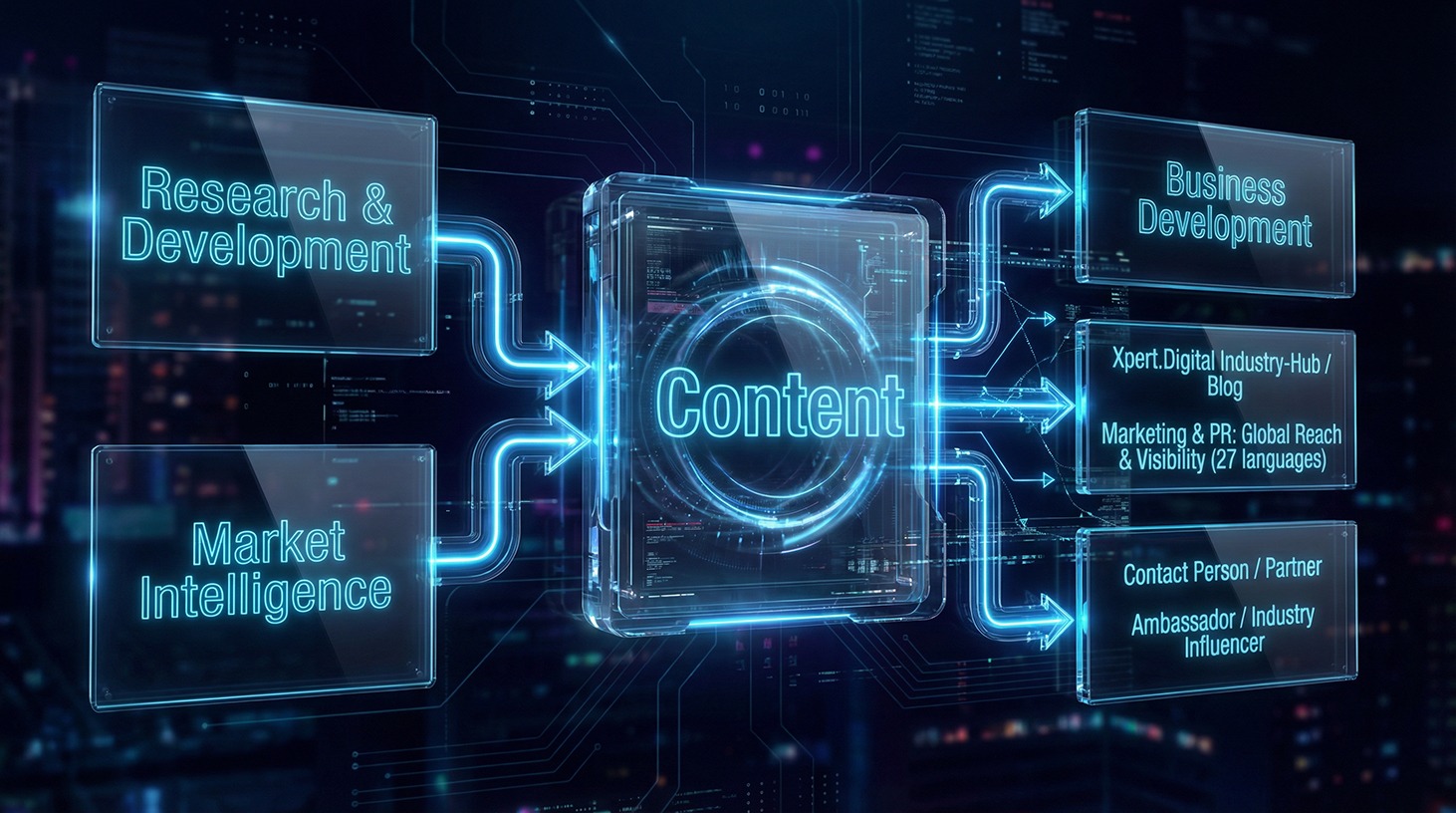
The quasi-in-house solution: How Xpert.Digital closes operational gaps in B2B marketing and sales – Smart Content-Driven Business - Image: Xpert.Digital
Xpert.Digital is a data-driven B2B industry hub led by Konrad Wolfenstein . The company acts as an external, quasi-in-house solution for industrial partners, closing operational gaps in marketing, content, and sales – without requiring additional resources on the client side.
More information here:
Opportunities, limitations, risks of misuse – the economic reality of image AI
Market dynamics and economic importance of the industry
The global market for AI image generators was still in its early stages in 2023, with an estimated volume of between $300 and $350 million, but is developing rapidly at an average annual growth rate of 17.5 to 17.7 percent. By 2030, various analysts expect the market to reach between $917 million and $1.08 billion. Far more optimistic forecasts, which also include software services and integrated creative suites, predict a jump to as much as $60.8 billion by 2030, with a CAGR of 38.2 percent. This range of estimates reflects the uncertainty surrounding how quickly and to what extent the professional creative industries will adopt AI-generated content.
In the broader context of the generative AI market, these figures appear even more modest: The global market for generative AI as a whole was estimated at over US$103 billion in 2025 and is projected to grow to more than US$1.26 trillion by 2034. AI image generation is therefore a significant, but not the dominant, segment. North America holds the leading position with a market share of around 35 to 40 percent, driven by the rapid adoption of AI in the advertising and marketing industry. In Germany, the share of generative AI image generators is estimated at approximately 21 percent of the total German market for generative AI platforms – a substantial share that demonstrates that the technology has long since outgrown its niche status.
For media and entertainment, the largest single segment, the AI image generator market is expected to reach more than US$335 million by 2032 in this area alone. The drivers are multifaceted: increasing demand for personalized visual content on social media, the growing e-commerce sector with its constant demand for product visualizations, and the increasing digitalization of marketing in B2B industries.
Impact on the creative industries: disruption or augmentation?
The question of whether AI image generation is a tool for empowerment or an existential threat to creative professions is one of the most hotly debated in the industry. ChatGPT Images 2.0 intensifies this debate because it significantly raises the bar for quality. Just two years ago, it was unthinkable that an AI generator could produce a ready-to-use menu without any adjustments—today, with Images 2.0, this is possible. For illustrators who primarily created storyboards, concept visualizations, and character designs for advertising and design agencies, this leap in quality is immediately noticeable: Many art directors now create their visualizations themselves, without commissioning illustrators. This reflects a real structural shift in the market for creative services, a shift that began even before Images 2.0 but is accelerated by its new capabilities.
The opposing view – AI as augmentation rather than substitution – is also compelling. Creative agencies report that AI tools allow them to visualize ideas without drawing skills, replace stock image portals with their own brand-specific graphics, and create more persuasive concept presentations. The actual creative work – the development of concept, strategy, and core message – remains human. What changes is the execution level. Whether an illustrator who previously delivered twenty concept sketches per day is replaced by a specialist who generates and curates two hundred variations using Images 2.0 is ultimately a question of individual companies' economic calculations.
Images 2.0 is particularly relevant for UI/UX design and product development. The ability to generate deceptively realistic wireframes, app screenshots, and technical diagrams significantly lowers the barrier to entry for non-designers. A product manager can now create functional mockups in minutes that previously required hours of designer work. This fundamentally changes internal development processes, decision-making cycles, and resource allocation within companies—with consequences that extend far beyond the creative industries in the narrow sense.
Initial user experiences: Between enthusiasm and sober assessment
Initial reactions from the community paint a mixed picture. Technical forums and social media platforms are showing genuine enthusiasm for the text rendering: users report a true quantum leap in text rendering after several hours of intensive use. At the same time, limitations are becoming apparent that continue to characterize the model despite the impressive innovations. The inability to directly convert images generated in ChatGPT into short video clips for social media, the lack of true personalization for AI-generated faces, and the absence of lip-sync functionality for video content are concrete limitations that become relevant in professional applications. These shortcomings can only be addressed with external tools, which partially negates the advantage of the integrated platform.
Technically savvy users also point out that the model still reaches its limits when dealing with complex spatial logic tasks. Three-dimensional logic puzzles, such as a scrambled Rubik's Cube or detailed origami folding instructions, are frequently rendered incorrectly. Extremely dense, repetitive structures and hidden surfaces force the system to make imprecise compromises. These are not trivial limitations for specific technical applications, even if they are irrelevant for the majority of use cases. The model's knowledge cutoff is December 2025, which means that misinformation can arise during very current events without the real-time search function—a risk that is relevant for news-related visual content.
Trade publications and AI specialists generally consider the release a significant, but not revolutionary, step. The underlying philosophy – treating images as a language, not mere decoration – is conceptually compelling and represents a mature evolution compared to purely aesthetically oriented predecessors. The fact that OpenAI simultaneously addresses the typical AI look with unrealistically smooth faces and flawlessly uniform lighting, while also making progress in photorealistic rendering, pixel art, and human hands, demonstrates that the developers systematically evaluated both technical and aesthetic user feedback.
Strategic positioning: OpenAI's path to a visual super app
Behind the release of Images 2.0 lies a corporate logic that extends beyond the individual product launch. OpenAI, having secured a $122 billion funding round in March 2026, reached a valuation of $852 billion and most recently generated approximately $2 billion in monthly revenue with more than 900 million weekly active users. This context is crucial: The company is under pressure to maintain its growth rate while simultaneously reducing its projected $8 billion operating loss in 2025 through new revenue streams. Offering professional image generation as a premium subscription feature is a direct response to this pressure.
OpenAI's stated goal of one billion weekly active users requires the platform to be attractive enough to professional audiences in design, marketing, and product development to become an everyday work tool. Images 2.0 is therefore not an isolated product update, but part of a comprehensive strategy to evolve ChatGPT from a text chat tool into a creative production suite. The integration with Codex, API accessibility, and the planned embedding in external platforms like Adobe Firefly are strategic moves in a market that OpenAI clearly intends to dominate not solely through direct use, but through a broad platform strategy. Consolidating the product line under the GPT-5 family aims to create a unified user experience that, through reduced switching costs, fosters long-term customer loyalty.
This strategy is not without risk. The reliance on enormous computing power—available computing power is currently cited as the limiting factor for further revenue growth—makes OpenAI vulnerable to infrastructure bottlenecks. The high investment required for the planned expansion of GPU capacity ties up capital that is simultaneously needed for research and development. And the competition is fierce: Google can offer similar capabilities at competitive prices via its Gemini infrastructure, while open-source models like Stable Diffusion 4 are further pushing down the price ceiling for simpler applications.
Limits, criticism and open questions
An economic analysis examining the initial impressions of a product launch must also acknowledge the structural limitations of the available information. The comparability of user reports from the first few days after launch is limited because selection bias plays a role: those who test and report early are often particularly tech-savvy and have an interest in either celebrating the new product or critically dismantling it. Reliable longitudinal data showing whether and how intensively professional users actually integrate Images 2.0 into their workflows will only become available months after the launch.
In terms of content, one key question remains unanswered: Can Images 2.0 truly deliver production-ready assets, or is the quality threshold still too high for professional standards? Initial user reports suggest that the quality is indeed directly usable for simpler formats such as social media graphics and menus. However, the limitations of the model are still noticeable when dealing with complex brand identities where color values, font styles, and logo proportions must be precisely adhered to. Integrating such brand constraints into the prompt process is an unresolved issue that cannot be fully addressed by this approach alone.
Last but not least, the ethical dimension deserves mention, even if it is not the primary focus of this analysis. The improved ability to render deceptively realistic screenshots and UI elements creates new opportunities for phishing attacks and disinformation that go far beyond previous approaches. While OpenAI continuously invests in security filters and content moderation, the sheer accessibility of the model—free of charge, without requiring a credit card—means that the potential for abuse is structurally more difficult to contain than with models that are subject to stricter access barriers.
Classification: A true paradigm shift or just another update?
The first serious assessment is nuanced. ChatGPT Images 2.0 is not a paradigm shift in the sense of reinventing image generation, but it is significantly more than an incremental update. The combination of reliable text rendering, agent-based thinking mode, sequential image consistency, and broad language coverage elevates the model to a new level of quality, making it relevant for a considerably larger range of professional use cases for the first time. The fundamental technical decision to generate images autoregressively, similar to language models, is conceptually significant and consistent.
Economically, this release is a smart move by OpenAI: broadly accessible for maximum user acquisition, with clear premium features for monetization, technically compelling enough to challenge serious competitors, and deeply integrated into an ecosystem that is becoming increasingly difficult to circumvent due to network effects. Whether this move will have the desired long-term impact depends on how quickly OpenAI overcomes the remaining technical limitations, addresses the computing capacity bottleneck, and keeps its competitors—especially Google with its Gemini infrastructure—at bay. What is considered an impressive product today will often quickly become yesterday's standard in the AI industry of 2026.
Consulting - Planning - Implementation

Konrad Wolfenstein
I would be happy to serve as your personal advisor.
You can contact me at wolfenstein∂xpert.digital or
Just call me on +49 7348 4088 965 .
🎯🎯🎯 Data-driven B2B industry hub as a quasi-in-house solution
The quasi-in-house solution: How Xpert.Digital closes operational gaps in B2B marketing and sales – Smart Content-Driven Business - Image: Xpert.Digital
Xpert.Digital is a data-driven B2B industry hub led by Konrad Wolfenstein . The company acts as an external, quasi-in-house solution for industrial partners, closing operational gaps in marketing, content, and sales – without requiring additional resources on the client side.
More information here: