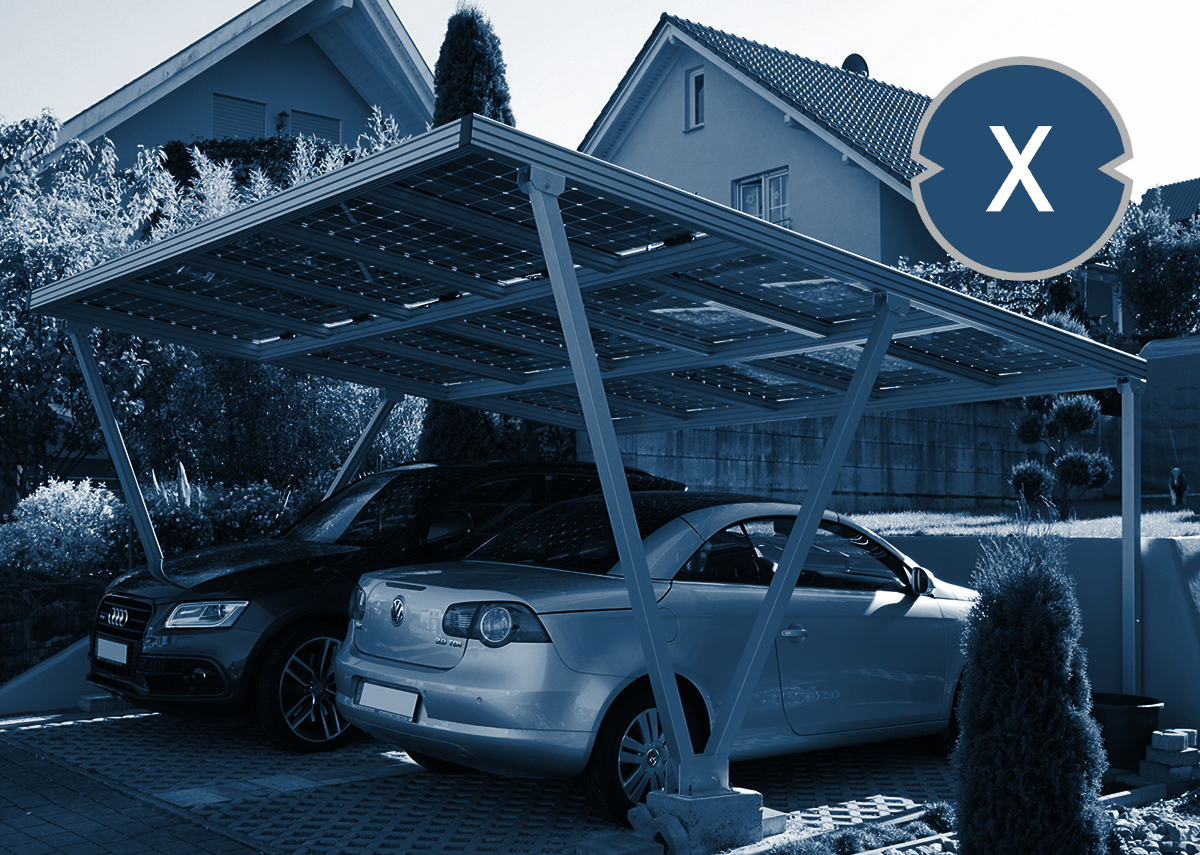
Our carport with solar roof: Studies confirm its cost-effectiveness – Image: Xpert.Digital
Studies confirm the cost-effectiveness of solar carports
“Projects on large parking areas are particularly well suited,” according to the ‘InfraSolaire’ study from Switzerland: “Solar power on infrastructure facilities and conversion areas”.
Electric vehicles must be parked and charged at locations powered by solar energy. The 'De Lorean Power' (Marco Rüegg) feasibility study (author: Björn Brugger, Project B) confirmed the great potential and showed why solar parking facilities need to be promoted.
Solar parking spaces are already being subsidized in various German and Austrian federal states; in Baden-Württemberg and North Rhine-Westphalia, solar roofs are mandatory for medium and large parking spaces.
Another independent study from Germany examined the economic viability of solar parking lots. The results are promising: solar parking lots can be profitable for both parking lot operators and environmentalists.
The study concludes that solar parking lots are indeed economically viable. This is because the costs for installing solar modules have fallen significantly in recent years. At the same time, the prices for fossil fuels continue to rise. This trend will continue in the coming years, further improving the profitability of solar parking lots.
But investing in such a parking lot isn't just worthwhile for parking lot operators; it also offers significant advantages for environmentalists. Every kilowatt-hour produced using photovoltaic systems reduces CO₂ emissions. In this way, solar parking lots contribute to achieving the German government's climate goals.
Solar parking lots are an accelerator of the energy transition
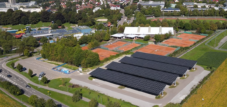
A study by DeLorean Power found that employee parking behavior ideally corresponds to the amount of solar power generated. The electric vehicle's daily mileage can be covered in almost any weather, and any surplus energy can be fed into the grid. The annual solar power generation in the parking lot matches the vehicle's energy needs. Solar parking lots have the greatest potential for electricity generation of all infrastructure sectors. In Switzerland, there are approximately two parking spaces available for every registered car. In suitable regions, this could generate over 10 terawatt-hours of solar power per year (15% of current electricity consumption). "It's astonishing how few pilot plants there are," the study authors stated. Furthermore, such a roof protects the car from the elements and reduces heat buildup in the summer.
According to an analysis by the Federal Statistical Office (FSO), Switzerland has at least 5 million above-ground parking spaces (6,400 hectares) with approximately 4.7 million registered passenger cars. These parking areas were recorded using a digital method that only identifies larger adjacent areas and not individual parking spaces. Traffic experts therefore estimate that there are between 8 and 10 million parking spaces. That's about two per car.
According to another study, "Solar Power Generation for Infrastructure Facilities and Conversion Areas," above-ground or open parking areas have the greatest PV potential of all infrastructure areas. These areas can supply up to 10 terawatt-hours (TWh) of PV electricity per year. This brings the total electricity production in Switzerland to 65.5 TWh.
The average parking area is 12.5 square meters (2.5 meters x 5 meters). This is also the area that a solar roof must cover. The energy yield of a PV system depends on many factors, including solar irradiance, component efficiency, and module orientation. In Thurgau, approximately 1000 kWh of electricity per year can be generated with 1 kW of installed PV capacity (1000 kWh per 1 kWp).
Depending on the PV modules used, 1 kWp requires an installed capacity of 4 to 8 square meters. This study assumes 5 m² per kWp. Therefore, a 12.5 m² parking space with a 2.5 kWp system can be installed, generating 2,500 kWh of solar power per year. The average Swiss household consumption is around 4,500 kWh/year (excluding heating, ventilation, and electric vehicles).
Our solar carport is included in the study!
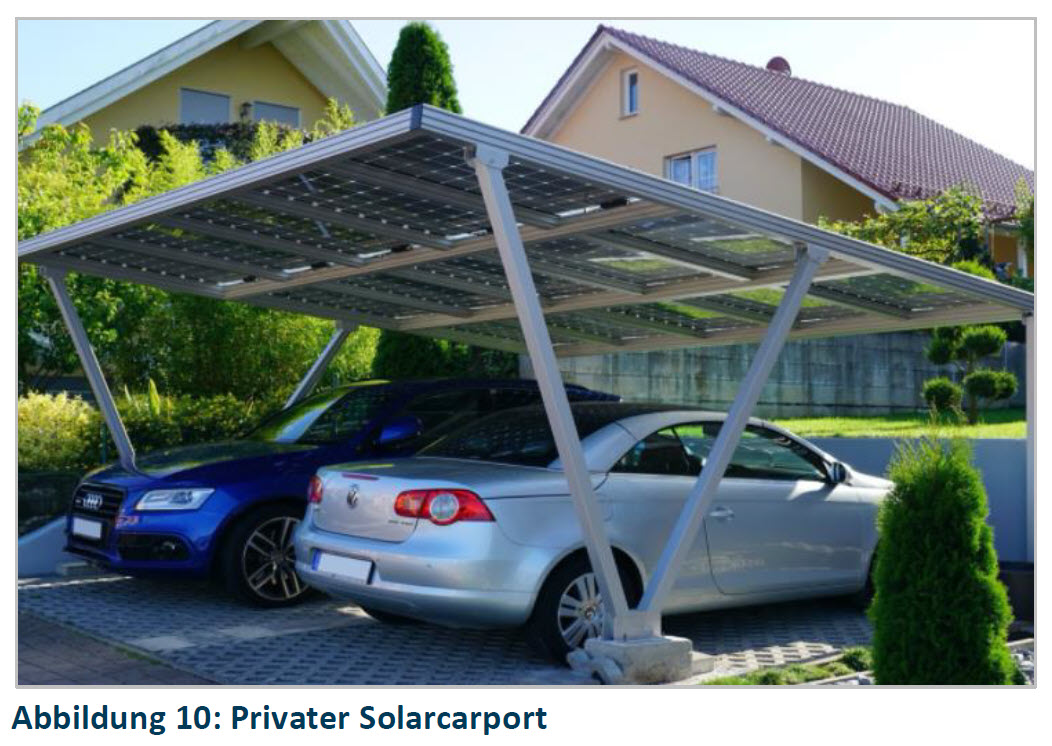
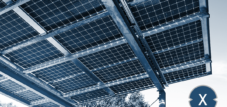
The illustration in the feasibility study by 'De Lorean Power' shows the Solarcarport XXL with 15 x M60 solar modules.

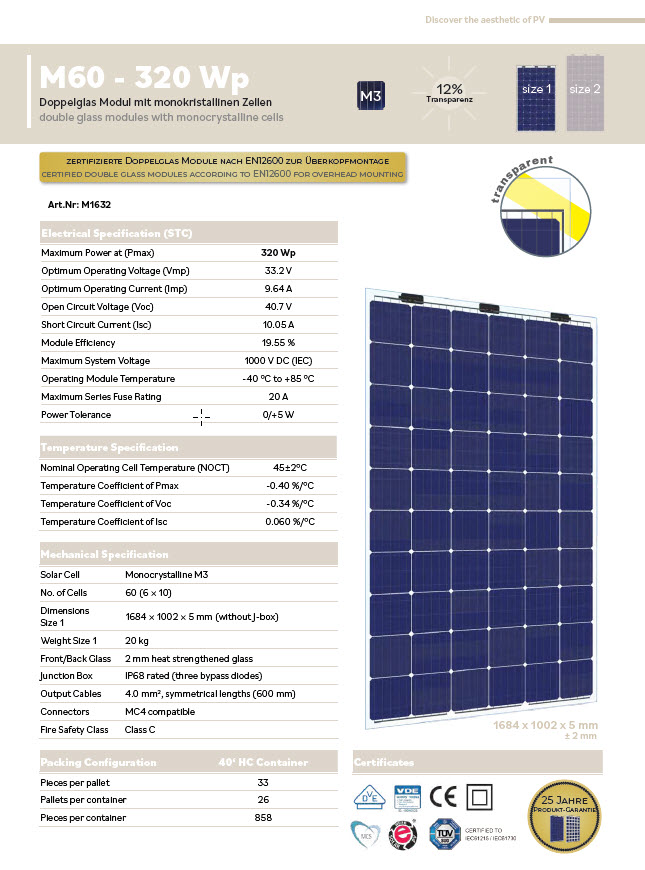
The M60 solar modules have a partial transparency of 12% with 320 Wp each and a total output of 4.8 kWp!
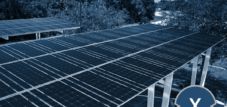
Important to mention: These are semi-transparent and certified double-glass solar modules according to EN12600 for overhead mounting.
The following two points were also noted in the 'DeLorean Power' study:
- "The modular design of a carport system is advantageous , allowing the roof to be adapted to almost any parking space, thus ensuring continued good utilization of the parking area and guaranteeing expandability."
- Bifacial modules allow for increased light transmission through the carport . This is visually appealing and leads to higher solar yields, as these PV modules can also utilize light entering from below, thus delivering 10-20% more energy. Currently, bifacial technology is not widely used because its economic viability is not guaranteed due to higher module prices. However, it is expected that this technology will become more established in the coming years.
In our 4+2+ modular and scalable solar carport system, which uses semi-transparent and bifacial modules, these points apply and are already an additional price-competitive alternative:
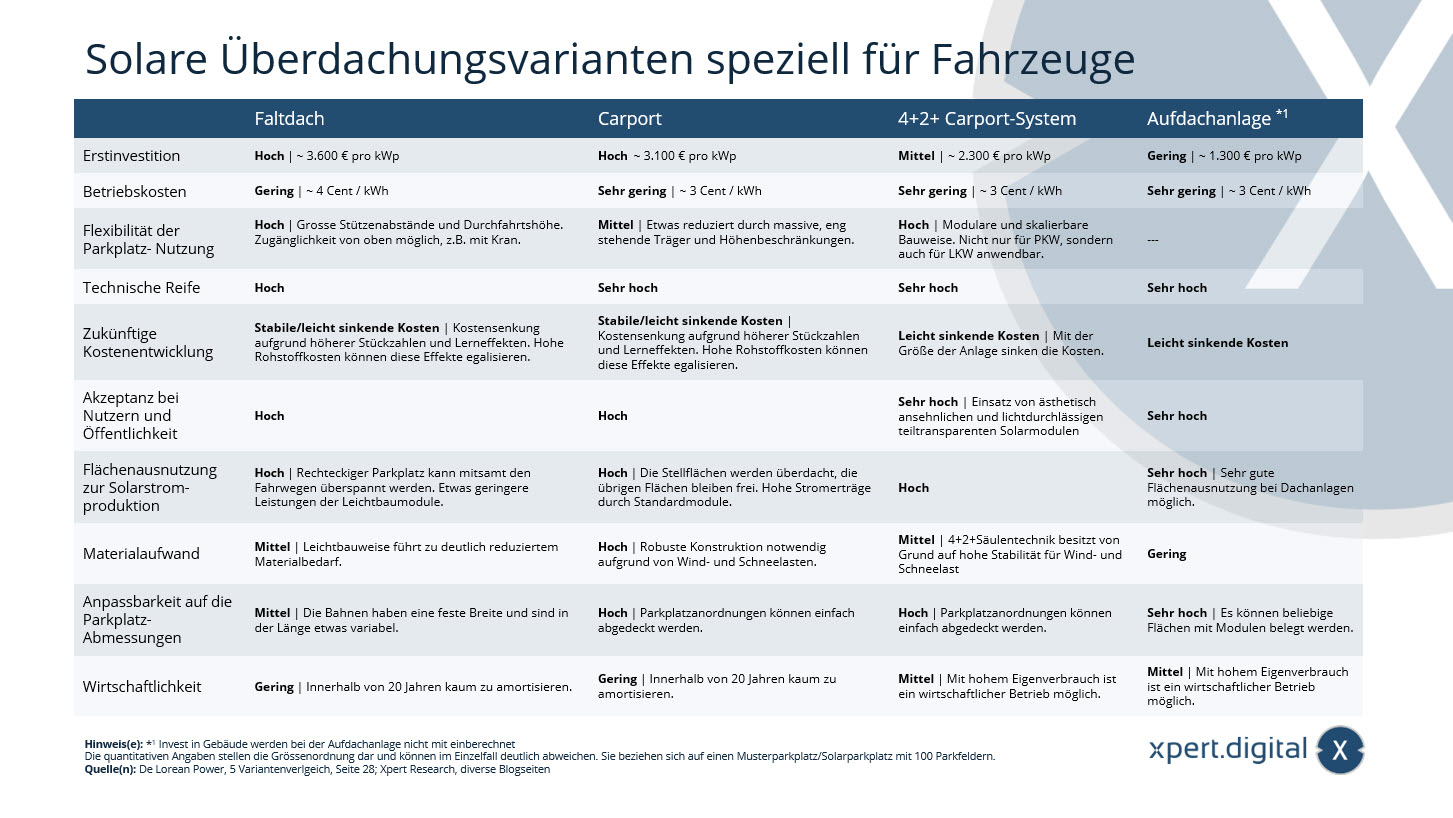
Solar roofing options specifically for vehicles – Image: Xpert.Digital
More information here:
We can also install solar roofs in large parking facilities!
Limitless: Modular and scalable solar carport system for cars and trucks
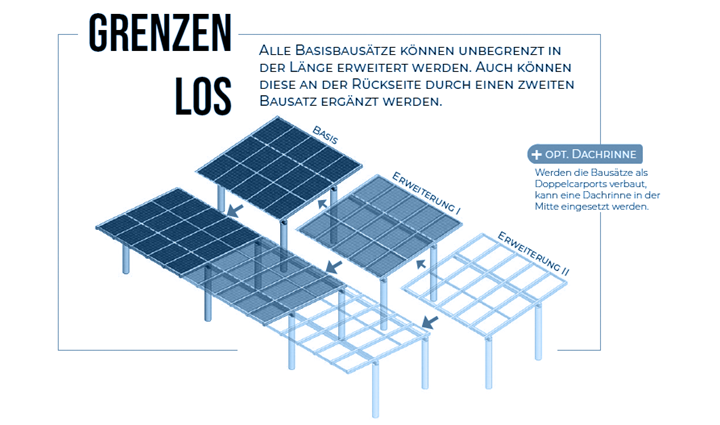
Limitless: Modular and scalable solar carport system for cars and trucks
Technical specifications: Modular and scalable solar carport system for cars and trucks
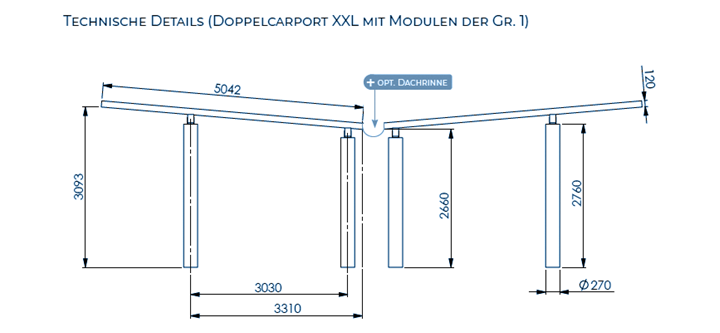
Technical specifications: Modular and scalable solar carport system for cars and trucks
Advantages at a glance:
- Flexible and modular (scalable) design
- Clearance height for cars from 2.66 m (extendable to 4.5 m or more for trucks)
- Parking space depth for cars up to 6.1 m, opposite side up to 12.5 m possible.
The depth depends on the dimensions of the solar modules used. - The solar carport system is optimally designed for semi-transparent solar modules with
12%/40% light transmission (!) – and is certified for overhead mounting. - Optionally available with powerful LED lighting, dimmable and with motion control
- Also suitable for parking spaces with inclined positioning
- No hidden costs regarding foundations.
Use of point foundations (most economical option, no extensive excavation for concrete slabs etc. is necessary for structural stability) or installation with base plates, depending on the existing soil conditions/asphalt.
Further sources:
- Cost factor of ground foundation for solar carports
- Solar carports where standard no longer applies – The optimal solution for every challenge with solar roofing for open parking spaces
- Solar carport systems: Which is the better and/or more cost-effective option?
- The solar carport strategy for open parking spaces
- The modular solar carport system for all applications and situations
Truck solar carport system
Due to the fact that the 4+2+ column technology offers the most flexible solution (both technically and in terms of price) for a parking space roofing system, it can also be easily extended and applied to larger vehicles such as trucks with appropriate modifications.
Further (earlier) studies on the economic viability of solar parking lots
The first studies on the economic viability of solar parking lots were published several years ago. These studies showed that solar parking lots are a cost-effective way to generate electricity. In recent years, further studies have confirmed the economic viability of solar parking lots and also highlighted the potential for this type of energy generation.
A 2016 study by the Fraunhofer Institute for Solar Energy Systems ISE showed that investments in solar parking lots pay for themselves within six to eight years. The study concluded that the cost of constructing a 10,000-square-meter solar parking lot is approximately €1.5 million. Annual operating costs are around €50,000. At an electricity price of 12 cents per kilowatt-hour, the parking lot would generate approximately 120,000 kilowatt-hours of electricity annually, thus generating around €14,400 in revenue. The Fraunhofer study concluded that the investment in a solar parking lot pays for itself within six to eight years.
Another study, published in 2017 by the consulting firm Ernst & Young (EY), confirmed the economic viability of solar parking lots. The study examined various scenarios for the construction of solar parking lots in Germany and concluded that an investment in a 10,000-square-meter parking lot would pay for itself within six to nine years.
The two studies clearly demonstrate that solar parking lots are an economically viable way to generate electricity. Furthermore, they have also highlighted the potential of solar parking lots. There are already several hundred solar parking lots in Germany, and more are being built every year. Experts expect the proportion of parking lots equipped with photovoltaic systems to continue to rise in the coming years.
Regarding the studies:
Industrial plants or commercial parking lots can be ideally used to generate renewable energy. This not only saves CO2, but also allows companies to directly participate in the success of the energy transition and thus strengthen their reputation.
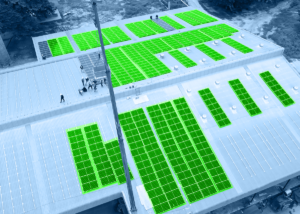
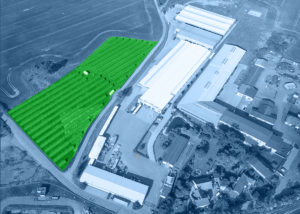

- Planning photovoltaics on warehouses, commercial buildings and industrial buildings
- Industrial plant: Planning a photovoltaic open-field system or open-area system
- Planning solar power systems with photovoltaic solutions for freight forwarding companies and contract logistics
- B2B Solar Systems and Photovoltaic Solutions & Consulting
From simple solar carports to large-scale systems: Xpert.Solar offers individual solar carport consultation – the combination of wooden substructure, steel columns and semi-transparent solar modules

Konrad Wolfenstein
I would be happy to serve as your personal advisor.
You can contact me by filling out the contact form below or simply call me on +49 7348 4088 965 .
I'm looking forward to our joint project.
Write to me



Xpert.Digital – Konrad Wolfenstein
Xpert.Digital is a hub for industry focusing on digitalization, mechanical engineering, logistics/intralogistics and photovoltaics.
With our 360° Business Development solution, we support renowned companies from new business to after-sales.
Market intelligence, smarketing, marketing automation, content development, PR, mail campaigns, personalized social media and lead nurturing are part of our digital tools.
You can find more information at: www.xpert.digital – www.xpert.solar – www.xpert.plus
Keep in touch