
Fewer clicks, but supposedly higher conversions: How Google's AI mode aims to change the web forever – but not yet in the EU – when? – Image: Xpert.Digital
Is Google making AI Mode the default search? Here's what the Lead Product Manager at Google DeepMind for Gemini and all Google AI products says
From the link google.com/ai to the new search: How realistic is this step?
The excitement in the SEO and tech community began on September 5, 2025, when Logan Kilpatrick, Lead Product Manager at Google DeepMind for Gemini and all Google AI products, responded to a user's inquiry about the AI Mode becoming the default search experience with a simple "Soon : )." This seemingly casual reply on Platform X (formerly Twitter) immediately sparked widespread discussion, as it implied that Google might soon make its AI Mode the default search experience.
The announcement came in the context of the new URL google.com/ai, which redirects directly to AI Mode. Kilpatrick had previously announced the availability of this direct URL, mentioning that AI Mode might soon become the standard. These statements gained particular significance because they came from a high-ranking Google manager who is largely responsible for the development of Google's AI products.
Related to this:


How did Google react to the speculation?
Google responded to Kilpatrick's statement on Sunday with a clear clarification. Robby Stein, Vice President of Product at Google Search, wrote on X: "Wouldn't read too much into this. We're focusing on making it easy to access AI Mode for those who want it." This statement was intended to dampen the rampant speculation and clarify that one shouldn't read too much into Kilpatrick's posts.
Stein's clarification emphasized that Google is focused on making AI Mode more accessible to those who want to use it, rather than making it the default for all users. This qualification was evidently necessary because Kilpatrick's initial statement had been interpreted as official confirmation of an impending change.
What is Google AI Mode and how does it work?
Google AI Mode represents a fundamental evolution of traditional Google Search. Instead of the familiar list of "ten blue links," AI Mode presents an AI-powered interface that directly provides complete answers to complex questions. The system utilizes Google's most advanced AI model, Gemini 2.5, which has been specifically optimized for search applications.
A key feature of AI Mode is the so-called "Query Fan-Out" technique. This innovative method breaks down a single user query into several related subtopics and simultaneously executes a multitude of search queries across various data sources. For example, the question "Things to do in Nashville with a group" could be automatically split into sub-questions such as "great restaurants," "great bars," or "activities with kids.".
The system integrates various Google services, such as the Knowledge Graph, shopping data, Google Maps, and real-time information, to generate comprehensive answers. Unlike existing AI Overviews, AI Mode allows for conversational follow-up questions and maintains the context of the conversation, similar to ChatGPT or other chatbots.
Where is AI Mode already available?
Google AI Mode was first introduced in Search Labs in March 2025 and was initially only available to US users via an opt-in process. Following its official unveiling at the Google I/O conference in May 2025, it was fully rolled out to all US users. India was the second country to receive AI Mode at the end of June 2025, followed by the UK.
In August 2025, a massive expansion to over 180 countries and territories took place. This global rollout is initially limited to English and notably excludes EU countries. However, availability extends to European countries outside the EU, including Albania, Andorra, Serbia, Moldova, Bosnia and Herzegovina, San Marino, Kosovo, Monaco, Ukraine, Belarus, and the United Kingdom.
Why is AI Mode not available in the EU?
The unavailability of AI Mode in EU countries is generally attributed to strict European data protection laws and regulations. In particular, the EU General Data Protection Regulation (GDPR) and the AI Act impose complex legal requirements that Google must meet before the service can be launched in the EU.
This regulatory caution is not unusual for Google. With previous AI products, such as AI Overviews, it took significantly longer for them to become available in Europe. For Google SGE (Search Generative Experience), 98 days passed between its launch in the US and India, while Europe never received the feature. With AI Overviews, it took only 92 days for the Indian launch, but 316 days for it to become available in Europe.
Interestingly, AI Mode is available in European countries that are not EU members. This underscores that EU-specific regulations are the primary reason for the delayed rollout, not technical or strategic considerations.
When could AI Mode become available in Germany?
Although Google has not yet announced an official launch date for AI Mode in Germany and the EU, several signs point to its imminent availability. The speed of rollouts has increased significantly: AI Mode took only 35 days to become available in the US and India, considerably less than previous AI features.
The first concrete indications of an imminent EU launch have already emerged. In Romania, an EU member state, screenshots of teasers and pop-ups referencing AI Mode in the Google app have been observed. These sightings suggest that Google is already pushing ahead with the technical and legal preparations for the EU rollout.
Experts estimate that AI Mode could be available in Germany as early as 2025, or at the latest by the beginning of 2026. The general acceleration in the release of AI innovations and Google's increased focus on the rapid global rollout of its AI features suggest relatively soon availability.
How does AI Mode differ from the already available AI Overviews?
The main difference between AI Mode and the AI Overviews already available in Germany lies in the scope and the interactivity. AI Overviews appear automatically in the regular search results when Google deems them helpful and offer short summaries with supporting links. They are static and do not allow for follow-up questions.
AI Mode, on the other hand, is a separate tab or standalone experience accessible via google.com/aimode. It enables deeper, interactive exploration with follow-up questions and comparisons. The system is conversational, maintains context, and allows for follow-up questions within the same session.
Technically, AI Mode utilizes enhanced Gemini models with improved reasoning capabilities, while AI Overviews are based on a customized Gemini model integrated with the search systems. AI Mode also offers multimodal capabilities, supporting text, speech, and image input, and can handle more complex tasks such as product comparisons or planning.
What new features does AI Mode bring?
Google AI Mode is continuously being enhanced with new features that go beyond traditional search results. One of the most significant innovations is the so-called "agentic" capability, which allows the system to perform complex tasks independently. For example, AI Mode can make restaurant reservations based on multiple criteria such as group size, time of day, cuisine, and location.
The system automatically searches various reservation platforms such as OpenTable, Resy, and Tock in real time and presents a curated list of available restaurants with direct booking links. This functionality is based on Google's Project Mariner web browsing system as well as data from the Google Knowledge Graph and Google Maps.
Furthermore, AI Mode offers enhanced personalization options. The system can adapt results based on user history, which includes not only previous searches but also AI chats and interactions with Google Maps. Restaurant recommendations, for example, are tailored to personal preferences if users enable this in their settings.
Our recommendation: 🌍 Limitless reach 🔗 Connected 🌐 Multilingual 💪 Sales power: 💡 Authentic with strategy 🚀 Innovation meets 🧠 Intuition


From local to global: SMEs conquer the world market with a clever strategy - Image: Xpert.Digital
In an era where a company's digital presence determines its success, the challenge lies in creating an authentic, personalized, and far-reaching presence. Xpert.Digital offers an innovative solution that positions itself as the intersection of an industry hub, a blog, and a brand ambassador. It combines the advantages of communication and sales channels in a single platform and enables publication in 18 different languages. Cooperation with partner portals and the ability to publish articles on Google News and a press distribution list with approximately 8,000 journalists and readers maximize the reach and visibility of the content. This represents a crucial factor in external sales and marketing (SMarketing).
More information here:
AI Mode changes search: Longer questions, higher conversions
How does AI Mode change user behavior?
The introduction of AI Mode is leading to fundamental changes in user search behavior. Google CEO Sundar Pichai reported at the I/O 2025 conference that AI Mode is resulting in search queries that are two to three times, sometimes even five times, longer than traditional Google searches. This demonstrates that users are willing to ask more complex and detailed questions when they know they can get complete answers.
Early behavioral data reveals significant differences between AI-driven and traditional search users. Research shows that AI search visitors have 4.4 times higher conversion rates than traditional organic search visitors. This discrepancy arises because AI systems provide comprehensive information during the research phase, allowing users to arrive at websites already equipped with detailed knowledge of options and value propositions.
The conversational nature of AI Mode also encourages users to ask follow-up questions and delve deeper into topics, rather than starting new, separate searches. This leads to longer interaction times with the search engine itself, but paradoxically, it can result in fewer clicks on external websites.
Related to this:
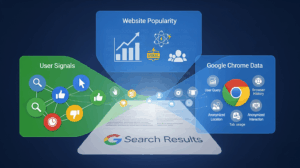
What does the query fan-out technique mean for website operators?
The AI Mode's query fan-out technique has far-reaching implications for website operators and SEO strategies. Because the system breaks down a single user query into multiple related search queries, content is no longer evaluated solely for specific keywords, but rather for its ability to cover various aspects of a topic.
Website operators must adapt their content strategy accordingly by structuring content into short, concise paragraphs, each answering specific micro-questions. Specific headings have become more important than general labels, as the AI system searches for precise units of information.
Building cluster structures is becoming increasingly important. Main pages should serve as an overview and link to related articles to increase the likelihood that multiple pieces of content from a website will be considered in AI responses. Continuously updating data-intensive areas is also crucial, as AI systems prefer current and reliable information.
What impact does AI Mode have on website traffic?
The impact of AI mode on website traffic is already measurable and presents a mixed picture. Early studies warn of dramatic drops in organic traffic of up to 30 percent, as users have less reason to click on external links when they receive complete answers directly in the search engine.
At the same time, data also shows that the quality of the remaining traffic is significantly higher. Visitors who arrive at websites via AI-generated search results have significantly higher conversion rates. This is because they have already been pre-qualified by the AI responses and arrive at the website with a clearer understanding of their needs.
The winners in this development are strong brands with unique data and specialized expertise. Content farms and websites with generic, interchangeable content, on the other hand, are disadvantaged, as their information can easily be integrated into AI responses without users having to visit the original source.
How does Google respond to concerns from website operators?
Google is aware of the concerns of website operators and publishers regarding reduced traffic and has announced various measures to address these issues. Robby Stein emphasized that the team is working intensively to make it easier to click on websites and announced further UI updates.
The company argues that AI Mode will answer new types of questions and allow people to ask follow-up questions and explore different facets, ultimately creating new opportunities for websites to rank. Google also promises improvements to link display in AI Mode, including embedded link carousels on desktop devices, with mobile versions to follow soon.
Nevertheless, skepticism and concerns persist within the publisher community. Third-party studies show that click-through rates for AI Overviews are already problematically low. Google is even being sued for these practices, and without detailed Search Console reports for AI Mode traffic, it remains difficult for website operators to measure the actual impact.
What are the technical foundations of AI Mode?
The AI Mode is based on a complex technical architecture that integrates various Google systems. At its core, the system uses a customized version of Gemini 2.5, Google's most powerful language model with a context window of one million tokens. For tasks requiring logical reasoning, mathematics, or programming, users can optionally switch to the even more powerful Gemini 2.5 Pro.
The query fan-out technique is the core of the functionality. When a query is entered, the system breaks it down into relevant subtopics and executes dozens or even hundreds of background queries. For more complex queries, these deep searches can take several minutes and deliver exceptionally detailed answers.
The system has access to Google's internal tools and data sources, including Google Finance, flight data, film information, and the shopping catalog with over 50 billion products, updated two billion times per hour. This comprehensive data integration enables AI Mode to deliver real-time information and make complex comparisons between different options.
How is the competitive situation developing in the AI search market?
AI Mode is Google's response to increasing competition in the AI search market, particularly from providers like Perplexity AI, OpenAI's ChatGPT Search, and other AI-based search tools. These competitors have already demonstrated that users are ready to embrace conversational AI interfaces for information retrieval, putting pressure on Google to develop its own solution.
Google's advantage lies in the integration of AI Mode with its existing search ecosystem and the company's extensive data sources. Unlike pure AI chatbots, AI Mode can leverage Google's 25 years of experience in indexing and evaluating web content. This combination of AI capabilities and established search infrastructure is intended to give Google a competitive edge.
The speed of development and rollout also demonstrates how seriously Google takes the threat posed by AI-based search alternatives. The rapid global expansion of AI Mode and the continuous updates indicate that Google is determined to defend and expand its dominant position in the search market.
What legal and social questions arise?
The introduction of AI Mode raises various legal and societal questions that extend beyond technical aspects. A key issue is its impact on the open web ecosystem. Ironically, in a legal dispute concerning its advertising technology division, Google argues that "the open web is already in rapid decline," while simultaneously introducing AI Mode, which diverts user traffic away from websites to Google's own platform.
This development creates a paradoxical scenario: Google uses the decline of the open web as an argument against breaking up its advertising business, while simultaneously introducing a product that could exacerbate this trend. The concentration of information and usage on Google's platform raises questions about market power and fair competition.
Data privacy and transparency issues are also relevant, particularly given the personalized features of AI Mode, which utilize data from various Google services such as Gmail and Maps. The system's agentic capabilities, which allow it to automatically execute bookings and transactions, create new categories of data privacy and security risks that are currently unregulated.
How should companies prepare for AI mode?
Businesses and website operators should take proactive steps to prepare for the availability of AI Mode, even though it is not yet available in Germany. The most important strategic shift is the move from keyword-focused to topic-based content strategies. Instead of optimizing for individual search terms, content should cover broad topics and answer various related questions.
Building alternative traffic sources is becoming increasingly important, as reliance on organic Google traffic could become risky. Newsletters, social media, YouTube, and other platforms should be developed as complementary channels. At the same time, implementing structured data and schema markup is crucial to help AI systems correctly understand and categorize content.
Brand building and the development of unique expertise are becoming crucial differentiators. Companies that establish themselves as trusted authorities in their fields and can offer exclusive data or insights have a better chance of being cited in AI-generated responses and continuing to drive direct traffic. The time for these strategic adjustments is now, before AI becomes the norm.
A new dimension of digital transformation with 'Managed AI' (Artificial Intelligence) - Platform & B2B solution | Xpert Consulting


A new dimension of digital transformation with 'Managed AI' (Artificial Intelligence) – Platform & B2B solution | Xpert Consulting - Image: Xpert.Digital
Here you will learn how your company can implement customized AI solutions quickly, securely and without high entry barriers.
A managed AI platform is your all-inclusive, worry-free solution for artificial intelligence. Instead of dealing with complex technology, expensive infrastructure, and lengthy development processes, you receive a ready-made solution tailored to your needs from a specialized partner – often within just a few days.
The key advantages at a glance:
⚡ Rapid implementation: From idea to ready-to-use application in days, not months. We deliver practical solutions that create immediate added value.
🔒 Maximum data security: Your sensitive data stays with you. We guarantee secure and compliant processing without sharing data with third parties.
💸 No financial risk: You only pay for results. High upfront investments in hardware, software, or personnel are completely eliminated.
🎯 Focus on your core business: Concentrate on what you do best. We take care of the entire technical implementation, operation, and maintenance of your AI solution.
📈 Future-proof & scalable: Your AI grows with you. We ensure continuous optimization and scalability, and flexibly adapt the models to new requirements.
More information here:
Your global marketing and business development partner
☑️ Our business language is English or German
☑️ NEW: Correspondence in your native language!

Konrad Wolfenstein
I and my team are happy to be available to you as your personal advisor.
You can contact me by filling out the contact form here wolfenstein@xpert.digital:or simply call me at +49 7348 4088 965. My email address is
I'm looking forward to our joint project.