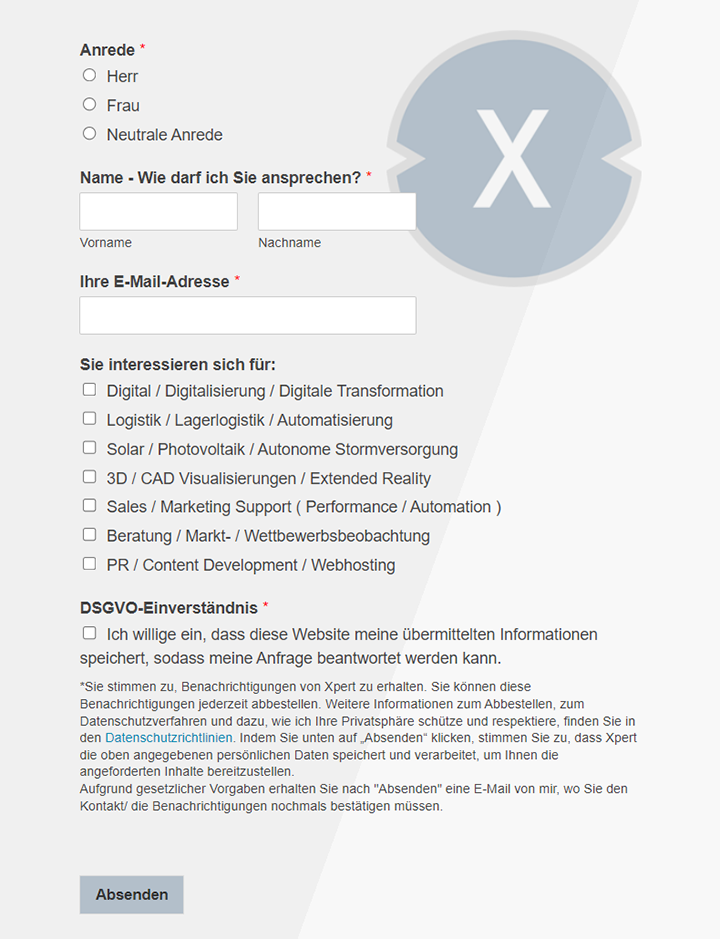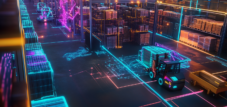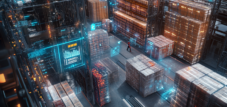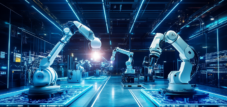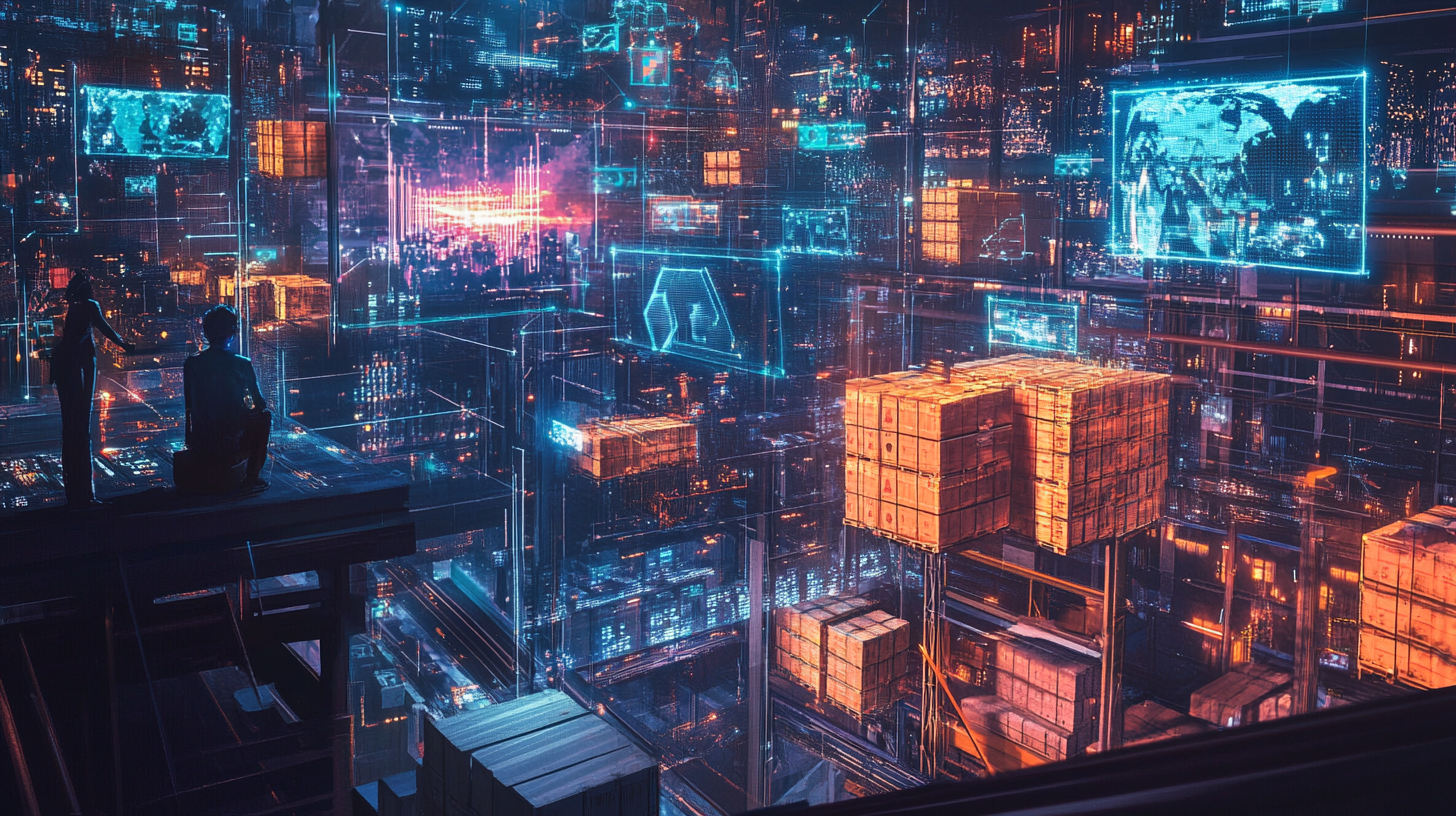
The role of AI and robotics in modern warehousing – buffer warehouses as strategic hubs – Image: Xpert.Digital
Strategic nodes: The smart symbiosis of robotics and buffer storage
The role of AI and robotics in modern warehousing
In times of globalized markets, increasingly individualized customer demands, and rising requirements for delivery speed, AI and robotics have established themselves as key drivers of innovation. Where forklift drivers once manually transported boxes and pallets from A to B, autonomous mobile robots (AMRs) are now in operation, capable of picking, transporting, and packing goods around the clock.
This automation operates on several levels:
Firstly, robots enable the reliable and rapid execution of repetitive tasks. Whether it's storing, repacking, or picking items, robotic systems perform these tasks with high precision and without breaks. This minimizes waiting times, reduces error rates, and accelerates overall workflows.
Secondly, AI algorithms come into play, analyzing vast amounts of data in real time and recognizing patterns. This data-driven intelligence can make predictions, for example, about the demand for specific products at different times. This allows for better inventory planning, more effective use of buffers, and the avoidance of bottlenecks. At the same time, system utilization is optimized, leading to greater efficiency and lower costs.
Thirdly, the integration of robotics and AI enables continuous learning. The robots don't just operate according to rigid guidelines, but adapt their routines based on real-time information. "We have developed an astonishing ability to react flexibly to changes," is the statement of many engineers involved in the development of these systems. For example, orders can be prioritized, robot routes can be dynamically adjusted, or additional capacity can be automatically provided in the event of a sudden increase in goods volume.
All these factors merge to form what is known as "intelligent warehousing," in which all processes are coordinated and continuously improved. This leads to a high degree of transparency within the warehouse and along the entire supply chain. A key component is the warehouse management system (WMS), which acts as the "brain" of the facility. All relevant information converges here, and based on this data, the AI makes independent decisions or supports human decision-makers.
Buffer storage as strategic nodes
Buffer warehouses originally served primarily to compensate for fluctuations in the supply chain. They were places where goods were either temporarily stored or prepared for onward transport. Now, in many industries, these warehouses have evolved into highly specialized centers that go far beyond simply buffering. “We use our warehouse as an innovation lab,” report modern logistics managers who conduct experiments using AI and robotics before implementing large-scale process changes across production or distribution.
Buffer warehouses make a crucial contribution to regional economic stability because they can prevent bottlenecks and supply disruptions. Particularly in times of crisis – whether caused by natural disasters, pandemics, or geopolitical tensions – the value of such warehouses as a "buffer zone" becomes apparent. If supply chains are disrupted elsewhere, a well-managed warehouse can compensate for short-term shortages and thus ensure customer supply. This has a direct impact on the competitiveness of companies and increases their attractiveness as employers, which also stimulates the regional labor market.
At the same time, modern technologies make it easier to reduce inventory levels in buffer stocks without increasing the risk of shortages. AI calculates precisely the quantities needed and how long specific items must be kept in stock. Where previously large safety stocks were maintained to cushion potential delivery delays, today a smaller number of units is often sufficient, as the system provides early warnings of potential bottlenecks. This reduces warehousing costs while simultaneously decreasing capital tied up in inventory and resource consumption.
Many companies report that targeted modernization of their buffer warehouses has simultaneously triggered a surge of innovation across the entire organization. "New ways of thinking about warehousing are driving our research and development," is a common refrain among executives when explaining the interrelationships between production, sales, and logistics. Those who have recognized the potential of automated and AI-driven processes in the warehouse are transferring these ideas to other areas of the company to achieve similar efficiency gains.
Related to this:
Key benefits of automation: From efficiency to sustainability
The advantages of widespread automation with AI and robotics can be identified in several dimensions. Traditionally, increased efficiency and productivity are paramount, as these aspects are often considered crucial for competitiveness. However, other factors are also increasingly coming into focus.
First, automation leads to a significant reduction in errors. Robots and AI systems not only operate according to predefined algorithms, but also continuously monitor and analyze their own processes. If irregularities are detected, they automatically switch to a correction mode or inform human operators who can intervene. In many industries, accuracy is a critical factor, for example in the pharmaceutical or food industries, where safety and quality are paramount. Here, precise order picking ensures high customer satisfaction and minimizes the risk of costly recalls.
Secondly, costs decrease because less staff is needed for monotonous or physically demanding tasks, and the machines can operate around the clock. This creates new, skilled jobs, for example in AI development, robot maintenance, and data analysis. “We have significantly restructured our workforce and have thus been able to attract new talent,” explain company representatives, who are investing specifically in training programs and collaborations with universities.
Thirdly, automation enables better scalability. Especially in times of booming online business, order peaks can be handled quickly and flexibly without requiring a complete system overhaul. The warehouse robot fleet can be expanded with additional units as needed; the AI algorithms are continuously developed and adapted to new requirements.
Fourth, sustainability is playing an increasingly important role. Environmental awareness and the efficient use of resources are not only societal concerns but also economic factors. Companies that focus on “green logistics” benefit from a positive image and save costs by reducing energy consumption and waste. “Our AI-driven systems enable us to control the flow of materials much more precisely, which has a positive impact on our CO2 balance,” is the feedback from many logistics managers who emphasize the advantages of intelligent warehouse processes.
AI as an engine for process optimization: Real-time data and learning systems
At the heart of current developments is AI-powered data analysis. Modern warehouses are equipped with sensors and IoT devices that enable constant monitoring of goods flow, inventory levels, and system status. These data streams are evaluated in real time, allowing for immediate responses when necessary. "We can prevent problems before they arise," emphasize the technicians responsible for system monitoring.
Based on these data sets, precise predictions can be made, for example, about future demand fluctuations or maintenance intervals. Predictive analytics enables companies not only to plan with pinpoint accuracy but also to proactively initiate maintenance measures. If, for example, an autonomous robot breaks down due to wear and tear, this can, in the worst-case scenario, delay the entire supply chain. Predictive maintenance, planned using AI calculations, can minimize this risk.
In addition to such preventative approaches, AI models exist that continuously make optimization suggestions during ongoing operations. For example, when it comes to dynamically adjusting routes for goods transport within the warehouse: "The planning of our AMRs adapts to the current situation every second," explain warehouse managers, who thus avoid longer waiting or travel times for robots and increase overall efficiency. This flexibility pays off particularly well for items with fluctuating demand, as the warehouse workflow always remains aligned with current needs.
Another important aspect is automated quality control. Using image recognition or scanning systems, robots inspect incoming items and identify defective goods early on. This conserves resources, as defective parts are not only discovered at the end of the chain and don't potentially lead to time-consuming and costly rework. "We now detect quality defects immediately and can inform our suppliers without delay," explain companies that, through this timely communication, also improve their relationships with suppliers and optimize processes together.
Positive effects on regional economic areas
The integration of AI and robotics into automated buffer warehouses not only has an impact within warehouse logistics itself, but also far-reaching consequences for the entire regional economy. In many regions, it has already been shown that companies that invested early in these technologies are more resilient and successful in global competition.
On the one hand, the potential applications of AI and robotics are increasing the region's overall capacity for innovation. Research collaborations between companies and universities are intensifying, local technology hubs are gaining importance and attracting highly qualified specialists. As a result, an "innovation ecosystem" is emerging, fueling sustainable growth and creating jobs. "We have been able to establish our region as a modern technology location," confirm many economic development agencies, which specifically work to bring together startups and established companies.
On the other hand, not only large corporations but also small and medium-sized enterprises (SMEs) benefit from the new possibilities in warehouse automation. For these businesses, being able to deliver quickly and reliably is often crucial to keeping pace with larger competitors. With the help of standardized robotics modules and cloud-based AI solutions, SMEs can implement automation that was fraught with obstacles just a few years ago. “We see automation as an opportunity to maintain our quality standards while still growing profitably,” is the assessment of many medium-sized companies that want to use digitalization as a springboard.
Furthermore, automated buffer warehouses have a direct impact on the supply chain. Shorter delivery times and a more stable supply not only benefit end customers but also related sectors such as logistics providers, suppliers, and local craft businesses. When more goods are produced or processed in the region, this strengthens the entire value chain and offers new opportunities for cooperation among local companies.
This creates a positive cycle overall: Stable and efficient buffer stocks ensure a better supply, which in turn increases purchasing power and trust in regional suppliers. This makes it easier to manage crises and exploit growth potential that would often remain untapped without modern technologies.
New jobs and training needs
A frequently discussed aspect of automation is the potential loss of jobs as robots take over certain tasks. However, in practice, it is evident that in addition to replacing repetitive or physically demanding tasks, numerous new job profiles are emerging. "We increasingly need data experts, robotics engineers, and specialists in AI development," explain companies that are strategically expanding their human resources departments.
This creates a demand for specialists who program the algorithms, maintain the robots, or set up interfaces between different IT systems. The topic of "human-robot collaboration" also requires new skills. Cobots, or collaborative robots, are designed to work alongside human workers without posing safety risks. However, this requires employees who are familiar with the processes and can program and control the devices.
At the same time, many employees are experiencing an increase in the value of their work. “We’ve been relieved of the monotonous, strenuous labor; now we focus on control and monitoring,” report warehouse workers who have undergone further training to enable collaboration with robots. Companies are supporting this development by offering retraining and continuing education programs, often in cooperation with local educational institutions. This allows even those with limited digital skills to participate in the new processes.
From an economic perspective, this means that the skills structure is changing. Regions that invest early in developing and expanding relevant training programs improve their chances of successfully managing the transformation. Often, innovative training projects also emerge, such as demonstration centers, "real-world laboratories," or funded collaborations with universities, where real-world applications can be examined and practical training provided.
How much do robots cost? How companies can overcome the hurdle of expensive infrastructure
Despite all the advantages, implementing AI and robotics systems also presents several challenges. One of these lies in the high initial investment costs. Automated warehouse systems are complex, requiring sophisticated infrastructure and experienced personnel. For some companies, this can represent a significant financial hurdle. "Without financial support, it would be virtually impossible for us," emphasize small and medium-sized enterprises (SMEs) in particular, which do not have the same reserves as large corporations. However, many regions are developing special funding programs to support companies on their path to digitalization.
Another point concerns the legal framework. With the increasing prevalence of AI and autonomous systems, issues such as data security, data protection, and product liability are gaining in importance. EU regulations for AI and machinery regulations must also be observed. “The regulatory requirements are often complex and change rapidly,” complain those responsible for designing their systems to meet all the requirements. Real-world laboratories can offer assistance here, as they create realistic environments in which companies can test new technologies and simultaneously verify compliance with regulatory requirements.
Another key issue is employee training. "If we don't provide targeted professional development for our employees, we risk a shortage of skilled workers and a loss of expertise," is a common refrain in management. The introduction of AI and robotics is an ongoing process that constantly brings new challenges. Regular training and close collaboration with universities or research institutes are therefore essential to stay up-to-date and maintain a technological edge.
Last but not least, cybersecurity presents a major challenge. Enormous amounts of data flow through highly networked warehouses, making them potentially vulnerable to external attacks. “We must ensure that our systems are not only efficient but also protected against manipulation,” demand IT experts, who consider a holistic security concept indispensable. Encryption technologies, multi-factor authentication procedures, and constantly updated security protocols are just some of the measures being taken to minimize risk.
Related to this:
Future prospects: Trends and forecasts up to 2025 and beyond
Developments in warehouse automation are dynamic and will accelerate further in the coming years. Several trends are becoming particularly evident:
More advanced AI and robotics
Thanks to the rapid advancement of AI methods such as deep learning and reinforcement learning, robots are becoming increasingly "intelligent" in dealing with complex situations. They can not only execute pre-programmed movements, but also recognize objects of different shapes and sizes and make independent decisions. "We want to develop our systems so that they can improve themselves," say research leaders who are intensively involved with self-learning robotics systems.
Collaborative robotics (cobots)
A strong focus is on cobots, which deepen collaboration with humans and make it significantly safer. In the future, cobots could assist directly at the packing station, while skilled workers concentrate on control or planning tasks. This allows for greater flexibility and the ability to precisely integrate both manual and automated processes.
Predictive analytics and digital twins
AI systems, which already perform extensive real-time analyses, will be even more focused on scenario planning. A major trend is the use of virtual representations of entire warehouse environments, so-called "digital twins." These digital twins allow processes to be simulated, optimization approaches to be tested, and maintenance plans to be created before being implemented in the real world. "This gives us a playground where we can try out new ideas safely," explain companies, who thus save themselves the expense of costly pilot projects during ongoing operations.
Next-generation autonomous mobile robots (AMRs)
AMRs are becoming even faster, more adaptable, and safer. With improved sensors and AI-based navigation algorithms, they can navigate complex warehouse environments, avoid collisions, and make safe decisions even in unforeseen events. At the same time, their range of applications will increase, enabling AMRs to operate in challenging outdoor areas or under special environmental conditions.
Integrations of IoT, Edge Computing and 5G
Real-time communication in warehouses is being further optimized by new technologies such as 5G and edge computing. Warehouse operators want to be able to process large amounts of data without delay in order to react truly "in a second." "The shorter our reaction time, the better prepared we are for market changes," say managers, who see particular advantages in the highly fluctuating demand patterns of e-commerce.
Sustainable solutions and circular economy
Responsibility towards the environment and society is increasingly coming to the fore. Warehouse processes are being optimized to use energy efficiently and minimize waste. AI-supported systems, for example, help in this regard by reducing packaging volumes or automatically switching to reusable containers. "Our goal is to continuously reduce the ecological footprint of our logistics," emphasize representatives of green logistics initiatives, who are embracing new technologies in collaboration with robotics and AI experts.
Human-robot collaboration as standard
With the increasing prevalence of cobots and safety-certified systems, employee acceptance is also growing. The fear of “job loss due to robots” is increasingly being replaced by the realization that robots relieve humans of monotonous or dangerous tasks, while new perspectives are emerging in the areas of process control and development. “Robots are tools, not competitors,” is the increasingly common maxim in companies pursuing a balanced automation strategy.
From vision to everyday life: How companies and regions benefit
The trends and developments described illustrate that buffer warehouses are no longer mere intermediate stops in the flow of goods. With AI-supported automation and state-of-the-art robotics, they are transforming into highly flexible, future-oriented hubs. For many companies, this is key to remaining competitive in the global market while maintaining a strong local presence.
The regional economy benefits from this development in several ways:
- Increased competitiveness: Automated warehouse processes enable faster deliveries, fewer errors, and thus an improved customer experience. This increases companies' chances of succeeding against international competition and strengthens their economic position.
- Creating new jobs: As repetitive tasks disappear, demanding jobs are emerging that require specialized professionals. Schools, vocational schools, and universities are adapting their educational programs so that new generations of workers possess the necessary skills.
- Promoting innovation and technology: Companies investing in AI and robotics often seek collaboration with startups, research institutions, or other firms. This fosters the development of an innovation cluster that provides impetus not only to logistics but also to other industries.
- Infrastructure improvements: Operating highly automated warehouses often requires fast internet connections, a reliable power supply, and modern transport routes. Upgrading this infrastructure has a positive impact on the entire region and can also improve quality of life and the attractiveness of the location.
- Sustainable development: Thanks to intelligent systems, material and energy consumption can be reduced. Both economic and environmental goals are better aligned. Regional projects for the circular economy or green mobility benefit from companies that are already investing in environmentally friendly technologies.
Practical example: Modernization boost and regional networking
Many regions report a veritable modernization boom after one or more large companies digitized and automated their warehouse logistics. This pioneering role then spreads to other industries, which follow the best practices. “We initially specialized in B2C e-commerce, but soon we received inquiries from mechanical engineering and wholesale,” describe companies that have discovered the universal applicability of the principles of adaptive and robotic warehousing.
At the same time, networks are being established in which know-how is exchanged and synergies are realized. For example, a manufacturing company can store its material inventories in an external, automated buffer warehouse operated by a specialized logistics service provider. This creates a win-win situation: The manufacturer saves on high investments in its own storage facilities, while the service provider utilizes its capacities more efficiently and generates profits. "Networking among companies in the region is therefore a key success factor for a stable, flexible supply chain," is a common conclusion among location developers.
Related to this:
- Warehouse logistics: Which logistics robots are known for their innovations
- The top ten logistics robots: Advanced robotics solutions in industry and logistics
From traditional to smart: How AI and robotics are transforming warehouse management
The future of warehousing is intelligent, robot-assisted, and optimized for seamless operations. AI and robotics are giving traditional buffer warehouses a completely new meaning by transforming them into highly automated hubs that stabilize supply chains and simultaneously boost regional economies. Companies that leverage these technologies gain in productivity, flexibility, and competitiveness. At the same time, new job profiles and career opportunities are emerging, making regions attractive locations for skilled workers.
The challenges associated with this transformation should not be underestimated. High initial investments, the need for comprehensive security concepts, and the training of employees can pose a considerable risk, especially for smaller companies. Nevertheless, numerous examples show that investments in AI and robotics are worthwhile and can open doors to further growth.
Looking to the near future, advanced robotics, adaptive AI systems, and digital twins will become standard. Cobots, predictive analytics, and automated processes that operate almost without manual intervention are already shaping the vision of many warehouse logistics providers. Real-time data, IoT-based sensors, and 5G communication ensure that market changes can be translated into optimized processes in fractions of a second. At the same time, sustainability is increasingly coming into focus, leading to resource-saving solutions and a more intensive focus on recycling and the circular economy.
There is no end in sight to this development. On the contrary, numerous companies and research institutions are focusing on continuous innovation to further extend their lead. It is therefore expected that automation will increasingly merge with other key technologies in the coming years, for example, with blockchain for transparent supply chains or with augmented reality to support employees in real time. “The boundaries of what can be automated are constantly shifting,” is the conviction of many pioneers in warehouse digitalization.
This dynamic presents enormous opportunities for the regional economy. A well-developed infrastructure, an open and innovative climate, and targeted funding programs can accelerate the construction or modernization of buffer storage facilities. Bringing local businesses, educational institutions, and policymakers together to define common goals will lay the foundation for sustainable and future-oriented economic development.
Thus, the former role of the buffer warehouse as a "hidden bottleneck" in logistics comes to an end. It is replaced by a networked, dynamic hub that orchestrates a wide variety of goods flows. Thanks to AI, robotics, and increasing automation, efficiency is reaching new levels. "With our automated warehouses, we have proven that technological innovation and economic stability are mutually dependent and reinforcing," conclude leading figures from business and research, who are convinced that this trend is only just beginning.
Although the path to complete digitalization and automation is not without its obstacles, the positive effects for companies, employees, and the entire economic region far outweigh them. Buffer warehouses are evolving into innovation centers where new technologies are tested and implemented. In this way, the efficiency renaissance in warehousing will inevitably progress and make a significant contribution to stabilizing and growing regional economic structures. Not only will industries traditionally rooted in logistics benefit, but sectors such as trade, industry, research, and development will also profit from the newly gained flexibility and speed in their value creation processes.
The close integration of humans and machines, of AI analysis and robotic power, points the way to a future in which warehousing is considered a key competency for companies that want to hold their own in a globally networked world. “We have never been so efficient, so adaptable, and so ready for what’s to come,” is the conclusion of many decision-makers who are already preparing for the next stage of innovation. With every new technology, every new best practice, and every successful implementation, the potential grows to overcome existing structures and create space for further disruptive ideas.
In a world where supply reliability, speed, and cost control have become crucial competitive factors, the transformation of buffer warehouses through AI and robotics offers a decisive advantage. It creates a buffer against crises, a solid foundation for growth, and an incubator for continuous innovation. Modern warehousing thus impressively demonstrates that traditional industrial sectors can be enhanced, not eliminated, through digitalization and automation. By reinventing themselves, companies are setting trends that extend far beyond their own walls and shape the future of regional economies.
Expert partner in warehouse planning and construction


Xpert.Plus Warehouse Optimization - High-bay warehouses and pallet warehouses: Consulting and planning
We are here for you - Consulting - Planning - Implementation - Project Management
☑️ SME support in strategy, consulting, planning and implementation
☑️ Creation or realignment of the digital strategy and digitization
☑️ Expansion and optimization of international sales processes
☑️ Global & Digital B2B trading platforms
☑️ Pioneer Business Development

Konrad Wolfenstein
I would be happy to serve as your personal advisor.
You can contact me by filling out the contact form below or simply call me on +49 7348 4088 965 .
I'm looking forward to our joint project.
Write to me


Xpert.Digital - Konrad Wolfenstein
Xpert.Digital is a hub for industry focusing on digitalization, mechanical engineering, logistics/intralogistics and photovoltaics.
With our 360° Business Development solution, we support renowned companies from new business to after-sales.
Market intelligence, smarketing, marketing automation, content development, PR, mail campaigns, personalized social media and lead nurturing are part of our digital tools.
You can find more information at: www.xpert.digital - www.xpert.solar - www.xpert.plus
Keep in touch