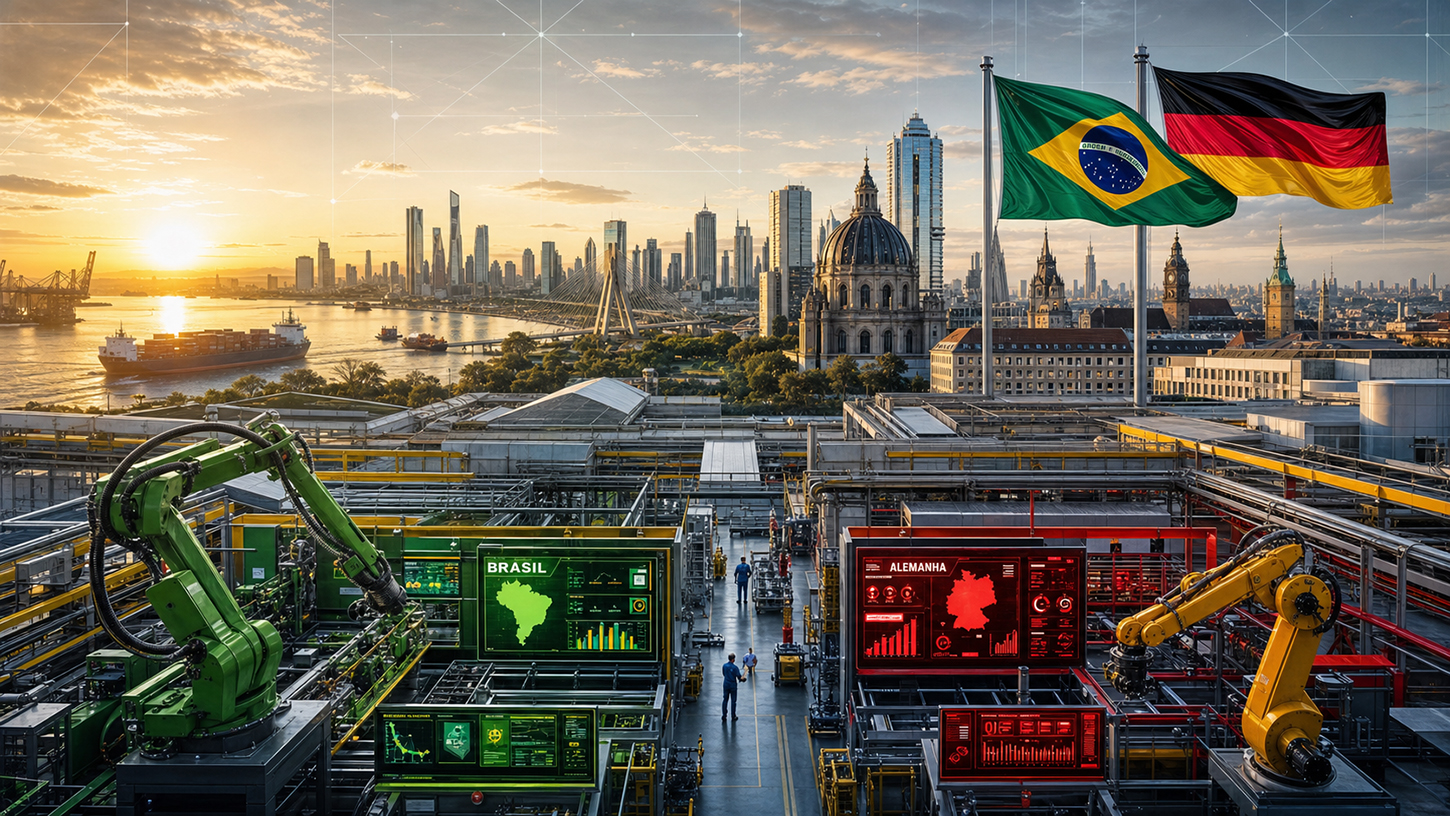
Brazil in transition: Economic power, industrial partners and the Mercosur agreement – Image: Xpert.Digital
Between high interest rate policy and trade diplomacy – Why Europe must now focus on Brazil
Billion-dollar opportunities in mechanical engineering: Why Brazil is now becoming the most important partner country
Brazil is at the center of a geopolitical and economic realignment. As Latin America's largest economy, the country boasts vast natural resources, a well-developed green energy base, and an ambitious state industrial policy. At the same time, the South American giant grapples with a paradoxical environment: high interest rates and a notorious bureaucracy still act as structural obstacles. But the global landscape is shifting rapidly. With the provisional entry into force of the EU-Mercosur agreement, the world's largest free trade zone is being created. In light of growing US protectionism and China's dominance in critical resources, Brazil is suddenly emerging as an indispensable strategic partner for Europe. For German industry, particularly mechanical engineering and the B2B sector, a market of 770 million inhabitants is opening up, one that has far more to offer than just agricultural goods. The following analysis sheds light on Brazil's economic reality amidst profound structural reforms, digital transformation and new trade policy opportunities – and shows why a wait-and-see approach is the wrong strategy for European companies right now.
Brazil's economy today: A giant with structural constraints
Brazil is the largest economy in Latin America and, with a gross domestic product of US$2.179 trillion in 2024, ranked among the ten largest economies in the world. With 216 million inhabitants, vast natural resource reserves, and a diversified industrial structure, the country possesses a weight that has long been underestimated in Europe. However, Brazil's strengths stand in curious contrast to the structural weaknesses that have hampered the country's full potential for decades.
Brazil's GDP growth in 2025 was between 2.2 and 2.5 percent – respectable, but not spectacular. In the fourth quarter of 2025, sequential quarterly growth fell to just 0.1 percent, a sign that the economy cooled significantly towards the end of the year. For 2026, economists expect a further slowdown to around 1.6 to 2.4 percent, depending on the model. The main obstacle is, unsurprisingly, monetary policy. Since September 2024, the Central Bank of Brazil has raised its key interest rate, Selic, in several steps to between 14.50 and 15 percent – the highest level in 20 years. This drastic interest rate hike was the response to persistent inflation, which ultimately ended at 4.26 percent in 2025, just within the official target range of 4.5 percent – a positive surprise compared to the Central Bank's more pessimistic forecasts from July 2025.
The effects of high interest rates are palpable in the daily operations of the Brazilian economy: investments are being postponed, consumption is dampened, and the credit market for businesses remains expensive. Nevertheless, the economy is demonstrating resilience. Agribusiness, the backbone of Brazil's export strength, grew by around 8 percent in 2025 thanks to record harvests and increasing exports to China and new markets. The service sector and private consumption also contributed to stabilization. The Brazilian economy is thus neither a story of failure nor one of smooth growth. Rather, it is the portrait of a giant whose galloping is being held back by self-imposed structural constraints.
The structural paradox: resource wealth versus bureaucracy density
Few countries in the world combine such contrasting characteristics as Brazil. On the one hand, it possesses the world's second-largest reserves of rare earth elements, estimated at 21 million tons, is the world's largest supplier of niobium, and is developing into a significant producer of lithium, nickel, graphite, and cobalt. The Brazilian mining association Ibram alone expects investments of over US$18 billion in this sector by 2030. Given the growing importance of critical raw materials for Europe's energy transition and high-tech industries, this resource base is of strategic significance.
On the other hand, the Brazilian tax system and regulatory environment have been considered major investment barriers for decades. Brazilian companies spend an average of 1,501 hours per year fulfilling their tax obligations – the highest figure among OECD-equivalent economies. This so-called "Custo Brasil" – the specific additional costs of doing business in Brazil – encompasses not only the tax burden but also inefficient infrastructure, corruption risks, and a cumbersome justice system. A comprehensive tax reform was passed on January 16, 2025, with Supplementary Law No. 214/2025. It replaces the previous fragmentation of indirect taxes (PIS, COFINS, IPI, ICMS, ISS) with a dual value-added tax system featuring two new taxes (CBS and IBS) as well as a selective levy. The reform is being implemented gradually between 2026 and 2033. For foreign investors, this means increased compliance complexity in the short term, but a more transparent and predictable tax system in the long term.
Another structural advantage is Brazil's energy mix. The country is a global leader in renewable energies, generating around 83 percent of its electricity from renewable sources, primarily hydropower, wind, and solar energy. This gives Brazilian production facilities a carbon footprint that is an attractive argument for European companies with decarbonization goals. Brazil is therefore not only a cost-effective production location but also potentially "green"—an aspect that is gaining significant relevance in a world with carbon border adjustment mechanisms (CBAM).
Mechanical engineering as the core: figures, structures and German roots
Brazilian mechanical engineering is far more significant than Brazil's public image as an agricultural nation would suggest. With global machinery sales of €51 billion in 2024, Brazil ranked 11th in global machinery production. This is not a marginal player, but a serious player with a broad industrial base. The pillars of this sector are agricultural machinery, metal processing, food processing machinery, materials handling equipment, and drive technology.
For Germany, Brazil is the most important South American market for its machinery – and Germany's only strategic partner on the entire Latin American continent. In 2025, German machinery exports to Brazil reached €2.73 billion, an increase of 1.1 percent compared to the previous year. This placed Brazil 19th in the German export rankings – a respectable result, but one that still has considerable potential for growth. Drive technology, food processing and packaging machinery, conveyor technology, and fluid technology are particularly in demand. These product categories perfectly align with the investment priorities outlined in Brazil's industrial policy for the coming years.
More than 100 German mechanical engineering companies operate their own production facilities in Brazil, the majority of them in the state of São Paulo. There, they are not only exporters but also local producers, employers, and technology transfer partners. Companies like Liebherr strengthened their presence in 2025 with a new research and manufacturing center in Guaratinguetá (São Paulo), where complex components for the global aerospace industry are developed. In the agricultural technology sector, Stihl, Horsch, Fendt, Amazone, and the Bosch/BASF joint venture One Smart Spray are actively investing in the Brazilian market. Bilateral trade between Germany and Brazil recently amounted to approximately 21 to 22 billion euros, making Germany Brazil's largest European trading partner.
Nova Indústria Brasil: State industrial policy as an engine of growth
The Brazilian government under President Lula da Silva has launched an ambitious re-industrialization strategy called "Nova Indústria Brasil" (NIB), extending to 2033. This program is more than just lip service: 300 billion Brazilian reais – roughly 56 billion euros – will be provided through the state-owned development bank BNDES for the period 2024 to 2026. The program focuses on six strategic missions: agriculture and food sovereignty, healthcare, sustainable mobility and logistics, digital and green industries, bioeconomy, and defense and space.
In the agricultural sector, the program sets ambitious goals: By 2030, the level of mechanization on family farms is to increase from the current 18 percent to 70 percent, and 95 percent of the necessary machinery is to be produced in Brazil. This has direct consequences for the mechanical engineering sector – both for domestic producers and for foreign investors who want to establish production capacities in Brazil. For digitalization and Industry 4.0, a credit line of the equivalent of €2 billion was established in 2025 for machinery, robotics, artificial intelligence, and IoT. The Brazilian Artificial Intelligence Plan (PBIA 2024–2028) envisages investments of €3.6 billion and positions Brazil as a global benchmark in supercomputing and AI.
This state-led industrial policy is not without its ambivalences. On the one hand, it creates reliable demand, channels capital, and sends clear investment signals. On the other hand, a strongly state-directed economic policy carries the risk of misinvestments, dependence on political cycles, and market-distorting subsidies. Brazilian economic history offers numerous examples of industrial policies that looked good on paper but, in reality, cemented inefficient structures. Nevertheless, given the depth of deindustrialization Brazil has experienced over the past three decades, an active state role is not only politically justifiable but economically necessary.
Digital transformation and the B2B market: Dynamic, fragmented, and full of opportunities
The Brazilian market for digital transformation is one of the most dynamic growth regions worldwide. Its volume was estimated at US$26.72 billion in 2025, and is expected to reach US$30.28 billion in 2026 – representing an annual growth rate of 13.32 percent until 2031, when a market volume of US$56.6 billion is projected. Drivers include the PIX payment boom (a Brazilian instant payment system with 42 billion transactions in the BFSI sector alone), substantial cloud investments by hyperscalers such as AWS, Microsoft, and Google, and government incentives under the "Lei do Bem," which provides tax breaks for Industry 4.0 modernizations.
5G connectivity now reaches 64 percent of the Brazilian population, creating the infrastructure prerequisites for scalable IoT and edge computing applications. In the B2B sector, this means that the rollout of 5G is not only transforming the telecommunications industry but also enabling private industrial networks (M2M – machine-to-machine communication) in manufacturing, healthcare, and agricultural technology. São Paulo has become Latin America's largest startup hub, Rio de Janeiro is focusing on energy and smart cities, Belo Horizonte on AI and IoT, and Recife on the creative industries and government technology.
For European B2B companies, this results in a two-tiered market picture: On the one hand, there is the demand for hardware, machinery, equipment, and industrial components – a traditional export business that is now becoming more favorable in terms of tariffs thanks to the Mercosur agreement. On the other hand, a growing market is emerging for software solutions, platform technologies, ERP systems, automation, and AI applications. German companies such as SAP and Siemens had a prominent presence at Hannover Messe 2026, where Brazil was the partner country and presented more than 300 companies. The event highlighted how much Brazil's self-image has changed: The country no longer just wants to supply raw materials, but to be perceived as an equal technology partner.
🎯🎯🎯 Global Sourcing & Commodity Trading with integrated logistics


Raw materials, global procurement & trade - Image: Xpert.Digital
State-of-the-art cargo planes, optimized transport routes, and multimodal logistics chains are interchangeable—they can be bought, leased, or outsourced. What money can't buy are direct contacts with producers in Peruvian mines, reliable supply relationships in the CIS countries, and years of built-up trust in markets that are unfamiliar to outsiders. The decisive competitive advantage in global commodity trading lies not in transporting the good from A to B, but in knowing where the good comes from, who produces it, and how to gain access before others even know the market exists. Whoever owns the network sets the price. Everyone else pays it.
More information here:
Tariff reduction, climate dispute, Chinese competition — the three levers of the Mercosur deal
The Mercosur agreement: 25 years of negotiations, a historic turning point
On May 1, 2026, the trade component of the EU-Mercosur agreement provisionally entered into force – a date of historic significance. After more than 25 years of negotiations, repeatedly thwarted by environmental issues, conflicting agricultural interests, and political shifts, the geopolitical pressure resulting from the re-election of Donald Trump and his protectionist trade policies finally brought about a breakthrough. On January 8, 2026, a qualified majority of EU member states in the European Council voted in favor of the agreement – with Italy holding the decisive balance of power. France, Poland, and Austria voted against it until the very end.
The agreement creates the world's largest free trade zone, encompassing a combined market of approximately 770 million inhabitants and nearly 20 percent of global economic output. Trade volume between the EU and Mercosur already amounts to around €88 billion. Upon full ratification, tariffs would be gradually eliminated on 91 percent of EU exports to Mercosur countries and on 92 percent of Mercosur exports to the EU. Provisional application initially applies only to the trade provisions, as the European Parliament has requested a review by the European Court of Justice, for which there is no set deadline.
For Brazil, the largest economy in Mercosur, this marks a turning point in economic policy. The country not only gains better market access to the world's wealthiest economic region, but also a strategic planning certainty it previously lacked. Investors developing a long-term strategy for Brazil can now rely on a more dependable regulatory framework.
Opportunities for German and European industry: Tariff reduction and its limits
For the German and European mechanical engineering sector, the Mercosur agreement represents a true turning point. Previously, tariffs of 14 to 20 percent applied to machinery, 35 percent to automobiles, and up to 18 percent to chemical products. The agreement stipulates that 95 percent of all mechanical engineering products will benefit from a gradual reduction of tariffs. The VDMA (German Engineering Association) estimates that German machinery exports to the four Mercosur countries could increase from the current 3.5 billion euros to as much as 5 billion euros by 2040.
However, the timeframes for tariff reductions are estimated at ten years, and in some cases even up to 15 years. The benefits will therefore materialize in the medium to long term. Only for a few products, such as metalworking lathes, textile machinery, and confectionery machines, will the tariff reduction take effect immediately in the first year after the agreement enters into force. For other products—such as milking machines, feed presses, and certain pumps with measuring devices—no tariff reduction is planned at all, demonstrating that the agreement does indeed take into account the protective interests of individual industries. In addition to the pure tariff reduction, the agreement also harmonizes technical standards and norms that have previously acted as non-tariff trade barriers. For German machine manufacturers with subsidiaries in Brazil, this means that local value creation can also be more easily integrated from a regulatory perspective.
In the automotive sector, the initial situation is particularly dramatic: The existing 35 percent tariff on imported vehicles is being phased out. German manufacturers like Volkswagen, BMW, and Mercedes-Benz, which already produce locally, benefit from improved predictability and streamlined supply chains. At the same time, they must grapple with a new reality: Brazil's electric vehicle market is booming, driven primarily by Chinese manufacturers. In January 2026, 14.6 percent of vehicles sold were electrified – almost twice as many as in January 2025. In February 2026, electric vehicle sales increased by 92 percent compared to the same period of the previous year. BYD and other Chinese manufacturers recognized Brazil's strategic importance early on and are building local assembly plants. European automakers are facing intensified competition in this market.
Strategic raw materials: Brazil as a counterweight to China
One aspect of the EU-Mercosur agreement that is often underrepresented in public debate concerns access to critical raw materials. Brazil possesses the world's second-largest reserves of rare earth elements (approximately 21 million tons), making it a potential key resource for Europe's technological independence from China. Over 90 percent of rare earth processing is currently in Chinese hands—a strategic concentration risk that directly affects European industries. Without rare earth elements such as neodymium, dysprosium, and terbium, there would be no wind turbines, no electric motors, and no modern defense systems.
The Mercosur agreement now creates a regulatory framework for European investments in Brazilian raw material extraction and processing. Projects like the MagBras initiative, in which European companies such as ArcelorMittal are involved, aim to build a complete value chain from mining to the finished magnet. By 2030, Brazil's mining association Ibram expects investments of over US$18 billion in copper, lithium, graphite, nickel, rare earths, and cobalt alone. At least 50 projects are already in the development phase. This development is geopolitically significant: Brazil is consciously positioning itself as a reliable raw materials partner of the West, a counterpoint to Chinese dominance – and President Lula is strategically using this to attract international investment.
Risks and criticism: The uncomfortable sides of the deal
Any serious analysis must also identify the risks and criticisms associated with the EU-Mercosur agreement. The most significant objections stem from European agriculture and environmental protection. The agreement opens EU markets to Brazilian agricultural exports—beef, poultry, sugar, ethanol, corn, and rice—without ensuring that these products are produced under the same environmental and social standards as their European counterparts. Already, one-third of EU poultry imports come from Mercosur countries.
European agricultural associations and trade unions are warning of a structural imbalance: Brazilian producers are not subject to the same regulations regarding pesticides, deforestation, animal welfare, and CO₂ emissions as EU farmers. Over 30 active ingredients approved for sugarcane in Brazil are banned for sugar beets in the EU, and 52 percent of the active ingredients approved for maize are not approved in the EU. This creates unequal competitive conditions, which are criticized as environmental and social dumping.
From an ecological perspective, warnings have been issued that the agreement could lead to an additional 620,000 to 1.35 million hectares of deforestation within five years. It would incentivize agricultural exports, thereby cementing an economic model focused on monocultures and pesticide use. Brazil has the second-highest pesticide consumption per hectare worldwide, after China. Critics consider the agreement's sustainability provisions neither binding nor sufficient. While the EU Commission has announced "robust safeguards" for sensitive agricultural products and intends to enact separate legislation for monitoring, it remains to be seen whether these mechanisms will be effective in practice.
For Brazil itself, closer ties with Europe also entail risks: The gradual reduction of tariffs opens the Brazilian market to European goods, which means considerable competitive pressure for local producers who were previously protected by high tariffs. Small and medium-sized industrial enterprises, in particular, which previously operated in a protected niche, now have to modernize or withstand this cutthroat competition.
Brazil's competitive landscape: China as the real wild card
Any analysis of Brazilian-European economic relations would be incomplete without considering the third player in the background: China. The People's Republic is already Brazil's most important trading partner and dominates large portions of Brazilian raw material exports, as well as increasingly the import market for industrial goods and vehicles. Chinese automakers such as BYD and Great Wall Motor established local production facilities in Brazil early on and are sometimes significantly undercutting European competitors on the price of electric vehicles.
For European companies, this means that while the Mercosur agreement opens doors, it doesn't guarantee market share. Those who rely on lower tariffs automatically leading to increased sales will be disappointed. The Brazilian market is highly competitive and will remain so. Success depends on product quality, service depth, technological leadership, and the ability to leverage local partnerships and integrate into the Brazilian ecosystem. German companies already established there have a structural advantage over newcomers – but this advantage must be actively defended.
Brazil as a political actor: Lula, Europe and the new worldview
Brazil's role in global trade diplomacy is also a political story. President Luiz Inácio Lula da Silva, who assumed his third term in January 2023, has deliberately positioned Brazil as a "global player of the Global South"—a country that trades with the West but does not automatically signal its willingness to follow suit. Lula's personal opening of the 2026 Hannover Messe, together with German Chancellor Friedrich Merz, sends a substantial diplomatic message. Brazil presented itself there under the motto "The Industry of Today"—that is, as an industry of the present, not the past.
The geopolitical logic behind this rapprochement is clear: In light of US protectionism under Trump, growing Chinese penetration of many emerging economies, and an increasingly multipolar global trade landscape, both sides are seeking diversification. Europe needs raw materials, sales markets, and reliable partners for critical supply chains. Brazil needs technology, capital, and access to affluent consumer markets. The Mercosur agreement is therefore not just a matter of trade policy, but a geopolitical repositioning project for both sides.
Whether this repositioning project succeeds depends largely on its implementation. Trade agreements create opportunities; they don't realize them automatically. The transition periods of up to 15 years for tariff reductions in the mechanical engineering sector mean that the real benefits won't be realized until the 2030s. Until then, the real work lies with the companies, chambers of commerce, associations, and regulatory authorities on both sides.
Perspectives: What matters now
Brazil's economic situation is complex, dynamic, and full of contradictions. The country is growing, but more slowly than it could. It is reforming its tax system, but the transition is taking time. It is opening its market, but with long lead times. It possesses strategic resources, but developing them requires capital and time. And it is forging closer ties with Europe while simultaneously trading with China and distrusting the US.
For European and especially German companies, this results in a clear course of action: Now is the time for strategic positioning, not for hesitant, passive behavior. Those who invest in Brazil today – in local production, technology partnerships, access to raw materials, or digital solutions – have a structural advantage in terms of time horizon compared to those who lag behind. The Mercosur agreement is not the solution to all problems, but it is a more reliable foundation than Brazil has had for decades.
The risk-reward profile for German companies in the Brazilian B2B market improved significantly in 2025/2026. High interest rates, compliance burdens, and competitive pressure from China are real challenges. But a market of 216 million people, a growing SME sector, an ambitious industrial policy, abundant raw material resources, and now permanently improved market access thanks to the Mercosur agreement combine to create an opportunity that is hard to ignore. Brazil is not an easy market – but it is a necessary one.
Your global marketing and business development partner
☑️ Our business language is English or German
☑️ NEW: Correspondence in your native language!

Konrad Wolfenstein
I and my team are happy to be available to you as your personal advisor.
You can contact me by filling out the contact form here wolfenstein@xpert.digital:or simply call me at +49 7348 4088 965. My email address is
I'm looking forward to our joint project.
☑️ SME support in strategy, consulting, planning and implementation
☑️ Creation or realignment of the digital strategy and digitization
☑️ Expansion and optimization of international sales processes
☑️ Global & Digital B2B trading platforms
☑️ Pioneer Business Development / Marketing / PR / Trade Fairs
🎯🎯🎯 Data-driven B2B industry hub as a quasi-in-house solution

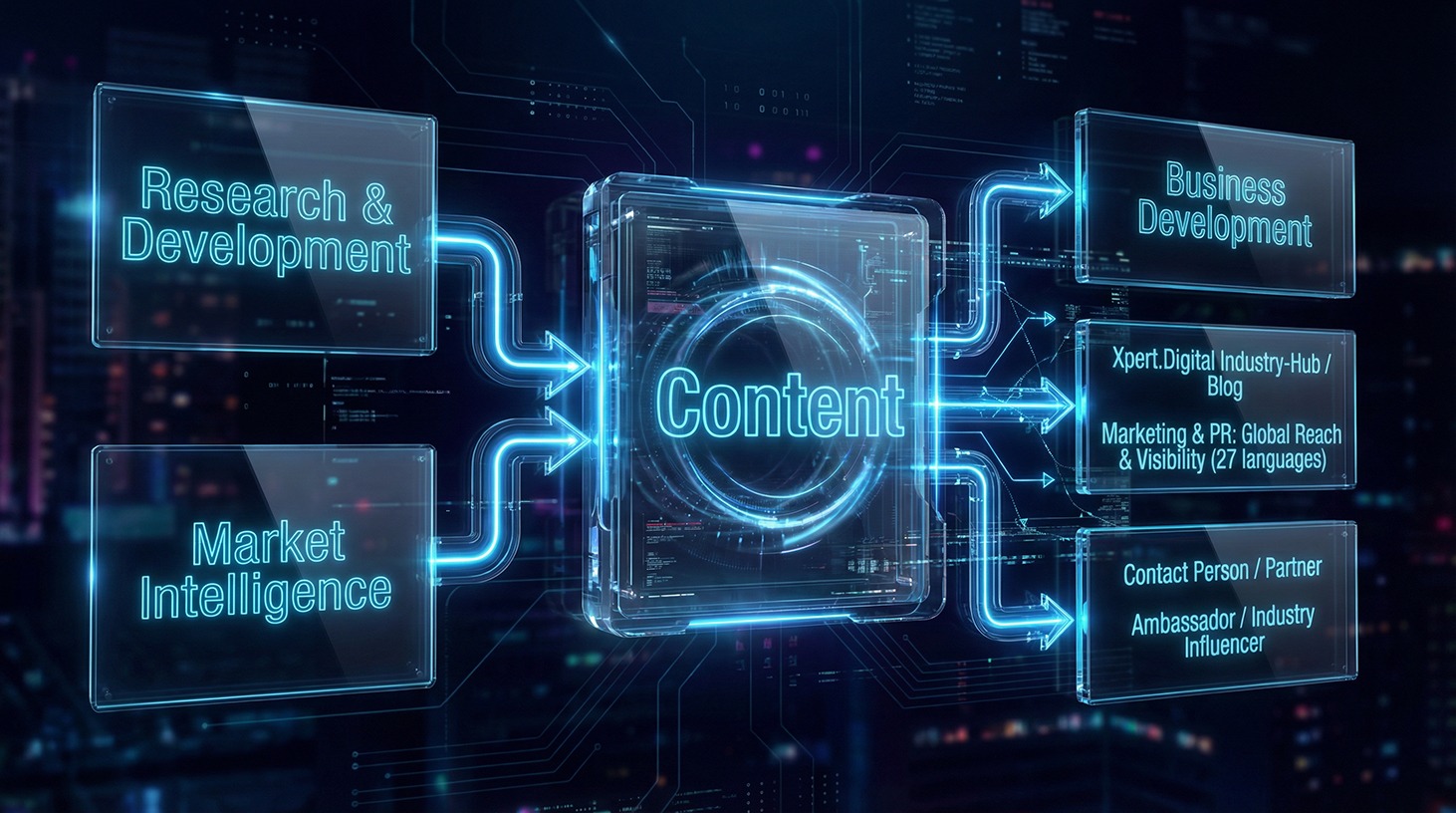
The quasi-in-house solution: How Xpert.Digital closes operational gaps in B2B marketing and sales – Smart Content-Driven Business - Image: Xpert.Digital
Xpert.Digital is a data-driven B2B industry hub led by Konrad Wolfenstein . The company acts as an external, quasi-in-house solution for industrial partners, closing operational gaps in marketing, content, and sales – without requiring additional resources on the client side.
More information here:
Our global industry and economic expertise in business development, sales and marketing
Our global industry and economic expertise in business development, sales and marketing - Image: Xpert.Digital
Industry focus areas: B2B, digitalization (from AI to XR), mechanical engineering, logistics, renewable energies and industry
More information here:
A thematic hub offering insights and expertise:
- Knowledge platform covering global and regional economies, innovation and industry-specific trends
- A collection of analyses, insights, and background information from our key areas of focus
- A place for expertise and information on current developments in business and technology
- A hub for companies seeking information on markets, digitalization, and industry innovations