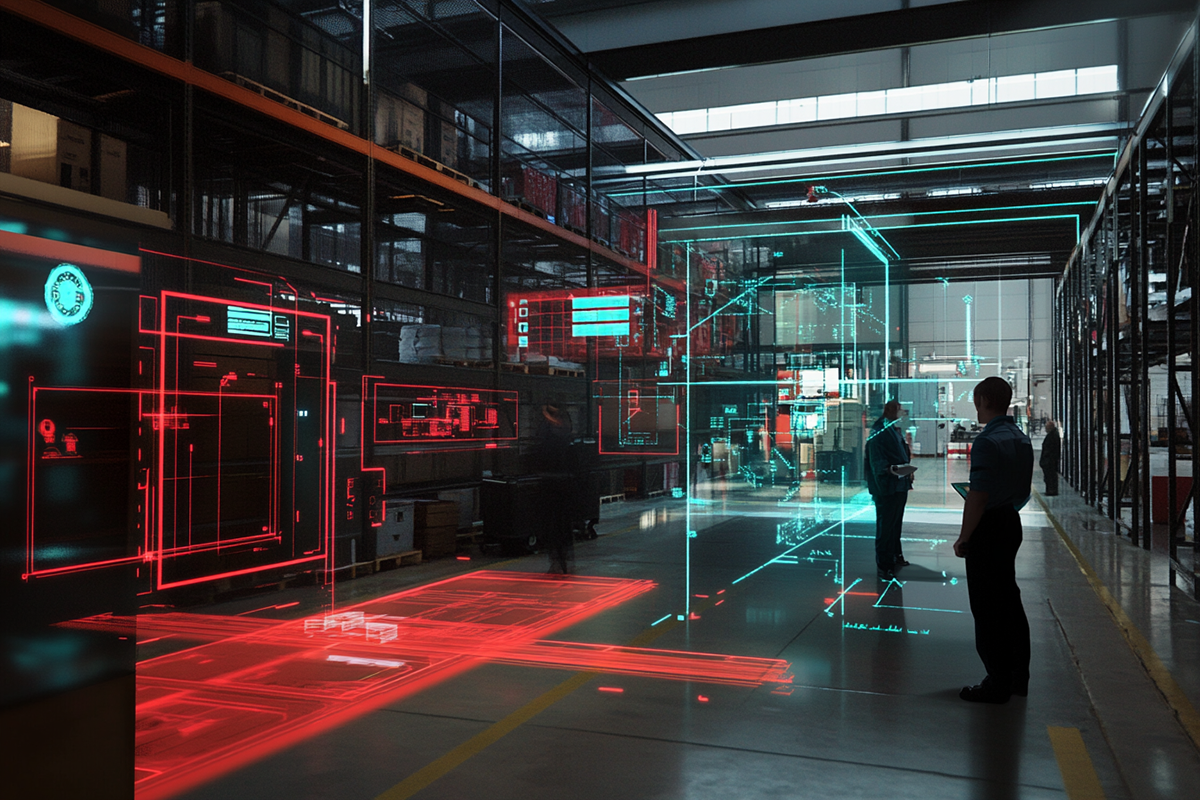
Are you familiar with the Bottleneck Walk? Identifying bottlenecks in intralogistics and logistics in general – Image: Xpert.Digital
🔍 Identifying bottlenecks in intralogistics and logistics: The Bottleneck Walk
📦 In modern logistics and intralogistics, efficient process design plays a crucial role. Companies are under constant pressure to optimize their operations, reduce costs, and simultaneously ensure customer satisfaction through on-time deliveries. One of the biggest challenges in this context is identifying and eliminating bottlenecks that can impede the entire flow of materials and information. A proven tool for analyzing such bottlenecks is the so-called "bottleneck walk." But what exactly is meant by this, and how can it contribute to improving logistics processes?
❓ What is a bottleneck?
Before we delve into the Bottleneck Walk, it's important to understand the term "bottleneck." In logistics, a bottleneck refers to a point within a process or supply chain where capacity is limited. This limitation causes the entire process to slow down or even come to a standstill. A classic example is a production line where one machine operates more slowly than the others. Although the remaining machines could produce faster, they have to wait for the slowest link in the chain.
Bottlenecks can occur in various areas:
- Material flow: When certain machines or means of transport do not have sufficient capacity.
- Information flow: When data is not processed or forwarded in a timely manner.
- Personnel: When there are not enough qualified employees available or workers are used inefficiently.
- Storage: When storage areas are not used optimally or storage processes are inefficient.
🚶♂️ The Bottleneck Walk as a method
The Bottleneck Walk is a systematic method for identifying bottlenecks. It involves a kind of "walk" through the various processes of a company, specifically searching for points where delays or inefficiencies occur. This method originates from Lean Management and is frequently used in production, but can also be applied to other areas such as intralogistics.
The goal of a bottleneck walk is to analyze the entire process flow and pinpoint exactly where the bottlenecks are. This involves not only identifying obvious problems but also uncovering hidden bottlenecks that might not be immediately apparent.
📋 How does the Bottleneck Walk work?
A bottleneck walk follows a structured approach. Essentially, it consists of the following steps:
1. Preparation
Before the actual walk begins, all relevant data should be collected. This includes production plans, inventory levels, lead times, and other key performance indicators that provide information about the current state of the processes.
2. On-site observation
The next step is to observe the actual workflow on-site. This can take place in a warehouse, a production facility, or a distribution center. The goal is to understand the real flow of materials and information and to identify any deviations from the planned processes.
3. Identification of bottlenecks
During the walk, the focus is on identifying areas where delays occur. These could include, for example, machines that constantly break down or are overloaded, blocked transport routes, or work processes that are unnecessarily complicated.
4. Analysis of the causes
Once a bottleneck has been identified, the next step is to find out why it exists. Methods such as the "5 Whys" principle – a root cause analysis technique – are often used to uncover deeper problems.
5. Development of measures
Once the causes of the bottleneck have been identified, measures must be developed to eliminate or at least mitigate it. This can be achieved through technical solutions such as the acquisition of new machinery or through organizational changes such as improved personnel deployment planning.
6. Implementation and monitoring
The developed measures must then be implemented and their success continuously monitored. It is important to ensure that the bottleneck has actually been eliminated and that no new problems arise.
🔧 Typical bottlenecks in intralogistics
In intralogistics, there are some typical areas where bottlenecks frequently occur:
Warehouse Management Systems (WMS)
An inefficient warehouse management system can lead to goods being stored incorrectly or orders being processed with delay.
order picking
Order picking is often a time-consuming process. If this process is not optimally designed – for example, due to a lack of automation – it can lead to significant delays.
Transport routes within the warehouse
Long transport routes or poorly organized storage areas can lead to goods being in transit for unnecessarily long periods.
Shortage of qualified personnel
Many warehouses suffer from a shortage of well-trained specialists. This can lead to certain tasks not being completed efficiently.
🌟 Benefits of the Bottleneck Walk
The Bottleneck Walk offers numerous advantages for companies:
transparency
Direct observation of the process on-site creates transparency. Often, it is small details in the daily routine that can have a major impact on efficiency.
Rapid problem detection
Because the Bottleneck Walk follows a systematic approach and covers all relevant areas, problems can be quickly identified and resolved.
Cost savings
Early detection of bottlenecks can prevent costly production losses.
Improved employee satisfaction
When processes run more smoothly and there is less stress caused by delays, this has a positive effect on the working atmosphere.
🚨 Implementation challenges
Despite its many advantages, there are also some challenges involved in performing a bottleneck walk:
1. Time required
A thorough bottleneck walk requires time and resources. It can take several days to analyze all processes in detail.
2. Resistance to change
Change initiatives often encounter resistance from employees or managers. It is therefore important to involve them in the process early on and to communicate transparently about the goals of the bottleneck walk.
3. Complexity of modern logistics systems
In large companies with complex supply chains, it can be difficult to cover all relevant areas and align them with each other.
🛠️ Tool for identifying bottlenecks
The Bottleneck Walk is an extremely useful tool for identifying bottlenecks in intralogistics and logistics in general. A systematic approach allows for the uncovering of weaknesses in the flow of materials and information, enabling the development of targeted improvement measures. Companies benefit not only from increased efficiency and reduced costs, but also from more satisfied employees and customers.
In an era of increasing globalization and growing demands on delivery times, it is becoming ever more important for companies to continuously review and adapt their internal processes. The Bottleneck Walk offers a practical solution for this – provided it is carefully planned and executed.
📣 Similar topics
- 🚶♂️ Increase efficiency: The Bottleneck Walk explained
- 🔍 Identifying bottlenecks: Steps to problem analysis
- 🛠️ Bottleneck Walk: A tool for process optimization
- 🚦 Designing efficient intralogistics through bottleneck analysis
- 📉 Reduce costs through targeted bottleneck removal
- 🤝 Employee satisfaction through optimized processes
- 📊 Supply chain transparency: The Bottleneck Walk
- 📈 Process analysis made easy: The Bottleneck Walk
- ⏱️ Save time through faster bottleneck diagnosis
- 📦 Warehouse optimization: Focus on bottlenecks
#️⃣ Hashtags: #BottleneckAnalysis #ProcessOptimization #Intralogistics #BottleneckWalk #LogisticsEfficiency
Our recommendation: 🌍 Limitless reach 🔗 Connected 🌐 Multilingual 💪 Sales power: 💡 Authentic with strategy 🚀 Innovation meets 🧠 Intuition


From local to global: SMEs conquer the world market with a clever strategy - Image: Xpert.Digital
In an era where a company's digital presence determines its success, the challenge lies in creating an authentic, personalized, and far-reaching presence. Xpert.Digital offers an innovative solution that positions itself as the intersection of an industry hub, a blog, and a brand ambassador. It combines the advantages of communication and sales channels in a single platform and enables publication in 18 different languages. Cooperation with partner portals and the ability to publish articles on Google News and a press distribution list with approximately 8,000 journalists and readers maximize the reach and visibility of the content. This represents a crucial factor in external sales and marketing (SMarketing).
More information here:
Expert partner in warehouse planning and construction

📊🚀 The importance of bottleneck identification
🌟 Bottlenecks can slow down the entire logistics process, leading to increased costs, delays, and dissatisfied customers. In intralogistics, i.e., internal logistics within a company, such bottlenecks can be particularly serious, as they affect the entire value chain. Therefore, it is essential to identify and resolve these weaknesses early on.
🔍 How does the Bottleneck Walk work?
1. Preparation
Before the bottleneck walk begins, clear goals should be defined and relevant data collected. This can include analyzing lead times, inventory levels, and production plans.
2. Conducting the tour
Experts from various departments jointly review the processes. They observe the procedures, speak with employees on site, and note any notable points.
3. Identifying bottlenecks
During the tour, areas are identified where processes are bottlenecked or resources are not being used optimally.
4. Analysis and Evaluation
The collected information will be analyzed to understand the causes of the bottlenecks.
5. Development of solutions
Based on the analysis, measures are developed to eliminate the identified bottlenecks.
6. Implementation and Follow-up
The measures are implemented, and it is checked whether they bring about the desired improvements.
📦⏳ Common bottlenecks in intralogistics and logistics
- Inadequate warehouse organization: Inefficient warehousing can lead to delays in order picking and delivery.
- Outdated technology: The use of outdated systems can slow down processes and increase errors.
- Lack of communication: Missing or insufficient communication between departments can lead to misunderstandings and process interruptions.
- Overburdened employees: Staff shortages or unequal work distribution can impair productivity.
🌟✨The benefits of eliminating bottlenecks
- Increased efficiency: Optimized processes allow for better use of resources and shorter lead times.
- Cost savings: More efficient processes reduce operating costs and increase profitability.
- Improved customer satisfaction: Faster and more reliable deliveries strengthen customer loyalty.
- Competitive advantage: Companies that continuously improve their processes are better able to hold their own in the market.
🚗📈 Case study: Successful bottleneck walk in practice
A medium-sized automotive supplier discovered that delivery delays were leading to customer complaints. A bottleneck walk revealed that parts picking was the bottleneck. Warehouse shelving was inefficiently arranged, forcing employees to walk long distances. After restructuring the warehouse and implementing a digital warehouse management system, throughput times were reduced by 30%.
👥💬 Tips for a successful bottleneck walk
- Interdisciplinary team: Involve employees from different departments to gain diverse perspectives.
- Open communication: Encourage an open dialogue with local staff, as they often have valuable insights.
- Use data: Supplement the observations with quantitative data to obtain a complete picture.
- Continuous improvement: Do not view the Bottleneck Walk as a one-off action, but as part of a continuous improvement process.
🔎📉 Observing and analyzing the processes
The Bottleneck Walk is an effective tool for identifying and eliminating bottlenecks in intralogistics and logistics. By directly observing and analyzing processes on-site, companies can uncover hidden inefficiencies and take targeted action. In an era where speed and efficiency are crucial, the Bottleneck Walk offers a clear path to optimizing operations and increasing competitiveness.
🛠️🚀 Your next step
Consider when you last took a close look at your internal processes. Perhaps now is the right time for a bottleneck walk within your company. By taking proactive steps, you can not only solve current problems but also prepare yourself for future challenges.
📣 Similar topics
- 🔍 Bottleneck removal in logistics: A guide
- 🚶♂️ Bottleneck Walk: Improve efficiency through walking tours
- 🏗️ Optimizing intralogistics: Key to competitiveness
- 📊 Data-driven improvement: Identifying bottlenecks
- 🤝 Success factor teamwork: Interdisciplinary approaches in the Bottleneck Walk
- ⏱️ Time savings through bottleneck identification: Here's how
- 🏆 Increase competitiveness through process optimization
- 📉 Cost reduction through targeted measures in logistics
- 😊 Strengthen customer loyalty through faster deliveries
- 📈 Continuous improvement process: The key to success
#️⃣ Hashtags: #Logistics #ProcessOptimization #EfficiencyImprovement #BottleneckManagement #BottleneckWalk

Xpert.Plus Warehouse Optimization - High-bay warehouses and pallet warehouses: Consulting and planning
We are here for you - Consulting - Planning - Implementation - Project Management
☑️ SME support in strategy, consulting, planning and implementation
☑️ Creation or realignment of the digital strategy and digitization
☑️ Expansion and optimization of international sales processes
☑️ Global & Digital B2B trading platforms
☑️ Pioneer Business Development

Konrad Wolfenstein
I would be happy to serve as your personal advisor.
You can contact me by filling out the contact form below or simply call me on +49 7348 4088 965 .
I'm looking forward to our joint project.
Write to me



Xpert.Digital - Konrad Wolfenstein
Xpert.Digital is a hub for industry focusing on digitalization, mechanical engineering, logistics/intralogistics and photovoltaics.
With our 360° Business Development solution, we support renowned companies from new business to after-sales.
Market intelligence, smarketing, marketing automation, content development, PR, mail campaigns, personalized social media and lead nurturing are part of our digital tools.
You can find more information at: www.xpert.digital - www.xpert.solar - www.xpert.plus
Keep in touch