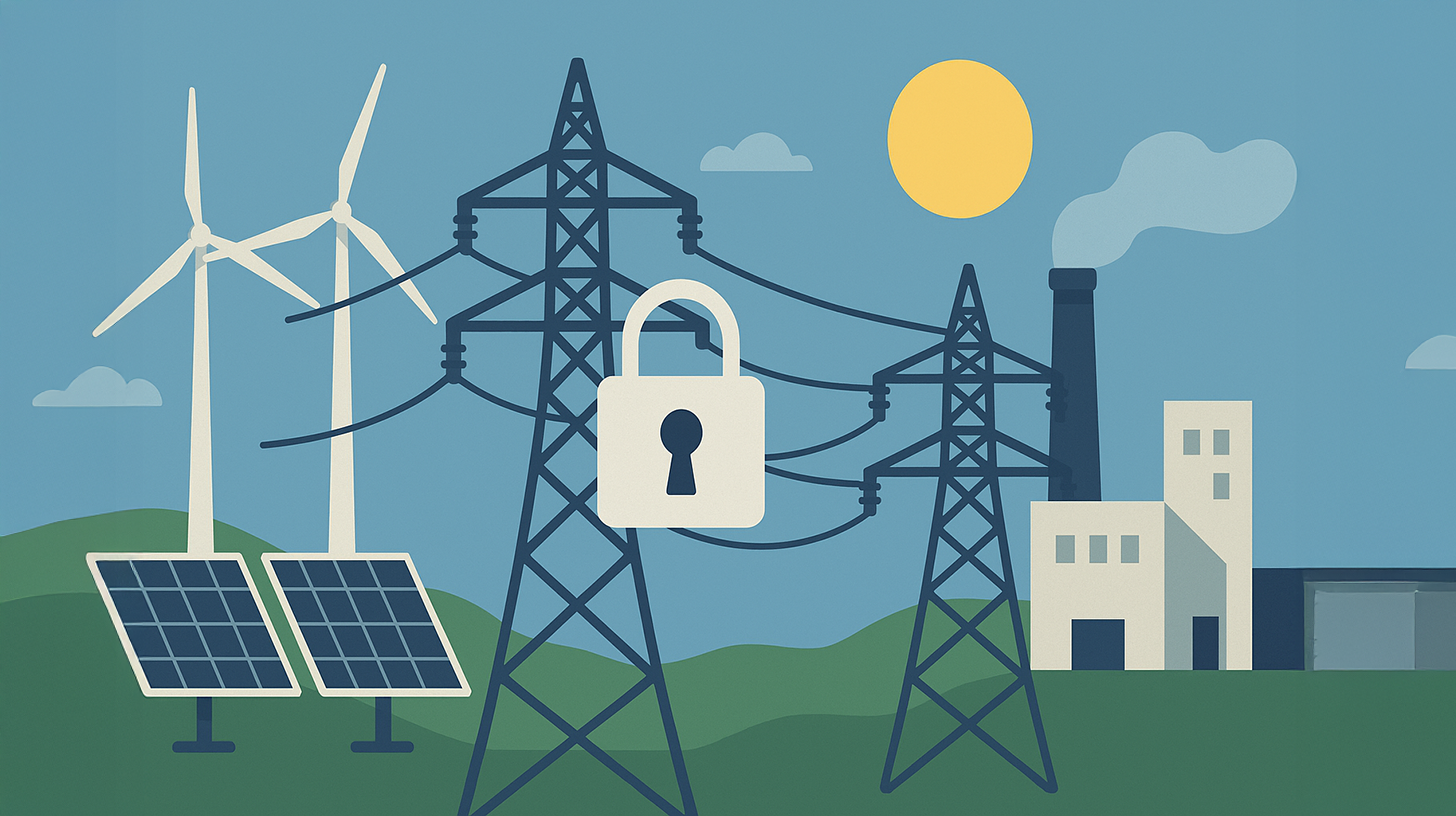
The electricity grid infrastructure as a bottleneck in the energy transition: Challenges and solutions – Image: Xpert.Digital
Power grid at its limit: Why Germany's energy transition is stalling and which clever solutions can help now
### Traffic jam on the power highway: Thousands of solar power plants are waiting to be connected – is the energy transition facing a blackout? ### The ingenious trick for the power grid: How "overbuilding" saves billions and connects solar parks to the grid immediately ### Your electricity bill in 2025: Who benefits from the new grid regulations and who will soon be paying more ### Smart grids instead of expensive cables: How digital technology is revolutionizing grid expansion and reducing costs ###
From north to south: Why our power grid is becoming a bottleneck and how virtual power plants can prevent collapse
Germany's energy transition is progressing at an impressive pace with the expansion of solar and wind power plants, but its success hangs by a thread: the outdated electricity grid infrastructure. What once served as the reliable backbone of the energy supply is increasingly becoming the biggest bottleneck of the transformation. The fundamental problem lies in the system change: away from a few, centralized large power plants and towards thousands of decentralized and weather-dependent generators. The grids, designed for a one-way flow from power plant to consumer, are not equipped for this volatile two-way traffic.
The consequences are already dramatic: Grid operators like Bayernwerk are reporting connection requests for renewable energy projects totaling over 60 gigawatts, but they cannot fulfill them. In many places, the grids are operating at their capacity limits, leading to waiting times of five to fifteen years for connecting new solar parks. The situation is exacerbated by the well-known north-south divide, where a surplus of electricity is generated in the windy north, which does not reach the industrial centers in the south. Entire streets are already being declared "no longer connectable," bringing the solar boom to a local standstill.
This enormous challenge, however, requires more than just the expensive and time-consuming construction of new power lines. Innovative and intelligent approaches are needed to utilize existing infrastructure more efficiently and shape the energy system of the future. These range from smart grids that coordinate generation and consumption in real time, to virtual power plants that combine thousands of small facilities into a large swarm, to clever concepts such as the "overbuilding" of grid connections and the proactive "feed-in socket." These solutions promise not only to accelerate the energy transition but also to keep exploding grid expansion costs, and thus electricity prices for consumers, in check. The following text highlights the most pressing bottlenecks and presents the most promising solutions that will determine the success or failure of Germany's energy transition.
Related to this:

Why is the grid infrastructure a critical factor for the expansion of renewable energies?
The grid infrastructure forms the backbone of a successful energy transition and simultaneously represents its biggest bottleneck. The problem lies in the fundamental change to the energy system: While previously large, centralized power plants produced electricity in a predictable manner, which was then transported to consumers via the grid, today decentralized and volatile renewable energy sources dominate.
Large-scale solar park projects require robust grids capable of handling their feed-in capacity. However, many grids are already operating at their limits and cannot accommodate any additional capacity. Bayernwerk, for example, reports connection requests for over 60 gigawatts, with many grid operators already reporting waiting times of 5-15 years for new connections.
The challenge is exacerbated by the north-south divide in Germany: In the north, more electricity is generated through wind power than is consumed, while the south, with its industrial centers, requires more energy than it produces locally. This problem will become even more pronounced after the phase-out of nuclear power and the planned coal phase-out.
What specific bottlenecks exist in connecting solar parks to the grid?
The practical problems associated with connecting solar parks to the grid are multifaceted and affect all voltage levels. At the medium-voltage level, where most ground-mounted photovoltaic systems between 10 and 60 MW are connected, the grids are already heavily utilized in many places. High-voltage grids offer even more capacity, but require the costly construction of dedicated substations.
A concrete example is the situation in Klettgau, Baden-Württemberg, where the local grid operator EVKR has published a list of streets where "it is highly unlikely that any further new photovoltaic systems" can be connected. Such grid bottlenecks mean that even already installed solar systems cannot be connected to the grid.
The grid expansion plans of the distribution network operators show that many areas of the medium and high-voltage networks are designated as "bottleneck regions". This leads to increasingly longer connection periods, with some projects not being able to be connected to the grid until after 2030, as the local grid infrastructure must first be expanded.
How are network charges developing and what are the effects?
Network charges, which make up about a quarter of the electricity price, show a differentiated development. The four major transmission system operators have announced an average increase of 3.4 percent to 6.65 cents per kilowatt-hour for 2025. This increase results primarily from the enormous investments in network expansion.
At the same time, the nationwide standardization of network charges in 2025 will lead to a fairer distribution of costs. Regions with a high level of renewable energy expansion will benefit: Network charges will decrease by 29 percent in Schleswig-Holstein, 29 percent in Mecklenburg-Western Pomerania, 21 percent in Brandenburg, and 16 percent in Bavaria.
This redistribution takes into account the fact that regions with many renewable energy plants have previously had to bear disproportionately high grid expansion costs. At the same time, grid fees are increasing in regions with a lower share of renewable energies, particularly in Baden-Württemberg, Rhineland-Palatinate, and North Rhine-Westphalia.
What are smart grids and how can they contribute to the solution?
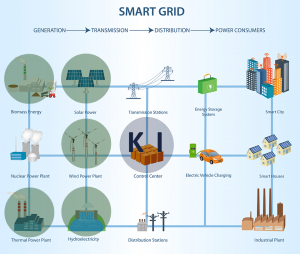
Smart grids, or intelligent power grids, use digital technologies to coordinate electricity generation, grid operation, storage, and consumption. Unlike the traditional power grid, which functioned as a one-way street from the power plant to the consumer, modern grids must reliably manage bidirectional energy flows as well as unpredictable feed-ins.
A smart grid connects all components of the electricity system – from the solar panels on the roof to battery storage in the basement and charging stations for electric vehicles. Using digital electricity meters and modern communication technologies, these systems can react to changes in real time and optimally balance supply and demand.
Battery storage systems play a central role as integral components of modern grid infrastructure. They stabilize the grid by compensating for short-term fluctuations, enable congestion management, and increase the flexibility of the overall system. Targeted energy storage can prevent grid overloads and reduce the need for expensive grid infrastructure expansion.
Related to this:

What role will virtual power plants play in the future energy system?
Virtual power plants represent an innovative solution for better integrating renewable energies. They connect hundreds or thousands of decentralized generation plants, storage facilities, and controllable consumers into a coordinated network. These swarm power plants can collectively deliver as much electricity as large conventional power plants.
The central control system of a virtual power plant monitors all connected facilities in real time and reacts instantly to changes in the power grid. If generation is too low, it activates additional renewable energy generators that can be controlled independently of the weather – such as biogas plants or hydroelectric power stations. Conversely, in the event of overproduction, it reduces the feed-in accordingly.
Modern virtual power plants utilize smart meter gateways for cost-effective control of small-scale installations. They not only enable better system integration of renewable energies, but also create added economic value for plant operators through optimized marketing across multiple markets.
What is overdevelopment and how can it reduce network bottlenecks?
Building over grid connection points represents a promising approach to more efficient grid utilization. This involves connecting power plants to the grid that together can produce more electricity than the lines are theoretically capable of transmitting. The crucial factor is the combination of power plants that rarely operate at full capacity simultaneously.
Wind and solar power plants complement each other perfectly: Wind turbines often deliver their main output at night and in autumn or winter, while solar plants generate their most power at midday and in summer. A study by the German Renewable Energy Federation (BEE) shows that when both systems are operated on a single connection, only around 3.5 percent of the solar power and 1.5 percent of the wind power have to be curtailed.
Bayernwerk has already demonstrated how this type of grid expansion works: A new photovoltaic (PV) system was installed alongside an existing wind turbine, connected to the same grid connection. Both systems operate together, saving all parties involved and consumers the costs of additional grid expansion. The potential is considerable: The planned 1,000 new wind turbines by 2030 could be installed on the Bayernwerk grid alone by utilizing existing PV connections.
How does the concept of the power feed-in socket work?
The feed-in socket represents a paradigmatic shift in grid connection planning. Instead of the infrastructure lagging behind renewable energy plants, additional capacity is proactively provided, which project developers can then apply for.
Bayernwerk has established a grid connection in Lower Bavaria using this approach, for which developers of renewable energy plants could apply. Almost the entire capacity was allocated within 24 hours, despite a 30 percent peak shaving requirement. This significantly improves the utilization of the lines and dramatically accelerates projects: from groundbreaking in March to commissioning in November of the same year.
LEW Verteilnetz and Bayernwerk Netz have further developed their joint pilot project "Feed-in socket," in which both companies independently create additional connection capacities at their substations. Bayernwerk is planning a new substation in Niederviehbach, while LVN is equipping the existing substation in Balzhausen with an additional transformer.
New: Patent from the USA – install solar parks up to 30% cheaper and 40% faster and easier – with explanatory videos!
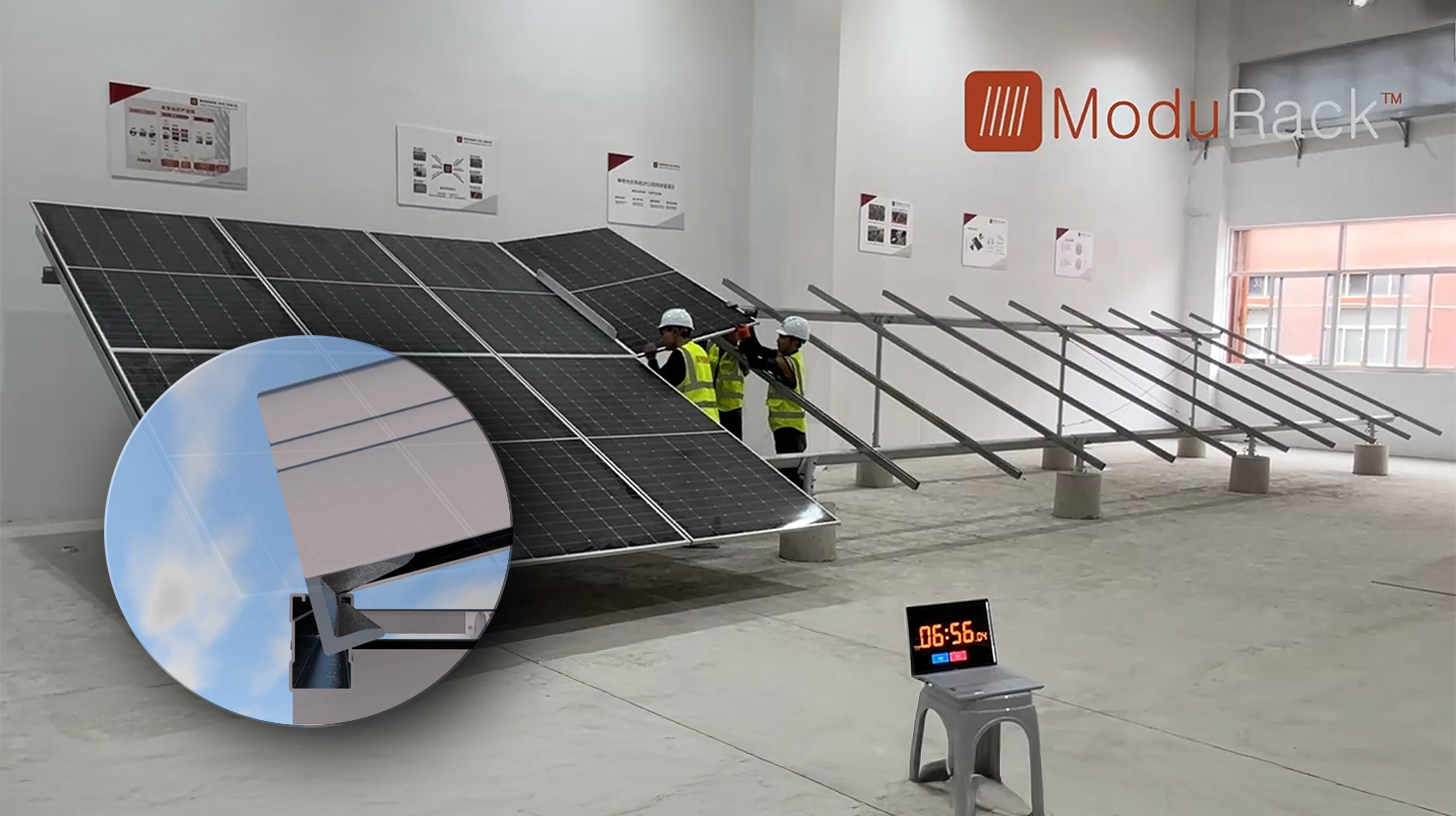
New: Patent from the USA – Install solar parks up to 30% cheaper and 40% faster and easier – with explanatory videos! - Image: Xpert.Digital
The core of this technological advancement is the deliberate departure from conventional clamp mounting, which has been the standard for decades. The new, more time- and cost-effective mounting system addresses this with a fundamentally different, more intelligent concept. Instead of clamping the modules at specific points, they are inserted into a continuous, specially shaped support rail and held securely in place. This design ensures that all forces – whether static loads from snow or dynamic loads from wind – are distributed evenly across the entire length of the module frame.
More information here:
Digital infrastructure: How AI and smart grids are transforming the power grid
What potential does the flexibilization of the energy system offer?
Flexibility in the energy system describes the ability to balance fluctuations between generation and consumption and to ensure the stability of the electricity supply. With the goal of 80 percent renewable electricity generation by 2030, the energy system must become flexible enough to guarantee supply even during periods of low nighttime electricity production.
This flexibility can be provided by various components: energy storage, controllable loads, and flexible power plants. The potential of small-scale systems such as decentralized solar installations, battery storage, electric vehicles, and heat pumps is particularly promising. If Germany has millions of electric vehicles in the coming years, 8,000 megawatts of flexibility will quickly become available.
Spatial flexibility allows for the compensation of geographical fluctuations, such as the well-known north-south bottleneck in Germany. Temporal flexibility balances seasonal and daily fluctuations. Smart energy management solutions thus become the digital infrastructure for the energy sector of the future and can make decisions in real time.
Related to this:

What does sector coupling mean for grid load?
Sector coupling describes the integration of the previously separate sectors of electricity, heat, transport, and industry through the increased use of renewable electricity. This development leads to a significant increase in electricity consumption and simultaneously changes the load profiles in the grid.
The German Renewable Energy Federation (BEE) forecasts an additional electricity demand of between 69 and 150 TWh for 2030 due to sector coupling. It sees the highest demand in electromobility with up to 48 TWh, followed by heat pumps with 41 TWh, hydrogen production with 37 TWh, and industrial electric boilers with 21 TWh.
This development presents new challenges for the electricity grid: When many households charge their electric cars simultaneously after work, new peak loads occur. Heat pumps can replace oil heating systems and gas boilers, but they require a reliable electricity supply. The intelligent control of these new consumers will be crucial for grid stability.
How can proactive network expansion solve the problems?
Predictive grid expansion represents a fundamental paradigm shift in grid planning. Instead of only reacting when specific facilities are planned, the grid infrastructure should be proactively expanded to meet future needs.
The problem with the current system lies in the differing implementation times: Renewable energy plants can be built in 5 months, while grid expansion takes 7 to 10 years. This time discrepancy leads to significant problems with connecting and transporting renewable energies.
The Association of Municipal Enterprises is calling for a regulatory framework that enables forward-looking grid expansion. This requires changes to six key areas: overcoming the backward-looking nature of regulatory practices, introducing future-oriented budget planning, and reducing regulatory hurdles for proactive investments.
The first publication of grid expansion plans by approximately 80 major German electricity distribution network operators in May 2024 was an important step. These plans describe specific planned expansion measures for the years 2028 and 2033, as well as estimates of the expansion requirements up to 2045.
What role do digitalization and automation play?
The digitalization and automation of the electricity grid are essential for the successful integration of renewable energies. Modern automation systems make it possible to monitor and optimize energy flow in real time. Demand-oriented automation is particularly necessary in low- and medium-voltage networks, where over 90 percent of renewable energy sources are connected.
Digital twins of distribution networks create a single, reliable source of information for network operators by combining various data sources such as smart meters, GIS, ERP, and SCADA systems. These computational network models can dynamically react to events such as changing weather conditions or loads.
Software solutions for network condition forecasting using artificial intelligence will in future operate based on real-time data-driven network models with individualized load profiles. Decision-support programs can recommend measures based on identified bottlenecks and their time horizons.
The VDE study on high automation shows that active grid operation enables the faster integration of more photovoltaic systems and electric vehicles into the grid, as the power flow can be controlled as needed. Automation also allows for the automatic restoration of supply in the event of outages and better utilization of existing grid capacities.
What are the economic implications of these solutions?
The economic impacts of the various solutions are significant and affect both the costs and the efficiency of the overall system. According to a study by the Energy Economics Institute, installing photovoltaic and wind power installations over existing grid connections can reduce grid expansion costs by up to €1.8 billion annually.
While the construction project would require more power plants to be curtailed, the savings in grid expansion costs would exceed the costs for the curtailed electricity by €800 million. This net efficiency gain results from the significantly reduced investments in new grid infrastructure with only slightly higher curtailment costs.
The investment required for European grid expansion by 2050 is estimated at between €1,994 and €2,294 billion. For Germany alone, various studies indicate that an average of €350 billion will be needed for distribution grid expansion by 2045. These enormous sums underscore the necessity of efficient solutions.
At the same time, better grid utilization leads to lower specific costs: the more electricity is transported through the grid, the better the grid costs per kilowatt-hour are distributed. The combination of infrastructure development, smart grids, and grid-supporting storage can make the system more efficient and reduce the overall costs of the energy transition.
How can politics and regulation support the transformation?
The political and regulatory framework is crucial for the successful expansion of the grid infrastructure. The "Act Amending Energy Industry Law," passed in January 2025, has already set an important course by creating the legal basis for grid expansion.
With the amendment to Section 8 of the Renewable Energy Sources Act (EEG), renewable energy plants can now be connected to a grid connection point already used by another renewable energy plant. The new Section 8a EEG also enables flexible grid connection agreements, which are necessary for the practical implementation of cable pooling.
Accelerating planning and approval processes is another critical factor. Grid operators are demanding more administrative decisions in less time, as 12 wind turbines need to be built and integrated into the grid daily to achieve climate targets. This requires better staffing and resources for planning and approval authorities as well as courts.
The legal priority given to renewable energies in the 2023 Renewable Energy Sources Act (EEG) also means priority for the expansion of the distribution grid. Synergies in environmental impact assessments must be utilized, parallel approval processes must be enabled, and the status of existing laws must be frozen at the start of the procedures.
Related to this:

Which technological innovations will shape the future?
Several technological innovations will significantly shape the future of the grid infrastructure. High-voltage direct current transmission lines enable the low-loss transport of large amounts of electricity over long distances and are particularly relevant for the north-south power gradient in Germany.
Power-to-X technologies open up new possibilities for sector coupling: Power-to-heat can use electricity to generate heat, while power-to-gas enables the conversion of electricity into hydrogen. These technologies can serve both as a flexibility option and as a long-term storage solution.
Intelligent metering and control technology will form the basis for all other innovations. Smart meter gateways enable the cost-effective control of small-scale systems and the integration of private households into virtual power plants. The widespread implementation of this technology is a prerequisite for the complete digitalization of the energy system.
Artificial intelligence and machine learning are increasingly being used for grid condition forecasting, load prediction, and automated decision-making. These technologies make it possible to manage and optimally control the complexity of the future energy system.
What challenges remain?
Despite the promising solutions, significant challenges remain. The sheer speed of the necessary grid expansion presents all stakeholders with enormous tasks: Planned grid investments must increase from approximately €36 billion annually to over €70 billion.
The shortage of skilled workers in the energy sector is further exacerbating the situation. At the same time, supply bottlenecks for transformers, cables, and other grid components are causing further delays. These supply chain disruptions can slow down the entire grid expansion, regardless of available funding.
Coordination between the various actors – transmission system operators, distribution system operators, producers, and consumers – remains complex. Any delay in one component of the system can have repercussions for the entire system.
Regulatory frameworks must be continuously adapted as technologies and market conditions evolve rapidly. What is considered optimal today may be obsolete in just a few years. Balancing necessary regulation with sufficient flexibility for innovation remains a challenge.
Public acceptance for the massive expansion of the network infrastructure must continue to be ensured. Citizen participation and transparent communication are crucial for the successful completion of network expansion projects.
The electricity grid infrastructure is central to the energy transition and significantly determines its success. Innovative approaches such as grid expansion, smart grids, virtual power plants, and proactive planning can overcome existing bottlenecks. A combination of technological innovations, regulatory adjustments, and substantial investments will be necessary to future-proof the grid. Only in this way can the full potential of renewable energies be unlocked and climate targets achieved.
Look, this little detail saves up to 40% installation time and reduces costs by up to 30%. It comes from the USA and is patented.

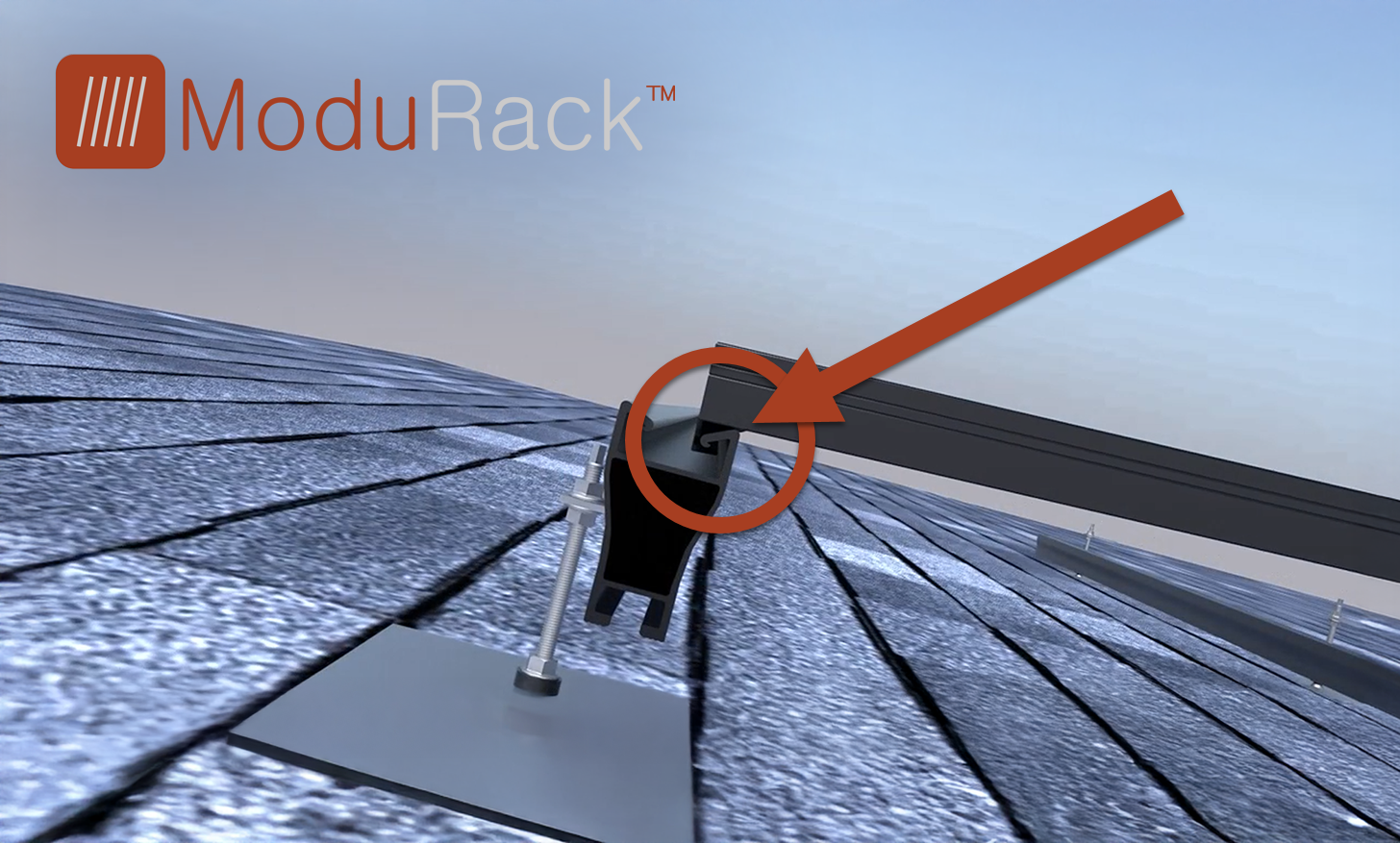
NEW: Ready-to-install solar systems! This patented innovation significantly accelerates your solar construction project
The core of ModuRack 's innovation lies in the departure from conventional clamp fastening. Instead of clamps, the modules are inserted and held in place by a continuous support rail.
More information here:
Your partner for business development in the fields of photovoltaics and construction
From industrial rooftop PV to solar parks and larger solar parking lots
☑️ Our business language is English or German
☑️ NEW: Correspondence in your native language!

Konrad Wolfenstein
I and my team are happy to be available to you as your personal advisor.
You can contact me by filling out the contact form here wolfenstein@xpert.digital:or simply call me at +49 7348 4088 965. My email address is
I'm looking forward to our joint project.