Germany can handle large-scale projects after all! What we need to learn from "Silicon Saxony" – a blueprint for Germany – Image: Xpert.Digital
TSMC, Infineon & Co.: The gigantic master plan behind Dresden's new chip factories
100,000 new jobs: How a German region is ending our dependence on Asia
Billions in investment fully on schedule: The secret of Europe's semiconductor capital
Germany suffers from a chronic construction trauma: BER airport, Stuttgart 21, and the Elbphilharmonie concert hall have long been etched in the collective memory as symbols of government inefficiency, exploding costs, and endless delays. But far removed from these negative headlines, a genuine industrial economic miracle is unfolding in the east of the country, impressively refuting this national narrative. In Dresden, the heart of "Silicon Saxony," tech giants like TSMC, Infineon, and GlobalFoundries are currently building state-of-the-art semiconductor plants – on time, efficiently, and fully on schedule. With an unprecedented density of billion-euro investments, not only is the guarantor of Europe's technological independence emerging here, but also a blueprint for the economic renewal of the entire country. A look behind the scenes of Europe's new semiconductor capital and the question: Why is it succeeding here where the rest of the country so often fails?
Silicon Saxony – Blueprint for Germany's industrial renewal capacity
Germany has a narrative problem. Hardly any topic generates such reliably widespread unease in public discourse as the question of the country's ability to successfully implement ambitious large-scale projects. Berlin Brandenburg Airport, Stuttgart 21, the Elbphilharmonie – these names not only represent specific construction projects, but have also become symbols of a supposedly structural German inability to realize complex infrastructure projects within budget and on time. And yet: In Dresden, an industrial development project of Europe-wide dimensions has been quietly underway for several years, without much public attention, fundamentally challenging this narrative. Silicon Saxony, Europe's largest semiconductor hub, proves with a density of billion-euro investments unparalleled in post-war German history that the Federal Republic is indeed capable not only of planning large-scale projects, but also of implementing them on time and effectively.
The collective memory of the construction delays
To properly understand the exceptional case in Dresden, it's helpful to first take a sober look at the mechanisms that so regularly turn major public projects in Germany into financial disasters. The causes are multifaceted and systemic: among the most significant are unrealistic cost calculations driven by political expediency, a state-mandated focus on low-cost procurement, and chronically overburdened and understaffed municipal authorities. Added to this is a psychological phenomenon known in academia as the "planning fallacy": the tendency of planners and politicians to systematically overestimate the benefits of projects and just as systematically underestimate the associated risks. The result is a structural optimism that makes projects appear politically feasible, projects that would never be approved under realistic conditions.
In Germany, the situation is further complicated by a multitude of legal and bureaucratic hurdles: lengthy planning approval procedures, new environmental protection requirements imposed during ongoing proceedings, lawsuits from citizens' groups, and the resulting years of litigation. Almost all problematic projects share the same symptoms: unclear objectives, too many levels of decision-making, a lack of accountability, and insufficient overall control. As a result, public investments in Germany face a significant lack of trust among large segments of the population. The question that inevitably arises in light of the developments in Dresden is: What is different there?
Dresden as Europe's semiconductor capital
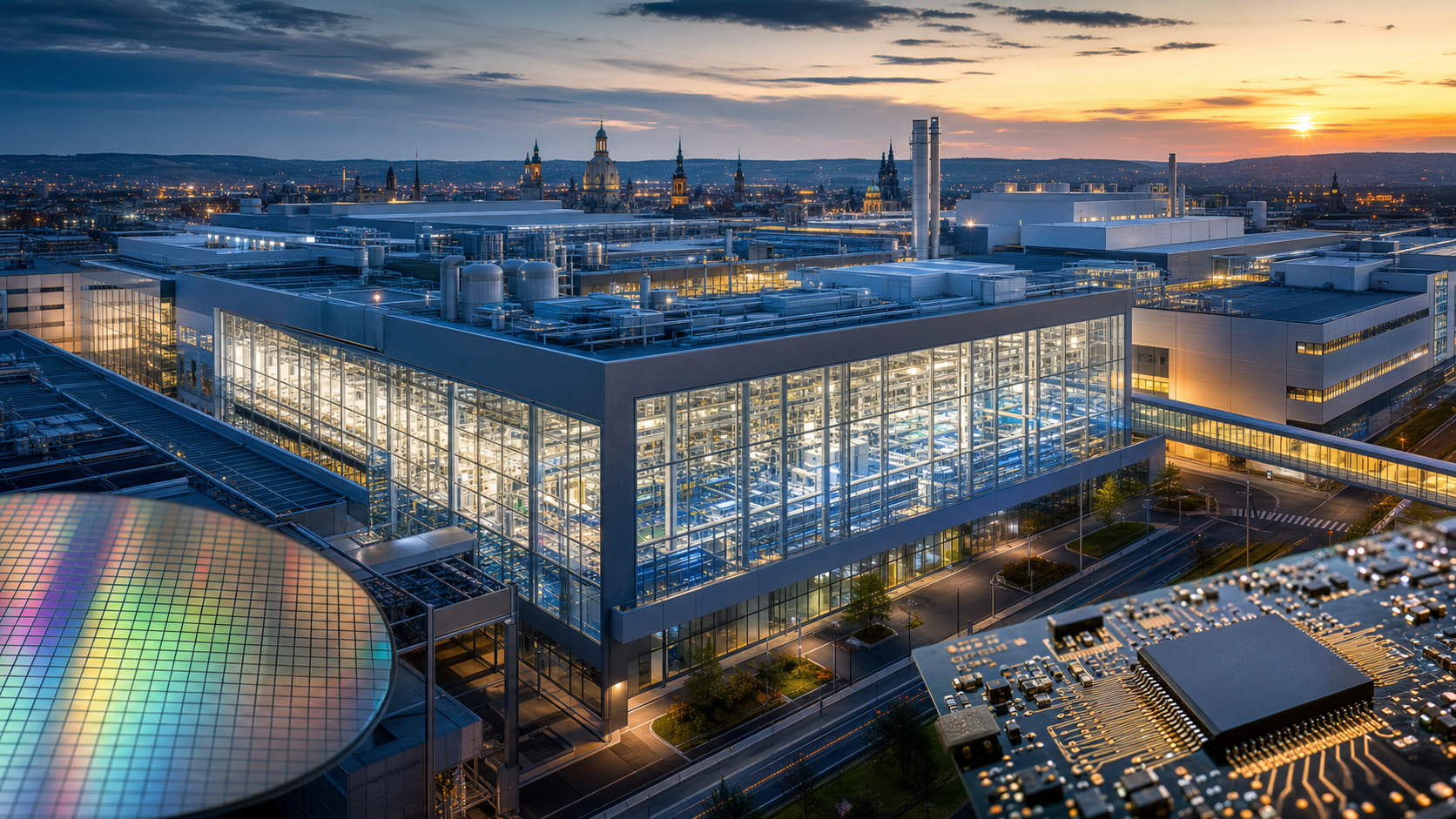
The rise of Silicon Saxony is not the result of short-term political whims, but rather the product of an industrial and research ecosystem that has grown over decades. The greater Dresden area has developed into by far the most important semiconductor region in Europe. Every third chip produced in Europe bears the "Made in Saxony" label – this figure alone illustrates the structural weight that this cluster has for overall European technological sovereignty. With around 82,500 employees in 3,650 companies – more than 11,500 of whom work in semiconductor manufacturing itself – Silicon Saxony is now not only the largest microelectronics location in Europe, but also the fifth largest worldwide. The industry association's forecast of exceeding the 100,000 employee mark by the end of this decade is considered realistic.
The economic importance of this region for Germany can hardly be overstated. With a share of more than a third of the total gross value added of the chip industry in the EU, Germany is the leading semiconductor country in Europe. The export value of integrated circuits from Germany amounts to more than 12 billion US dollars annually, placing the Federal Republic clearly ahead of the Netherlands, Ireland, and France. The engine of this export strength is Dresden. And Dresden is currently dramatically increasing its production capacity.
Infineon: Five billion euros on schedule
The most prominent single project within Silicon Saxony is Infineon Technologies' Smart Power Fab. The Munich-based semiconductor company is investing more than five billion euros in the construction of a state-of-the-art manufacturing facility for power semiconductors in Dresden – the largest single investment in the company's history. Groundbreaking took place in May 2023, production is scheduled to start in 2026, and construction has been fully on schedule at every documented point. Infineon received the building permit for the final construction phase as early as May 2024 – a sign of the smooth cooperation between the investor, authorities, and planners. In May 2025, the Federal Ministry for Economic Affairs and Energy issued the final confirmation of funding, following the European Commission's approval of state aid in February 2025.
At full capacity, the Smart Power Fab will generate annual revenues equivalent to its five billion euro investment. The project is supported by both the European Chips Act and the IPCEI program for microelectronics and communications technology. Infineon will create up to 1,000 new jobs directly at the site – not including the additional indirect employment effects in the supplier sector. The chips manufactured in Dresden are intended for applications in electric vehicles, industrial automation, renewable energies, and AI infrastructure – growth markets of the next decade.
ESMC: TSMC brings its world-class technology to Europe
Even more spectacular in its industrial policy significance is the project of the European Semiconductor Manufacturing Company (ESMC), a joint venture of TSMC, Bosch, Infineon, and NXP Semiconductors. TSMC—the global market leader in chip contract manufacturing and operator of the most technologically advanced production lines on the planet—is building only its third plant outside of Taiwan and China in Dresden. Total investment amounts to approximately ten billion euros. TSMC holds a 70 percent stake in ESMC and is bringing to Europe a manufacturing technology that, with feature sizes between 12 and 28 nanometers, significantly surpasses the capabilities previously available in Germany.
Ground was broken for the ESMC factory in August 2024 in Dresden's Airport Park, west of the airport. The dimensions of the construction project are impressive: The building has a footprint of 200 by 200 meters, extends ten meters underground, and will house cleanrooms with a total area of 45,000 square meters on two upper floors. A total of 155,000 cubic meters of concrete will be used; 600,000 cubic meters of soil were excavated for the construction. By October 2025, the project was on schedule: The foundation slab was almost complete, and construction of the other building sections was in full swing. The factory is scheduled to be roofed and weatherproofed in 2026, and the installation of the production equipment will begin in mid-2027. Once fully operational, ESMC will produce 40,000 wafers per month in the 300-millimeter format and employ approximately 2,000 people.
GlobalFoundries and the “Sprint” program
Alongside ESMC's high-profile new building, the long-established US contract manufacturer GlobalFoundries is also significantly expanding its capacity in Dresden. In October 2025, GlobalFoundries announced investments totaling €1.1 billion. Internally codenamed "Sprint," the project aims to increase the Dresden plant's annual capacity from the current 950,000 to well over one million 300-millimeter wafers per year by the end of 2028. Construction officially began in March 2026; together with the general contractor Exyte, the cleanroom and laboratory space will be expanded by approximately ten percent to around 65,000 square meters. The first new manufacturing tools are scheduled to be installed starting in the second half of 2026.
GlobalFoundries is breaking new ground strategically with the Sprint project: The company plans to supply semiconductors with a purely European supply chain – a direct industrial policy signal in favor of technological sovereignty and security of supply. Primary customers are expected to be Europe's defense and aerospace sectors as well as critical infrastructure – a positioning that strategically elevates the Dresden production far beyond purely commercial interests.
Bosch, Jenoptik and the depth of the ecosystem
What distinguishes Silicon Saxony from a mere industrial park is the depth of its ecosystem. Bosch is the only automotive supplier worldwide to have built its own semiconductor manufacturing facility and has continuously expanded its Dresden site. With an initial billion-euro investment in 2021 – at the time the largest single investment in the company's more than 130-year history – and a further investment commitment of three billion euros by 2026 for Reutlingen and Dresden combined, Bosch has demonstrated its serious commitment to Germany as a business location. The Bosch factory in Dresden, which went online six months ahead of schedule despite the supply chain problems caused by the COVID-19 pandemic, perhaps most clearly symbolizes what is possible when planning and implementation go hand in hand.
Jenoptik, the Thuringian photonics group, celebrated the grand opening of its new high-tech factory in Dresden's Airport Park in May 2025. Nearly €100 million – financed entirely from the company's own resources, without any subsidies – was invested in the building, which produces micro-optics and sensors for semiconductor lithography. This is noteworthy because it demonstrates that not only are the large, subsidized fab projects on schedule, but also that smaller, privately funded projects within the cluster are being successfully implemented. Employees in Saxony's semiconductor industry earn a significantly higher average annual salary of €63,000 than the manufacturing sector average of €46,000 – an indicator of the high quality of the jobs being created here.
Our EU and German expertise in business development, sales and marketing

Our EU and German expertise in business development, sales and marketing - Image: Xpert.Digital
Industry focus areas: B2B, digitalization (from AI to XR), mechanical engineering, logistics, renewable energies and industry
More information here:
A thematic hub offering insights and expertise:
- Knowledge platform covering global and regional economies, innovation and industry-specific trends
- A collection of analyses, insights, and background information from our key areas of focus
- A place for expertise and information on current developments in business and technology
- A hub for companies seeking information on markets, digitalization, and industry innovations
Silicon Saxony explains: Why Dresden's chip cluster is a model
Infrastructure grows with the city: The Dresden waterworks project
European Chips Act and Dresden: Can Europe break its chip dependency?
Semiconductor production is extremely water-intensive. Enormous quantities of purified water are required in the cleanrooms – for rinsing processes, cooling, and production steps. While the cluster has relied on the existing drinking water infrastructure of the city of Dresden in recent years, the massive increase in capacity makes a fundamental reorganization of the water supply unavoidable. The answer is a project that, in its consequences, supports the entire industrial ecosystem: a new river water treatment plant on the Elbe River in the Übigau district.
In early June 2026, SachsenEnergie, the Free State of Saxony, and the city of Dresden symbolically handed over the groundbreaking ceremony to the general contractor, Hochtief. From the end of 2030, the waterworks will supply chip manufacturers in northern Dresden with industrial water via two underground pipelines, thus permanently decoupling the public's drinking water supply from industrial use. The total cost is over €300 million; Saxony is contributing €100 million, the city of Dresden €50 million, with SachsenEnergie covering the lion's share. According to industry observers, the waterworks is considered a model for European industrial clusters because it exemplifies a sustainable and scalable supply infrastructure for high-intensity industries.
What distinguishes the Dresden projects from the problem cases
The question of why Dresden's semiconductor projects are running so smoothly, while public infrastructure projects are failing one after another, has no simple answer. But consistent patterns can be identified that explain the difference.
First: Clarity of objective. The semiconductor projects in Dresden have a clearly defined economic purpose – chips for AI, automotive, and defense – and this purpose has never been subject to political negotiation. There are no compromise options, no parallel planning, and no subsequent program changes by interest groups.
Secondly: Private ownership with clear responsibilities. All major investment projects in Dresden are undertaken by private companies that bear the risk with their own capital. Infineon is investing five billion euros of its own funds; GlobalFoundries is contributing 1.1 billion euros. This fosters entrepreneurial discipline in a way that public entities cannot structurally achieve.
Thirdly: Reliable financing frameworks from the outset. Funding decisions at the European and national levels – European Chips Act, IPCEI program, KfW financing – were made in a timely manner and were binding before construction began. The Berlin airport fiasco became a disaster, in part, because fundamental financing and conceptual issues were never definitively resolved.
Fourth: Synchronized stakeholder management. In Dresden, authorities, project managers, planners, and contractors worked closely together. This is not automatic, but rather the result of a conscious decision by all involved to give the project goals the highest priority. A good example of this is that the building permit for the final Infineon construction phase was granted on time and without bureaucratic delays.
Fifth: Close integration of industry and science. Silicon Saxony is not an isolated industrial area, but a vibrant cluster where the Technical University of Dresden, the Fraunhofer Institute, and other research institutions cooperate closely with industry. This institutional infrastructure accelerates innovation, secures skilled workers, and reduces technological risks.
The European Chips Act as a strategic framework
The projects in Dresden are embedded in a larger European strategy to regain technological sovereignty. European chip manufacturers such as Infineon, STMicroelectronics, and NXP currently hold only about eight to nine percent of global semiconductor production capacity – around the turn of the millennium, this figure was around 20 percent. Reversing this decline is the stated goal of the European Chips Act, which came into force on September 21, 2023. It mobilizes public and private investments of more than 43 billion euros and sets the ambitious target of achieving a 20 percent global market share by 2030. By 2030, a total of more than 100 billion euros is expected to flow into the European semiconductor ecosystem.
Germany sees itself in a key strategic role: With a share of around 30 percent of European wafer capacity and more than a third of the EU's total gross value added in the chip industry, the Federal Republic is the industrial backbone of the European semiconductor strategy. At the same time, it is clear that complete autarky is neither realistic nor desirable. A completely autonomous German or European semiconductor industry is, from an expert perspective, not feasible – the global value chains in design, base materials, and manufacturing equipment are simply too interconnected. The realistic objective is strategic resilience: to build up sufficient domestic capacity in critical segments to absorb supply bottlenecks and maintain geopolitical negotiating power.
Limits and open questions
A complete analysis of Silicon Saxony's success story also requires an honest look at the model's limitations and risks. The comparison with public disaster relief projects has a structural weakness: it compares private investment projects with state-owned infrastructure, which operates according to different rules. Whether a private company stays on schedule is ultimately decided by the market and the board of directors – whether a public railway or airport company stays on schedule is determined by a complex web of political stakeholders, procurement law, and public participation processes.
At the same time, the Dresden projects themselves have legitimate criticisms and open questions. The massive government subsidies – the German government expects up to five billion euros in subsidies for ESMC alone, with substantial IPCEI funding for Infineon – raise the question of the proportionality of public resource allocation. Critics point out that a significant portion of these billions ultimately benefits private corporations – including the world's largest chip manufacturer, TSMC from Taiwan – while other industrial sectors and regions in Germany have to manage with far fewer resources. The profitability of subsidized chip production in a region with significantly higher labor and energy costs than in Asia or the USA remains a long-term strategic gamble.
Furthermore, the Dresden investments only partially address Europe's and Germany's weakness in high-performance chips for AI applications. The chips manufactured in Dresden – including ESMC products – are in the 12 to 28 nanometer range, i.e., in the so-called mature node segment. The truly high-performance AI chips from TSMC or Samsung are produced with feature sizes of 2 to 4 nanometers, and even after the completion of all the Dresden projects, Europe still lacks its own production capacity in this segment. This is not a weakness of the Silicon Saxony model, but rather an honest assessment of the scope of the European Chips Act.
Learning from Silicon Saxony: Transferability of the model
Despite these limitations, Silicon Saxony remains an exceptionally valuable reference point for the question of how Germany can shape strategic industrial policy in the 21st century. The cluster's success factors—early political decisions, clear responsibilities, professional project management, close coordination among all stakeholders, and a consistent focus on the project goal—are not sector-specific. They can be transferred to other future-oriented fields in which Germany seeks to establish or defend a strategic presence.
Space travel and satellite technology, drones and autonomous systems, robotics and industrial automation, hydrogen technology and battery cell manufacturing: In all these areas, Germany is either already well-positioned or has a real chance of becoming so – provided that industrial policy draws the right lessons from Dresden. Specifically, this means: less political maneuvering in location decisions, but clear targets and binding financing commitments; less procurement law as an end in itself, but more entrepreneurial responsibility in funded projects; fewer coordination meetings and more decisiveness at the government level.
The Silicon Saxony cluster is also proof that regional economic development can be effective when it is consistently and sustainably focused on a clear industrial objective. Through decades of location policy focused on microelectronics and information technology, Saxony has built up a critical mass of expertise, skilled workers, infrastructure, and reputation that now attracts international market leaders such as TSMC and GlobalFoundries. This development cannot be replicated elsewhere overnight – but it shows that it is possible if the political will is sustained and endures across legislative periods.
A decade of decisions
The first half of 2026 marks a particularly high concentration of developments in Dresden: GlobalFoundries celebrates the official groundbreaking of the Sprint project in March; a few months later, at the beginning of June, the groundbreaking ceremony for the new river water treatment plant takes place; and in the background, the ESMC factory is progressing according to plan towards its weatherproofing phase this year. If everything goes according to plan – and the cluster's track record to date gives every reason to expect it to – Dresden will have production capacities by 2028 that will significantly reduce Europe's dependence on Asian semiconductor imports in key segments.
Against this backdrop, the Silicon Saxony industry association's employment forecast of more than 100,000 jobs by the end of this decade doesn't seem at all exaggerated. Between September 2024 and September 2025 alone, 1,500 new jobs were created in the cluster. When the planned fabs become operational, thousands more jobs will be created in direct production, in the supplier network, and in the service infrastructure. Germany is capable of large-scale projects. The proof lies in Saxony. The question is whether politicians in Berlin and the other federal states will finally recognize this proof for what it is: not an exceptional case, but a model.
🎯🎯🎯 Data-driven B2B industry hub as a quasi-in-house solution


The quasi-in-house solution: How Xpert.Digital closes operational gaps in B2B marketing and sales – Smart Content-Driven Business - Image: Xpert.Digital
Xpert.Digital is a data-driven B2B industry hub led by Konrad Wolfenstein . The company acts as an external, quasi-in-house solution for industrial partners, closing operational gaps in marketing, content, and sales – without requiring additional resources on the client side.
More information here:
Your global marketing and business development partner
☑️ Our business language is English or German
☑️ NEW: Correspondence in your native language!

Konrad Wolfenstein
I and my team are happy to be available to you as your personal advisor.
You can contact me by filling out the contact form here wolfenstein@xpert.digital:or simply call me at +49 7348 4088 965. My email address is
I'm looking forward to our joint project.