
Behind the facade: What agencies really do for their money – Expensive coordination instead of creative genius – Image: Xpert.Digital
The top 10 activities: What marketing agencies actually do all day
Strategy or just administration? The inconvenient truth about everyday agency life
The agency illusion: What you really pay advertising agencies for
When companies hire an agency, they're often buying into a dream: the dream of creative genius, innovative brand strategies, and award-winning campaigns. Dazzling pitch decks and impressive case studies on agency websites suggest that every euro invested goes directly into groundbreaking ideas. But the reality behind the scenes at advertising and digital agencies often looks very different. Instead of pure creativity, tedious system maintenance, time-consuming project coordination, technical troubleshooting, and Excel-based data analysis dominate the daily routine. So what are clients really paying for when the monthly bill arrives?
This article offers an unvarnished look behind the scenes of the agency world. It debunks common myths – such as the notion that CMS maintenance is simple – and reveals in detail the ten tasks that actually constitute the lion's share of daily work. An essential analysis for anyone who collaborates with agencies and finally wants to understand how value creation is distributed between genuine consulting, skilled implementation, and invisible administration in practice.
Creative backdrop, technical core – the inconvenient truth about the agency world
Those who hire an advertising, marketing, or digital agency rarely get what's advertised at first glance. The dazzling case studies, minimalist pitch decks, and inspiring brand promises on agency websites create the impression of idea factories brimming with creative genius. However, the actual day-to-day work behind this facade is far less glamorous and largely consists of routine tasks, technical system maintenance, project coordination, and data-driven meticulous work.
This analysis examines the services agencies actually provide in their day-to-day operations, how the different types of agencies vary in their service profiles, and which ten activities account for the largest share of value creation in practice. The analysis is based on market observations from the German and international agency landscape, on the pricing and service structures of real service providers, and on industry association data from the communications sector.
Between consulting, implementation and administration – the three levels of agency work
To understand what agencies actually do, it's helpful to distinguish between three fundamental levels of work that are found in virtually every agency – regardless of whether it's a traditional advertising agency, a web agency, or a specialized performance marketing agency. The first level is strategic thinking, where decisions are made about target groups, positioning, channel selection, and campaign logic. The second level is operational implementation, meaning the actual production of content, ads, websites, and technical adjustments. The third level is the administrative infrastructure, consisting of project management, client communication, reporting, and approval processes, which consumes a significant, often underestimated, portion of working time.
Numerous service descriptions from German and international agencies reveal that these three levels are rarely clearly separable, but rather closely intertwined in practice. While a campaign may begin conceptually with strategic planning, it quickly transitions into detailed operational work such as keyword research, ad creation, and content production, all while status meetings, approval processes, and reports run concurrently. This simultaneity is precisely one of the reasons why many clients feel they are paying for consulting services, when in reality they are primarily being billed for administrative coordination and technical implementation.
From initial consultation to ongoing support – how agency work typically unfolds
In the initial phase of a project, analytical services are usually the primary focus. These include competitive analyses, target group definitions, audits of existing websites, technical tracking checks in analytics systems, and evaluations of the current product or service offering and customer journey. This analytical phase forms the basis for the subsequent strategic planning, in which channels are selected, budgets are allocated, and campaign strategies are developed.
Following the concept phase, a significantly longer and recurring support period typically ensues, comprising the majority of the engagement duration. During this phase, daily work focuses on ongoing campaign optimization, content production according to a pre-defined editorial calendar, community management on social networks, maintenance of email automation, and continuous monitoring of key performance indicators (KPIs) such as click-through rate (CTR), cost per click (CPC), and conversion rate (CTR). Especially with paid campaigns, daily or at least several times a week monitoring of performance data is essential to reallocate budgets in a timely manner and pause underperforming ad variations.
The CMS myth – why website maintenance is just one component
A key aspect of understanding what agencies actually provide concerns the maintenance of a website's content management system (CMS). Many clients assume that hiring a web agency primarily involves the technical maintenance of the CMS, such as installing security updates, creating new subpages, and replacing text and images. This assumption only partially reflects reality, as CMS maintenance is indeed a standard, but usually small and standardized, service within a web agency's overall portfolio.
Standard maintenance contracts in Germany typically include a monthly time allowance of between 30 and 120 minutes for content changes, supplemented by automated security updates, regular data backups, and technical monitoring of availability. The price range for such basic contracts is usually between 30 and 200 euros net per month, with additional services such as adding new images, creating additional subpages, or more extensive text changes billed separately at an hourly rate or flat fee. These hourly rates usually range from 50 to around 150 euros, depending on complexity and region.
Beyond mere content maintenance, web agencies undertake significantly more comprehensive tasks, ranging from initial concept development and information architecture to visual design, front-end and back-end programming, technical search engine optimization, and ongoing technical operation. According to consistent market reports, actual CMS maintenance often represents only a small fraction of the total effort, while relaunch projects, custom programming of interfaces and forms, and technical SEO are considerably more time-consuming and value-adding.
Consulting as a scarce commodity – how much strategic thinking actually takes place
The question of whether agencies actually provide consulting services can be answered in a nuanced way. Strategic consulting takes place in almost every reputable agency, but to a very different degree and depth, depending on whether it is a small local agency, a specialized performance boutique, or a large, so-called full-service agency. Classic consulting services include defining target groups and personas, competitive analysis, developing positioning and brand messaging, and selecting the right channels for the respective target group and sales cycle.
In practice, however, this consulting service is often provided in relatively short, initial workshops or strategy meetings and then transferred into standardized, recurring implementation processes. The actual strategic consulting thus takes place primarily at the beginning of a project and in regular, but time-limited, review meetings, while the majority of ongoing working time is devoted to implementation, monitoring, and adjustments. Larger communications agencies in Germany themselves report that strategic planning, target group analysis, and brand management are part of their core offering, but simultaneously emphasize that creative implementation, cross-channel media planning, and performance analysis characterize their day-to-day operations.
🎯🎯🎯 Data-driven B2B industry hub as a quasi-in-house solution

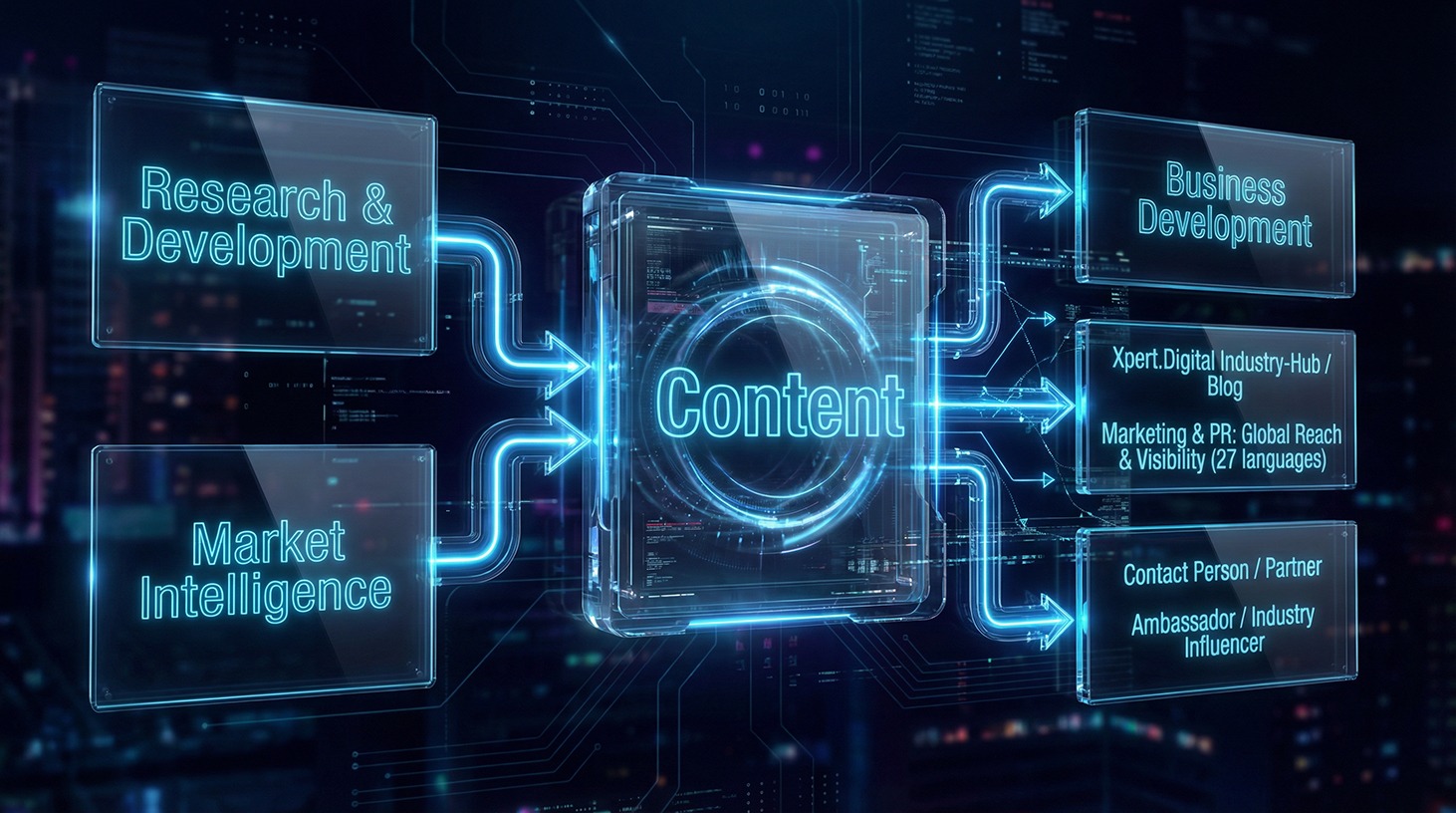
The quasi-in-house solution: How Xpert.Digital closes operational gaps in B2B marketing and sales – Smart Content-Driven Business - Image: Xpert.Digital
Xpert.Digital is a data-driven B2B industry hub led by Konrad Wolfenstein . The company acts as an external, quasi-in-house solution for industrial partners, closing operational gaps in marketing, content, and sales – without requiring additional resources on the client side.
More information here:
Project management and reporting: Why invisible agency work is so expensive
Creativity as a craft – brochures, advertising motifs and moving images
Traditional creative services such as the creation of brochures, leaflets, ad designs, logos, and corporate design guidelines remain a core part of many advertising agencies' repertoire, but have lost relative importance compared to digital formats. The production of physical advertising materials like brochures and flyers is now usually part of a larger communication package that also includes digital assets such as social media graphics, video content, landing pages, and email templates.
Video production has gained considerable importance in recent years, as short video formats on platforms like Instagram, TikTok, and YouTube have become central components of many campaigns. Agencies often handle the entire production chain, from scriptwriting and filming to editing and platform-specific preparation. This creative production work ties up a significant portion of the resources of modern digital agencies, as multiple versions are needed for each campaign, targeting different audiences and platforms.
Programming as an underestimated core competency
Programming is a significantly larger service component in many digital and web agencies than the public perception suggests. In addition to pure website development with frontend and backend technologies, agencies often handle the development of custom CMS extensions, the programming of forms and interfaces to third-party systems, the integration of tracking and analytics tools, and the technical implementation of landing pages for individual campaigns.
Especially in the context of data protection-compliant tracking, server-side data processing, and the integration of customer relationship management systems, technical expertise has become a key competitive factor, which many agencies are increasingly building internally instead of outsourcing entirely to external developers. This technical competence also explains why many larger agencies are now assembling hybrid teams of concept developers, designers, copywriters, and software developers who must work closely together to deliver digital products on time.
Reporting, dashboards, and the illusion of control
A crucial, yet often underestimated, aspect of daily agency work involves creating and maintaining reporting structures. This includes setting up customized dashboards, defining and monitoring key performance indicators (KPIs), regularly generating monthly and quarterly reports, and interpreting the data for the client. This reporting work serves several purposes: it creates transparency for the client, provides a basis for budget adjustments, and justifies the ongoing engagement of the agency.
However, from a critical perspective, intensive reporting also creates a certain illusion of control, since the mere presentation of figures does not automatically equate to strategic depth or genuine optimization. In practice, report preparation, internal coordination, and client meetings consume a significant portion of working time, which is hardly visible from the outside but contributes substantially to the cost structure of engaging an agency.
Project management as invisible infrastructure
An often overlooked but crucial component of agency work is project management. This includes coordinating different specialists within the agency, organizing approval processes with the client, scheduling content calendars and campaign launches, and ongoing communication about status, delays, and change requests. This coordination work rarely appears as a separate item in proposals, but in practice, it often accounts for a significant portion of the billed hours.
Especially with larger projects involving multiple contacts on the client side and several specialist disciplines on the agency side, significant friction arises due to coordination loops, approval delays, and last-minute change requests. These structural inefficiencies explain why many clients get the impression that they are receiving high bills for comparatively trivial coordination services, even though, from the agency's perspective, precisely this coordination is necessary to complete complex projects on time.
The top ten agency services actually provided
A review of numerous service descriptions from German and international agencies of varying sizes allows us to derive a ranking of the activities performed most frequently and with the greatest time commitment in day-to-day operations. This ranking does not represent a scientifically precise quota, but rather reflects the recurring patterns in service descriptions, price lists, and industry case studies.
Search engine optimization (SEO) is consistently a top priority, as technical optimization, content planning, backlink building, and local visibility create an ongoing, never-ending need for maintenance. Paid advertising on search engines and social media platforms follows closely behind, as it requires daily budget monitoring, ad testing, and target audience adjustments to keep costs per result cost-effective.
Social media management, consisting of content creation, editorial planning, community management, and performance monitoring, is also among the most common everyday tasks, as virtually every company now wants to maintain a presence on multiple platforms. Content production in the form of blog articles, white papers, technical texts, and landing page copy forms the content basis for almost all digital channels and therefore also ties up considerable resources in text and editorial teams.
Website development and technical implementation, meaning the actual programming of new pages, templates, and functions, is among the most time-consuming individual services, especially for relaunch projects and individual technical requirements. Pure CMS maintenance in the narrower sense, i.e., text changes, image replacements, and minor corrections, follows as a separate, but usually significantly less time-consuming, service.
Email marketing, including campaign creation, segmentation, and automation setup, is also among the regularly recurring services, as many companies value automated customer communication as a cost-effective channel. Analysis and reporting in the form of dashboard maintenance, KPI evaluation, and regular reporting constitute a solid, often underestimated component that ensures transparency and justifies the engagement.
Traditional creative production, such as graphic design, image editing, and brochure and leaflet creation, remains a core, albeit relatively smaller, component of the portfolio compared to digital services. Project management and client communication, while not constituting a separate, visible service in the traditional sense, nevertheless account for a significant, often double-digit, percentage of total working time, according to consistent reports from the field, and thus effectively rank among the ten most important activities in the agency's daily operations.
Economic framework of the industry
The economic situation of German communications agencies has been strained in recent years. The German Association of Communication Agencies (GWA) reported an average revenue decline of 2.7 percent for the agencies surveyed in 2025, following a slight decrease of 0.9 percent the previous year. The industry's average return on investment was 7.5 percent in 2025, with an improvement to an average of 10.8 percent expected for 2026. The industry itself cites the weakening economy as the biggest obstacle to growth, while at the same time a clear majority of the surveyed agencies consider expanding their own service portfolio to be the most important lever for positive economic development, significantly ahead of cost-cutting measures.
These economic conditions at least partially explain why many agencies are continuously expanding their service portfolio and increasingly offering additional services such as technical server-side tracking, consulting on artificial intelligence, or the integration of customer relationship management systems. Given stagnant overall revenues, the pressure to deepen existing customer relationships through ever-new service modules and to increase revenue per customer is an understandable strategic reflex within the industry.
The gap between expectation and everyday life
In summary, the public perception of agencies as creative idea factories with a strong strategic consulting focus only reflects part of the actual reality. The vast majority of daily working time is spent on standardized, repetitive implementation work, technical maintenance, content production, campaign optimization, reporting, and internal and external coordination. While strategic consulting does take place, it is often concentrated in the initial phase of a project and in occasional review meetings, while day-to-day operations are characterized by tedious, hands-on work.
This has an important practical consequence for clients: those who commission an agency should focus less on grand strategic promises and instead ask specifically which individuals are actually working on which tasks and how much time they are dedicating to them. Only a clear contractual definition of the service components—strategic consulting, creative production, technical implementation, and administrative coordination—creates the necessary transparency to realistically assess the actual value of the monthly invoice.
📈🚀 From visibility to trust 👀🤝 Your scalable path with Xpert.Digital

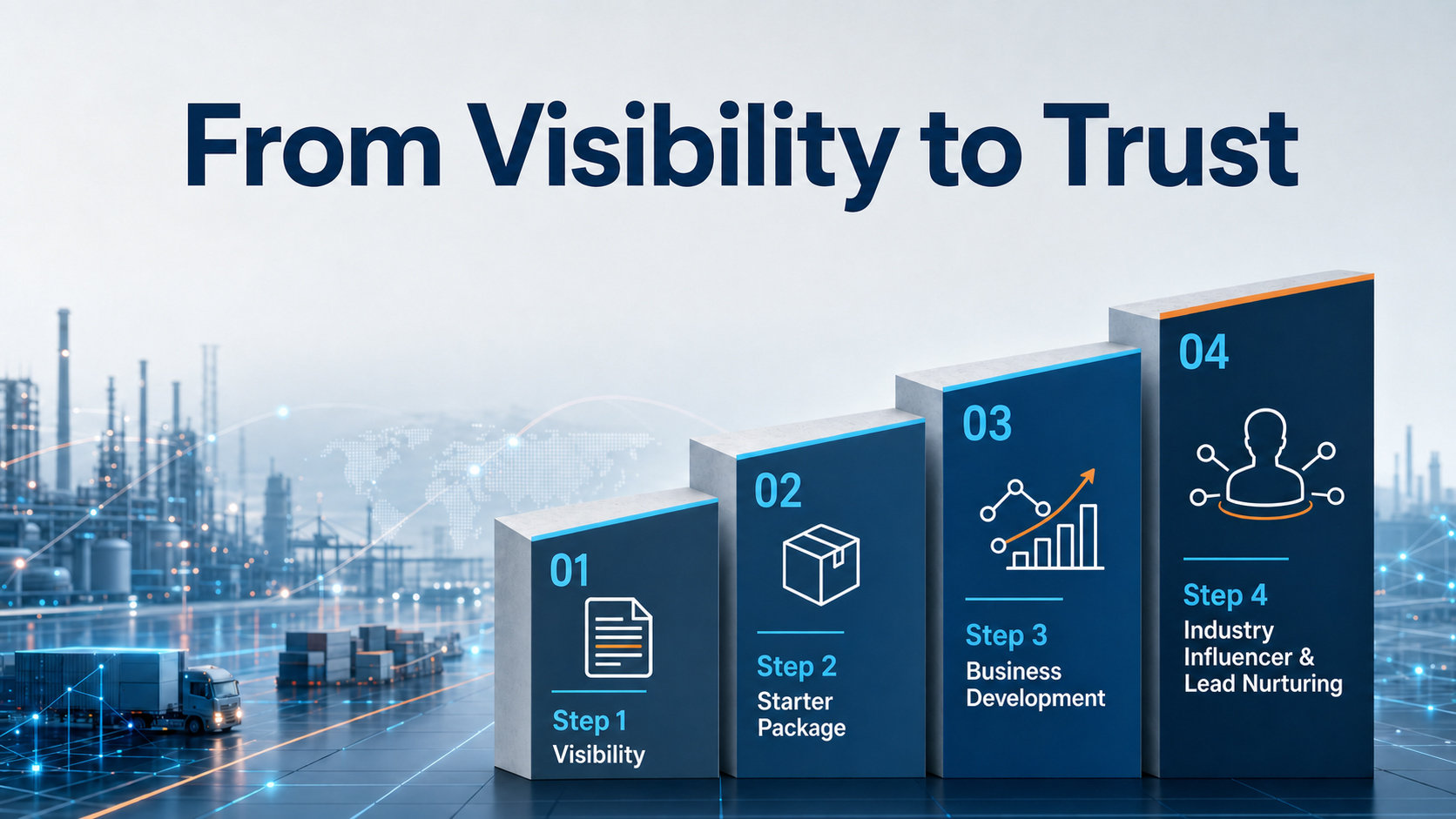
From visibility to trust: Your scalable path with Xpert.Digital - Image: Xpert.Digital
In industrial B2B, sustainable business relationships rarely emerge overnight. They develop step by step – through visibility, professional relevance, recurring touchpoints, and growing trust. Xpert.Digital's 4-stage model addresses precisely this: It offers a structured path that begins with a manageable entry point and can evolve into deeper collaboration in business development if needed.
Instead of relying on loud marketing promises, this model puts the relationship at the forefront. Companies start with clearly defined, easily calculable measures and then decide, based on their own experience, how far they want to expand the collaboration. A key factor for this undisturbed trust-building process: The platform completely avoids annoying advertising ads, so the editorial focus remains solely on the companies' expertise.
More information here:
Your global marketing and business development partner
☑️ Our business language is English or German
☑️ NEW: Correspondence in your native language!

Konrad Wolfenstein
I and my team are happy to be available to you as your personal advisor.
You can contact me by filling out the contact form here wolfenstein@xpert.digital:or simply call me at +49 7348 4088 965. My email address is
I'm looking forward to our joint project.